Saturday, October 11, 2014

October 2014 Reviews

Motherland by Maria Hummel

Motherland by Maria Hummel (book club)

This is one of those books that I would have never read if not for my book club. Just on the face of it I thought it would be another hard, depressing read about World War II. While parts of the book were hard and depressing it was really interesting and much better than I thought it would be. The story follows a German family during WWII. Frank Kappus' wife died in childbirth with their third son. He remarries to Liesl shortly before he is drafted - Frank is a surgeon who's called to treat injured soldiers. While Liesl tries to take care of her three step-sons back home, the middle child Anselm begins to act strangely. Liesl thinks it's grief from the loss of his mother and worry about his father being away, but soon Anselm draws the attention of a prominent doctor who threatens to take Anselm away to Hadamar, the infamous institution for "unfit" children. From what little Liesl knows of Hadamar she does not want Ani being sent there. She takes great pains to keep all of her step-children safe during the war. Meanwhile, Frank is struggling being away from his family and having to try to treat the horrific wounds of war. The story is told from both Frank and Liesl's perspectives which helps give a more well-rounded story. 

The most interesting thing about this book is that it's about WWII from the German perspective, but never mentions the Holocaust or any of the more well-known and infamous parts of the war. Hadamar is mentioned, but most people didn't know the extent of the euthanasia of "unfit" children that took place there. I think the author is trying to make the point that not every German knew the horrors that went on during WWII, but history paints it like the whole country knew and supported Hitler's plans. Overall, an interesting look at WWII from the German citizen's perspective.


A Farm Dies Once a Year by Arlo Crawford

A Farm Dies Once a Year by Arlo Crawford

This was a disappointing farm read for me. Arlo Crawford's parents were "back-to-the-land" hippies who decided to try to make a living farming vegetables - and they've been successful. Arlo and his sister were raised on the farm, but never wanted to come back and help run it or take it over from their parents. This book is about Arlo coming back when he's in his early 30's and between jobs and isn't sure what he wants to do next. He works the summer on the farm with his girlfriend Sarah. When Arlo was 12 his parents good friend Bert, who was also a farmer, was murdered on his farm by a drunk neighbor. A lot of the book is about that incident and how is affected Arlo and his family. Obviously, it was a shocking, terrible event, so it's understandable why it's brought up, but it does become the focus of a lot of the book. 

Overall, it was disappointing to me because while Arlo seems to genuinely love the farm and enjoy working there, he still doesn't want to take over from his parents. There is such a huge need for more small, sustainable farms that I hope his parent's farm doesn't fulfill the title one day and become A Farm Dies Once a Year. There are a lot better farm memoirs out there than this one.
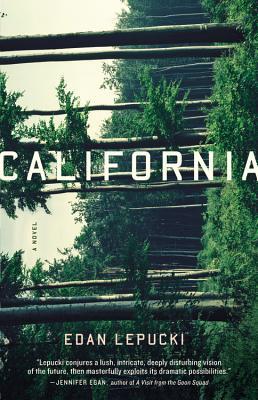


California by Edan Lepucki

California by Eden Lepucki

I had been looking forward to reading this book for a long time and it did not disappoint! Cal and Frida left the remains of L.A. behind and are now living in a shack in the wilderness. They work hard every day just to survive. For the most part they are content with their small world of just the two of them, but when Frida gets pregnant she starts to realize that they may not be able to raise a child on their own. Cal and Frida leave their shack and start looking for other people. When they find a fortified settlement they feel like this community can offer them protection and friendship. But this settlement is full of secrets and soon Cal and Frida realize they are not sure who they can trust - including each other. In flashbacks the reader gets both Frida and Cal's back stories, which help round out the story.

Like many dystopian novels California explores what lengths people will go to when it comes to survival. It's interesting to see how this small community comes together for the "greater good," but also what tears them apart. Overall, this was a really interesting book and seemed pretty realistic when it comes to what life would be like in those circumstances. This is Lepucki's first novel, so I can't wait to see what she comes out with next.


Good Manners for Nice People Who Sometimes Say F*ck by Amy Alkon

Good Manners for Nice People Who Sometimes Say F*ck by Amy Alkon

This book is hilarious! Amy Alkon made me laugh out loud throughout this book. As the title implies, this is a book about manners for "real" people who may occasionally drop the f-bomb. If you're reading this book or thinking about reading this book you probably already have basic manners, so this is not an Emily Post-type book of etiquette, but rather how to deal with common lack-of-manners situations and also how to recognize your own possible lack of manners in certain areas. The chapters each focus on a particular situation such as traveling, dating, cell phones, etc. There are also some hilarious photos of manners "fails." Alkon is a proponent of manners "shaming" where you call someone out (in a calm and courteous way) for their lack of manners - either in person or by photographing a situation and posting it online. Overall, there is a lot of great advice for dealing with rudeness from friends and strangers alike - all written in a hilarious and fun way. 

Here are a few quotes I really liked:

"But, in general, my ire at the rude blithely taking advantage of the rest of us overwhelms my fear of being gutted with a kitchen implement, and has ever since I started looking at rudeness for what it really is: theft. If somebody steals your wallet, it's a physical thing that's there and then gone, so you get that you've been robbed. The rude, on the other hand, are stealing valuable intangibles like your attention (in the case of cell phone shouters who privatize public space as their own)...Letting the rude get away with robbing you emboldens them to keep robbing you - and the rest of us. We all need to start identifying the rude as the thieves they are, which is what it will take for more people to get mad enough to get up on their hind legs and refuse to be victimized." (p. 12-13)

"Happy people tend to be kind or, at least, uninterested in tearing other people down. Miserable people often want to lash out at the world - and there you are, so conveniently located as a target for their hate. When one of these spitebags hurls a put-down at you, they expect that you'll either try to fight back or just stand there blinking and wishing you could disappear. Instead, you should do the last thing they'd expect: Look straight at them for a moment, and coolly call them on their rottenness with a remark like 'Clearly, you must have had a pretty bad day to feel the need to say something so nasty to me. I hope you feel better.' (Sincerity is not required here - just believability - so say it devoid of anger, and sound like you mean it.)" (p. 40-1)

"What the doomsaying hysterics fail to see is that the Internet is a tool, same as a paring knife. The paring knife can be used to cut up an apple for a baby, to carve 'B.L. love M.C.' on a tree, or to stab somebody 300 times. Likewise, the Internet itself doesn't alienate people. It's the most amazing connector of humans we've ever had - that is, providing those of us on it have the guts, imagination, and good manners to use it that way." (p. 117-8)

"It's seriously cool that a whole bunch of people can get into a big metal tube in Los Angeles, hurtle through the sky, and be in New York five or six hours later. We're all so used to airplane travel that we mostly forget to be amazed by it. Of course, these days, we're sometimes just too angry to be amazed by it. Just getting through the airport to the gate is an ugly ordeal, thanks to the 'security theater,' security expert Bruce Schneier's term for our wildly wasteful and idiotic pretend security that treats every American with a plane ticket as a plausible suspect." (p. 177)


One Plus One by Jojo Moyes

One Plus One by Jojo Moyes

Jojo Moyes is my new favorite author! Every book she writes is even better than the one before. In One Plus One the lives of single mother Jess, her math genius daughter Tanzie, her goth step-son Nicky, and tech millionaire Ed all collide on a crazy road trip trying to get Tanzie to a math Olympiad. While Jess and Ed couldn't have less in common on the surface, they have each been hurt by their ex's. Jess has been raising two children with no help from her ex because he's too depressed to work, while Ed is now facing potential jail time and ruin for insider trading with his ex-girlfriend. Just when it seems like Jess and Ed might work out another secret comes to light. Will they be able to work past this new problem or will their relationship be over before it even started? Lots of surprises at the end and the whole time you just can't put the book down because you have to know what happens next. Another incredibly great book from Jojo Moyes!



Saturday, September 20, 2014

September 2014 Cookbooks

Urban Pantry by Amy Pennington

Urban Pantry: Tips & Recipes for a Thrifty, Sustainable & Seasonal Kitchen by Amy Pennington

This is a unique cook book in that it is more than just a collection of recipes - it's a guide for stocking and creating a pantry that makes it easier to cook from. The author was inspired by a friend of hers who loved to eat her homemade food, but kept next to nothing on hand in his apartment. She started creating a list of pantry essentials for him that eventually turned into this book. Each chapter goes over a staple or staple category like whole grains, beans, eggs, etc. and each chapter has recipes that incorporate or focus on those staples. There are also chapters on small batch preserving and growing a "pantry garden." Overall, I liked it and there were a few recipes I'd like to try out plus it inspired me to revamp my own pantry soon.


Pie Love by Warren Brown

Pie Love by Warren Brown

This book will inspire you to make a pie or multiple pies! This book is full of awesome pie recipes. There are only 5 chapters - piecrusts, sweet pie fillings, tart crusts, sweet tarts, and savory pies. I really liked how the author had multiple different pie crust recipes that he then paired with different fillings. I already have a pie crust recipe I like, but I definitely want to try the vanilla bean and chocolate pie crusts. He also includes gluten-free and vegan pie crust recipes. This is just a great cook book to inspire you to try some new pie variations. Since we're heading into fall I think I'll try some new recipes out soon.

September 2014 Reviews

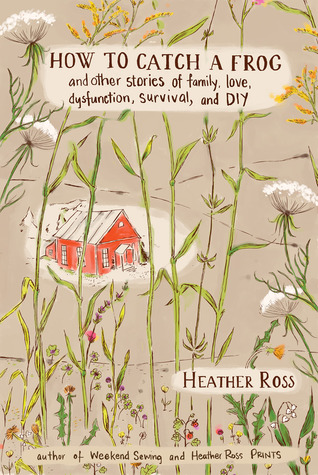
How to Catch a Frog by Heather Ross

How to Catch a Frog: and Other Stories of Family, Love, Dysfunction, Survival, and DIY by Heather Ross

Heather Ross grew up in a very dysfuctional and unconventional home. She never learned what a happy marriage looked like, how to pay bills, or the importance of a career to support yourself. Many of the adults in her life never worked and the priorities were keeping beer and cigarettes in stock not food. Heather and her twin sister Christie were born on land in Vermont that their grandfather owned. Their parents split up shortly after their birth and they lived with their mother who was supported monetarily by her father. As an adult Heather quickly begins to realize just how much she was neglected as a child and how different her upbringing was from most of her peers. How to Catch a Frog is a collection of stories from Heather's childhood into adulthood and becoming a parent herself. The stories are interesting, but in my opinion they get better and better as the book goes on. The later half of the stories are from when Heather is an adult trying to figure out her life. 

I laughed out loud when I read this quote in the book:

[After finding out she's pregnant] "The next day I called my father, who was genuinely thrilled for me. This gave me new hope and motivated me to get dressed and walk to the bookstore, where I bought a stack of books about pregnancy and newborns. They sat next to me, in a neat pile, on the table. Every few days I would try to pick one up and read through whatever chapter seemed relevant to me at that stage, but I would instantly feel such a bitter anxiety beginning to grow out of the pit of my stomach and into my chest that I would have to put the book down immediately and reach for the remote control. I watched episode after episode of 16 and Pregnant, each one filling me with a sense of competence that no book could provide." (p. 223)


Mary Coin by Marisa Silver

Mary Coin by Marisa Silver (Books & Banter book club)

I really enjoyed this book. It creates a fictional story around the famous Dorothea Lange Depression photograph "Migrant Mother." The story is told from 3 people's perspectives - Mary Coin, the subject of the photograph, Vera Dare, the photographer, and Walker Dodge, who's family owns some of the citrus groves in California that hired migrant workers. All three of these people's lives are intertwined in ways they never expected. After reading about the famous photograph I realized that the author stayed true to the basic facts about the "Migrant Mother" in this story, she just adds fictionalized details to round out the story. I liked that it was told from 3 different perspectives because you got to see all sides of the same story. Overall, it was definitely an interesting book that highlights the incredible hardships many families endured during the Great Depression.


Guests on Earth by Lee Smith

Guests on Earth by Lee Smith (book club)

I didn't really have any preconceived ideas of this book, but it wasn't great. The story follows Evalina Toussaint who was born to an exotic dancer in New Orleans. Her mother takes up with a married man and they have a child together, but after the child dies Evalina's mother commits suicide. Her married lover's family takes her in, but soon sends her off to the Highland Hospital in Asheville, NC. While Evalina is not mentally ill, she has obviously endured a lot in her short life. She does come to heal emotionally and mentally, but because she really has nowhere else to go she is in and out of Highland as both a patient and eventually a staff member for most of her life. The main thread of the story is Evalina's interactions with Zelda Fitzgerald who is also an on-again, off-again patient at Highland. But, Evalina doesn't have a lot of one-on-one interaction with Zelda - she does however make LOTS of friends with the various patients and staff that come through Highland. Many of the patients like her come back multiple times over the years. The story ends with a devastating fire that broke out and killed many patients at the hospital. After the fire Evalina is able to move on and goes back to New Orleans.

I think one of the things Smith is trying to point out is how many women during this time period were deemed "crazy" or "sick" that were really depressed housewives or abused in terrible ways, yet somehow at fault themselves. In Evalina's case her problem is that she's an orphan, not that she's mentally ill. I also didn't like how Evalina kind of played two guys at the hospital - one a doctor on staff and the other a patient. She was sleeping with them both and claimed to love them both, but neither of them knew about the other. You do like Evalina's character, but she does make some poor choices throughout the book. Overall, it was OK. I almost felt like a mental patient while reading it because it seemed all over the place and there were so many characters that it was hard to keep up with them all. I only read this book for my book club, and this is one that I wouldn't have missed if I hadn't read it.


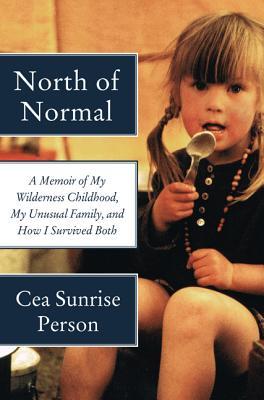
North of Normal by Cea Sunrise Person

North of Normal: a Memoir of My Wilderness Childhood, My Unusual Family, and How I Survived Both by Cea Sunrise Person

Cea Person was born when her mother was only 17. She and her mother moved with her mother's parents and siblings into the Canadian wilderness living in Tipis on Indian land - sometimes with permission and sometime without. Cea's grandparents were true hippies and there was constant sex and drugs EVERYWHERE when she was growing up. Everyone in the family was mentally ill or a drug addict. When Cea was 5 she and her mother moved to be with her mother's boyfriend Karl. Karl made a living either growing and selling pot or robbing lake vacation cabins. When Cea starts school she quickly realizes how unconventional her home life is. She has to beg her mother to put clothes on and not smoke pot when she invites friends over. When Cea is 8 her mother takes up with a new boyfriend, Barry, who molests Cea - and her mother knows but does nothing about it. By the time Cea is 13 she is done with her crazy family. She enters a modeling contest and wins and that begins a 20 year international modeling career. Even though she has escaped her chaotic home life the dysfunction has taken a toll. She has 2 failed marriages before she finally finds true, functional love. By the end of the book she has also managed to forge new relationships with her parents and has 3 children of her own.

While reading this it obviously reminded me of The Glass Castleby Jeannette Walls, and in the acknowledgments at the end of the book Cea thanks Jeannette Walls for writing The Glass Castle since that gave her the courage to write her own story too. But, I think Jeannette Walls life seems like a fairy tale compared to Cea's - her life was beyond chaotic and there was a lot of sexual abuse and dysfunction that really messed her up for a long time. It's an incredible story made more incredible by the fact that it's true. A must read for fans of The Glass Castle and similar books.


Burnt Toast Makes You Sing Good by Kathleen Flinn

Burnt Toast Makes You Sing Good: a Memoir of Food & Love From an American Midwest Family by Kathleen Flinn

I wish I could give this book more than 5 stars - it was absolutely fantastic! I already loved Kathleen Flinn's other books, The Sharper Your Knife, the Less You Cry and The Kitchen Counter Cooking School, so I was VERY excited about this one because she explores her family history and where her love of cooking and food comes from. Kathleen was the youngest of 5 children and her parents were both from large families. When Kathleen's parents were first starting out they didn't have a lot of money, so they always had a large garden and kept chickens for awhile. Kathleen's mother canned fruit and vegetables they grew and always made homemade bread. One of the funniest scenes in the book is when Kathleen's older sister convinces her mother to buy TV dinners for them, she was jealous of friends who ate them regularly. When they made them they were all disgusted by the food since they were so used to the homemade, home grown food! This book is at times hilarious and at times heartbreaking. It's amazing some of the things her family went through, but no matter what they never let circumstances beat them down. They all loved each other and her parents were so proud of all their children. You can also clearly see how Kathleen's love of food comes from generations of great home cooks. She also includes plenty of recipes from her family as well. This is one of the best food and family memoirs I've ever read. Kathleen Flinn does an amazing job with this book. I can't wait to see what she writes next!


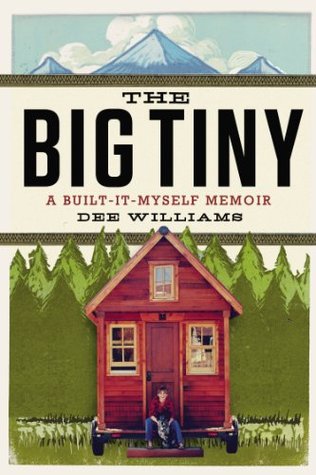
The Big Tiny by Dee  Williams

The Big Tiny: a Build-it-Myself Memoir by Dee Williams

When Dee Williams was diagnosed with a heart condition it made her re-evaluate her life and her priorities. A few years earlier she had bought her first house, but it was a constant money pit and time suck. When she happened upon an article about a man who built a tiny house and lived in the backyard of his "big" house that he rented out, she immediately contacted the guy and went out to visit him and his tiny house. After that she decided to build her own tiny house even though she had virtually no construction experience. After selling her house and moving into the new tiny house full time Dee finally feels "at home." She now co-owns a business helping people design and build their own tiny houses and does speaking engagements with her tiny house in tow.

While I appreciate her re-evaluation of her life and priorities, I don't know that I could live in such a tiny house. It is very impressive that she built this whole house with no experience. Overall, I did like the book, but I wasn't blown away.


The Roommates by Stephanie Wu

The Roommates: True Tales of Friendship, Rivalry, Romance, and Disturbingly Close Quarters by Stephanie Wu

I just happened to flip through this book at the library and it looked pretty funny so I decided to check it out. Ironically, I've never had a roommate other than my husband which is completely different. Some of the stories are hilarious, some are sad, and some are happy endings with the roommate becoming a best friend or even spouse. It was definitely an entertaining and quick read, most of the stories are only 2-3 pages long. Overall, it was a fun, quick read.

Tuesday, August 12, 2014

August 2014 Reviews

Delancey by Molly Wizenberg

Delancey: a man, a woman, a restaurant, a marriage by Molly Wizenburg

Molly Wizenberg's husband, Brandon Pettit, was always becoming interested in a unique topic or interest and then dropping it for the next one he comes across. So when he says he wants to open a pizza restaurant she thinks this is just another passing interest that will get dropped for the next thing, except it doesn't. Soon Brandon is signing a lease on a space and Molly is helping him renovate it to get it ready for the restaurant.Delancey is the story of Brandon's pizza restaurant of the same name, but it's also about how Molly had to learn to adapt to life as the wife of a restaurant chef (long, long hours most days), and how she came to understand who she truly is and who her husband truly is. He is great at running the restaurant and as much as she wanted to help and loves to cook - Molly is not cut out to be a restaurant line cook, that's just not who she is. Once she worked through all this she could finally enjoy Delancey for what it is and what it means to her husband. I admire Molly's honesty in this book about her mixed feelings about the restaurant and about her process for dealing with it and learning from it. This is a great book for any foodie readers out there. I loved Molly's first book A Homemade Life and I loved this one too! She also includes a few recipes either from the restaurant or just some of her favorites. I actually read this book in one day flying home from vacation - it's a quick, enjoyable read that will make you want to go grab a slice of pizza at your local pizza restaurant.

Real Food: What to Eat and Why

Real Food: what to eat and why by Nina Planck

I was so excited to read this book after reading Planck's cookbook The Real Food Cookbook, but it was kind of a let down. While I completely agree with everything she says about how real, traditional food is better for you than processed food, the book was very, very scientific and just had way too much statistics and facts bogging you down. While some of that is necessary in a book like this I just felt like it was so much science and data that it just became a chore to keep reading it. I really wanted to like it because I think she has a great message and obviously a LOT of data to back up her points, but it wasn't very interesting and engaging for me. I would still recommendThe Real Food Cookbook and eating a more traditional, real food diet that supports local farmers in your area.

A few quotes I liked:

"When a raw milk ban was proposed in New York City in 1907, a coalition of doctors, social workers, and milk distributors defeated it, arguing that safe milk should be guaranteed by inspectors, not pasteurization. In 1908, however, a panel of experts appointed by President Theodore Roosevelt concluded that raw milk itself was to blame for food-borne illness. That was the final blow. In 1914, New York required pasteurization of milk for sale in shops. Other states followed suit, and by 1949, pasteurization was the law in most places." (p. 73)

"The Journal of Dairy Science reported that 30 to 80 percent of conventional cattle carry E. coli in their stomachs, but when cattle were switched from a high-corn diet to hay, E. coli declined a thousandfold in only five days. In other words, a mere five days of feeding grass and hay to beef cattle before slaughter will restore the stomach to its normal acidity and kill E. coli, which would prevent many cases of contamination in the slaughterhouse. Unfortunately, this sensible, inexpensive practice has not been widely adopted by feedlots." (p. 102) [This is why you should support your local farmer for all your meat!]

"But there are some questions about vitamin supplements. The results of trials with supplements isolated from whole foods range from unhelpful (smokers taking beta-carotene had higher rates of lung cancer) to promising (vitamin E prevents second heart attacks) to merely equivocal (another vitamin E study on heart disease showed no effect). However, studies consistently find that diets rich in antioxidants from whole foods lower risk of heart disease and cancer." (p. 161)

"One dogged researcher, Mary Enig, helped to get the word out. The author of Know Your Fats, Enig waged an often lonely battle. I'm afraid her efforts were not always welcomed with bouquets of roses. In 1978, Enig wrote a scientific paper challenging a government report blaming saturated fat for cancer, in which she pointed out that the data actually showed a link with trans fats. Not long after, 'two guys from the Institute of Shortening and Edible Oils - the trans fat lobby, basically - visited me, and boy, were they angry.' Enig told Gourmet magazine. 'They said they'd been keeping a careful watch to prevent articles like mine from coming out and didn't know how this horse had gotten out of the barn'." (p. 201)


Lost Girls by Robert Kolker

Lost Girls: an Unsolved American Mystery by Robert Kolker

I wanted to read this book after watching the Disappeared episode with Shannon Gilbert - the investigation into her disappearance is what uncovered 10 bodies buried in Long Island that are most likely the work of more than one serial killer. While officials don't think Shannon was the victim of a serial killer - like the other identified victims she was a prostitute who marketed herself on Craigslist. In Lost Girls Kolker explores the backgrounds of Shannon and the first four victims discovered on Long Island - Maureen Brainard-Barnes, Melissa Barthelemy, Megan Waterman, and Amber Lynn Costello. All these women had hard lives that led them to a life of drugs and prostitution, but that's not to say they weren't missed by their friends and family. If anything good came from any of this it's that a few of their friends who were also prostitutes decided to get legitimate jobs after their friend was murdered - one said she'd rather be broke than dead. Kolker does a great job of really digging into these women's lives and families. He also explores a few of the main theories about the serial killer(s) and whether they are local Long Island residents. 

Obviously this is a sad book about women working as prostitutes who were killed by a serial killer, so some of it is hard to read because their lives were very hard and terrible. My only complaint was that the very end of the book got into more of the in-fighting between Shannon Gilbert's mother Mari and some of the other victim's families. At first they all came together to support each other, but over the years Mari alienated many of the other family members and while it is relevant it also felt like drama and gossip that could have been left out. Also, because these murders are still unsolved it's a little bit of a let down at the end that the case is still open. Overall, it was a very interesting book and it definitely made me appreciate my own life and family a lot more!


Gone Feral by Novella Carpenter

Gone Feral: Tracking My Dad Through the Wild by Novella Carpenter

I read and liked Novella Carpenter's previous book Farm Cityabout her and her boyfriend farming on an abandoned lot beside their apartment building in Oakland, CA. So, I was excited to read this one about her relationship with her father. When Novella gets a phone call that her dad is missing, as in an official missing person, she freaks out and tries to find him. Soon he reaches out to her (he had just gone out of town without telling anyone), but she realizes that her father is getting older and now is the time to re-establish a relationship with him. Her father wasn't in her life much growing up and the few adult interactions with her dad hadn't been great. After he went missing she visits him and quickly realizes that he's not just a hermit who likes living a simple life in the wilderness, but very likely he's mentally ill. Novella has to work through the idealized image she had of her father with the reality - especially as she is trying to get pregnant with her first child. Novella also has to explore traits of her father that she has and what that might mean for her future as well.

This is an honest memoir of a daughter trying to work out her relationship with her difficult father. It wasn't as apparent (as least from what I remember) in Farm City that she is basically living in poverty, although it seems by choice - apparently that runs in the family as well. I'm far from wealthy myself, but her whole family seemed to be living hand-to-mouth, but on purpose which seems so bizarre to me. It was interesting, if somewhat sad, but in the end she does have hope for her future and she's made peace with her relationship with her father too.


The Owl Who Liked Sitting on Caesar by Martin Windrow

The Owl Who Liked Sitting on Caesar by Martin Windrow

Martin Windrow became fascinated with owls after his older brother got into falconry and also kept a pet Tawney Owl. After one failed attempt with a Little Owl who never bonded with Windrow and escaped, he adopts Mumble a Tawney Owl. Mumble was hatched in captivity and came to Windrow a few weeks after birth. They bonded instantly and living with Mumble would completely change Windrow's life. The personal aspects of the book about Windrow and Mumble's activities was very interesting, but there was a lot of general information about owls and it seemed like too much to me. Obviously you need some background about owls for a story like this, but there were whole chapters just on owl history, biology, etc. that I could have done without. Windrow also mentions that after the first year or so Mumble no longer tolerated visitors well - she would attack them unless Windrow put her into her cage. He never really talked about how that affected his social life, which I'm sure it did in a big way. Overall, it had interesting parts, but it wasn't great. I liked Wesley the Owl by Stacey O'Brien much better.


Eating Wildly by Ava Chin

Eating Wildly: Foraging for Life, Love and the Perfect Meal by Ava Chin

Ava Chin is approaching 40 and is still single, her beloved grandmother is dying, she struggles with her relationship with her Mom, and her relationship with her Dad is non-existent. To deal with all this she escapes into foraging for wild food in New York City. She even lands a column in The New York Timeswriting about being an "urban forager." In foraging for wild food Ava learns how to navigate the tough circumstances she's dealing with - and later her foraging even leads, finally, to true love.

This was a quick read that was interesting. Chin's personal stories/problems don't overwhelm the book and each chapter also includes a recipe using wild food. I did like it, but it wasn't fantastic. Since it was such a quick read I would recommend it to anyone interested in foraging or food issues.


July 2014 Cookbooks

The New Cast Iron Skillet Cookbook: 150 Fresh Ideas for America's Favorite Pan
The New Cast Iron Skillet Cookbook by Ellen Brown

I was lucky enough to inherit a few pieces of cast iron cookware and this book has inspired me to pull them out and get them seasoned and ready to cook with. The author gives a chapter at the beginning of the book about the benefits of cooking with cast iron and how to season and care for cast iron cookware. Then it's broken down like a traditional cookbook with breakfast, sides, main dishes, breads, and desserts. There were lots of great recipes I'd like to try. This one will make you want to ask your grandmother if she has any old cast iron pots around you could "borrow" for awhile.


The Real Food Cookbook by Nina Planck

The Real Food Cookbook by Nina Planck

As the subtitle reads, this book is full of "traditional dishes for modern cooks." The author describes changing from trying to eat a supposedly more healthy vegetarian diet, to changing to what she calls "traditional foods," including meat, dairy, and fat which are often disparaged as unhealthy. There are lots of yummy sounding basics that look very easy to pull together quickly. It's broken down like a traditional cookbook with appetizers, salads, soups, sides, main dishes, etc. But, I like that at the end there are a few pages about how to source good, local ingredients - which makes a big difference in my opinion. There are definitely a few recipes I'd like to try from this. Another great cookbook for anyone looking to make more homemade, traditional food.


The Nourished Kitchen by Jennifer McGruther

The Nourished Kitchen by Jennifer McGruther

This cookbook has TONS of great, seemingly very easy recipes for basics and staples that most people use all the time. I am a firm believer that doing things from scratch or homemade can sometimes be even easier than the "convenience" ways. I also think society and media have steered us away from using traditional things like lard that is rendered from pig fat to seemingly "better" options that are just full of chemicals. There are recipes for homemade sour cream, lard, curing your own bacon and more traditional recipes too. There are quite a few things I hope to try from this one. If you're interested in more traditional and homemade ways of cooking this one is for you!


Tuesday, July 8, 2014

July 2014 Reviews

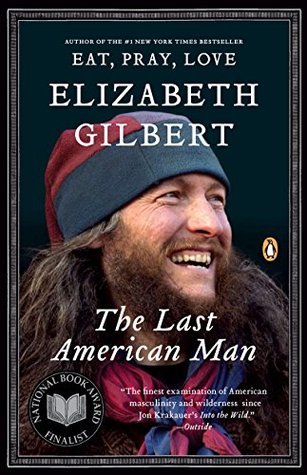
The Last American Man
The Last American Man by Elizabeth Gilbert

This was a very unique and odd book about a unique and odd man named Eustace Conway. Conway was born in South Carolina, but mostly grew up in Gastonia, NC. Through his parents he developed an intense love of nature and being outdoors. He taught himself TONS of survival skills and studied Native American and other indigenous cultures to learn more natural ways to live. Conway's father, also named Eustace Conway, was an incredibly demanding and exacting man and he constantly let Conway know what a disappointment he was as a son - even though Conway was incredibly skilled and talented. Unfortunately this terrible relationship with his father would be a constant shadow on Conway's otherwise incredible life. He experienced things only a handful of people in the world ever experience. He devoted his life to trying to teach other how to live a more meaningful and natural life. But, he was also very similar in personality to his own father and most people could never live up to his expectations, which strained most of his relationships. Conway lived on 1,000 acres outside of Boone, NC called Turtle Island. He acquired his land piece by piece and wanted nothing more than to live his back-to-the-land existence with a family, but it hasn't happened, at least by the end of this book anyway. While Conway's story is fascinating, it is also sad because from the outside it's obvious that his strained relationship with his father has affected him so much. Being from North Carolina myself, I can't believe I'd never heard of Conway until I found this book. He is an incredibly accomplished person who's led a unique and fascinating life. At the end of this book I'm curious to know more about Conway and what he might be doing now.

Some quotes I liked:

"So Eustace pulled out a huge map and unfolded it before him, as if he were a pirate. His land was blocked out in small and large connected parcels, and he told me how he'd acquired each piece over the years. What emerged was a portrait of genius. Eustace had put the thing together like a chess master. He first bought the 107 acres that made up the valley of Turtle Island, and then, as he earned money over the years, he slowly bought the peaks of each hill that surrounded the valley. The peaks of a hill are the most valuable real estate to developers, after all, since everyone wants a home right on top of a mountain. By securing those peaks, then, Eustace had made the hills below them much less attractive to any roving land speculator and therefore much less likely to be sold to someone else before he could afford to grab it...Once he owned the crests, he filled in the gaps, buying the slopes that connected his valley to the surrounding mountaintops. In this way, he guarded his watershed. What he was doing, actually, was transforming his holdings from a small, flat, low-lying basin into a large teacup - a perfect valley - which would be protected by mountains on every side." (p. 116-7)

"My initial reaction on witnessing Eustace Conway's life was relief. When I first heard of his life and adventures, all I could think was Thank God. Thank God somebody in America was still living this way. Thank God there was at least one genuine mountain man, frontiersman, pioneer, maverick out there. Thank God there was one truly resourceful and independent wild soul left in this country. Because, at some deep emotional level, Eustace's existence signified to me that somehow it's still true, that we Americans are, against all other available evidence, a nation where people grow free and wild and strong and brave and willful, instead of lazy and fat and boring and unmotivated." (p. 125)

"Jason was the very model of the young guy who typically comes to Eustace Conway for guidance. He was trying to discover how to be a man in a society that no longer had a clear path for him. Just as Eustace Conway had struggled as a teenager to find rituals to lead him into manhood, Jason was struggling to find some ceremony or meaning that would help define his own ascension. But he had no role models, his culture had no satisfying coming-of-age ritual for him, and his background had provided him with none of the manly skills that were so attractive to him. He was, by his own admission, lost." (p. 202)


The One & Only by Emily Giffin

The One and Only by Emily Giffin

I really like Emily Giffin, but this one was not one of my favorites. The story follows Shea Rigsby who from a very young age LOVED football - specifically the college team of her hometown of Walker, Texas. It also didn't hurt that her best friend Lucy is the daughter of Coach Carr, the head football coach at Walker. Fast forward to Shea's mid-thirties and even though she's working on staff at Walker, her life feels stuck. She knows she's just coasting and could be doing more with her life. When Coach Carr recommends her for a new job and she starts dating the star quarterback of the Dallas Cowboys it looks like Shea's life is starting to shape up. But, she still feels like something is missing. When she starts to realize what she really wants Shea has to decide if it's worth taking the risk or if she'll keep taking the safe route.

There was enough going on in the storyline that I wanted to keep reading to see what would happen, but it also felt very scattered and there was a LOT going on. There was also a LOT of football - which I'm not super interested in, but it was important to the story. I did like the overall theme of fighting for love and that you don't choose who you fall in love with, but I just didn't like the feel of the book. I still really like Emily Giffin, but this wasn't her best book.


Sous Chef by Michael Gibney

Sous Chef by Michael Gibney

This is one of those books that leaves you almost exhausted at the end. Michael Gibney takes you through a typical day in a higher-end restaurant working as the sous chef. The sous chef is one step down from the head chef, so there is a lot of hard work and responsibility involved. Gibney does a great job walking someone unfamiliar with a restaurant kitchen through a typical day working on the line. It definitely makes you appreciate the kind of hard work that goes into running a smooth restaurant. I wish I had been able to just sit down and read this book in one sitting since it only covers one 24-hour period. There are also a few pages at the end that defines kitchen terminology, some of which Gibney defines throughout the book. I would recommend this one for anyone interested in chefs and restaurant work.


Problems with People by David Guterson

Problems with People by David Guterson

I'm not much for short story collections, but I really like David Guterson so I decided to try this one. I didn't like it at all. All of the stories are about people dealing with grief or loss, but you didn't even really like most of the characters themselves. Almost all of the stories had a very uncomfortable feeling, which a little of that is OK, but the whole thing?! Overall, it was just not good in my opinion.


A Wolf Called Romeo
A Wolf Called Romeo by Nick Jans

In the winter of 2003 Nick Jans encountered a lone wolf near his Juneau, Alaska home. Having seen wolves in the wild before, but only rarely he is amazed at how much this wolf seems to seek out human and canine attention. Over the next few years Romeo, as the wolf becomes known locally, interacts with dozens of humans and dogs - always seeking the interaction himself. Within a few years though there are a faction of local residents who are not happy about a wolf hanging around so much. There is also the increasing problem of Romeo's popularity with local residents who are thrilled to have the chance to see a wild wolf so close. Jans knows that this increased attention to Romeo could easily backfire if the wolf feels threatened and lashes out. Jans is also worried about dog owners who don't have control of their dogs or have aggressive dogs - although he never personally saw Romeo react poorly to an aggressive dog. But, unfortunately in 2009 at trophy hunter from Pennsylvania comes to Juneau with the intent of killing Romeo solely because of his local popularity. He does and when locals like Jans find out they bring it to the attention of local authorities. The trophy hunter is arrested, along with his friend who is a local resident, but their prosecution is a joke and shows that even with an animal like Romeo - in Alaska it's just another wolf that's been hunted illegally.

While Romeo's story does have a sad ending, his impact is still felt on the community in Juneau. Especially with a few people like Jans who had a more long-term, intimate relationship with Romeo. Interspersed throughout Romeo's story Jans also gives a lot of information about wolves and shows just how unique the situation with Romeo was. He also gives a lot of the complicated and sad history of human interaction with wolves, both in the Continental US and specifically in Alaska. He also includes a few beautiful pictures of Romeo that he took over the years of their interactions. Overall, even though the end is sad, this is an incredible book about a very unique wolf and how much he impacted a small community over just a few years.


The Bees by Laline Paull

The Bees by Laline Paull

Flora 717 is a sanitatation bee who is born into the lowest caste in her hive. The sanitation bees clean up after the other bees and remove dead bees from the hive. But, from the very beginning Flora 717 is different. She is curious and smart and doesn't just go along with what's expected of her - which is very little. She quickly is able to feed newborns in the nursery, she works as a forager gathering pollen and nectar to make into honey, she then helps fight off a wasp which grants her seldom-given access to the Queen. Soon Flora 717 is doing things that are NEVER done in the hive - things that put her life in jeopardy. The motto of the hive is Accept, Obey, and Serve, but Flora 717 is starting to realize things must change in order for the hive to survive. She uncovers secrets and risks her life to do what she knows is right even if no one else agrees. In the end her courage to go against the hive mentality of Accept, Obey, and Serve will change not only her life, but the life and future of the hive.

This is one of the most unique and interesting books I've read in a really long time. On one level it's a unique look at the culture of a beehive from an "insider's" perspective, but on another level it's also a story about power, hierarchies, risk, and the importance of believing in yourself and doing what is right no matter what. A fascinating book that I just could not put down.

Exodus: A Memoir
Exodus by Deborah Feldman

I loved Deborah Feldman's first memoir Unorthodox, where she described growing up in the Hasidic Jewish community and making the decision to leave. Exodus picks up shortly afterUnorthodox ends. She has to work out how to support herself and her son and make the HUGE adjustment to life outside the rigid and secluded Orthodox Jewish community. Feldman is also trying to work out how she can connect with her Jewish heritage and religion outside of the Hasidic community. In order to work through a lot of her issues she travels across the US and decides to trace her Grandmother's roots in Europe - starting in Hungary where her Grandmother was born to the concentration camps in Germany that her Grandmother survived. Feldman discovers a lot on her European journey, unfortunately one thing she finds is that there is still a lot of anti-Semitism there. She struggles the most in Germany thinking about all that happened to the Jews there because of the Nazis. Incredibly though she also falls in love with a German man who's grandparents were Nazis!

Overall, I think this book was almost as good as Unorthodox. The story is not strictly chronological, but it works. She walks through some of the journeys she took to discover herself after her Exodus and also explores her family's Holocaust history and shows just how much that affected her growing up and still today. My only complaint was there was some definite weirdness/awkwardness with her relationship with the German guy who's grandparents were Nazis - she was very conflicted about their relationship even though he was ashamed of his family's history. There were a few weird/uncomfortable sexual scenes that I did not need to know about with him. But, overall it was a really good book and I definitely enjoyed it. I look forward to her future work.


Goodnight June by Sarah Jio

Goodnight June by Sarah Jio

This was a really enjoyable and light read. June Andersen is a successful vice-president of a banking company, but she works 60+ hours a week and has absolutely no personal life. When she finds out that her beloved aunt Ruby died and left June her children's bookstore Bluebird Books in Seattle, WA, June thinks she'll fly out for a week and get her aunt's bookstore ready to sell. But, once she gets there she remembers how much her aunt and the bookstore meant to her as a child. She always loved reading, but now barely has time to sleep much less read for pleasure. She also starts to unravel some secrets about Bluebird Books, but also about her aunt's life. As June starts to understand the secrets of Bluebird Books she realizes there is an important connection between her aunt and Bluebird Books and the famous children's author Margaret Wise Brown and her most famous book Goodnight Moon. Soon June has quit her banking job and decided to make a go of running Bluebird Books. Will she be able to save Bluebird Books and reinvent her life? 

There were a few things that were pretty predictable, but not painfully so. There was also a weird storyline with June's sisters Amy that I felt like didn't really work and didn't add much to the overall story - I think that whole part could have been left out completely. But, overall I did like the story and even though it was somewhat predictable I still wanted to keep reading and see it all play out. A fun and light-hearted read with a happy ending.