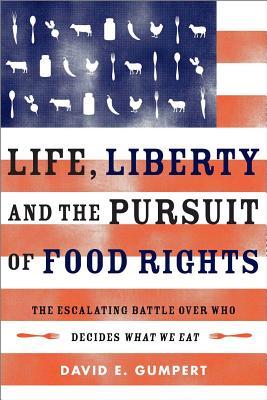
Life, Liberty and the Pursuit of Food Rights: the Escalating Battle Over Who Decides What We Eat by David E. Gumpert
This is really an eye-opening book. While I was more than aware of the evils of conventional factory farming, I wasn’t as aware of how much pressure the government tries to put on smaller traditional farms who are trying to operate outside of the conventional factory method. This book focuses on a few cases of smaller traditional farmers and food clubs or herdshares that were targeted and shut down or prosecuted for not following food laws. Many of these stories involve raw milk which has become the catalyst issue for food rights. While the laws on raw milk vary from state to state, many of the stories in this book were of people operating under the radar of the law – or trying to. If the public sale of raw milk is illegal, what about a herdshare agreement or private food club? These issues are being decided across the country right now. What is more of a fundamental right than the right to choose what kind of food goes into your body?! And this is not about food safety – it’s about governmental power and control. Gumpert does a great job exploring this appalling issue through a few examples. This will really make you think and I agree with the author that we need more small farmers and the people who support them and want to buy their food to move into civil disobedience against these ridiculous laws. If you don’t already support your local lunatic farmer and stand up for local food rights in your area!
Some quotes I really liked:
“But, today, the U.S. government denies perhaps the most fundamental right: freedom of food choice. After all, what good is it to possess the right to own guns, assemble, speak, or worship if we can’t choose good fuel for our bodies to propel us to shoot, pray, or preach? Is not food even more basic than religion? What religion can you practice without food?” (p. x from the Introduction by Joel Salatin)
“While most small farms that sell directly to consumers, including Meadowsweet, actively encourage their customers to visit and learn about how their food is produced, large corporate producers often try to keep shocking images of vast crowded animal holding areas off-limits to public scrutiny. After several videos of farm animal abuse were publicized, a number of states with a substantial number of farms owned by major corporations – Iowa, Utah, Florida, Illinois, and Minnesota – actually promoted legislation that would make it illegal for anyone to film CAFO farms undercover.” (p. 31)
“The Farm-to-Consumer Legal Defense Fund sprang up on July 4, 2007, to protect the rights of farmers and consumers being prosecuted for dispensing foods privately. One of its first cases involved defending Meadowsweet Dairy, which I described earlier in this chapter. In early 2010, it challenged the FDA in a federal court suit on behalf of ten plaintiffs, arguing that the agency’s ban on interstate shipments of raw milk interfered with individual rights to privacy and due process. The case was notable for prompting the FDA, in a motion to dismiss the case, to declare that Americans have ‘no absolute right to consume or feed children any particular food.’ Its rationale? ‘Comprehensive federal regulations of the food supply has been in effect at least since Congress enacted the Pure Food and Drugs Act of 1906, and was strengthened by the passage of the FDCA [Food, Drug, and Cosmetics Act] in 1938. Thus, plantiffs’ claim to a fundamental privacy interest in obtaining ‘foods of their own choice’ for themselves and their families is without merit.’” (p. 34-5)
“Despite raw milk being for many centuries one of mankind’s most important foods, its seventy-five-year downfall during the chaos of the Industrial Revolution resulted in it becoming not only the first processed food, but the first food in American history to be banned or sharply limited in its raw form. Because the restrictions occurred gradually (over a period of more than half a century) and the evidence seemed so convincing, the enormity of what happened – that an important precedent had been set that allowed public authorities to ban or curtail food deemed ‘dangerous’ so as to ‘protect’ us – went largely unnoticed.” (p. 45)
Some quotes I really liked:
“But, today, the U.S. government denies perhaps the most fundamental right: freedom of food choice. After all, what good is it to possess the right to own guns, assemble, speak, or worship if we can’t choose good fuel for our bodies to propel us to shoot, pray, or preach? Is not food even more basic than religion? What religion can you practice without food?” (p. x from the Introduction by Joel Salatin)
“While most small farms that sell directly to consumers, including Meadowsweet, actively encourage their customers to visit and learn about how their food is produced, large corporate producers often try to keep shocking images of vast crowded animal holding areas off-limits to public scrutiny. After several videos of farm animal abuse were publicized, a number of states with a substantial number of farms owned by major corporations – Iowa, Utah, Florida, Illinois, and Minnesota – actually promoted legislation that would make it illegal for anyone to film CAFO farms undercover.” (p. 31)
“The Farm-to-Consumer Legal Defense Fund sprang up on July 4, 2007, to protect the rights of farmers and consumers being prosecuted for dispensing foods privately. One of its first cases involved defending Meadowsweet Dairy, which I described earlier in this chapter. In early 2010, it challenged the FDA in a federal court suit on behalf of ten plaintiffs, arguing that the agency’s ban on interstate shipments of raw milk interfered with individual rights to privacy and due process. The case was notable for prompting the FDA, in a motion to dismiss the case, to declare that Americans have ‘no absolute right to consume or feed children any particular food.’ Its rationale? ‘Comprehensive federal regulations of the food supply has been in effect at least since Congress enacted the Pure Food and Drugs Act of 1906, and was strengthened by the passage of the FDCA [Food, Drug, and Cosmetics Act] in 1938. Thus, plantiffs’ claim to a fundamental privacy interest in obtaining ‘foods of their own choice’ for themselves and their families is without merit.’” (p. 34-5)
“Despite raw milk being for many centuries one of mankind’s most important foods, its seventy-five-year downfall during the chaos of the Industrial Revolution resulted in it becoming not only the first processed food, but the first food in American history to be banned or sharply limited in its raw form. Because the restrictions occurred gradually (over a period of more than half a century) and the evidence seemed so convincing, the enormity of what happened – that an important precedent had been set that allowed public authorities to ban or curtail food deemed ‘dangerous’ so as to ‘protect’ us – went largely unnoticed.” (p. 45)
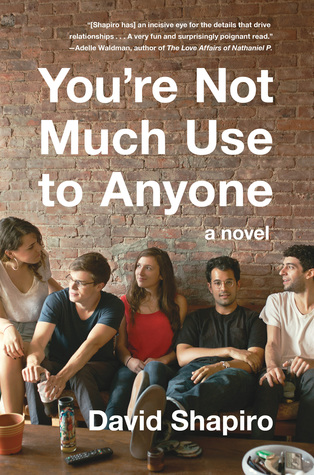
You're Not Much Use to Anyone by David Shapiro
David just graduated from NYU and is stalling on actually finding a career and becoming an adult. His parents still pay his rent and he pretends to be studying to take the LSAT. When he lands an incredibly dull and mindless job he decides to start a blog as an outlet. He types up the posts on his Blackberry and emails them to a friend to post for him. Pretty soon his blog takes off and he has real journalists wanting to interview him and write about him. While he's excited David also feels like he's still pretending to be an adult - and now pretending to be a writer. The book is almost written like blog posts, so it's a really quick read. There are some pretty funny parts, but also some pretty awkward parts which make it seem more real and make David more likable. While I did like the book, the ending was really vague and just left you hanging. I was hoping for some hint of a direction for David in the end. Overall, a fun, quick read.

Hand to Mouth: Living in Bootstrap America by Linda Tirado
In 2013 Linda Tirado responded to an online forum question about why poor people make bad decisions. Her response/tirade hit a chord and almost instantly went viral. It was published on The Huffington Post and other major publications. Hand to Mouth is a longer, more organized version of that forum post. Tirado talks about being poor and living hand to mouth and how hard it is - she explains many of the misconceptions or stereotypes wealthier people have of poor people. While I don't consider myself ignorant of how hard it is for poor people to get by, this book was VERY eye-opening. Unfortunately even if you try not to you still often assume the stereotypes, but Tirado shows that you can be smart and articulate and still struggle to make ends meet day to day. I don't think of myself as "rich," but by Tirado's definition I most definitely am. This book should really be a must-read for anyone - wherever you are on the wage/class spectrum. If nothing else you'll be more grateful for what you have and you'll try harder to be nicer to the low-income workers you encounter on any given day (fast food, gas station, janitorial workers, etc.).

The Moment of Everything by Shelly King
In some ways this book really reminded me of Mr. Penumbra's 24-Hour Bookstore, but with a female protagonist - they both feature used book stores in California, IT start-ups, coding, and of course lots of books. Maggie came out to California with her best friend and an MLIS degree hoping to find work in a library system. Instead she ended up working for a tech start-up company with her best friend - at least until her position was eliminated. After that she ends up spending so much time in her landlord's used bookstore that she starts working there. While there she finds a tattered copy of Lady Chatterley's Lover that she plans to read for a book club she's been asked to join. But when she starts to read she's surprised to find notes written on the pages of the book between Henry and Catherine - two real life people who seem to fall in love with each other only through these notes. Do Henry and Catherine ever get together? Are they still alive? Where are they now? This energizes Maggie and she ends up using Henry and Catherine's story to bring attention to the Dragonfly used book store. Through her time at the Dragonfly Maggie's life will change in unimaginable ways - she will experience grief and heartbreak, love and hope.

Bon Appetempt: a Coming of Age Story by Amelia Morris
This was somewhat disappointing. I love a good food memoir, but this one was pretty depressing. It was more about the author's constant dissatisfaction with her life and less about food. Food did factor in, more so as an adult, but overall it was kind of a downer. I liked the premise of the book that attempting to cook is important even if your results don't "match" the picture with the recipe and that is obviously a metaphor for life that it's more important to try new things than always take the safe route. There were a few recipes in the book, but not as many as you would expect for a book like this. Overall, it wasn't terrible, but I wouldn't recommend it.
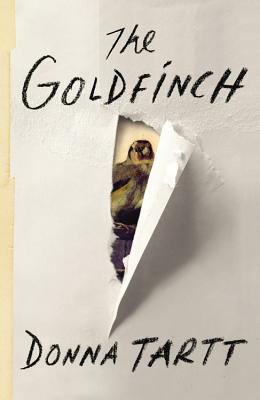
The Goldfinch by Donna Tartt (Books & Banter book club)
I would have never read this book if not for my book club. While I can't say I would recommend it - it is ridiculously long and often a downer - it did keep my interest and it's one of the craziest books I've ever read. There is SO MUCH going on the whole time that it's amazing that Tartt managed to keep everything straight throughout the book. Because there is so much going on and so many characters it's a book that's hard to describe or summarize. Basically the whole story is about Theo Decker and his attachment to a painting called The Goldfinch. Every major event in Theo's life is because of or related to that painting. He has an unbelievably dysfunctional and sad childhood - many important people in his life end up dying suddenly and unexpectedly. As an adult Theo gets into the criminal underground side of the art world - still all related to his connection to The Goldfinch.His past starts to catch up to him and how he decides to handle things will show who he really is. A big theme throughout the book is what determines who you really are - your parents, your circumstances, your choices, etc. This was definitely an interesting and unique book, but it is also incredibly sad and depressing and there is a LOT of drug use. It should make for an interesting book club discussion though since there is a LOT to talk about!
Some quotes I really liked:
"But sometimes, unexpectedly, grief pounded over me in waves that left me gasping; and when the waves washed back, I found myself looking out over a brackish wreck which was illuminated in a light so lucid, so heartsick and empty, that I could hardly remember that the world had ever been anything but dead." (p. 93)
"Though sometimes I worked down in the basement with Hobie for six or seven hours at a time, barely a word spoken, I never felt lonely in the beam of his attention: that an adult not my mother could be so sympathetic and attuned, so fully there, astonished me." (p. 418)
"Very dark message to this book [The Idiot]. 'Why be good.' But - this is what took hold on me last night, riding here in the car. What if - is more complicated than that? What if maybe opposite is true as well? Because, if bad can sometimes come from good actions-? where does it say, anywhere, that only bad can come from bad actions? Maybe sometimes - the wrong way is the right way? You can take the wrong path and it still comes out where you want to be? Or, spin it another way, sometimes you can do everything wrong and it still turns out to be right?...What if all your actions and choices, good or bad, make no difference to God? What if the pattern is pre-set? No no - hang on - this is a question worth struggling with. What if you badness and mistakes are the very thing that set our fate and bring us round to good? What if, for some of us, we can't get there any other way?" (p. 745-6)
A great sorrow, and one that I am only beginning to understand: we don't get to choose our own hearts. We can't make ourselves want what's good for us or what's good for other people. We don't get to choose the people we are...Only here's what I really, really want someone to explain to me. What if one happens to be possessed of a heart that can't be trusted --? What if the heart, for its own unfathomable reasons, leads one willfully and in a cloud of unspeakable radiance away from health, domesticity, civic responsibility and strong social connections and all the blandly-held common virtues and instead straight towards a beautiful flare of ruin, self-immolation, disaster?" (p. 761)
Some quotes I really liked:
"But sometimes, unexpectedly, grief pounded over me in waves that left me gasping; and when the waves washed back, I found myself looking out over a brackish wreck which was illuminated in a light so lucid, so heartsick and empty, that I could hardly remember that the world had ever been anything but dead." (p. 93)
"Though sometimes I worked down in the basement with Hobie for six or seven hours at a time, barely a word spoken, I never felt lonely in the beam of his attention: that an adult not my mother could be so sympathetic and attuned, so fully there, astonished me." (p. 418)
"Very dark message to this book [The Idiot]. 'Why be good.' But - this is what took hold on me last night, riding here in the car. What if - is more complicated than that? What if maybe opposite is true as well? Because, if bad can sometimes come from good actions-? where does it say, anywhere, that only bad can come from bad actions? Maybe sometimes - the wrong way is the right way? You can take the wrong path and it still comes out where you want to be? Or, spin it another way, sometimes you can do everything wrong and it still turns out to be right?...What if all your actions and choices, good or bad, make no difference to God? What if the pattern is pre-set? No no - hang on - this is a question worth struggling with. What if you badness and mistakes are the very thing that set our fate and bring us round to good? What if, for some of us, we can't get there any other way?" (p. 745-6)
A great sorrow, and one that I am only beginning to understand: we don't get to choose our own hearts. We can't make ourselves want what's good for us or what's good for other people. We don't get to choose the people we are...Only here's what I really, really want someone to explain to me. What if one happens to be possessed of a heart that can't be trusted --? What if the heart, for its own unfathomable reasons, leads one willfully and in a cloud of unspeakable radiance away from health, domesticity, civic responsibility and strong social connections and all the blandly-held common virtues and instead straight towards a beautiful flare of ruin, self-immolation, disaster?" (p. 761)

The Chain: Farm, Factory, and the Fate of Our Food by Ted Genoways
The Chain looks at the industrial food industry through the lens of Hormel - one of the largest pork producers in the world. Genoways not only looks at the horrific CAFO system for "raising" hogs for meat, but also how companies like Hormel corner the market for themselves through vertical integration (they own ALL aspects of the industry - the hogs, the feed, the slaughterhouses, the food processing plants, etc.). Besides the horrible, yet blessedly short, lives of the hogs, the worst part is how terribly the workers are treated. These companies needs scores of low-wage, un-skilled labor, so they look to the illegal immigrant population. These people, of course not all here illegally, are just trying to make a living, but usually end up with severe long-term health problems even after only a few months in this type of environment. What's even more enraging is that these companies often work with ICE to "give" them illegal employees over certain periods of time instead of having sweeping raids where half or more of their employees would be arrested and deported, yet these companies are never prosecuted or punished for continuing to hire illegals all the time - they don't have any intention of ever stopping. Unfortunately all these corporations care about is making more money - to the physical and emotional harm of the animals raised and killed for these products, the workers who do all the dirty work, and the communities affected by the CAFOs and factories. While a hard and sad book, it's another window into the horrible world of industrial farming. The ONLY answer to this is to support your local farmer and opt out of this terrible system.
Here are some quotes I liked:
"Only at the end of the checkup did Dyck explain to Garcia that there was an 'epidemic of neuropathy' that was affecting QPP [Quality Pork Processors, Inc.] workers - a newly discovered form of demyelinating polyradiculoneuropahty. After careful study, medical investigators had unanimously concluded that inhaling aerosolized brains had caused workers' immune systems to produce antibodies. Because porcine and human neurological cells are so similar, the antibodies didn't recognize when the foreign cells had been eliminated. Even when Garcia's body had eliminated all the hog tissue he had inhaled, Dyck explained, the antibodies kept fighting the infection, destroying Garcia's own nerve cells. The explanation made sense, except that, according to company officials, QPP had been blowing brains, off and on, for more than a decade. So why did workers fall ill now and not earlier? The answer offered by the Mayo Clinic is complex but boils down to one key change: increased line speed...And the longer hours worked in 2007 had, quite simply, upped workers' exposure." (p. 50-51)
"'It's absurd,' said Amanda Hitt at the Government Accountability Project. She told me that activist videos were akin to airplane black-box recorders - evidence for investigators to deconstruct and find wrongdoing. Ag gag laws, as they're known, don't just interfere with workers blowing the whistle on animal abuse. 'You are also stopping environmental whistle-blowing; you are also stopping workers' rights whistle-blowing.' In short, 'you have given power to the industry to completely self-regulate,' That should 'scare the pants off' of consumers concerned about where their food comes from. 'It's the consumers's right to know, but also the employee's right to tell. You gotta have both.' She said she couldn't believe that an industry that had been so regularly recorded breaking the law 'would have the audacity to come to any state legislative body and say, 'Hey, we're sick of getting caught doing crimes. Could you do us a favor and criminalize catching us?'" (p. 138-9)
"To me, the hog industry's vigilance against external pathogens seemed strangely at odds with their out-of-hand dismissals of concerns about their facilities' effects on human health." (p. 194)
"But this modern method of raising hogs is the farthest thing from natural; in fact, it is only made possible by massive amounts of antibiotics - used to prevent illness, to promote growth, and to increase fertility in ever increasing dosages as bacteria develop resistance and mutate into new, stronger strains. Many medical researchers and public health advocates now caution the widespread use of antibiotics has grown reckless and potentially dangerous." (p. 196)
"The team gathered the records of more than a thousand patients from rural Iowa who had been admitted to the Iowa Veterans' Affairs Hospital with respiratory complaints in 2010 and 2011. In all, they found 119 of the patients were suffering from MRSA. The rate in itself was distressingly high, but the greatest shock came when the home addresses for those patients were overlaid onto the Iowa's DNR's [Dept. of Natural Resources] map of CAFOs. The overwhelming number of patients with MRSA lived within one mile of a hog confinement. They were three times more likely to have the antibiotic-resistant bacteria than other residents of rural Iowa - and nearly ten times more likely than someone living in an urban area. The researchers were unable to say exactly how MRSA was making the jump from the confined hogs to the workers in the barns and the nearby residents, but they noted that manure from CAFOs is typically spread as fertilizer on the corn and soybean fields surrounding the barns. 'MRSA can be aerosolized from this manure to human food or water sources,' they concluded. 'The increasing populations of swine raised in densely populated CAFOs and exposed to antibiotics presents opportunities for drug-resistant pathogens to be transmitted among human populations.'"(p. 204-5)
"...the impact [of CAFO hog production] on Iowa's waterways has been almost too massive to comprehend. Of ninety test stations established across the state, only two now rate water quality as good. None rate as excellent. The Raccoon River and Des Moines River watersheds, which together supply most of the drinking water for the city of Des Moines and converge just east of the capital, have the highest and second-highest nitrate loads of the forty-two major tributaries to the Mississippi River. The Iowa DNR [Dept. of Natural Resources] estimates that the level of E. coli in the Raccoon River needs to be reduced by 99 percent." (p. 210)
Here are some quotes I liked:
"Only at the end of the checkup did Dyck explain to Garcia that there was an 'epidemic of neuropathy' that was affecting QPP [Quality Pork Processors, Inc.] workers - a newly discovered form of demyelinating polyradiculoneuropahty. After careful study, medical investigators had unanimously concluded that inhaling aerosolized brains had caused workers' immune systems to produce antibodies. Because porcine and human neurological cells are so similar, the antibodies didn't recognize when the foreign cells had been eliminated. Even when Garcia's body had eliminated all the hog tissue he had inhaled, Dyck explained, the antibodies kept fighting the infection, destroying Garcia's own nerve cells. The explanation made sense, except that, according to company officials, QPP had been blowing brains, off and on, for more than a decade. So why did workers fall ill now and not earlier? The answer offered by the Mayo Clinic is complex but boils down to one key change: increased line speed...And the longer hours worked in 2007 had, quite simply, upped workers' exposure." (p. 50-51)
"'It's absurd,' said Amanda Hitt at the Government Accountability Project. She told me that activist videos were akin to airplane black-box recorders - evidence for investigators to deconstruct and find wrongdoing. Ag gag laws, as they're known, don't just interfere with workers blowing the whistle on animal abuse. 'You are also stopping environmental whistle-blowing; you are also stopping workers' rights whistle-blowing.' In short, 'you have given power to the industry to completely self-regulate,' That should 'scare the pants off' of consumers concerned about where their food comes from. 'It's the consumers's right to know, but also the employee's right to tell. You gotta have both.' She said she couldn't believe that an industry that had been so regularly recorded breaking the law 'would have the audacity to come to any state legislative body and say, 'Hey, we're sick of getting caught doing crimes. Could you do us a favor and criminalize catching us?'" (p. 138-9)
"To me, the hog industry's vigilance against external pathogens seemed strangely at odds with their out-of-hand dismissals of concerns about their facilities' effects on human health." (p. 194)
"But this modern method of raising hogs is the farthest thing from natural; in fact, it is only made possible by massive amounts of antibiotics - used to prevent illness, to promote growth, and to increase fertility in ever increasing dosages as bacteria develop resistance and mutate into new, stronger strains. Many medical researchers and public health advocates now caution the widespread use of antibiotics has grown reckless and potentially dangerous." (p. 196)
"The team gathered the records of more than a thousand patients from rural Iowa who had been admitted to the Iowa Veterans' Affairs Hospital with respiratory complaints in 2010 and 2011. In all, they found 119 of the patients were suffering from MRSA. The rate in itself was distressingly high, but the greatest shock came when the home addresses for those patients were overlaid onto the Iowa's DNR's [Dept. of Natural Resources] map of CAFOs. The overwhelming number of patients with MRSA lived within one mile of a hog confinement. They were three times more likely to have the antibiotic-resistant bacteria than other residents of rural Iowa - and nearly ten times more likely than someone living in an urban area. The researchers were unable to say exactly how MRSA was making the jump from the confined hogs to the workers in the barns and the nearby residents, but they noted that manure from CAFOs is typically spread as fertilizer on the corn and soybean fields surrounding the barns. 'MRSA can be aerosolized from this manure to human food or water sources,' they concluded. 'The increasing populations of swine raised in densely populated CAFOs and exposed to antibiotics presents opportunities for drug-resistant pathogens to be transmitted among human populations.'"(p. 204-5)
"...the impact [of CAFO hog production] on Iowa's waterways has been almost too massive to comprehend. Of ninety test stations established across the state, only two now rate water quality as good. None rate as excellent. The Raccoon River and Des Moines River watersheds, which together supply most of the drinking water for the city of Des Moines and converge just east of the capital, have the highest and second-highest nitrate loads of the forty-two major tributaries to the Mississippi River. The Iowa DNR [Dept. of Natural Resources] estimates that the level of E. coli in the Raccoon River needs to be reduced by 99 percent." (p. 210)