Thursday, September 21, 2017

August 2017 Reviews

Finishing up my summer of non-fiction reading, here are the books I read in August 2017:

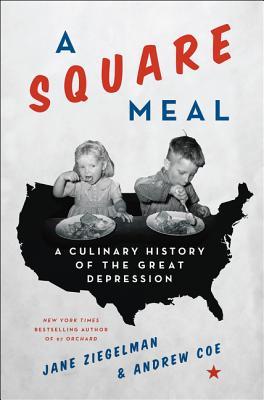
A Square Meal by Jane Ziegelman

A Square Meal: a culinary history of the Great Depression by Jane Ziegelman & Andrew Coe

This book basically explores the history of the Great Depression through food - and often the lack thereof. It seemed like a lot of the focus was on how government agencies REALLY fought creating or giving any money toward feeding starving people around the country. Like the present, politicians are often far removed from the reality of the struggles of the people they are supposed to represent. But, in this book it did seem a little heavy-handed. Overall, it was not as interesting as I expected it to be. I really liked Ziegelman's previous book 97 Orchard, but this one didn't seem as interesting to me. It wasn't bad, but it wasn't great in my opinion.
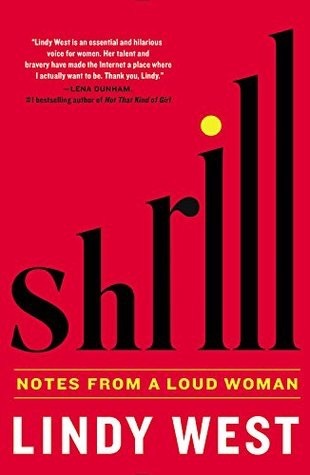

Shrill by Lindy West

Shrill: notes from a loud woman by Lindy West

Lindy West is a fat female feminist - three things society tends to hate and when they are all together in one person - look out. If you're a woman and don't conform to societal "norms" like being thin and quiet Shrill is probably the least offensive name you'll be called. West writes about everything from her struggles with accepting her body, her love of all things comedy, how she took on rape jokes in comedy, and even how a troll pretending to be her dead father eventually came out and apologized to her. While her experiences are unique to her, she is also representative of all women who are called derogatory names for speaking out about the misogyny in our culture. At times laugh out loud funny and at times very serious, West is a voice we need to hear.

Some quotes I really liked:

"But it's just the Internet. There's nothing we can do. This is my reality now. Pretty much every day, at least one stranger seeks me out to call me a fat bitch (or some pithy variation thereof). Being harassed on the Internet is such a normal, common part of my life that I'm always surprised when other people find it surprising. You're telling me you don't have hundreds of men popping into your cubicle in the accounting department of your midsized, regional dry-goods distributor to inform you that - hmm - you're too fat to rape, but perhaps they'll saw you up with an electric knife? No? Just me, then. This is the barbarism - the eager abandonment of the social contract - that so many of us face simply for doing our jobs." (p. 123)

"In my lowest moment, when it seemed like the onslaught would never stop, an idea unfurled in my mind like some night-blooming flower: They'd handed me a gift, I realized. A suffocating deluge of violent misogyny was how American comedy fans reacted to a woman suggesting that comedy might have a misogyny problem. They'd attempted to demonstrate that comedy, in general, doesn't have issues with women by threatening to rape and kill me, telling me I'm just bitter because I'm too fat to get raped, and suggesting that the debate would have been better if it were just Jim raping me. Holy shit, I realized. I won. Their attempts to silence me made my point more effective than any think piece or flawless debate performance ever could...I compiled a sheaf of comments. (They were so uniformly vile I didn't need to dig for the 'worst' ones.) I sat in a big grey easy chair in my living room. Aham filmed me as I read aloud, in one relentless, deadpan beam, staring into the camera for nearly five minutes...Here is my face. Here are these words. 'It's just the Internet' doesn't seem so true anymore." (p. 203-4)


The Third Plate by Dan Barber

The Third Plate: field notes on the future of food by Dan Barber

Dan Barber is a chef and chefs often drive food trends. The farm-to-table movement tried to change the way we eat and grow food, but it's still catering to societal trends and isn't enough to really turn our food industry around. As Barber explains the "first plate" is industrial/factory farmed food, the "second plate" is organic/farm-to-table food, but The Third Plate could be a game-changer - it's focusing on a more integrated and truly sustainable food. Barber explores this issue through some ground-breaking farmers who are on the cusp of the third plate farming movement. People like Klaas and Mary-Howell Martens with their organic grain and milling enterprise, Eduardo Sousa and his natural (not force-fed) fois gras, Miguel Medialdea of Veta la Palma - a "natural" fish farm, Glenn Roberts of Anson Mills, and Steve Jones of the Bread Lab - these farmer/scientist types are on the cutting edge of the food world. While Barber does a great job of exploring these innovators and what they're doing, there is still the question of how to get these kind of people and farms all over the country and world. 

In some of the reviews I read of this book there was the complaint that Barber is elitist and this type of food is not available to everyone due to the cost. As a whole we have gotten so far away from where our food comes from that the expectation now is dirt cheap food - and with food as with many other things you get what you pay for. With cheap food you will pay in the long run with your health. And cheap food has hidden costs - in destruction of the land/sea/soil, suffering of the animals and workers, full of chemicals and grown for shipability not flavor. If more small to mid size farms were practicing these integrative and sustainable techniques there would be more of this kind of food to go around. Right now because these people are doing what no one else is doing they can charge a premium for their products. But, almost anyone can grow their own food and really nourish the soil in order to get more quality and tasty food. Definitely a book that will make you think.

Some quotes I really liked:

"It helps if your worldview includes the belief that nature knows best. A plant suffering from an infestation of pests is not a shortcoming of nature; it's a plant you're not mothering well. Either the nutrient balance in the soil is wrong or your crops aren't being rotated properly or the variety cultivated is wrong for the area - or any one of dozens of other possibilities. Your job is to figure it out. Since the chemical farmer has the option of spraying the problem away, he tends not to bother." (p. 55)

"In the words of ecologist Frank Egler, 'Nature is not more complex than we think, but more complex than we can think.'" (p. 88)

"Of the diet-related diseases that have spiked in the past century, the obesity epidemic would seem to have been impossible to predict. And yet, in the 1930s, [Dr. William] Albrecht [a soil scientist] came close. He knew that cows grazing from well-mineralized soils ate balanced diets. But when kept in a barn and fed a predetermined grain ration, they never stopped eating, overindulging in a vain attempt to make up with sheer volume for what they weren't getting in their food. Albrecht believed our bodies would likewise stuff themselves for the same reason. Starved of micronutrients, he said, we will keep eating in the hope of attaining them...Albrecht...worked backward from his observation of healthy people. 'Rather than assuming what a healthy diet should be, he looked at healthy people and figured out what made them healthy,' Klaas told me. 'He could almost always trace it back to healthy soil.'"(p.97-8)

"In just the past thirty years, the poultry industry has tripled its production of chickens, from 11.3 billion pounds to 37 billion pounds. But we don't eat 37 billion pounds of chicken, and the excess chicken has to end up somewhere. Processed food - Chicken McNuggets, for example - heroically soaked up the imbalance for a time. So did pet food. More recently, excess chicken is fed to cattle (an eyebrow raiser, since cattle aren't carnivores) and now increasingly even to fish. Why? Because while the price of wild fish - the traditional feed for aquaculture - has risen dramatically in the past decade, the relative cost of chicken has gone down. It's cheaper to feed chicken...I once asked an aquaculture biologist what was sustainable about feeding chicken to fish. There was a long pause. 'Well, Chef,' he said, 'there's just too much chicken in this country.' Another solution has been to look abroad - to dump unwanted parts onto other countries." (p. 155-6)

"The overproduction of grain helps enable the overproduction of chicken, which lowers the price of chicken, which means even more chickens are raised to make up for the declining revenue. That leads to even more unneeded chicken. So it's fed to other animals it probably shouldn't be fed to, like fish (which are increasingly farm-raised, in part due to the offshore pollution caused by producing too much grain). And then the overproduced chicken gets dumped to places like Mexico. To compete, Mexico turns to the same kind of system, the get-big-or-get-out system that feeds on itself: produce more chicken at lower prices. Laid-off poultry workers seek work in America, often illegally, which drives down wages and helps poultry companies produce...more chicken." (p. 157)

"'And the business model for all of this?' I asked. 'I mean, for Anson Mills. It sounds like you've become a company that donates seeds and pays farmers to grow them out. Where's the profit in that?' 'There's no profit. We're up to three million in revenue, based on the sales to thirty-two hundred chefs. Chefs are driving this, literally. Every year we turn around and zero out the bank account. All the money goes to seed work at this point.' It was humbling to see how, in Glenn's hands, the power of chefs could be harnessed for such good." (p. 379)

Homegrown & Handmade by Deborah Niemann

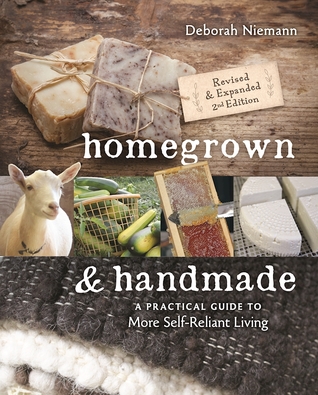
Homegrown & Handmade by Deborah Niemann

When Deborah Niemann and her husband have been homesteading for 15 years now and over time they have expanded and added to their homestead. I hadn't seen the original edition, but this one is the updated 2nd edition. I really liked her introduction about why they changed their lifestyle to one of homesteading and the benefits from that change. I also know that any book Joel Salatin writes the forward to will be worth reading! I really liked how she organized the book by topic - gardening, orchard, poultry, homegrown business, etc. that way you could read the sections that interested you the most. But some of the other sections were helpful - I'm not planning to raise pigs, but the chapter on cooking with pork and lard was still something I wanted to read. Overall, it is a good introduction to the various aspects of homesteading. It's not meant to be a comprehensive guide - the chapter on honey is only a few pages long and that is not enough to make you a beekeeper, but it can explain the basics so you can then delve further into that aspect if it interests you with other books, classes, etc. Overall, a very helpful book if you want to do more for yourself.

A quote I really liked:

"It first became obvious to researchers in the 1970s that farmers had a much higher rate of some cancers, although they are otherwise healthier than the general population. Since then, studies from many countries have found that farmers have increased rates of leukemia, non-Hodgkin's lymphoma, multiple myeloma, soft tissue sarcoma, and cancers of the skin, lip, prostate, brain, and stomach. After eliminating possible causes - such as increased sun exposure causing an increased risk of skin cancer - insecticides were declared the culprit for the increased risks of leukemia, multiple myeloma, and brain cancer. Herbicides have been linked to non-Hodgkin's lymphoma and soft tissue sarcoma...A 2004 study showed that children of farmers who apply pesticides have higher rates of several cancers. That study included 17,357 children born to Iowan farmers after 1975 and compared them to the cancer rates for the general population of Iowa during the same time. Researchers found that there were twice as many cases of childhood lymphoma and two and a half times as many cases of Hodgkin's and Burkitt's lymphomas. They also had more than twice as many bone tumors and germ cell tumors. The researchers also found increased rates of brain tumors, neuroblastoma, retinoblasomas, Wilms' tumors, and soft tissue tumors. Even more telling is the fact that the cancer rates were three times as high for children whose parent did not wear chemically resistant gloves during mixing and application." (p. 10)


Teeth by Mary Otto

Teeth: beauty, inequality, and the struggle for oral health in America by Mary Otto

I always notice people's teeth - it's something I learned from my Dad. And as Georges Cuvier is credited with saying, "Show me your teeth and I will tell you who you are." Mary Otto examines both the history of dentistry in America and also how it continues to be a barometer of social inequality. Otto started working on this book after Deamonte Driver, who was 12 years old, died from an infected tooth that spread to his brain. Unfortunately Deamonte isn't unique in that children and adults still routinely die from infected teeth because of lack of access to dental care. One of the things I found most disturbing is how time and again people or groups - across different time periods and parts of the country - would try to create ways to bring preventative dental care to poor children in schools and be sued and fought tooth and nail by dentists. The dentists claim this would take business away from them, but these children are not getting ANY dental care and preventative care could help prevent massive problems for these kids in the future. While there were parts of the book that were very interesting, it was not arranged in a cohesive way. I wish it had flowed a little more naturally, but it was choppy and history was mixed in with current events and it was often hard to follow. But, I think she did do a good job of showing how dental health is equally important as overall physical health and our country is seriously lacking in dental care for a large part of the population.

Some quotes I liked:

"In Illinois, a team of research assistants posed as the mother of a fictitious child with a broken front tooth. They phoned eighty-five Illinois dental practices twice, a month apart, in an attempt to determine whether a child's Medicaid status affected a parent's ability to get a dental appointment. In 170 paired calls, a total of 36.5 percent of the Medicaid children obtained an appointment, compared with 95.4 percent of privately insured children." (p. 122)

"Alaska Native children suffer from tooth decay that has been estimated at rates more than twice as high as other American children. In Alaska, complete tooth loss by the age of twenty is not uncommon." (p. 173)

Books for Living by Will Schwalbe

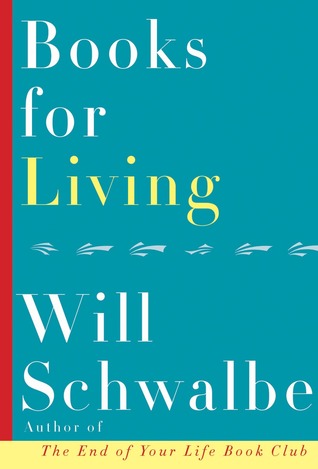
Books for Living by Will Schwalbe

For Will Schwalbe reading can be to escape, to learn, to explore a new culture or idea, for comfort or for any and all reasons. In this book Schwalbe discusses some books that made an impact on him whether for a profound reason or just because they remind him of a good time in his life. Reading can connect you with people - both real and fictional. As Schwalbe says, "...there's one question I think we should ask of one another a lot more often, and that's 'What are you reading?'" (p. 15). Reading can open doors we might not have explored or found otherwise. I had read some of the books Schwalbe discusses, but there were quite a few he inspired me to add to my ever-growing "to read" list. For anyone who is a reader this is a book for you - it's a quick, but profound read. While I did like Schwalbe's previous book The End of Your Life Book Club, I like this one even more. 

It's too long to quote here, but I LOVED the chapter on 1984and his comparisons to our current cell phone/social media addiction. My synopsis - put down your phone/tablet/laptop and pick up a book to read.

When in French by Lauren Collins

When in French by Lauren Collins

Ugh. I had heard really good things about this book, but I couldn't even get through the second chapter. I really wanted to like it because the author is from Wilmington, NC, which is where my family is from, but it was terrible writing. She jumped from topic to topic within the same page. It was very hard to follow and just all over the place. Don't waste your time on this one.

The Carolina Table by Randall Kenan

The Carolina Table: North Carolina writers on food by Randall Kenan, ed.

As Randall Kenan says in the introduction to The Carolina Table, "This is the story of the Tar Heel state through food." (p.7) A collection of essays centering around Southern food, food memories, and how food continues to shape the cultural experience of the South today. As with any collection of essays by different authors, there are some I liked more than others and some I could more personally relate to, but overall it is a great collection of stories about Southern food. It's a pretty quick read and I liked that the editor divided the stories into sections - Someone's in the Kitchen, Carolina Flavor, Adventures in Eating, and Traditions. Definitely a must-read for any NC foodies.

A quote I really liked:

"One time when we all went out for bagels in Chapel Hill, she [Lee Smith's mother] said, 'This may taste good to someone who has never eaten a biscuit.' Another thing she used to say is, 'No matter what is wrong with you, a sausage biscuit will make you feel a whole lot better.' I agree..." (p.47)

Ditch the City and Go Country by Alissa Morris

Ditch the City and Go Country by Alissa Morris

When Alissa Hessler and her husband moved from Seattle to rural Maine it was a hard adjustment for her. Because it took her years to learn better ways to transition from the city life to country life, she decided to start a website, Urban Exodus, for ex-city dwellers who were also moving into the country life to share her tips and connect with other former-city-now-country dwellers. While this book isn't super long, Hessler is really thorough in covering all the aspects of moving from the city life to the country life. She goes over things like how to make a living, what to look for in a new property/farm, how to grow a successful garden, raise livestock, enjoy the seasons, etc. Illustrated with beautiful photographs and she also includes recipes and lots of other helpful tips. Overall, a unique and helpful book if you're looking to escape the hustle and bustle of city life for the simpler country life.


Rise by Cara Brookins

Rise: how a house built a family by Cara Brookins

After having 4 kids and 3 failed marriages, with the last 2 marriages being abusive, Cara Brookins family has been through the ringer. On a Thanksgiving getaway to a cabin with her kids Cara is inspired to build a new house for them on the cheap - meaning they literally build it themselves. Once back home she finds the perfect lot and secures a bank loan for the house, but they only have 9 months to complete it. Rise alternates between Cara and her kids building their dream house and stories of the terror they lived in during and after her marriage to Adam (husband #2 who turned out to be violently schizophrenic). Building the house gave Cara and her kids the confidence they needed to move on after her violent marriages. While their story is inspiring, I didn't love the writing. There were some really weird parts with a spirit/guru/something that she would "see" when she would meditate when trying to go to sleep - that just felt really random and weird. Also, it's hard to understand how she could subject her kids to not one but two abusive and violent marriages. Overall, it wasn't as good as I hoped it would be.

Pure Heart by Troylyn Ball

Pure Heart: a spirited tale of grace, grit, and whiskey by Troy Ball

Troy Ball grew up in Texas and was a Texas girl through and through. When she met her husband and they started their family everything seemed to be falling into place. But, both of their sons has severe special needs and it was a long time before doctors could even figure out what was wrong. Troy devoted herself to her son's care, but still managed to start several businesses along the way. Troy was an entrepreneur at heart and learned how to be a great salesperson from her father. Austin, TX is one of the worst places to live if you have allergies and her sons both had breathing issues, so the family decided to move to Asheville, NC. In Asheville is where Troy met a few mountain men who had family histories brewing local moonshine. She realized there was a gap in the market - no local, legal moonshine and that's how Troy & Sons Platinum whiskey was born. There were a lot of struggles, both personally and professionally, along the way, but Troy persevered. She became the "first woman licensed in the state of North Carolina to distill hard liquor, and only the fourth woman licensed in the entire United States." (p. 176) This is a story about family, both biological and the one you create, hard work, and how when those two things come together amazing things can happen. 

I wasn't familiar with Troy & Sons before this, but her story is so amazing and unique that I will have to check it out now. Even if you're not a big drinker this is an uplifting and unique story that you won't want to miss.


The Stranger in the Woods by Michael Finkel

The Stranger in the Woods: the extraordinary story of the last true hermit by Michael Finkel

This is one of those books that proves the axiom "truth is stranger than fiction." If this were a fictional story it would be completely unbelievable. For 27 years cabins around North Pond in Albion, Maine were routinely burglarized. Locals called the burglar the North Pond Hermit and he mostly stole food, batteries, books, and other small-scale supplies. No one thought it was the same person burglarizing for 27 years, but when Christopher Knight is caught in 2013 he confesses to upwards of 40 break-ins per year for the past 27 years. At 20 years old Knight just walked into the wilderness of Maine for no clear reason other than he wanted to be alone in the quiet of the woods. He survived by stealing everything he needed from food to clothes to shelter from seasonal cabins and a nearby camp. He only encountered humans on two occasions and never called his family or left the woods except for the break-ins. After he is arrested Michael Finkel manages to create a rapport with him and begins writing and visiting him which eventually leads to this book. Knight doesn't really even want to tell his story, if he could have his way he would go back into the woods again. He knew the stealing was wrong and never tries to justify it, but he truly enjoyed living a life of solitude in the Maine woods. Finkel does an excellent job of telling Knight's story from Knight's own perspective, as well as the perspectives of locals who were regularly burglarized. Finkel intersperses facts about solitude and hermits throughout Knight's story. Overall, a fascinating book that I just blew through in the course of a day at the beach.

Some quotes I really liked:

"According to more than a dozen studies conducted around the world, Knight's camp - an oasis of natural quiet - may have been the ideal setting to encourage maximum brain function. These studies, examining the difference between living in a calm place and existing amid commotion, all arrived at the same conclusion: noise and distraction are toxic...The body responds immediately, even during sleep. People who live in cities experience chronically elevated levels of stress hormone. These hormones, especially cortisol, increase one's blood pressure, contributing to heart disease and cellular damage. Noise harms your body and boils your brain." (p. 113)

"I began asking cabin owners - and, later, many others - to estimate the longest time they'd ever spend without human interaction. By this I meant not seeing anyone or communicating in any way, including phone, e-mail, or text messages. Just time by one's self, unconnected, though reading or listening to the radio or watching TV alone was okay. Nine out of ten people, often after a contemplative pause, realized that they had never passed a single day in solitude. Usually it was no more than a handful of waking hours. My father has lived seventy-three years but hasn't tried a dozen hours alone. I once embarked on a three-day solo wilderness trip but encountered a pair of hikers and stopped to chat, so my record is around forty-eight hours. A few accomplished explorers I know have gone a week. To meet someone who's finished a month would be extraordinary. Chris Knight, with his thousands upon thousands of days alone, was an unfathomable outlier." (p. 131-2)

"A large majority of men, and twenty-five percent of women, a University of Virginia study found, would rather subject themselves to mild electric shocks than do nothing but sit quietly with their thoughts for fifteen minutes. Unless you are a trained meditator, the study's authors concluded, the 'mind does not like to be alone with itself.'" (p. 136)

"He left because the world is not made to accommodate people like him. He was never happy in his youth - not in high school, not with a job, not being around other people. It made him feel constantly nervous. There was no place for him, and instead of suffering further, he escaped. It wasn't so much a protest as a quest; he was like a refugee from the human race. The forest offered him shelter." (p. 182)

Thursday, August 3, 2017

July 2017 Reviews

Continuing with the summer of non-fiction, here is what I read in July:

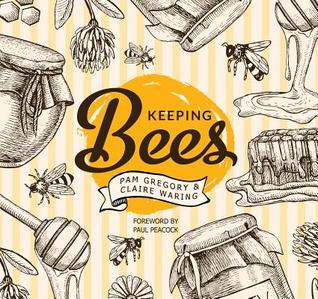
Keeping Bees by Pam Gregory

Keeping Bees by Pam Gregory & Claire Waring

This is a good introduction to keeping bees. There are chapters about bees and beekeeping, what keeping bees entails, the beekeeping year, harvesting honey, pests and diseases, and going further. While the later chapters were a bit more advanced and were somewhat over my head, I think this is a good beginning book. There are LOTS of full color pictures and illustrations that are very helpful. I find that with every book I read about beekeeping I learn a few more things that will help me with my bees. The only downside is that the authors are in the UK, so some of the things that are discussed don't apply in the US and that could sometimes be confusing. But, I did learn some new things and overall it was a good beekeeping book.


Pancakes in Paris by Craig Carlson

Pancakes in Paris by Craig Carlson

Craig Carlson was always fascinated by France as a child. He did not have a great family life with a mentally ill mother and alcoholic, womanizing father. He took French in high school and caught on to the language quickly and when in college he had the opportunity to study abroad in France. That was when he fell in love with Paris and vowed to live there one day. The only thing he missed from America while living in Paris was American diner breakfast food. In his 30's Craig decided to open Breakfast in America, an American diner located in Paris, despite the fact that he had no experience working in or running a restaurant. After jumping through the many hoops to open a business in Paris he opened BIA in 2003. A few years later in 2006 BIA #2 opened. Both restaurants did very well and received a lot of press and media attention. Craig fulfilled his dream of opening Breakfast in America in Paris and along the way made some great friends and also fell in love.

When you read about Craig's terrible family you can't help but root for him and hope that he's successful with his crazy idea. I liked Craig's back story and how everything came together with BIA for him, but it was really hard to read about how terrible some aspects of French culture are. While known for lots of vacation time, benefits, and a maximum 35 hour work week, it is also unbelievably difficult to fire an employee and the employer is ALWAYS at fault - Craig had countless lawsuits from employees and it seemed like that was pretty much the norm. I honestly don't know why or how he continued his business after all the lawsuits and employee issues. That really put a damper on the book overall for me. But, I was glad that Craig realized his dream and was successful despite all the roadblocks!


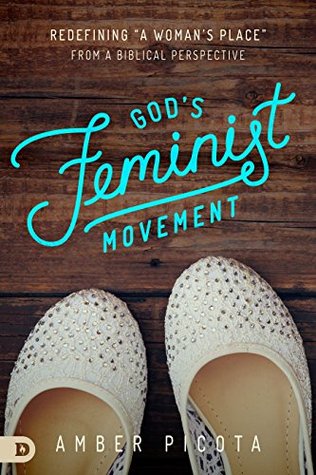
God's Feminist Movement by Amber Picota

God's Feminist Movement by Amber Picota

I definitely consider myself a Christian feminist, but sometimes books on the subject can be a let down. Not this one! Picota does a great job of exploring what she calls God's Feminist Movement and backs it up with interpretations of scripture that is often taken out of context or used to keep women out of leadership. She gives her own personal stories and stories of others to flesh out her points, but I was most impressed with the hermeneutics. She explains the interpretation fully, but also in a way that someone who is not a Biblical scholar could understand - and that is not easy to do. One of her points that I really appreciated was that often people don't dig into the Bible for themselves, they just believe whatever they've been taught and that could be wrong. She really encourages everyone to dig into the Bible and make your own conclusions, but the Bible won't contradict itself, so if something seems to contradict there is more digging to find out the original context and meaning. Overall, a great book with a wonderful message. 

Some quotes I really liked:

"You are not an animal, driven by instinct. Men are not animals, and it is about time we as women and mothers stop raising up our boys believing the lie that they don't have the power to take their thoughts captive and submit them to the obedience of Christ Jesus (see 2 Cor. 10:5). We cannot take the responsibility upon ourselves that we have the power to stop other people from sinning." (p. 87)

"For too long Christians have simply rammed abstinence down people's throats without even thinking twice about empowering them with the knowledge of freedom by helping them understand their worth and value to God." (p. 117)

"Sometimes I felt that I was wrestling with my own self. On the one hand, all I wanted was to be a quiet, meek, submissive Christian wife. And on the other hand, I had differing opinions than my husband. I had ideas. I had dreams. I had goals. The very painful truth is that in many Christian circles, women like me are labeled 'Jezebels' or 'rebellious.' Women like me who are strong and bold are often painted in a villainous light." (p. 134-5)

[During marital counseling] "Once we identified that we both were people with control issues, we did what any logical Christians would do: we tried to break my dominant little spirit. Not Rene's...mine. Because when a man has control issues, for some reason, much of the Christian community does not seem to have a problem with it. It's perceived as normal...So that's all there was to it. I just needed to put on my big girl britches, find a way to break my strong spirit, shut my brain off, and submit. I felt like a train was coming and I was preparing to let it hit me." (p. 137-8)


The 15 by Anthony Sadler

The 15:17 to Paris by Anthony Sadler, Alex Skarlatos, and Spencer Stone

I was so excited to read more about the heroic actions of 3 friends who stopped a terrorist attack on a Paris train, but this book was a big letdown. I should have heeded the other Goodreads reviews because it was very poorly written and very choppy. I also found a few obvious spelling errors that didn't get caught before publication. The book is divided into 3 sections - one for each man, telling his side of the story. I thought it was going to be more of the guys telling their version of the event because the book reiterates that each person experienced the event differently. Honestly, I think you could understand what happened better from watching the guys doing TV interviews, the book barely touches on the actual terrorist event and how they stopped it. I was hoping for more especially the guys together going over what happened and how they each reacted. Overall, it was disappointing.


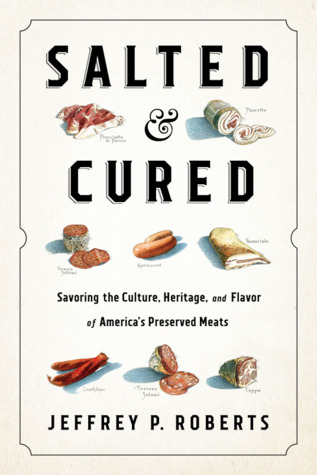
Salted and Cured by Jeffrey P. Roberts

Salted & Cured: Savoring the Culture, Heritage, and Flavor of America's Preserved Meats by Jeffrey P. Roberts

I saw this book at the Mother Earth News Fair and decided to buy it. Jeffery Roberts explores the history of Salted & Cured meats in America. The first 2 chapters focus on the history of cured meats and meat production in America, then the rest of the chapters focus on a geographic area and how that area's culture (immigrant populations, weather, etc.) shaped the cured meats that were produced there. It's really nice to see so many businesses highlighted in this book that have been curing meat here for generations and still maintaining a high standard of both work and quality meat. Roberts also discusses some of the issues facing small, artisan producers of smoked, cured, and fermented products from USDA inspectors who don't always understand how these products are made. At the end of the book there is a list of all the businesses featured in the book and also a glossary in case you didn't know every type of cured meat that exists. Overall, a very interesting and unique book about an important part of America's food history and culture.

Some quotes I liked:

"The 2011 Food Safety Modernization Act added layers of new regulations, review, monitoring, and inspection. The new law established a wide range of standards, many of which impacted farmers, food producers of all sizes, and ultimately customers, who pay for increased business expenses. In some instances small artisan food producers, including those of cured meats, closed shop because they could not afford the costs to retrofit an old facility or build a new building." (p. 34)

"Cured meat was always about survival, ways to ensure we made it through winter or hard times. Life depended on the oral passage of skills from one generation to the next, a communication and transfer of knowledge and culture. For most Americans today survival isn't the issue; we are able to choose what, when, and how we eat. So in addition to the loss of skills, we no longer feel, appreciate, or understand the cultural context." (p. 92)

"The partners [of Salumeria Biellese] faced a disastrous situation: The USDA would not back down on its regulations, and Marc, Paul, and Fouad would not change the company's long-established methods of making its salami. The solution came about because of their stubbornness, unshakable belief in their products, and a $100,000 investment. They found a scientist cited in the USDA's literature whom they hired to run tests on the salami. In the wildest experiment imaginable, he injected the salami with pure Listeria monocytogenes and E.coli and then aged them following the Biellese model. The result, no dangerous bacteria present at all! The USDA accepted the findings, and the partners were back in business." (p. 118)

"In his book It's a Long Road to a Tomato, Keith Stewart relates his experiences as a longtime Union Square farmer and his appreciation of the deep connections he enjoys with customers. Whether it's someone on food stamps, a hipster couple, a Gramercy chef, or a neighborhood resident, all share a common bond, a democratic link around Keith's tomatoes and other fresh produce." (p. 133)


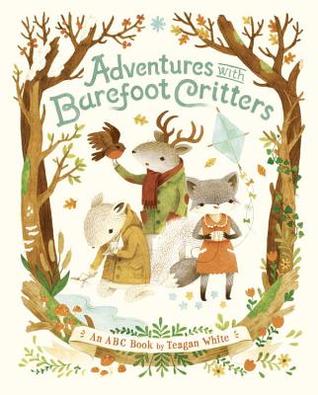
Adventures with Barefoot Critters by Teagan White

Adventures With Barefoot Critters by Teagan White (Children's Picture Book)

I just happened to see this book when checking in at work and was drawn to the beautiful illustrations. The Barefoot Critters go through the alphabet in a unique way and also include all the months of year and seasons. I just LOVE the beautiful illustrations and also the little mouse doing something cute in each picture! I also love that they include collecting honey and exploring in nature. The next book in this series will focus on counting. A beautiful picture book with a unique look at the alphabet with a group of cute critters.


The Nordic Theory of Everything by Anu  Partanen

The Nordic Theory of Everything by Anu Partanen

When Anu Partanen meets an American man and falls in love she eventually decides to move to America to marry him. Once here Anu is overwhelmed by how different everyday things are from her native Finland. Finding health insurance, doing taxes, going to the DMV are all ordeals that take her forever to understand and figure out. In The Nordic Theory of Everything she explores the differences between Finland and other Nordic countries and the US in major areas like education, healthcare, and business. While Anu loves her new country, she does think America could be better off if it were to have a more Nordic culture and attitude. 

It was a very interesting and unique book, but I was hoping for more of her personal story. This does have her personal and other stories added to illustrate points, but overall it's more of a comparison of country policies. So parts were a little bogged down in detail and history, but it was still interesting.

Some quotes I really liked:

"'In the United States there is both a moral, and to some extent legal, expectation that parents provide for their children even after the children have come of age,' Trägårdh said. 'But this expectation also means that parents have power over their children.'...[the Nordic theory of love] creates relationships that are much freer of resentment, guilt, and baggage." (p. 52)

"Finns still see the basic goal of public education as preparing children not for standardized tests, not for college applications, and not for specific jobs or industries, but more generally for life, although a life that takes place in the twenty-first century. Schools aim to graduate well-rounded human beings who are creative as well as technically skilled. To this end, physical education , arts, and crafts remain crucial elements of the permanent curriculum, alongside more academic subjects. All students - girls and boys - must even study carpentry, sewing, and cooking." (p. 141)

"During the last year that I lived in Finland and worked a regular full-time job, as a magazine editor, I made the equivalent of $67,130 - well above the median Finnish salary. After some standard deductions my taxable income was $61,990. So how much did I pay in taxes? The figure came to $18,973 in national and municipal taxes, or 30.6 percent. Before drawing a conclusion about that figure, keep in mind I didn't have much else to pay beyond that...Here are some of the things that paying my Finnish taxes bought me: smoothly functioning and comprehensive health insurance, a full year of partially paid disability leave, nearly a full year of paid parental leave for each child and a smaller monthly benefit for an additional two years (should I or the father of my child choose to stay home longer with our child), affordable high-quality day care, one of the world's best K-12 education systems, free college, and free graduate school. My taxes in Finland were not used to hand out money to some lazy moochers living on welfare; instead they were used to pay for high-quality services for me. As far as I was concerned, it was a bargain." (p. 235-6)

"When the Finnish government sends every single Finnish family in the country a payment of more than a hundred dollars every month for each child, the families are clearly aware of the support they are receiving. But when the United States offers families with children the Earned Income Tax Credit - if they qualify - or the Child and Dependent Care Tax Credit, many recipients fail to understand that they are receiving a direct cash benefit from the government." (p. 239)

"Nordic workers often prefer to take time over money, because at a certain point, the secret Nordic people know is that time off buys you a better quality of life than more cash. Those four or five glorious weeks of paid summer vacations that people in the Nordic countries enjoy really just mean that the employer is spreading eleven months of pay over twelve." (p. 294)


Year of No Clutter by Eve O. Schaub

Year of No Clutter by Eve O. Schaub

Eve Schaub has always been a collector and always had a hard time separating her memories from physical objects. But, she knows she has a problem when the biggest room in her house morphs into the Hell Room. Literally a room crammed with everything imaginable that she doesn't want to deal with in the moment. She decides that over the course of a year she will sort through, throw away, donate, etc. and finally deal with the Hell Room. What I liked the most about this book is Eve's honesty about her love of things and stuff. She doesn't go the Marie Kando route of extreme minimalism, but honors herself and her collections and love of things. By the end of the year the Hell Room is not perfect and it's not 100% done, but more than just that room has been changed. And on her website you can see a video before and after of the Hell Room: https://eveschaub.com/category/year-o.... This is a great, honest take on dealing with clutter and stuff from someone who is not trying to guilt you into throwing away all your stuff.

A quote I really liked:

"There's nothing wrong with keeping things other people deem strange because it's not the things you keep that make you a hoarder. What makes you a hoarder is whether it takes over." (p.167)


It's a Long Road to a Tomato by Keith Stewart

It's a Long Road to a Tomato by Keith Stewart

This book was mentioned in another book I read recently, Salted & Cured, and it sounded interesting so I put it on hold. Keith Stewart was working in New York City at a consulting firm and as he approached middle age he felt like there had to be a better way to live. He and his future wife cash in their retirement savings to buy 88 acres in upstate New York and start a small organic farm. Twenty years later he's still happy with his decision to go from corporate drone to farmer. It's a Long Road to a Tomato is a collection of essays from Stewart about everything from his personal farm journey to GMO's and the decline of small farms in America and pretty much everything in between. While many of his essays are interesting, I guess about half way through it started to feel kind of repetitive to me. I did like it, but it wasn't as good as I was hoping it would be.

Thursday, June 29, 2017

June 2017 Cookbooks

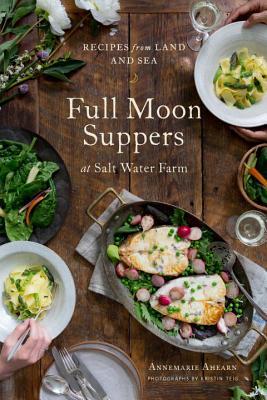
Full Moon Suppers at Salt Water Farm by Annemarie Ahearn

Full Moon Suppers at Salt Water Farm by Annemarie Ahern

When Annemarie Ahearn was 18 her parents fulfilled a lifelong dream when they bought a run-down farm on the coast of Maine. At first Annemarie thought her parents were crazy, but soon she came to love the small town where they spent their summers on the farm. Soon she decided to live there full time and start a farm and cooking school on her parent's farm. Soon she was hosting full moon suppers on the full moon of each month sourcing local and seasonal ingredients. This book is a collection of recipes from those monthly dinners. Each chapter describes that month's full moon and what food/ingredients are in season at that time before the recipes. While I love the premise of the book and what Annemarie did with her parent's farm, there just weren't a lot of recipes I wanted to try. But, it's still a unique cookbook with lots of beautiful photographs of the food and the farm.


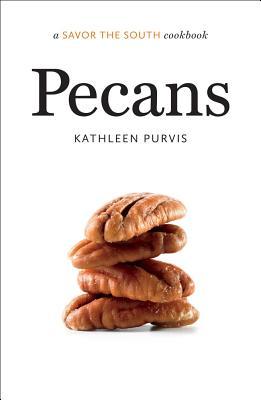
Pecans by Kathleen Purvis

Pecans by Kathleen Purvis

I love the Savor the South cookbooks and somehow I had missed this one even though I think it was the first in the series. I haven't always loved nuts, but in the last few years I have come to really like pecans so I decided to check out this book. Purvis gives a great introduction with the history of pecans in the South, as well as her personal history with pecans. The book is ordered like many cookbooks with sections for appetizers, main dishes, sides, and desserts. Whether you pronounce them "pee-cans" or "pah-cahns" pecans are a definitive Southern food. There were definitely a few recipes I'd like to try.


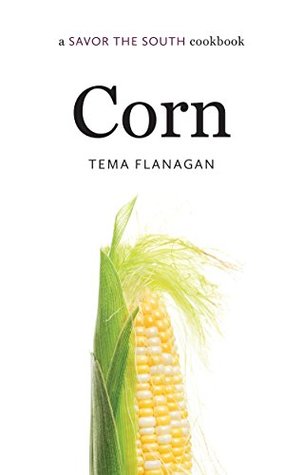
Corn by Tema Flanagan

Corn by Tema Flanagan

This is one of the newest Savor the South cookbooks and I might end up buying this one! Corn is such a versatile ingredient and definitely a signature food of the South. Flanagan gives a great introduction with the history of corn and how it is used in Southern cooking. She also gives some tips on how to source the best quality corn and corn products. Then she organizes the recipes by the type of corn used - on and off the cob, dried and ground, nixtamalized and popped, and mashed and fermented. It is a unique way to organize a cookbook, but really works to show just how versatile and prolific corn is for Southern cooking. There are LOTS of recipes I'd like to try in this one!


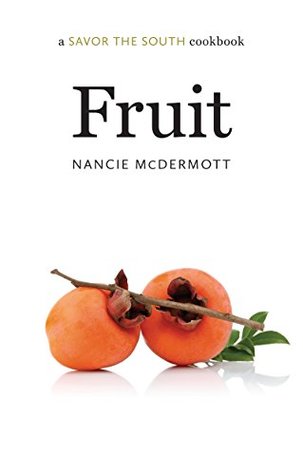
Fruit by Nancie McDermott

Fruit by Nancie McDermott

This is one of the newest Savor the South cookbooks. I liked that McDermott didn't just focus on one fruit, but rather on 12 fruits that are either native to the South (Mayhaws, Pawpaws) or have become symbolic of Southern food (Watermelon, Figs). Each fruit gets its own small introduction about it's history and place in Southern cuisine followed by a few recipes. Overall, I liked how the book was put together, but there weren't a ton of recipes I wanted to try.

June 2017 Reviews

Last year I decided to read all non-fiction over the summer and I think I'll make that a new annual tradition. Here is the start of 2017 summer of non-fiction!

Everything That Remains by Joshua Fields Millburn

Everything That Remains by Joshua Fields Millburn and Ryan Nicodemus

When a friend suggested the Minimalists documentary on Netflix I thought Joshua and Ryan seemed really interesting and fun, even though I didn't see myself as a minimalist. I read their earlier book Minimalism: live a meaningful life first and liked it, but thought it was a little didactic. This book is more what I was hoping for - a more personal story about how Joshua got into minimalism and how it changed his life. His story was really interesting, but I was still curious to know more about how he supported himself after quitting his corporate job. I also thought that he and Ryan deciding kind of on a whim to move out to Colorado would be much harder for someone with a family to do. Joshua wasn't married or dating anyone and both of his parents were dead, so he really wasn't tied down in any way. But, this is definitely making me think about some things. Definitely worth reading and I'll be interested in future books by The Minimalists.

Some quotes I really liked:

"I understand that Ryan's and my (or any other successful person's) seemingly rapid rise from obscurity might seemrapid - at least from the other side of the glowing rectangle. But what you see is only the end result. Before your favorite rock stars were headlining festivals and stadiums around the world, they had to earn the calluses on their fingertips. What you perceive as overnight success is, in fact, everything after- after the tedium of repeated failures, after the monotony of writing twelve hours a day, after drudging through the drudgery, after adding value to one, two, ten, hundreds, and then thousands of people's lives. What you see is the culmination of years of hard and steady work. There's nothing overnight about it." (p. 137)

"That 'downtime' is a misnomer. Human beings used to have precious interstitial zones in which we could find momentary solace: airports, checkout lines, waiting rooms, and other places were transient sanctuaries in which we could bask in reverie. This is no longer the case. I now notice everyone on their phones during these precious moments. They are attempting to be more productive or interactive, but I've discovered that stopping and thinking during these moments is more productive than fiddling with my phone." (p. 143-4)


Freedom by Jaycee Dugard

Freedom: My Book of Firsts by Jaycee Dugard

I was really looking forward to reading this because I liked Dugard's first book A Stolen Life even though it was hard to read. But, this one was kind of a let down. It seemed kind of simplistic and all over the place and the tone was kind of subdued. I was hoping for more of a chronological account of all her "firsts" after she was rescued and reunited with her family. It does seem like she has a good life and has found a way to balance her "fame" and creating a normal life for her and her daughters. Overall, it was just OK - not bad, but I didn't love it.


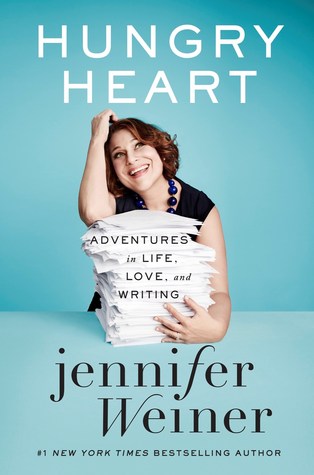
Hungry Heart by Jennifer Weiner

Hungry Heart: Adventures in Life, Love, and Writing by Jennifer Weiner

I have always loved Jennifer Weiner's novels, so I was excited to read her memoir. In a series of stories she explores everything from serious issues like her dysfunctional family, her struggles with weight, and a miscarriage to more light-hearted stories about her love of the Miss America pageant and The Bachelor. While Jennifer may have struggled in high school and longed to be accepted by her peers, today she sounds like the perfect BFF - smart and funny and willing to share all her secrets with you. She reveals how hard it was for her after her father left their family and started a downward spiral that left illegitimate children, debt, and lawsuits in his wake. She also writes about how she worked even harder to never follow in her father's footsteps - to create a career she loved, to be successful, and to love her children and create a healthy family. This is one of those books that was so good you wish it was longer!


American Girls by Nancy Jo Sales

American Girls: Social Media and the Secret Lives of Teenagers by Nancy Jo Sales

This book was a lot to take in and is pretty disturbing and depressing. As the author says in the conclusion, "Being a teenager has never been easy. Faces and bodies are changing, hormone raging, emotions all over the place. Imagine adding to that a constant pressure to take pictures of yourself and look 'hot' in those pictures and have people like them. Imagine getting a dick pic from a boy, maybe before you've ever held a boy's hand. Or being asked for nudes at a time when you're just trying to feel comfortable in your changing body, and not always succeeding. Imagine developing a crush on someone, who seems to like you back, only to find out that he's been 'talking' to other girls, online, even at the same time you thought you were having an intimate conversation." (p.371) - this is what this book deals with. I liked that the author organized the book by ages - each chapter focuses on a particular age from age 13 to 19 and how they use social media and how it affects their life. And it seems like it mostly affects them negatively, yet they are also so drawn to it and addicted to it. While there was a lot of eye-opening and disturbing information presented, the basic gist of the book is that teens and kids are really sexualized from a very young age, social media has hampered real connections, and porn has fucked EVERYONE up. My main complaint about this book is that each chapter was basically a remix of the previous chapter just with older kids being interviewed. Although, I personally found the younger (13 & 14) and older (18 & 19) chapters were worse. The younger because they are SO YOUNG and dealing with sexual harassment every single day and the older kids because college campuses + drinking = lots of rape. Overall, very disturbing and depressing. I'm so thankful that I grew up before social media and cell phones.

Some quotes I really liked:

"In 1991, Naomi Wolf's The Beauty Myth: How Images of Beauty Are Used Against Women amplified this theme. Wolf saw in the increased pressure for women to be beautiful a reaction against feminism. She contended that as women achieved more social and political power, the demands of 'beauty' worked to undermine women's empowerment. 'The more legal and material hindrances women have broken through, the more strictly and heavily and cruelly images of female beauty have come to weigh upon us,' she wrote. 'During the past decade, women breached the power structure; meanwhile, eating disorders rose exponentially and cosmetic surgery became the fastest growing specialty...pornography became the main media channel...and thirty-three thousand American women told researchers that they would rather lose ten to fifteen pounds than achieve any other goal...More women have more money and power and scope and legal recognition than we have ever had before; but in terms of how we feel about ourselves physically, we may actually be worse off than our unliberated grandmothers.'" (p. 86)

"More than 220,000 cosmetic procedures were performed on patients ages thirteen to nineteen in 2013, and in that year plastic surgeons were noting that teenagers were saying they wanted to have 'something done' for a new reason - to look good in selfies." (p. 93)

"'Girls start out life now being immersed in princess culture,' says Rebecca Hains, author of The Princess Problem: Guiding Our Girls Through the Princess-Obsessed Years, referring to the obsession with princesses seen in little girls since the launch of Disney's multibillion-dollar line of princesses and princess toys in 2000. 'I think princess culture is part of the overall backlash against feminism,' says Hains. 'This obsession with princesses is concurrent with a cultural pendulum swing that happened when the Republicans got back power in the 2000s and [in the 2010s] launched the War on Women,' meaning efforts to roll back reproductive rights and restrict women's rights in other areas...'What girls learn from princess culture is that how they look is very, very important. If you're hooked on external validation at age four, that plays into self-objectification and self-sexualization.'" (p. 98)

"In 2005, Newsweek ran a story headlined 'Bad Girls Go Wild,' which raised an alarm about an alleged increase in violence among girls. Citing a new study from the FBI, the magazine reported that the number of adolescent girls arrested for aggravated assault had seen a shocking rise over the last twenty years. Though the FBI had given no theories about the reason for this spike in violence, Newsweek blamed feminism. 'The women's movement,' said the magazine,'which explicitly encourages women to assert themselves like men, has unintentionally opened the door to girls' violent behavior.' But when the Justice Department looked into Newsweek's claims, in 2008, it found them to be based on a faulty analysis of data. Girls weren't becoming more violent, but they were being arrested and incarcerated more frequently for lesser offenses...It's worth considering whether the women's movement actually may have opened the door to, not more violent behavior among girls, but more policing of girls' behavior, as a form of backlash." (p. 152)

"'It's become a way for people to dismiss sexism,' says Laura Bates, talking about the evolution of the notion that 'girls are mean.'...Competitiveness is a difficult human trait. Bullying comes from all kinds of people. I don't believe it's some ingrained genetic trait in women or girls...In a world where there is such sexualization of women and oppression of women, it just feels like it's too easy to blame girls for meanness. And it's such a clever attempt to create a diversion. Why is it that everybody loves to talk about 'mean girls'? It's another attempt to stymie the feminist movement." (p. 168)

"And yet, despite the high numbers of girls experiencing sexual harassment in schools, only 12 percent said they ever reported it to an adult. 'Some researchers claim that sexual harassment is so common for girls that many fail to recognize it as sexual harassment when it happens,' said the AAUW report." (p. 273)

"Finally, I think girls need to read. Which they already do; but they need to read more. Early in this book I reported on my conversation with April Alliston, the Princeton professor who talked about how it was with the invention of the printing press that we first saw porn in its modern form. Porn was a reaction to women reading, to becoming more educated and informed. It was meant to degrade women and distract them from becoming educated, in the view of some historians, as a way to keep them from becoming empowered. And so for girls now to model themselves in the image of pornography, one could argue, is for them to embrace their own disempowerment. Girls need to put down their phones sometimes and pick up books." (p. 375)


Wild and Free by Jess Connolly

Wild and Free: a Hope-Filled Anthem for the Woman Who Feels She is Both Too Much and Not Enough by Jess Connolly and Hayley Morgan

I was really looking forward to reading this one since part of the subtitle is "for the woman who feels she is both too much and never enough." It's easy to feel that way as a Christian if you don't fit the stereotypical view of what a Christian woman is supposed to be like. Growing up in churches where feminism was the other f-word I can totally relate to feeling like I'm "too much" and our overall culture works hard to make sure women always feel like we are "never enough." But, I felt like the authors only skimmed the surface of this issue. Every chapter felt like it repeated itself by continuing to talk about how God made us wild and free and all the ways God Himself is wild and free in His creation and by loving us unconditionally. While I completely agree and would argue that the Church in fact often tries to tame our perceptions of God - especially for women, but nothing in this book really jumped out and made me feel connected to the authors or their message. Overall, I love the title and the idea behind the book, but was pretty disappointed.

One quote I did love:

"I see women believing and repeating the lie that motherhood is the highest calling for all women. Did you know that's nowhere in the Bible?" (p. 29) [But again that's easy for these authors to note because they both have 4 children. As a Christian who's childfree by choice it's been a very isolating choice, but I still don't regret my decision and would like to see more Christian women own their non-conformist choices.]


Unearthed by Alexandra Risen

Unearthed: Love, Acceptance, and Other Lessons From an Abandoned Garden by Alexandra Risen

Alexandra Risen's parents emigrated to Canada from the Ukraine after World War II. Her parents often fought and it wasn't a happy household to grow up in. Her one comfort and escape was the ravine behind her family home. Risen grew up loving the outdoors and hiking. When Risen and her husband see a house for sale with a huge abandoned garden, she knows she must rebuild the garden. At first it feels like a way to connect with her mother who's health is failing and has recently moved into a retirement home. Risen also wants the garden to be a connection for herself and her son. Her own mother loved gardening, but seemed incapable of including her children in her hobby. Risen wants a better relationship with her own son, but she also wants to instill in him the love of nature that she got from exploring as a child. The more they get into their garden the worse shape they realize it's in, but the more unique features they discover. I hate to even imagine how much money they poured into the garden, but after 10 years it's completely renovated and renewed. Working in the garden helped Risen work through her emotions about her parents and the strained relationship she had with them, but the garden also connected her even more with her husband and son. There are a few pictures on the inside cover pages, but I would have loved to see more pictures of the garden included.


Junk by Alison    Stewart

Junk: Digging Through America's Love Affair With Stuff by Alison Stewart

When Alison Stewart and her sister have to clean out their late parent's house to get it ready to sell they make short work of the main level - most things were in working order and could be donated and they each wanted to keep a few family mementos. But the basement was another story. After spending months of Saturdays working hard they had barely made a dent and Stewart knew it was time to get professional help. Sorting through her parent's basement and subsequently paying someone to help clean it out made Stewart think about junk - why do we keep so much stuff "just in case," the companies and TV shows that make a living from junk (selling it, organizing, hoarders, etc.), new uses for junk, and even embracing your junk. This is a really interesting and unique look at junk - however you define it, because there is not just one definition of junk. And you have the old saying, "one man's trash is another man's treasure." I think this is more than timely with the new popularity of minimalism and tiny houses in our culture today. One thing I found really interesting is the people she interviewed who were in the professional business of helping clean out other people's junk live much more minimally. Overall, a really interesting and unique book that really looks at every aspect of junk.

Two things I really liked - the Regeneration Station, a business in Asheville, NC that will come and collect good quality "junk" furniture and other things and then refurbishes them to sell at the Regeneration Station.

Repair Cafe - started in Amsterdam, but is now all over the world. Mostly a quarterly meeting with craftspeople of all types who volunteer their time to repair most anything - furniture, clothing, dolls, toys, light fixtures, etc.

Some quotes I really liked:

"Rats are a big problem in Portland. Apparently, it is so bad that one man in the neighborhood told the local news, 'They're like their own little gang. When I killed one...they pulled him back in there like it was like Saving Private Ryan or something.'" (p. 180)

"Wiens is part of the Right to Repair movement, an effort to pass strong legislation that would allow individual and independent repair shops to fix electronics. Many companies keep their manuals close to the vest and only allow them in the hands of dealers. A bizarre example has surfaced with farm tractors. Now there are John Deere tractors that are wildly computerized. If one of these tractors breaks down, a farmer can't really get in there and fix it himself. He has to have a Deere-approved repair person do it with certain parts and manuals only available to certain people...The Fair Repair bill put forth in two states in 2015, New York and Minnesota, would empower the average person or repair person to have access to the information and parts to be able to fix smartphones, computers, and yes, farm equipment. There is a precedent for a law like this passing. Automotive repair folks won the right to repair in 2012. Now that cars are borderline spaceships, for a while independent mechanics and owners who were handy with a wrench were being turned down when they requested manuals and parts to fix cars, based on the proprietary argument." (p. 250)


We Should All Be Feminists by Chimamanda Ngozi Adichie

We Should All Be Feminists by Chimamada Ngozi Adichie

I almost hate to mark this down as reading a "book" since it was more like a long pamphlet at only 48 pages and about the size of the old tiny Peter Rabbit books. I had heard a lot of hype about this book and since I 100% agree with the title I decided to check it out. It was disappointing in that it was so short and tiny - it only took me about 15 minutes to read it. But, it was also very basic and I was hoping for something more in depth. I think this could be good for someone who doesn't understand what feminism is to read, but I was definitely looking for more.


Lassoing the Sun by Mark   Woods

Lassoing the Sun: A Year in America's National Parks by Mark Woods

I was really excited to read this book, but it was kind of a gloomy read. When Mark Woods won a writing grant he decided to write a book about National Parks and visit a different one every month for a year. His family often visited National Parks when he was growing up and he had many fond memories of those trips. Right before his National Parks year starts he finds out that his mother is dying and that kind of took over the book. While I understand why his mother's death, family, and National Parks were all tied together for him, it really gave the book a sad tone. His visits to 12 National Parks was definitely interesting and he visited a wide variety of parks. While it wasn't exactly what I expected it did make me want to visit more National Parks and especially the ones out West.

A quote I really liked:

"More than anything, Mom's life made me think about what I wanted in my life. And I didn't want things. I wanted to dothings." (p. 265)

Monday, June 5, 2017

May 2017 Cookbooks

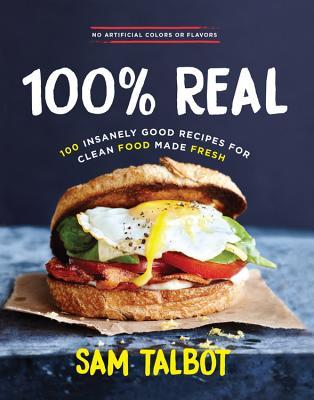
100% Real by Sam Talbot

100% Real: 100 insanely good recipes for clean food made fresh by Sam Talbot

Sam Talbot is a type 1 diabetic and he learned early on that he couldn't eat processed junk food and feel good. This cookbook focuses on recipes that reflect his food philosophy of real food - just cooking with high quality real, whole foods. He gives some tips on eating real food and also gives substitutions for some common staples. While some of the recipes are gluten free or vegan that's not the focus, but it is noted in the recipe. It's organized like most cookbooks by type of meal - breakfast, sandwiches and salads, proteins, vegetables, etc. There are lots of recipes I'd like to try. This is a great cookbook especially if you're new to whole food eating or trying to make some positive changes to your cooking.

May 2017 Reviews

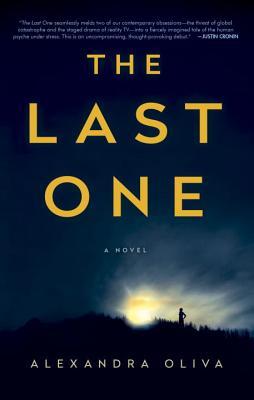
The Last One by Alexandra Oliva

The Last One by Alexandra Oliva

Zoo is a contestant on a survival reality TV show. Some of the show's challenges are group challenges and some are solo. While on a solo challenge Zoo's cameraman never shows back up, but she thinks it's part of the challenge that there are hidden cameras. But, the reality that Zoo doesn't know is that her cameraman is dead - a pandemic has hit the US and hundreds of thousands of people die. But, Zoo still thinks she is on the solo challenge. When she starts seeing some of the carnage she thinks it's just part of the show. After meeting Brennan, a teenager who's family all died, she finally realizes what has happened. Zoo's hope is that somehow against all odds her husband survived. Will she and Brennan make it back to her home? Will her husband still be alive? 

This is a really unique storyline and it was definitely a quick read. The beginning was a little slow, but once the story picked up you didn't want to put the book down. This is the author's first novel, so I'll be interested to see her future books.


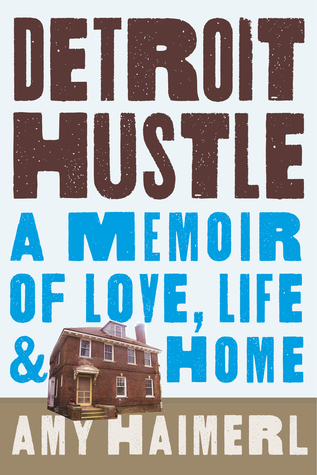
Detroit Hustle by Amy Haimerl

Detroit Hustle: a memoir of love, life, and home by Amy Haimerl

Amy Haimerl grew up in a small, working-class town in rural Colorado, so blue collar, hard scrabble towns are in her blood. While she and her husband are living in Red Hook Brooklyn where the cost of living is getting higher and higher, they decide to start looking for somewhere to live where they can afford to buy a house. They end up in Detroit. And while rumors of $1 houses in Detroit abound, there is a lot of red tape involved in buying and fixing up an abandoned house in Detroit...namely most banks won't give you a mortgage. After finding their dream home and cashing out their 401ks and borrowing money from family they spend two years rehabbing a historic home in Detroit. Amy writes about not only their adventure in renovating a home, but also some of the history and current issues with Detroit. She also delves into the whole issue of gentrification and what that can mean for both sides of the issue. Overall, an interesting book about how one couple realized their dream of home ownership and are helping to revitalize the city of Detroit.


Salt, Fat, Acid, Heat by Samin Nosrat

Salt, Fat, Acid, Heat by Samin Nosrat

This is a unique cookbook in that only about half of the book is recipes. The first half talks about the four main elements of cooking - Salt, Fat, Acid, and Heat. Each chapter explains that element and how it affects cooking. She also includes "test" recipes to test out each element and using that element when cooking. The second half of the book is full of recipes and then at the very end she creates some sample menus based on the recipes given. This is more like cooking school in book form. Michael Pollan writes the forward and I remember Samin being featured in his book Cooked when she teaches Pollan how to cook better. Overall, a very thorough and educational book about cooking. This is one you could refer back to time and again and learn something new each time.


The Alliance by Jolina Petersheim

The Alliance by Jolina Petersheim

When a plane crashes into a Mennonite community in rural Montana it signals a drastic change for this pacifist community. Moses Hughes, the pilot of the crashed plane, believes that an EMP or electromagnetic pulse is the cause of his plane crash and the loss of electricity in the area. But, as the Mennonite community only uses electricity for their commercial store, they are the most prepared people in the area - which means they quickly become a target for gangs of looters and thieves. Moses and two other Englishers (non-Mennonites) work with the Mennonites to try to protect their community. 

While I liked the premise of the book, it was VERY obvious right from the start that a large focus of the book is the love triangle between Mennonites Leora and Jabil and the downed pilot Moses. It was also painfully obvious that Moses, like his Biblical namesake, was "sent" to lead the Mennonite community out of danger. There was also a very odd twist at the end relating to Leora's estranged father that really seemed crazy and did not fit with the rest of the book. But, it was still a quick read and I'll admit that I put myself on hold for the sequel since the ending definitely leaves you hanging. This is like the Hallmark movie channel version of a dystopian novel, which I would normally not like, but it did draw me in enough to keep reading and I do want to see what happens in the next book.


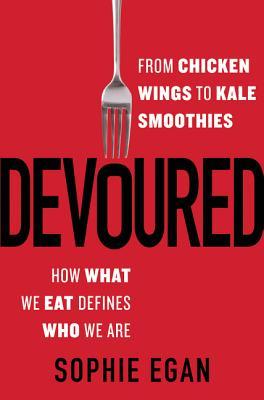
Devoured by Sophie Egan

Devoured: from chicken wings to kale smoothies how what we eat defines who we are by Sophie Egan

In Devoured Sophie Egan explores the deeper meaning behind what we choose to eat and why. What does is say about our country that only 26% of Americans eat breakfast everyday and 40% eat lunch at their desk so they can keep working? Egan explores not only how we eat, but some of the crazy things we eat like cereal that has more sugar than candy bars and things like the Doritos Locos Taco from Taco Bell. Egan explores 10 phenomena that illustrate what our food says about who we are as a culture. In the last chapter she gives her prescription for how we can create better food habits and culture - "Work less and savor more. Make it real and stir the pot." (p. 311). This is a very interesting look at America's food culture and habits and it really does say a lot about who we are both for good and bad. I liked that Egan shows her findings, but doesn't pass judgement about what we should or shouldn't be eating. She isn't telling us to give up sugar forever, but what she explores does shine a light on some bad habits that could be better. Overall, a great book with tons of eye-opening information. 

Here are some quotes I really liked:

"I was on a hike with a Swedish friend, and she was talking about how stunned she is by the amount of time people work in the United States...she asked me a simple question about the sheer number of hours we work: Why? She was absolutely dumbfounded when I explained: Putting in the time proves your value. She laughed at the idea and said, 'In Sweden, if you're working more than the hours absolutely mandatory and expected of you, people's reaction is, 'What's wrong with you that you couldn't get your work done in time?' ' In other words, it's an efficiency question - 'You're working late tonight? Oh, you must be slow.' I stopped in my tracks. Mind blown." (p. 27)

"When [consumers were asked] how they define a 'meal,' they describe a combination of foods, home-cooked and plated. This sounds about right to me too. But when he asks them the last time they had a meal like that, responses vary from 'a couple of weeks ago' to 'maybe Thanksgiving.' One of the fundamental themes of eating behavior is that there is a difference between what people say they want and what they actually eat. It's often the difference between intention and action, between goals and reality." (p. 29)

"Dinner has become a litmus test for family values in America. According to recent data from Gallup, 53 percent of American adults with children under the age of eighteen say their family eats dinner together at home six or seven nights a week. On average, families share 5.1 dinners together, down only slightly from 5.4 in 1997...I'll admit, this figure is higher than I would have given us credit for...But if you dig deeper into the family meal, it gets more interesting...It turns out that a good number of families eating dinner 'together' aren't eating the same thing. Family meals are following more of an a la carte model...More than half of families cook multiple meals or dishes to cater to each family member." (p. 97-8)

"...our food culture thrives on 'mass customization,' which sounds like an oxymoron but means taking existing processed foods and delivering them in individual-size portions that meet a wide range of specific demands. A cup of coffee made with a Keurig capsule costs about three times more than one made with supermarket grounds and a drip machine. That Keurig habit can add up to spending $400 more on coffee in a given year. Apparently the exact flavor we get from Keurig, made fresh at the precise moment we want it, is worth that much." (p. 103)

"...a far more prevalent, and equally puzzling, practice: Selling Absence. That is, how marketers convince us to buy foods such as fat-free milk, low-sodium pretzel sticks, and 100-calorie packs of cookies. What we are doing is purchasing a food not for the crazy reason that it contains worthwhile ingredients - but because of what an item lacks. Emily Green, a writer for the Los Angeles Times, has dubbed this genre of foods 'nonundelows,' because their labels being with 'non-,' 'un-,' 'de-' and 'low-.'" (p. 107)

"So when it comes to brunch, one way to think about its popularity is to ask what activity it is replacing. If people are sipping mimosas at a cafe with friends, what are they not doing on Sunday mornings? The answer: Brunch is secular church. Sunday service for the socially starved. Something for the nothings. Specifically, something soulful and restorative...in parts of the United States where people aren't as religious, the brunch gathering is the closest substitute for the experience of church: getting out of the house, marking the turn of the calendar, breaking bread together. Perhaps most important, Connor argues, it involves spending time with friends or family." (p. 145)


The Stars Are Fire by Anita Shreve

The Stars Are Fire by Anita Shreve

In October of 1947 after a long drought fires break out all along the Maine coast. Grace Holland and her husband Gene live 2 blocks from the ocean with their two children. When the fires break out Gene and some other men go try to create a firebreak to stop the fire from reaching their community. When the fire comes Grace and her children must huddle in the ocean to stay alive while they watch everything they own burn to the ground. Grace has no idea if her husband survived the fire or not, but she has to step up to care for her children. In short order Grace finds a place for them to stay, learns to drive, and gets a job. But months after the fire when her husband returns neither of them is the same. Grace has come to relish her independence and control over her own life and Gene is terribly burned and disfigured from the fire. While their marriage was never good, the stress of Gene's injuries really brings out the worst in him and he takes it out on Grace and their children. Grace found strength within herself to rebuild her life after the fire, but can she find the strength to leave her abusive marriage and start over yet again. Grace finds that her experience has irrevocably changed her and even if she wanted to she can never go back to who she was before the fire.

A beautifully written and haunting novel about finding the strength and resilience to start over.


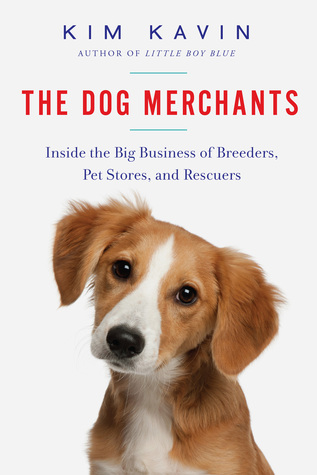
The Dog Merchants by Kim Kavin

The Dog Merchants: inside the big business of breeders, pet stores, and rescuers by Kim Kavin

I remembered reading and liking Kim Kavin's previous book Little Boy Blue about her personal story with adopting a dog who was transported from a high-kill shelter in the South to her home state of New Jersey. In The Dog Merchants Kavin takes on breeders. Is there such a thing as a "responsible" breeder? Can legislation stop puppy mills? Why does the Westminster dog show have such an impact on breeding and dog popularity? These are just a few of the questions that Kavin tackles in this book. I was truly amazed at how many large and small scale dog breeders are out there, but I was even more shocked by how much movies and the winners of the Westminster dog show affect the public opinion of certain breeds and the demand for them. While Kavin definitely shows examples of good, responsible breeders, the overall theme of the book is that dog breeding today (especially in the US) is driven by the "breed standards" created by breed clubs hoping for wins at Westminster and other dog shows. Any breed can make a great pet, but often breeders attach personality traits to their breeds that can apply to any pet if you put the time into training. At the very end she talks about what questions to ask when adopting or purchasing a dog - questions to ask yourself about how much time and money you're willing to invest in your pet and also questions for the shelter and/or breeder you're adopting/buying from. Definitely an interesting look at the dog industry through the lens of breeding.

Some quotes I really liked:

"'To me, breeds are like a designer handbag,' Woods writes. 'People like the way they look and the hype behind them. They buy into the stereotypes (Border Collies are the smartest, Labs are the most faithful, etc.) and then they match up how they see themselves with the marketing behind the dog.'" (p. 49)

"All dog lovers have come to know the terms 'puppy mill' and 'puppy farm' in recent years. They appear on the news and in fundraising letters from animal welfare groups showing horrific photographs and asking for donations to shut down the big-scale breeders who treat dogs badly...But what, exactly, is a puppy mill? There is no legal definition, even according to leading animal welfare groups." (p. 89)

"The notion that America's homeless dogs face an 'overpopulation problem' does not match up against the available statistics. Supply is not exceeding demand. Americans want about eight million dogs a year as new pets, while only about four million dogs are entering the shelters. America kills about two million of those shelter dogs each year while US dog lovers get their new pets from other sources. If just half the Americans already getting a dog went the shelter route, then statistically speaking, every cage in US animal control facilities could be emptied. Right now. And the United States would still need another four million dogs each year to meet demand. Americans want more pups than any other nation on the planet. In the United States, there are no extra dogs in terms of quantity. There are instead millions of throwaway dogs in terms of perceived quality." (p.140-1)

"'This is a very materialistic society. If you buy something and then you don't want it, you throw it out,' [Teri Goodman] says. 'I was walking on the street with Misty one day, and there was a woman who said a woman up the block wanted to get rid of her older dog. I said, 'What's the problem? Is the dog unhealthy? Is there a problem with finances?' And the woman said she was selling her house and moving to an apartment, and she had a garden and could let the dog out, but at the apartment, she'd have to walk her. The dog was fourteen. She'd had her from a puppy. Now that I've been in this senior dog world for a while, that's not an uncommon story. People think of a dog as a commodity, that you can get rid of it if it's inconvenient.'" (p. 203)

Goodreads Milestone


In May I posted my 1000th review on Goodreads! I joined Goodreads in August of 2007, so it took me almost 10 years to get there.