Tuesday, May 20, 2014

May 2014 Reviews

Strangers at My Door by Jonathan Wilson-Hartgrove

Strangers at My Door by Jonathan Wilson-Hartgrove

This was really an amazing book. Many people may be familiar with the scripture where Jesus says "I was hungry and you did not feed me, I was thirsty and you gave me nothing to drink. I was a stranger and you did not invite me in..." and the response is "Lord, when did we see you hungry or thirsty or a stranger? and He replied what you did not do for the least of these you did not do to me." (Matt. 25:40-45 paraphrased) Jonathan Wilson-Hartgrove and his wife Leah take these words to heart and decide to try to be Jesus to the least in their community. They move to the Walltown neighborhood in Durham, NC - an area of mostly African-Americans known for povery, drugs, and gang violence. They basically open up a hospitality house and will take in anyone in need. Anytime day or night their neighbors can call or stop by for help. They live with the very people they are trying to help. He is honest with the struggles and the failures, but there are also LOTS of success stories. Many of the people they help never had long-term, healthy relationships with anyone and fell easily into drugs or gangs and prison, but when they realize these people truly care for them and will be there for them many are able to completely turn their lives around. This was an inspiring read of a couple who truly took Jesus's words to heart and decided to try their best to be Jesus in their community for people who need it the most. Obviously, not everyone can do work like this, but I'm thankful there are people out there like the Wilson-Hartgroves who are giving their lives to really help people like Jesus did - meeting them where they are with love, compassion, and grace.

Blue Shoes and Happiness by Alexander McCall Smith

Blue Shoes and Happiness by Alexander McCall Smith (book club)

I don't know how this book was recommended for our book club since it's the 7th in the series, but it wasn't as bad as I thought it would be. I haven't read anything else in this series, but I guess these don't HAVE to be read in order to get the story. I'm sure there were things that would have made more sense if I'd read the previous 6 books, but I was able to understand everything going on. I'm not a fan of mysteries and I'm definitely not a fan of "cozy" mysteries, which is what I would classify this book. I'm just not much for cutesy, everything-works-out-in-the-end, and everybody-learns-an-important-life-lesson type books. I also didn't love that most of the detective "cases" were just either miscommunication or a misunderstanding. Even though I didn't love it, it was a quick, light read and I can see why it has such appeal for some people. Not a bad book, just not my reading style.

Sum It Up by Pat Summitt

Sum It Up by Pat Summitt (Books & Banter book club)

I remember hearing about Pat Summitt's Alzheimer's diagnosis when she announced it a few years ago, but I didn't really follow women's basketball and didn't really know who she was. The only reason I read this book is because of my book club, but I absolutely LOVED it. Pat Summitt was an incredible trailblazer, not just for women's basketball, but for women everywhere. I had no idea that until 1979 some states did not allow high school girls to play full-court basketball because they thought it would "damage" them somehow. Pat and other women in basketball fought to change those out-dated rules. Through her experience you see how Title IX started to change women's sports - how her teams went from being on the fringes to getting all the same perks and benefits that men's teams did. Her personal life was amazing too. She grew up with 3 older brothers and 1 younger sister and everyone in the family worked HARD all day, every day. She grew up knowing what hard work means and how important that is for success. While her father was not openly affectionate with his family he obviously loved his children and did everything for them. When Pat was in high school her school didn't offer a women's basketball team - so her family moved over the county line so she could go to a school with a women's team. That was unheard of at the time in the early 1970's. While I've never been into watching women's basketball my husband did get me interested in college basketball, so I think that helped me enjoy the book more. But, whatever your interest in basketball, Pat Summitt is a trailblazer for women and everyone should know who she is and what she's accomplished.

In speaking about feminism and the women's movement Pat describes watching the famous Battle of the Sexes tennis match between Billie Jean King and Bobby Riggs:
"Did I have grievances as a young woman? You bet. But protesting or sign carrying wasn't me - and wasn't going to get it done. Billie Jean, now there was an influential force. Was there anything more equalizing than her sheer toughness, her combination of smarts and muscle? I wanted to influence, and to change. But there was only one way I could see that changed things: winning. You changed things for women by winning." (p. 79)
The Girl You Left Behind by Jojo Moyes

The Girl You Left Behind by Jojo Moyes

The Girl You Left Behind follows the stories of two women separated by over 100 years. Sophie Lefevre's artist husband Edouard leaves her in 1916 France to fight in the first world war. Sophie clings to a painting Edouard did of her when they first met to remember him by. As the Germans begin to occupy Sophie's small town, a commander takes a liking to both Sophie and the painting. Can Sophie trust this German soldier to help reunite her with her husband? Or will her decision be her ruin? Fast forward over 100 years to Liv Halston living in modern day London. Her late husband bought a painting for her on their honeymoon that he said reminded him of Liv. After his death Liv remembers all the good times with her husband whenever she sees that painting in their house. But, one day she finds out that her painting was supposedly stolen from it's original owners by Germans in WWI and the family of the artist is trying to get the painting back. Liv can't bear the thought of giving away one of the only remaining things from her husband, so even though she can't really afford to she hires a lawyer to fight to keep the painting. As both sides try to find out what really happened to Sophie and the painting, now known as The Girl You Left Behind, during WWI and it's aftermath, Liv tries to figure out not only how to keep her beloved painting but also how to move on from her husband's death. Sophie and Liv's stories show the power of true love that can overcome any hardship.

I really like Jojo Moyes and it seems like every book she writes is even better than her last one. She is truly a gifted writer and as the storylines unfold you just can't put the book down - you have to keep reading to find out what happens to the characters. I would highly recommend this one!

Beatrix Potter's Gardening Life: The Plants and Places That Inspired the Classic Children's Tales
Beatrix Potter's Gardening Life by Marta McDowell

This was a really interesting book that explored Beatrix Potter's life through gardens. I knew Beatrix Potter had gardens and drew plants and flowers, as well as the animals that inspired her books. But, I had no idea just how much land Beatrix Potter bought over the course of her life. Apparently because of her much of the Lake District in Northern England has been preserved solely because Beatrix Potter bought every piece of property she could, then had all that property willed to the National Trust after her death. "Our access to the views, the lakes and hills, the cottages and pastures of Cumbria, are thanks in great part to Beatrix Potter and her Tales. The lakesides are not strewn with holiday cottages. The jagged vertebrae of the fells are free of vacation homes perched on unlikely heights. She left a legacy of land as well as words and pictures." (p. 143) And she also farmed much of the land she purchased, not because she needed the money, but because she felt like it was wasteful to have all that farmland and not actually farm it. The book is divided into 3 sections - Beatrix Potter, her life as a gardener, the year in Beatrix Potter's gardens, and visiting Beatrix Potter's gardens. I feel like the middle section was kind of redundant and could have easily been left out. The first and last sections are the more interesting, but the whole book is filled with beautiful photographs of the areas described, photographs of Beatrix and her family and friends, and of course lots of Beatrix Potters drawings and illustrations. If your a fan of Beatrix Potter and also like to garden this is THE book for you! I thought it was a really unique way to explore Beatrix Potter's life.

Lighthouse Island by Paulette Jiles

Lighthouse Island by Paulette Jiles

Nadia Stepan is born into a future, dystopian US, where after the population exploded and cities popped up on every available square inch of earth drought seized the land. Most animals are extinct, only a few crops can be grown, and water is issued by the quart. Nadia is abandoned by her parents at the age of 4 with only a scrap of paper with some constellations drawn on it. She is shuttled from orphanage to foster home with little hope of a better life. But, Nadia is convinced that if she can get to Lighthouse Island in the Pacific Northwest she will be reunited with her parents. When the political climate heats up to the point where people are rounded up, arrested, and executed for no reason Nadia decides that she must escape and make her way North. Along the way she meets James who's confined to a wheelchair, but knows he will someday walk again. James is surprised by Nadia's intellect and helps her on her journey. Will James and Nadia make it to Lighthouse Island? Will things be better there or worse? In this dystopian nightmare world James and Nadia cling to their dreams and to the hope of each other.

This was really a weird, yet interesting book. The first 1/3 of the book is a little slow, but once the pace picks up you can't wait to find out what happens to Nadia and James. There are parts where the story is too slow and lots of added detail that probably could have been left out. Overall, it was interesting, but definitely not great. I did like Nadia's character and how determined she was to be more than what was expected of her.

Harvest by Max Watman

Harvest: field notes from a far-flung pursuit of real food by Max Watman

This book was so much fun to read. Max Watman wants to make/produce/grow as much of his food as he can. Throughout the course of the book he buys his own steer to raise for beef, tries his hand at making cheese, grows and cans vegetables, makes his own kimchi and charcuterie, and even his own salt from the ocean. He is honest about the failures and mistakes and makes lots of hilarious, dry remarks about everything. I very much appreciate his desire to produce as much of his food as he can because I strive to do the same thing, although I don't think I'm anywhere near the cook he is. He makes points about the problems and wrongs of the industrial food system, but the book is still light-hearted and funny. He hits just the right balance of being informational and entertaining. If you are a regular at your local farmer's market this is the book for you. Max Watman is the foodie neighbor and friend you wish you had!

Some quotes I really liked:

"...but what I'd really wanted was something that didn't take you back to the land. You don't have to walk out of the city and buy a farm - and you'd better not even try to, unless you have a magically refreshing bank account and a television show all lined up about doing it...I just wanted to do what I could with what I had, tune the system up and get better at it. I wanted my readers to think to themselves that maybe they should make their own bacon, despite the fact that they live in a tiny apartment in the city. I don't want a Garden of Eden, something out of reach, something aspirational. I want to do things that everyone can do. To turn myself on to the seasonal, agricultural rhythms. To live, in other words, as if I were on a farm but without the farm." (p. 156)

"One of the most powerful bits of Katz's book comes in his defense of amateur fermenters in response to Paul Stamets, who writes that 'making Kombucha under non-sterile conditions becomes, in a sense, a biological form of Russian Roulette.' Katz replies, 'The idea that kombucha (or any ferment) is safe only in the hands of technical experts denies the long lineages of home and village production that spawned them and plays right into the disempowering cult of specialization. Make sure you understand the parameters of the selective environment you need to create, and you are not playing Russian Roulette. Basic information and awareness are important. Empowered with them, you may ferment without fear'." (p. 194)

"Canning made me even more nervous than fermenting. Fermenting, after all, even if it's just rotting on the counter, is working with the natural proclivities of salt and bacteria. Also, in my experience, a ferment gone wrong is an obvious thing. Canning, however, is an attempt to create an environment in which nature can't happen...It seems improbable, if not impossible, that a thinking person would simply put some jars in boiling water and imagine that after so doing he could go ahead and set those jars on a shelf in the basement and everything would be fine. It works, obviously; it just doesn't feel like it should, and it certainly didn't feel like it should the first time I did it." (p. 196-7)


A Single Breath by Lucy   Clarke

A Single Breath by Lucy Clarke

Eva and Jackson have been married less than a year when he is killed in a tragic accident. Eva knew Jackson had had a falling out with his brother Saul and didn't like to talk about it. To deal with her grief Eva decides to travel from England to Tasmania to visit Jackson's family and help heal her grief. But, once there Eva finds out that her whole life with Jackson was based on lies. She has to deal with her grief and the anger she feels toward Jackson as she finds out more about his life before her. Eva is also surprised at the attraction she feels toward Jackson's brother Saul - is it because he reminds her of Jackson or is it something more? 

The plot moves very quickly and this is a fast read because you want to find out the truth about Jackson and his past. I totally saw the ending coming so I wasn't really surprised, but there are a LOT of twists and turns and secrets to be revealed - it was almost too much. I liked it because it was so fast-paced, but I liked her previous book Swimming at Night better.


Falling in Honey by Jennifer Barclay

Falling in Honey by Jennifer Barclay

This book was a HUGE waste of time to read. I was so excited to read it because I thought it sounded really interesting, but I didn't like the author and a lot of the book was very repetitive. Basically, Jennifer Barclay always enjoyed traveling and lived in a few different countries, but she always loved Greece. She had gone to a few of the Greek islands before she discovered Tilos and she just fell in love with the friendly, small-town atmosphere. After a heart-break she decides to stay on Tilos for a month to relax and recover from her breakup. When she returns home to England she reconnects with an old friend and they discover they each have feelings for each other. Soon they are engaged and going back to visit Tilos together. While they are there her fiancée rashly makes an offer on a house and they decide to live there permanently once his business sells in England. Then a week before they are supposed to fly over to Tilos together he confesses that he never owned the business, never owned the houses, etc. and Jennifer goes alone. 

While I do think it's great that Jennifer always wanted to live on Tilos and she made it happen, she made some really poor choices otherwise. She tells her mother she feels like she doesn't know her fiancée well enough to get married quickly, but they're trying to get pregnant - so you know him well enough to have a baby and be linked to him forever, but not to get married?! And one of her Greek friends that she meets on Tilos, Manolis, seems like a jerk and it's not like she doesn't have other friends so I never understood why she spent so much time with him, then complained about it! Basically, I did NOT enjoy her story and would NOT recommend this book. This book was a big waste of my precious reading time.

Saturday, April 26, 2014

April 2014 Cookbooks

The B.T.C. Old-Fashioned Grocery Cookbook by Alexe van Beuren

The B.T.C Old-Fashioned Grocery Cookbook by Alexe Van Beuren, Dixie Grimes

I may have to buy this one. Not only were there TONS of recipes I want to try, but I just loved all the stories about the B.T.C. Old-Fashioned Grocery in Water Valley, Mississippi. Alexe Van Beuren and her husband moved from Virginia to a very small town in Mississippi. She had an idea to transform a empty storefront on Main street into a local grocery store and restaurant. They struggled in the beginning like any new business, but eventually became part of the local small town scene. B.T.C. stands for "Be The Change" and I really appreciate the author's commitment to local small businesses. Plus, I LOVE southern food and all these recipes make me want to plan a trip to Mississippi and visit the B.T.C. to sample some of this food! I would highly recommend this one to any die-hard southern food fans.

Okra by Virginia Willis

Okra: a savor the South cookbook by Virginia Willis

I LOVE okra, so I knew I had to see this book when I heard about it. I've also found that okra is really easy to grow and have beautiful flowers! This book does a great job of giving an overview of okra - how it's used in cuisine, how it grows, some heirloom breeds, tips for growing it and how to save it or cook it. Then it gets into the recipes, which are divided into two categories - southern and global. I'm a southerner and I grew up eating okra and now I love growing it in my garden too. Most southerners have "their" way of cooking okra and I do too, but I did find a few recipes I want to try out. Overall I thought it was a great "ode to okra."


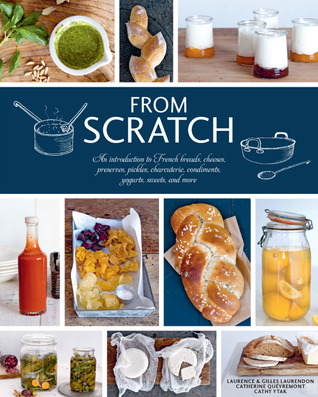
From Scratch by Laurence Laurendon

From Scratch by Laurence Laurendon

I have tried more and more over the past few years to make more of my own food from scratch instead of using processed "convenience" foods. Usually making stuff from scratch is not much more time consuming than using the more convenient processed items. I did find a few recipes I'd like to try, but I was disappointed that most of the bread recipes were written to use with a bread machine. I may try to get a bread machine, but I know you don't really need one to bake homemade bread. Also, I would not recommend trying to can just by using a book - you should really take a class on canning. I took one through my local county extension office for a very small fee and learned a LOT. Overall, this book was pretty good.

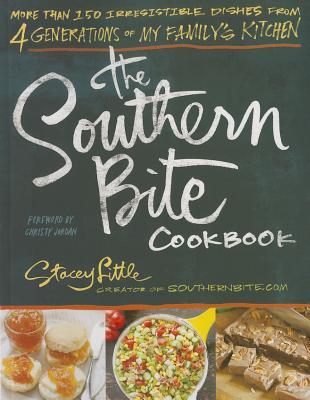
The Southern Bite Cookbook by Stacey Little

The Southern Bite Cookbook by Stacey Little

I think I will probably buy this one. Growing up in the South I LOVE Southern food and this cookbook just embodies everything that is great about Southern food. There were so many recipes I wanted to try and I liked that the author also showed variations on some traditional dishes. I love pimento cheese and can't wait to try the pimento cheese crisps! All of the recipes are very simple and easy to follow. This would be a great cookbook for someone who likes simple, Southern food. I can't wait to try out some of these recipes myself.

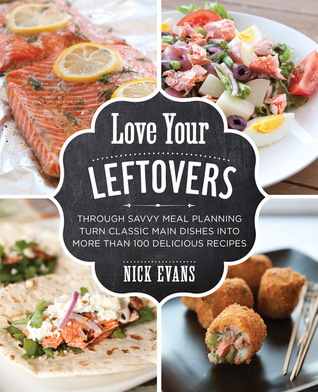
Love Your Leftovers by Nick Evans

Love Your Leftovers by Nick Evans

I wasn't as impressed with this book, although I did like how it was laid out. The author takes one ingredient for each chapter and shows multiple ways that ingredient could be used in many dishes throughout a week. I just didn't find very many recipes I wanted to try, but I did appreciate that he talks about making your own stock with leftover bones, which I've started doing and it's much easier than I thought it would be. Overall, it was OK.

Tuesday, April 8, 2014

April 2014 Reviews


The Madonnas of Leningrad by Debra Dean (Books & Banter book club)

This book was actually better than I thought it was going to be. Based on the description and the cover (I know you're not supposed to judge a book by it's cover, but it can make a differnce) it seemed like it would be depressing and slow. While it was partly depressing, it was actually a pretty quick read. The story follows Marina, an elderly Russian woman who is now living in America and suffering from Alzheimer's. When Marina was a young woman she was living in Leningrad during the time of World War II. She worked as a museum guide at the Hermitage and when Russia was invaded the museum staff all lived in the museum and removed the priceless masterpieces and secreted them away for safekeeping. The war time was not something Marina wanted to discuss, but as she ages and begins suffering from Alzheimer's it's almost like she goes back in time in her mind and remembers it all again. I thought the author did a good job of writing about the Alzheimer's from Marina's perspective. She really showed how Marina kind of knew something was off, but how she was also just sliding into the past and not realizing it. Overall, it was OK and I wouldn't really recommend it.


Mastering the Art of French Eating by Ann Mah

Ann Mah always wanted to live in France ever since she visited with her family as a child. Her husband, Calvin, also lived in France when he was in college. Calvin works as a diplomat so they move to a different country or city every 3 years. Then suddenly Calvin gets an assignment in Paris! Ann is so excited and can't wait to spend 3 years with Calvin in Paris. But, shortly after they arrive in Paris Calvin finds out that he has to go to Baghdad for a year. Ann can stay in Paris, but it means they'll be apart most of that first year. Ann decides to take advantage of that first year and explore some of the traditional French dishes and the areas where they originated. Her exploration of France's signature dishes helps her learn more about France and also helps her deal with missing Calvin in that year they are apart. It was definitely an interesting book and when she was describing some of the dishes it made me wish I was there to eat it with her! At the end of each chapter Ann gives a recipe for that signature dish that that chapter explored. Overall, a good culinary memoir that will make you want to go to France and sample the dishes for yourself.

The Age of Miracles by Karen Thompson Walker

The Age of Miracles by Karen Thompson Walker (book club)

I absolutely LOVED this book! I probably never would have read it either if not for my book club. The narrator is 11-year-old Julia. One day Julia's family wakes up and hears on the news that the rotation of the Earth is slowing and their days are getting longer. Soon, they have more than 24 hours of daylight and 24 hours of darkness. The slowing of the rotation brings about cataclysmic changes, but slowly at first. Soon there is a divide between "real-timers" and people who continue to follow the old 24-hour day. What I found the most interesting was how some of the characters didn't really react to this news at all - they just kept on doing whatever they had been doing before, but others really freaked out and seemed to understand before others what these changes would mean in the near future. I also thought the author did a fantastic job with Julia's voice and dealing with the super awkward time of the middle school years. Julia not only has to cope with the normal pre-teen angst, but also all the additional issues the slowing brings. I really felt like the author did a great job with how she had the effects of the slowing play out and also with the main character Julia. Overall, I thought this book was great and I would highly recommend it!

Pilgrim's Wilderness by Tom Kizzia

Pilgrim's Wilderness: a true story of faith and madness on the Alaska Frontier by Tom Kizzia

In 2002 a man calling himself Papa Pilgrim arrived in the remote Alaskan town of McCarthy with his wife and fourteen children. He said they were a strong Christian family looking to live off the land and raise or hunt all their own food. They purchased land around a deserted mining camp inside the Wrangell-St. Elias National Park. At first the locals in and around McCarthy thought this new family would be a great addition to their community, but within a matter of weeks they were bulldozing roads through the National Park, which is illegal, and forcing their ways on the small town. Anyone who got in their way or disagreed with Pilgrim was "against God" and would be damned to hell. Pilgrim also started a heated battle with the National Park Service over access to their land through the National Park. As author Tom Kizzia, who was working as a reporter for the Anchorage Daily News, dug into the story he also began to uncover background on the Pilgrim family. He found out that Papa Pilgrim was really Bob Hale who grew up in privilege in Texas. After marrying Kurina Rose and starting a family they moved to New Mexico where their neighbors quickly grew to see the Hales as manipulative thieves who took what they couldn't get legally. After an incident in New Mexico that drew authorities into the picture the Hale family re-christened themselves the Pilgrims and started out toward Alaska. As their drama with neighbors in McCarthy and the National Park Service grew, some of the older children began to attempt to break away from Papa Pilgrim. What they disclose about life with the "Christian" Papa Pilgrim would make your hair stand on end - brutal punishments and beatings for small infractions, forced fasting, sexual abuse, and brainwashing. 

This story was very fascinating, but I still hate to see a story of someone abusing their family in the name of being a Christian. While disturbing, I was glad to see a good resolution to the story. Thanks to an awesome family who took in most of the Pilgrim family, the children have all moved on to better things and more normal lives without their father in the picture.

Tempting Fate by Jane Green

Tempting Fate by Jane Green 

I was pretty disappointed with this one. I saw an interview with Jane Green where she said this is the only book she's written that's based in the real town where she lives, Westport, Connecticut. Green says this book is based on not any real person she knows, but on friends of friends who suddenly lose weight, dress better, wear more make up and then it comes out a few months later that they're having an affair. In Tempting Fate Gabby never thinks of herself as someone to be tempted into an affair - she loves her husband Elliot and their two daughters, Olivia and Alanna. But, she is also starting to feel old and overlooked. At a girl's night out she meets Matt, who is 10 years younger than her and obviously attracted to her. What she views as a harmless flirtation to make her feel better about herself turns into an obsession with her relationship with Matt. When things go too far Gabby finds out that the consequences of "one-time" fling can be devastating.

My biggest complaint is that at first this book seems to glorify adultery, but when Gabby realizes the consequences for her fling it seemed much more realistic. Then the end wrapped up everything WAY to perfectly. Just very unrealistic and unlikely to ever actually happen. I really like Jane Green, she's one of my favorite authors, but I didn't really like this one much.

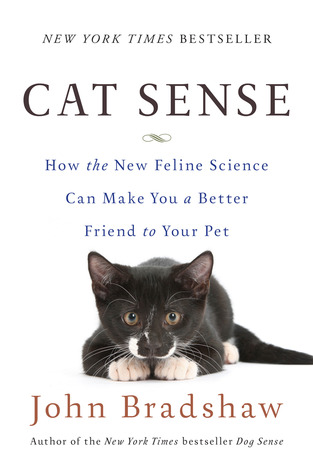
Cat Sense by John W.S. Bradshaw
Cat Sense: how the new feline science can make you a better friend to your pet by John Bradshaw

I liked this book more than I thought I was going to when I started reading it. I did learn a lot about cats that I didn't know, but there was SO much scientific information and detail that it wasn't an easy non-fiction read. Bradshaw goes over how cats evolved into the pets we know today, the history of keeping cats as pets, how cats today still have to learn to be pets, how cats think and feel, how cats relate to humans and each other, how cats impact wildlife and what the future looks like for cats. It seems that Bradshaw came in with the assumption that most pet cats will be outside some of the time, which I personally don't always agree with. Although I did learn a lot, it wasn't a very "readable" non-fiction book and was VERY scientific, so it's not necessarily for everyone.

Some quotes I liked:

I knew the Egyptians were one of the earliest cultures to keep cats as pets and even view them as deities. They also mummified some special pet cats. I did not know "...the sacrificial cats were bred specifically for this purpose. Remains of catteries have been found adjacent to the temples of all the deities associated with cats or other felids. There is little doubt that these cats were deliberately killed for mummification, since X-rays of the mummies show that their necks had been dislocated, and others were probably strangled. Some were killed when they were still kittens, at two to four months old, while others were fully grown, at nine to twelve months: presumably the purveyors of such a commercial operation saw no benefit in feeding a cat for any longer than this unless it had been earmarked for breeding. The mummies would be sold to visitors to the temple, who would then leave them there as offerings to the appropriate deity." (p. 38-9)

"Littermates that are homed together usually form a stronger bond with one another than two unrelated cats. In August and September of 1998, a student and I studied this by recording behavior of pairs of cats in boarding catteries...We compared fourteen pairs of littermates that had lived together since birth with eleven pairs of unrelated individuals that had not met each other until at least one of the pair was more than a year old. Despite the hot weather, all the littermate pairs slept in contact with each other, but we observed only five of the unrelated pairs ever lying in contact with each other, and even those only occasionally. Many of the littermate pairs groomed each other; the unrelated pairs never did. Almost all the littermates were happy to feed side by side; we had to feed most of the unrelated pairs from separate bowls or in turns." (p. 94)

"Cat need to meow because we humans are generally so unobservant. Cats constantly monitor their surroundings (except when they're asleep, of course) but we often fix our gaze on newspapers and books, TVs and computer screens. We do, however, reliably look up when we hear something unusual, and cats quickly learn that a meow will grab our attention...Some will deliver the meow at specific locations - by the door means 'Let me out,' and in the middle of the kitchen means 'Feed me.' Others find that different intonations lead to different results, and so 'train' themselves to produce a whole range of different meows. These are generally different for each cat, and can be reliably interpreted only by the cat's owner, showing that each meow is an arbitrary, learned, attention-seeking sound rather than some universal cat-human 'language.' Thus, a secret code of meows and other vocalizations develops between each cat and its owner, unique to that cat alone and meaning little to outsiders." (p. 140)

"Cats are descended from a species with a solitary lifestyle, and therefore much of their behavior is guided by the need to compete, not to collaborate." (p. 146)

"If you don't yet have a cat, consider getting two littermates; they will be good company for each other. If you already have one indoor cat, plan ahead before getting another cat for 'company.' Cats that have never met before are unlikely to adapt spontaneously to sharing a confined space." (p. 217)

"Few veterinary procedures excite as much controversy was declawing...This is regarded as routine in the United States and the Far East, but is illegal in many places, including the European Union, Brazil, and Australia. Declawing is a surgical procedure that involves amputation of the first joint of the cat's toes. The initial pain resulting from the procedure may be controlled by analgesics, but we do not know whether cats subsequently feel phantom pain due to the nerves that have been severed...Declawed cats are more likely to urinate outside their litter boxes than other indoor cats, possibly because of the stress of this phantom pain [or pain after the procedure that they associate with the litter box not the surgery]. Claws are an essential defense mechanism for cats. While owners of indoor cats will argue that their cat never meets other cats, and so should never need their claws, a declawed cat that is picked up roughly by a person may resort to biting, unable to scratch to indicate its discomfort, and thereby cause a much more significant wound." (p. 267)

Soy Sauce for Beginners by Kirstin Chen

Soy Sauce for Beginners by Kirstin Chen


Gretchen Lin always felt pulled in opposite directions by her parents. Her mother wanted her to go to school in the US and become more American, but her father always hoped Gretchen would come back to their native Singapore and help run the family artisanal soy sauce business. When Gretchen does come back to Singapore she's trying to escape her failed marriage and lack of direction; at first she isn't interested in getting involved in her family's business. But, she quickly realizes there are some problems brewing in the business and without meaning to she jumps back in. While trying to work out what direction she wants for her life, Gretchen has to deal with the family business drama, her mother's worsening health, and a possible new romance. Eventually Gretchen realizes the importance of family and continuing her grandfather's legacy with the soy sauce business.

I thought the author did a good job with Gretchen's character. Her depression and apathy is almost palpable, but it's also depressing to read too, which is why I didn't rate the book higher. I found the first part of the book harder to read because she is SO depressed and you KNOW what the right thing for her is, but it takes her almost the whole book to figure it out. It was a quick read and I did like that not everything is wrapped up in the end, but you definitely feel hopeful for Gretchen's future.


The Stop by Nick Saul

The Stop by Nick Saul and Andrea Curtis

This was a really interesting and inspiring book. Nick Saul takes over as the director of a food bank in a rough area of Canada. He knows that the people they serve need more than a food basket once a month - especially when a lot of that food is high-calorie/low-nutrition processed food. Over fifteen years he takes The Stop from a small food bank to a model organization for a better way to help get better foods into the hands of the people who need it the most. The Stop begins growing a garden to introduce more fresh foods into the hands of the people they serve. They also start offering nutrition classes for pregnant women, cooking classes and demonstrations, and so much more. It's really amazing what they are able to accomplish in a relatively short amount of time. Saul is honest too about the problems and set backs - the realities of doing the work that they do. There are lots of success stories, but there are also the people they try to help who go back to their old ways. I think the idea of food banks incorporating gardens is a great idea and helping the people who use them learn more about how to grow and cook healthy food is vital. Overall, this was an inspiring book about how food banks and how they can be transformed in the future.

The Bookstore by Deborah Meyler

The Bookstore by Deborah Meyler

I was SO disappointed with this book. Whatever I had read about it before I got it made it sound fantastic, but it was so bad I wish I hadn't wasted the time reading it. The story follows Esme Garland, a PhD student at Columbia University. Esme's been having a relationship with Mitchell van Leuven, an upper crust, blue-blooded New Yorker. When Esme finds out she's pregnant it changes everything with Mitchell. At the same time she learns of her pregnancy Esme starts working at The Owl used bookstore. Unexpectedly her co-workers at The Owl will become her substitute family while she deals with her pregnancy and Mitchell. While Esme may be a PhD student her character is SO stupid - everyone else can see through Mitchell right away, but she keeps hoping he'll change. And there was a lot of unnecessary and over the top sexual stuff that just didn't work at all. Overall, I would NOT recommend this one to anyone. I wish I hadn't wasted my time.


Tuesday, March 18, 2014

March 2014 Cookbooks

Southern Casseroles by Denise Gee

Southern Casseroles by Denise Gee

This book not only had TONS of casserole and casserole-type side dish recipes, but I really liked that the author gave a lot of good tips at the beginning of the book. She walked through pantry staples to keep on hand, how to determine what size dish you need to cook your casserole in, basic recipes for sauces and types of casserole toppings. There are definitely a few recipes I'd like to try - the squash casserole, corn casserole, and two variations of sweet potato casserole are at the top of my list to try. I would definitely recommend this one to casserole and/or Southern food fans.


The Healthy Homemade Pet Food Cookbook by Barbara Laino

The Healthy Homemade Pet Food Cookbook by Barbara Laino

In theory I would LOVE to be able to make homemade pet food for my cats. A few years ago when my husband and I drastically changed our diet by only buying our meat and milk at the farmer's market and as much produce as I can too, I reevaluated our cat's food too and changed them to a more natural-based cat food (Blue Buffalo) that doesn't have any "animal by-product" included. I figured if I didn't want to eat mystery meat from the grocery store why should my cats eat the even worse by-products left over from that mystery meat! As much as I would like to make their food it would be pretty pricey. Plus, one of my cats is pretty picky and the other LOVES any kind of food. I could see one cat eating all the homemade food and the other one either not getting much or forcing me to have to feed them separately. I think the premise is great, but not realistic for most people. I did appreciate that she does include a list of some "high-quality commercial food brands" as well. Overall, if you have lots of extra time and money this would be great for your pets.


The Farmstead Egg Guide & Cookbook by Terry Blonder Golson

I really liked this book. It was half how to raise chicken and half egg recipes. I don't have chickens (yet), but I imagine if you have a few you will need lots of different recipes to use up all the eggs you'll get. The author even talks about how to freeze eggs which I'd never heard of before. There were quite a few recipes I'd like to try and I would definitely come back to this one when/if I get some chickens someday. I would definitely recommend this one!


Modern Pioneering by Georgia Pellegrini

I think the title of this book is a little misleading. It's mostly recipes and there is information about gardening, even on a very small scale, and looking for and using wild edibles. There was also a little information about canning, but I would recommend reading more than one chapter in a book before canning at home! There were a couple recipes I'd like to try. Overall, it was pretty good, but not great or amazing.


The Italian Vegetable Cookbook by Michele Scicolone

I love Italian food, but often Italian cookbooks are a little complicated and mostly pasta (which I don't mind). This one is all vegetable recipes, but not just side dishes, there are also sandwiches, soups, pasta of course, sauces, side and main dishes, and desserts - all vegetable centered. There are a few recipes I'd like to try and overall I liked that it had a wide variety of recipes and dishes.

March 2014 Reviews

Preaching in Hitler's Shadow by Dean G Stroud

Preaching in Hitler's Shadow: Sermons of Resistance in the Third Reich by Dean G. Stroud, ed.

This is an incredibly inspiring book! While I knew the Nazis used all kinds of propaganda to promote their distorted racist beliefs, I didn't know that they purposely targeted the Church and tried to initially promote Nazism as a "Christian" based government, then shortly re-wrote the Bible to exclude anything about Jews (which needless to say is pretty much ALL of it)! Pastors during this incredibly difficult time had to decide whether to stand against the Nazis at their own personal risk or keep quiet. The first part of the book explores how Nazism tried to infiltrate the Church and how pastors stood up against it - many of them dying in concentration camps because of their stand. The second part is a collection of sermons. Each chapter gives background information on the pastor, background on the sermon, and the actual message. I can't even imagine living during that time and facing down that kind of evil. These men show that no matter how dark the days God's light still shines from His believers. 

Quotes I really liked:

"Bonhoeffer told the Christians that they had to aid victims of Nazi persecution, regardless of religious affiliation or status in the Nazi state. If persecution continued, then Bonhoeffer suggested yet a third step. This measure was one that he ultimately would take himself, and it would cost him his life. 'The third possibility is not just to bandage the victims under the wheel, but to jam a spoke into the wheel itself.' Here Bonhoeffer's Christian faith required political and self-sacrificing opposition. His way of 'jamming a spoke' into the Nazi wheels that were crushing Jews would be to join those plotting to kill Hitler." (p. 37)

"As life became more and more difficult in Germany, Bonhoeffer accepted an invitation to teach in the United States, but soon after his arrival he decided to return to Germany. Bonhoeffer left New York for Germany on July 27, 1939. A little more than a year later, in September 1940, Bonhoeffer, like so many other pastors, was officially banned from preaching and speaking in the Third Reich...After his arrest in April 1943, Bonhoeffer continued to be a model of Christian courage...Dietrich Bonhoeffer refused to allow prison confinement to silence Christian witness. By special orders of Hitler, Bonhoeffer was hanged on April 9, 1945, just days before Germany surrendered." (p. 52-3)

"The sermon included here [by Karl Barth] was preached just at the end of Hitler's first year as chancellor. Its theme is Jesus as a Jew. Copies were made the following day, and Barth even sent the sermon to Hitler. The Jewishness of Jesus offended some in the church, and they walked out. Writing later to a woman from the church, Barth insisted that one simply cannot sever Jesus from his Jewishness: 'anyone who believes in Christ, who was himself a Jew, and died for Gentiles and Jews, simply cannot be involved in the contempt for Jews and ill-treatment of them which is now the order of the day.'"(p. 64)

"I would rather die for my faith than live a cowardly and cultured life with the rest of the world. For nowhere is it said that God will allow us in all circumstances her to live the little span of earthly life without going through loss of money, property, honor, life and limb, wife and child. Even more, such sorrows must come upon the Christian at times; but the Lord brings the little boat of the church through the stormy seas of human events, which must grow calm at his word." (p. 84 -Paul Schneider)

"It is inside us all; this truth that upright men and women can turn into horrible beasts is an indication of what lies hidden within each of us to a greater or lesser degree. All of us have done our part in this: one by being a coward, another by comfortably stepping out of everyone's way, by passing by, by being silent, by closing our eyes, by laziness of heart that only notices another's need when it is openly apparent, by the damnable caution that lets itself be prevented from every good deed, by every disapproving glance and every threatening consequence, by the stupid hope that everything will get better on its own without our having to become courageously involved ourselves. In all these ways we are exposed as the guilty people we are, as men and women who have just enough love left over for God and our neighbor to give away when there is no effort or annoyance involved." (p. 122-3 - Helmut Gollwitzer)

"Now just outside this church our neighbor is waiting for us - waiting for us in his need and lack of protection, disgraced, hungry, hunted, and driven by fear for his very existence. That is the one who is waiting to see if today this Christian congregation has really observed this national day of penance. Jesus Christ himself is waiting to see." (p. 126 - Helmut Gollwitzer)

"The Christian faith is not something that lets us rest. It is not simply the possession of the conviction of certain teachings that one can make one's own once and for all. Rather the Christian faith is an attitude of the will. It is only alive in us when it continually proves itself in new ways. It does not suffice to have decided for faith in God once in the past, but rather this decision for faith has to be implemented anew time and time again whenever he encounters us, when his call meets us. Always again it remains true: Now! Through his encounters God puts us to the test. To be ready for his call, that demands from us that we keep an inner detachment from everything that has a claim on us, from our work and cares, from joys and sorrows; that nothingentirely claims us, lest we become blind for his encounter and deaf to his call." (p. 153 - Rudolf Bultmann)

"How many behave like this with Jesus. For a period of time his is okay. But when things head into the dark, into the dying of the old man, into the shattering of our wishes and hopes, then one says: 'That is going too far. I am turning around.' True faith, however, goes with the savior even into the darkness. Thus we read of Abraham (Heb. 2:8): 'By faith Abraham was obedient when he was called to go out...and he went out and did not know where he was to go.' He went with Jesus into the darkness and the unknown. And one day the command came that he should sacrifice his only son on Mount Moriah. He did not scream: 'That's going too far!' but rather he went comforted by faith along this dark path that led ultimately to light." (p. 176 - Wilhelm Busch)


Mr. Penumbra's 24-Hour Bookstore by Robin Sloan

Mr. Penumbra's 24-Hour Bookstore by Robin Sloan (book club)

This was one of the most unique books I have ever read. But, it was also kind of all over the place so I didn't love it. Clay Jannon has been hit by the Great Recession and is desperately in need of work. His last job was in web design, but he just sort of learned what he needed to on the fly. He stumbles upon Mr. Penumbra's 24-hour bookstore and ends up working the graveyard shift there. He quickly realizes something is different about this bookstore since only half of the books are actually for sale and the rest are reserved for members to some sort of secret society. Clay's boredom leads him to start learning computer code and trying to recreate the books taken by the society members. Unknowingly Clay breaks the code that all these members have been working on. That opens the door for Clay into a secret society where old-school books are pitted against new computer technology in a power struggle between members. By being able to appreciate both old and new technologies Clay is able to figure out secrets that the secret society has been working on since its existence. Sloan manages to work Google, tech start-up companies, a sci-fi author, and an ancient secret society all into this crazy book and it somehow works.


Bargain Fever  by Mark  Ellwood

Bargain Fever: How to Shop in a Discounted World by Mark Ellwood

I thought I was going to like this book more than I actually did. I read a few other reviews that said the book dragged as it went along and the first few chapters were the best, which I definitely agree with. I really enjoyed the chapter about coupons and how that whole thing got started. It was also interesting to learn that the very first coupon EVER was for a free Coca-Cola to get people to try the new drink. There was also some interesting information about how sales and discounts affect our brain. I can say from experience that saving a lot of money by combining coupons and sales IS like a high. There was also some stuff about why high-end fakes (mostly purses) is such a huge problem. Overall, I thought the book was VERY wordy and detailed and a lot of it was information I just wasn't super interested in. There were some interesting facts, but I don't think I would recommend it to anyone.

A few quotes I did like:

"Supermarkets after World War II stocked an average of 3,750 items; by the end of the twentieth century that number had increased more than tenfold, to 45,000. In 1994, the total of UPCs for consumer products - in other words, things that could be sold at a store by scanning them - was just over five hundred thousand. Less than ten years later, it had reached almost seven hundred thousand. In 1980, there were six major blue jeans brands in America; thirty years on, that number was eight hundred and climbing. We have enough excess possessions to birth not just a TV show about self-storage but also a booming industry. In 2012, there were 2.3 billion square feet of storage space in this country, and more added since. One in ten US households was renting some kind of unit, an increase of 65 percent since the late 1990's." (p. 6)

"To celebrate [American Girl dolls] twenty-fifth anniversary, the firm teamed up with Celebrity cruises to offer a week-long trip to the Caribbean aimed at American Girl fans. The package included cooking classes, chats with authors of some of the books, and a giant birthday party. The ship sold out in forty-eight hours." (p. 157) - this is some craziness! A week cruise aimed at 8-10 year old girls?! Wow.


The Whole Golden World by Kristina Riggle

Morgan Monetti never intended to fall in love with her calculus teacher, but she did and she continues to shock her parents and the community when she stands by TJ even after he's arrested for their relationship. Morgan doesn't feel like a victim of a predator, she believes she's a young woman who happened to fall in love with her teacher, who's not even thirty yet. Morgan's mother, Dinah, wants justice for her daughter. Morgan might not believe she's a victim, but Dinah does. Dinah wants the full force of the law to come down on TJ, but Dinah didn't realize how the whole town would turn against her family too. She's trying to keep their family together through this insane ordeal. Rain is TJ's wife and she's standing by her husband as well. At least in the beginning when she still believes his story, but as more of the truth comes out Rain has to decide what's best for her, not just what's best for TJ. Told from each woman's perspective, The Whole Golden World explores all sides of an inappropriate teacher-student relationship. Each woman copes with the situation differently, but all are deeply affected and forever changed by the consequences of this relationship. 

Overall, I thought the storyline was good and each woman's character is well developed. A few of the scenarios at the end of the book seem a little too far-fetched to be realistic, but the storyline overall flows well and you can clearly see each woman's side of the story. The ending made sense and wrapped up each character's story well. I thought it was good, but not amazing.


Mud Season by Ellen Stimson

Ellen Stimson knew the very first time she visited Vermont that she wanted to live there someday. She and her husband were both from St. Louis, Missouri, but never felt any special attachment to their hometown. When Ellen's decided to sell her half of her book business to her business partner, she decided this would be the perfect time to live her dream of moving to Vermont. Packing up their life, 3 kids, 2 dogs, and 2 cats proved challenging at best and their dream house in Vermont turned out to be somewhat of a money pit, but they were now living in Vermont. Soon after their move Ellen finds out the local country store is up for sale and they impulsively decide to buy it. For all of Ellen's dreams about revamping the country store, the locals are not thrilled with her changes - or any changes. She quickly butts heads with many of the locals about the store, the local schools, the contractors she hires to work on her house, etc. Eventually Ellen has to re-evaluate their decision to buy the local country store, but for all the crazy disasters and disappointments Ellen never doubts their decision to move across the country to Vermont and her family still lives there today.

This was one of those everything-that-can-will-go-wrong-but-in-a-funny-way kind of books. At times you feel bad for them and at times you think how can they not see how crazy this is, but it was a funny book that I read pretty quickly. I did appreciate how Stimson was real and didn't sugar-coat the downsides to their move and decision to buy the country store. Overall, it was pretty good but there were a few things I didn't like which is why I didn't rate it higher. Good, but not great.


Stella Bain by Anita Shreve

During World War I, an American woman wearing a British nurse's uniform wakes up in a field hospital in France with shrapnel wounds to her feet. She has no memory of who she is other than the name Stella Bain and does not know why she is in Europe or how she became trained as a nurse. Soon she feels compelled to visit the Admiralty in London, but soon after arriving becomes very ill and is taken in by a cranial surgeon and his wife, Dr. August and Lily Bridge. Dr. Bridge quickly realizes that Stella is suffering from traumatic amnesia and starts to help her get her memory back. Stella wants nothing more than to remember her past, but she is also afraid of what she might remember. When her memory does come back the storyline quickly moves through her past and the reader follows her back to America to try to re-gain her old life. The way Shreve lays out the story not in chronological form, but rather in time with Stella's memories is fantastic. You can almost feel Stella's emotions with her. This is one of the best books I've read in a LONG time! I've been a fan of Anita Shreve for a long time, but I haven't loved some of her last few books. But, I could not put this one down it was so good!


Paris Letters by Janice Macleod

This book was so inspiring and such a quick, fun read. Janice MacLeod was working in advertising as a copywriter in L.A. Her life looked great on the outside, but she was miserable. One day she decided to see how much it would cost for her to quit her job for a year to figure out a new career path. She decides to try to save or not spend $100 a day. Within a year she's saved a whopping $60,000! She quits her job and decides to travel around Europe for the first few months. Her first stop is Paris, where she almost immediately falls for a butcher working near where she is staying. She doesn't speak French well and he doesn't speak English, but they manage to communicate enough to start a relationship. MacLeod doesn't think this is going to necessarily go anywhere, so she continues with the rest of her planned travel around Europe. But, when Christophe, the hot butcher, asks her to come back to Paris "to see" she does and the rest is history. She still has to figure out a way to make money if she stays in Paris, so she combines two of her loves - painting and letter writing and starts selling painted letters on Etsy and through her blog. MacLeod's story shows that sometimes it's worth taking a big risk to get a big reward. While not everyone can quit their life and move to Paris, this book still makes you think about how to enjoy your life more and whether a steady, boring job is better than a cheaper, happier life.