Monday, March 23, 2015

March 2015 Cookbooks

100 Days of Real Food by Lisa Leake

100 Days of Real Food by Lisa Leake

After checking this book out from my library and not having time to finish it, I just decided to go ahead and buy it. I was already familiar with Leake's blog of the same name, so I knew this one would be worth owning. This is a great book and Leake shows how with a little work and planning you can cut out most of the processed food in your life. The few pages where she had reader comments about how Real Food had changed their lives was very impressive. I'm convinced (even before reading this book) that diet is a MUCH bigger component to our health than the food industry would have us believe. I really like how she walked the reader through her thought process and food "conversion" and gave tips about how to do this with kids and/or a reluctant spouse in the first half of the book and then in the second half she includes 100 Real Food recipes. Overall, this is a fantastic book that really breaks down Real Food in an easy to understand and easy to implement way. If you are looking to revamp your diet or just want to improve on your "real food" skills - this is the book for you!


Eat Right for Your Sight by Jennifer Trainer Thompson

Eat Right for Your Sight by Jennifer Trainer Thompson and Johanna M. Seddon

After my father-in-law was diagnosed with Macular Degeneration it definitely made me more aware of trying to help my husband do everything he can to prevent this. I'm not sure how much of a genetic component there is, but either way it can't hurt to try to eat better for overall health. The forward of the book is written by Chip Goehring who is the President of the Board of Trustees for the American Macular Degeneration Foundation. He explains how his own diagnosis compelled him to quit his job and go into research about this disease and how to prevent it, which led to the creation of the American Macular Degeneration Foundation and this book. All the recipes include ingredients known to help with eye/vision health and macular degeneration. Of course eating lots of fruits and vegetables would be good for anyone's overall health. There are a few recipes I'd like to try and overall this book just encouraged me to eat better for my overall health.


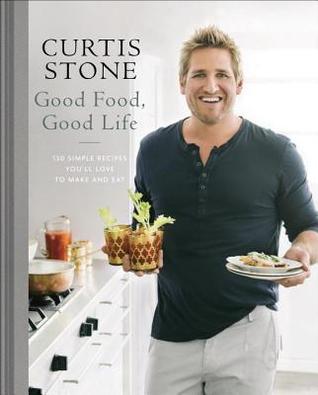
Good Food, Good Life by Curtis Stone

Good Food, Good Life by Curtis Stone

I have always liked Curtis Stone ever since I saw him on the Take Home Chef TV show. In this book he focuses more on recipes he uses for his own family. I liked how he emphasized growing your own vegetables and herbs to use in cooking. There were also lots of great pictures of Curtis and his family at home cooking. There are definitely a few recipes I'd like to try as well.


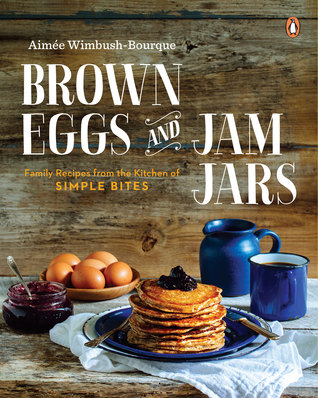
Brown Eggs and Jam Jars by Aimée Wimbush-Bourque

Brown Eggs and Jam Jars by Aimee Wimbush-Bourque

The author grew up in a rural homestead growing and making all their own food. As an adult and parent she wants to instill those same values in her children, but needs to live closer to where there is available work, so she and her family are urban homesteaders. They live on a few acres and grow tons of fruit and vegetables and raise chickens for meat and eggs. This cookbook is divided into the 4 seasons to promote eating seasonally, but she also talks about the importance of canning to preserve summer produce to enjoy year round. This is right up my alley! There were definitely some recipes I'd like to try and I'm also going to check out her blog Simple Bites too. A must read for any home gardener/canners out there!

March 2015 Reviews

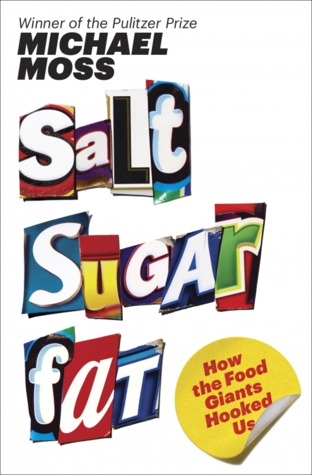
Salt Sugar Fat by Michael Moss

Salt Sugar Fat by Michael Moss

Salt Sugar Fat is a really interesting and scary book. Moss basically does over three years of research into the processed food industry to examine how salt, sugar, and fat play a role in our food. The book is divided into three sections – one for each area. What I found most fascinating in how many scientists and chemists these processed food corporations have working for them! Moss interviews many prominent food scientists who discovered things like “bliss point,” the point at which there is the maximum flavor enjoyment by a consumer. There is also a TON of effort and even more money going into advertising. What’s scary is that people seem to think that these companies should somehow be forced by law to create “healthier” products with less salt, sugar, and fat. But, the goal of these companies is to make money – not sell good, healthy food. You can do that at home. It’s also scary how these companies try to show the public that they are making “healthier” changes, when they are not at all. Most have no intention of changing their products because less salt, sugar, and fat doesn’t sell. Usually whichever of the three is more in the news as “unhealthy” they cut that one down a little, but usually end up pumping up the other two culprits to make up the taste difference. 

Basically, the answer to all this is to eat less processed crap. Real, whole food that IS healthy and good for you is the solution. Marketing tells us it's too hard to cook when really it's no more time-consuming that using some of the "convenience" foods they sell. Americans need to learn how to cook basic meals and not eat what should be “treats” like chips, cookies, and soda for all 3 meals a day. Here are some of the many quotes that I really liked:

“First, the food companies themselves are hooked on salt, sugar, and fat. Their relentless drive to achieve the greatest allure for the lowest possible cost has drawn them, inexorably, to these three ingredients time and time again. Sugar not only sweetens, it replaces more costly ingredients – like tomatoes in ketchup – to add bulk and texture. For little added expense, a variety of fats can be slipped into food formulas to stimulate overeating and improve mouthfeel. And salt, barely more expensive than water, has miraculous powers to boost the appeal of processed food.” (p. xxix)

“The persistent attacks on sugar had an effect. That same year [1985], Post changed the name of its Super Sugar Crisp Cereal to Super Golden Crisp, though its sugar levels remained at more than 50 percent. A spokeswoman said at the time that the change was made in ‘recognition that there’s a sensitivity to the word sugar’.” (p. 81-2)

“In nutrition circles, where the causes of obesity are discussed, there is no single product – among the sixty thousand items sold in the grocery store – that is considered more evil, more directly responsible for the crisis than soda. The problem, as growing numbers of nutritionist see it, is not the calories in soda, though calories are ultimately what causes us to gain weight. Rather, it’s their form: Research suggests that our bodies are less aware of excessive intake when the calories are liquid.” (p. 98)

“As I spoke with scientists about the way fat behaves, I couldn’t resist drawing an analogy to the realm of narcotics. If sugar is the methamphetamine of processed food ingredients, with its high-speed, blunt assault on our brains, then fat is the opiate, a smooth operator whose effects are less obvious but no less powerful.” (p. 148)

“One of the most successful approaches to marketing lean beef turned out to be the most controversial…It involved ammonia. This created the leanest, least expensive, most-commonly eaten burger America had yet seen – that is, until the public caught on and the lean, ammonia-processed beef came to be known as ‘pink slime.’ This material – which the USDA preferred to call ‘lean finely textured beef’ – is produced by taking pieces of beef from the fattiest parts of the cow – ranging up to 70 percent fat – that has previously been diverted to pet food or tallow. The material is then put through a high-speed centrifuge that spins much of the fat off, leaving a mash that has the virtue of being quite lean, with all but ten percent of the fat removed. It is then formed into 30-pound blocks, frozen, and shipped to meat plants, where the blocks are combined with other beef trimmings to make hamburger. The defatted beef became popular with the companies that make hamburger for another reason: It was 15 percent cheaper than the naturally lean meat from South America, where ranchers raise their cattle on grass, forgoing the fat-inducing process of corn feeding that is typical in the American beef industry. The money to be saved was significant, and not only to grocers and restaurant chains like McDonald’s, who bought hamburger made with the defatted beef. The USDA itself realized that it could shave up to three cents off the price of every pound of hamburger it was buying for school lunch programs.” (p. 226-7)

“Babies love sugar the instant they are born…But babies do not like salt. They don’t like it at all until they are six months or more into their lives, and even then, they have to be coaxed. This idea that salt is being pressed upon America’s kids comes from the scientists at Monell, who have been pushing hard to pinpoint the genesis of our taste for salt. They wanted to know what caused kids to like salt, if it wasn’t a natural thing for them to do. So they followed sixty-one children, starting at infancy. First, they surveyed their parents to learn how much salt the kids got in their diets, and the kids fell neatly into two camps: One group was eating what their parents ate, salty cereal and crackers and bread made by food manufacturers, while the other got baby foods that had little or no salt, like fresh fruits and vegetables…At six months, however, when they were tested again, the kids split into two groups. Those who had been given fruit and vegetables to eat still preferred plain water to the salty solutions. But those who had been fed foods that were salty now liked the salty solutions. Over time, the two groups – the salted and the unsalted – grew even more disparate…When the study was released, Gary Beauchamp, the center’s director and a co-author, talked about its significance. Kids…were not born liking salt. They have to be taught to like the taste of salt, and when they are, salt has a deep and lasting effect on their eating habits.” (p. 279-80)

“It had taken me three and a half years of prying into the food industry’s operations to come to terms with the full range of institutional forces that compel even the best companies to churn out foods that undermine a healthy diet. Most critical, of course, is the deep dependence the industry has on salt, sugar, and fat…Salt, sugar, and fat are the foundation of processed food, and the overriding question the companies have in determining the formulations of their products is how much they need of each to achieve the maximum allure.” (p. 337)

“On a personal level, I found that many of the executives I talked to go out of their way to avoid their own products.” (p. 341)

Frankenstein by Mary Shelley

Frankenstein by Mary Shelley (Books & Banter book club)

I remember really liking this one after having to read it for my Senior year of high school, and after re-reading it as an adult I still like it. Frankenstein's monster is nothing like the depictions in the movies - he is a monster who longs for connection. When he doesn't receive it from his creator Frankenstein, he tries to find it elsewhere, but is constantly attacked by any humans he encounters. Soon he decides to wreak havoc on any humans that get in his way, but especially anyone Frankenstein loves or cares for. When Frankenstein is confronted by his creation and asked to create a companion for him in exchange the monster will leave humans alone for good; he is torn. Does he create another horrific creature and hope his monster is truthful or does he live with the consequences of the monster's wrath? This book brings up lots of issues to think about - what happens when humans play God? How the consequences of our actions affect innocent people. What does Frankenstein owe, if anything, to his creation? 

My only complaint would be that like many classics there is a LOT of detail to characters, setting, history, etc. that could be shortened or cut out altogether. Still an interesting story overall and I like how Shelley laid out the story as a story within a story.

The Lexicon of Sustainability by Douglas Gayeton

Local: the new face of food and farming in America by Douglas Gayeton

Local: the New Face of Food and Farming in America is almost a coffee table book with all the beautiful photos of local, small farms and farmers. Gayeton is inspired by what he calls his “Road to Damascus” moment when he brought his wife and daughter to the creek he grew up visiting when the salmon were running, but they were no longer running due to a variety of factors. “If people don’t understand the meaning (and implication) of terms like Food Miles, Carbon Footprint, CSA, Organic, Food Security, Food Desert, GMO, Grass-Fed, Direct Trade, or even Pasture-Raised, how can they live more sustainably? To help ‘take back’ the meanings of these important ideas, I set out to document the work of two hundred thought leaders, architects of a new vocabulary reflecting the most promising solutions for creating a vital and sustainable food system in this country.” (p. 10) This is a beautiful and inspiring book about small farmers who are taking back the food system from Big Ag. My only (small) complaint is that the cursive text on some of the photos is hard to read and it’s such interesting information that you don’t want to miss any of it, so I wish the font was easier to read. Overall, a great book about some awesome people making a difference in the food world!

“Consumers’ willingness to align their values with those of the product their buying – even when it’s something as cheap as a dozen eggs – means the industrial food system is a house of cards. It proves that when presented with clear, compelling explanations about what they’re eating, consumers will make purchases that reflect their ever-expanding food literacy. When consumers shop and eat according to their values, the food industry is forced to adapt.” (p. 13)

“Even though GMO seeds are commercially available in the United States, researchers are required to ask permission from these seed companies before conducting tests. If no permission is granted, there’s no legal way to perform a study. Conversely, permission given can be just as easily withdrawn if a seed company becomes disenchanted with the potential outcome of this research.” (p. 95)

“Wycall’s story represents the fundamental challenge now facing ambitious farmers across the United States: how to transition land from Conventional Farming back to its Organic or ‘Pre-Chemical’ state. It took eight years of patient research on Wycall’s part – interspersed with dark periods that left him paralyzed by self-doubt – before his soil came back to life [after 25 years of conventional farming on family land].” (p. 117)

“A healthy farm is a stable, functioning organism, a system with many moving parts – some animal, some vegetable, and some mineral. They are influenced by the rhythms of nature and kept in balance by a farmer who acts as his land’s steward and protector.” (p. 126)

“Feldman recounts an infamous urban legend that turns out to be true: ‘The Case of the Mysterious Red Honey.’ In 2010 local beekeepers opened their hives to discover honey frames stained red. Was it bacteria? A bee toxin? Perhaps bees pollinating an odd flower like sumac? For months beekeepers pondered the mystery before discovering its cause: a maraschino cherry company in neighboring Red Hook. Instead of pollinating, the bees had fixated on a steady diet of corn syrup and Red Dye No. 40. Such are the travails of urban beekeeping.” (p. 140-145)

“Sustainable agriculture has no single figurehead – nor does this defiant, disparate movement have a center – but if it wants an able spokesperson, [Joel] Salatin would be a safe bet. He’s a professional contrarian, a knowledgeable agricultural apostate who not only practices what he preaches but has the rare capacity to explain it to others. While his summers are devoted to farming, his winters are spent literally barnstorming the country – from grange hall to farm to classroom – as he expounds on the joys of grass farming.” (p. 174)


Close Your Eyes, Hold Hands by Chris Bohjalian

Close Your Eyes, Hold Hands by Chris Bohjalian (Evening Edition book club)

You never know what to expect from Chris Bohjalian. Close Your Eyes, Hold Hands follows Emily Shepherd after a nuclear meltdown happens in her town - the nuclear station where both her parents work. It's amazing how spectacularly terrible the few years after the meltdown are for her. She ends up homeless, lives for awhile with a drug dealer working as a prostitute for him, takes in a nine-year-old boy who's also homeless, and eventually tries to get back home. The story is told in a disjointed way, but probably in a realistic way for a teen who's gone through what Emily went through. While Emily is a likable character, the book is rough and hard to read, but probably tame compared to what a lot of homeless kids go through. It was definitely interesting and when she finds her dog in the end, while HIGHLY unrealistic, it was a great way to end the book. I didn't love it, but I was interested enough to keep reading and I wanted to know what was going to happen to Emily. Definitely a different kind of book.


The Tastemakers by David Sax

The Tastemakers: Why we're crazy for cupcakes but fed up with fondue by David Sax

This is a fascinating book that explores how food trends come about and why they are important. Sax covers everything from the cupcake craze to bacon flavored EVERYTHING to "expired" trends like fondue. It's interesting to me how many trend-predictors there are and how they attempt to forecast food trends. The book is divided into three parts - the four types of trends, how trends break out, and why food trends matter. Whether you consider yourself a foodie or not, if you're interested in food at all this book is worth reading. I learned a lot and whenever the next food trend arises I'll understand all that goes into a trend a little better. 

Here are some quotes I liked:

"Yes, Anson Mills was a company that existed to sell grains to high-end customers (their products are much more expensive than their competitors'), but at its core Roberts saw his mission as part of a 'Robin Hood syndrome.' In 2003, when the company began taking off, he founded the Carolina Gold Rice Foundation, a nonprofit that funds research into heirloom grains from the Carolina Rice Kitchen and distributes those grains for free to interested farmers around the United States as well as cofunding research projects with the USDA, such as the China Black trials. 'My mission is to recover something from extinction and make sure the avenues to scale it up are open.' Already, he had distributed up to seventy tons of seed entirely free, including donations of Einkorn wheat to the radition-ravaged farms around Japan's damaged Fukushima reactor, and aided the southwest's Hopi Native Americans in recovering their nearly extinct blue corn crop. To Roberts, Anson Mills was just the means to fund and publicize the work he was doing at his foundation." (p. 48)

"'From a nutrition educator's point of view, it's 'Here we go again,'' said Chassy [Dr. Bruce Chassy, professor emeritus of food science and human nutrition at the University of Illinois] regarding each new health and diet trend that emerges. 'The message is: eat a balanced diet in moderation, which is totally counter to the message of a superfood, which is basically saying, 'eat one thing as much as possible.'' We want to have our cake and eat it, too, and now with chia flour cake mix (selling at twice the price of a normal cake mix), we can eat it without feeling guilty. 'What Dr. Oz is doing is very, very bad because it reinforces the mistaken belief that there's a magic answer. The magic answer, you've heart it all! Get sleep, exercise, get a balanced diet. That's what the scientific literature supports. Every time Dr. Oz sells you blueberries and pomegranates, he's selling you snake oil.'"(p. 99)

"Perhaps the most striking story is that of the lowly Patagonian toothfish, a snarly species that swam in the cold waters of South America. So ugly that even the Chilean fisherman who accidentally caught the fish refused to eat it, the Patagonian toothfish (also called Cod of the Deep by fishermen) was an unknown, unwanted, and unmolested species up until 1977. That was the year that a young Los Angeles seafood importer named Lee Lantz took a trip to Chile to meet with suppliers and encountered a giant Patagonian toothfish...the fish piqued his curiosity, and when Lantz began asking questions he found that the Patagonian toothfish had the characteristics he was looking for: it was white-fleshed, meaty, relatively mild, and oily enough to withstand cooking heat...However...Americans wouldn't buy something called Patagonian toothfish...or Cod of the Deep...Lantz slapped Chilean at the front of sea bass to conjure up images of clean ocean waters and exotic locales...Though it took several years to catch on with the public, by the late 1990's Chilean sea bass was the darling fish of the seafood trade. Its price rose tenfold, to over $10 a pound..." (p. 164)


The Objects of Her Affection by Sonya Cobb

The Objects of Her Affection by Sonya Cobb


Sophie Porter always dreamed of having the perfect house to raise her children in. When she finds her dream house is doesn't take too much convincing that they can afford it and all the renovations it needs. Before having kids Sophie was a freelance web designer and knows she can get enough work to make ends meet...until she can't. With her career dead in it's tracks, a huge mortgage and renovation costs, plus the costs of raising her children the "right" way Sophie turns to stealing artwork from the museum where her husband works. Until she takes it too far and the FBI get involved.

I thought the author did a good job of portraying an overwhelmed mother who makes a huge mistake, but Sophie's character still seemed kind of surface-level to me. I also thought everything in the book wrapped up a little too neatly in the end and some of the things that happen in the end are ridiculously unbelievable. For giving up the guy who bought the stolen goods Sophie gets off with NO charges and there is no mention of all the money she got either, both of which seem very unrealistic. I did want to know what was going to happen next in the story, so I kept reading, but overall I didn't love it.


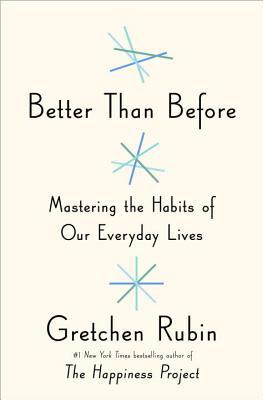
Better Than Before by Gretchen Rubin

Better Than Before by Gretchen Rubin

I don't think I would have ever read a book about habits if not for Gretchen Rubin. I LOVED The Happiness Project and Happier at Home, so of course I wanted to read Better Than Before. In the same way Rubin explored happiness - general happiness and her own more specifically - she explores habits. Why habits are easier for some people to make and keep than others, specifics about how to create new habits and keep them, and what can get in the way of our habits. If you haven't read her books this probably won't make sense, but I just love her "voice" and style of writing. It's so engaging - like she's a friend who's telling you all about something really cool she just learned. Both of her happiness books and this one definitely made me think more about myself and why I do some of the things I do. It also encouraged me to be more mindful in my life and try to create some better habits in order to improve myself. She also has a great quiz you can take to find out which of the Four Tendencies you are: Upholder, Obliger, Questioner or Rebel. Doing that will help you figure out the best ways to create and keep the habits you want, as well as, break the habits you don't want. Overall, this is an interesting and fascinating book.


You Should Have Known by Jean Hanff Korelitz

You Should Have Known by Jean Hanff Korelitz

Grace Reinhart Sachs is living the perfect life. She's a therapist who's just published a much-hyped book called You Should Have Known about the things women tend to miss or overlook when they meet their partners - and then that information comes back to haunt them later. She lives in the apartment she grew up in and is raising her son Henry with her husband Jonathan, a pediatric oncologist. Everything is going great until another parent at her son's school is murdered - and her seemingly perfect husband is missing. From the first day the police question Grace, her life is turned completely upside down. As she races to figure out who her husband really is, all she can think isYou Should Have Known! This is a fast-paced and realistic story that will keep you up late to finish it.

The book is divided into 3 sections - before, during, and after. The "before" section is a little slow, but once you get past that section you just can NOT put this book down!

Saturday, February 28, 2015

February 2015 Cookbooks

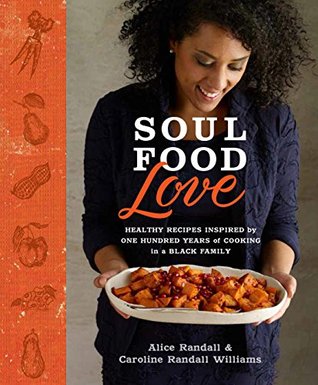
Soul Food Love by Alice Randall

Soul Food Love by Alice Randall & Caroline Randall Williams

While I liked the concept of this book, I didn't like the book all that much. Alice Randall and Caroline Randall Williams were inspired by generations of home cooks in their family, but they also saw that most of these women ended their lives overweight and unhealthy. They wanted to revamp some of the traditional "soul food" recipes into healthier versions. Williams also reiterates that many people today don't understand "celebration" food is not meant for every day meals - eat cake and fried chicken - just not every day. I like the premise of the book, but the first 77 pages are all text/stories of each generation of women. While that's interesting, it's not a cookbook. Some of the recipes do look good, but there weren't that many that I wanted to try. Overall, it was a little disappointing.

February 2015 Reviews

What the Fork Are You Eating? by Stefanie Sacks

What the Fork Are You Eating? by Stefanie Sacks

This book is a REALLY great overview of the processed food industry and how to make better choices with food. The author is a nutritionist, a certified chef with a master of science in nutrition from Columbia University, so she definitely knows what she's talking about. The book is divided into 4 sections - Top Rated Terminators (the really bad crap that's in almost all processed food), Pantry Rehab (how to overhaul your pantry in order to make better food choices), Supermarket Strategies (how to shop better and decipher food labels), and Meal Rehab (cooking tips and recipes). There are also 5 Appendixes that give even MORE resources and information. One of the best things is that Appendix A is a long list of "big food" companies and all the smaller labels that are under their heading - so you know who you're REALLY supporting when you think you're avoiding the "big" food corporations. Appendix B gives popular food items/categories and "better" choices/brands in those categories. While there are better books about more specific food industry issues - CAFOs, Industrial vegetable "farming," meat industries, etc., this book is perfect for someone who wants to overhaul their diet but doesn't know where to start. Sacks gives TONS of easy to incorporate tips while not expecting the average person to go to extremes. She is realistic about things, but still wants better for you when it comes to food. Overall, I am VERY impressed with the overall amount of information and how easy to follow everything is for the average person.

Here are some quotes I really liked:

"Today, about one hundred dyes are still listed for use by the FDA, and according to the Center for Science in the Public Interest, nine dyes are approved for use in food, drugs, and cosmetics. But just three of the nine dyes - Red No. 40, Yellow No. 5, and Yellow No. 6 - account for 90 percent of all dyes used...Dyes can even be found in foods you don't expect - many jarred pickles actually have Yellow No. 5 in them even though there are plenty on the market that do just fine without the added color. U.S consumption of food dye has increased fivefold since 1955, according to the CSPI." (p. 27)

"According to the Mayo Clinic, artificial sweeteners are sugar substitutes whose sweetness comes from chemically manufactured molecules that do not exist in nature...saccharin was one of biochemical giant Monsanto Company's first consumer products [unveiled during WWI's sugar shortage]." (p. 33-4)

"Paul Francois is a forty-something grain farmer living in southeast France. Like many farmers, he uses pesticides to manage his crop...In 2004, after applying (and accidentally inhaling) the chemical weed killer Lasso, made by Monsanto...Francois didn't feel too fabulous. He began experiencing neurological problems, including memory loss, headaches, and stammering. As a result, Francois went for the jugular and sued Monsanto, blaming them for not providing adequate warnings on their product label. Amazingly, Francois won; in February 2012, Monsanto was found culpable of chemical poisoning. It was the first time, a pesticide maker was found guilty of such a crime." (p. 59)

"Of almost six hundred samples each of green beans, pears, and sweet potatoes processed as baby food in 2011, the green beans tested positive for five pesticides...pears that were processed for baby food had eleven pesticides...[including one] not registered with the EPA for use on pears, so its presence in this baby food was a violation of FDA regulations...As far as the sweet potatoes go, they were squeaky clean." (p. 64)

"In 2013, the Environmental Working Group released the reportSuperbugs Invade American Supermarkets, in which they analyzed research and government tests of supermarket meats and concluded that disturbing amounts of the meat tested have incredibly high levels of antibiotic resistant bacteria. I hope you are sitting down - 81 percent of ground turkey; 69 percent of pork chops; 55 percent of ground beef; and 39 percent of chicken breasts, wings, and thighs were found to be tainted with bacteria that could make you...super sick. Folks, you are getting dosed up on potentially antibiotic-resistant bugs when you eat industrially farmed meat." (p. 71-2)

"...as reported by FishWatch (part of the National Oceanic and Atmospheric Administration [NOAA]), 'The U.S. imports over 91% of its seafood...'. Equally astonishing is that a significant portion of our imported wild seafood was actually caught here, but then shipped overseas for processing - fileting, deboning, and packaging - because it's cheaper. Some of it is thenreimported for sale as 'local' seafood (even though it has traveled as far as China and India and back). And according to Marianne Cufone, environmental attorney and executive director of Recirculating Farms Coalition...'less than 2% of your imported seafood is inspected for 'filth' ' (as in mouse, rat, and human hair and insects)." (p. 80)

"Overhyped claims are epidemic among food products, and I beg you to stop buying into the baloney - like the cookie that touts as much calcium as a glass of milk, as much fiber as a bowl of oatmeal, and as much vitamin C as a bowl of blueberries. Do youreally think that a cookie is the way to deliver honest nourishment to your precious body? So stop getting duped by 'food'; the real deal, as in fresh, whole food, is the way to go." (p. 114)

"To add a little more mess to the mix, roughly fifteen thousandnew food products are introduced per year." (p. 186)


The Interestings by Meg Wolitzer

The Interestings by Meg Wolitzer (Books & Banter book club)

The Interestings follow six kids who meet at a summer camp for artistic/gifted kids. Jules feels like the outsider because she's on scholarship to the camp, but somehow she is brought into the inner circle who call themselves The Interestings. The book basically follows them from high school through adulthood. It's not in strict chronological order, which actually works, but you get the highlights from each stage of life and from each of the main characters. You see how each of them struggle with whether to pursue their "creative" pursuits or find something that pays the bills. Only one of them really succeeds at being creative for tons of money. Jules is the main character even though parts of chapters are from other character's viewpoints, and from the very beginning she seems unhappy with who she is, where she is from, and constantly wanting to be "more" that she is. A lot of the book is her struggling with envying her more successful friends while still genuinely loving them as friends. 

This is one of those books that I wouldn't have read if not for book club and I can't say I'm happy that I did read it. Despite the title, it's not that interesting, but once I started reading I did want to find out what happened to the main characters. It just wasn't a book that you fly through because it's so good you can't put it down. There was also a LOT of weird/uncomfortable/vulgar sexual scenes thrown in that really didn't work in the book - it was like someone just put them in there at random. It was also REALLY, overly long at 468 pages. Overall, not great, but it will probably make for a decent book club discussion since often the books no one liked inspire a lot of discussion.


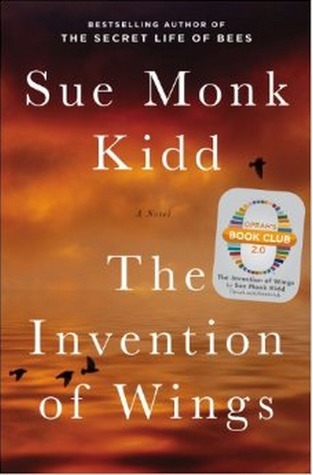
The Invention of Wings by Sue Monk Kidd

The Invention of Wings by Sue Monk Kidd (Evening Edition book club)

When Sarah Grimke turned 11 her parents gave her ownership of 10-year-old Hetty "Handful" Grimke, the daughter of one of their slaves. Sarah is incredibly intelligent and even at 11 understands the evils of slavery, but she is powerless to free Hetty or give her back to her parents. She embarks on a unique relationship with Hetty that leads them both into trouble more often than not. The Invention of Wings follows both Sarah and Hetty as they try to create a life for themselves within the confining prescribed roles that exist for women and slaves during the early 19th century in the South. Spanning the next 35 years, both Sarah and Hetty are able to do things they would have never dreamed possible - but their dreams come with a steep price.

While fiction, this novel is based on the real life Grimke sisters, Sarah and Angelina, who were pioneers in the abolitionist and feminist movements. Almost everything in the novel is based on real events in their lives, but the life of Hetty was made up to parallel Sarah's life (the real Sarah was given a slave named Hetty for her 11th birthday, but that is the only truth to that part of the story) and round out the novel. This was an incredible and fascinating read that shows no matter what life's circumstances women have always dreamed and sometimes with hard work, sacrifice, and determination some of those dreams can come true.


In CHEAP We Trust by Lauren Weber

In Cheap We Trust: the Story of a Misunderstood American Virtue by Lauren Weber

This was a really interesting book talking about the concept of being "cheap." Apparently the word cheap originally meant a quality product for a good price, but now has devolved into an insult. The author goes through America's history of thrift and how that concept has gone up and down in our society's view. The scariest parts are when she describes the shift in economic theory/practice with John Maynard Keynes and how he turned our country's economic policy on it's head - and how that has continued to today. It was also REALLY interesting to read about the propaganda about spending money that happened after the Keynes economic shift took over - I mean there is no other word to use for it than propaganda! She also talks about how little American's save and how that will REALLY hurt us in our retirement years. The last few chapters were about newer pockets of thrift like freegans - who dumpster dive for almost everything they use. It was a really unique and interesting book and definitely makes you think twice about how you spend your money and America's economic policy. Definitely worth reading!

Some quotes I really liked:

"This [war-time] productivity was terrific for economic growth; gross domestic product rose 20 percent in 1917 and 27 percent in 1918. But it also raised the specter of a severe recession once the guns fell silent...In this light, the old virtue of thrift began to look more and more suspicious...the war had so inflated America's manufacturing capacity that business interests began to see consumption, not savings, as the key to maintaining stability and growth. Corporations feared that if consumers internalized the war's scarcity message and withheld their cash even after the battles ended, corporate profits would suffer permanently." (p. 142)

"This was a shocking reversal of traditional theory, which held that savings created the pool of funds that made business investment possible. Keynes argued the opposite: in a sophisticated financial system, where money moves quickly between players and banks can even borrow from other banks to finance their loans, companies have ready access to funds. Thus, Keynes said, it is investment that leads to savings, since only investment (and the prospect of higher profit) creates jobs, which increases incomes, which leads to higher savings. This idea - that higher savings lowers the economy's total output (and thus, that thrift is a private virtue but a public vice) - became known as the 'paradox of thrift'." (p. 154)

"The marketing analyst Victor Lebow summed up the official ethos of the era when he wrote, in 1955, 'Our enormously productive economy...demands that we make consumption our way of life, that we convert the buying and use of goods into rituals, that we seek our spiritual satisfaction, our ego satisfaction, in consumption. We need things consumed, burned up, worn out, replaced, and discarded at an ever-increasing rate'." (p. 177)

"In 1975, almost 40 percent of American workers could count on a steady income from their employers from the day they retired until they dropped dead. These 'defined-benefit' (DB) plans, as they're called, were the traditional pensions many of our grandparents received. Today's employee-retirement plans look very different. Approximately 63 percent of workers who participate in corporate-sponsored retirement programs are now enrolled in 'defined-contribution' (DC) plans - generally 401K accounts that allow participants to invest a portion of their pretax income in a limited number of assets, such as stock or bond mutual funds or company stock...The main result of the switch to 401Ks is that they shift risk away from corporations and onto workers' shoulders...Classical economics tells us that Americans should save more money outside their pension plans to compensate for greater uncertainty in the plans. Instead, as we've seen, the opposite has happened...Social security was never meant to be a retiree's only source of income (though it is, for 21 percent of Americans over age sixty-five); it was designed to supplement personal savings and employer-provided pension plans." (p. 191-3)

"Until 1985, the United States was the world's creditor, lending money to other nations. Now, with obligations of over $10 trillion, we are the world's largest debtor nation." (p. 201)

"In 2007, the U.S. government paid $430 billion per year in interest payments alone - that's apart from principal - on the loans it's taken out. That's $430 billion in taxpayer money that went largely to overseas governments rather than to schools, transportation networks, research programs, and other investments here at home." (p. 203)

"The story that's told about the United States, both at home and abroad, is that we're a nation of spendthrifts, a debtor nation, a credit card nation. In the aggregate, that's absolutely true, and the statistics bear it out. But look a little closer and you find a different story. On the margins, often quiet and invisible, are pockets of Americans who are questioning and, to varying and sometimes astonishing degrees, opting out of consumer culture." (p. 223-4)


Delicious! by Ruth Reichl

Delicious! by Ruth Reichl

Billie Breslin moves from California to New York for an opportunity to work at the famous Delicious! magazine. Billie always lived in her big sister Genie's shadow, so at first she struggles to find her place in New York City. But quickly she connects with some of the other magazine staff and she also begins to explore the vibrant NYC food scene - especially Fontanari's where she starts working on the weekends. Then without warning Delicious! is shut down, but they keep Billie on to answer the phones. While working in the empty building Billie uncovers a hidden room full of letters to the magazine. One of the letter writers is 11-year-old Lulu who develops a correspondence with James Beard during WWII. Billie instantly feels a connection to Lulu and through her Billie starts to come to terms with her own fears and issues. This is a quick and fun read full of secrets and food that any foodie will love.

January 2015 Cookbooks

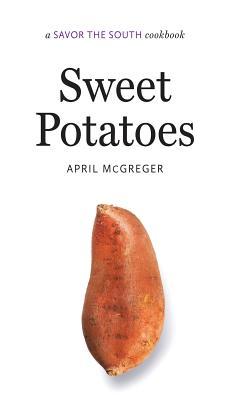
Sweet Potatoes by April McGreger

Sweet Potatoes by April McGreger

I love these Savor the South cookbooks! This book gives some really interesting information about the history of the sweet potato in the South, as well as, growing tips and various varieties and how they are best cooked. There are definitely quite a few recipes I'd like to try and the author goes well beyond sweet potato pie! If you like sweet potatoes you need to check this book out - you will learn something new and find plenty of new sweet potato recipes!

January 2015 Reviews

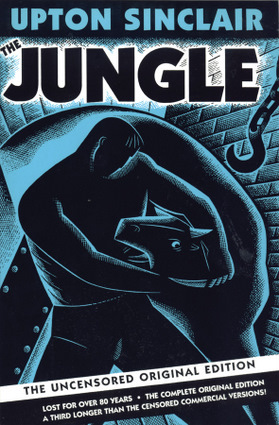
The Jungle by Upton Sinclair

The Jungle by Upton Sinclair (Evening Edition book club)

I remember reading this book in high school and really liking it, so I was looking forward to re-reading it as an adult especially because of my interest in food issues. While this book caused quite a stir when it first came out because of what it brought to light about the food industry of the day, the majority of the book is not about food. Jurgis Rudkus comes to America with friends and family from Lithuania hoping for a better life. What he finds is pretty much hell. They are barely able to scrape by and all work in some capacity in the "packingtown" meat packing district of Chicago. The working conditions are horrific, the pay is horrific, the food being produced is horrific, and immigrants are constantly being scammed because they can barely speak the language and don't know any better. Most of the book is Jurgis' life getting worse and worse - until he finds socialism in the last few chapters. Then suddenly all is right in his world. Sinclair wrote this book as an argument for socialism, but when it came out the public was horrified by what he revealed about the food industry - to the point that this book inspired the Pure Food and Drug Act of 1906. I found the parts about socialism the hardest to take, just because it was so obviously trying to beat that point of view into the reader's head. Overall, it was WAY longer than it needed to be and all the things that Jurgis get involved in over the course of the book seem pretty far-fetched. What did seem obvious to me was how little the food industry has changed overall - corporations still create food laws to benefit their pockets, industrial food workers are treated incredibly poorly and are often illegal immigrants, and industrial food is far from "pure." But there are MUCH better non-fiction books about the food industry if that's what you're interested in.


The End of Your Life Book Club by Will Schwalbe

The End of Your Life Book Club by Will Schwalbe (Books & Banter book club)

Will Schwalbe and his mother Mary Anne always talked about books. Will worked in publishing and his whole family were big readers. So when Will's mother is diagnosed with terminal pancreatic cancer, they form an informal book club to pass the time during Mary Anne's treatments. Pancreatic cancer patients sometimes only live a few months past their diagnosis, but Mary Anne lived for almost 2 years after her diagnosis and her family made the most of that time with her. While some parts of the book were tedious in describing basically the same things over and over, but two things stood out to me - how close the Schwalbe family was and what an incredible woman Mary Anne was. Overall it was a good book and not overly sad or sentimental. 
[originally read July 27, 2013]

I re-read this book for book club and it made for a great discussion - about books, book clubs, life and death, family, etc. I did enjoy re-reading it and might even give it 4 stars this time. This is a great book for book clubs and I printed the list of books at the end of the book that are discussed in the book for my book club. Overall, a really good book about the love of reading and not as sad as you might think based on the subject matter.
[re-read January 9, 2015]


Leaving Time by Jodi Picoult

Leaving Time by Jodi Picoult

Jenna Metcalf's mother disappeared when she was three years old after an incident at the elephant sanctuary where Jenna's parents Alice and Thomas work. Her father has a mental breakdown and ends up in an institution after the incident. Jenna has spent her whole life wondering what happened that night. She decides to enlist the help of a psychic and one of the original detectives on her mother's case. Both Serenity and Virgil have seen better days and the last thing they want to do is help a thirteen-year-old with a ten year old missing person's case, but something about Jenna draws them both in. Jodi Picoult is known for her surprise twist endings, but I really did NOT see this ending coming. It's like The Sixth Sense meets Ghost in book form. The story is told from Jenna, Serenity, Virgil, and Alice's perspectives so you really get the whole story of what happened that night at the elephant sanctuary. I'm not a fan of psychics, so when I realized what was happening at the end it made me like the book a little less, but the way the story unfolds you definitely want to keep reading to find out what happens.


The Life-Changing Magic of Tidying Up by Marie Kondō

The Life-Changing Magic of Tidying Up by Marie Kondo

This book was definitely unique. The author has created a "tidying" empire that supposedly has changed the lives of all her clients. While she does have some good ideas and she explains why she suggests everything that she does, it is pretty hardcore. She thanks her clothing, shoes, etc. every day and empties her purse completely every day when she comes home. Her biggest suggestion is only keeping things that "spark joy," but she is also against stockpiling anything for any reason, which I don't agree with. There are some good tips for organizing and storing, but overall it's pretty hardcore and almost neurotic in my opinion. Her descriptions of herself as a child I find hard to believe - she LOVES tidying and does it EVERY day after school. She also said that by 1st grade she was using an alarm to get up on her own because she didn't trust anyone in her family to get her up on time - yikes! I might think about discarding things differently after reading this, but it didn't inspire me to want to be like her. Overall, OK, but pretty rigid and strict.

Some crazy quotes:

"Every piece of clothing has its own 'sweet spot'where it feels just right - a folded state that best suits that item." (p. 76)

"I pointed to the balled up socks. 'Look at them carefully. This should be a time for them to rest. Do you really think they can get any rest like that?'" (p. 81)

"Once you've experienced the freedom of a life without surplus stock, you won't want to give it up and will naturally stop stockpiling." (p. 123)

"There is no need to keep soaps and shampoos out when we are not using them, and the added exposure to heat and moisture when they aren't in use is bound to affect their quality. It is therefore my policy to keep everything out of the bath or shower. Whatever is used in the bath should be dried after use anyway, so it makes far more sense to just wipe down the few items we use with our bath towel and then put them away in the cupboard." (p. 158)


Mambo in Chinatown by Jean Kwok

Mambo in Chinatown by Jean Kwok

I loved Jean Kwok's first book Girl in Translation, so I was excited to read this one and she does not disappoint! Charlie and her sister Lisa are ABCs - American Born Chinese. After their mother died Charlie works extra hard to help her father raise Lisa and also help contribute financially. When Charlie has the opportunity to work as a receptionist for a ballroom dance company she doesn't know that her whole life will change. But, as Charlie's life gets better Lisa's gets worse - she starts having nightmares and physical problems that no one can figure out. Plus, their father doesn't trust western medicine. As Charlie becomes more and more involved in the ballroom dancing world she feels like she is living two lives. Kwok does a great job of showing how Charlie is torn between two worlds - her father's traditional Chinese world and all the possibilities of American life. Another great book by Jean Kwok - I can't wait to read whatever she writes next!


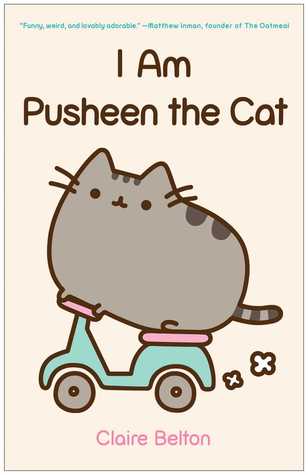
I Am Pusheen the Cat by Claire Belton

I Am Pusheen the Cat by Claire Belton

This book is SO cute that after checking it out from my local library I immediately bought it! I also bought a Pusheen keychain and a little stuffed Pusheen toy. I had seen some of the Pusheen gifs online and thought they were cute, but this book just takes it to another level. The illustrations are great and I actually laughed out loud when reading it. I only takes a few minutes to read through the book since it's mostly pictures, but if you love cats then this is a must have book!


The Call of the Farm by Rochelle Bilow

The Call of the Farm by Rochelle Bilow

When Rochelle Bilow was working on her freelance food writing career, she stumbled upon Stonehill farm - a small, sustainable CSA farm in central New York. She plans to volunteer for a day and write a day-in-the-life piece about it. But, after that first day she is inexplicably drawn to the farm and the work - she is also drawn to Ian, one of the farmers. Soon she is hired to cook meals for the staff and that turns into actually working on the farm. Pretty quickly she and Ian start dating too, but it's obvious that her feelings are much stronger than his are. Over the course of a year Rochelle learns the ins and outs of working on a small, sustainable farm - how hard the work is and how long the days are, but also how beautiful it is and how satisfying the work can be. But, you can see it coming a long way off that her relationship with Ian is probably not going to work out. I felt bad for her, but I also know that sometimes when you're in a relationship like that you just can't help yourself. 

Overall, it was disappointing because from about half way through you realize the relationship isn't going to work and it puts a damper on the book. Plus, the end just drops off and I would have liked to know at least what happened after she left the farm - an epilogue or something. She does include a few seasonal recipes at the end of each section which I liked. It wasn't a terrible book, but I just felt really bad for her with how painful this relationship was for her. There are a lot better, and happier farm memoirs out there.


Saving Grace by Jane Green

Saving Grace by Jane Green

Grace and Ted Chapman are a literary powerhouse couple. Ted is known as "the thinking man's Grisham" and Grace is by his side as the beautiful, loving wife and homemaker who sits on charity boards. They have an enviable life, but on the inside Grace has to put up with Ted's drastic and terrible mood swings and rages. When his long-time assistant Ellen leaves, Grace steps into her role and honestly can't take much more. Then at just the right moment Beth comes along, she has experience as a personal assistant and it seems like there isn't anything that she can't do. Even though she seems like a dream come true, Grace feels like there is something not quite right about Beth. Soon, Grace realizes that Beth may have been after more than just a "dream job," but might be trying to take over Grace's life. Will Grace be able to save her family and her comfortable life or once she takes a step back will she even want to go back?

THIS is the Jane Green that I love! I really didn't like her last book Tempting Fate and I was hoping that was a one-off not-so-great book and it seems it was. This is a fast paced novel that will keep you guessing until the end about what will happen with Grace and what she will choose for herself in the end. I would highly recommend this one!

2014 Year in Reading

In 2014 I read 85 books and 32 cookbooks!  Here are my top 10 picks for 2014:

Fiction

All the Light We Cannot See by Anthony Doerr
The Girl You Left Behind by Jojo Moyes
The Bees by Laline Paull
Stella Bain by Anita Shreve
The Age of Miracles by Karen Thompson Walker

Non-Fiction

The Mushroom Hunters by Langdon Cook
Burnt Toast Makes You Sing Good by Kathleen Flinn
A Wolf Called Romeo by Nick Jans
The Meat Racket by Christopher Leonard
Pandora's Lunchbox by Melanie Warner