Friday, March 2, 2018

February 2018 Cookbooks

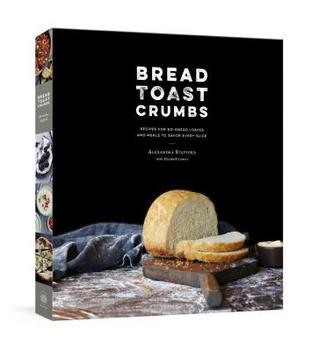
Bread Toast Crumbs by Alexandra Stafford

Bread Toast Crumbs: recipes for no-knead loaves and meals to savor every slice by Alexandra Stafford

Alexandra Stafford grew up eating her mother's peasant bread at every meal. Eventually after she started a food blog she convinced her mother to share her bread recipe. This cookbook starts with that recipe then the first section "bread" gives other bread recipes and variations on her mother's original recipe. The second section "toast" covers recipes that use the breads from the first section - sandwiches, entrees using bread, etc. The final section "crumbs" includes recipes on using the bread in a broken down way - crumbs, croutons, bread pudding, etc. I really like the way Stafford organized the cookbook and there were LOTS of recipes I'd like to try. If you want to get started baking bread (and finding all kinds of ways to use that bread) this would be a great place to start.


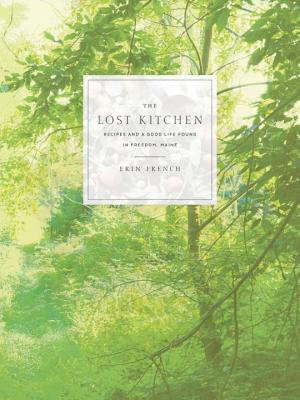
The Lost Kitchen by Erin French

The Lost Kitchen: recipes and a good life found in Freedom, Maine by Erin French

Erin French grew up helping cook in her father's diner in a small town in Maine. French never went to culinary school, but between growing up cooking and cookbooks she became a self-taught chef. Now in this cookbook she shares some of her favorite recipes based on local, seasonal ingredients. Because not all of her local ingredients would be available everywhere, she gives possible substitutes where needed. Arranged by season, there are lots of recipes I'd like to try. Plus, there are lots of beautiful photographs of both the food and also her Maine landscape. Definitely a solid cookbook.

February 2018 Reviews

The Light Between Oceans by M.L. Stedman

The Light Between Oceans by M. L. Stedman - Evening Edition book club, re-read

When Tom Sherbourne returns to Australia after fighting for four years on the Western Front he just wants solitude to try to sort through everything he's seen and done in the war so he takes a job as a lighthouse keeper on Janus Rock, an island that is half a day's journey from the coast. When he brings his new bride Isabel back to Janus Rock with him it seems like their world is perfect - they both love living on Janus and love each other. But, then after Isabel suffers two miscarriages and a stillbirth Tom sees that Isabel is starting to retreat into herself further and further after each loss. When a boat washes ashore with a dead man and a live infant inside to Isabel this is an answered prayer, but Tom wants to report the man and baby immediately. Because of Isabel's losses and how she lights up with this new baby he reluctantly agrees to keep the child and raise it as their own. But, when they go back to the mainland for their first leave nearly 3 years since they left they realize that their decision to keep the baby as their own has far reaching consequences. Tom truly struggles with how to do the right thing this far into their lies. This begins to strain their marriage and when everything comes to light Tom, Isabel, and baby Lucy will be forever changed. 

This was an incredibly well-written novel - you could almost feel and taste the salt air at the lighthouse and you really feel for Tom and Isabel after all they've been through. The author does a great job with the characters working through all the moral issues that surface throughout the book. I also really like a book that has a realistic ending and everything isn't tied up too perfectly. This is probably one of the best books I've read this year - and it's the first novel by this author so I will definitely be on the lookout for more from her!

Re-reading this book it was just as good as the first time. A beautifully written love story with a tear-jerker ending. Should make for a good book club discussion. [Re-read Jan 29-Feb 2, 2018]


My Lovely Wife in the Psych Ward by Mark Lukach

My Lovely Wife in the Psych Ward by Mark Lukach

Mark and Giulia met their freshman year of college and married a few years out of college. They both had jobs they loved and were starting their married life in San Francisco, but when Giulia was 27 she had a psychotic break and was hospitalized for 23 days. Doctors still weren't sure what Giulia's diagnosis was, but she was able to go home. Then the crippling depression and suicidal thoughts started. Finally a few years after her first breakdown, it seemed like this was a one-time thing and the couple got pregnant. But, when their son was a few months old Giulia had another breakdown, this time spending 33 days in the hospital. At the time Mark was a stay-at-home dad, but he still struggled to care for their son and visit Giulia and help her. After the second breakdown Giulia was diagnosed with bipolar disorder and over time she and Mark worked out a plan to deal with any future breakdowns. Unfortunately, a few years later she was hospitalized for a third time, but this was the shortest and she was able to return to work after just a month off. My Lovely Wife in the Psych Ward is Mark's story of how Giulia's illness impacted him and their marriage. It's a true love story in that Mark never gives up and never loses hope that Giulia will get better. There is a really great video on Mark's website (http://www.marklukach.com/about/) of an interview with him and Giulia - it was nice to see what she looks like and hear her side of things. Definitely a sad story, but still a love story.


Vinegar Girl by Anne Tyler

Vinegar Girl by Anne Tyler - Books & Banter book club

I wasn't sure what to expect with this book and it's been a long time since I read Shakespeare's Taming of the Shrew, but this one left me kind of dumbfounded. While Kate is the narrator, it is not clear when or even if she really falls in love with Pyotr. Their wedding is so terrible and such a disaster that I really felt bad for her, but maybe she truly didn't mind every single thing going wrong. There are a lot of unanswered questions, but based on the epilogue it seems like she is happy with Pyotr. It was just a very odd story. I'll be interested to see what my book club thinks of this one.

A quote I liked:

"It seemed they viewed her differently now [after her engagement]. She had status. She mattered. All at once they were interested in what she had to say. She hadn't fully understood that before this, she hadn't mattered, and she felt indignant but also, against all logic, gratified." (p. 152)


Modified by Caitlin Shetterly

Modified: GMOs and the threat to our food, our land, our future by Caitlin Shetterly

Shortly after she was married Caitlin Shetterly started getting sick with a variety of symptoms that didn't seem to point to an obvious illness. After her son was born it continued to get worse to the point where she was exhausted all the time and could barely do anything. Around the same time her son experienced some weird symptoms and his doctor thought it might be a corn allergy. Not long after that Caitlin finally saw a doctor who said he thought she might be having an allergy to the proteins created by the enterotoxins bred into GMO corn - and that was likely what her son had as well. But, in trying to cut GMO corn completely out of her diet proved harder than you might think - corn is in EVERYTHING - pretty much every processed food has some corn derivative in it. Shetterly's family had to basically grow and source local, non-GMO food and prepare it themselves, but once they did all of her symptoms stopped. After going through this traumatic experience, Shetterly wanted to dig into GMOs. What exactly are they? What do we know about how they affect humans? This book is the result of those questions. A very thorough, but easy to read explanation of the horror-show that is genetically modified organisms, or GMOs. This is a terrifying, yet must-read book that exposes how our government has allowed Monsanto and other biotech companies to mutate our food for huge profits. 

Quotes I liked:

"[Dr. Mansmann] said he'd come to believe, in the years since GMOs were first introduced, that some people might be developing a kind of chronic allergic response that was caused not by the corn itself, but instead by the proteins created by both the enterotoxins, bred into the corn to make it pest-resistant, and the proteins created from making it 'Roundup Ready'..." (p.14)

"I find that people like to say that farmers have been 'genetically modifying' our food for ten thousand years. This is just not accurate...To emphasize, a GMO, most often, carries the genes from two different species - and only technology (except in rare occurrences) can make this happen. No farmer or plant breeder or botanist can do this outside of a lab. Again, GMOs can only be made in the laboratory. Nature will never make a GMO on her own and you can't make one out in the field, no matter how brilliant a farmer you are." (p. 22)

"(Between 2001 and 2007, as GMO products took off, glyphosate use more than doubled; 180-185 million pounds of glyphosate were used in 2007. Some researchers estimate another doubling, as least, in the last decade, but it's hard for us to know because the Bush administration, openly friendly with the chemical companies, was reportedly persuaded to stop recording glyphosate sales in 2007.)" (p. 28-9)

"...back in 2002, during the African famine, Zimbabwe, Mozambique, and Zambia refused food aid from the United States because they did not want genetically modified corn. (Zambia's President Mwanawasa said, famously, 'Simply because my people are hungry, that is no justification to give them poison.')" (p. 98-9)

[Dave of Food Democracy Now!] "'It almost doesn't matter who's in the White House because it's been a corporate takeover of our government,' he said. 'This is gangster capitalism.' And then he elaborated further, 'There are six hundred corporate lobbyists controlling America. No one in the White House does.'" (p. 150-1)

"Ignacio said that a German importer had told him that he had hit a stumbling block in his importation business: In order to make sure his honey is GMO-free, he has to run some expensive PCR testing (testing for GMO DNA) to be sure the 'GMO-free' label is accurate. And the problem was that his drums were often contaminated. He told Ignacio that even a small amount of GMO DNA from just one family's operation could ruin a whole drum, in which he's already invested quite a bit of time and money. So Ignacio had asked the guy, 'Well, what do you do with it if it does have GMO DNA? Do you dump the honey into the sea or what?' And the guy says to Ignacio, 'Oh no. We just send it to the U.S. where people don't care.'" (p. 168-9)

"In Dashka Slater's Mother Jones piece, she wrote, 'Gender deformities were present among frogs exposed to as little as 0.1 part per billion (picture a thousandth of a grain of salt in a half gallon of water). That's thirty times less than the 3 ppb the EPA allows in our drinking water.' Indeed, some of Tyrone's studies were showing that atrazine, even at extremely low levels, was causing some male frogs to 'become' females - complete with female parts. This was an electrifying and terrifying discovery." (p. 294)

"Wendell Berry's famous words: 'You cannot regulate an abomination. You have got to stop it.'" (p. 306)

"[A 2014] study said that neonics are as dangerous as DDT and are affecting birds, fish, worms, pollinators, bugs - you name it. Their study also found that traces of neonics have been found in fruits, vegetables, cow's milk, and honey. This is the first comprehensive compendium that seems to point the finger, without a doubt, to the trouble neonics, used primarily on GMO crops, could be wreaking." (p. 323)


Our Hearts Will Burn Us Down by Anne Valente

Our Hearts Will Burn Us Down by Anne Valente

It's bad when you pick up a book that sounds good, but turns out to be terrible and you stop reading it. But it's worse when you're reading a book that you're liking and want to see what happens only to be disappointed with a terrible ending - that is this book. A school shooting at a high school in St. Louis, MO is followed by a string of unexplained house fires at the shooting victim's homes. Told from the perspectives of four Juniors, all friends and all on the yearbook committee - Christina, Matt, Nick, and Zola. As they each try to deal with their own trauma and experiences during the shooting, they are also on edge due to the fires, grief, and normal high school stresses. I didn't love the writing, sometimes it was hard to tell who the narrator was and there were no quotation marks for conversations. But, I was interested enough in the story and I wanted to know what was behind the fires and that was where the author totally dropped the ball. The ending is so vague and terrible that I was like WTF did I just read?! As another reviewer on Goodreads said, "I can't believe I struggled through this mess of jangling sentence fragments and plot holes to see how this writer planned to resolve the mysteries, only to discover she never had any intention of doing so." Definitely disappointing and I won't be looking for any other books by this author in the future.


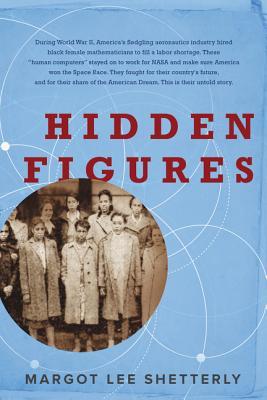
Hidden Figures by Margot Lee Shetterly

Hidden Figures by Margot Lee Shetterly - Books & Banter and Evening Edition book clubs

The story of the African-American women computers who worked to make NASA space flight and the moon landing possible is an amazing story that I had never heard of before this book came out. But, unfortunately this book is just not well written. I so wanted to like it, but found myself skimming because it was so bogged down in details and names. I think if the story had been told better this could have been an amazing book. I was also surprised that there were no pictures at all - it would have helped to put faces with names. While the women's stories and accomplishments are AMAZING, this book is not. It's unfortunate that this lost story of women's and African-American history was not written better. Very disappointing. I'll be interested to see what my book clubs think of this one. I also plan to watch the movie now that I've read the book - hopefully it will be more interesting than the book.

Some quotes I liked:

"Even as a professional in an integrated world, I had been the only black woman in enough drawing rooms and boardrooms to have an inkling of the chutzpah it took for an African American woman in a segregated southern workplace to tell her bosses she was sure her calculations would put a man on the Moon. These women's paths set the stage for mine; immersing myself in their stories helped me understand my own." (p. xv)

[As public school integration started in Virginia] "In Prince Edward County, however, segregationists would not be moved: they defunded the entire county school system, including R.R. Morton in Farmville, [where Dorothy Vaughan taught] rather than integrate. No municipality in all of America had ever taken such draconian action. As white parents herded their students into the new segregation academics, the most resourceful black families scrambled to salvage their children's educations by sending them to live with relatives around the state, some as far afield as North Carolina. Prince Edward's schools would remain closed from 1959 through 1964, five long and bitter years...Commenting on the situation in 1963, United States Attorney General Robert Kennedy said, 'The only places on earth known not to provide free public education are Communist China, North Vietnam, Sarawak, Singapore, British Honduras - and Prince Edward County, Virginia.'" (p. 204)


Sleeping Giants by Sylvain Neuvel

Sleeping Giants by Sylvain Neuvel

When Rose Franklin was a child she fell into a hole that held a giant metal hand surrounded by panels of strange text. Seventeen years later Rose is a brilliant physicist leading a secret team to crack the code found with the hand. Told exclusively in interviews between Rose and her team members with a mysterious benefactor/powerful behind-the-scenes leader the story quickly unfolds as this elite, yet unorthodox team works to unlock an ancient mystery. The story that unfolds is pretty crazy, but believable at the same time. I really liked how the story was told and I don't think it would have been as effective if it had been a regular narrative. It's very curious who the mystery interviewer might be - the "man behind the man behind the man behind the throne." It's definitely interesting to see the relationship change between each character and the mystery man. Since this is #1 in a trilogy, I'm definitely interested to see what happens next in this crazy story. Worth checking out even if you're not a huge sci-fi fan!

Tuesday, February 6, 2018

January 2018 Cookbooks

Preservation Pantry by Sarah Marshall

Preservation Pantry: Modern Canning From Root to Top Stem to Core by Sarah Marshall

I love canning, so I'm always looking for new canning recipes and ideas. In Preservation Pantry Sarah Marshall shows not just canning ideas, but really how to use the whole product so there is literally NO waste. The book is divided into 2 sections - fruits and vegetables. Then for each specific fruit or vegetable Marshall gives multiple recipes - some are to be canned, others are recipes using the canned product, or other ways to preserve that product without canning. In the introduction she describes how she learned to can from her mother and how growing and canning food are some of her favorite memories. She also gives an overview of how to water-bath can and an illustrated list of tools and equipment needed for canning. While she does a good job explaining the basics, I always recommend learning how to can from someone experienced or through your local county extension office. I really like how the book is laid out by the fruit or vegetable instead of broader categories. Marshall does have a few "basic" canning recipes, but many of her recipes are unique or different from most canning cookbooks. If you're an intermediate canner/gardener this might be the book to help you try some new and different canning ideas/recipes. There are definitely a few I want to try!

January 2018 Reviews

Eat Well, Move Well, Live Well by Galina Denzel

Eat Well Move Well Live Well by Roland & Galina Denzel

I thought this book would be more interesting than it was. To be fair though, it's designed to read one tip per week and focus on that integrating that tip into your life that week in the hopes that after a year you'll have 52 ways to eat, move, and live better. I checked this out from the library, so I can't keep it for a year! I did read it from front to back and there were tips that I liked and made sense, but there were some that in my opinion were pretty out there - get rid of your couch and sit on the floor all the time, no thanks. Overall, a good way to incorporate small changes to your life and you don't have to read it front to back you could pick out chapters/areas that you want to change/focus on.


Moonglow by Michael Chabon

Moonglow by Michael Chabon (Books & Banter book club)

I've never read anything by Michael Chabon before and wouldn't have read this one if not for my book club. If it wasn't for book club I probably would have quit after the first 50 pages, but it did get a little better about halfway through. This "fictional memoir" follows "Mike" as he spends time with his grandfather at the end of his life. For whatever reason his grandfather feels compelled to tell Mike a series of fragmented stories from his life. Mike's grandfather was brilliant, but also a constant troublemaker even into adulthood. He grew up poor, served during WWII, spent time in prison, and dealt with a mentally ill wife. He was definitely a character and if half of what he said is true he had an adventuresome life. 

I didn't really like this book - I didn't like the format of "fictional memoir" that was not in anyway told chronologically. There was also a lot of seemingly random sexual or vulgar parts that seemed to be thrown in for no reason at all. While the writing was good, I just didn't love the story and it was very hard to get into. I don't think I'll be reading anymore Chabon in the future.


To The Bright Edge of the World by Eowyn Ivey

To the Bright Edge of the World by Eowyn Ivey (Evening Edition book club, re-read)

I loved The Snow Child, so I couldn't wait to read this one and saved it to take on vacation. While it's very different from The Snow Child, there are some similar elements and I really liked it.

Allen Forrester has the opportunity of a lifetime to lead a small group of men up the Wolverine River and into uncharted Alaskan territory. While this is the adventure of a lifetime he will be leaving behind his newly pregnant wife Sophie. Sophie is not thrilled about living in army barracks for up to a year with little to no word from her husband - not knowing if he will come back to her. Told exclusively in letters and diary entries from both Allen and Sophie, their stories even though hundreds of miles apart continue to intersect through strange coincidences or magic - however you choose to see it. While Allen is away Sophie delves into the new art and science of photography to fill her time. This new hobby will completely change her life in unseen ways. Meanwhile at times Allen's group struggles to survive in the harsh Alaskan wilderness and much of what they experience can't be explained rationally or scientifically. Like Ivey did in The Snow Child, there is a fine line between reality and magic that is often blurred and many events could be seen either way. While this book does start slow, it holds your attention and you can't wait to see if Allen and his men will survive their journey and make it back to Sophie. And as someone who is childfree, I like that in both her books the main characters don't have children. In the late 1800's when this book takes place that would have been a devastating circumstance, but only because of it is Sophie able to do all she does at the end of the book. While in both this book and The Snow Child, being childless is not their choice, the author shows that in both cases the characters have fulfilling lives and marriages. I highly enjoyed this one!

Re-read for book club and loved it EVEN MORE the second time! This time because I knew the storyline I was able to read it a little slower and really see a lot of the details that I might have missed the first time. I also marked all the pages with raven references as I was reading because the first time I was about halfway through the book and wished I had done that. Such a beautiful and well-written story. I can't wait to see what Ivey writes next!

Some quotes I really liked this time:

"It made me uneasy. I have no desire to bring Sophie into such low talk. How could I tell of her intelligence, her humor, her gentleness, to a man like this? She is too good for his ears." (p. 57)

"There was something diminishing about the conversation, too, as if suddenly we had become only, collectively, and forever Mothers, with no room for an entire individual." (p. 89)

"You are by no means naive or unwitting, yet somehow you still find beauty in each day. It is a gladdening thought, & one that saves me just now...I can find no means to account for all that we have witnessed, except to say that I am no longer certain of the boundaries between man & beast, of the living & the dead. All that I have taken for granted, what I have known as real & true, has been called into question. I am certain only of this - I come home to you in love." (p. 378)


The Potlikker Papers by John T. Edge

The Potlikker Papers by John T. Edge

I wasn't sure what to expect with this book, but I LOVED it. As Edge describes "potlikker" was the broth left after a pot of greens was cooked - the slave owners ate the greens, leaving the potlikker for the slaves - not knowing the potlikker was nutrient rich and the better product. Today in the South potlikker has been reclaimed by chefs using it in new and unique ways, as well as celebrating it's history. This book explores the history of the South through food, starting with the pivotal roles cooks and waiters played in the civil rights movement. Then decade by decade Edge shows trends in Southern food and how they reflected the changing culture of the South. A very interesting and incredibly informative book about the culture and food of the South. A must-read for any Southerner or fan of Southern food!

Some quotes I really liked:

"To apprehend how Southerners have fed themselves and others gains us a necessary glimpse of remarkable lives, a kitchen-eye view of the revolutions and evolutions that have shaped the region. Those stories reveal a people's history, embedded in the crops we grow, the dishes we cook, and the tables where we gather. In these Potlikker Papers, complex narratives reveal how and why Southern food has become a shared culinary language for a nation now fixed on finding new meaning in its meals." (p. 11)

"Through television shows and books, [Nathalie] Dupree argued that Southern cooking should be considered a cuisine. 'People go all the way to Italy to study how to make pasta with Giuliano Bugiatti,' said the woman who, in the 1960s, had gone all the way to London to learn how to stew a proper coq au vin. He moves his hands, she said, in the same way a Southern cook shapes biscuit dough. 'It's just that no one ever bothered to say that making Southern biscuits was a technique worth learning.'" (p. 203)
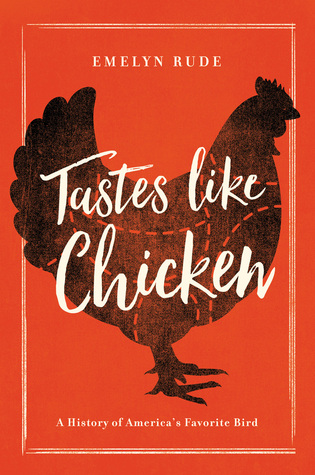

Tastes Like Chicken by Emelyn Rude

Tastes Like Chicken by Emelyn Rude

I assumed this would be another book about the industrial chicken industry and all its evils. But, Emelyn Rude takes a different look at the chicken. She looks at chicken as a food source and how much that has changed over the years. Chicken was seen as food only for sick or ailing people in the 1800's, while beef was for "strength" or healthy people. Then during slavery in the American South, chickens weren't considered "livestock" so slaves could own them and then chicken became associated with slavery and poverty. Only when the chicken industry became industrialized between the 1940's and 1960's did chicken become more widely available and consumed in America. Rude only focuses on the evils of the modern day chicken industry in the last chapter and I wish there had been one more chapter to show the other side - small farm pastured chicken/poultry. Overall, an interesting look at how eating chicken has changed over time in the American culture.

Some quotes I liked:

"Like their English forebears, Americans were unafraid of letting their livestock take the stand and bear testimony in criminal proceedings. In 1876 a black woman in Virginia was accused of stealing chickens. As part of the prosecution, the mother of the chickens in question was brought to court to see if she could identify those birds as her offspring. The biddy somehow managed to convince those present, beyond a reasonable doubt, that she recognized that those were indeed her progency that were stolen. As a result of the hen's testimony, the human defendant received thirty-nine lashes." (p. 36-7)

"By the end of the 1940's, almost all of the broilers in the United States were raised in complete confinement, a practice that was incredibly effective in achieving its aims of efficiently producing very cheap meat. By 1955 the average time required to raise one thousand birds to maturity was just forty-eight man hours, as opposed to the average of two hundred and fifty in 1940." (p. 142)

"Further scientific investigation ensued and researchers found that while B12 was indeed essential to a happy chicken, the antibiotic residues affixed to them were veritable chicken Miracle-Gro. When fed antibiotics, the birds required less feed, grew fatter faster, and the mortality rate dropped sharply. Farmers were ecstatic - the discovery was heralded as 'the Biggest Feeding News in 40 years!' - and within the next two decades every single commercially produced chicken in the United States was supplemented with antibiotics." (p. 144)

"If humans grew as fat as fast as a modern chicken, a 6.6 pound human baby would reach 660 pounds in just two months." (p.183)

"According to one survey of the broiler industry, a typical grower in 1995, 'had been raising chickens for fifteen years, owned three poultry houses, remained deeply in debt, and earned perhaps $12,00 a year.' Unfortunately, not much has changed in the time since. Today the median-income poultry farmer owns between three and five chicken houses, produces some 483,600 broilers each year, and lives below the poverty line." (p. 186)
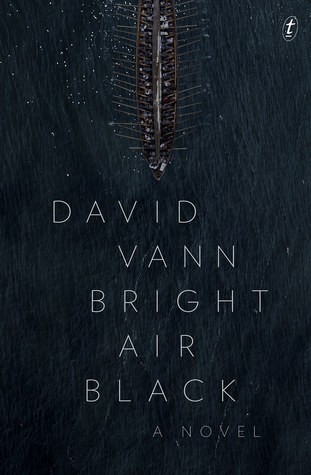

Bright Air Black by David Vann

Bright Air Black by David Vann

I remember reading Medea in high school and loving this quote so much that my parents put it in my Senior page of the yearbook for me: “Let no man think me a weak, frail-hearted woman, no let them know me for the opposite of that...it is lives like this that are longest remembered.” So, when I saw this book that's a re-telling of Medea from her perspective I knew I had to read it. In Bright Air Black Medea is "a slayer of kings who wants a world not ruled by men." Medea sees the men in her world rise to the top by being ruthless warriors, but when she tries to escape the confines of being a woman by doing the same thing she is scorned and seen as crazy. She thinks that Jason is the solution - she will set it up for him to be king and will rule through him. But Jason is weak and leaves Medea for another woman - and Medea is not someone to be scorned. Medea's "burn down the ground" approach will exact her revenge on Jason and make her a legendary villain. 

This is not as easy book to read - there is a LOT of violence and brutality. Definitely not a good time to be a woman or really anyone, but women were always on the verge of being sold, given away, kicked aside, used, etc. Medea acting on her own desires for power and control would be seen as great qualities in a man, but as a woman in that time period she had no hope of rising above her prescribed role. Despite the violence, I wanted to see what would happen as Medea's story unfolds, but I would have a hard time recommending this one because it was so brutal. Definitely a unique book that re-casts Medea as a woman ahead of her time, not just a ruthless villain.

Some quotes I liked:

"What Medea believes is this: that there are no gods. There is only power, and to hold power, you have to be descended from a god. In the end, this is the same thing. When you have that power, you do become a kind of god...Gods do what cannot be done. And a woman can become a god easily because she is not allowed anything. She can become a thing of fear." (p. 21)

"She will be made anything today, slave or whore or friend of the king, with slaves beneath her. She will be killed or whipped or bathed and dressed and honored with a feast, all at the whim of one man she has never met, and she has no say over what will happen to her children." (p. 213)
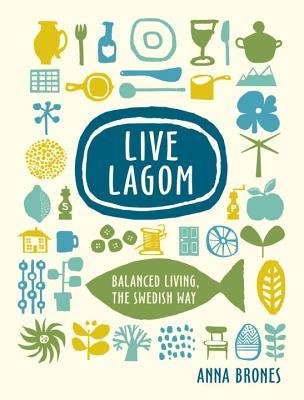

Live Lagom by Anna Brones

Live Lagom: Balanced Living, the Swedish Way by Anna Brones

The last lagom book I read was pretty lacking, but this one is much better! Anna Brones gives a great introduction to the Swedish concept of lagom, "In a chaotic, modern world, this all feels like a breath of fresh air. We're craving more balance, more equality, more simplicity. We're looking for something that's often hard to put an exact name to, but it's a feeling of contentedness, of having just the right amount of things, the right amount of time." (p. 12) She also explains how lagom can sometimes have a darker side where people use it to keep people in line with cultural expectations or to discourage ambition. But, overall lagom can really help if you apply it to all aspects of your life. In this book she covers work, home, health, and the environment. There are also lots of beautiful photos and in the "home" section there are quite a few recipes included. This was more what I was expecting after all the hygge books - a really beautiful book that explores the idea of lagom and how anyone can apply the ideas to their own life. There is a renewed popularity with minimalism right now, but the idea of lagom resonates much more with me because it's a middle ground - not minimalism or extreme consumerism, but the balance in the middle. Definitely a book worth reading.

Some quotes I really liked:

"In modern Western culture, being busy has come to define us - the socially acceptable pastime. It comes with an underlying assumption that if we're busy, with our schedules packed to the brim, then we must be important, our lives must have meaning and purpose. We use busy as a plaster to cover up the real question that we're all afraid of asking: if we are not busy, then who are we? The truth is that we're too busy to take a step back and ask ourselves: what exactly are we busy with? Sometimes we've got a work schedule full of deadlines and it's hard to get around that. But more often than not, we're filling up our time off with a multitude of activities instead of taking the time to just exist." (p. 68)

"Think how easy it is to look at Facebook, and all of a sudden half an hour has gone by. Or how easy it is to come home after a long day at work and watch an episode of a television series. That episode quickly turns to another one, and then another one. Suddenly several hours have passed. What could we have done with that time instead? Sometimes we need to indulge in these activities, but I am certain that the majority of us spend far more time doing them than we should - definitely not a lagom amount." (p. 71)

"One could argue that the Swedish art and craft scene is a representation of the Slow Art, art that preserves the tradition of craft and puts a value on the time and energy spent to make something well...When we honor art and craft in this way, it is a reminder that in modernizing, we don't need to throw out the lessons and traditions of the past...Today, there is a new generation of women and men taking back these traditionally female crafts [like knitting and weaving], helping to revive the art forms and give credit to the women rarely honored for their work and creativity." (p. 113-4)


Jesus Feminist by Sarah Bessey

Jesus Feminist: an Invitation to Revisit the Bible's View of Women by Sarah Bessey

I had heard of this book, but hadn't read it because many Christian books about feminism are disappointing. My husband forwarded me a blog post by Sarah Bessey and I decided to read her book. While parts of it were good, it was a little too flowery for lack of a better word. She grew up in a much more charismatic church, so I think that her writing reflected that and sometimes it could seem like she was glossing over stuff with over-the-top descriptions. But, I did like that in the first half of the book she addresses really well Biblical passages that are commonly misunderstood or misapplied. She also does a great job of really showing how Jesus viewed and treated women, which was beyond radical for that day, but today it seems normal and is not viewed in the truly radical way that it was intended. The second half of the book is where I struggled more because she kind of vaguely shows how women can impact the Church today in a variety of ways, but it wasn't very clear. I just didn't connect as much with the second half of the book. But, overall a good explanation of Biblical feminism.

Some quotes I really liked:

"As Canadian theologian Dr. John G. Stackhouse Jr. says, 'Christian feminists can celebrate any sort of feminism that brings more justice and human flourishing to the world, no matter who is bringing it, since we recognize the hand of God in all that is good.'" (p. 13)

"Both sides [of the egalitarian vs complementarian view] can treat the Bible like a weapon. On both sides, there are extremists and dogmatists. We attempt to outdo each other with proof texts and apologetics, and I've heard it said that there is no more hateful person than a Christian who thinks you've got your theology wrong." (p. 15)

"Jesus often practiced the redemptive movement himself in the Gospels, showing how the Spirit moves the people of God (and therefore, eventually even humanity) further along toward his full intention. Jesus would teach or quote a portion of the Law and then move us forward from our current place toward God's original intent." (p. 27)

"Often when a woman exhibits leadership, she's accused of having that Jezebel spirit. I look forward to the day when women with leadership and insight, gifts and talents, callings and prophetic leanings are called out and celebrated as a Deborah, instead of silenced as a Jezebel." (p. 92)
Wednesday, January 3, 2018

2017 Year in Reading

For 2017 I made a goal to read 100 books and I was able to surpass that goal by reading 102! I also read 29 cookbooks. Here are my top 10 books of 2017 and my top 5 cookbooks:

Fiction 

Good Morning, Midnight by Lily Brooks-Dalton
The Sunshine Sisters by Jane Green
Small Great Things by Jodi Picoult
The Second Mrs. Hockday by Susan Rivers
The Stars are Fire by Anita Shreve

Non-fiction

Everyday Sexism by Laura Bates
The Stranger in the Woods by Michael Finkel
In Memory of Bread by Paul Graham
The Unsettlers by Mark Sundeen
Hungry Heart by Jennifer Weiner

Cookbooks

Dishing Up the Dirt by Andrea Bemis
The Farmhouse Chef by Jamie Dement
Adventures in Slow Cooking by Sarah DiGregorio
The Forest Feast by Erin Gleeson
Real Food Heals by Seamus Mullen

Tuesday, January 2, 2018

December 2017 Cookbooks

The Hygge Life by Gunnar Karl Gíslason

The Hygge Life by Gunnar Karl Gislason and Jody Eddy

I didn't realize when I put this book on hold that it was a cookbook. The author gives a brief overview of the Scandinavian concept of hygge - loosely translated to "coziness." Then the book is divided into a few categories - Starting the Day, Caring for Yourself, Staying In, Easy Gatherings and Holidays, and Getting Out. All of these chapters give an overview of how you can add hygge to each of these areas and then have a collection of recipes. I liked how the book was laid out and there were a lot of recipes and ideas in each chapter. There weren't a lot of recipes I want to try, but I still think it's a unique hygge cookbook.


The Harvest Baker by Ken Haedrich

The Harvest Baker by Ken Haedrich

The Harvest Baker focuses on all aspects of baking - not just sweets. Ken Haedrich covers everything from bread, pizza, tarts, pies, and more both savory and sweet and all with a focus on freshly harvested produce. The cookbook is divided into four parts - For the Love of Bread, Crusty Entrees, The Baker's Sweet Tooth, and Top It Off and then each section is further divided into chapters with more specific category recipes. If you enjoy baking or what to try your hand at baking this is the cookbook for you. Haedrich gives a lot of information at the beginning about ingredients and baking tools that is very helpful for the beginner or someone wanting to take their baking to the next level.


Six Seasons by Joshua McFadden

Six Seasons by Joshua McFadden

Many seasonal cookbooks divide the year into 4 seasons - spring, summer, fall, and winter. But in Six Seasons Joshua McFadden divides the year into 6 - spring, early summer, mid-summer, late summer, fall, and winter and I think this really works especially if you garden. There is a big difference in what is coming out of the garden in early summer versus late summer. Each season has 3-5 recipes featuring an ingredient that is available during that season. This is a great way to focus on seasonal eating/cooking and make the most of whatever produce is available and at peak freshness. Definitely a few recipes I want to try in here!


Bobby Flay Fit by Bobby Flay

Bobby Flay Fit by Bobby Flay

Obviously you can look at Bobby Flay and see he's doing something right - he's in his fifties in a very high pressure field and looks great. He explains how he changed his eating and exercise habits when he turned 40 and realized he wasn't as healthy as he wanted to be and needed to be for his career. The first chapter is called Healthy Basics and covers making basic dressings, sauces, condiments, and basic healthy cooking techniques, then the rest of the book is divided into your basic cookbook chapters - breakfast, snacks, lunch, etc. There weren't that many recipes I wanted to try, but it's definitely worth checking out if you want to focus more on whole food cooking.

December 2017 Reviews

Good Morning, Midnight by Lily Brooks-Dalton

Good Morning, Midnight by Lily Brooks-Dalton

Augustine is an aging scientist who is based in a research center in the Arctic. He is a brilliant scientist who uses his work to keep from making real connections with anyone else. When his research center is evacuated due to some impending emergency he refuses to go. Shortly after everyone is gone he finds a young girl named Iris. Reluctantly, he takes care of Iris and soon finds that he genuinely cares about her and that opens the door for him to remember and re-see all the relationships in his life and how he managed to ruin all of them.

At the same time Mission Specialist Sullivan is on the spaceship Aether on a return flight from Jupiter when all their communication with Earth goes silent. No one on board can figure out what could have happened to make all communications around the world cease. As Sully and the other crew members work toward coming back to Earth she too remembers and contemplates her life before and how much she struggled to connect with other people.

While both Augustine and Sully are loners by nature, they still long for connection especially now that it's obvious something really terrible has happened on Earth. Brooks-Dalton does a great job connected these two seemingly-unrelated stories and the ending is definitely a shocker - I truly did NOT see that coming AT ALL. Definitely a unique and beautifully written book that explores the issues of loneliness, belonging, and love.


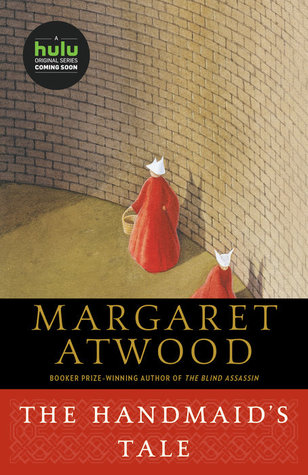
The Handmaid's Tale by Margaret Atwood

The Handmaid's Tale by Margaret Atwood (Books & Banter book club)

Somehow I managed to get through college as an English major and Women's Studies minor without reading The Handmaid's Tale. Based on our current political climate I felt like it would be a good time to read it (and my book club voted it in). I wasn't sure what to expect, but I didn't love it. It was VERY slow to get into, and once the storyline did pick up it felt incomplete - maybe that was on purpose? I do think the author did a good job of showing how quickly and completely a society could change from freedom to a totalitarian regime. There were quite a few things that I could very much relate to current events even though this was written in the mid-1980's. I wish there had been 2 or 3 more chapters to show what happened to Offred at the end. I also wish there had more more to her backstory - what happened to her daughter? What was her real name? It was probably on purpose to reinforce the totalitarian feel of the story, but there was too much missing information. I'll be curious to see what my book club thinks too.

Some quotes I liked:

"There is more than one kind of freedom, said Aunt Lydia. Freedom to and freedom from. In the days of anarchy, it was freedom to. Now you are being given freedom from. Don't underrate it." (p. 24)

"I intend to get out of here. It can't last forever. Others have thought such things, in bad times before this, and they were always right, they did get out one way or another, and it didn't last forever. Although for them it may have lasted all the forever they had." (p. 134)

"Better never means better for everyone, he says. It always means worse, for some." (p. 211)


Lagom by Linnea Dunne

Lagom: the Swedish Art of Balanced Living by Linnea Dunne

In the vein of all the Swedish/hygge books that are currently so popular, Lagom explores the Swedish idea of "not too little, not too much, but just enough" in all aspects of life. The book is divided into chapters like Living Lagom - work-life balance, Feeling Lagom - health & wellbeing. Overall, I liked how the book was laid out and there were a lot of cute illustrations and photos, but the overall book just seemed lacking. I've read a few hygge books and they seem MUCH more informative and clear in the direction/purpose of the book. There were also a few pages where there was black text on a navy blue background and it was very hard to see the text in those sections. Overall, it was OK, but I'll stick with the hygge books for now.


Anne of Green Gables by L.M. Montgomery

Anne of Green Gables by L.M. Montgomery (Evening Edition book club)

This was my absolutely FAVORITE book series when I was a kid. My grandmother gave me all the books and I even got my husband to read this one before we went to Prince Edward Island for our honeymoon. But, I was concerned about re-reading it and not liking it as much as an adult. Thankfully, that wasn't the case. After I finished it my first thought was, "Now I want to re-read the rest of the series!" 

Anne is an orphan girl who is mistakenly given to brother and sister Matthew and Marilla Cuthbert when they wanted to adopt a young man to help on their farm. Matthew is charmed by talkative Anne and convinces Marilla to keep her. Anne has a way of always getting into "scrapes" and trouble always finds her, but soon Matthew and Marilla have fallen in love with Anne and can't imagine Green Gables without her. The reader follows Anne as she goes from a VERY talkative child to a young woman by the end of the book. I will admit the younger Anne kind of got on my nerves a little with all her talking, but Montgomery does a great job in showing Anne grow up, but still keeping her personality and imagination intact. Overall, a very uplifting and fun book with a wonderful main character.

Some quotes I really liked:

"'Why must people kneel down to pray? If I really wanted to pray I'll tell you what I'd do. I'd go out into a great field all alone or into the deep, deep woods, and I'd look up into the sky - up - up - up - into that lovely blue sky that looks as if there was no end to its blueness. And then I'd just feel a prayer.'" (p. 52)

"'I'm so glad I live in a world where there are Octobers. It would be terrible if we just skipped from September to November, wouldn't it?'" (p. 118)


A Remodelista Manual by Julie  Carlson

Remodelista: the Organized Home by Julie Carlson

I wasn't familiar with the Remodelista website before happening upon this book, but now after reading this one I'll be checking out the website. In this book the focus is all on organization. I really like how it's laid out with "the art of order: a manifesto" with 8 overall organizing guidelines, 12 universal storage tactics, and how daily rituals can help keep you organized. Then there are chapters for each major area of your home - kitchen, bathroom, closet, etc. and at the end are resources to find some of the items shown in the book. It is really a beautiful book that doesn't necessarily encourage minimalism, but shows how to best make use of whatever space you have and highlight special items. This is one I could probably buy and refer back to forever!


Finding God in the Waves by Mike McHargue

Finding God in the Waves: how I lost my faith and found it again through science by Mike McHargue

Mike McHargue grew up in an Evangelical church and felt a deep, personal connection to God from childhood. After he is an adult, married and with his own children, his parents divorce and that starts Mike on a tailspin that leads to him renouncing his faith - but in secret. He lives as a closet atheist for two years because he doesn't want to lose his church community, friends, and family. Then he has an unexplainable encounter with God that starts him back on the path to faith, but this time he finds his way back to God through science. Many people think science and religion are polar opposites and contradict one another, but Mike shows how science can reveal God in new ways and that science and religion don't have to be an either/or option - it can be both.

While I don't personally agree with all Mike's current views on God and the Bible, I do appreciate the rawness and honesty of this book. He really lays out his struggle with his faith and how much he suffered trying to work things out in his mind. Definitely a unique book about one man's faith being lost and found.

Some quotes I liked:

"If you're a Christian who wonders what to do with someone who's in doubt, consider these words carefully: Love and grace speak loudly. The first and best response to someone who's faith is unraveling is a hug. Apologetics aren't helpful. Neither are Scripture references. The first thing a hurting person needs is to know they're not alone. My path back to God was paved with grace by those who received my doubt in love." (p. 119)

"But I've learned that the need for certainty is an addiction we can kick - that it's possible to have faith, and even follow Christ, without needing to defend historical Christianity like a doctoral thesis. We can approach beliefs not as gems to be mined from the earth and protected with clenched fists, but as butterflies that land on an open hand - as gifts to enjoy but not possess." (p. 141)

"Instead of fighting science or trying to filter science through my understanding of God, I discovered that you can begin by accepting scientific evidence - and therefore, scientific accounts of how our universe came to be - and still see the face of God." (p. 149)

"Saying 'religion is bad' is a lot like saying 'eating is bad.' Eating can be bad, but it depends on what you eat or how much you eat. Religion can be bad, but it depends on how you view God and how attached your faith is to an authoritarian system...When atheists criticize oppressive religious systems, I stand with them. But to paint all faith with the same brush is to oversimplify the matter, and this view ignores the insights of neuroscientists and anthropologists who find merit in healthy spiritual expression." (p. 159-60)

"One thing I found particularly striking was that when people experienced a prayer going unanswered, or being answered via a redemptive perspective on suffering, the way they prayed changed. Prayer became less about asking God for something and more about being in God's presence." (p. 172)

"Trauma leaves an impression on your brain. And when you recall traumatic events from your past, or when you experience things that remind you of them, your amygdala re-creates the fear and pain you had in those moments. Leaving my church was traumatic, and that trauma was amplified by my childhood experiences of rejection...My fierce independence, my willingness to walk away from the crowd, was merely a coping strategy I'd developed in response to being bullied. The way I played it, no one could reject me if I didn't need them in the first place. I'd bet a lot of you know exactly what I'm talking about." (p. 216)

"Science gives us fact. Faith gives us meaning. These two lenses, so often set up in opposition to each other, are most powerful when used together...We don't have to choose one or the other...But if we open ourselves up to receive both, we'll be surprised by what we find. And God will meet us there." (p. 246-7)


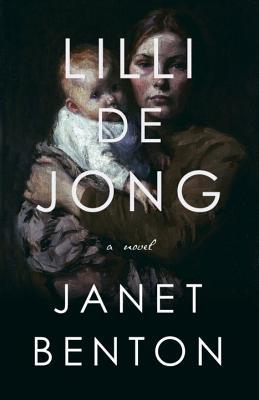
Lilli de Jong by Janet Benton

Lilli de Jong by Janet Benton

When Lilli de Jong finds herself pregnant out of wedlock and thrown out of her Quaker job and home in 1883 Philadelphia she ends up in an institution for unwed mothers. The charity seeks to help unwed mothers escape the stigma by allowing them to give birth and adopt the babies out so the women can get on with their lives as if the pregnancy never happened. But, Lilli truly believed Johan was going to send for her and that they would be married. When she can't get in touch with him, she finally believes he lied just to get her to have sex with him. But, once she has her daughter she can't bear to give her away. Despite being warned about how hard it will be for her and her daughter, Lilli is determined to survive somehow. And she does, but barely. The few short months after Charlotte's birth are horrible in almost every way imaginable - Lilli stoops to things she would have NEVER considered previously. Her story ends better than most in her circumstances, but it very much highlights how hard it is for women in almost any time. What's most disturbing is that things weren't all that much different for unwed mothers even up until the 1960's or 70's - women then did have more options that Lilli did, but it's very hard to dig out of the hole alone. Definitely a compelling book that highlights the bond between mother and child and the struggles women have faced since the beginning of time.