Friday, September 6, 2019

August 2019 Reviews

The Polygamist's Daughter by Anna LeBaron

The Polygamist's Daughter by Anna LeBaron

I had heard of this book, but when I read recently that the author was related to the author of The Sound of Gravel I was even more interested to read this one. While Anna's story is terrible and it's amazing that she survived and became a "normal" adult, it wasn't as well-written as The Sound of Gravel in my opinion. Anna is the child of Ervil LeBarron - one of the most notorious cult leaders of a polygamous offshoot of Mormonism. She barely knows her father and is constantly woken up in the middle of night to move somewhere trying to constantly evade the police and the FBI. When she is 14 she eventually escapes and moves in with an older sister and her family who had already left the cult. But, around the time she graduates from high school her brother-in-law Mark is murdered by members of her father's cult, even though he has long since died. Shortly afterward Mark's wife, Anna's sister, commits suicide leaving their 6 children orphans. Only after Anna is married and a mother herself does she finally allow herself to start healing and feel all the emotions she buried so deeply as a child and teenager. It's truly a miracle that she and her husband's marriage survived and that she was able to raise her children in the kind of healthy home she never had. Her story is one of survival and how she was able to rise above the life of her childhood into a happy, healthy life as an adult.


Women's Work by Megan K. Stack

Women's Work: a reckoning with work and home by Megan K. Stack

Megan Stack left her job as a foreign correspondent when she got pregnant. She wanted to write a book and knew that work + baby + writing a book was just too much. Her husband made enough money to support them in Beijing, so she decided to work on the book before and once she had the baby. But, she was ill-prepared for the realities of having a newborn. She rarely got any sleep and could barely keep up the bare minimum of chores, much less any writing. So, like many wealthy people she hired help. But, hiring help opened her eyes to the plight of poor, domestic workers, especially women of color, yet she realized she was completely dependent on that paid help. Stack vacillated between wanting to have more of a real relationship with her help (who all had children of their own that they were handing off to someone else in order to help her with her children) and also not really wanting to know the reality of their lives outside her home. She also realized what women since the beginning of time have known that women do EVERYTHING while men go off to work and come home with the expectation of a clean house, well-behaved children, and a hot meal. While her focus became how women of her class "need" help and the sub-class of domestic workers that that creates, the real issue I see is emotional labor and how little her husband was expected to do in maintaining their shared home. She never gets much into what their life was like before children other than they both traveled a lot, but who cleaned then? who cooked? who made household appointments? who met the HVAC guy? etc. Stack is a good writer and I was interested in her story, but it was much less about the class of domestic help workers and more about her unease with being so dependent on this help.

There were a lot of mixed reviews about this book. Was Stack likeable? Not really. Did her husband come across as a dick? YES. I don't doubt that Stack loves her children, but she didn't strike me as someone who really wanted children. I'm still not sure why she had children when she really seemed to love her work and life before and couldn't manage even one day with them on her own. Maybe she bought into the lie that having children is the only way to have a "real family" or to be "complete". Whatever her reasoning she does come across as spoiled and helpless and her husband comes across as useless and uninterested in her and the children. Despite all this it was an interesting book and will hopefully open up some discussions about child-raising and our dependence on cheap, domestic help.

Some quotes I really liked:

"It was motherhood that forced me to understand the timeless horror of our position. The obvious, hidden-in-plain-sight reason women had not written novels or commanded armies or banked or doctored or explored or painted at the same rate as men. The cause was not, as I had been led to believe, that women had been prevented from working. Quite the opposite: we had been doing all of the work, around the clock, for centuries." (p. 35)

"This line of thought was dangerous. If I found out too much, if the facts were too grim, then I might conclude that my domestic arrangement was fundamentally unfair. That was my formless and underlying fear: that if I understood too much, I might have to rip apart the status quo. I could either drown or I could wear Xiao Li as a life vest. There was no third choice." (p. 46)

"I was new to India. I didn't know yet that domestic staff are routinely forbidden to sit on their bosses' furniture, drink from their cups, or eat from their plates. I didn't understand that, for millions of women across India, domestic work was not a path to upward mobility, but a life sentence. Society deemed them more respectable than sex workers, but only just. Their willingness to work in other people's homes marked them as dirty and undesirable. I didn't know any of that, but I would learn." (p. 128-9)

"This was welcome because Sundays were a recurrent disaster. Every seventh day, the cheerful fictions of our domestic life were painfully exposed as a batch of lies. On Sunday Tom discovered that hanging out with tiny children was not a sun-washed field and overflowing picnic basket, but a jumble of physical needs and messy rooms and senseless tears. On Sunday I discovered that my partner didn't know where the diapers were kept and thought it prudent to let crusty dishes fester in the sink because a 'maid' would arrive twenty-four hours later. By the time the sun set on the Sabbath, we were often simmering and hardly speaking." (p. 166)

"And yet honest discussion of housework is still treated as taboo. For all her advice about holding one's place at work, this is a realm that Sheryl Sandberg has mostly managed to sidestep. Instead of addressing directly the employment of domestic workers in her home, she has pointed out that men aren't asked that question. By implication, since men aren't asked, she shouldn't have to answer. And she's half right - men aren't asked that question. But this is a dodge. Men ought to be asked. Everyone ought to be asked. Who's cooking the food, who's minding the kids, who's scrubbing the toilets? How do you manage to be out in the world, and if you are here, who is there?" (p. 328)


Travels with Foxfire by Foxfire Fund Inc

Travels With Foxfire by Phil Hudgins and Jessica Phillips

An entertaining collection of short stories about what life used to be like and still is today in the Southern Appalachian mountains. The subtitle sums it up well, "Stories of people, passions, and practices from Southern Appalachia." The stories are divided into topical sections - my favorite section title was "food fit to eat." The stories cover everything from famous people like author and farmer Dori Sanders to unknown, but interesting folks. While the stories were very interesting reading a book like this makes you realize how much of the "old ways" are being lost or could be lost in the next several years. But that's the point of Foxfire to capture and record these "old ways" and stories for posterity.

It Happened Like This by Adrienne Lindholm

It Happened Like This: a life in Alaska by Adrienne Lindholm

When Adrienne Lindholm was a child her family took a month-long, cross-country trip to several National Parks from their home in Pennsylvania. This was when Lindholm first discovered her love of the outdoors and nature. In college she met a friend and they moved out to Colorado - working any job they could find just to be able to live out West. After several years of adventures in several Western states Adrienne gets a job as a park ranger in Denali National Park in Alaska - the ultimate outdoor adventure destination. Once in Alaska Lindholm loves it and finds a group of friends who all came to Alaska looking for adventure like she did. Eventually she falls in love and gets married and decides to stay in Alaska.

There were a few things I didn't love about this book. Lindholm talks about how before moving to Alaska she hated the idea of hunting, but once there she saw how many people depended on hunting for their food. She started being more open to hunting as a better alternative to the industrial food industry and did actually hunt, but then barely mentioned it again. It just seemed odd that she did it a few times and just dropped it. I was also disappointed that the last several chapters of the book were about her struggle with her husband over having children. He decided he couldn't live without children, but she was still on the fence. She eventually gave in and then they struggled with several miscarriages before finally having their daughter when Lindholm was almost 40. I don't begrudge their decision to have a child, but I'm tired of so many women who say they don't want children then giving in because it's expected or everyone else is having kids, etc. and now their life is complete. The book wasn't amazing, but the end was just not what I was expecting in terms of the focus of the book. It just goes to show that even in Alaska among very adventurous people there is still that pressure to "settle down" and have kids.


Growing Perennial Foods by Acadia Tucker

Growing Perennial Foods by Acadia Tucker

As a gardener I'm just getting started with perennial crops and would like to add more in the future. In this book Tucker does a great job of explaining the prep work of gardening in the first few chapters. She explains the importance of good soil and building soil and also planning out your garden based on your yard/space available. The majority of the book covers perennial plants by category - herbs, fruit, and vegetables. Each entry gives basic info about that plant like varieties, companion plants, etc. then best places to plant that type of plant, how to plant, growing, challenges, and harvest. Each entry also includes one recipe using that plant/produce. Overall, a good look at starting to grow perennials.


The Woman's Hour by Elaine F. Weiss

The Woman's Hour: the great fight to win the vote by Elaine Weiss

In 1920 suffragists had been fighting for women's right to vote for 70 years. In the summer of 1920 thirty-five states had voted for the 19th amendment to the US Constitution, but thirty-six were need to ratify the amendment and Tennessee could make or break this fight. In The Woman's Hour three very different women come together in Tennessee for this fight. Carrie Catt was the president of the National American Women Suffrage Association (the more mainstream suffragist group). Sue White was a young activist for the more radical suffragist group the National Women's Party. And Josephine Pearson was the president of the Tennessee State Association Opposed to Woman Suffrage. All three of these women would work to pull in local support for their group and cause and meet with dozens of Tennessee lawmakers to try to persuade them to vote on their side. This book focuses on the last six weeks leading up to the Tennessee vote on the 19th amendment. While the subject matter is fascinating I felt like the book got bogged down in details. I appreciated learning more about the 3 women who were the focus of the book, but there was just a LOT of detail about everyone involved in all sides of this issue. It reminded me in some ways of Hidden Figures a really great story, but just too bogged down in minute detail to really read as well as I hoped. It is amazing to read how many women fought against suffrage, but then women are still fighting against women's issues to this day. It was also interesting to see just how tied suffrage and abolition were - basically anything that threatened white men being in power was a hard fight to win. And even though abolition was granted first, I still think white women had it better than anyone of color during that time. Freedom on paper is not the same as actual equality - something we're still fighting for to this day. Overall, it wasn't a great book, but I'm glad I read it to know more about just how hard women fought for this basic right.

Some quotes I liked:

"Woman suffrage could upend the supremacy of the white race and the southern way of life. After the brutal disruptions of the Civil War and the upheavals of Reconstruction - when black men were allowed to vote (and some were even elected to the legislature) but former Confederate soldiers were considered traitors and stripped of their voting rights - the southern states had finally achieved a degree of equilibrium, in terms of restoring racial and political relations, the Pearson family believed. Jim Crow laws kept blacks in their place. But if a federal amendment mandated suffrage for all women, that would mean black women, too. Then Washington could demand that black men be allowed to vote, and that was totally unacceptable." (p. 11)

"Even in the few instances where Suffs were victorious in the border states of the old Confederacy, as in Arkansas, they still had to endure the rabid rants of defiant legislators: 'I'd rather see my daughter in a coffin than at the polls,' one doting father exclaimed during floor debate in Little Rock." (p. 95)

[After the 19th amendment passed in Tennessee Carrie Catt wrote] "The vote is the emblem of your equality, women of America, the guaranty of your liberty. That vote of yours has cost millions of dollars and the lives of thousands of women. Women have suffered agony of soul which you can never comprehend, that you and your daughters might inherit political freedom. That vote has been costly. Prize it! The vote is a power, a weapon of offense and defense, a prayer. Use it intelligently, conscientiously, prayerfully. Progress is calling to you to make no pause. Act!" (p. 323-24)

"On November 2, 1920, American women did act - they voted. About ten million women went to the polls, just over a third of the eligible female electorate; nationwide, an estimated three women voted for every five voting men. Women voted in every state except Mississippi and Georgia, which, in an effort to prevent black women from participating, refused to extend registration deadlines to allow women enfranchised by the Nineteenth Amendment to cast ballots." (p. 325)

[After much violence toward black women voting predominantly in the South] "After the election, NAACP officers testified before Congress, bringing documentary evidence of the violent suppression of black women's and men's vote in the southern states. A veteran white suffragist, Mary Ovington, begged her suffrage comrades to help: 'We must not rest until we have freed the black as well as the white of our sex,' she implored. 'Will you not show us how to make the 19th Amendment the democratic reality that it purports to be?' It is a race issue, not a woman's issue, insisted Alice Paul in refusing to allow her National Women's Party to take a stand on black women's disenfranchisement. With rare exceptions, white suffragists, satisfied that they finally possessed the vote, ignored the plight of their black sisters for almost the next half century." (p. 328)

"Although white women completed their quest for the vote in 1920, other Americans would have to wait. Native Americans finally succeeded in convincing Congress to grant them citizenship and suffrage in 1924, yet many Native Americans continued to be barred from voting by state laws until 1957. Asian Americans, even native born, were not permitted to become citizens or vote until the mid-twentieth century: Chinese Americans were not allowed citizenship or suffrage until 1943; for those of Asian Indian descent, these rights were withheld until 1946; and Japanese Americans were forced to wait until 1952. African Americans in southern states, while possessing suffrage on paper, could not freely exercise their franchise until 1965 and still face obstacles. It is perhaps telling that in a stubborn stance on states' rights, some states that had rejected ratification of the amendment waited decades to finally make a symbolic acceptance: though it had no bearing on (white) women's ability to vote, Maryland did not officially ratify the Nineteenth Amendment until 1958; Mississippi waited until 1984." (p. 329)


Everything Happens for a Reason by Kate Bowler

Everything Happens for a Reason: and other lies I've loved by Kate Bowler - Books & Banter book club

Kate Bowler is a professor at the Duke Divinity School. Her specialty and the subject of her dissertation is the "prosperity gospel" a theology that believes whatever good that happens to you shows God's blessing, but if anything bad happens it's because of your lack or faith or some unconfessed sin in your life. When Kate is 35 she is diagnosed with Stage IV colon cancer. She has a husband she loves, a great career, and a 2-year-old son. At first her diagnosis is grim and she does not expect to live even a year. In struggling with her grief and illness she realizes she bought into the "prosperity gospel" mindset more than she realized. She also sees how with any illness or disaster people want some kind of control - I did this that caused this or if I do that it will fix it - when really we have no real control. Over the course of the first year of her diagnosis Kate learns slowly how to surrender and not try to do everything. She is honest about her fears, but also about the hope and love she feels from her family, friends, and colleagues. An honest look at terminal illness that feels hopeful, but not disingenuous. She also includes a helpful appendix of what NOT to say to someone in her shoes and also one of things you SHOULD say or do to help.

Some quotes I liked:

"What would it mean for Christians to give up that little piece of the American Dream that says, 'You are limitless'? Everything is not possible. The mighty Kingdom of God is not yet here. What if rich did not have to mean wealthy, and whole did not have to mean healed? What if being people of 'the gospel' meant that we are simply people with good news? God is here. We are loved. It is enough." (p. 21)

"I used to think that grief was about looking backward, old men saddled with regrets or young ones pondering should-haves. I see now that it is about eyes squinting through tears into an unbearable future." (p. 70)

"Even when I was still in the hospital, a neighbor came to the door and told my husband that everything happens for a reason. 'I'd love to hear it,' he replied. 'Pardon?' she said, startled. 'The reason my wife is dying,' he said in that sweet and sour way he has, effectively ending the conversation as the neighbor stammered something and handed him a casserole." (p. 112-13)


Crazy Rich Asians by Kevin Kwan

Crazy Rich Asians by Kevin Kwan

Rachel Chu has been dating Nick Young for two years while they are both living in New York City. When Nick invites her home to Singapore for his best friend's wedding Rachel is excited to go and meet his family. But, Nick has not told Rachel that his family is unbelievably wealthy and Nick has also not told his family about Rachel at all. Rachel is in for a rough time trying to navigate Nick's huge extended family and the opulence of the wedding they are attending. Nick is also a very desirable catch being from an old money Chinese family, so Rachel is also in for some serious back-stabbing from jealous women who want to get their hooks in Nick and his family money. Will Rachel survive this trip? And will her relationship with Nick survive?

I was prepared to hate this book as it's not what I normally would want to read. But, since my book club voted it in I was going to at least try. I quickly found myself wanting to know what was going to happen with Rachel and Nick. I liked it, but I'm not quite sure if I liked it enough to read the next two in the series. But, it should make for some good book club discussion.
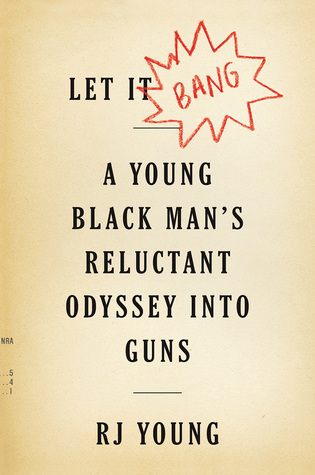

Let It Bang by R.J.    Young

Let It Bang: a young black man's reluctant odyssey into guns by RJ Young

RJ Young didn't know much about guns other than they could get him killed. As a black man RJ wanted to stay as far away from guns as possible. But, when he starts dating Lizzie, a white woman who's whole family is VERY into guns he decides to learn to shoot to get closer to his future father-in-law Charles. RJ buys his first handgun, gets his conceal carry license, attends his first gun show, and eventually becomes an NRA-certified pistol instructor. All the while navigating this new world as a black man. He encounters his share of racist comments and "jokes," but wants to prove to his in-laws and the gun world that he can not just learn, but excel at shooting. A very interesting look at the pro-gun world through the eyes of a black man.

Some quotes I liked:

"...the number of police shootings of blacks in that year - and certainly today - is nearly equal to the average number of black people who were lynched in this country at the height of 'separate but (un)equal.'" (p. 50)

"I was enduring the occasional quizzical look and snide comment from other [gun range] patrons too. The ones that stuck bit through to the marrow of who I am. Ain't you supposed to be shooting a basketball? and Hold it sideways, it's more your people's style were two of the less clever barbs along those lines." (p. 73-4)

[At the NRA instructor training class during a break] "...[a police officer taking the class] said, 'I know what you're doing.' 'I'm sorry?' [the police officer] looked irritated now. 'I know what you're doing. You're gonna teach them to shoot back.'" (p. 113)

"This apathy is the emotion I hate most. It makes me angriest and most fearful. If this man, intent on demonstrating to our class the importance of his services [U.S. Law Shield], chooses to make his case by citing an incident that half the country believes was a murder [Trayvon Martin being shot by George Zimmerman] - if he doesn't have the sensitivity to see me in the room and choose a different example, it shows that he doesn't believe I'm worth the effort. So why would anyone else who believes what he believes try to engage with me in a positive way? How do I begin a dialogue with a person like that? How do I convince him that my fears are real, and that he directly contributes to them?" (p. 120)
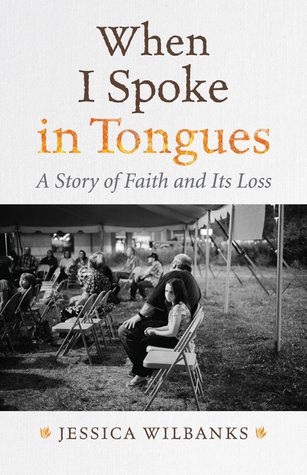
When I Spoke in Tongues by Jessica Wilbanks

When I Spoke in Tongues by Jessica Wilbanks

Jessica Wilbanks grew up in a poor, working class area of southern Maryland. Her father was a bricklayer and her mother stayed home with Jessica and her brothers. Their family struggled financially and moved from rental house to rental house. They were also very involved in a small, Pentecostal church. Their church valued speaking in tongues which they believed was an outward sign of God's blessing on your life. Jessica received this gift when she was 11 shortly after she was baptized, but just two years later she would inwardly renounce her faith. As a teenager she began to rebel and looked forward to graduating from high school and getting out of her claustrophobic home and small town. In college she cemented her disbelief and rarely even spoke about her childhood church experiences. But, in graduate school she started researching the roots of the Pentecostal faith and was drawn to visit Nigeria where the Pentecostal church is growing by leaps and bounds. In the end she never returns to the faith of her childhood, but is able to make peace with it and with her family.

I wasn't sure what to expect with this book, but I was not expecting the majority of it to take place and focus on Nigeria. I know this was Jessica's path to working through her own faith issues, but it seemed more about Nigerian Pentecostalism and less about her. The first half also ends on a very odd note of her being checked into a treatment facility for anorexia - which was never even hinted at before that chapter. I felt like a lot of her personal story was somewhat glossed over. I really didn't enjoy the book and had to make myself finish the second half.

A quote I liked:

"The faith that did so much good for the people of Nigeria seemed to be behind so many wrongs as well. The very pastors who greeted me so warmly after church services were the same ones who were spreading the idea that people could be possessed by witches. There didn't seem any way that I'd be able to follow all the tangled threads within the history of the church and find some pure kernel of good or evil underneath it all." (p. 219)

Thursday, August 1, 2019

July 2019 Cookbooks

Smoke, Roots, Mountain, Harvest by Lauren McDuffie

Smoke, Roots, Mountain, Harvest by Lauren McDuffie

I was born in the Appalachian mountains of NC, so I was interested to check out this cookbook. While the photographs are beautiful, there weren't that many recipes I wanted to try. I did like that the book is organized by season and focuses on eating seasonally. After recently finishing Rick Bragg's The Best Cook in the World that also focuses on mountain/country Southern food, I think this book might be a little too fancy of a take on Appalachian food for me. There were a few recipes I wanted to try, but overall it was just a pretty cookbook to look through.

July 2019 Reviews

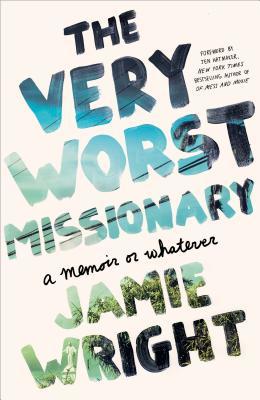
The Very Worst Missionary by Jamie   Wright

The Very Worst Missionary by Jamie Wright

Jamie Wright had a very interesting path to becoming a full-time missionary in Costa Rica. She grew up Jewish (by conversion, not birth) then fell away from church and became a very promiscuous and wild teenager dropping out of high school at 15 and getting pregnant at 17. She and her boyfriend Steve got married and miraculously stayed married having two more children. As a harried, young mother to three boys Wright started attending the local Christian church and really found a home there, eventually her husband joined her and they started leading the youth group together. After going on a few short-term mission trips to Costa Rica with their youth group kids, the family starts thinking about doing something "bigger" for God by going into the mission field full time. So the Wright family gets rid of most of their belongings and move to Costa Rica for 5 years. During that time they start to realize that much of the mission work they are involved in is unnecessary and doesn't really help the local's needs - jobs, money, etc. They also realize that (including themselves) there is no real screening process for who can go into full time missions, so they see a lot of people who really aren't doing good work. As Wright struggles with these conflicts The Very Worst Missionary is born - a blog where Wright gets real about the inconsistencies she is seeing and her own personal struggles. While several reviews I read complain about her language - there is a lot of cursing - I side with Wright that being real and failing is better than being fake and still failing while making everyone around you feel worse. A funny, yet heart-breaking look at one woman's not-so-great experience as a full time missionary that brings to light some real issues that the Church needs to address.

Some quotes I liked:

"The questions started during a study of the life of Christ, because that was the first time I truly looked beyond how everyone else was doing it and started to see how Jesus did it. I began to really see what he said and where he went and what he did and how he treated people. The guy touched lepers with his bare hands and hung out with the neighborhood undesirables. He talked to the impoverished, the infirm, the outcast as though they mattered as much as anybody. And when faced with greed and corruption in a house of God, Jesus braided a whip and quite literally overturned the tables of injustice. When I took the time to examine how he lived out his days on earth, it changed everything about how I saw the club. Following Jesus started to make a lot more sense - but the church started to look kinda wonky." (p. 63)

Pages 77-85 Wright's meltdown during a women's Bible study is HILARIOUS and sadly true.

"Pretending to be someone else is exhausting. I'd given so much energy to keeping up appearances that when I finally realized I could drop the act altogether, it was like stepping out of a furry suit on a hot summer day. In a word, it was refreshing. It was terrifying too, because all of a sudden I was seeing and feeling and experiencing the world as my own self, and I felt exposed. But for the first time ever, I also felt free." (p. 90)

"To be fair, many of these enthusiastic new missionaries didn't know what to make of me and Steve either. We were the nondenominational, egalitarian beer drinkers. Steve had tattoos and I had a ring in my nose. All of this was taken by some as evidence that we were heathens in need of the gospel. The frequency with which we were evangelized by fellow students was almost hilarious." 
(p. 129)

"I do believe that God can use anyone to do anything (that I am writing this book is a prime example), but I was beginning to see how that is a pretty weak standard by which to choose whom we send out into the world to 'be the hands and feet of Jesus,' or whatever you want to call it. This isn't about having unrealistic expectations of ordinary people, and it's not about negating God's ability to surprise us by doing amazing things. It's about recognizing that we have a responsibility, as the church, to choose whom we send, so that we send the right people to do the right things in the right places - and to not send them when it's not right. And therein lies the real problem: There's really not much choosing going on. If you raise your hand (and have enough cash), someone will send you out...Moreover, the Bible tells us that Jesus handpicked the first disciples and 'selected' the seventy-some pairs of missionaries he sent out. Like, he chose them from among a larger group of people he'd been teaching for months." (p. 133-34)

"In the love our players developed for one another, the spirit of belonging they shared, and the promise of community that comes with being part of a team, the little world of Costa Rican semipro football felt in many ways like a church. Steve and I discovered that the growing connection and increasing intimacy we had within our football family felt more alive and meaningful than any part of the 'work' we were doing on campus as so-called missionaries." (p. 164)

"A few months into Steve's first season with the team, they went out to participate in a sports clinic hosted by a Christian athletic ministry from the States. The group would donate used football gear and a few hours of specialized instruction in exchange for the opportunity to evangelize. Every team in the league agreed to this deal from these complete strangers because they needed the gear, and the extra training was always helpful. On the morning of the event, though, this is what Steve witnessed: Local coaches and players who'd attended the same clinic the year before took a few minutes ahead of time to solicit volunteers to accept Jesus as their Lord and Savior. On our team of fifty, the head coach assigned a half dozen guys to raise their hands at the appointed time. Everyone else was urged to play along but not overdo it, so that the missionaries would feel successful and keep coming back...'It's mutual exploitation,' explained Mateo, who worked for Intel and played tight end. 'Everybody wins.' Caught between these two worlds, Steve and I felt conflicted. It was great to see the teams getting resources and support. But we knew those missionaries were gonna go back to their home churches and celebrate a false account of changed lives." (p. 167-38)

"For me, the experience of dismantling my simple ideology felt bittersweet. It was necessary and liberating, and at times it felt damn good, but it was also sad, and confusing, and lonely. It's scary to get back up after you've been crushed by the realization that the church you grew up in or the ministry you championed or the spiritual leaders you adored, supported, and trusted were perhaps not as awesome and amazing as you once believed. If they turn out to be abusers, liars, crooks, pathological narcissists, and/or asshats in general, it's worse, and some people never recover from the pain, anger, and disappointment." (p. 210)


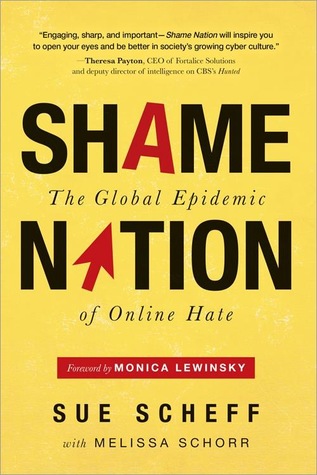
Shame Nation by Sue Scheff

Shame Nation: the global epidemic of online hate by Sue Scheff

If you are online in ANY way this book is a must read. In 2003 Sue Scheff was cyberattacked by a spiteful client. The attack almost ruined Scheff's business and nearly destroyed her self-confidence, but she chose to fight back and won a landmark lawsuit. Now she works to help people prevent and recover from cyberattacks. In Shame Nation Scheff explores why there has been such a rise in online hate and cyber-shaming, preventing and surviving a cyberattack, and how to recover after you've survived an attack and ways organizations are working to combat online hate. There are tons of real stories from people who've been bullied and shamed online to illustrate Scheff's points. And while these stories (and the thousands more that happen every day) and sad and terrible, Scheff does end the book on a hopeful note that this current tsunami of online hate will inspire a backlash of love and hope. Definitely eye-opening and worth reading.

Some quotes I liked:

"Strikingly, Chubb Limited recently became the first insurance firm to offer its clients coverage against cyberbullying and other forms of man-made digital disasters. For $70 a year, American families can add a protection plan to their existing policy and get reimbursed for up to $60,000 in costs resulting from online harassment, such as unwarranted job loss, technical support for tracking down cyberfoes, public relations support for image repair, and even therapy bills." (p. xix)

"Comedian and actress Margaret Cho spoke in an Observerarticle about taking a specific action she dubs 'hate shame.' People often say, 'Oh, don't feed the trolls.' I screenshot what they say, report it, and I'll send it to their employers, their spouses - things of that nature, where you're calling attention to the hatred and cutting it off at the same time with immediate hate shame. If you hate shame, it automatically forces them to revisit the hatred they're spewing, that can be potentially very damaging. And using it against them - as opposed to internalizing the trolling and feeling uncomfortable with it - it's a good opportunity to stand up for yourself and also bring reverence to the kind of racism, misogyny, and homophobia that these people perpetuate. We should all practice this kind of self-defense." (p. 95-6)

"Emily Lindin, author of Unslut: a Diary and a Memoir, has a strong message that always strikes a chord when she talks with teen girls about slut shaming: she points out that online porn is readily available, so these boys already have all the masturbatory material they could ever desire - what they are really after is power to lord over you, control you, even blackmail you. She asks young women pointedly, 'Do you really want to give them that power?'" (p. 148)

"Researchers at the University of Michigan crunched data that tracked years of incoming college freshman's empathy, and found that empathy has declined by 40 percent in the last three decades - while narcissism has risen by 58 percent. This inability to see those on the other side of the computer screen as people deserving of our compassion is one of the huge drivers of our Shame Nation." (p. 227)


Maid by Stephanie  Land

Maid: hard work, low pay, and a mother's will to survive by Stephanie Land

I almost didn't read this one based on the very mixed reviews, but decided to give it a try. When I saw that Barbara Ehrenreich wrote the introduction, I thought surely it can't be terrible if Barbara Ehrenreich is writing the introduction. Was this book Evicted or Nickel and Dimed? No. But, it was still a well-written account of one woman's struggle to provide a better life for her daughter and how hard that can be with no family safety net at all. Stephanie Land is twenty-eight when she unexpectedly gets pregnant and decides to keep the baby. She hoped her boyfriend Jamie would step up to the plate, but never did except when he could do something to throw in her face. When he starts to become violent Land finds herself and her infant daughter homeless. She is able to cobble together enough government assistance and work to stay barely above water, but there is always the looming dread of something unexpected - illness, car accident, etc. Her family was almost as broke as she was, but were also abusive and not to be relied on. Land realizes that her only escape is education. She enrolls in community college and by the end of the book she is able to transfer to a University and there is a lot more hope for her and her daughter. 

A lot of the bad reviews of this book pointed out every little mistake or bad decision Land made. Did she make some really bad decisions and mistakes? Yes. Haven't you? It's nice to know there are so many people out there making NO MISTAKES AT ALL in their personal lives. I feel like Land is honest with the bad decisions she made and owns it. Several reviews complained that she played the victim and never took responsibility, but I didn't read it that way at all. One thing she sees over and over in the houses she cleans is that it doesn't matter how much money you make you can still be miserable - not that having more money doesn't make things easier, but just money in and of itself doesn't make you happy. Overall, I was pleasantly surprised based on the reviews I read and am looking forward to what Stephanie Land will write in the future.


Beauty in the Broken Places by Allison Pataki

Beauty in the Broken Places by Allison Pataki

Allison and her husband Dave are expecting their first child and on their way to a "babymoon" trip to Hawaii when Dave suffers a massive stroke. After an emergency landing Alli is alone in the hospital with her 30-year-old husband in a coma. Miraculously Dave survives and is transferred back to Chicago to the hospital where before their trip he was working in his medical student residency. Slowly Dave starts to recover, but the recovery is hard on everyone. Alli struggles with worrying whether Dave will recover fully or become a dependent she has to care for along with their soon-coming baby. But, Dave does recover and while it is a long, slow recovery by the one year anniversary of his stroke he is mostly back to his old self. Beauty in the Broken Places is Alli's story of how she and Dave met and fell in love interspersed with his stroke and the aftermath. While what they went through is terrible and Alli doesn't shy away from describing that time, the book as a whole is more hopeful because it's written on the other side after Dave's recovery. A beautiful story of what it can look like when "in sickness and in health" and "for better or for worse" actually play out in a marriage.

A quote I liked:

Ultimately, I realized, this was the moment when things between God and me finally got real. This was when I needed to live the faith that I had been thinking, for thirty-one years, that I had been living. I did not understand why the things that had happened had happened. But did I still - even in that place of not knowing or understanding, especially in that place of not knowing or understanding - believe that God was with me? Was He there beside me in my pain and brokenness, just as I had always believed Him to be beside me in my joy? Did I believe that God could take this heartbreak and this fear and this fatigue and somehow weave something beautiful from all of the frayed and feeble threads? That there was a divine plan at work here, a much larger picture than the one I could see, a framework that exceeded my capacity to understand? Yes, I realized. I did. I did still believe that God was beside us." (p. 214)


I Will Not Fear by Melba Pattillo Beals

I Will Not Fear: my story of a lifetime of building faith under fire by Melba Pattillo Beals

Melba Beals was one of the "Little Rock Nine" - nine African-American high school students who were the first to integrate Central high school in Little Rock, Arkansas. Growing up Melba was raised in the Christian faith by her grandmother India. India instilled her deep faith in Melba and helped her see that while they experienced hate and discrimination from white people, God loved them and would always help them. Melba had to draw on her own faith to get through that first year at Central, but she did. After that Little Rock shut down all public schools as a backlash to the forced legal integration. Beals had to leave Little Rock for her own safety. She ended up in California and her time there really shaped her life. She lived with a white family and was able to heal some of the racist wounds she had from growing up in Little Rock. She eventually married a white man and they had a daughter together. But, Beals wanted more than just to be a stay-at-home wife and mother. That was not what her husband wanted so they divorced when her daughter was young. She went on to finish college and earned a doctorate and worked in journalism and as a college professor. She later adopted twin boys and raised them as well. Throughout her life her faith was her foundation. Dr. Beals is an inspiration and example.

While her story is incredible, I enjoyed the first half of this book more than the second half. The first half is about her growing up and the struggle of that year at Central high school, then going to California and how her life changed there. The second half of the book seemed to really jump in time and some of the stories with the twins seemed very bizarre - not that I didn't believe it happened, but just bizarre and maybe needed more explanation. Overall, it was a good book and it did focus on how faith shaped her life.

A quote I liked:

[At an NAACP meeting with Dr. Martin Luther King, Jr.] "At this point we were three weeks into the semester at Central High, and I was exhausted, depressed, and disappointed. I was still in shock at the price integrating that high school was exacting from me. I was somehow convinced someone would change things in an instant, so I couldn't stop myself from spilling my feelings about how much I was suffering to Dr. King. His quick answer was loud and clear as his huge eyes held mine with a commanding stare. 'Melba, don't be selfish. You're not doing this for yourself. You are doing this for generations yet unborn.' His voice was kind, his face empathetic...I had been waiting for white students to change, extend kindness, and welcome me, when maybe it was my task to change...Dr. King's statement was life-changing." (p. 55-6)


The Cooking Gene by Michael W. Twitty

The Cooking Gene: a journey through African American culinary history in the Old South by Michael Twitty

I had heard so much about how amazing this book was, but I was disappointed. I'm not sure what exactly I was expecting, but it was very repetitive and seemed to go over the same things in almost every chapter. At the beginning of the book Twitty says, "The early and antebellum South is not where most African Americans want to let their minds and feet visit. It's a painful place, and the modern South is just beginning to engage the relationship between the racial divide, class divisions, and cultural fissures that have tainted the journey to contemporary Southern cuisine. It's an entangled and deeply personal mess that has been four centuries in the making. This book is about finding and honoring the soul of my people's food by looking deep within my past and my family's story." (p. 6) As a white Southerner I completely understand that Southern food is inextricably tied to slavery and the African people who were forced to come here and work. And I also feel like I understand Twitty's desire to understand his roots - both in the slavery of the South and in the parts of Africa where his ancestors were taken from. The first several chapters were very interesting, but once he got to the chapter about DNA genealogy I started losing interest. After that it seemed very repetitive with both the food and his family. I felt like the same stories were told over and over again and I'm still not sure why. I think this could have been an amazing book, but it was just so all over the place and focused on the same few things over and over again. Maybe I'm not getting it, but I was disappointed.

Some quotes I did like:

"I want to be clear: my dream was to be able to put myself in the evolving narrative of Southern food from it's beginnings to now, and to do so I had to be able to do what most African Americans had the most difficulty doing - trace my ancestry to Africa and follow the lineages across the Southern map into the present day." (p. 125)

"Long before the current movement to taste the past and revive forgotten terroir, it made sense to me that the Caseknife pole bean from Wesley and the Cowhorn okra from Peter and yam potato from William were something more than just neat relics. They were the very taste of how my ancestors survived slavery." (p. 268)

"History did not let the historical black garden go unremarked. These spaces were little landscapes of resistance: Resistance against a culture of dehumanizing poverty and want, resistance against the erasure of African cultural practices, resistance against the destruction of African religions, and resistance against slavery itself." (p. 269)

"Earlier that summer, I had been in Donaldsonville, Louisiana, where during the time of Jim Crow black farmers and landowners got together and decided that sharecroppers in the cotton and sugarcane fields had enough trouble to not be in debt to white planters, so they created a community farm where all who were hungry could get produce. That was 1912. The year of my travels was 2012, and somehow, without black Twitter, without Facebook, without Instagram or Snapchat, black farmers in a time of Klansmen and lynch law solved the problem of food insecurity. Thankfully, the secret weapon, the garden, had not been forgotten." (p. 275)

Monday, July 1, 2019

June 2019 Cookbooks

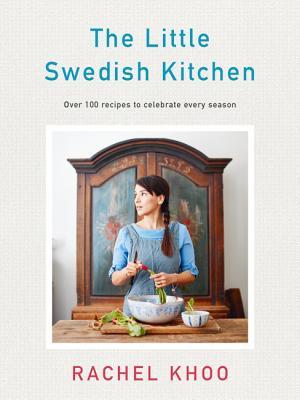
The Little Swedish Kitchen by Rachel Khoo

The Little Swedish Kitchen by Rachel Khoo

I guess I'm just not into Swedish food because nothing in here really jumped out at me as something I wanted to try. I did like that it was organized seasonally instead of by appetizers, entrees, etc. I'm not saying it's a bad cookbook, just not my thing.


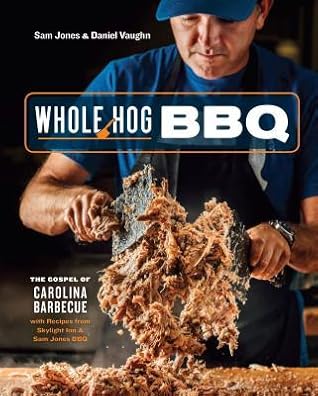
Whole Hog BBQ by Sam Jones

Whole Hog BBQ: the gospel of Carolina Barbecue with recipes from Skylight Inn and Sam Jones BBQ by Sam Jones

I mainly checked this book out because of the subtitle - the gospel of Carolina barbecue. Being from NC I know the importance of good pulled pork barbecue. I wasn't familiar with Sam Jones and the long-running Skylight Inn barbecue restaurant in Ayden, NC. But, after checking out this book I think I may need to take a Eastern NC food trip and visit Skylight, Sam Jones BBQ, and Vivian Howard's Chef & Farmer. While I'm not quite in the place to start barbecuing whole hogs, if you are this book gives detailed instructions on how to build a pit and how to barbecue an entire hog. So, while I won't be building a whole hog pit anytime soon, this was a fascinating look at one family's role in NC BBQ.


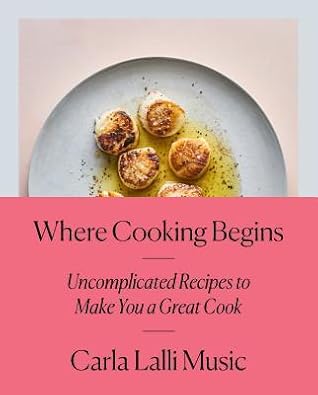
Where Cooking Begins by Carla Lalli Music

Where Cooking Begins: uncomplicated recipes to make you a great cook by Carla Lalli Music

I don't consider myself a professional chef, but I guess I'm not quite a beginner either because this book was a little too basic for me. The first section is about planning and preparing for cooking, the second section illustrates various cooking techniques like steaming, pan-roasting, making pastry dough, etc. The third section is the actual recipes using the techniques described earlier. One thing I did like is that each recipe has "spin it" options that give other ways to use that recipes either with different ingredients or ways to use ingredients you already might have on hand. There just weren't any recipes that jumped out at me that I really wanted to try. I do think this would be good for someone who is a VERY beginner because the photos of the cooking techniques would be very helpful.


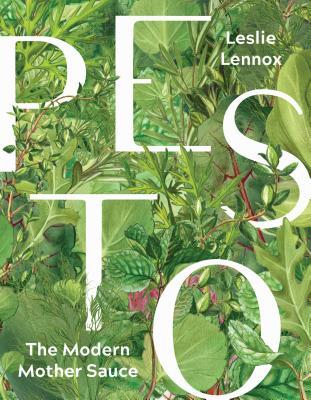
Pesto by Leslie Lennox

Pesto: the modern mother sauce by Leslie Lennox

I love pesto, so when I saw this cookbook I knew I wanted to check it out. Lennox gives information on how she started her pesto business and also about mother sauces and why she thinks pesto is the modern mother sauce that can be the foundation or an addition to many dishes. She gives a basic pesto recipe, ways to vary it, several ways to use pesto in salad dressings, and tips on growing basil at home. Then she gets into the recipes - some use pesto as more of a garnish, but many include pesto in a larger way. There are several recipes I'd like to try and I have a TON of basil at home in my garden, so this cookbook was good timing.

June 2019 Reviews

The Library Book by Susan Orlean

The Library Book by Susan Orlean

Susan Orlean grew up going to the library regularly with her mother - special trips that bonded them and their love of reading. As Susan got older she quit using the library and started buying books instead. When her son wanted to interview a librarian for a school project they went to their local branch in Studio City, CA and that visit reignited Orlean's spark of love for libraries. When she found out that the Central branch of the Los Angeles had burned in 1986 and arson was suspected she dove into the story. In this book Orlean explores the Central library fire and suspected arsonist, but also explores the role of libraries in general and more specifically the history and current staff at the LA Central library.

I had heard such good things about this book and I'm a public librarian so I was very excited to read this one. But, I was disappointed overall. The story of the Central library fire is a very small part of the overall book and it's never resolved either. Orlean is all over the place with the book and it's hard to follow all the storylines and people she includes. She goes back in forth in time and gives a LOT of detail about people or things that don't seem important to the overall story. Since I already work in a public library I'm not surprised by most of the information she gives about the role of libraries. I think this could have been an amazing book and the descriptions of the fire and what was lost in the first few chapters is really interesting. I also think it was really interesting how people volunteered to help the library and the fund-raising efforts to help rebuild the collection. But, it just got really bogged down in too much detail about too many people and events. I will say the chapter on how often arson is wrongfully determined was eye-opening. I hate to say it, but I would not recommend this one.

There was a lot of interesting information about libraries, so there were some quotes I liked:

"With Lundquist directing, the volunteers worked for the next three days around the clock. Most were strangers to each other, drawn together unexpectedly, and worked together for hours, diligently and peacefully. They formed a human chain, passing the books hand over hand from one person to the next, through the smoky building and out the door. It was as if, in this urgent moment, the people of Los Angeles formed a living library. They created, for that short time, a system to protect and pass along shared knowledge, to save what we know for each other, which is what libraries do every day." (p. 37)

"The library is an easy place to be when you have no place you need to go and a desire to be invisible." (p. 60)

"Szabo [the current LA city librarian] acknowledges the fact that the library has attained a sort of guardianship of many of Los Angeles's street people. When he ran the library system in Atlanta, he sent bookmobiles to the motels where many homeless people lived, to offer books and story hours for the children. He included a public health nurse on the bookmobile so the nurse could check on residents' well-being once the bookmobile had drawn them out." (p. 73)

"In 2014, Szabo had established Career Online High School - COHS - which is the first accredited library-based high school program in the United States. Through the library's website, adults who had not gotten their high school diploma could take any of the nine hundred COHS online classes for free, and graduate with a diploma rather than a high school equivalency certificate. Szabo frequently preaches the gospel of the library as the people's university, and with COHS, he had managed to make good on that notion." (p. 77)

"[Glen Creason a senior librarian] also waited on a patron named Richard Ramirez, who was looking for books on torture and astrology. (It turned out that Ramirez was the serial killer known as the Night Stalker and was sentenced to death for thirteen murders in Los Angeles. 'He was definitely really creepy,' Creason says.)" (p. 159)

"In the year leading up to Prohibition, when the ban on alcohol seemed inevitable, every book about how to make liquor at home was checked out, and most were never returned." (p. 175)

[In the 1930's when a telephone reference dept. was added] "So many people called for help solving crossword puzzles that Warren finally forbade the librarians to answer those requests, because they hardly had time to answer non-crossword questions." (p. 200)

"OverDrive [and ebooks] may be the future of book lending, but that's not the same thing as the future of libraries. Libraries are physical spaces belonging to a community where we gather to share information. There isn't anywhere else that fits that description." (p. 299)


Inspired by Rachel Held Evans

Inspired: slaying giants, walking on water, and love the Bible again by Rachel Held Evans

Some people view the Bible as a literal instruction manual, while others view it as a metaphor or collections of stories no different than fairy tales. Christians say the Bible is Inspired, but what does that mean? Rachel Held Evans started exploring how the Bible is meant to be read and used today and her findings are in this book. Each chapter starts with a re-imagining of a popular Bible story, then goes on to explore a type of literature or story found in the Bible and how it was used then and what it could mean for us today. She doesn't shy away from hard issues or stories, but also doesn't make the Bible out to be more or less than what it is. Beautifully written and expertly researched this book does NOT disappoint. Evans was an amazing writer and the worst part about finishing this book is knowing it's her last one and I don't get to anticipate her next book and the one after that. 

There are a LOT of quotes I really liked:

"At the heart of the gospel message is the story of a God who stoops to the point of death on a cross. Dignified or not, believable or not, ours is a God perpetually on bended knee, doing everything it takes to convince stubborn and petulant children that they are seen and loved. It is no more beneath God to speak to us using poetry, proverb, letters, and legend than it is for a mother to read storybooks to her daughter at bedtime. This is who God is. This is what God does." (p. 12)

"If I've learned anything from thirty-five years of doubt and belief, it's that faith is not passive intellectual assent to a set of propositions. It's a rough-and-tumble, no-holds-barred, all-night-long struggle, and sometimes you have to demand your blessing rather than wait around for it." (p. 28)

"They say art should afflict the comfortable and comfort the afflicted. I think the same is true for Scripture. For centuries the Bible's stories of deliverance have offered comfort to the suffering and a challenge to the privileged." (p. 43)

"So when we join with our spiritual ancestors in telling our stories of deliverance, we must remember to name each wilderness, to mark those spots where, when all hope seemed lost, we encountered God - at a desert well on the road to Egypt; on a bridge in Selma, Alabama; at a shabby airport chapel in Chicago; in a labor and delivery room on Candlemas Day. God made a way where there seems to be no way. It's the steady refrain of our narrative heritage." (p. 50)

"While it is shortsighted to discount Scripture's laws as totally backward and amoral, it is just as misguided to pretend they reflect a more just society than they do. No one who values the inherant worth and dignity of their fellow human beings should want a return to ancient Israel. Those were not the 'good old days.' Not by a long shot." (p. 54)

"If you want to do violence in this world, you will always find the weapons. If you want to heal, you will always find the balm. With Scripture, we've been entrusted with some of the most powerful stories ever told. How we harness that power, whether for good or evil, oppression or liberation, changes everything." (p. 57)

"But this is the deleterious snare of fundamentalism: It claims that the heart is so corrupted by sin, it simply cannot be trusted to sort right from wrong, good from evil, divine from depraved. Instinct, intuition, conscience, critical thinking - these impulses must be set aside whenever they appear to contradict the biblical text, because the good Christian never questions the 'clear teachings of Scripture;' the good Christian listens to God, not her gut. I've watched people get so entangled in this snare they contort into shapes unrecognizable. When you can't trust your own God-given conscience to tell you what's right, or your own God-given mind to tell you what's true, you lose the capacity to engage the world in any meaningful, authentic way, and you become an easy target for authoritarian movements eager to exploit that vacuity for their gain." (p. 66)

"The Bible isn't some Magic 8 Ball you can consult when deciding whether to take a job or break up with a guy, not is it a position paper elucidating God's opinion on various social, theological, and political issues. While we may wish for a clear, perspicuous text, that's not what God gave us. Instead, God gave us a cacophony of voices and perspectives, all in conversation with one another, representing the breadth and depth of the human experience in all its complexities and contradictions." (p. 103)

"When God gave us the Bible, God did not give us an internally consistent book of answers. God gave us an inspired library of diverse writings, rooted in a variety of contexts, that have stood the test of time, precisely because, together, they avoid simplistic solutions to complex problems. It's almost as if God trusts us to approach them with wisdom, to use discernment as we read and interpret, and to remain open to other points of view. 'The iconic idea of the Bible as a book of black-and-white answers,' wrote Beal, 'encourages us to remain in a state of spiritual immaturity...In turning readers away from the struggle, from wrestling with the rich complexity of biblical literature and its history, in which there are no easy answers, it perpetuates an adolescent faith. It keeps us out of the deep end, where we have to 'ride these monsters down,' as Annie Dillard put it, trusting that it's not about the end product, but the process." (p. 104)

"Often I hear from readers who left their churches because they had no songs for them to sing after the miscarriage, the shooting, the earthquake, the divorce, the diagnosis, the attack, the bankruptcy. That American tendency toward triumphalism, of optimism rooted in success, money, and privilege, will infect and sap of substance any faith community that has lost its capacity for 'holding space' for those in grief. As therapists and caregivers explain, to 'hold space' for someone is to simply sit with them in their pain, without judgment or solutions, and remain present and attentive no matter the outcome. The Psalms are, in a sense, God's way of holding space for us. They invite us to rejoice, wrestle, cry, complain, offer thanks, and shout obscenities before our Maker without self-consciousness and without fear. Life is full of the sort of joys and sorrows that don't resolve neatly in a major key. God knows that. The Bible knows that. Why don't we?" (p. 110-11)

"The fact is, despite wistful nostalgia for the days when America was a supposedly 'Christian nation,' the history of this country is littered with the bodies of innocent men, women, and children who were neglected, enslaved, dispossessed, and slaughtered so the privileged class could have more and more and more and more." (p. 126)

"'Jesus came to die,' they often say, referring to a view of Christianity that reduces the gospel to a transaction, whereby God needed a spotless sacrifice to atone for the world's sins and thus sacrificed Jesus on the cross so believers could go to heaven. In this view, Jesus basically shows up to post our bail. His life and teachings make for an interesting backstory but prove largely irrelevant to the work of salvation...Jesus didn't just 'come to die.' Jesus came to live - to teach, to heal, to tell stories, to protest, to turn over tables, to touch people who weren't supposed to be touched and to eat with people who weren't supposed to be eaten with, to break bread, to pour wine, to wash feet, to face temptation, to tick off the authorities, to fulfill Scripture, to forgive, to announce the start of a brand-new kingdom, to show us what the kingdom is like, to show us what God is like, to love his enemies to the point of death at their hands, and to beat death by rising from the grave. Jesus did not simply die to save us from our sins; Jesus lived to save us from our sins. His life and teachings show us the way to liberation. But you can't fit that on a bumper sticker." (p. 154-55)

"The apostles remembered what many modern Christians tend to forget - that what makes the gospel offensive isn't who it keeps out but who it lets in." (p. 186)


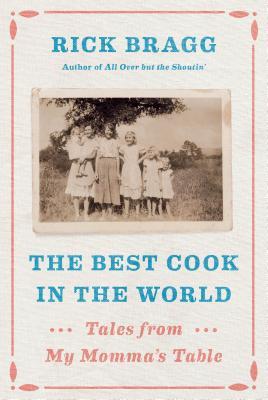
The Best Cook in the World by Rick Bragg

The Best Cook in the World: tales from my momma's table by Rick Bragg

This book is Rick Bragg's ode to Southern food and his mother Margaret, also known as The Best Cook in the World. Cooking skills go back generations in the Bragg family. As his great-grandfather Jimmy explained it to Bragg's grandmother Ava, when you're poor and working hard, manual labor jobs you want not just food for sustenance, but food you actually look forward to eating when you get home - it might be the only spot of good in your whole day. Jimmy and other Bragg family members managed to make mouth-watering feasts out of scraps - they had to as they could afford little beyond what they could raise, grow, forage or hunt. Bragg sits down with his Mom as she's getting older to try to get recipes for the food she grew up eating and making and also the family stories that go along with all the recipes. Of course Margaret and all the people she learned from never used printed recipes - some could not read or write. Bragg does an amazing job of telling his family's story through food and food was important for them and I think for everyone. You always remember the food you grew up eating. You will find yourself fascinated by Bragg's crazy family lineage and craving the food he describes even if you didn't grow up eating that way. Thankfully there are several recipes in each chapter so you can try to carry on the tradition of cooking great food for your own family.

Some quotes I liked:

"It is the one place in our culture where living in the past makes a lovely sense, not an antidote for all the rest of it, but a balm. There is a reason why many black Southerners - and some white ones, like my mother - still call this kind of cooking soul food, because it transcends the pain and struggle of the everyday, a richness for a people without riches." (p. 13)

"She believes that most outsiders, including Southerners who have never stood in a field and salted a tomato, have forgotten what Southern country food used to be, or ought to be. 'I mean, it ain't s'posed to be easy.'" (p. 19)

"The secret to a good biscuit, he believed, was a soft, domed top but a thin, crispy bottom. You got this with a little extra lard on the biscuit pan's bottom - not a whole lot, just a little more - so that the flour on the bottom crisped as the rest of the biscuit baked. Some people did not like it and preferred a soft, fluffy biscuit through and through, which concerned him not at all. Those people could make their own damn biscuit, if they did not see the glory in his." (p. 57)

"Thick grits are good, even if they seem a little too thick, she said, parroting her own mother, who was parroting Jim. Watery, thin grits are always an abomination, a thing not even food. Some chefs try to mask this by serving grits in a bowl, as if they meant them to be a watery mess. Grits should not be served in a bowl, like, ugh, cream of wheat, but should be thick enough to hold up in a pool or puddle on the plate. They should not need butter, salt, or pepper after the fact, but some people like saltier grits and more buttery ones. Some people go crazy and put diced ham or bacon in them. These people are Philistines. The cayenne will give them a little heat, but not so much as to be silly." (p. 66)

"[Ava] was a true Pentecostal...She wore her hair to below her waist then, and her skirts to her shoe tops. Around a cookfire, the girl was a human torch. At the woodpile, she was little more than a backstop. 'It's be easier on your shins if you was to put on some pants,' he said. 'Be easier to get out the way, when the wood come flyin' at you. Hard to chop much wood, anyway, in a damn bedsheet.' She told him that, like thievery, drinking, fighting, and smarting off to ladies, to wear pants would be a sin. 'Hell is a wide place for y'all, ain't it?' the old man said." (p. 75)

"In those days, it was not a matter of turning a switch on an electric stove, or lighting a pilot light. To prepare a meal meant chopping and splitting wood, building a fire, and - in summer - cooking within an envelope of heat that was damned near unbearable. A simple pound of butter, with milking and churning, was a half-day's work. A bushel of green beans took an hour or more to pick, and more time to snap. And to procure and clean and cook a chicken - well, a chicken was a by God endeavor." (p. 284)

"'I don't know when people stopped caring about their food,' my mother said. 'I don't mean the cooks. I mean, people will just eat what you throw at 'em. It's like they give up on having anything good.'" (p. 411)


Do You Have Kids? by Kate Kaufmann

Do You Have Kids? Life When the Answer is No by Kate Kaufmann

As someone who has chosen to be childfree, I was really excited to read this one. Unfortunately, it was kind of a let down and the end was pretty depressing. As the author points out there are usually two types of women without children - those who chose not to have children and those who can't have children, but may have wanted them. The author falls into the second camp and I think that fact makes the focus of the book lean more in that direction. She spends a lot of time talking about step-parenting, step-grandparenting, finding other children to invest in, etc. I never wanted kids and I don't want to be a teacher or caregiver for children either. I don't feel like I have to invest in children in some way to be valuable. I do like that she gets into more day-to-day issues like housing options for single or childfree people as they age, dealing with end of life issues and wills, how having children or not can affect your health, what will your legacy be, etc. The chapter on religion and not having children was interesting, but also disappointing to me. I felt like she kind of glossed over how hard it can be to be childfree in a religious community - or maybe that's just been my issue. It was an interesting book, but I felt like it leaned more toward people who really wanted kids and couldn't have them and learned to deal with being childless. I also agreed with another reviewer who said the ending of the book left her feeling depressed - maybe because the last two chapters dealt with end of life planning and leaving your legacy. But, I guess reading this book kind of reiterated how I already feel - I do NOT regret not having children, but it's been very isolating for me. I know very few childfree couples, especially in any churches I've attended, and I've found it very, very hard to maintain friendships once the friend has children. The author really didn't give me a lot of hope of that changing. It is an interesting book, but I wouldn't really recommend it.

Some quotes I liked:

"Abma and Martinez's study was cited to in an article titled, 'Childless and Godless,' published in The Family in America: A Journal of Public Policy. Authors Bryce J. Christiansen and Robert W. Patterson summed up the study's finding by saying, 'This study highlights - among other things - the sterilizing consequences of irreligion.' It's ridiculous to suggest that those without children would have procreated if only they'd remained regular churchgoers...some of us have found the church less than welcoming." (p. 151-52)

"The Pope made a distinction between the childless and the childfree. He suggested that couples who are unsuccessful having children 'look to Jesus and draw on the fertility that Christ has with His Church.' However, he didn't mince words when it came to the childfree. 'These couples who do not want children, in which the spouses want to remain without fertility...in the end this marriage comes to old age in solitude, with the bitterness of loneliness. It is not fruitful, it does not do what Jesus does with His Church: He makes His Church fruitful.'" (p. 156) [Yes, I LOVE taking advice on whether or not to have children from the Pope who also does not have children who repeatedly cites Jesus, who also did NOT have children...]

"In fact, researcher Leslie Ashbury-Nardo found that those who go against cultural stereotypes by intentionally choosing not to have kids can be met with what researchers refer to as 'moral outrage.'" (p. 237) [People don't like it when other people live outside the box they choose to live in.]


The Idle Beekeeper by Bill Anderson

The Idle Beekeeper: the low-effort, natural way to raise bees by Bill Anderson

I picked this book up based on the title. My husband and I took a beekeeping class and have tried to keep bees for two years, but never had a hive successfully overwinter. It was just too expensive to keep buying packages of bees that just died, so we're taking a break. Before this book I was not familiar with the Warré method of keeping bees, but it was very interesting. The Warré hives are built to mimic the size and type of hollow tree wild bees prefer to make their home. The boxes are rotated so that when you harvest honey in the fall you take the top box and in the spring you add an empty box to the bottom. While some aspects of harvesting the honey from the Warré boxes seems complicated, I do like that in theory when you add a box the other boxes will be lighter as the bees consume their honey stores over the winter. With Langstroth hive boxes I can't physically lift them when they are full of bees and honey, but the Warré boxes are smaller, so it might be more doable. There was a lot of good information about catching swarms and not checking on the bees constantly. The bees know what they're doing and we're just trying to provide a suitable home for them and harvest some of their honey as well. This book definitely gives me more ideas about better ways to keep bees when we try again in the future. Anderson also gives full color pictures in the Appendixes if you want to build your own Warré hives.

Some quotes I liked:

"Maverick mycologist Paul Stamets also keeps bees. He noticed that a raised bed of woodchips in which he was growing King Stropharia mushrooms was being visited by his bees - with extraordinary determination they had lifted relatively enormous chips of wood to expose the intricate strands of his mushrooms' mycelium growing below the surface. When he looked he could see that the bees were sucking on little extracellular droplets that the mycelium had exuded like beads of sweat...these droplets contain acids, enzymes, and all sorts of messaging molecules: the mycelium is self-organizing and self-educating - as it grows and penetrates its environment, the tips of the mycelium explore anything new or unfamiliar, and then intelligently change themselves to find solutions to fight new toxins, or build new enzymes to digest new food...But Stamets discovered that the mycelial droplets his bees were so keen on were specifically and spectacularly antiviral too. They upregulated the bees' immune systems." (p. 125-27)