Thursday, October 31, 2019

October 2019 Reviews

The Sun Does Shine by Anthony Ray Hinton

The Sun Does Shine: how I found life and freedom on death row by Anthony Ray Hinton (Evening Edition book club)

In 1985 Anthony Ray Hinton was arrested for 3 robbery murders. While he was scared he was innocent and had an airtight alibi - he had been at work on the night of the 3rd murder. But, his innocence did not change the views of the Alabama courts. Due to a joke of a court-appointed attorney and falsified evidence by the Alabama prosecutors Hinton is sentenced to the death penalty. His first three years on death row were dark. Hinton was furious at what had happened to him and all he could think about was getting revenge on the people who fabricated evidence and ignored his innocence. Then he had a breakthrough - he could let the state of Alabama kill him the whole time he was in prison or he could live inside himself the best he could under these circumstances. After his appeal with the same court-appointed attorney is denied his case is taken up by Bryan Stevenson of the Equal Justice Initiative and for the next 27 years he goes through appeal after appeal trying to get higher courts to overturn his conviction. Hinton spends 30 years on death row in mostly solitary confinement. His mental strength and faith were the main things that kept him going. He also had an incredible friend, Lester, who came to EVERY SINGLE VISITING DAY and after 30 years was able to pick Ray up when he was finally released. This story is heart-breaking and terrifying and should be required reading for EVERYONE. After all Hinton went through the state of Alabama never apologized or gave him any kind of compensation for spending 30 years on death row as an innocent man. This should definitely make for a good book club discussion.

There are LOTS of quotes I liked:

"McGregor [the prosecutor] may have won, but I don't think he or the judge realized that by sentencing me to death, they were giving me the only shot I had at proving my innocence. Now that I was sentenced to die, I would be guaranteed an appeal and guaranteed some representation by my attorney. If I had been sentenced to life, I would have had to hire an attorney to appeal." (p. 14

"Acker [a police detective] turned around and looked me in the eye for the first time since I had told him I was at work on the twenty-fifth. 'You know, I don't care whether you did or didn't do it. In fact, I believe you didn't do it. But it doesn't matter. If you didn't do it, one of your brothers did. And you're going to take the rap." (p. 51)

"...a man laughed. A real laugh. And with that laughter, I realized the State of Alabama could steal my future and my freedom, but they couldn't steal my sense of humor. I missed my family. I missed Lester. But sometimes you have to make family where you find family, or you die in isolation. I wasn't ready to die. I wasn't going to make it easy on them. I was going to find another way to do my time. Whatever time I had left." (p. 118)

"Bring in the books, I thought. Let every man on the row have a week away, inside the world of a book. I knew if the mind could open, the heart would follow. It had happened to Henry. Look at him sitting here in a locked room with five black men who had nothing to lose...I had no anger toward Henry. He had been taught to fear blacks. He had been trained to hate. Death row had been good for Henry. Death row had saved his soul. Death row had taught him that his hate was wrong." (p. 153)

"Compassion doesn't know what color you are, and I think Henry felt more love from the black men on death row than he ever did at a KKK meeting or from his own father and mother...Henry was the first white man to be put to death for killing a black in almost eighty-five years. His death meant something to people outside of the row. It was making a point about racism and justice and fairness like all the books we had been reading in book club, but to us, it was a family member being killed. There's no racism on death row." (p. 161)

"'Yes, I'm firing you. Thank you for everything up until now, but I'd rather die for the truth than live a lie. I'm not agreeing to life without parole. I'll rot and die in here before I agree to that. But thank you for working so hard.'...I would bend over when the guards made me do it. I had no choice. But I wasn't going to let anybody else shake me down. I wasn't ready to give up on my life. I was going to walk out of this place as an innocent man, or I was going to die trying. Nothing more and nothing less." (p. 164-65)

"I wasn't surprised that the State was doing its best to keep me locked away and quiet. It was what the court had done from the beginning. It was still a lynching. It was taking decades to get the noose wrapped just right. I also wasn't naive. The State was unwilling to admit it had made a mistake. Alabama would rather stay wrong than admit it had been wrong; rather accept injustice than admit that it had been unjust." (p. 185)

[From an article Bryan Stevenson wrote for the Birmingham News] "With 34 executions and seven exonerations since 1975, one innocent person has been identified on Alabama's Death Row for every five executions. It's an astonishing rate of error. What most defines capital punishment in Alabama is error. Reviewing courts have concluded nearly 150 Alabama capital murder convictions and death sentences have been illegally and unconstitutionally imposed. Reversals outnumber executions 5 to 1. While some states have seriously examined their death penalty systems and pursued reforms, Alabama leaders have recklessly called only for speeding up the execution process." (p. 210)

[After Hinton's release from prison, his first night in a real bed] "It was all strange, and I could feel the anxiety start again. I began to breathe heavy and fast. What was happening to me? I wondered if I should wake up Lester and have him take me to the hospital. Was this how it ended? The day I get my freedom, I have a heart attack? I tried to steady my breath, but it was like the walls were moving in and out and the room was spinning. I didn't like this. I got out of bed and ran into the bathroom. I locked the door behind me and sat on the floor with my head between my knees. Immediately, my heart stopped pounding and my breathing slowed. I lifted my head and looked around. The bathroom was almost exactly the same size as my cell. I stretched out on the floor, my head resting on the bath mat. I would sleep in here tonight. This felt like home." (p. 236)

"I forgive them. I made a choice after those first difficult few weeks at Lester's when everything was new and strange and the world didn't seem to make sense to me. I chose to forgive. I chose to stay vigilant to any signs of anger or hate in my heart. They took thirty years of my life. If I couldn't forgive, if I couldn't feel joy, that would be like giving them the rest of my life. The rest of my life is mine. Alabama took thirty years. That was enough." (p. 238)


Clock Dance by Anne Tyler

Clock Dance by Anne Tyler (Books & Banter book club)

Willa Drake grew up with a most likely mentally ill mother and a very enabling father. While she didn't realize how abusive her mother was as a child, I'm not sure that she really did understand that as an adult either. She married her college boyfriend and gave up her dreams of working as a linguist to follow him to California. She had two sons and was widowed at 41. The book tells 3 defining moments for Willa - when she is 11, 21, and 41 - then picks up with the present when she is 61 and remarried. Her son's ex-girlfriend is injured and needs someone to care for her 9-year-old daughter. A neighbor mistakenly thinks Willa is the child's grandmother and calls her. Willa is feeling at loose ends and decides on a whim to go and ends up really enjoying her time with Cheryl. Willa's current husband on the other hand is not happy about this recent turn of events. Willa tends to go along with whatever the men in her life want her to do and now after this she has to determine what SHE really wants for one. The ending is ambiguous, but I'm hoping that for once Willa does what she wants for a change.

A quote I liked:

"Sometimes Willa felt like she'd spent half her life apologizing for some man's behavior. More than half her life, actually. First Derek and then Peter, forever charging ahead while Willa trailed behind picking up the pieces and excusing and explaining." (p. 187)


Inheritance by Dani Shapiro

Inheritance: a memoir of genealogy, paternity, and love by Dani Shapiro

How much of your identity is tied to your biological DNA? Dani Shapiro grew up in an Orthodox Jewish house and knew her family lineage. But, she never looked Jewish - she was fair with blonde hair and blue eyes. As the only child of older parents she often felt out of place, many of the other Orthodox Jewish families had several children. But, she never questioned her biological identity in her family. Then on a whim she and her husband decided to do Ancestry DNA analysis and when the results came back they rocked her world - she was not biologically related to her father. Both of Shapiro's parents were dead, so she couldn't get answers from them. As a writer and her husband with a background in journalism, the couple began to research and very quickly found information based on a few scraps of information Shapiro remembered from her mother. She even found her biological father within 2 days of finding out this information. But, this was just the tip of the iceberg for Shapiro - she had to figure out how to deal with this bombshell and what it might mean for her family. As she sorts through information and begins to communicate with her biological father and other family members, she is also working through feelings about what makes a family. A fast read about how one family's secret impacted several people over fifty years in the future.

Some quotes I liked:

[During a conversation with her father's only living sibling] "She trained her whole ninety-three-year-old self, every cell in her being, in the direction of consoling me. Every bit of energy. It was the purest manifestation of love I had ever experienced." (p. 138)

"Those early months were taken up first with the disbelief that my parents could have ever knowingly participated in such a deceit, and then later with anger and sorrow that they had made the choices they did - even though those choices resulted in my existence...But now I was coming to the awareness that my young parents-to-be had none of these tools. They possessed only their own fear, shame, despair, and desire for a child at any cost. They joined hands and went deeper into the wilderness until the only way out was through. There was no going back. And then they pretended it never happened. They never spoke of it again - not to each other, not to family, nor to friends." (p. 222-23)


The Friends We Keep by Jane Green

The Friends We Keep by Jane Green

Maggie, Evvie, and Topher meet their first year at University and become inseparable. They end up renting a house together and living together as an odd little family for the rest of college. After college they go their separate ways - Evvie becomes a model in New York, Topher gets into acting and is cast in a soap opera, and Maggie married Ben, her crush throughout college. The three friends lose touch, but decide to reconnect at their 30th University reunion. After the reunion some devastating secrets come out that will change everyone's lives.

I love Jane Green and was really looking forward to this book, but it was very disappointing. I won't give anything away, but the main "secret" is pretty big and devastating. There is ABSOLUTELY NO WAY their friendship would have survived and continued as it does in the book. I saw this coming from the end of the first section of the book and knew it was going to be like a Hallmark movie where everything works out perfectly in the end. Very unrealistic and not like most of Green's other books. I'll keep reading Jane Green, but I wouldn't recommend this one.


American Predator by Maureen Callahan

American Predator: the hunt for the most meticulous serial killer of the 21st century by Maureen Callahan

When Samantha Koenig disappeared from the coffee stand where she worked in Anchorage, Alaska it seemed like she might be a runaway at first. But, then her boyfriend saw a masked man rummaging through the truck they shared and they got a ransom note. Samantha's kidnapper, Israel Keyes, was caught in Texas after the police followed ATM withdrawals and surveillance footage. Keyes had no criminal history and was barely on the radar at all, but he admitted to kidnapping and killing Samantha. The FBI realized that this was not the first time Keyes had killed and they were soon engaged in a cat and mouse game with Keyes to see if they could get him to admit to any other murders. Keyes traveled all over the country and would bury "kill kits" in remote places. These kits would have a handgun, suppressor, ammunition, knife, and zip ties - everything he needed to kidnap and kill someone. Keyes eventually admitted to a double murder in Vermont and alluded to several other murders, rapes, and kidnappings and police managed to connect several missing persons cases with Keyes timelines and travels over the years. Keyes committed suicide in prison, so the full extent of his crimes may never be known. But, what the police were able to piece together is terrifying because Keyes picked people at random to kill and was meticulous in his planning and cover ups.

Some quotes I liked:

"Before his death in 2016, [Roy] Hazelwood [a pioneering FBI behavioral profiler] spoke about Keyes. Hazelwood's decades of service had left him with a cynical view of the FBI's truthfulness in general, and he believed stranger abductions are far more common than the Bureau insists. He was convinced that the proliferation of hard-core pornography, so easily and anonymously accessible online, has contributed to increasingly sadistic crimes and murders. He believed that technology, the mainstreaming of violent pornography, advances in ever-faster travel, and an overall culture of misogyny, from politics to entertainment, would only continue to breed more aberrant and dangerous criminals. He made this prediction in 2001." (p. 179)

[In interviewing one of Keyes only friends during his military service] "Are you surprised, they asked, that Keyes has been arrested for kidnapping and murder? 'I'm surprised he...got caught,' Perkins said. 'He was smarter than that.'" (p. 234)

[Keyes was almost able to escape at a court hearing in Anchorage] "Bell's warnings [to the Alaska corrections officers] had not been taken seriously. In fact, they had not been taken at all, because that was how Keyes had nearly escaped. In the three hours between transport and the court hearing, Keyes had been given lunch, the standard meal for the standard inmate: a brown bag containing a carton of milk, an apple, and a sandwich wrapped in cellophane. Keyes had used his stored-up pencil slivers to pick the locks on his cuffs and leg irons, then used the cellophane to make his leg irons look tied together." (p. 238)

The Whole Okra by Chris         Smith

The Whole Okra: a seed to stem celebration by Chris Smith

If you love okra and want to know literally EVERY SINGLE THING you can make, eat, and do with okra this is the book for you. Chris Smith is British, so he did not grow up eating okra. But, he married a woman from South Carolina and once he had eaten really good okra he was hooked. Smith has done things with okra that I would never have dreamed of doing. He covers the history of okra, the slime issue/factor, how to best cook and preserve okra, eating okra flowers and leaves, making and using okra seed and pod flour, making paper from okra stalks, and of course how to best grow your own okra. There are several recipes included - some like the okra face mask and hair treatment might be a bit much for some people. But, there are some recipes I'd like to try and this book is definitely a great exploration of all the wonders that is okra! It was also cool that Smith and his family now live in Asheville, so lots of the resources and restaurants he referenced are ones I could actually check out. Overall, a really thorough look at one of the South's favorite vegetables.


Just Mercy by Bryan Stevenson

Just Mercy: a story of justice and redemption by Bryan Stevenson

Bryan Stevenson enrolled in law school on somewhat of a whim, which is incredible given what you will learn about him in this book. Once in law school a lot of the courses seemed arbitrary and not applicable for the real world. In his second year of law school Stevenson signed up for a one-month intensive course on race and poverty litigation that required students to work with an organization doing social justice work. Stevenson ended up interning with the Southern Prisoners Defense Committee (SPDC) in Atlanta, Georgia. That was where he met his first death-row inmate and that was also where he found his life's calling. After finishing law school Stevenson worked for SPDC in Atlanta, but so many of their cases dealt with prisoners in Alabama that he ended up moving to Alabama and opening his own non-profit legal organization, the Equal Justice Initiative (EJI). Since the very beginning of EJI when it was just Stevenson, one other lawyer and a receptionist they have been inundated with inmates and family members trying desperately to find someone to help them in the brutal legal system. Stevenson tells the story of EJI and his work through the story of Walter McMillian, one of the innocent people Stevenson is able to get released from death row. McMillian's story is interspersed with other aspects of social justice and race that Stevenson and EJI have worked on like child imprisonment, mentally handicapped prisoners on death row, and arbitrarily long prison sentences for minor infractions - almost all disproportionately for African-American or other minority groups. The stories in this book are heartbreaking and infuriating. To read story after story after story of poor people being railroaded by the state is just mind blowing. Equally mind blowing is how often the state turns a blind eye to this injustice even in the face of compelling evidence of innocence over and over and over again. This is a hard book to read, but it's an important book to read and should be required reading for EVERYONE. The world needs more people like Bryan Stevenson.

Some quotes I liked:

"It wasn't until 1967 that the United States Supreme Court finally struck down anti-miscegenation statutes in Loving v. Virginia, but restrictions on interracial marriage persisted even after that landmark ruling...Even though the restriction couldn't be enforced under federal law, the state ban on interracial marriage in Alabama continued into the twenty-first century. In 2000, reformers finally had enough votes to get the issue on the statewide ballot, where a majority of voters chose to eliminate the ban, although 41 percent voted to keep it. A 2011 poll of Mississippi Republicans found that 46 percent support a legal ban on interracial marriage, 40 percent oppose such a ban, and 14 percent are undecided." (p. 29)

[In the court proceeding to present the evidence that showed Walter McMillian was innocent] "In the last pretrial appearance, the judge had asked, 'How much time will you need to present your evidence, Mr. Stevenson?' 'We'd like to reserve a week, your honor.' 'A week? You've got to be joking. For a Rule 32 hearing? The trial in this case only lasted a day and a half.' 'Yes, sir. We believe this is an extraordinary case and there are several witnesses and -' 'Three days, Mr. Stevenson. If you can't make your case in three days after all of this drama you've stirred up, you don't really have anything.' 'Judge, I -' 'Adjourned.'" (p. 164-5)

"The tapes that Tate, Benson, and Ikner had made when they interrogated Myers were pretty dramatic. The multiple recorded statements Myers gave to the police featured Myers repeatedly telling the police that he didn't know anything about the Morrison murder or Walter McMillian. They included the officers' threats against Myers and Myers's resistance to framing an innocent man for murder...All of these recorded statements were typed, exculpatory, and favorable to Walter McMillian, and none of them had been disclosed to McMillian's attorneys, as was required." (p. 182) [also infuriating is that the prosecutor, Tate, had immunity and could not be sued for damages after McMillian was released from prison]

"Today over 50 percent of prison and jail inmates in the United States have a diagnosed mental illness, a rate nearly five times greater than that of the general adult population. Nearly one in five prison and jail inmates has a serious mental illness. In fact, there are more than three times the number of seriously mentally ill individuals in jail or prison than in hospitals; in some states that number is ten times...when I still worked in Atlanta, our office sued Louisiana's notorious Angola Prison for refusing to modify a policy that required prisoners in segregation cells to place their hands through bars for handcuffing before officers entered to move them. Disabled prisoners with epilepsy and seizure disorders would sometimes need assistance while convulsing in their cells, and because they couldn't put their hands through the bars, guards would mace them or use fire extinguishers to subdue them." (p. 188)

"Terrorist groups like the Ku Klux Klan cloaked themselves in the symbols of the Confederate South to intimidate and victimize thousands of black people. Nothing unnerved rural black settlements more than rumors about nearby Klan activity. For a hundred years, any sign of black progress in the South could trigger a white reaction that would invariably invoke Confederate symbols and talk of resistance. Confederate Memorial Day was declared a state holiday in Alabama at the turn of the century, soon after white rewrote the state constitution to ensure white supremacy. (The holiday is still celebrated today.)...In fact, it was in the 1950's, after racial segregation in public schools was declared unconstitutional in Brown v. Board of Education, that many Southern states erected Confederate flags atop their state government buildings. Confederate monuments, memorials, and imagery proliferated throughout the South during the Civil Right Era. It was during this time that the birthday of Jefferson Davis, the president of the Confederacy, was added as a holiday in Alabama. Even today, banks, state offices, and state institutions shut down in his honor." (p. 192-3)

"...even today almost half of all states (twenty-two) offer no compensation to the wrongly imprisoned. Many of the states that do authorize some monetary aid severely limit the amount of compensation. No matter how many years an innocent person has been wrongly incarcerated, New Hampshire caps compensation at $20,000; Wisconsin has a $25,000 cap; Oklahoma and Illinois limit the total amount an innocent person can recover to under $200,000, even if the person has spent decades in prison. While other states have caps of more than a million dollars, and many have no cap at all, several states impose onerous eligibility requirements. In some jurisdictions, if the person lacks the support of the prosecuting attorney who wrongly convicted him, compensation will be denied." (p. 245)

"The power of just mercy is that it belongs to the undeserving. It's when mercy is least expected that it's most potent - strong enough to break the cycle of victimization and victimhood, retribution and suffering. It has the power to heal the psychic harm and injuries that lead to aggression and violence, abuse of power, mass incarceration." (p. 294)


The Next Right Thing by Emily P. Freeman

The Next Right Thing by Emily Freeman

I read this book as part of a women's Bible study at my church, so I read it in 4 chapter increments each week. When I first started reading it I wasn't sure how much I would get out of it because I don't have trouble making decisions, which seemed to be somewhat the focus of the book. But, there was still a lot that I found helpful and through the course of reading the book for this class I did find myself having to make some harder decisions, so it was helpful to be reading and discussing during that time. The overall message I got from the book is there is not one perfect right decision for everything. If you're trying to follow God prayerfully doing The Next Right Thing is all we can do. The only downside of reading a book only 4 chapters a week is that it's harder for me to remember all the things I liked about it because now it's been so long since I started reading it. But, I did like it and I would read something else by this author again.

Thursday, October 3, 2019

September 2019 Reviews

The World According to Fannie Davis by Bridgett M. Davis

The World According to Fannie Davis: my Mother's life in the Detroit Numbers by Bridgett M. Davis

Growing up Bridgett was the youngest of five siblings. She only knew her family as successful and she never wanted for anything. But her older siblings remember the harder times before their mother Fannie became a Numbers runner. Numbers was and is an illegal lottery that started in Harlem and while all walks of life played Numbers it was primarily known as a part of African-American life in Detroit and other major cities up North. Fannie Davis was an entrepreneurial woman who was determined to defeat the poverty that plagued most African-Americans even "up North." With her husband on the bottom rung of the Detroit auto industry constantly being laid off and rehired, she borrowed $100 from her brother and started running Numbers. She eventually became one of the only female Numbers bankers, meaning she had enough cash put back that she completely worked for herself and did not rely on a larger funder to back her business. Growing up Bridgett and her siblings knew to NEVER speak about what their mother did or how their family earned a living. This was so ingrained in her that she had trouble even starting to write this book, but she knew she wanted to share her mother's story and legacy. The World According to Fannie Davis is Bridgett's ode to her mother. Bridgett gives a history of the Numbers game and how it evolved over time, but the majority of the book is about her mother and the incredible legacy she was able to create all from an illegal business.

Some quotes I liked:

"But the most important reason for its beauty was this: unlike the policy [an earlier lottery game], Numbers was a black-owned and black-controlled business. The Numbers blossomed into a lucrative shadow economy in the early 1920's, and moved into black communities across America, thanks in large part to the Great Migration." (p. 61)

"A 1972 Detroit Free Press article quoted a Detroit Baptist minister who once famously said from the pulpit, 'I know some of you are taking the numbers of our hymns and betting on them. I'm not saying whether I approve or not, but if you play them...be sure to box 'em.' Certain preachers actually built their church followings on the claim that they had the ability to prophesy, and would give out numbers that had supposedly come to them in their dreams." (p. 133)

"For those who knew us, our family secret (as far as it was a secret at all) didn't possess the potency I gave it. People admired my mother not so much for what she did as for the kind of woman she was. And yet I don't want this point to get lost: My mother launched a Numbers operation out of necessity, but despite its constant challenges, she enjoyed running her own business. Self-employment allowed her a coveted life of rugged individualism, as they say. By contributing to this thriving underground economy, my mother was able to live out Booker T. Washington's dream of Negroes' self-reliance, and as such she moved through the world as a head-held-high, race-proud black woman." (p. 290)


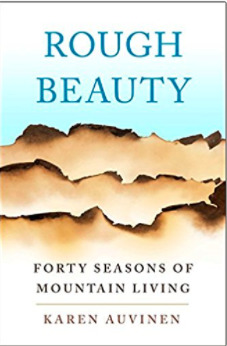
Rough Beauty by Karen Auvinen

Rough Beauty: forty seasons of mountain living by Karen Auvinen

A few months before her 40th birthday Karen Auvinen's cabin in the Colorado Rockies burned to the ground. She lost everything except her truck, her dog Elvis, and a few articles salvaged from the fire. Never one to rely on others, Karen had a very hard time accepting help from people after the fire, but she had no choice because she literally had nothing. After the fire Karen reevaluates her life and slowly starts to realize that she does need connections and her small town really rallies to help her rebuild her life.

While some parts of the book were really interesting, a lot of it was very depressing and sad. Karen had a rough childhood and doesn't have a good relationship with anyone in her immediate family. This comes up again and again as her mother's health declines steadily throughout the book. She also loses her beloved dog Elvis and that was hard to read. I don't have dogs, but I had an elderly cat and we just lost her sister last year, so that was a hard few chapters to read. Based on the book description I thought it was going to be a more uplifting book, but it was pretty depressing overall. I am glad I finished it, but I wouldn't really recommend this one.


Save Me the Plums by Ruth Reichl

Save Me the Plums: my Gourmet memoir by Ruth Reichl

Ruth Reichl's love of food and cooking started when she stumbled upon some back issues of Gourmet magazine and convinced her father to buy them for her. When she asked her parents to buy her the ingredients needed to cook some of the recipes in the magazine they did and she began doing more and more of the family's cooking. She and her father also bonded over visiting ethnic food markets and new restaurants in New York City. Reichl worked as a food writer and then as a restaurant reviewer for the New York Times before being offered the job as editor-in-chief of Gourmet magazine. While not sure she was qualified, Reichl couldn't turn down the opportunity to work for the magazine that inspired her so much. It wasn't always easy, especially in the beginning, but Reichl grew to love working at Gourmet. So, it was that much more devastating when the magazine closed in 2009 during the recession. Save Me the Plums is Reichl's memoir of her time at Gourmet. She is honest about her mistakes and things she would do differently, but her love of food, cooking, and Gourmet magazine shines through. One of the most touching chapters was in response to 9/11 Reichl called everyone at Gourmet to invite them to use the Gourmet kitchens to cook for the first responders. She wasn't even sure anyone would show up, but tons of staff showed up and cooked for all the emergency crews working at ground zero. A lovely tribute to Gourmet and Reichl's time there.


On Being 40 by Lindsey Mead

On Being 40(ish) by Lindsey Mead, editor

I just recently turned 40, so I purposely chose to read this book the week of my 40th birthday. A collection of female authors write about what it was like to turn 40 or reflecting on life in your 40's. While some of the names I recognized, many of them I did not. There were several that I liked - Soul Mates, There's a Metaphor Here, and Youth Dew were my favorites. But, the rest were just OK. Not much other than the three I mentioned really jumped out or were all that interesting. Overall, it was OK, but not great.


Carving Out a Living on the Land by Emmet Van Driesche

Carving Out a Living on the Land by Emmet Van Driesche

Emmet Van Driesche and his wife Cecilia had worked together on farms before, but this book details their story of taking over a Christmas tree farm. In telling their story, Emmet shares both their mistakes and triumphs. Running a small farm is not easy and taking over an established farm over time can be even harder and more complicated. But each year they have made more money than the previous year by adding income streams and also by streamlining the processes on the farm. While some parts of the book do go into more detail about their operation, all of it could apply to other farms or small businesses. There are also lots of pictures and information - including two appendixes and a list of resources. This is a very unique book - part farm instruction manual and part farm/business philosophy. Even if you don’t want to have your own farm if you’re interested in small business or even homesteading you could learn something from this book.


Mrs. Everything by Jennifer Weiner

Mrs. Everything by Jennifer Weiner

Jo and Bethie Kaufman grow up in the 1950's in Detroit in the stereotypical ranch house and a neighborhood full of friends. Jo is a tomboy who loves to run and play sports while Bethie is the pretty "good girl" who loves to let her mother dress her up and fix her hair. After their father dies things change drastically for the Kaufmans. And while Jo was the one who protested with her African-American friends outside of local businesses in high school, she ends up married and a stay-at-home mom to three girls. Bethie loses her "good girl" identity in college and ends up getting into the whole free love and drugs scene in the 1970's. Both Jo and Bethie deal with trauma, changes in culture, and their fluctuating relationship as sisters. Weiner does an amazing job of highlighting all the changes and issues for women from the 1950's to the present through Jo and Bethie. Overall, another AMAZING book by Jennifer Weiner who's books are always on-target in addressing what it means to be a woman.

I will warn any potential readers that there is a LOT of sex in this book - it's not gratuitus, but it is a lot. It's still a great book with two characters you will absolutely love, but just that small warning for anyone super sensitive to that.

Friday, September 6, 2019

August 2019 Reviews

The Polygamist's Daughter by Anna LeBaron

The Polygamist's Daughter by Anna LeBaron

I had heard of this book, but when I read recently that the author was related to the author of The Sound of Gravel I was even more interested to read this one. While Anna's story is terrible and it's amazing that she survived and became a "normal" adult, it wasn't as well-written as The Sound of Gravel in my opinion. Anna is the child of Ervil LeBarron - one of the most notorious cult leaders of a polygamous offshoot of Mormonism. She barely knows her father and is constantly woken up in the middle of night to move somewhere trying to constantly evade the police and the FBI. When she is 14 she eventually escapes and moves in with an older sister and her family who had already left the cult. But, around the time she graduates from high school her brother-in-law Mark is murdered by members of her father's cult, even though he has long since died. Shortly afterward Mark's wife, Anna's sister, commits suicide leaving their 6 children orphans. Only after Anna is married and a mother herself does she finally allow herself to start healing and feel all the emotions she buried so deeply as a child and teenager. It's truly a miracle that she and her husband's marriage survived and that she was able to raise her children in the kind of healthy home she never had. Her story is one of survival and how she was able to rise above the life of her childhood into a happy, healthy life as an adult.


Women's Work by Megan K. Stack

Women's Work: a reckoning with work and home by Megan K. Stack

Megan Stack left her job as a foreign correspondent when she got pregnant. She wanted to write a book and knew that work + baby + writing a book was just too much. Her husband made enough money to support them in Beijing, so she decided to work on the book before and once she had the baby. But, she was ill-prepared for the realities of having a newborn. She rarely got any sleep and could barely keep up the bare minimum of chores, much less any writing. So, like many wealthy people she hired help. But, hiring help opened her eyes to the plight of poor, domestic workers, especially women of color, yet she realized she was completely dependent on that paid help. Stack vacillated between wanting to have more of a real relationship with her help (who all had children of their own that they were handing off to someone else in order to help her with her children) and also not really wanting to know the reality of their lives outside her home. She also realized what women since the beginning of time have known that women do EVERYTHING while men go off to work and come home with the expectation of a clean house, well-behaved children, and a hot meal. While her focus became how women of her class "need" help and the sub-class of domestic workers that that creates, the real issue I see is emotional labor and how little her husband was expected to do in maintaining their shared home. She never gets much into what their life was like before children other than they both traveled a lot, but who cleaned then? who cooked? who made household appointments? who met the HVAC guy? etc. Stack is a good writer and I was interested in her story, but it was much less about the class of domestic help workers and more about her unease with being so dependent on this help.

There were a lot of mixed reviews about this book. Was Stack likeable? Not really. Did her husband come across as a dick? YES. I don't doubt that Stack loves her children, but she didn't strike me as someone who really wanted children. I'm still not sure why she had children when she really seemed to love her work and life before and couldn't manage even one day with them on her own. Maybe she bought into the lie that having children is the only way to have a "real family" or to be "complete". Whatever her reasoning she does come across as spoiled and helpless and her husband comes across as useless and uninterested in her and the children. Despite all this it was an interesting book and will hopefully open up some discussions about child-raising and our dependence on cheap, domestic help.

Some quotes I really liked:

"It was motherhood that forced me to understand the timeless horror of our position. The obvious, hidden-in-plain-sight reason women had not written novels or commanded armies or banked or doctored or explored or painted at the same rate as men. The cause was not, as I had been led to believe, that women had been prevented from working. Quite the opposite: we had been doing all of the work, around the clock, for centuries." (p. 35)

"This line of thought was dangerous. If I found out too much, if the facts were too grim, then I might conclude that my domestic arrangement was fundamentally unfair. That was my formless and underlying fear: that if I understood too much, I might have to rip apart the status quo. I could either drown or I could wear Xiao Li as a life vest. There was no third choice." (p. 46)

"I was new to India. I didn't know yet that domestic staff are routinely forbidden to sit on their bosses' furniture, drink from their cups, or eat from their plates. I didn't understand that, for millions of women across India, domestic work was not a path to upward mobility, but a life sentence. Society deemed them more respectable than sex workers, but only just. Their willingness to work in other people's homes marked them as dirty and undesirable. I didn't know any of that, but I would learn." (p. 128-9)

"This was welcome because Sundays were a recurrent disaster. Every seventh day, the cheerful fictions of our domestic life were painfully exposed as a batch of lies. On Sunday Tom discovered that hanging out with tiny children was not a sun-washed field and overflowing picnic basket, but a jumble of physical needs and messy rooms and senseless tears. On Sunday I discovered that my partner didn't know where the diapers were kept and thought it prudent to let crusty dishes fester in the sink because a 'maid' would arrive twenty-four hours later. By the time the sun set on the Sabbath, we were often simmering and hardly speaking." (p. 166)

"And yet honest discussion of housework is still treated as taboo. For all her advice about holding one's place at work, this is a realm that Sheryl Sandberg has mostly managed to sidestep. Instead of addressing directly the employment of domestic workers in her home, she has pointed out that men aren't asked that question. By implication, since men aren't asked, she shouldn't have to answer. And she's half right - men aren't asked that question. But this is a dodge. Men ought to be asked. Everyone ought to be asked. Who's cooking the food, who's minding the kids, who's scrubbing the toilets? How do you manage to be out in the world, and if you are here, who is there?" (p. 328)


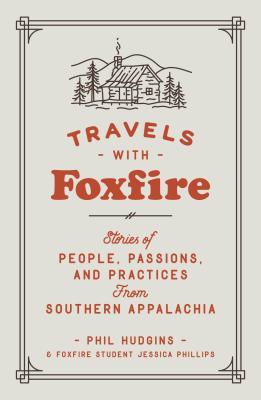
Travels with Foxfire by Foxfire Fund Inc

Travels With Foxfire by Phil Hudgins and Jessica Phillips

An entertaining collection of short stories about what life used to be like and still is today in the Southern Appalachian mountains. The subtitle sums it up well, "Stories of people, passions, and practices from Southern Appalachia." The stories are divided into topical sections - my favorite section title was "food fit to eat." The stories cover everything from famous people like author and farmer Dori Sanders to unknown, but interesting folks. While the stories were very interesting reading a book like this makes you realize how much of the "old ways" are being lost or could be lost in the next several years. But that's the point of Foxfire to capture and record these "old ways" and stories for posterity.


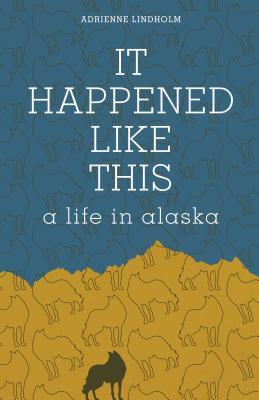
It Happened Like This by Adrienne Lindholm

It Happened Like This: a life in Alaska by Adrienne Lindholm

When Adrienne Lindholm was a child her family took a month-long, cross-country trip to several National Parks from their home in Pennsylvania. This was when Lindholm first discovered her love of the outdoors and nature. In college she met a friend and they moved out to Colorado - working any job they could find just to be able to live out West. After several years of adventures in several Western states Adrienne gets a job as a park ranger in Denali National Park in Alaska - the ultimate outdoor adventure destination. Once in Alaska Lindholm loves it and finds a group of friends who all came to Alaska looking for adventure like she did. Eventually she falls in love and gets married and decides to stay in Alaska.

There were a few things I didn't love about this book. Lindholm talks about how before moving to Alaska she hated the idea of hunting, but once there she saw how many people depended on hunting for their food. She started being more open to hunting as a better alternative to the industrial food industry and did actually hunt, but then barely mentioned it again. It just seemed odd that she did it a few times and just dropped it. I was also disappointed that the last several chapters of the book were about her struggle with her husband over having children. He decided he couldn't live without children, but she was still on the fence. She eventually gave in and then they struggled with several miscarriages before finally having their daughter when Lindholm was almost 40. I don't begrudge their decision to have a child, but I'm tired of so many women who say they don't want children then giving in because it's expected or everyone else is having kids, etc. and now their life is complete. The book wasn't amazing, but the end was just not what I was expecting in terms of the focus of the book. It just goes to show that even in Alaska among very adventurous people there is still that pressure to "settle down" and have kids.


Growing Perennial Foods by Acadia Tucker

Growing Perennial Foods by Acadia Tucker

As a gardener I'm just getting started with perennial crops and would like to add more in the future. In this book Tucker does a great job of explaining the prep work of gardening in the first few chapters. She explains the importance of good soil and building soil and also planning out your garden based on your yard/space available. The majority of the book covers perennial plants by category - herbs, fruit, and vegetables. Each entry gives basic info about that plant like varieties, companion plants, etc. then best places to plant that type of plant, how to plant, growing, challenges, and harvest. Each entry also includes one recipe using that plant/produce. Overall, a good look at starting to grow perennials.


The Woman's Hour by Elaine F. Weiss

The Woman's Hour: the great fight to win the vote by Elaine Weiss

In 1920 suffragists had been fighting for women's right to vote for 70 years. In the summer of 1920 thirty-five states had voted for the 19th amendment to the US Constitution, but thirty-six were need to ratify the amendment and Tennessee could make or break this fight. In The Woman's Hour three very different women come together in Tennessee for this fight. Carrie Catt was the president of the National American Women Suffrage Association (the more mainstream suffragist group). Sue White was a young activist for the more radical suffragist group the National Women's Party. And Josephine Pearson was the president of the Tennessee State Association Opposed to Woman Suffrage. All three of these women would work to pull in local support for their group and cause and meet with dozens of Tennessee lawmakers to try to persuade them to vote on their side. This book focuses on the last six weeks leading up to the Tennessee vote on the 19th amendment. While the subject matter is fascinating I felt like the book got bogged down in details. I appreciated learning more about the 3 women who were the focus of the book, but there was just a LOT of detail about everyone involved in all sides of this issue. It reminded me in some ways of Hidden Figures a really great story, but just too bogged down in minute detail to really read as well as I hoped. It is amazing to read how many women fought against suffrage, but then women are still fighting against women's issues to this day. It was also interesting to see just how tied suffrage and abolition were - basically anything that threatened white men being in power was a hard fight to win. And even though abolition was granted first, I still think white women had it better than anyone of color during that time. Freedom on paper is not the same as actual equality - something we're still fighting for to this day. Overall, it wasn't a great book, but I'm glad I read it to know more about just how hard women fought for this basic right.

Some quotes I liked:

"Woman suffrage could upend the supremacy of the white race and the southern way of life. After the brutal disruptions of the Civil War and the upheavals of Reconstruction - when black men were allowed to vote (and some were even elected to the legislature) but former Confederate soldiers were considered traitors and stripped of their voting rights - the southern states had finally achieved a degree of equilibrium, in terms of restoring racial and political relations, the Pearson family believed. Jim Crow laws kept blacks in their place. But if a federal amendment mandated suffrage for all women, that would mean black women, too. Then Washington could demand that black men be allowed to vote, and that was totally unacceptable." (p. 11)

"Even in the few instances where Suffs were victorious in the border states of the old Confederacy, as in Arkansas, they still had to endure the rabid rants of defiant legislators: 'I'd rather see my daughter in a coffin than at the polls,' one doting father exclaimed during floor debate in Little Rock." (p. 95)

[After the 19th amendment passed in Tennessee Carrie Catt wrote] "The vote is the emblem of your equality, women of America, the guaranty of your liberty. That vote of yours has cost millions of dollars and the lives of thousands of women. Women have suffered agony of soul which you can never comprehend, that you and your daughters might inherit political freedom. That vote has been costly. Prize it! The vote is a power, a weapon of offense and defense, a prayer. Use it intelligently, conscientiously, prayerfully. Progress is calling to you to make no pause. Act!" (p. 323-24)

"On November 2, 1920, American women did act - they voted. About ten million women went to the polls, just over a third of the eligible female electorate; nationwide, an estimated three women voted for every five voting men. Women voted in every state except Mississippi and Georgia, which, in an effort to prevent black women from participating, refused to extend registration deadlines to allow women enfranchised by the Nineteenth Amendment to cast ballots." (p. 325)

[After much violence toward black women voting predominantly in the South] "After the election, NAACP officers testified before Congress, bringing documentary evidence of the violent suppression of black women's and men's vote in the southern states. A veteran white suffragist, Mary Ovington, begged her suffrage comrades to help: 'We must not rest until we have freed the black as well as the white of our sex,' she implored. 'Will you not show us how to make the 19th Amendment the democratic reality that it purports to be?' It is a race issue, not a woman's issue, insisted Alice Paul in refusing to allow her National Women's Party to take a stand on black women's disenfranchisement. With rare exceptions, white suffragists, satisfied that they finally possessed the vote, ignored the plight of their black sisters for almost the next half century." (p. 328)

"Although white women completed their quest for the vote in 1920, other Americans would have to wait. Native Americans finally succeeded in convincing Congress to grant them citizenship and suffrage in 1924, yet many Native Americans continued to be barred from voting by state laws until 1957. Asian Americans, even native born, were not permitted to become citizens or vote until the mid-twentieth century: Chinese Americans were not allowed citizenship or suffrage until 1943; for those of Asian Indian descent, these rights were withheld until 1946; and Japanese Americans were forced to wait until 1952. African Americans in southern states, while possessing suffrage on paper, could not freely exercise their franchise until 1965 and still face obstacles. It is perhaps telling that in a stubborn stance on states' rights, some states that had rejected ratification of the amendment waited decades to finally make a symbolic acceptance: though it had no bearing on (white) women's ability to vote, Maryland did not officially ratify the Nineteenth Amendment until 1958; Mississippi waited until 1984." (p. 329)


Everything Happens for a Reason by Kate Bowler

Everything Happens for a Reason: and other lies I've loved by Kate Bowler - Books & Banter book club

Kate Bowler is a professor at the Duke Divinity School. Her specialty and the subject of her dissertation is the "prosperity gospel" a theology that believes whatever good that happens to you shows God's blessing, but if anything bad happens it's because of your lack or faith or some unconfessed sin in your life. When Kate is 35 she is diagnosed with Stage IV colon cancer. She has a husband she loves, a great career, and a 2-year-old son. At first her diagnosis is grim and she does not expect to live even a year. In struggling with her grief and illness she realizes she bought into the "prosperity gospel" mindset more than she realized. She also sees how with any illness or disaster people want some kind of control - I did this that caused this or if I do that it will fix it - when really we have no real control. Over the course of the first year of her diagnosis Kate learns slowly how to surrender and not try to do everything. She is honest about her fears, but also about the hope and love she feels from her family, friends, and colleagues. An honest look at terminal illness that feels hopeful, but not disingenuous. She also includes a helpful appendix of what NOT to say to someone in her shoes and also one of things you SHOULD say or do to help.

Some quotes I liked:

"What would it mean for Christians to give up that little piece of the American Dream that says, 'You are limitless'? Everything is not possible. The mighty Kingdom of God is not yet here. What if rich did not have to mean wealthy, and whole did not have to mean healed? What if being people of 'the gospel' meant that we are simply people with good news? God is here. We are loved. It is enough." (p. 21)

"I used to think that grief was about looking backward, old men saddled with regrets or young ones pondering should-haves. I see now that it is about eyes squinting through tears into an unbearable future." (p. 70)

"Even when I was still in the hospital, a neighbor came to the door and told my husband that everything happens for a reason. 'I'd love to hear it,' he replied. 'Pardon?' she said, startled. 'The reason my wife is dying,' he said in that sweet and sour way he has, effectively ending the conversation as the neighbor stammered something and handed him a casserole." (p. 112-13)


Crazy Rich Asians by Kevin Kwan

Crazy Rich Asians by Kevin Kwan

Rachel Chu has been dating Nick Young for two years while they are both living in New York City. When Nick invites her home to Singapore for his best friend's wedding Rachel is excited to go and meet his family. But, Nick has not told Rachel that his family is unbelievably wealthy and Nick has also not told his family about Rachel at all. Rachel is in for a rough time trying to navigate Nick's huge extended family and the opulence of the wedding they are attending. Nick is also a very desirable catch being from an old money Chinese family, so Rachel is also in for some serious back-stabbing from jealous women who want to get their hooks in Nick and his family money. Will Rachel survive this trip? And will her relationship with Nick survive?

I was prepared to hate this book as it's not what I normally would want to read. But, since my book club voted it in I was going to at least try. I quickly found myself wanting to know what was going to happen with Rachel and Nick. I liked it, but I'm not quite sure if I liked it enough to read the next two in the series. But, it should make for some good book club discussion.


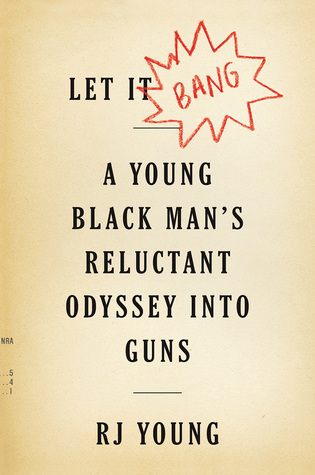
Let It Bang by R.J.    Young

Let It Bang: a young black man's reluctant odyssey into guns by RJ Young

RJ Young didn't know much about guns other than they could get him killed. As a black man RJ wanted to stay as far away from guns as possible. But, when he starts dating Lizzie, a white woman who's whole family is VERY into guns he decides to learn to shoot to get closer to his future father-in-law Charles. RJ buys his first handgun, gets his conceal carry license, attends his first gun show, and eventually becomes an NRA-certified pistol instructor. All the while navigating this new world as a black man. He encounters his share of racist comments and "jokes," but wants to prove to his in-laws and the gun world that he can not just learn, but excel at shooting. A very interesting look at the pro-gun world through the eyes of a black man.

Some quotes I liked:

"...the number of police shootings of blacks in that year - and certainly today - is nearly equal to the average number of black people who were lynched in this country at the height of 'separate but (un)equal.'" (p. 50)

"I was enduring the occasional quizzical look and snide comment from other [gun range] patrons too. The ones that stuck bit through to the marrow of who I am. Ain't you supposed to be shooting a basketball? and Hold it sideways, it's more your people's style were two of the less clever barbs along those lines." (p. 73-4)

[At the NRA instructor training class during a break] "...[a police officer taking the class] said, 'I know what you're doing.' 'I'm sorry?' [the police officer] looked irritated now. 'I know what you're doing. You're gonna teach them to shoot back.'" (p. 113)

"This apathy is the emotion I hate most. It makes me angriest and most fearful. If this man, intent on demonstrating to our class the importance of his services [U.S. Law Shield], chooses to make his case by citing an incident that half the country believes was a murder [Trayvon Martin being shot by George Zimmerman] - if he doesn't have the sensitivity to see me in the room and choose a different example, it shows that he doesn't believe I'm worth the effort. So why would anyone else who believes what he believes try to engage with me in a positive way? How do I begin a dialogue with a person like that? How do I convince him that my fears are real, and that he directly contributes to them?" (p. 120)

When I Spoke in Tongues by Jessica Wilbanks

When I Spoke in Tongues by Jessica Wilbanks

Jessica Wilbanks grew up in a poor, working class area of southern Maryland. Her father was a bricklayer and her mother stayed home with Jessica and her brothers. Their family struggled financially and moved from rental house to rental house. They were also very involved in a small, Pentecostal church. Their church valued speaking in tongues which they believed was an outward sign of God's blessing on your life. Jessica received this gift when she was 11 shortly after she was baptized, but just two years later she would inwardly renounce her faith. As a teenager she began to rebel and looked forward to graduating from high school and getting out of her claustrophobic home and small town. In college she cemented her disbelief and rarely even spoke about her childhood church experiences. But, in graduate school she started researching the roots of the Pentecostal faith and was drawn to visit Nigeria where the Pentecostal church is growing by leaps and bounds. In the end she never returns to the faith of her childhood, but is able to make peace with it and with her family.

I wasn't sure what to expect with this book, but I was not expecting the majority of it to take place and focus on Nigeria. I know this was Jessica's path to working through her own faith issues, but it seemed more about Nigerian Pentecostalism and less about her. The first half also ends on a very odd note of her being checked into a treatment facility for anorexia - which was never even hinted at before that chapter. I felt like a lot of her personal story was somewhat glossed over. I really didn't enjoy the book and had to make myself finish the second half.

A quote I liked:

"The faith that did so much good for the people of Nigeria seemed to be behind so many wrongs as well. The very pastors who greeted me so warmly after church services were the same ones who were spreading the idea that people could be possessed by witches. There didn't seem any way that I'd be able to follow all the tangled threads within the history of the church and find some pure kernel of good or evil underneath it all." (p. 219)

Thursday, August 1, 2019

July 2019 Cookbooks

Smoke, Roots, Mountain, Harvest by Lauren McDuffie

Smoke, Roots, Mountain, Harvest by Lauren McDuffie

I was born in the Appalachian mountains of NC, so I was interested to check out this cookbook. While the photographs are beautiful, there weren't that many recipes I wanted to try. I did like that the book is organized by season and focuses on eating seasonally. After recently finishing Rick Bragg's The Best Cook in the World that also focuses on mountain/country Southern food, I think this book might be a little too fancy of a take on Appalachian food for me. There were a few recipes I wanted to try, but overall it was just a pretty cookbook to look through.

July 2019 Reviews

The Very Worst Missionary by Jamie   Wright

The Very Worst Missionary by Jamie Wright

Jamie Wright had a very interesting path to becoming a full-time missionary in Costa Rica. She grew up Jewish (by conversion, not birth) then fell away from church and became a very promiscuous and wild teenager dropping out of high school at 15 and getting pregnant at 17. She and her boyfriend Steve got married and miraculously stayed married having two more children. As a harried, young mother to three boys Wright started attending the local Christian church and really found a home there, eventually her husband joined her and they started leading the youth group together. After going on a few short-term mission trips to Costa Rica with their youth group kids, the family starts thinking about doing something "bigger" for God by going into the mission field full time. So the Wright family gets rid of most of their belongings and move to Costa Rica for 5 years. During that time they start to realize that much of the mission work they are involved in is unnecessary and doesn't really help the local's needs - jobs, money, etc. They also realize that (including themselves) there is no real screening process for who can go into full time missions, so they see a lot of people who really aren't doing good work. As Wright struggles with these conflicts The Very Worst Missionary is born - a blog where Wright gets real about the inconsistencies she is seeing and her own personal struggles. While several reviews I read complain about her language - there is a lot of cursing - I side with Wright that being real and failing is better than being fake and still failing while making everyone around you feel worse. A funny, yet heart-breaking look at one woman's not-so-great experience as a full time missionary that brings to light some real issues that the Church needs to address.

Some quotes I liked:

"The questions started during a study of the life of Christ, because that was the first time I truly looked beyond how everyone else was doing it and started to see how Jesus did it. I began to really see what he said and where he went and what he did and how he treated people. The guy touched lepers with his bare hands and hung out with the neighborhood undesirables. He talked to the impoverished, the infirm, the outcast as though they mattered as much as anybody. And when faced with greed and corruption in a house of God, Jesus braided a whip and quite literally overturned the tables of injustice. When I took the time to examine how he lived out his days on earth, it changed everything about how I saw the club. Following Jesus started to make a lot more sense - but the church started to look kinda wonky." (p. 63)

Pages 77-85 Wright's meltdown during a women's Bible study is HILARIOUS and sadly true.

"Pretending to be someone else is exhausting. I'd given so much energy to keeping up appearances that when I finally realized I could drop the act altogether, it was like stepping out of a furry suit on a hot summer day. In a word, it was refreshing. It was terrifying too, because all of a sudden I was seeing and feeling and experiencing the world as my own self, and I felt exposed. But for the first time ever, I also felt free." (p. 90)

"To be fair, many of these enthusiastic new missionaries didn't know what to make of me and Steve either. We were the nondenominational, egalitarian beer drinkers. Steve had tattoos and I had a ring in my nose. All of this was taken by some as evidence that we were heathens in need of the gospel. The frequency with which we were evangelized by fellow students was almost hilarious." 
(p. 129)

"I do believe that God can use anyone to do anything (that I am writing this book is a prime example), but I was beginning to see how that is a pretty weak standard by which to choose whom we send out into the world to 'be the hands and feet of Jesus,' or whatever you want to call it. This isn't about having unrealistic expectations of ordinary people, and it's not about negating God's ability to surprise us by doing amazing things. It's about recognizing that we have a responsibility, as the church, to choose whom we send, so that we send the right people to do the right things in the right places - and to not send them when it's not right. And therein lies the real problem: There's really not much choosing going on. If you raise your hand (and have enough cash), someone will send you out...Moreover, the Bible tells us that Jesus handpicked the first disciples and 'selected' the seventy-some pairs of missionaries he sent out. Like, he chose them from among a larger group of people he'd been teaching for months." (p. 133-34)

"In the love our players developed for one another, the spirit of belonging they shared, and the promise of community that comes with being part of a team, the little world of Costa Rican semipro football felt in many ways like a church. Steve and I discovered that the growing connection and increasing intimacy we had within our football family felt more alive and meaningful than any part of the 'work' we were doing on campus as so-called missionaries." (p. 164)

"A few months into Steve's first season with the team, they went out to participate in a sports clinic hosted by a Christian athletic ministry from the States. The group would donate used football gear and a few hours of specialized instruction in exchange for the opportunity to evangelize. Every team in the league agreed to this deal from these complete strangers because they needed the gear, and the extra training was always helpful. On the morning of the event, though, this is what Steve witnessed: Local coaches and players who'd attended the same clinic the year before took a few minutes ahead of time to solicit volunteers to accept Jesus as their Lord and Savior. On our team of fifty, the head coach assigned a half dozen guys to raise their hands at the appointed time. Everyone else was urged to play along but not overdo it, so that the missionaries would feel successful and keep coming back...'It's mutual exploitation,' explained Mateo, who worked for Intel and played tight end. 'Everybody wins.' Caught between these two worlds, Steve and I felt conflicted. It was great to see the teams getting resources and support. But we knew those missionaries were gonna go back to their home churches and celebrate a false account of changed lives." (p. 167-38)

"For me, the experience of dismantling my simple ideology felt bittersweet. It was necessary and liberating, and at times it felt damn good, but it was also sad, and confusing, and lonely. It's scary to get back up after you've been crushed by the realization that the church you grew up in or the ministry you championed or the spiritual leaders you adored, supported, and trusted were perhaps not as awesome and amazing as you once believed. If they turn out to be abusers, liars, crooks, pathological narcissists, and/or asshats in general, it's worse, and some people never recover from the pain, anger, and disappointment." (p. 210)


Shame Nation by Sue Scheff

Shame Nation: the global epidemic of online hate by Sue Scheff

If you are online in ANY way this book is a must read. In 2003 Sue Scheff was cyberattacked by a spiteful client. The attack almost ruined Scheff's business and nearly destroyed her self-confidence, but she chose to fight back and won a landmark lawsuit. Now she works to help people prevent and recover from cyberattacks. In Shame Nation Scheff explores why there has been such a rise in online hate and cyber-shaming, preventing and surviving a cyberattack, and how to recover after you've survived an attack and ways organizations are working to combat online hate. There are tons of real stories from people who've been bullied and shamed online to illustrate Scheff's points. And while these stories (and the thousands more that happen every day) and sad and terrible, Scheff does end the book on a hopeful note that this current tsunami of online hate will inspire a backlash of love and hope. Definitely eye-opening and worth reading.

Some quotes I liked:

"Strikingly, Chubb Limited recently became the first insurance firm to offer its clients coverage against cyberbullying and other forms of man-made digital disasters. For $70 a year, American families can add a protection plan to their existing policy and get reimbursed for up to $60,000 in costs resulting from online harassment, such as unwarranted job loss, technical support for tracking down cyberfoes, public relations support for image repair, and even therapy bills." (p. xix)

"Comedian and actress Margaret Cho spoke in an Observerarticle about taking a specific action she dubs 'hate shame.' People often say, 'Oh, don't feed the trolls.' I screenshot what they say, report it, and I'll send it to their employers, their spouses - things of that nature, where you're calling attention to the hatred and cutting it off at the same time with immediate hate shame. If you hate shame, it automatically forces them to revisit the hatred they're spewing, that can be potentially very damaging. And using it against them - as opposed to internalizing the trolling and feeling uncomfortable with it - it's a good opportunity to stand up for yourself and also bring reverence to the kind of racism, misogyny, and homophobia that these people perpetuate. We should all practice this kind of self-defense." (p. 95-6)

"Emily Lindin, author of Unslut: a Diary and a Memoir, has a strong message that always strikes a chord when she talks with teen girls about slut shaming: she points out that online porn is readily available, so these boys already have all the masturbatory material they could ever desire - what they are really after is power to lord over you, control you, even blackmail you. She asks young women pointedly, 'Do you really want to give them that power?'" (p. 148)

"Researchers at the University of Michigan crunched data that tracked years of incoming college freshman's empathy, and found that empathy has declined by 40 percent in the last three decades - while narcissism has risen by 58 percent. This inability to see those on the other side of the computer screen as people deserving of our compassion is one of the huge drivers of our Shame Nation." (p. 227)


Maid by Stephanie  Land

Maid: hard work, low pay, and a mother's will to survive by Stephanie Land

I almost didn't read this one based on the very mixed reviews, but decided to give it a try. When I saw that Barbara Ehrenreich wrote the introduction, I thought surely it can't be terrible if Barbara Ehrenreich is writing the introduction. Was this book Evicted or Nickel and Dimed? No. But, it was still a well-written account of one woman's struggle to provide a better life for her daughter and how hard that can be with no family safety net at all. Stephanie Land is twenty-eight when she unexpectedly gets pregnant and decides to keep the baby. She hoped her boyfriend Jamie would step up to the plate, but never did except when he could do something to throw in her face. When he starts to become violent Land finds herself and her infant daughter homeless. She is able to cobble together enough government assistance and work to stay barely above water, but there is always the looming dread of something unexpected - illness, car accident, etc. Her family was almost as broke as she was, but were also abusive and not to be relied on. Land realizes that her only escape is education. She enrolls in community college and by the end of the book she is able to transfer to a University and there is a lot more hope for her and her daughter. 

A lot of the bad reviews of this book pointed out every little mistake or bad decision Land made. Did she make some really bad decisions and mistakes? Yes. Haven't you? It's nice to know there are so many people out there making NO MISTAKES AT ALL in their personal lives. I feel like Land is honest with the bad decisions she made and owns it. Several reviews complained that she played the victim and never took responsibility, but I didn't read it that way at all. One thing she sees over and over in the houses she cleans is that it doesn't matter how much money you make you can still be miserable - not that having more money doesn't make things easier, but just money in and of itself doesn't make you happy. Overall, I was pleasantly surprised based on the reviews I read and am looking forward to what Stephanie Land will write in the future.


Beauty in the Broken Places by Allison Pataki

Beauty in the Broken Places by Allison Pataki

Allison and her husband Dave are expecting their first child and on their way to a "babymoon" trip to Hawaii when Dave suffers a massive stroke. After an emergency landing Alli is alone in the hospital with her 30-year-old husband in a coma. Miraculously Dave survives and is transferred back to Chicago to the hospital where before their trip he was working in his medical student residency. Slowly Dave starts to recover, but the recovery is hard on everyone. Alli struggles with worrying whether Dave will recover fully or become a dependent she has to care for along with their soon-coming baby. But, Dave does recover and while it is a long, slow recovery by the one year anniversary of his stroke he is mostly back to his old self. Beauty in the Broken Places is Alli's story of how she and Dave met and fell in love interspersed with his stroke and the aftermath. While what they went through is terrible and Alli doesn't shy away from describing that time, the book as a whole is more hopeful because it's written on the other side after Dave's recovery. A beautiful story of what it can look like when "in sickness and in health" and "for better or for worse" actually play out in a marriage.

A quote I liked:

Ultimately, I realized, this was the moment when things between God and me finally got real. This was when I needed to live the faith that I had been thinking, for thirty-one years, that I had been living. I did not understand why the things that had happened had happened. But did I still - even in that place of not knowing or understanding, especially in that place of not knowing or understanding - believe that God was with me? Was He there beside me in my pain and brokenness, just as I had always believed Him to be beside me in my joy? Did I believe that God could take this heartbreak and this fear and this fatigue and somehow weave something beautiful from all of the frayed and feeble threads? That there was a divine plan at work here, a much larger picture than the one I could see, a framework that exceeded my capacity to understand? Yes, I realized. I did. I did still believe that God was beside us." (p. 214)


I Will Not Fear by Melba Pattillo Beals

I Will Not Fear: my story of a lifetime of building faith under fire by Melba Pattillo Beals

Melba Beals was one of the "Little Rock Nine" - nine African-American high school students who were the first to integrate Central high school in Little Rock, Arkansas. Growing up Melba was raised in the Christian faith by her grandmother India. India instilled her deep faith in Melba and helped her see that while they experienced hate and discrimination from white people, God loved them and would always help them. Melba had to draw on her own faith to get through that first year at Central, but she did. After that Little Rock shut down all public schools as a backlash to the forced legal integration. Beals had to leave Little Rock for her own safety. She ended up in California and her time there really shaped her life. She lived with a white family and was able to heal some of the racist wounds she had from growing up in Little Rock. She eventually married a white man and they had a daughter together. But, Beals wanted more than just to be a stay-at-home wife and mother. That was not what her husband wanted so they divorced when her daughter was young. She went on to finish college and earned a doctorate and worked in journalism and as a college professor. She later adopted twin boys and raised them as well. Throughout her life her faith was her foundation. Dr. Beals is an inspiration and example.

While her story is incredible, I enjoyed the first half of this book more than the second half. The first half is about her growing up and the struggle of that year at Central high school, then going to California and how her life changed there. The second half of the book seemed to really jump in time and some of the stories with the twins seemed very bizarre - not that I didn't believe it happened, but just bizarre and maybe needed more explanation. Overall, it was a good book and it did focus on how faith shaped her life.

A quote I liked:

[At an NAACP meeting with Dr. Martin Luther King, Jr.] "At this point we were three weeks into the semester at Central High, and I was exhausted, depressed, and disappointed. I was still in shock at the price integrating that high school was exacting from me. I was somehow convinced someone would change things in an instant, so I couldn't stop myself from spilling my feelings about how much I was suffering to Dr. King. His quick answer was loud and clear as his huge eyes held mine with a commanding stare. 'Melba, don't be selfish. You're not doing this for yourself. You are doing this for generations yet unborn.' His voice was kind, his face empathetic...I had been waiting for white students to change, extend kindness, and welcome me, when maybe it was my task to change...Dr. King's statement was life-changing." (p. 55-6)


The Cooking Gene by Michael W. Twitty

The Cooking Gene: a journey through African American culinary history in the Old South by Michael Twitty

I had heard so much about how amazing this book was, but I was disappointed. I'm not sure what exactly I was expecting, but it was very repetitive and seemed to go over the same things in almost every chapter. At the beginning of the book Twitty says, "The early and antebellum South is not where most African Americans want to let their minds and feet visit. It's a painful place, and the modern South is just beginning to engage the relationship between the racial divide, class divisions, and cultural fissures that have tainted the journey to contemporary Southern cuisine. It's an entangled and deeply personal mess that has been four centuries in the making. This book is about finding and honoring the soul of my people's food by looking deep within my past and my family's story." (p. 6) As a white Southerner I completely understand that Southern food is inextricably tied to slavery and the African people who were forced to come here and work. And I also feel like I understand Twitty's desire to understand his roots - both in the slavery of the South and in the parts of Africa where his ancestors were taken from. The first several chapters were very interesting, but once he got to the chapter about DNA genealogy I started losing interest. After that it seemed very repetitive with both the food and his family. I felt like the same stories were told over and over again and I'm still not sure why. I think this could have been an amazing book, but it was just so all over the place and focused on the same few things over and over again. Maybe I'm not getting it, but I was disappointed.

Some quotes I did like:

"I want to be clear: my dream was to be able to put myself in the evolving narrative of Southern food from it's beginnings to now, and to do so I had to be able to do what most African Americans had the most difficulty doing - trace my ancestry to Africa and follow the lineages across the Southern map into the present day." (p. 125)

"Long before the current movement to taste the past and revive forgotten terroir, it made sense to me that the Caseknife pole bean from Wesley and the Cowhorn okra from Peter and yam potato from William were something more than just neat relics. They were the very taste of how my ancestors survived slavery." (p. 268)

"History did not let the historical black garden go unremarked. These spaces were little landscapes of resistance: Resistance against a culture of dehumanizing poverty and want, resistance against the erasure of African cultural practices, resistance against the destruction of African religions, and resistance against slavery itself." (p. 269)

"Earlier that summer, I had been in Donaldsonville, Louisiana, where during the time of Jim Crow black farmers and landowners got together and decided that sharecroppers in the cotton and sugarcane fields had enough trouble to not be in debt to white planters, so they created a community farm where all who were hungry could get produce. That was 1912. The year of my travels was 2012, and somehow, without black Twitter, without Facebook, without Instagram or Snapchat, black farmers in a time of Klansmen and lynch law solved the problem of food insecurity. Thankfully, the secret weapon, the garden, had not been forgotten." (p. 275)