Wednesday, January 22, 2020

December 2019

A Sin by Any Other Name by Robert W. Lee

A Sin By Any Other Name by Robert W. Lee

When I first heard about this book I was interested, but I wasn't familiar with Robert W. Lee and his speaking out against white supremacy as a descendant of the Civil War general Robert E. Lee. Lee talks about growing up in Statesville, NC (which is only about an hour from where I grew up) and how as was age-appropriate his family told him about his famous ancestor. Lee's family didn't idolize General Lee, but his grandmother did have a portrait of him in her home and often told Lee and his brother stories about the famous Lee and many of their ancestors. When Lee went to high school he was exposed to more diversity and became friends with many African-American peers in the marching band. As he got older, he also became more uncomfortable with how his ancestor General Lee was so revered by many white Southerners. Having always felt called to ministry, Lee attended the Duke Divinity School and racial justice became part of his ministry focus. He had just started pastoring a church in Statesville when the Charlottesville, VA "Unite the Right" rally took place leading to violence and a few deaths. Because of a previous article he had written about the need to take down Confederate statues, NPR reached out to Lee for an interview. After the interview aired, MTV asked him to come and speak at the VMAs. Both of these events led to Lee being asked to resign as pastor of his church. While he was incredibly saddened to be asked to resign, he did and now speaks and writes about how the Church can play an important role in racial justice. While Lee is still pretty young, he has obviously been called to speak about this issue and has the family connection that might make some give his words more weight. His main message is that the Church should accept everyone and churches shouldn't be racially segregated and that for white Southerners speaking out against racism is the only way things will ever improve.

In my opinion, as a white Southerner, too many people put their faith in their comfort zone instead of God. Jesus was very radical, but the Church often shies away from truly being radically loving and challenging the status quo as Jesus did. In order for things to get better we need to focus more on God and less on South/North, White/Black, Democrat/Republican, Male/Female, etc.

Some quotes I liked:

"Michael Korda, in his biography of Lee, includes an observation about Lee and his legacy that's stuck with me: 'As the Confederacy shrank, [Lee] grew, symbolizing the unshakable spirit of resistance, stubborn hope, courage, and honor - beyond criticism, perhaps even beyond reason.' It's true. As the old ways of life in the South are rightfully challenged, people resistant to change cling ever tighter to Lee and what he represented." (p. 88)

[When he started getting hate mail and threats after speaking out against white supremacy and Confederate statues] "Then, several emails arrived. 'You need to be quiet,' one said. 'You're treading on dangerous grounds,' read another. The messages were vaguely threatening, but in an oddly Southern way. The words almost sounded kind, as if the senders were worried about the trouble I'd face if I kept making noise about these issues. But peel back that veneer of politeness and the message was clear: If you're gonna keep it up, watch out." (p. 123)


Where the Crawdads Sing by Delia Owens

Where the Crawdads Sing by Delia Owens (Books & Banter book club)

** spoiler alert ** Kya and her family are "marsh people" in the Outer Banks of North Carolina. People on the fringes of society who want to be left alone. In 1952 when Kya is six, her mother walks away from the family and never comes back. A few years later her closest sibling, Jodie, leaves as well leaving Kya with their abusive, alcoholic father. By the time she's ten her father is gone too and she's all alone. She knows the marsh like the back of her hand and can evade truant officers or anyone else who might come snooping around. Fast forward to 1969 and Kya is accused of murder. Over the years townspeople have speculated about the "Marsh Girl" and what she might be like. Is she capable of murder?

I honestly wasn't looking forward to reading this one because I had not heard good things about it. While parts of the story were good, the overall storyline was like a Lifetime TV movie - very overwrought and unrealistic. And I'm from the South, my family is from backwater beach areas and NO ONE in my family talked like the characters in this book. I was actually offended by the dialect, it felt like it was mocking. And the dialect was all over the place, in the same paragraph or sentence you would have a character speaking normal English then suddenly break into crazy phonetic fake deep-South dialect. It was also completely unrealistic that Kya would have not only survived her childhood alone, but even more unrealistic that she would become a published scientific author - get real. It was also super obvious that she killed Chase or at least tricked him into the accidental death. That was foretold by the scene when she attacks the boys harassing Jumpin'. Not that Chase didn't deserve killing, but she did a good job of faking that she didn't do it. Also, the ending felt totally rushed and weird. And how convenient that she couldn't have kids because there is NO WAY she wouldn't have gotten pregnant during her relationship with Chase. This book reminded me a lot of The Nightingale by Kristin Hannah - EVERYONE loved it and it was very similarly overwrought and unrealistic storyline, but at least without the terrible mocking Southern dialect.

Some particularly terrible quotes:

[On finding Chase's body] "Now, he sprawled alone, less dignified than the slough. Death's crude pluck, as always, stealing the show." (p. 25)

"'Ya gotta watch out for folks 'round here,' he said. 'Woods're full a' white trash. Pert near ever'body out here's a no-'count.'" (p. 57)

"'...more skeeters than the whole state of Jawja.'" (p. 81)

"Toting the bag of jam jars, she turned back toward her boat and motored home. Thought she's probably never go viztin' again." (p. 102)

"She hesitated; touching someone meant giving part of herself away, a piece she never got back." (p. 158) WTF, this is the stupidest line EVER. Shaking hands with someone takes a piece of yourself away forever. *rolling my eyes here*


The Island of Sea Women by Lisa See

The Island of Sea Women by Lisa See (Evening Edition book club)

The Island of Sea Women follows the friendship and lives of Mi-ja and Young-sook, two girls from very different backgrounds who begin working with their village's all female divers, the haenyeo, on the island of Jeju. Starting in the 1930's during the Japanese occupation of Korea, through World War II, the Korean War, and all the way to the present, Mi-ja and Young-sook grow into their roles as haenyeo and also wives and mothers. During a violent incident during the Korean war Mi-ja and Young-sook's friendship is tested and Young-sook vows to never forgive Mi-ja for what happened. But, forgiveness is not for the other person, it's for yourself. Young-sook in looking back over her life realizes how much her hate has cost her, but will she finally be ready to forgive Mi-ja and herself? The Island of Sea Women is the story of one of the hardest parts of Korea's history, but also the story of friendship and forgiveness. It also highlights the brutality of war, which is often worse for the innocent people just trying to live their lives.

I've really liked all the books I've read by Lisa See and I was excited to read this story about this unique haenyeo culture in Korea. But, unlike her other books I felt like this one kind of dragged. And there was a LOT more violence than I was expecting. I didn't like this one as much as some of her others, but the ending was powerful and really showed the importance of forgiveness.


Conversations with RBG by Jeffrey Rosen

Conversations with RBG: Ruth Bader Ginsburg on life, love, liberty, and law by Jeffrey Rosen

Jeffrey Rosen had a chance encounter with Ruth Bader Ginsburg when they were both working on the U.S. Court of Appeals for the District of Columbia Circuit. That encounter turned into a genuine friendship and over the years Rosen and Ginsburg discussed all kinds of personal and professional issues. This book is a collection of their conversations divided into topics like "Her Landmark Cases" and "Marriage Between Equals." The book is unique in that these conversations are between friends and colleagues, not just an interview with a semi-stranger. Each chapter has a few pages of Rosen writing about the topic of that chapter, the the second half of the chapter is an interview style between Rosen and Ginsburg. It's a pretty quick read, but it does give you a lot of insight into not only Ginsburg, but the Supreme Court and it's inner workings. It was really a very interesting book and I would highly recommend it.

Some quotes I liked:

[In an interview for The Docket Sheet, a newsletter for Court employees] "...asked her why she had agreed to a flexible schedule for one of her law clerks, David Post. Ginsburg replied that when Post applied for a clerkship, he was caring for his two small children during the day, so that his wife could sustain a demanding job as an economist. 'I thought, 'This is my dream of the way the world should be,' ' Ginsburg enthused. 'When fathers take equal responsibility for the care of their children, that's when women will be truly liberated.'" (p. 13)

"As co-founder of the American Civil Liberties Union's Women's Rights Project, Ruth Bader Ginsburg sought from 1972 to 1980 to persuade the Supreme Court that legislation apparently designed to benefit or protect women could often have the opposite effect. For this reason, she chose to represent a series of male plaintiffs who had been denied legal benefits designed for women. This visionary strategy forced the Court to articulate a standard of scrutiny for gender discrimination that could be applied neutrally to either sex...She represented plaintiffs with whom the male judges of the 1970s were most likely to identify." (p. 19-20)

"It was not so long ago that most of the social clubs in New York and Washington, DC, were men only. So whenever I was asked to speak at those clubs, I said, 'I'm not going to speak at a place that wouldn't welcome me as a member.'...My first encounter with men-only social clubs happened when my husband was working for a law firm in New York. The firm had a holiday party at a club that did not admit women. The women associates let it be known that that was improper. They weren't listened to. So the next year, none of the women associates showed up at the holiday party. The year after that, the holiday party was held at a place that welcomed women as well as men." (p. 128)

"We have in DC the first person to be given flexible time at a law firm. It was at Arnold and Porter, and the woman is Brooksley Born. When her second child was born, she elected to have a three-day schedule. She was told, 'That's okay, but you'll never make partner.' It turned out that she produced more in three days than the average associate produced in a full week, so she became the first full-time [female] partner...[what feminism still needs to work on] The two big areas are unconscious bias and what is called work-life balance. If we could fix those two, we would see women all over doing everything. Unconscious bias and facilitating a work life and a family life." (p. 207-8)


Hope in the Dark by Craig Groeschel

Hope in the Dark: believing God is good when life is not by Craig Groeschel

Hope in the Dark is written for Christians who are dealing with a hard time, an illness, or an on-going unanswered prayer. As Groeschel says in A Letter to the Reader, "If you're living the dream and you're on a spiritual high, stop and praise God for his goodness. I celebrate with you. But, honestly, this book probably isn't for you, at least not in this season of your life." (p. 11) My opinion is if you live long enough you will experience something that makes you question God and often that's discouraged or glossed over in church, but it shouldn't be. If you read the Bible you can see how so many of the people we admire as Biblical leaders struggled daily with doubt and fears. Groeschel models the book after the book of Habakkuk in the Old Testament by have three sections to the book. The first section deals with doubting or not understanding why God chooses to answer some prayers and not others. The second section deals with waiting on God and the third covers embracing the goodness of God despite whatever circumstances you're in. While I didn't find this book life-changing, I think it is good for new Christians to see that it's OK to struggle and question things and God is still good throughout whatever we're going through.

Some quotes I liked:

"Few people just sit and watch TV anymore. Most watch TV and look at Instagram and text friends and respond to email and update calendars and pretend they're listening when someone tries to engage them. Be honest with yourself: when was the last time you sat and just had a real, live conversation with someone else, in which you took turns and genuinely listened to what they said? No devices. No TV. No music. No distractions. No wonder it's so hard for us to listen to God." (p. 70)

"As basic and obvious as this may seem, sometimes the reason we're not getting answers to our questions is that we're not willing to pause and wait long enough for God to reveal himself to us." (p. 71)


Burn the Place by Iliana Regan

Burn the Place by Iliana Regan

I love chef memoirs even if I'm not familiar with the chef, but this one was not great. Iliana Regan grew up in rural Indiana and always felt out of place. She was gay before she really understood what that meant. She grew up on a farm and was raised growing vegetables, canning food, hunting, foraging, and cooking. While her family was super dysfunctional, she did inherit a love of food and inherent cooking skills. Alcoholism and addiction ran in her family and she was an alcoholic by high school. Unfortunately restaurants and alcoholics/addiction tend to go together so it was well into adulthood before she finally got sober. Eventually she was able to open her own restaurants and tap into the food and cooking of her childhood just in time for foraging and farm to table to become trendy in the food world.

While her story was interesting to me the book was kind of all over the place and there was a LOT of vulgarity. Even though she's very successful now, the book was pretty depressing and I just didn't like it very much.


She Came to Slay: the life and times of Harriet Tubman by Erica Armstrong Dunbar

Born as a third-generation slave in Maryland, Araminta Ross (who later became Harriet Tubman) knew from an early age that "...there was one of two things I had a right to, liberty, or death; if I could not have one, I would have the other..." She was fortunate in that her parents stayed together for over fifty years and kept almost all of their children. When Tubman managed to escape slavery she did the unthinkable - she went back to the South to help other slaves escape. And she went back over and over and over again. Rescuing almost her entire immediate family and dozens of others along the way. She was so skilled at her work on the Underground Railroad that the Union Army actually sought her out as a spy - but they never paid her and tried to stiff her out of her salary, she only was finally compensated for her work when she was in her 70's. But, even once out of slavery, life was incredibly hard for African-Americans and despite her celebrity Tubman's life was hard and she mostly lived hand to mouth. But, until her death at age 91 (which is miraculous for that time period, let alone a former slave) she was still fighting for the rights of women and black people. Tubman is truly a role model and an incredible historical figure that we should all look up to.

Some quotes I liked:

"His owner had promised to set him free at the age of forty-five and miraculously, this promise was kept. Ben Ross [Harriet's father] became a free man in 1841. It's natural to assume that Ben Ross's emancipation gave him reason to celebrate, but what did it mean to live as a free person surrounded by slavery? Yes, he was free, but his wife and children were not...While his freedom offered advantages, it would never give him the same privileges of white men. Paradoxically, Ben Ross's free status highlighted his powerlessness. His freedom was a reminder of his family's enslavement." (p. 25-26)

[Worried about being sold away from her family Harriet prayed that God would keep her owner from selling her or her family members] "She altered the tenor and directives of her prayers [after hearing about further financial issues of her owner]. 'I changed my prayer, and I said, 'Lord, if you ain't never going to change that man's heart, kill him, Lord, and take him out of the way, so he won't do no more mischief.'" (p. 32)

"Harriet's raid on the Combahee dealt a devastating blow to the Confederacy. Causing nearly two millions dollars in property damage and the loss of hundreds of slaves, Harriet became the first woman, black or white, to plan and lead an armed military expedition during the Civil War." (p. 94)

"Although freedom had come [in the end of the Civil War], Harriet knew that racism and bigotry would not evaporate overnight; in fact, like most black people, she assumed that she would have to fight against oppression for the rest of her life. Time would prove Harriet right." (p. 103)


When Less Becomes More by Emily Ley

When Less Becomes More by Emily Ley

Our lives feel increasingly busy with work, chores, errands, social media, family, friends - the list never ends. And while many of these areas of life are great, sometimes too much of something great can turn not-so-great. In When Less Becomes More Emily Ley explores what it might mean to create a life where less can become more - more rest, more connection, more unscheduled time. While that sounds great it can be hard to actually implement. Ley covers various aspects of life in each chapter - technology, noise, social media, home, etc. and how to reevaluate and downsize in those areas. Some chapters like rest, wellness, and faith explore how to make room for these areas once you've downsized some other aspects of your life. I liked that the tone of the book was approachable and realistic, not another impossible goal to strive toward. Ley also gives plenty of examples of her own life and how she still struggles to not get caught up in all the rushing and hustling that society demands. Definitely good timing to pick this up to read during all the craziness of the holiday season and right before New Years.

Some quotes I liked:

"I decided that I would take the reins on what information I allow into my head and my heart [through social media]. If you are my personal friend on Facebook, that means you get a Christmas card from me. That's my litmus test." (p. 45)

"I've learned, as I continue to walk out the topics of this book in my own life, that the following truth is the fundamental part of learning that less is truly more. Jesus didn't pick and choose the most confident, well-read, best-behaved people to join His table. He didn't surround Himself only with the best Scripture memorizers or the ones whose church attendance was the most stellar. He chose the broken ones. The imperfect ones. The ones who doubted and asked questions. He chose the ones with histories, and stories, and struggles. He chose you and me." (p. 122)

"Why is contentment so hard to realize in today's world? Because our world doesn't want us to be content. Our chase for more has added to our discontent in more ways than one, which is exactly what marketing agencies and corporations want. How can one be full and content when 'full' is never quite 'full' enough?" (p. 162)


Cider Revival by Jason Wilson

The Cider Revival: dispatches from the orchard by Jason Wilson

Cider was the beverage of choice in early America until Prohibition caused many cider orchards to be abandoned or chopped down. Then dessert or eating apples took over in agriculture and many heritage cider apple varieties were lost. In the last few years cider has come back with dozens of small orchards and cider mills have popped up all over the country - mostly in Northern areas where apples grow well like the Northeast, Michigan, and the Pacific Northwest. Jason Wilson has written extensively about wine and other spirits, so he turns to cider in Cider Revival. While the book was interesting and I definitely learned some things, the description says "following the seasons" Wilson explores the cider industry, but he didn't really get into detail about what the cider industry seasons look like. It was mostly him traveling all over the place drinking cider and talking about it, so toward the second half of the book it felt somewhat repetitive. There were also a few very random anti-Trump sections in the book that just seemed randomly thrown in for no reason. Overall, it was interesting, but not amazing.

Some quotes I liked:

"I'm interested in cider makers who are revivalists, committed to hard work in the orchard, and whose ciders tell the story of a specific place and time. Whose cider have, dare we say it, terroir." (p. 13)

"Apples, similar to humans, are heterozygous. That means that they produce offspring that are unique from their parents. Every seed inside every apple has different genetic content, and each seed will grow a completely new variety of apple, distinctly different from its parents...That's why the only way an orchardist can cultivate the same apple over and over again is to graft the scion wood from that variety onto existing rootstock." (p. 28)

[Andy Brennan of Aaron Burr Cidery]...clomped straight into the thickest patch [of poison ivy], saying, 'Poison ivy is just part of it. If harvesting these [wild] apples means I get a terrible poison ivy rash, well, that's just part of the experience. I feel like the fruit from this place needs to be represented in my ciders.' Brennan also says that he gets E. coli about once a year from tasting apples that have fallen to the ground - also part of the experience." (p. 41)

"So for whatever reason, most ciders from the West Coast would be categorized as modern because of the apples used. This means that, in the cider world, the divide between modern and heritage ciders is quickly becoming a West Coast - East Coast schism." (p. 106)


The Honey Bus by Meredith May

The Honey Bus: a memoir of loss, courage and a girl saved by bees by Meredith May

Meredith was five when her parents split up and her mom moved Meredith and her two-year-old brother Matthew back to California to live with their grandparents. As soon as they got to California Meredith's mother got in bed and rarely got out. She left Meredith and Matthew in the care of their grandparents and they quickly learned not to disturb her. Meredith's grandfather was a beekeeper and she became fascinated with the bees and helping her grandfather. Meredith didn't understand what was going on with her family and why she couldn't see her father, but she instinctively knew that her grandfather was the only reliable, caring adult in her life. Throughout the rest of her dysfunctional childhood Meredith was saved by her grandfather and the bees. Eventually as an adult she would come back to beekeeping and try to keep her grandfather's beekeeping legacy alive.

I understand why Meredith didn't go live with her father when she had the chance. She didn't want to leave her brother behind or lose the relationship with her grandfather. But, there is no more mention of him in the rest of the book once she's an adult on her own. Did she continue to have a relationship with him? Did she ever tell him how terrible her mother was? I wish there had been more about that at the end of the book. While this book was no Glass Castle, I liked the aspect of how learning about the bees and beekeeping helped Meredith survive her dysfunctional family.

Some quotes I liked:

"As I got older, I detected a more serious undertone to his hive lessons - a gentle prodding to think beyond Via Contenta and to consider what we wanted, instead of what Mom needed. He spoke in metaphors, using the bees as examples of the proper way to behave." (p. 269)

"I could continue to define my life by all that it lacked, as my mother had done. Or I could be thankful that I had been rescued in the most profound way. Grandpa and his bees had guided me through a rudderless childhood, keeping me safe and teaching me how to be a good person. He showed me how bees are loyal and brave, how they cooperate and strive, all the things I'd need to be when it was my time to navigate solo. Grandpa had been quietly teaching me that family is a natural resource all around me." (p. 305)


Behold the Lamb of God by Russ Ramsey

Behold the Lamb of God by Russ Ramsey

I've had this book for several years and every year I tell myself I'm going to read this book during Advent and this year I finally did. It's based on the Behold the Lamb of God Christmas album by Andrew Peterson that tells the Christmas story all the way from the Old Testament to the birth of Christ. The book is the perfect thing to read during the Advent/Christmas season and it further fleshes out what is covered in the Behold the Lamb songs. We tend to divide the Bible into the Old Testament and New Testament and focus more on Jesus and the New Testament, but the prophecies and foretelling of Jesus is all through the Old Testament and really what the Old Testament is all about. Russ Ramsey does a great job with this book and each chapter is short enough to read in the morning during your devotional time. I think this will be a new Advent tradition for me to read this book and remember how the Old Testament foretells the coming of Jesus that is manifested in Christmas.


Good Husbandry by Kristin Kimball

Good Husbandry: growing food, love, and family on Essex Farm by Kristin Kimball

Good Husbandry picks up a few years after where Kimball's previous book, The Dirty Life ended. Kimball and her husband Mark now have a three-year-old and another baby on the way. Their farm has grown and they now have several seasonal employees. And while things are mostly good, farming is hard and often unpredictable work. In a few years the Kimball's farm experiences injuries, weather issues, and the strain of living and working with employees and their growing family. Kimball works through what does is mean to raise children on a working farm, how do you make a marriage work when you are both working on the same farm, and the continuous struggle of farm finances. Kimball shows both the beauty of the farm and the darker side of the continuous hard work and stress of this type of lifestyle. This book definitely makes me appreciate even more the local, lunatic farmers that I support.

Some quotes I liked:

"Our farm kept trying to separate Mark and me into traditional gender roles, and I wasn't sure how to feel about it. I had been raised in a family with a full-time homemaking mother right at the end of the era when that was default normal. But I was the cultural product of third-wave feminism and had assimilated all the ideas. I had married someone who was enlightened enough to take my last name. I never doubted that I was a full and equal partner in our business. And yet I was the one who was mostly in the house, at the stove, taking care of the children, while he was running the business, managing the employees." (p. 176)

"In the beginning, when Mark and I started the farm, the past was the image that got me out of bed to do chores every morning. I thought we could create happiness by reinventing the farm of our grandparents' generation - by working hard together on something that made sense to us and fed us on all levels. After the children came, it was the future that motivated me, the hope that we could make a good and modestly prosperous life for them out of the sun and the dirt. I wanted to build something beautiful and secure enough that they would want to inherit it and continue." (p. 197)


Unfollow by Megan Phelps-Roper

Unfollow: a memoir of loving and leaving the Westboro Baptist Church by Megan Phelps-Roper

Megan Phelps-Roper was born into the Westboro Baptist Church family. The church was founded by her grandfather and the majority of members were family. Her grandparents had 13 children and Megan was one of 11 children herself, so the church was a vast network of aunts, uncles, and cousins with a few other members who had made the cut to join the church. When Megan was 5 the church began it's constant protesting which would eventually make it famous. The church's protests grew along with the internet - which provided information about events they might want to protest, social media as a platform, and how much of the world came to know and hate the name Westboro Baptist Church. As a young adult Megan managed much of the church's social media, especially Twitter. It was through Twitter that she eventually began to doubt the church and her family's beliefs.

The first half of the book is Megan recounting her childhood in Westboro and just how rigid and extreme the beliefs she grew up with were. The second half is her struggling with her doubts and eventually leaving and trying to figure out life outside of Westboro. She does a great job with her writing because you really feel the stress she's under once she starts doubting. While the book was really interesting, I would have liked a little bit more of her life after Westboro. The book ends just a few months after she leaves and I'm sure there were years of struggling to figure out her life. I definitely applaud her for being strong enough to walk away from her whole life and even more so for now trying to be a voice for compassion and love instead of hate.

Some quotes I liked:

"There were no chores at school, no crying babies, no laundry, no vacuuming. We only had to learn. It was the freest time we had, and became the portal to my favorite place: books." (p. 23)

"Voice dripping with disdain, my grandfather railed against 'Christians' so often in his weekly sermons that I spent my elementary school years believing the term to be synonymous with 'evil' and denying that it applied to me." (p. 41)

[In response to a lawsuit against Westboro for protesting military funerals] "The men took turns making elaborate prayers to God to kill these men that very weekend, before they had the opportunity to attack the Lord's church in this way...Our enemies did not die over the weekend, but this pervasive doctrinal shift would affect the church for years to come, pushing us ever more to the extreme." (p. 87)

"By visceral instinct more than conscious deliberation, I understood that no force silences doubt as effectively as zeal - a passionate clinging to familiar and reliable truths that quiets dissonance and snuffs out uncertainty in an avalanche of action." (p. 147)

"I couldn't believe how our love within the church had been warped beyond recognition by the elders' unscriptural will to punish. By their implacable demands for unquestioning obedience. By their pernicious need for superiority and control. They had developed a toxic sense of certainty in their own righteousness, seizing for themselves the role of the ultimate arbiter of divine truth - and they now seemed willing to lay waste to anyone who disagreed with them. It was a heinous arrogance and sinfulness that could not be denied. And in a moment of horrifying clarity, I finally saw what had eluded me for so long: We had all been behaving in the exact same way toward outsiders. It was as if we were finally doing to ourselves what we had been doing to others - for over twenty years." (p. 158-9)

"Though their ideologies manifested in vastly different ways, it was fundamentalist religious groups, from Jehovah's Witnesses to members of the Islamic State, that first permitted me to recognize the patterns of my upbringing. But as I watch the human tribal instinct play out in the era of Donald Trump, the echoes of Westboro are undeniable: the division of the world into Us and Them; the vilification of compromise; the knee-jerk expulsion of insiders who violate group orthodoxy; and the demonization of outsiders and the inability to substantively engage with their ideas, because we simply cannot step outside of our own. In this environment, there is a growing insistence that opposing views must be silenced, whether by the powers of government, the self-regulation of social media companies, or the self-censorship of individuals. At the heart of this insistence lie several false assumptions, including a sentiment that Westboro members would readily recognize: We have nothing to learn from these people. This sentiment was troubling to witness even among our tiny fringe movement, and I was relieved to abandon it when I left the church - but watching it spread among a vast and growing populace has been altogether more alarming, filling me with a growing sense of unease." (p. 276)


Monday, December 2, 2019

November 2019 Cookbook Reviews


The Soup Book: 200 recipes, season by season by DK Publishing

I enjoy soup especially in the winter, but I tend to stick with the handful of soup recipes I cook over and over. So, I decided to check out The Soup Book to get some more soup ideas and recipes. I like that the recipes are organized by season as I do like to eat seasonally as much as I can. There is also a chapter on techniques like making your own stock, ways to thicken soup, etc. There is also a chapter with bread recipes since bread and soup go so well together. There are definitely some new soup recipes I'd like to try in here. Overall, a good soup cookbook that can help you open your soup horizons more.


The Pioneer Woman Cooks by Ree Drummond

The Pioneer Woman Cooks: the New Frontier by Ree Drummond

I've always loved Ree Drummond and her show and recipes, but many of them are so high calorie that you would need to be working cattle all day to eat like that. However, in The New Frontier many of her recipes are healthier, lower-carb, etc. while still including more indulgent recipes as well. And as is her cookbook signature, all the recipes have tons of step-by-step photographs to go along with the instructions. There are definitely a few recipes I'd like to try. Overall, another great cookbook by The Pioneer Woman Ree Drummond.


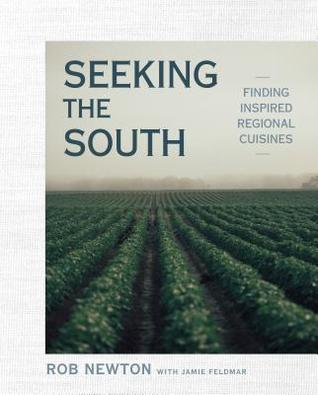
Seeking the South by Rob Newton

Seeking the South: finding inspired regional cuisines by Rob Newton

I love Southern food so I was excited to check out this cookbook. Author Rob Newton explains that while people think of Southern food as all the same there is a lot of variation between regions of the South. So, this cookbook is organized by region - Upper South, Deep South, Gulf Coast, Coastal Plains and Piedmont, and Lowcountry and Southeast Coast. Each region's recipes are divided into appetizers, side dishes, main courses, and dessert. The last chapter includes recipes for pantry basics like pickles, cornbread, salad dressings, etc. While I really liked how he broke the recipes down by region, there just weren't very many recipes I wanted to try. But there is a lot of great information about the different regions of the South and why they eat and cook the food they do in those areas.


Half Baked Harvest Super Simple by Tieghan Gerard

Half Baked Harvest Super Simple by Tieghan Gerard

In Half Baked Harvest Super Simple Tieghan Gerard gives us even more delicious sounding recipes to drool over. In this cookbook she focuses on easier/more simple recipes with either few ingredients or that you can just throw in a crockpot and forget about until dinner. I really liked that in several recipes she gives several ways to make something - crockpot, instapot/pressure cooker, or stove top. That way depending on how much time you have or what kitchen tools you have you can make the recipe any one of three ways. There were quite a few recipes I want to try in here. I'll definitely be on the lookout for more from Gerard in the future.


Sean Brock's South by Sean Brock

South by Sean Brock

This is such a beautiful cookbook that I may end up buying this one. In the introduction Brock talks about his history in the South and how he got into cooking. He also explains about the microregions of the South and how the same ingredients can be used very differently in different regions, but it's all food of the South. He also talks about the importance of eating and cooking seasonally and sourcing heirloom ingredients. The recipes are organized traditionally by snacks, soups and salads, poultry and meat, vegetables and sides, etc. Brock also gives 5 different recipes for cornbread! Throughout the book Brock has sections with other tips/topics like caring for and seasoning cast iron and canning seasonal produce. Overall, there were LOTS of recipes I'd like to try and this looks like an amazing book.

November 2019 Reviews


Be More RBG: speak truth and dissent with supreme style by Marilyn Easton

This is a quick read that will inspire you to Be More RBG in your daily life. The book is broken down into 5 parts - dare to dissent, change the world, notorious, off the bench, and supreme wisdom. Each section has quotes from Ginsberg and then some tips or ideas of how to incorporate what she's talking about in your own life. Ginsberg is a HUGE role model for women and everyone should try to Be More RBG.


The Good Neighbor by Maxwell King

The Good Neighbor: the life and work of Fred Rogers by Maxwell King

Fred Rogers was a pioneer in television programming for children for over 40 years. As the creator and star of public television's Mister Rogers' Neighborhood he helped thousands of children connect with their emotions and learn that they were loved for who they were. Fred Rogers grew up wealthy, but sheltered and often lonely. Because of that he retreated into his world of make believe with puppets and music - both of which would help him create the beloved Mister Rogers' Neighborhood. Throughout his career Rogers would testify before Congress about the importance of public television and its funding, write several books and operas, create non-profits, and influence adults and children alike. Almost everyone he interacted with became a close friend and his dedication to friends and family were legendary - he never forgot birthdays or holidays and even in his last days worked out what gifts he wanted to leave to all his close friends. Many people who never met Rogers wondered if the Mister Rogers on TV was a persona, but everyone who knew him commented that he WAS Mister Rogers - quiet, patient, thoughtful, and caring. Rogers became a cultural icon and even today more than 16 years after his death people still quote him and re-watch episodes of Mister Rogers' Neighborhood. This is a very thorough biography of a wonderful and creative man and his impact on our culture.

Some quotes I liked:

"And he understood that television could give him a unique opportunity to marry his skills in music and entertainment with his interest in children's education. Fred saw that there could be a career opportunity that would blend his aspirations in the more structured field of education with his powerful, more free-form creative instincts. He saw the chance to be both an educator and an artist, and he knew right away that he wanted it." (p. 68)

"Silence - Fred's willingness, as a producer and as a person, to embrace the quiet, inactivity, and empty space - and his calm demeanor were completely unexpected in the television of the 1970s. They were qualities that captivated children and their parents." (p. 194)

[A memorable meeting between Rogers and a fan] "...a twelve-year-old boy who was autistic: 'I tried to get as much information from the family as I could so Fred had an idea of what their problems were. This was a mother and father, and the autistic boy was, I think, the oldest of three. He had a sister, and he also had a younger brother, all of whom, they claimed, had never heard him speak...Fred, when he came out to visit with the family, had the King and Queen puppets on his hands, and he started talking to the family, and he finally got to the boy, who was almost as tall as Fred at that point. The child started speaking in full sentences to the King and Queen. Well, I don't know if you can imagine what the family was going through at that point, hearing their son speak for the first time.'...Lynch [Rogers' secretary] rushed upstairs to get the family their own King and Queen puppets from Rogers's office." (p. 224-5)

"Academics who've studied Rogers's work often marvel at how young children calm down, pay attention, and learn so much from this television production - and at how they remain calm and centered for some time after watching the Neighborhood. Rogers himself put great care into the pacing of the program to help children slow down and steady themselves." (p. 245)


Varina by Charles Frazier

Varina by Charles Frazier (Evening Edition book club)

When Varina Howell agrees to marry much older widower, Jefferson Davis, she expects to have a more secure life than the one she had for the first seventeen years of her life. Davis's family owns land in Mississippi and she expects to live her life there. But, when Davis decides to pursue a career in politics Varina follows him to DC and enjoys life there very much. Until Davis is appointed the president of the Confederacy, then Varina's life changes drastically, often daily. Eventually forced to flee Richmond once the war is over, Varina only hopes to save her children from whatever fate she and Jefferson face. Told back and forth through time as Varina recounts her life history, we see what her relationship with Jefferson was like and how she survived after the Confederacy fell.

I didn't love this book and Varina is not very likable at first. She did grow on me a little as you see glimpses of her character throughout her story. In my opinion, the book is somewhat over-written and overly sentimental and descriptive. But, the main point that shines through is that no one wins when it comes to war and the Civil War was brutal for almost everyone at that time. No matter the side in the end everyone was barely scraping by and trying their best to just survive. It will be interesting to see what my book club thinks of this one.


Rachael Ray 50 by Rachael Ray

Rachel Ray 50: memories and meals from a sweet and savory life by Rachel Ray

I was never a huge follower of Rachael Ray, but she always seemed down to earth and approachable. I also liked that she didn't have children and was unapologetic about it. As someone who is childfree by choice I'm always on the lookout for other childfree people out there. This book was half memoir/essays and half recipes. Each chapter starts with a personal essay - some are about her and some are about other people who shaped her life - then there are a few recipes that correspond to that person or time period of her life. All of the chapters are divided into three categories - family, friends, and work. There are some funny stories and some heartwarming ones and lots of recipes that look amazing. I was super impressed that she keeps separate notebooks for recipes - ones for work, ones for personal/at home cooking, etc. I also loved the copies of her notebook pages on the inside covers of the book. I am also someone who still needs to write things down and loves a good list. Overall, it was an interesting collection of essays and recipes from Rachel Ray to celebrate her first 50 years.


Dirt to Soil by Gabe Brown

Dirt to Soil: one family's journey into regenerative agriculture by Gabe Brown

When Gabe Brown and his wife first started farming they took over her family's farm. In the beginning Gabe did everything the "traditional/industrial" way his father-in-law taught him. But, the first four years after taking over were a series of disasters. On the brink of financial ruin, Gabe started thinking outside the box - initially just to save money. But, once he started to see how no-till and cover cropping helped not just his bottom line financially, but in the output of the crops he was hooked. He started researching regenerative agriculture and trying to incorporate ways to make his farm healthier - both financially and the health of his crops and animals. In Dirt to Soil Gabe shares his story, both the good decisions and the failures they learned from. Often failure is what helps the most if you're willing to be open-minded and learn from it. While this book is pretty detailed in the soil health aspect, there are things that are applicable even if you're just trying to grow your own food in a backyard garden and not farming for profit/career. Gabe reminds me a lot of Joel Salatin - another lunatic farmer who is embracing the counter-culture, unorthodox lifestyle.

Some quotes I liked:

"First, I realized that I had come to accept the degraded condition of our ranch as normal. Instead of reversing the degraded conditions, I had been trying to hang on not let things become worse. I was trying to sustain the operation in a poor state of health, not help it recover and improve. I know sustainable is a popular buzzword today. Everybody wants to be sustainable. But my question is: Why in the world would we want to sustain a degraded resource? We instead need to work on regenerating our ecosystems." (p. 24)

"The fusion of life transforms dirt into soil. Dirt becomes soil not simply because there is enough organic matter in the soil but because there's life if the soil - and not just any life but the full spectrum of soil biology. As Ray likes to say, without life we might as well be farming on the moon." (p. 50)

"The best thing about raising hogs, other than the bacon and pork chops, is the economic return. Our hogs finish in seven months and provide superior meat quality. Per dollar invested, on our operation, hogs are second only to honey." (p. 90)

"The owner of the apiary [who provides the honeybees for Gabe] told us that the hives placed on our property yield 19 percent more honey as compared to the hives placed on other properties. I see this high yield as proof of the diversity and health of our ecosystem. We pay them a fair price, thus helping support a local business. Then we sell the honey to our customers at a small profit. It's a win-win situation for all involved, including the bees!" (p. 103)

"He [Jack Stahl] considers the use of GMOs to be an act of arrogance, as well. 'Over the long run, you can't manipulate nature and win. It will always have the final word.'" (p. 157)

"The US government has propagated this mindset with its cheap food policy. It wants to ensure that citizens have an abundant supply of cheap food. Notice I did not say nutrient-dense food. The United States spends more on health care than any other country in the world, and yet, its citizens are not healthy. Are farmers and ranchers to blame for all this? No, not entirely, but we need to take our fair share of the blame. The American public needs to take their part of the blame, as well, for allowing this to happen. Through their buying dollars, consumers have made the choice that they want this system, even as they choose to ignore the environmental degradation, the mistreatment of animals, and the overall decline in human health. And think of what else this production model has caused. It has led to tighter and tighter margins for producers. Lower margins mean producers must farm more and more land to make ends meet. Farm sizes increase, leaving fewer farms overall and fewer people operating the land. In other words, this production model has also lead to the decline of many of our small towns." (p. 177)

"In 2002, the Journal of the American Medical Association concluded that diet alone, sourced from the conventional production model, could no longer supply adequate amounts of nutrients and advised all adults to take one multivitamin per day, reversing a long-standing position. The sales of supplements have since grown into a $30 billion-a-year industry." (p. 185)

"Once, when I was speaking to a large crowd of corn and soybean producers in Nebraska, I asked how many of them made a profit on their corn the previous year. One person raised his hand. Yes only one. I asked how many planned on planting corn the following year. Every hand went up. This is an example of how entrenched people are in today's production model." (p. 190)


The Truth Will Set You Free, But First It Will Piss You Off! by Gloria Steinem

Gloria Steinem is an icon, so lots of things that she's said over the years have been re-quoted over and over. In this book Steinem collects some of her most famous quotes on several different topics. The book is divided into 6 chapters - Families Born and Chosen, Changing Aging, Work is Not a Four-Letter Word, Among Co-conspirators and Adversaries, Laughing Our Way to the Revolution, and In the Street. Each chapter has a few pages written by Steinem about that topic and then there are several pages of quotes. The last page of each chapter has quotes from other feminist women that pertain to that chapter's topic. This is a short, quick read that you could probably read in one sitting. Steinem is always inspiring and this book is a collection of all her inspiring highlights. Overall, a great feminist book!

As this is a book of quotes, of course there were several that I loved:

"For instance, in Sex and World Peace, Valerie Hudson and other scholars conducted a study of violence in a hundred nations around the world. The single biggest determinant of whether a nation would be violent, both in its own streets and in military violence against another country, was domestic violence in the home. More than poverty, access to natural resources, religion, or even degree of democracy, they found that violence against females was the indicator and normalizer of all other violence." (p. 9)

"Democracy begins with owning our bodies. By that measure, women have rarely lived in a democracy." (p. 23)

"Women are not going to be equal outside the home until men are equal inside it." (p. 32)

"We are all engaged in the task of peeling off the false selves, the programmed selves, the selves created by our families, our cultures, our religions." - Anais Nin (p. 53)

"Prostitution isn't the oldest profession, it's the oldest oppression." (p. 67)

"Not one study has proved that women talk more than men, but numerous studies indicate that men talk more than women. Women are thought to be more talkative than men because they are being measured against the expectation of female silence." (p. 95)

"The first resistance to social change is to say: It's not necessary." (p. 99)

"A woman who aspires to be something will be called a bitch." (p. 109)

"So use laughter as a guide:
- Try to stay away from places where you're not allowed to laugh, including religious ones. The absence of laughter is a giveaway that the religion in question is more political than spiritual, more about a hierarchy with God at the top than about godliness in all living things.
- Try to stay away from workplaces where laughter is absent. The degree of freedom where you work is indicated by the presence or absence of laughter.
- Try to stay away from social settings with no laughter. Your ability to laugh is a sign that you're doing the right thing with the right people in the right place. Laughing together creates instant community." (p. 122-23)


Eat Joy by Natalie Eve Garrett

Eat Joy: stories and comfort food from 31 celebrated writers by Natalie Eve Garrett, ed.

This was a really quick read. Stories about comfort food with a recipe included at the end of each story. The stories were divided into 4 categories - Growing Pains, Loss, Healing, and Homecoming. My favorite one was the story by Anthony Doerr, but there were several really good ones I liked. It's interesting to think about how much food ties into comfort and how comfort can be for something bad or to celebrate something good. Overall, a good, quick read that made me think about my own comfort food and how much cooking is tied to love.


Together by Judy  Goldman

Together: a memoir of a marriage and a medical mishap by Judy Goldman

Judy Goldman's husband Henry suffered from back issues for many years - even having to retire early from his ophthalmology practice because of it. So when he reads an article about epidural shots to relieve back pain he's very interested. The shots are in two parts and after the first part he experiences some numbness in one of his legs, but they don't think much of it. But, after the second shot both of Henry's legs are numb and he can't feel anything from the waist down. The doctor who gave him both shots is less than helpful and doesn't have an explanation. The next several months to a year is an ordeal as they try to figure out if Henry will get any use of his legs back. Judy always saw herself as the meeker partner, but now she has to step up to make sure Henry gets the care he needs. Judy tells the story of Henry's "medical mishap" and how that situation highlighted some of the strengths and challenges of their marriage. She does a good job of blending their personal history with the story of the "medical mishap" and how they dealt with it and worked to move on with their lives.


The Little Book of Bob by James Bowen

The Little Book of Bob: life lessons from a street-wise cat by James Bowen

This is a quick read that would make a great holiday gift for a cat lover or Bob fan. In The Little Book of Bob James Bowen recounts some of the life lessons he's learned from having Bob the cat in his life. The book's stories are organized into 6 sections - lessons in friendship, what we need to be happy, how to get the most out of life, how to survive all that life throws at us, how to be good to ourselves, and lessons in day-to-day life. Each section has a few stories about James and Bob that highlight that section's theme. A quick, uplifting read.

One quote I really liked:

"Boats don't sink because of the water around them. Boats sink because of the water that gets into them. Bob seems to have the gift of not allowing what happens around him to get inside him. He merely sails serenely on." (p. 103)


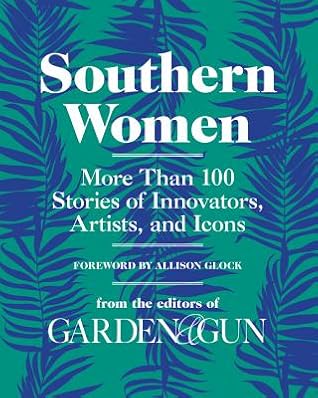
Southern Women by Garden and Gun

Southern Women: more than 100 stories of innovators, artists, and icons by the editors of Garden & Gun 

I love Garden & Gun magazine and the books they publish are always great, so I was really looking forward to Southern Women and it did not disappoint. Organized into seven categories, performers & players, chefs & mixologists, innovators & iconoclasts, artists & artisans, singers & songwriters, writers & readers, and tastemakers & trendsetters, 123 Southern women are highlighted. Some are well-known names like Oprah Winfrey and Dolly Parton, but I liked that Garden & Gun chose to highlight some newer faces that are already making a name for themselves in various industries in the South. A great collection of stories about women that show all the diversity and drive women have in the South, both in the past and present.

Thursday, October 31, 2019

October 2019 Cookbook Reviews

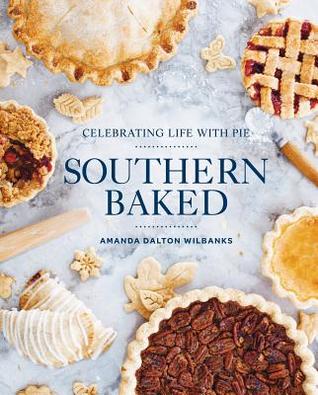
Southern Baked by Amanda Wilbanks

Southern Baked: celebrating life with pie by Amanda Wilbanks

I fully expected this cookbook to just be recipes of pies and desserts based on the title, so I was pleasantly surprised to see it covered a lot more. Wilbanks talks about how she learned to cook and make pie and how her business, Southern Baked Pie Company, was born. But, in this cookbook she breaks the recipes down into meal ideas based on the month of year and any holidays or special occasions in that month. This makes for a very well-rounded cookbook with TONS of recipes (both sweet and savory) that I want to try. I also like that in the first section of the cookbook she gives her basic pie dough recipe and lots of tips for making pie and different ways to use the dough. Overall, a great cookbook with much more than pie recipes.


Heritage by Sean Brock

Heritage by Sean Brock

Sean Brock is a pioneering Southern chef who wants to help bring back heritage Southern food. This cookbook is interspersed with stories from Brock and about people and farms that he sources food for his restaurants from. His focus on local, seasonal food is great and I try to do the same. Even though he says some of the recipes are more simple and designed for home cooks, I thought most of the recipes seemed pretty complicated and I'm not an inexperienced cook. But, I still found several recipes I want to try and I'm excited to check out his newest cookbook South.


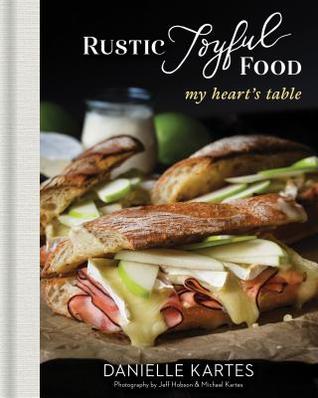
Rustic Joyful Food by Danielle Kartes

Rustic Joyful Food: my heart's table by Danielle Kartes

This cookbook is so full of simple, yet nourishing and comforting recipes that I will probably end up buying it. In the introduction Danielle Kartes talks about her love of cooking and how that led her to work in restaurants and eventually open her own. When she had to close down her restaurant it took a few years before she was ready to start creating again, but when she was she had the idea to write a cookbook. This cookbook is just full of wonderful recipes and there were SO MANY I want to try! Kartes encourages cooking from scratch, which is my thing too, so she gives several "pantry staples" recipes for stocking homemade basics. Overall, definitely a great cookbook and I will be watching for more from Danielle Kartes.


Heirloom by Sarah Owens

Heirloom: time-honored techniques, nourishing traditions, and modern recipes by Sarah Owens

After reading the Introduction and Part One Preserving Traditions I was super excited about this book. The author talks about the importance of heirloom, not just what you might think of heirloom vegetables, but heirloom as a way of preparing food based on time-honored traditional ways. In Part One she covers various ways to preserve food - fermentation, pickling, freezing, dehydrating, etc. and gives several recipes for stocks, vinegars, etc. But, once she got into the actual recipes there just weren't that many I wanted to try. She encourages using heirloom grains, which could be hard to source and would take time to learn to use, and not everyone can do that. I really thought that this cookbook would be right up my alley and that I would find lots of recipes I wanted to try, but there just weren't that many I want to try. The cookbook is beautiful and I agree with her food philosophy, but just wasn't as excited about it after reading through it.

October 2019 Reviews

The Sun Does Shine by Anthony Ray Hinton

The Sun Does Shine: how I found life and freedom on death row by Anthony Ray Hinton (Evening Edition book club)

In 1985 Anthony Ray Hinton was arrested for 3 robbery murders. While he was scared he was innocent and had an airtight alibi - he had been at work on the night of the 3rd murder. But, his innocence did not change the views of the Alabama courts. Due to a joke of a court-appointed attorney and falsified evidence by the Alabama prosecutors Hinton is sentenced to the death penalty. His first three years on death row were dark. Hinton was furious at what had happened to him and all he could think about was getting revenge on the people who fabricated evidence and ignored his innocence. Then he had a breakthrough - he could let the state of Alabama kill him the whole time he was in prison or he could live inside himself the best he could under these circumstances. After his appeal with the same court-appointed attorney is denied his case is taken up by Bryan Stevenson of the Equal Justice Initiative and for the next 27 years he goes through appeal after appeal trying to get higher courts to overturn his conviction. Hinton spends 30 years on death row in mostly solitary confinement. His mental strength and faith were the main things that kept him going. He also had an incredible friend, Lester, who came to EVERY SINGLE VISITING DAY and after 30 years was able to pick Ray up when he was finally released. This story is heart-breaking and terrifying and should be required reading for EVERYONE. After all Hinton went through the state of Alabama never apologized or gave him any kind of compensation for spending 30 years on death row as an innocent man. This should definitely make for a good book club discussion.

There are LOTS of quotes I liked:

"McGregor [the prosecutor] may have won, but I don't think he or the judge realized that by sentencing me to death, they were giving me the only shot I had at proving my innocence. Now that I was sentenced to die, I would be guaranteed an appeal and guaranteed some representation by my attorney. If I had been sentenced to life, I would have had to hire an attorney to appeal." (p. 14

"Acker [a police detective] turned around and looked me in the eye for the first time since I had told him I was at work on the twenty-fifth. 'You know, I don't care whether you did or didn't do it. In fact, I believe you didn't do it. But it doesn't matter. If you didn't do it, one of your brothers did. And you're going to take the rap." (p. 51)

"...a man laughed. A real laugh. And with that laughter, I realized the State of Alabama could steal my future and my freedom, but they couldn't steal my sense of humor. I missed my family. I missed Lester. But sometimes you have to make family where you find family, or you die in isolation. I wasn't ready to die. I wasn't going to make it easy on them. I was going to find another way to do my time. Whatever time I had left." (p. 118)

"Bring in the books, I thought. Let every man on the row have a week away, inside the world of a book. I knew if the mind could open, the heart would follow. It had happened to Henry. Look at him sitting here in a locked room with five black men who had nothing to lose...I had no anger toward Henry. He had been taught to fear blacks. He had been trained to hate. Death row had been good for Henry. Death row had saved his soul. Death row had taught him that his hate was wrong." (p. 153)

"Compassion doesn't know what color you are, and I think Henry felt more love from the black men on death row than he ever did at a KKK meeting or from his own father and mother...Henry was the first white man to be put to death for killing a black in almost eighty-five years. His death meant something to people outside of the row. It was making a point about racism and justice and fairness like all the books we had been reading in book club, but to us, it was a family member being killed. There's no racism on death row." (p. 161)

"'Yes, I'm firing you. Thank you for everything up until now, but I'd rather die for the truth than live a lie. I'm not agreeing to life without parole. I'll rot and die in here before I agree to that. But thank you for working so hard.'...I would bend over when the guards made me do it. I had no choice. But I wasn't going to let anybody else shake me down. I wasn't ready to give up on my life. I was going to walk out of this place as an innocent man, or I was going to die trying. Nothing more and nothing less." (p. 164-65)

"I wasn't surprised that the State was doing its best to keep me locked away and quiet. It was what the court had done from the beginning. It was still a lynching. It was taking decades to get the noose wrapped just right. I also wasn't naive. The State was unwilling to admit it had made a mistake. Alabama would rather stay wrong than admit it had been wrong; rather accept injustice than admit that it had been unjust." (p. 185)

[From an article Bryan Stevenson wrote for the Birmingham News] "With 34 executions and seven exonerations since 1975, one innocent person has been identified on Alabama's Death Row for every five executions. It's an astonishing rate of error. What most defines capital punishment in Alabama is error. Reviewing courts have concluded nearly 150 Alabama capital murder convictions and death sentences have been illegally and unconstitutionally imposed. Reversals outnumber executions 5 to 1. While some states have seriously examined their death penalty systems and pursued reforms, Alabama leaders have recklessly called only for speeding up the execution process." (p. 210)

[After Hinton's release from prison, his first night in a real bed] "It was all strange, and I could feel the anxiety start again. I began to breathe heavy and fast. What was happening to me? I wondered if I should wake up Lester and have him take me to the hospital. Was this how it ended? The day I get my freedom, I have a heart attack? I tried to steady my breath, but it was like the walls were moving in and out and the room was spinning. I didn't like this. I got out of bed and ran into the bathroom. I locked the door behind me and sat on the floor with my head between my knees. Immediately, my heart stopped pounding and my breathing slowed. I lifted my head and looked around. The bathroom was almost exactly the same size as my cell. I stretched out on the floor, my head resting on the bath mat. I would sleep in here tonight. This felt like home." (p. 236)

"I forgive them. I made a choice after those first difficult few weeks at Lester's when everything was new and strange and the world didn't seem to make sense to me. I chose to forgive. I chose to stay vigilant to any signs of anger or hate in my heart. They took thirty years of my life. If I couldn't forgive, if I couldn't feel joy, that would be like giving them the rest of my life. The rest of my life is mine. Alabama took thirty years. That was enough." (p. 238)


Clock Dance by Anne Tyler

Clock Dance by Anne Tyler (Books & Banter book club)

Willa Drake grew up with a most likely mentally ill mother and a very enabling father. While she didn't realize how abusive her mother was as a child, I'm not sure that she really did understand that as an adult either. She married her college boyfriend and gave up her dreams of working as a linguist to follow him to California. She had two sons and was widowed at 41. The book tells 3 defining moments for Willa - when she is 11, 21, and 41 - then picks up with the present when she is 61 and remarried. Her son's ex-girlfriend is injured and needs someone to care for her 9-year-old daughter. A neighbor mistakenly thinks Willa is the child's grandmother and calls her. Willa is feeling at loose ends and decides on a whim to go and ends up really enjoying her time with Cheryl. Willa's current husband on the other hand is not happy about this recent turn of events. Willa tends to go along with whatever the men in her life want her to do and now after this she has to determine what SHE really wants for one. The ending is ambiguous, but I'm hoping that for once Willa does what she wants for a change.

A quote I liked:

"Sometimes Willa felt like she'd spent half her life apologizing for some man's behavior. More than half her life, actually. First Derek and then Peter, forever charging ahead while Willa trailed behind picking up the pieces and excusing and explaining." (p. 187)


Inheritance by Dani Shapiro

Inheritance: a memoir of genealogy, paternity, and love by Dani Shapiro

How much of your identity is tied to your biological DNA? Dani Shapiro grew up in an Orthodox Jewish house and knew her family lineage. But, she never looked Jewish - she was fair with blonde hair and blue eyes. As the only child of older parents she often felt out of place, many of the other Orthodox Jewish families had several children. But, she never questioned her biological identity in her family. Then on a whim she and her husband decided to do Ancestry DNA analysis and when the results came back they rocked her world - she was not biologically related to her father. Both of Shapiro's parents were dead, so she couldn't get answers from them. As a writer and her husband with a background in journalism, the couple began to research and very quickly found information based on a few scraps of information Shapiro remembered from her mother. She even found her biological father within 2 days of finding out this information. But, this was just the tip of the iceberg for Shapiro - she had to figure out how to deal with this bombshell and what it might mean for her family. As she sorts through information and begins to communicate with her biological father and other family members, she is also working through feelings about what makes a family. A fast read about how one family's secret impacted several people over fifty years in the future.

Some quotes I liked:

[During a conversation with her father's only living sibling] "She trained her whole ninety-three-year-old self, every cell in her being, in the direction of consoling me. Every bit of energy. It was the purest manifestation of love I had ever experienced." (p. 138)

"Those early months were taken up first with the disbelief that my parents could have ever knowingly participated in such a deceit, and then later with anger and sorrow that they had made the choices they did - even though those choices resulted in my existence...But now I was coming to the awareness that my young parents-to-be had none of these tools. They possessed only their own fear, shame, despair, and desire for a child at any cost. They joined hands and went deeper into the wilderness until the only way out was through. There was no going back. And then they pretended it never happened. They never spoke of it again - not to each other, not to family, nor to friends." (p. 222-23)


The Friends We Keep by Jane Green

The Friends We Keep by Jane Green

Maggie, Evvie, and Topher meet their first year at University and become inseparable. They end up renting a house together and living together as an odd little family for the rest of college. After college they go their separate ways - Evvie becomes a model in New York, Topher gets into acting and is cast in a soap opera, and Maggie married Ben, her crush throughout college. The three friends lose touch, but decide to reconnect at their 30th University reunion. After the reunion some devastating secrets come out that will change everyone's lives.

I love Jane Green and was really looking forward to this book, but it was very disappointing. I won't give anything away, but the main "secret" is pretty big and devastating. There is ABSOLUTELY NO WAY their friendship would have survived and continued as it does in the book. I saw this coming from the end of the first section of the book and knew it was going to be like a Hallmark movie where everything works out perfectly in the end. Very unrealistic and not like most of Green's other books. I'll keep reading Jane Green, but I wouldn't recommend this one.


American Predator by Maureen Callahan

American Predator: the hunt for the most meticulous serial killer of the 21st century by Maureen Callahan

When Samantha Koenig disappeared from the coffee stand where she worked in Anchorage, Alaska it seemed like she might be a runaway at first. But, then her boyfriend saw a masked man rummaging through the truck they shared and they got a ransom note. Samantha's kidnapper, Israel Keyes, was caught in Texas after the police followed ATM withdrawals and surveillance footage. Keyes had no criminal history and was barely on the radar at all, but he admitted to kidnapping and killing Samantha. The FBI realized that this was not the first time Keyes had killed and they were soon engaged in a cat and mouse game with Keyes to see if they could get him to admit to any other murders. Keyes traveled all over the country and would bury "kill kits" in remote places. These kits would have a handgun, suppressor, ammunition, knife, and zip ties - everything he needed to kidnap and kill someone. Keyes eventually admitted to a double murder in Vermont and alluded to several other murders, rapes, and kidnappings and police managed to connect several missing persons cases with Keyes timelines and travels over the years. Keyes committed suicide in prison, so the full extent of his crimes may never be known. But, what the police were able to piece together is terrifying because Keyes picked people at random to kill and was meticulous in his planning and cover ups.

Some quotes I liked:

"Before his death in 2016, [Roy] Hazelwood [a pioneering FBI behavioral profiler] spoke about Keyes. Hazelwood's decades of service had left him with a cynical view of the FBI's truthfulness in general, and he believed stranger abductions are far more common than the Bureau insists. He was convinced that the proliferation of hard-core pornography, so easily and anonymously accessible online, has contributed to increasingly sadistic crimes and murders. He believed that technology, the mainstreaming of violent pornography, advances in ever-faster travel, and an overall culture of misogyny, from politics to entertainment, would only continue to breed more aberrant and dangerous criminals. He made this prediction in 2001." (p. 179)

[In interviewing one of Keyes only friends during his military service] "Are you surprised, they asked, that Keyes has been arrested for kidnapping and murder? 'I'm surprised he...got caught,' Perkins said. 'He was smarter than that.'" (p. 234)

[Keyes was almost able to escape at a court hearing in Anchorage] "Bell's warnings [to the Alaska corrections officers] had not been taken seriously. In fact, they had not been taken at all, because that was how Keyes had nearly escaped. In the three hours between transport and the court hearing, Keyes had been given lunch, the standard meal for the standard inmate: a brown bag containing a carton of milk, an apple, and a sandwich wrapped in cellophane. Keyes had used his stored-up pencil slivers to pick the locks on his cuffs and leg irons, then used the cellophane to make his leg irons look tied together." (p. 238)


The Whole Okra by Chris         Smith

The Whole Okra: a seed to stem celebration by Chris Smith

If you love okra and want to know literally EVERY SINGLE THING you can make, eat, and do with okra this is the book for you. Chris Smith is British, so he did not grow up eating okra. But, he married a woman from South Carolina and once he had eaten really good okra he was hooked. Smith has done things with okra that I would never have dreamed of doing. He covers the history of okra, the slime issue/factor, how to best cook and preserve okra, eating okra flowers and leaves, making and using okra seed and pod flour, making paper from okra stalks, and of course how to best grow your own okra. There are several recipes included - some like the okra face mask and hair treatment might be a bit much for some people. But, there are some recipes I'd like to try and this book is definitely a great exploration of all the wonders that is okra! It was also cool that Smith and his family now live in Asheville, so lots of the resources and restaurants he referenced are ones I could actually check out. Overall, a really thorough look at one of the South's favorite vegetables.


Just Mercy by Bryan Stevenson

Just Mercy: a story of justice and redemption by Bryan Stevenson

Bryan Stevenson enrolled in law school on somewhat of a whim, which is incredible given what you will learn about him in this book. Once in law school a lot of the courses seemed arbitrary and not applicable for the real world. In his second year of law school Stevenson signed up for a one-month intensive course on race and poverty litigation that required students to work with an organization doing social justice work. Stevenson ended up interning with the Southern Prisoners Defense Committee (SPDC) in Atlanta, Georgia. That was where he met his first death-row inmate and that was also where he found his life's calling. After finishing law school Stevenson worked for SPDC in Atlanta, but so many of their cases dealt with prisoners in Alabama that he ended up moving to Alabama and opening his own non-profit legal organization, the Equal Justice Initiative (EJI). Since the very beginning of EJI when it was just Stevenson, one other lawyer and a receptionist they have been inundated with inmates and family members trying desperately to find someone to help them in the brutal legal system. Stevenson tells the story of EJI and his work through the story of Walter McMillian, one of the innocent people Stevenson is able to get released from death row. McMillian's story is interspersed with other aspects of social justice and race that Stevenson and EJI have worked on like child imprisonment, mentally handicapped prisoners on death row, and arbitrarily long prison sentences for minor infractions - almost all disproportionately for African-American or other minority groups. The stories in this book are heartbreaking and infuriating. To read story after story after story of poor people being railroaded by the state is just mind blowing. Equally mind blowing is how often the state turns a blind eye to this injustice even in the face of compelling evidence of innocence over and over and over again. This is a hard book to read, but it's an important book to read and should be required reading for EVERYONE. The world needs more people like Bryan Stevenson.

Some quotes I liked:

"It wasn't until 1967 that the United States Supreme Court finally struck down anti-miscegenation statutes in Loving v. Virginia, but restrictions on interracial marriage persisted even after that landmark ruling...Even though the restriction couldn't be enforced under federal law, the state ban on interracial marriage in Alabama continued into the twenty-first century. In 2000, reformers finally had enough votes to get the issue on the statewide ballot, where a majority of voters chose to eliminate the ban, although 41 percent voted to keep it. A 2011 poll of Mississippi Republicans found that 46 percent support a legal ban on interracial marriage, 40 percent oppose such a ban, and 14 percent are undecided." (p. 29)

[In the court proceeding to present the evidence that showed Walter McMillian was innocent] "In the last pretrial appearance, the judge had asked, 'How much time will you need to present your evidence, Mr. Stevenson?' 'We'd like to reserve a week, your honor.' 'A week? You've got to be joking. For a Rule 32 hearing? The trial in this case only lasted a day and a half.' 'Yes, sir. We believe this is an extraordinary case and there are several witnesses and -' 'Three days, Mr. Stevenson. If you can't make your case in three days after all of this drama you've stirred up, you don't really have anything.' 'Judge, I -' 'Adjourned.'" (p. 164-5)

"The tapes that Tate, Benson, and Ikner had made when they interrogated Myers were pretty dramatic. The multiple recorded statements Myers gave to the police featured Myers repeatedly telling the police that he didn't know anything about the Morrison murder or Walter McMillian. They included the officers' threats against Myers and Myers's resistance to framing an innocent man for murder...All of these recorded statements were typed, exculpatory, and favorable to Walter McMillian, and none of them had been disclosed to McMillian's attorneys, as was required." (p. 182) [also infuriating is that the prosecutor, Tate, had immunity and could not be sued for damages after McMillian was released from prison]

"Today over 50 percent of prison and jail inmates in the United States have a diagnosed mental illness, a rate nearly five times greater than that of the general adult population. Nearly one in five prison and jail inmates has a serious mental illness. In fact, there are more than three times the number of seriously mentally ill individuals in jail or prison than in hospitals; in some states that number is ten times...when I still worked in Atlanta, our office sued Louisiana's notorious Angola Prison for refusing to modify a policy that required prisoners in segregation cells to place their hands through bars for handcuffing before officers entered to move them. Disabled prisoners with epilepsy and seizure disorders would sometimes need assistance while convulsing in their cells, and because they couldn't put their hands through the bars, guards would mace them or use fire extinguishers to subdue them." (p. 188)

"Terrorist groups like the Ku Klux Klan cloaked themselves in the symbols of the Confederate South to intimidate and victimize thousands of black people. Nothing unnerved rural black settlements more than rumors about nearby Klan activity. For a hundred years, any sign of black progress in the South could trigger a white reaction that would invariably invoke Confederate symbols and talk of resistance. Confederate Memorial Day was declared a state holiday in Alabama at the turn of the century, soon after white rewrote the state constitution to ensure white supremacy. (The holiday is still celebrated today.)...In fact, it was in the 1950's, after racial segregation in public schools was declared unconstitutional in Brown v. Board of Education, that many Southern states erected Confederate flags atop their state government buildings. Confederate monuments, memorials, and imagery proliferated throughout the South during the Civil Right Era. It was during this time that the birthday of Jefferson Davis, the president of the Confederacy, was added as a holiday in Alabama. Even today, banks, state offices, and state institutions shut down in his honor." (p. 192-3)

"...even today almost half of all states (twenty-two) offer no compensation to the wrongly imprisoned. Many of the states that do authorize some monetary aid severely limit the amount of compensation. No matter how many years an innocent person has been wrongly incarcerated, New Hampshire caps compensation at $20,000; Wisconsin has a $25,000 cap; Oklahoma and Illinois limit the total amount an innocent person can recover to under $200,000, even if the person has spent decades in prison. While other states have caps of more than a million dollars, and many have no cap at all, several states impose onerous eligibility requirements. In some jurisdictions, if the person lacks the support of the prosecuting attorney who wrongly convicted him, compensation will be denied." (p. 245)

"The power of just mercy is that it belongs to the undeserving. It's when mercy is least expected that it's most potent - strong enough to break the cycle of victimization and victimhood, retribution and suffering. It has the power to heal the psychic harm and injuries that lead to aggression and violence, abuse of power, mass incarceration." (p. 294)


The Next Right Thing by Emily P. Freeman

The Next Right Thing by Emily Freeman

I read this book as part of a women's Bible study at my church, so I read it in 4 chapter increments each week. When I first started reading it I wasn't sure how much I would get out of it because I don't have trouble making decisions, which seemed to be somewhat the focus of the book. But, there was still a lot that I found helpful and through the course of reading the book for this class I did find myself having to make some harder decisions, so it was helpful to be reading and discussing during that time. The overall message I got from the book is there is not one perfect right decision for everything. If you're trying to follow God prayerfully doing The Next Right Thing is all we can do. The only downside of reading a book only 4 chapters a week is that it's harder for me to remember all the things I liked about it because now it's been so long since I started reading it. But, I did like it and I would read something else by this author again.

Thursday, October 3, 2019

September 2019 Reviews

The World According to Fannie Davis by Bridgett M. Davis

The World According to Fannie Davis: my Mother's life in the Detroit Numbers by Bridgett M. Davis

Growing up Bridgett was the youngest of five siblings. She only knew her family as successful and she never wanted for anything. But her older siblings remember the harder times before their mother Fannie became a Numbers runner. Numbers was and is an illegal lottery that started in Harlem and while all walks of life played Numbers it was primarily known as a part of African-American life in Detroit and other major cities up North. Fannie Davis was an entrepreneurial woman who was determined to defeat the poverty that plagued most African-Americans even "up North." With her husband on the bottom rung of the Detroit auto industry constantly being laid off and rehired, she borrowed $100 from her brother and started running Numbers. She eventually became one of the only female Numbers bankers, meaning she had enough cash put back that she completely worked for herself and did not rely on a larger funder to back her business. Growing up Bridgett and her siblings knew to NEVER speak about what their mother did or how their family earned a living. This was so ingrained in her that she had trouble even starting to write this book, but she knew she wanted to share her mother's story and legacy. The World According to Fannie Davis is Bridgett's ode to her mother. Bridgett gives a history of the Numbers game and how it evolved over time, but the majority of the book is about her mother and the incredible legacy she was able to create all from an illegal business.

Some quotes I liked:

"But the most important reason for its beauty was this: unlike the policy [an earlier lottery game], Numbers was a black-owned and black-controlled business. The Numbers blossomed into a lucrative shadow economy in the early 1920's, and moved into black communities across America, thanks in large part to the Great Migration." (p. 61)

"A 1972 Detroit Free Press article quoted a Detroit Baptist minister who once famously said from the pulpit, 'I know some of you are taking the numbers of our hymns and betting on them. I'm not saying whether I approve or not, but if you play them...be sure to box 'em.' Certain preachers actually built their church followings on the claim that they had the ability to prophesy, and would give out numbers that had supposedly come to them in their dreams." (p. 133)

"For those who knew us, our family secret (as far as it was a secret at all) didn't possess the potency I gave it. People admired my mother not so much for what she did as for the kind of woman she was. And yet I don't want this point to get lost: My mother launched a Numbers operation out of necessity, but despite its constant challenges, she enjoyed running her own business. Self-employment allowed her a coveted life of rugged individualism, as they say. By contributing to this thriving underground economy, my mother was able to live out Booker T. Washington's dream of Negroes' self-reliance, and as such she moved through the world as a head-held-high, race-proud black woman." (p. 290)


Rough Beauty by Karen Auvinen

Rough Beauty: forty seasons of mountain living by Karen Auvinen

A few months before her 40th birthday Karen Auvinen's cabin in the Colorado Rockies burned to the ground. She lost everything except her truck, her dog Elvis, and a few articles salvaged from the fire. Never one to rely on others, Karen had a very hard time accepting help from people after the fire, but she had no choice because she literally had nothing. After the fire Karen reevaluates her life and slowly starts to realize that she does need connections and her small town really rallies to help her rebuild her life.

While some parts of the book were really interesting, a lot of it was very depressing and sad. Karen had a rough childhood and doesn't have a good relationship with anyone in her immediate family. This comes up again and again as her mother's health declines steadily throughout the book. She also loses her beloved dog Elvis and that was hard to read. I don't have dogs, but I had an elderly cat and we just lost her sister last year, so that was a hard few chapters to read. Based on the book description I thought it was going to be a more uplifting book, but it was pretty depressing overall. I am glad I finished it, but I wouldn't really recommend this one.


Save Me the Plums by Ruth Reichl

Save Me the Plums: my Gourmet memoir by Ruth Reichl

Ruth Reichl's love of food and cooking started when she stumbled upon some back issues of Gourmet magazine and convinced her father to buy them for her. When she asked her parents to buy her the ingredients needed to cook some of the recipes in the magazine they did and she began doing more and more of the family's cooking. She and her father also bonded over visiting ethnic food markets and new restaurants in New York City. Reichl worked as a food writer and then as a restaurant reviewer for the New York Times before being offered the job as editor-in-chief of Gourmet magazine. While not sure she was qualified, Reichl couldn't turn down the opportunity to work for the magazine that inspired her so much. It wasn't always easy, especially in the beginning, but Reichl grew to love working at Gourmet. So, it was that much more devastating when the magazine closed in 2009 during the recession. Save Me the Plums is Reichl's memoir of her time at Gourmet. She is honest about her mistakes and things she would do differently, but her love of food, cooking, and Gourmet magazine shines through. One of the most touching chapters was in response to 9/11 Reichl called everyone at Gourmet to invite them to use the Gourmet kitchens to cook for the first responders. She wasn't even sure anyone would show up, but tons of staff showed up and cooked for all the emergency crews working at ground zero. A lovely tribute to Gourmet and Reichl's time there.


On Being 40 by Lindsey Mead

On Being 40(ish) by Lindsey Mead, editor

I just recently turned 40, so I purposely chose to read this book the week of my 40th birthday. A collection of female authors write about what it was like to turn 40 or reflecting on life in your 40's. While some of the names I recognized, many of them I did not. There were several that I liked - Soul Mates, There's a Metaphor Here, and Youth Dew were my favorites. But, the rest were just OK. Not much other than the three I mentioned really jumped out or were all that interesting. Overall, it was OK, but not great.


Carving Out a Living on the Land by Emmet Van Driesche

Carving Out a Living on the Land by Emmet Van Driesche

Emmet Van Driesche and his wife Cecilia had worked together on farms before, but this book details their story of taking over a Christmas tree farm. In telling their story, Emmet shares both their mistakes and triumphs. Running a small farm is not easy and taking over an established farm over time can be even harder and more complicated. But each year they have made more money than the previous year by adding income streams and also by streamlining the processes on the farm. While some parts of the book do go into more detail about their operation, all of it could apply to other farms or small businesses. There are also lots of pictures and information - including two appendixes and a list of resources. This is a very unique book - part farm instruction manual and part farm/business philosophy. Even if you don’t want to have your own farm if you’re interested in small business or even homesteading you could learn something from this book.


Mrs. Everything by Jennifer Weiner

Mrs. Everything by Jennifer Weiner

Jo and Bethie Kaufman grow up in the 1950's in Detroit in the stereotypical ranch house and a neighborhood full of friends. Jo is a tomboy who loves to run and play sports while Bethie is the pretty "good girl" who loves to let her mother dress her up and fix her hair. After their father dies things change drastically for the Kaufmans. And while Jo was the one who protested with her African-American friends outside of local businesses in high school, she ends up married and a stay-at-home mom to three girls. Bethie loses her "good girl" identity in college and ends up getting into the whole free love and drugs scene in the 1970's. Both Jo and Bethie deal with trauma, changes in culture, and their fluctuating relationship as sisters. Weiner does an amazing job of highlighting all the changes and issues for women from the 1950's to the present through Jo and Bethie. Overall, another AMAZING book by Jennifer Weiner who's books are always on-target in addressing what it means to be a woman.

I will warn any potential readers that there is a LOT of sex in this book - it's not gratuitus, but it is a lot. It's still a great book with two characters you will absolutely love, but just that small warning for anyone super sensitive to that.