Friday, September 18, 2020

March 2020 Reviews


Martha Stewart's Organizing by Martha Stewart

I'm always a little leery of Martha Stewart stuff because she can come across as condescending and elitist, but I did enjoy this book. It's divided into three categories - organize your year, organize your home, and organize your routine. Organize your year helps organize your calendar with tips and ideas for each month. Each month includes any holiday that falls that month, but also some cooking/baking ideas, and housekeeping tasks like cleaning all your windows, or deep cleaning your oven. I liked this section the best and actually wrote down some of the ideas for each month to try incorporate more seasonal cleaning/household type things into my calendar. Organize your home goes room by room with tips for organization, cleaning, storage, etc. Organize your routine gives tips on how to better accomplish everyday/regular tasks like laundry, cleaning, yard work, cooking, etc. There are a LOT of good ideas and lots of beautiful photos as well. Overall, a unique look at organizing beyond just "stuff" and more of organizing aspects of your life.


The Less People Know About Us by Axton Betz-Hamilton

When Axton Betz-Hamilton was eleven-years-old her parents identity was stolen. This was before the internet made this type of fraud easier, so they had little help from the authorities. They did what they could by getting a PO Box to make it harder for someone to steal their mail, but anxiety and money troubles plagued all three of them. Axton grew up learning not to ask for much because it would result in an argument between her parents about money. Because they didn't know who the identity theft was they cut off almost everyone from their lives. When Axton went to college she found out that she too has also been a victim of the identity theif and had tens of thousands of dollars of debt already in her name. Because of this she ended up going all the way to a PhD with her dissertation being about childhood victims of identity theft and becoming an expert in the newly emerging field of identity theft. After her mother passed away the identity of the identity theft is revealed and it completely rocks Axton's world. Then she's on a mission to find out everything she can about the thief hoping it will help her understand why all this happened. Meanwhile she and her father are still trying to pick up the pieces of their lives and move on after her mother's death. A fast-paced story that reads more like a whodunit novel than non-fiction, this is a heart-breaking, but hopeful read about how to move beyond a painful childhood even when you don't have all the answers.

There were a lot of mixed reviews of this book, but I LOVED it. Without giving anything away, I felt like it was pretty obvious who the identity thief was from the beginning, but even more secrets are uncovered at the end. Some of the complaints in reviews were that this book should have been less about identity theft and more about mental illness, but I disagree. The book is from Axton's perspective and it wasn't until she uncovered who the thief was that she began to see how abnormal her childhood was and how mental illness came into play. And identity theft became Axton's career because of what happened in her childhood, so to me it makes sense that that was the focus of the book.

Some quotes I liked:

"'The less people know about us, the better' was my mother's refrain. My father parroted it often. This wasn't a completely new phenomenon...In the years prior to the identity theft, when we still used to go to parties at their friends' houses, Mom would instruct me to 'act like you belong here.' Belonging somewhere in rural Indiana meant being a happy family with a pristine farm. And so the hayfields on the south side of the house were neatly manicured, and when mowing the grass became by responsibility, Dad used to walk me around the yard afterward to personally demonstrate all the spots I had missed...Even during the full onslaught of the crimes committed against us, I was coached to report how great everything was going...All of it was an elaborate illusion, a magic trick we never stopped perfecting. On the outside, our lives looked solid and well put together, but on the inside, everything was falling apart. Everything including me." (p. 83-85)

"This obsession with appearances ran deep and began well before the identity theft. My mother had struggled with her weight as long as I could remember. Once, when I was in first or second grade, I came home crying because the kids at school had called me fat. Instead of comforting me, or telling me that I wasn't fat (and in fact, quite scrawny), she said that, unfortunately, there was little to be done about it. 'Eventually you will be,' she declared, 'big like me.' After years of watching my mom try diets and take Dexatrim and argue with my father over her eating habits, this proclamation terrified me." (p. 85)

"Sometimes when I think about what I have lost, I rage against the unfairness of it all. In many ways the financial impact of my family's identity theft was the least of the damage. You can rebuild your credit; you cannot rebuild your childhood." (p. 301)


Sing, Unburied, Sing by Jesmyn Ward (Books & Banter book club)

Leonie is a drug addict who has two children with her boyfriend Michael. Michael is currently in prison, but when he finds out he is getting out Leonie decides to take their two children (and her friend Misty who she gets high with) to meet him. Their epic road trip turns out to be full of ghosts, illness, almost-overdoses, and drama. At Parchman, the prison where Michael was, the ghost of Richie (who has ties to Leonie's father, River) comes back with them hoping to find peace with River. The story is narrated by Jojo, Leonie's thirteen-year-old son, Leonie, and Richie. And while all this is going on Leonie's mother, who has basically been raising her grandchildren their whole lives, is dying of cancer. So, this is real uplifting, good-time story, right?!

This book has won so many awards, but I honestly have no idea why. Many of the reviews I read talked about how beautifully it was written, but I didn't see that AT ALL. I don't mind reading hard books like The Underground Railroad and The Nickel Boys by Colson Whitehead, but even in those there was some semblance of hope. I didn't love Unsheltered by Barbara Kingsolver, but it WAS beautifully written even if I didn't love the characters or storyline. But, I don't get anything remotely positive or beautiful about this book's writing, characters, or storyline. It's like a bad TV movie version of Intervention, but without the actual intervention or hopeful ending. Ugh. At least this one was short and a quick, but deeply depressing read.


The Way Through the Woods: overcoming grief through nature by Long Litt Woon

When Long Litt Woon's husband, Eiolf, unexpectedly passed away she worked through her grief in an unusual way - she became a mushroom forager. She took a mushrooms for beginners course that was offered in Oslo and after that first class she found herself inexplicably drawn to the world of mushrooms and foraging. Such was her interest that she ended up taking an exam to become a mushroom inspector, something only Norway offers its citizens. She also travels all over the world to mushroom festivals and conferences and even organizes a sensory panel to try to more thoroughly describe the smells of various mushrooms to make it easier for novices to identify their finds. Throughout her mushroom journey Long finds that it gives her both a purpose and a distraction from her husband's death. Each chapter describes part of her mushroom journey and also a few sections about coping with her grief. My only (small) complaint is that the descriptions of her grief often seemed just kind of stuck in the chapters, but maybe it feels that way since it was translated and not originally written in English. But, overall I did appreciate her story and all of the information about mushrooms and foraging was fascinating.

A quote I liked:

"Slowly but surely, as time went on, the pattern of my days began to change. This new life gradually began to blossom. Mushroom outings gave me the push I needed to get out of the house and take part in life, instead of staying immersed in grief within its four walls. They also allowed me to get to know people in the mushroom community, who made me feel welcome on their outings...There are so many hours in the day that have to be filled when someone very close to us passes away. No wonder people talk about a vacuum after someone dies. For me, these forays into the fungi kingdom became a way of spending this unwelcome spare time." (p. 62-3)


News of the World by Paulette Jiles (Evening Edition book club, re-read)

After the Civil War Captain Jefferson Kidd rides from small town to small town reading the News of the World from various newspapers. He's lived through three wars, is widowed, and enjoys the freedom of not being tied down in his old age. While at one of his stops he is offered a fifty-dollar gold piece to bring a rescued white child back to her family. Johanna Leonberger's parents and younger sister were killed by Kiowa raiders and she was kidnapped and lived with them for 4 years. She is now 10 years old, does not speak English, and doesn't want to leave her Kiowa family. The Captain agrees to take her against his better judgement, but while traveling across the wild Texas territory the two form a unique bond. Once they reach her extended family outside San Antonio the Captain has to make a terrible choice that will ultimately change both he and Johanna's lives forever. This is a short, but fantastic book with two very memorable characters and would make a great movie! Definitely worth reading!

Updated review after 2nd reading:

Re-reading this book was even more enjoyable the second time. There were scenes I didn't remember, but overall I was able to read it a little more slowly because I knew the ending so I wasn't rushing to find out what happens. I still got choked up at the very end. I just LOVE Captain Kidd and Johanna and now to find out there will be a movie later this year is even better!


Kitchen Yarns by Ann Hood 

Ann Hood grew up in an Italian-American household where her grandmother lived with them and cooked all their meals. Her parents cooked some as well, but somehow in a family that loved food and cooking Ann never learned to cook until she was an adult. Once on her own she cooked for comfort or in celebration or as a way to show love to her friends and family. Once she had children she made sure they were with her in the kitchen helping and learning like she didn't get to in her own childhood. In this collection of essays Hood writes about all the ways food has shaped her life. Each essay ends with a recipe (or 3) that were discussed in that essay. Hood is an excellent writer and having read some of her books in the past I remembered how much I enjoy reading her. This collection of essays will definitely inspire you to get into your own kitchen and either try something new or re-create a family favorite.


The Scent Keeper by Erica Bauermeister

Emmaline lives an idyllic childhood with her father on a remote island. They forage for food, grow a garden, chop wood, and enjoy exploring together. Emmaline's father has a huge wall of drawers where he keeps glass jars of scents that he makes with a scent capturing machine. But, as Emmaline gets older she has more questions that he father won't answer - where is her mother? how did they get to this island? why are the boxes that wash up on shore always full of exactly what they need? When Emmaline starts to find out some of the truth behind her questions she unintentionally betrays her father and is suddenly out in "the real world" away from her childhood island. Now she must dig deep to find out the answers to more of her questions and along the way she starts to discover who she really is and how she can still honor her father's work.

When I first started this book I was really hoping it wasn't going to go the Orphan Island route because it seemed kind of a bizarre premise. But, in the second section you definitely get more answers and it starts to make a little more (realistic) sense. I did feel like the ending was pretty lacking. I would have at least liked an afterward or something. I also was almost certain that Emmaline was going to end up pregnant in the second section and how she didn't is some magical realism right there. Overall, the story was fast-paced and I wanted to know what happened. But, I didn't love it and unless the author is setting us up for a sequel I would have liked more from the ending.


Smarter Living: work, invest, nest, relate, thrive by Karen Barrow, Tim Herrera, Karron Skog and The New York Times

Smarter Living is the advice section of The New York Times and this book is a collection of those articles divided into five sections - Work, Nest, Invest, Relate, and Thrive. Each article within the sections is relatively short and covers a specific topic. Regardless of your job or stage of life you should be able to find several articles that are helpful. There were several articles in each section that I learned something or got something out of it. But, there was one article in the Nest section that I very much disagreed with. The article is "Eight, Cheap, Landlord-Friendly Ways to Upgrade Your Rental." As a landlord I would be VERY unhappy if any of my tenants did some of the suggested things - install new cabinet handles, upgrade the lighting, swap out the faucet, replace the toilet (WTF why would you do that?!). We had a tenant change out light fixtures without asking and while she did put back our original lighting when she moved out that is something that could cause an electrical fire if not done properly. Same with changing a toilet if you don't know what you're doing you could really do some damage. I understand you might not like every detail of a rental, but maybe let that motivate you to save up for your own place instead of making huge changes to a house that is not yours. I was so mad after I read that article! Overall though I did like this book. It's a quick read with lots of great tips and ideas that could make your life better.


On the Clock: what low-wage work did to me and how it drives American insane by Emily Guendelsberger

When the newspaper Emily Guendelsberger worked for closed she decided to work on a book about low-wage work and decided to do it through her own experience. She worked at an Amazon fulfillment center in Louisville, Kentucky, Convergys, a call-center in Hickory, North Carolina, and a McDonald's in San Francisco, California. In each position Emily is worked to her absolute physical, mental, and emotional limit. The book alternates between her personal experiences in each job and the history of employment in the United States and how employees have gone from being the most expensive element of production to the cheapest (and most replaceable). She also covers how working these kinds of jobs take such a heavy toll on a person and how often people cope in very unhealthy ways. On the Clock is kind of a modern Nickel and Dimed with the focus more on the toll this kind of work takes on the worker and not quite as much on how impossible it is to support yourself and a family in one of these jobs. Emily does an amazing job with this book and gives an insiders look at some of the most common jobs around today. And I'll be honest after reading this book and Nomadland it's making me rethink using Amazon. I would highly recommend this one.

There were a LOT of quotes I liked:

"I did plenty of research beforehand, and I'd heard crazy things about how stressful each job would be - each in its own special way, like Tolstoy's unhappy families. But at each of them, technology made it impossible to escape the weeds. And every time, my thorough research totally failed to prepare me for how dehumanizing the job felt. (p. 11)

"Actually, Amazon's early supply-chain and warehousing systems were designed by a former Walmart executive - one of so many high-level execs Amazon poached that Walmart sued, demanding that Amazon 'stop targeting Wal-Mart associates and vendors in an effort to duplicate proprietary business systems.'" (p. 24)

"Nearly every drop of 'brain work' has been wrung out of this job, like so many others. Cashiers used to have to be able to do math in their heads to give people change; today, many registers automatically dispense the appropriate coins. Call-center workers rely on elaborate scripts instead of understanding the systems they work within. London's taxi drivers, who once had to study for years to pass the Knowledge, are being displaced by Uber drivers with GPS maps. As more and more skill is stripped out of a job, the cost of turnover falls; eventually, training an ever-churning influx of new unskilled workers becomes less expensive than incentivizing people to stay by improving the experience of work or paying more." (p. 76-77)

"A good rule of thumb: the more interest management take in workers' use of the bathroom, the more that job is going to suck. And I could easily fill the next twenty pages with unbelievable stories just about call-center bathrooms." (p. 123)

"There's a lot of talk about the decline of the American family in certain circles, and I don't think it's unfounded. Family is powerful: it motivates us, and it ties us down. It's the strongest force in most people's lives. But a lot of this talk blames the decline of family on weird stuff - gay marriage, women in the workplace, video games, Frozen, sluts, lizard people, Miley Cyrus. After my experiences in the low-wage sector, I have no doubt whatsoever: the way we work in America is crippling family life. So, so many working parents I met in the course of writing this book sacrificed their relationships with each other for the sake of their kids [often purposely working opposite shifts so someone was home with the kids]." (p. 193)

Henry Ford quote about the repetitive labor of his assembly line jobs, "Repetitive labour - the doing of one thing over and over again and always in the same way - is a terrifying prospect to a certain kind of mind. It is terrifying to me. I could not possibly do the same thing day in and day out, but to other minds, perhaps I might say to the majority of minds, repetitive operations hold no terrors." (p. 200)

"The entrance to the nearby BART stop is crowded with a dozen homeless people, so many that it's actually hard to get down the stairs. None of them bothers to ask me for money, because, as I've been fascinated to discover, my McDonald's uniform is like an invisibility cloak when it comes to panhandlers. The whole time I work here, exactly one guy hits me up while I'm in uniform - and I don't really count him, because his 'Hey, spare a cheeseburger?' was clearly meant to make me laugh." (p. 254)

[In dealing with rude customers who often throw food or condiments at staff] "So I wise up. I become less sympathetic and more skeptical about customer problems - and it works. I get better at shaking off unpleasant customers like Mustard Lady. I get harder and more pragmatic, like my coworkers...Like a robot. But empathy is a two-sided coin. The shield protects me from screamers, but it also appears to filter out any satisfaction I used to get from making people happy. Without that, and without much opportunity to form friendships with coworkers, my shifts become hour after hour of mechanical movement at top speed, saying the same words and performing the same motions over and over and over. I start really dreading my shifts." (p. 278)

"But trauma isn't the best method of creating a model of depression. All you have to do is remove control and predictability - the exact things low-wage workers have been forced to sacrifice in the name of corporate efficiency and flexibility. Is it any surprise that it feels like the country's losing its collective mind? It would be more surprising if we weren't. (p. 281)

"In the 1970's, Japan coined a new word - karoshi, meaning death by overwork - after businessmen in their thirties and forties started dropping dead from strokes, heart attacks, and suicide after working twenty-hour days for months at a time. Giving the phenomenon a name, starting to measure it, and imposing a nontrivial punishment on the companies driving it were the first steps in keeping karoshi from getting out of hand. There's now words for karoshi in Mandarin, Korean, and other Asian languages, though today they're mostly applied to blue-collar factory workers, not well-paid businessmen. But there's still no word for it in English, even as stress-related illnesses become an even bigger health crisis than cigarettes. Until we recognize this, name it, measure it, and talk about it, things aren't going to get better." (p. 310-11)


Girl on the Block by Jessica Wragg

When Jessica Wragg was 16 she got a job in a local farm store. While she was hired to work the register in the butcher area, she became interested in learning to work as a butcher after seeing the butchers at work. Because she was young and a woman she had a hard time getting the butchers to teach her anything, but eventually she did learn how to do some actual butchering. In college she worked part time at a more well-known butcher shop in London and eventually went on to work in marketing for an up-and-coming butcher shop. While parts of her story were interesting, there was a LOT of sexual harassment and really terrible work environments literally everywhere she worked in this book. I know it's often harder for women to be taken seriously in commercial kitchens and in butcher shops, but her experiences make me wonder why she even kept going in that field. The last chapter was more about drama with her boyfriend than anything else. She did give some information about meat and butchery between chapters, but overall it was just OK. Thankfully it was a pretty quick read.

A quote I did like:

"On average, one pound of industrially farmed chicken costs two dollars, while free-range cost five dollars. One pound of ground beef from intensive farms cost five dollars, while free-range costs almost nine dollars. As consumers, what we see first is the price. And it's easy to understand why we would opt for the cheaper and more convenient option, neatly packaged and ready for us to simply pick up and put in our basket. What we don't see are the larger ethical and environmental implications that go hand in hand with choosing to buy meat that has been reared quickly in a confined space and on a mass scale." (p. 80)


Grow Food for Free by Huw Richards

Even though I'm a semi-experienced gardener I still like to read any new gardening books because you can ALWAYS learn more and will never know everything there is to know about gardening. In Huw Richards book he shows that you don't have to invest a lot of money into creating a successful vegetable garden. He gives a lot of good tips on how to source materials for your garden or even using someone else's yard/garden. He has an entire chapter devoted to creating compost, which is great, but I do wish he would have talked a little more about cheaper ways to get good dirt to start your garden. When we first started our garden we ended up getting not great soil, but have amended it over time with our own compost, but I think that is one of the most challenging things with getting started. He talks about perennial and annual vegetables and herbs. He gives tips on dealing with common pests, how to best invest in your garden as you progress and I really like that the last chapter is Huw's Journal that shows one year of him creating a garden and growing food. Overall, this is a good book to help you get started growing your own food without breaking the bank.


Sorry I'm Late, I Didn't Want to Come: one introvert's year of saying yes by Jessica Pan

Jessica Pan is a self-described shintrovert (a shy introvert) who realized that she needed more friends and more real connections in her life. She had friends, but several had moved away and she didn't have anyone local to call for a last minute coffee or event. So, she challenged herself to spend a year saying yes and doing things WAY outside her comfort zone - like stand up comedy and improv. During the year some things work out really well, while others still don't, but she does make several new friend connections that are real and continue after the year of extroversion.

As someone who is also an introvert and would also like to make more friends, I thought I would relate to Pan's story more. But, somehow I just couldn't connect with her. I know she was really trying to push herself, but I don't think you have to do stand up comedy in order to get outside your comfort zone. There were parts that I really liked, but overall it just sort of fell a little flat for me.


Monday, March 2, 2020

February 2020 Reviews

American Overdose by Chris McGreal

American Overdose: the opioid tragedy in three acts by Chris McGreal

About a year ago I read Dopesick by Beth Macy. In her book she gives a good overall picture of the opioid epidemic - how it started, who it's affected, who is selling the drugs, and what's being done to try to help people affected. In American Overdose the focus is more on how every level of American government repeatedly failed the American people when it came to opioids. The biggest failures come from the FDA (Food and Drug Administration) that is the regulatory body that approves new drugs for sale in the US. With barely any research data they approved OxyContin, then just a few years later when doctors, medical examiners, police, and social workers start reporting huge numbers of overdose deaths starting in rural areas inundated with pill mills the FDA is reluctant to tell doctors how they should prescribe medications. It takes almost 20 years for the FDA to admit that they royally screwed up with the quick approval of OxyContin and other similar opioids. Meanwhile, "...the official count [of overdose deaths] is 350,000 between 1999 and 2016. By 2018 deaths from drug overdoses had risen to more than 200 people a day, and were the single largest cause of mortality for people under the age of fifty. Some studies predicted the toll could double or worse over the next decade, killing a half-million more Americans if the spread of heroin and fentanyl cannot be contained." (p. 281) It took the CDC (Center for Disease Control) to call the opioid issue "an epidemic" to finally start getting some attention, but doctors, Congresspeople, and other members of regulatory agencies like the FDA are STILL fighting limits and restrictions on opioids. This terrible situation is the perfect example of how the love of money is the root of all evil. There was so much money to made from opioid sales that no one involved cared about the consequences of what they were doing as long as the money kept rolling in. McGreal does a great job of really explaining the intricacies of this issue and why there has still been so little legal headway in this epidemic.

Some quotes I liked:

"Purdue's marketing was far more successful than it predicted. The company had estimated it would earn $350 million from OxyContin in the first five years. The little opioid pill pulled in more than $2 billion in sales, accounting for 80 percent of Purdue's revenue. The drug maker rushed to expand production." (p. 48)

"Opiates had been around for thousands of years. Their effectiveness was not in question. But that long history also presented compelling evidence of the addictive qualities of those same drugs. Haddox acknowledged there was a need to study opioid addiction but questioned whether it was the pharmaceutical industry's duty to fund it, knowing well that if the drug companies didn't, then it probably wouldn't happen. The narcotics manufacturers had no interest in exploring whether their drugs really worked as well as they claimed or in research that might expose the true risk of addiction." (p. 63)

"Physicians could spend a half hour pressing a person to take more responsibility for their own health - eat better, exercise more, drink less, find ways to deal with their stress - only to watch an unhappy patient make their views known on the satisfaction survey. Or they could quickly do what the patient came in for: give them a pill and get full marks. 'This is more like a business model. What's your customer satisfaction?' said Dr. Jennifer Plumb, a hospital emergency room and urgent care doctor in Salt Lake City. 'People want antibiotics and they want pain killers, and if you don't give them what they want, guess what happens to the patient satisfaction scores. Physicians face a choice. They can do what's easy and sign the prescription. The patients are happy. They hospital system is happy. Or they can do what's hard. I'll tell you, that's a challenging discussion to have.'" (p. 86-7)

"Overdoses drove the rising numbers of premature deaths, running 65 percent higher in Appalachia than the rest of the nation. But there were big disparities within the region. West Virginia and eastern Kentucky had the highest mortality rates for diseases of despair in general and overdose deaths in particular. They were 80 percent above southern parts of Appalachia...Prescription painkillers were not just another contributor on the road of decline but were in themselves a cause of devastation. A poison that not only killed but wrecked the existence of the living. The pills destroyed families and communities on a scale that alcohol and suicide never did. 'It's easy to put a template over it and say these people are full of despair. 'What is their hope? Who are they?' But it was a business decision to introduce these drugs to this community. It was somebody figuring out how to have a good quarter and a better year. They made some choices. They decided which people are valuable and which ones are expendable.'" (p. 112-13)

"Months after Purdue was handed its criminal conviction in 2007, the chairman and founder of the American Pain Foundation, Dr. James Campbell, the man who as president of the American Pain Society had launched the campaign for recognition of pain as the fifth vital sign, told the US Senate: 'I believe Purdue and its management deserve recognition for their contribution to the welfare of these many patients.' In the year the Pain Care Forum was founded and began pushing for the report on pain, close to 11,000 people were killed by an overdose of prescription opioids. Six years later, in 2011, when the report was published, the death toll had escalated to just shy of 17,000 for the year. Purdue's income from OxyContin rose by $1 billion over the same period to more than $3 billion a year." (p. 165-66)

"The drug industry's influence over Congress is facilitated by the promise of lucrative second careers in lobbying. Congressman Billy Tauzin played an important role as chair of the Energy and Commerce Committee in shepherding the 2003 legislation limiting price negotiations into law. The following year, Tauzin gave up his seat and, immediately after leaving Congress, took up a $2 million a year post as head of the drug manufacturers trade group PhRMA. He proved so effective that when he left eight years later, Tauzin was the highest-paid health industry lobbyist in the country, earning more than $11 million that year." (p. 167) [But, tell me more about how the government will fix things and help us...]

"In 2012 the American Pain Foundation hurriedly shut its doors after the US Senate Finance Committee announced it was investigating the influence of pharmaceutical company money on supposedly independent advocacy groups. The foundation said it was shutting shop 'due to irreparable economic circumstances.'" (p. 174)

"After years of rejecting one piece of legislation after another proposed by Rogers, Bono, and other representatives to combat the epidemic, the US Congress was finally ready to act - but on behalf of the industry. The HDMA (Healthcare Distribution Management Association) championed a bill, the Ensuring Patient Access and Effective Drug Enforcement Act, requiring the DEA to warn pharmacies and distributors if they were in breach of regulations and to give them a chance to comply before licenses were withdrawn...The same companies paying tens of millions of dollars in fines to avoid criminal prosecution, a move reasonable people might regard as an implicit admission of guilt, were now being allowed to rewrite the law that held them accountable. Rannazzisi ridiculed the legislation as a 'free pass' for companies he regarded as institutional drug traffickers..."(p. 215)

"Fifteen years after Purdue Pharma launched its video promoting OxyContin as safe and effective, the Milwaukee-Wisconsin Journal-Sentinel tracked down the seven patients who appeared in it praising the drug. Two became addicted and died using opioids. Another person who became hooked lost her job and her home before finally overcoming her addiction to OxyContin. Three patients said the drug had worked for them. The seventh declined to answer the newspaper's questions." (p. 282)


Unsheltered by Barbara Kingsolver

Unsheltered by Barbara Kingsolver - Books & Banter book club

Willa Knox and her husband Iano tried to make all the right choices and they were both laid off and have had to move into a crumbling house they inherited in New Jersey. They are also caring for Iano's elderly, ailing father and then both of their adult children also end up moving back home too. Nearly 150 years earlier in the same house Thatcher Greenwood struggles against town and school leadership to teach real science to his high school students. As the stories of Willa and Thatcher alternate you see a clearer picture of Vineland, New Jersey and the history of Willa's house and it's current and former occupants and their struggles. Both Willa and Thatcher begin to see being Unsheltered differently - can it be a blessing and not a curse?

While I loved Kingsolver's Animal, Vegetable, Miracle, I've never gotten into her fiction. And while the writing is often beautiful I found myself struggling to get through this book. To me the saving grace was Thatcher's story - I was truly interested in him and the ending made me hopeful for his future. Willa's family all got on my nerves. At the beginning of the book I assumed based on layoffs, magazine and newspaper closings, housing crisis, etc. that it was taking place between 2008-10, but then it becomes obvious (without her ever saying Trump) that it's set in 2016 when Trump is running for President. I didn't feel like that meshed with everything else going on in the book. It's like she just wanted to combine those two major issues/times into the same time and it didn't work. It really came across to me like she just wanted to bitch about Trump and his campaign/election and just forced that into the book and it was talked about a LOT. I'm already over it in real life and didn't really want to re-live it all in this book, but I did. This is one for book club, so I'll be curious to see what everyone thinks about this one. The writing was nice, but I didn't love the Willa part of the story - I would have rather had an entire book of Thatcher and Mary Treat.

Some quotes I liked:

"He had managed to rise a little and Rose to fall, arriving accidentally on a plane that accommodated their marriage. But the weight of their separate histories held the plane in uneasy balance." (p. 45)

"'I suppose it is in our nature,' she said finally. 'When men fear the loss of what they know, they will follow any tyrant who promises to restore the old order.' 'If that is our nature, then nature is madness. These are more dangerous times than we ever have known.'" (p. 206)


If Beale Street Could Talk by James Baldwin

If Beale Street Could Talk by James Baldwin - Evening Edition book club

This title was suggested for one of my book clubs, but if not for that I don't think I would have read it. Maybe Baldwin's other work is better, but this was just a huge sad, downer of a book. It follows the story of Tish and Fonny after Fonny is falsely arrested. Taking place in 1970's New York City, it's just a sad, sad story of yet another young, black man rotting away in prison for no reason.

This book also did not have chapters and was somewhat a stream-of-consciousness narrative that I didn't particularly care for. The ending also leaves you hanging. Overall, I was not impressed.


Rhythms of Renewal by Rebekah Lyons

Rhythms of Renewal: trading stress and anxiety for a life of peace and purpose by Rebekah Lyons

I read this book as part of a class at my church, so I read one section each week before the class. Lyons covers 4 Rhythms of Renewal that help combat stress and anxiety in our lives. The 4 rhythms are Rest, Restore, Connect, and Create. In each section there are 7 chapters on specific ideas or topics within that rhythm and at the end of each chapter there are questions to help you implement that practice in your life. There are a LOT of really good ideas and tips in this book. I feel like this is a book I will read again in the future and come back to when I need to work on these rhythms of renewal again (which I probably will need to!). Our society tells us that hustling and being busy are the most important things, but resting, restoring, connecting, and creating can't be done in a hurry. The counter-cultural ideas in this book will help you connect better with yourself, God, and those around you. Who wouldn't want more of that?

Some quotes I liked:

"...Play and control cannot coexist. Afraid of taking a risk, of losing control, I often miss opportunities for play, which is a shame because it's play that breaks us out of our stressful routines and rejuvenates us. It's play that so often restores our freedom and joy." (p. 92)

"Fear holds us back and keeps us believing the lie that we aren't strong enough, brave enough, or mentally tough enough to break out of our ruts, even when we know better...when I put myself in new situations, even when they require fitting into tight spaces, and I see the reward of those situations, my brain cultivates new ways of seeing the world. Ways that aren't rooted in the efficacy of fear." (p. 132-33)

"My counselor has a catchphrase: 'If you're crying, you're healing.' It's a truth counselors, pastors, priests, spiritual advisors, and folks with high emotional intelligence have known for years, and research backs up this notion. When we allow ourselves to feel, to release, it has positive effects on our emotional state. Crying can be self-soothing and elevate mood better than any antidepressant...Crying can be our body's natural way to offload stress and anxiety, to push into new seasons of healing." (p. 188)

"Many of us drive cars, eat regular meals, and have an assortment of clothing. In those terms, we are affluent. And our wealth affords us the luxury of entertainment. Often, when we aren't entertained, we're bored. Our solution to boredom? More entertainment, please. There are indeed exceptions...But in general, if we have too much time on our hands, too little responsibility, and not enough entertainment, we're headed into a crisis of identity and anxiety." (p. 226)

"The stress and anxiety-relieving aspects of working with our hands have been documented. According to Psychology Today, 'Research has shown that hand activity from knitting to woodworking to growing vegetables or chopping them are useful for decreasing stress, relieving anxiety, and modifying depression...Functioning hands also foster a flow in the mind that leads to spontaneous joyful, creative thought. Peak moments occur as one putters, ponders and daydreams.' What's more, one online publication noted that '[D]octors in the 19th century would prescribe knitting to anxiety-ridden women. Without knowing the exact neuroscience behind it, they did know that knitting somehow relaxed these patients.' In a very real sense, working with our hands relieves the mind." (p. 245)


The Last Season by Eric Blehm

The Last Season by Eric Blehm

I was familiar with the story of Randy Morgenson's disappearance from the TV show Disappeared. Because of already seeing the show I knew the ending so it wasn't a surprise for me, but Blehm gives a LOT more detail about Randy's life, the difficulties of the two years leading up to his disappearance, and the actual search for him by his fellow rangers. Randy had an incredible childhood and parents who really encouraged his love of nature, photography, and wilderness. While his parents chose to work "real" jobs and spend time in wilderness in their downtime, Randy was determined to make his living (and adjust his standard of living) in the wilderness. He worked as a seasonal back country park ranger every summer for 28 years and found other seasonal work to make ends meet during the winters. His wife Judi, who was an artist, seemed to feel the same way and their life together seemed to work for them. But, the two years leading up to his disappearance were filled with hard times - both Randy's parents died, his relationship with his brother was strained, Judi's mother died, and Randy had an affair. Going into his last season as a back country ranger Judi had filed for divorce so that was heavy on Randy's mind. When Randy went missing after barely a month at work everyone assumed he was injured because Randy would never get lost. But, when day after day goes by with no sign of Randy it's a mystery that no one can figure out. When Randy's body is found five years after he goes missing the mystery is finally solved.

While I did enjoy the book, it is VERY detailed and it is kind of a long read. Some of the detail is interesting, but some of it feels repetitive and unnecessary. But, already being familiar with the story I did enjoy the more detailed account. I also thought it was pretty crazy that Judi had a dream about Randy's death that was eerily accurate to what actually happened to him: "'I was driving down this mountain road and came to a clearing and there was this lake with granite along the shoreline,' she says. 'Big trees were hanging over the surface kind of like the bayou, and I looked into the water and it was crystal clear and there was a man with a backpack floating at the bottom of the lake.'" (p. 215)


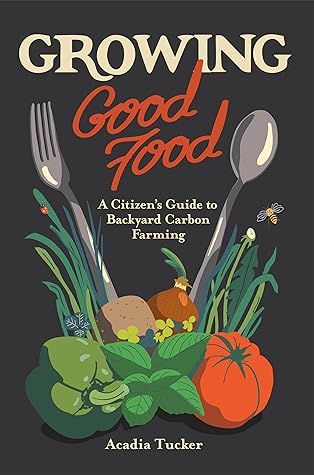
Growing Good Food by Acadia Tucker

Growing Good Food: a citizen's guide to backyard carbon farming by Acadia Tucker

Most people are familiar with WWII Victory Gardens where the government encouraged citizens to grow their own food so that more food could be sent overseas to our troops. Acadia Tucker has the idea for citizens to grow their own Climate Victory Garden to help the land absorb more carbon dioxide which helps with climate change. I would also add that whatever your motivation growing your own food is fun and empowering - and you KNOW where your food comes from and don't have to worry about the next lettuce recall if you're growing your own. In this short, but information-packed book, Tucker gives tips on starting your own garden in whatever available space you have. There is a large section in the book with suggested perennial vegetables and some popular annuals like squash and cucumbers. Throughout the book there are lots of charts, drawings, and other inserts to help you plan out and benefit from your own backyard garden. This is a great book for a beginner, but also has a lot to offer a more experienced gardener as well.

A quote I liked:

"Researchers at the Rodale Institute calculated that replacing conventional farming practices around the world with regenerative ones would allow us to sequester 100 percent of annual global carbon emissions." (p. 4)


On Call in the Arctic by Thomas J. Sims

On Call in the Arctic by Thomas J. Sims

Dr. Tom Sims was working an internship at San Joaquin hospital in California in 1971. This was during the Vietnam war, but his draft had been deferred by college, then by his hospital internship, but now the military wanted to rescind his deferment and send him to be a MASH surgeon in Vietnam. At the time Dr. Sims had a wife who was pregnant and a two-year-old daughter. When a coworker gives Dr. Sims an out he jumps at the opportunity - he can serve as a PHS physician in Alaska under a military contract helping care for remote Native communities AND bring his family with him. So, Dr. Sims, his wife Pat, their daughter Chantelle, and a menagerie of pets all pack up and move to Nome, Alaska. Dr. Sims and his family weren't quite prepared for just how rustic Nome would be, but they make the best of it. Dr. Sims being the only physician for several miles around has some interesting experiences - an early one was performing an emergency appendectomy by flashlight when the power goes out at the hospital. For all the hardships, there was also a lot of good during their time in Alaska - they made friends and experienced things many people would never experience outside Alaska. But, the remoteness and some political issues between the private hospital and PHS push Dr. Sims and his family to transfer the Anchorage for the rest of his military service. Dr. Sims does a great job in telling the stories of his family's time in Nome. The book reads almost like fiction and has a lot of action. I do wish there had been some follow up about some of the more memorable cases, but overall it was a great book that I just could not put down.


All the Wild Hungers by Karen Babine

All the Wild Hungers: a season of cooking and cancer by Karen Babine

When Karen Babine's mother is diagnosed with a rare form of cancer her instinct is to start cooking. She tries new recipes, old family recipes, anything that she thinks might entice her mother to eat something. All the while she vacillates between hope and crippling fear that her mother might not survive the cancer treatments. As a reader her tone is rather dark, so I was almost certain that it would turn out her mother didn't survive, but (spoiler alert) she does. Babine's writing is more literary than memoir-esqe, but I did enjoy her musings on family, food, medicine, and health. I was also wildly jealous that she managed to find not one, but two or more Le Creuset cookware pieces in thrift stores for $5! Overall, it wasn't amazing, but it was a quick, interesting read that turned out more hopeful than I had anticipated.


The Giver of Stars by Jojo Moyes

The Giver of Stars by Jojo Moyes

When Alice Wright marries Bennett Van Cleve she is hoping to escape her stifling life in England. But, once she's back in Bennett's hometown of Baileyville, Kentucky she quickly realizes that small-town Kentucky life can be just as stifling and living with her father-in-law doesn't help things either. When a pack horse library is started Alice volunteers mainly to get out of the house, but the ladies she works with will change her life in several ways. Alice is initially intrigued by Margery, an independent woman who lives on her own and by her own rules. When Alice experiences a traumatic event she is able to turn to Margery and when Margery is arrested all the traveling librarians come together to help her. Each woman grows and changes because of working for the pack horse library and the families they are able to reach with books are also changed and empowered by the knowledge they now have access to. A beautiful story with some unforgettable characters that highlight a real program from the WPA that Eleanor Roosevelt created to promote literacy to rural areas.

I already love Jojo Moyes and this might be my new favorite by her. Some of the reviews criticize the end of the book (the trial) and all of the drama, but I felt like she did such a good job with the characters and the story that it just worked. Were there a LOT of dramatic events in the book - yes, but honestly nothing that seems way out of the realm of possibility for that place and time. Were some of the characters a little ahead of their time in their thinking - yes, but again change has to come from somewhere and if no one thought differently how would we ever progress? Did all the characters end up with a pretty happy ending - yes, but this is why this is fiction. Overall, I LOVED the book and especially Alice. I hope that Moyes might give us a sequel to this one down the road.

Thursday, February 6, 2020

January 2020 Cookbook Reviews

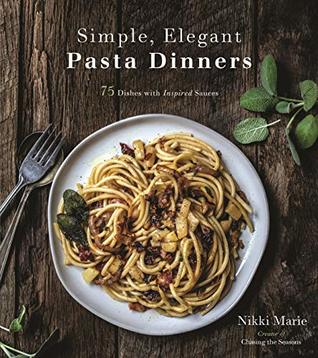
Simple, Elegant Pasta Dinners by Nikki Marie

Simple, Elegant Pasta Dinners: 75 dishes with inspired sauces by Nikki Marie

Pasta is one of the easiest and most versatile ingredients to cook with. It can be a side dish or a main dish and can be made fresh or purchased dried. In this cookbook Nikki Marie gives 75 seasonally inspired pasta dishes. She starts with an introduction that answers many common pasta questions - does the shape matter? (yes), should you add oil to the pasta water? (no), etc. Then she walks through how to make basic pasta dough with several very helpful pictures. The recipes in the book can be used with fresh or purchased, dried pasta. I really like that the recipes are organized by season and at the beginning of each section Marie talks about what is in season and how the recipes reflect that season. Overall, there were several recipes I want to try and this is a great cookbook if you want to expand your pasta nights.


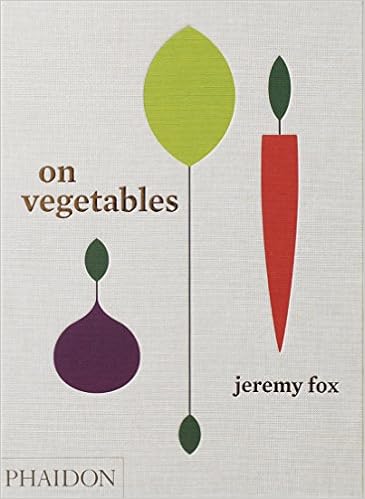
Image result for on vegetables: modern

On Vegetables by Jeremy Fox

In the Introduction Jeremy Fox talks about his success with Ubuntu, the first vegetarian restaurant to earn a Michelin star. He was seen as a brilliant chef who followed a "seed-to-stalk" philosophy with using every part of the plant in his cooking. But, Fox was miserable and on several medications for anxiety and stress. After walking away from Ubuntu and taking some time to figure things out Fox ended up working as the chef at Rustic Canyon. This cookbook showcases the food Fox cooks at Rustic Canyon - still highlighting every part of the vegetables, but not as pretentious as what he was known for at Ubuntu. His story is sad and compelling and definitely gave me more insight into the author than many cookbooks, but overall the recipes are still too fancy for the average home cook. I did like that he highlighted several of the farms Rustic Canyon buys from and gives several pages of tips for buying the best quality produce yourself. But, overall there weren't any recipes I wanted to try from this one.


The Goodful Cookbook by Buzzfeed

The Goodful Cookbook: simple and balanced recipes to live well by Buzzfeed

The Goodful Cookbook's goal is to help you eat good, healthy food. In the Introduction the goal for this cookbook, how to stock your kitchen, they also explain some of the more common diets (keto, vegan vs. vegetarian, etc.), they also cover sustainability and what is in season. Each recipe is noted if it's vegan, vegetarian, gluten-free or dairy-free, but there are notes about how to adjust any recipe for your eating habits/diet. Normally any cookbook that promotes vegan/gluten-free/etc. recipes is not for me, but I feel like this cookbook has a LOT of really great options and recipe ideas. There are several recipes I'd like to try, so if you're trying to start 2020 by eating a little healthier you might get some good ideas here.


Gifts from the Modern Larder by Rachel De Thample

Gifts From the Modern Pantry by Rachel De Thample

Rachel de Thample has put together a beautiful book with lots of handmade treats and gifts. The book is divided into gift categories - infuse, ferment, pickle, jam, bake, temper, and dry. At the beginning of each section she gives an overview of that technique and tips. In the Introduction she also gives gift suggestions from the book for various occasions. Overall, there were some good ideas and there are a few things I want to try.

January 2020 Reviews

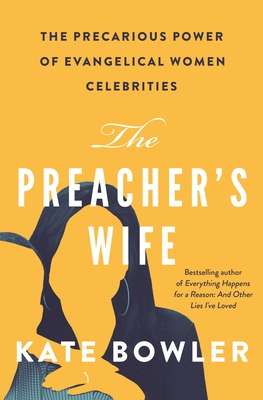
The Preacher's Wife by Kate Bowler

The Preacher's Wife: the precarious power of evangelical women celebrities by Kate Bowler

In The Preacher's Wife Kate Bowler explores how women in evangelical churches and circles have managed to carve out their own place in the world of the evangelical celebrity. While most evangelical churches don't allow women to be in positions of authority, many of the women in this book have managed to circumvent that rule, at least on the surface. But, because their power hinges on the men in their lives, that power is precarious and the double-standards and rules for women are overwhelming. Bowler explores the various ways evangelical women's precarious power plays out - the preacher, the homemaker, the talent, the counselor, and the beauty, but almost never in the pulpit or leading an entire church. The Preacher's Wife is meticulously researched, yet very readable. It took me longer than it should have to get through this book because it was also a hard read in a lot of ways. In the evangelical church there are two views of women: egalitarian (men and women are equal in all ways) and complementarian (belief that God has ordained men as the head of the family and the church and women cannot lead men in any way). I am firmly in the egalitarian camp, but I'm also an evangelical Christian. Reading about how so many evangelical churches continue to treat women as second class Christians is just hard to read for me. I truly don't understand why Christian women would work so hard to keep themselves in a lesser position when I do NOT believe that is what God intends for us. But, Bowler does a great job with this topic and it is very eye-opening. I'm hopeful that in another few decades we'll look back and see how evangelical women have made more strides in equality within the Church.

Some quotes I liked:

"For women, this is an era of almost - almost feminist, almost patriarchal, almost progressive, and almost regressive - and in these pages we hold the prism of their experiences up to the light. The lives of public women invite us to ask again what Americans expect from women in the spotlight; and whether they will ever grow used to women's presence in the main seats of power, in the pulpit, in the corner office, or in the White House. The women of megaministry are exceptional, but they are not simply exceptions. They are religious reflections of almost-mythic American ideals of women as wives and mothers, pillars and martyrs, in a culture divided over whether women should lean in or opt out." (p. 16)

"The roles of wife and mother took on a decidedly populist tone in Christian circles with the campaign to stop the Equal Rights Amendment (ERA). In 1970, the National Organization for Women (NOW), founded by Betty Friedan, stepped up public pressure to amend the American constitution to include a ban on sex discrimination. Within two years the House of Representatives and the Senate had adopted an amendment that then had to be ratified by thirty-eight states. But by the mid-1970s, a vocal and well-organized STOP ERA effort effectively made celebrities out of two women who professionalized their roles as politically savvy mothers. Phyllis Schlafly, a lawyer and Catholic mother of six, found the Eagle Forum, and Beverly LaHaye, mother of four and wife of famous pastor Tim LaHaye, launched the Concerned Women for America..." (p. 73)

"'It's part of why our church doesn't allow husbands and wives to be on staff together. I think it's been a great thing because it prevents too much power from being concentrated in one place. It's also our rule that only one person from every family can be on staff, so a son can't be on the same board as his father, for instance.' Many of the largest non-denominational churches, especially from prosperity gospel traditions, did not have strong governing institutions outside of the pastoral family, and, as Donna [of Westover Church in Greensboro, NC] observed, this policy asked a great deal from both husband and wife." (p. 108)

"A counseling degree offered women in evangelical contexts a large measure of freedom. These degrees, or corresponding degrees in social work, qualified them for work in a variety of roles, from religious schools, private practice, children and family services, hospitals, and funeral homes to homeless shelters. In a congregational setting, the work of counseling did not seem to trigger the same concerns around authority and oversight." (p. 171)

"As bearers of children, women's bodies are gatekeepers of life and death. In a culture largely reluctant to make news of miscarriage and stillbirth public, women's ministries became a sanctuary for the enormous range of emotions that arise when some lives begin and others end...The separate sphere of women's ministry was opened to reveal a place of holy sorrow." (p. 179-80)

"Likewise, Beverly LaHaye initially felt sorry for a woman being berated by her husband for looking tired on a date, but then sympathized with the husband for not having a wife with a little more pride in herself. 'What a pity to see a Christian woman who has developed her inner beauty but has done nothing to the frame she must house it in,' she fretted. The common argument given was that men were visual creatures, which made women's appearance a part of her wifely duties. Her beauty and sexuality were not her own...[and when male pastors cheated or pursued infidelity] There was always a woman to blame for a man who strayed." (p. 222-23)

"On a more basic level, these concerns about dangerous sexuality made it difficult for women to operate in ministry without fear of the 'appearance of evil,' a commonly used extra-biblical phrase to indict unsupervised male-female interaction. Though women were lauded as keepers of the home, they were often treated as temptresses. Take, for instance, the common practice of refusing to allow a man and a woman to be unchaperoned. Billy Graham famously made it a policy that he would never be alone with a woman other than his wife...However, in practice, it had two significant effects. First, the consequence of sex-segregated spaces was that women would find it very different to gain powerful mentors...Secondly, it sexualized interactions between the genders." (p. 227)

"As we have seen in each chapter, the heights to which Christian celebrity women could rise depended on their ability to master the rules of complementarianism and capitalism, finding financial stability without appearing to be theologically overreaching. Women found a public voice in credentialing themselves as wives, mothers, and homemakers. From Elisabeth Elliot to Joanna Gaines, audiences rewarded those who opened the door to let them into their famously Christian homes. The title of 'wife and mom' was so powerful that even the popular writer Rachel Held Evans was rejected by a Christian publisher on the grounds that, since she was not yet a mother, she could not write authoritatively about Christian womanhood." (p. 243)

[When Beth Moore responded to the Donald Trump audio tape of "grab 'em by the pussy."] "She [Tweeted]: 'Try to absorb how acceptable the disesteem and objectifying of women has been when some Christian leaders don't think it's that big a deal. I'm one among many women sexually abused, misused, stared down, heckled, talked naughty to. Like we liked it. We didn't. We're tired of it.'...For her boldness, she was asked by male evangelical leaders to repent, and she was deserted by some of her female supporters. Attendance at her events dropped, and some women swore they would never buy another of her bible studies again." (p. 245-46)


Searching for Sylvie Lee by Jean Kwok

Searching for Sylvie Lee by Jean Kwok

Sylvie and Amy Lee are sisters, but grew up very differently. Sylvie spent the first 9 years of her life in the Netherlands being raised by her grandmother, aunt, and uncle while her parents got established in the United States. When Amy was 2 years old her parents brought Sylvie back to live with them in New York, but the time apart was hard on Sylvie who felt like a stranger to her parents. Fast forward 20+ years and Sylvie disappears while back in the Netherlands for her grandmother's funeral. Amy flies out there to try to find out what happened to Sylvie and uncovers a huge family secret that may explain Sylvia's disappearance.

I REALLY liked Jean Kwok's previous two books, but I did not like this one. The beginning with Sylvie's disappearance is interesting, but once you start finding out more about what happened during her visit to the Netherlands it was just a lot of really weird stuff that seemed very forced. The pseudo-sexual relationship between Lukas and Estelle is SUPER weird. In fact all the Netherlands characters are VERY VERY odd and just didn't make sense or help the story. The ending with what really happened to Sylvie is the WORST. Not to give anything away, but it's not a good ending. This was just a weird, weird book and I would not recommend it. I was interested enough in the story despite the weirdness to keep reading and find out what happened to Sylvie though.


The Old Farmer's Almanac Vegetable Gardener’s Handbook by Old Farmer’s Almanac

The Old Farmer's Almanac Vegetable Gardner's Handbook by Old Farmer's Almanac

Even though I'm a semi-experienced gardener, this is a book that I might buy because it had so much helpful information. The first part of the book "Ground Rules" goes over different types of gardening (raised beds, container gardening, etc.), testing and building soil, composting, starting seeds and knowing when to plant. Part 2 covers Vegetables and Growing Concerns. In the Vegetables section each vegetable gets a few pages that covers planting, care, common diseases and pests, and harvest. In Growing Concerns dealing with disease and pests are covered in more detail and watering and fertilizing are also covered. There are also several journal pages throughout the book for keeping notes about your garden. There is a LOT of really good, helpful information in this book for a beginner or more experienced gardener as there is always more to learn with gardening.


Digital Minimalism by Cal Newport

Digital Minimalism: choosing a focused life in a noisy world by Cal Newport

Digital minimalists aren't Luddites who refuse to use technology. Instead they are people who are intentional about how they use technology, instead of letting technology use them. Newport's book is a call to Digital Minimalism in our tech-saturated world. Newport feels like we need to go beyond recent calls for "digital sabbaticals" and instead examine what digital tools we want to use, for what purposes, and when to use them. The book is divided into two parts - Foundations and Practices. Foundations describes our current tech-obsessed culture, digital minimalism, and Newport's "digital declutter" plan. Practices explores 4 lifestyle practices of digital minimalists - spend time alone, don't click "like," reclaim leisure, and join the attention resistance. This is a really interesting book. While I do use my smartphone and also have a tablet and laptop at home, I absolutely HATE seeing people just glued to their phones ALL THE TIME. I'm a big reader and I've had several people comment to me things like, "You're the only person who ever brings a book [to a waiting room]." But, I am still sucked in to mindlessly scrolling through Facebook or Instagram on my phone - habits I'd like to change and hence reading this book. I'm probably not too far away from being a digital minimalist, but this book has definitely inspired me to think about how I use technology and how I can be more selective with what I choose to use.

Some quotes I liked:

"Because digital minimalists spend so much less time connected than their peers, it's easy to think of their lifestyle as extreme, but the minimalists would argue that this perception is backward: what's extreme is how much time everyone else spends staring at their screens." (p. xv)

"Here, for example, is how Kate described [her digital declutter] experience to me: 'The day the declutter was over, I raced back to Facebook, to my old blogs, to Discord, gleeful and ready to dive back in - and then, after about thirty minutes of aimless browsing, I kind of looked up and thought...why am I doing this? This is...boring? This isn't bringing me any kind of happiness. It took a declutter for me to notice that these technologies aren't actually adding anything to my life.'" (p. 80)

"To put this in context, previous technologies that threatened solitude, from Thoreau's telegraph to Storr's car phone, introduced new ways to occasionally interrupt time alone with your thoughts, whereas the iPod provided for the first time the ability to be continuously distracted from your own mind." (p. 100)

"The smartphone provided a new technique to banish these remaining slivers of solitude: the quick glance. At the slightest hint of boredom, you can now surreptitiously glance at any number of apps or mobile-adapted websites that have been optimized to provide you an immediate and satisfying dose of input from other minds." (p. 101)

"Young people born between 1995 and 2012, a group Twenge calls 'iGen,' exhibited remarkable differences as compared to the Millennials that preceded them. One of the biggest and most troubling changes was iGen's psychological health. 'Rates of teen depression and suicide have skyrocketed,' Twenge writes, with much of this seemingly due to a massive increase in anxiety disorders. 'It's not an exaggeration to describe iGen as being on the brink of the worst mental-health crisis in decades.'" (p. 106)

"'[Thoreau's] intention was not to inhabit a wilderness,' he writes, 'but to find wildness in a suburban setting." (p. 110)

"In recent years, as the boundary between work and life blends, jobs become more demanding, and community traditions degrade, more and more people are failing to cultivate the high-quality leisure lives that Aristotle identifies as crucial for human happiness. This leaves a void that would be near unbearable if confronted, but that can be ignored with the help of digital noise. It's now easy to fill the gaps between work and caring for your family and sleep by pulling out a smartphone or tablet, and numbing yourself with mindless swiping and tapping...The most successful digital minimalists, therefore, tend to start their conversion by renovating what they do with their free time - cultivating high-quality leisure before culling the worst of their digital habits." (p. 168-69)

"We might tell ourselves there's no greater reward after a hard day at the office than to have an evening entirely devoid of plans or commitments. But we then find ourselves, several hours of idle watching and screen tapping later, somehow more fatigued than when we began...if you instead rouse the motivation to spend that same time actually doing something - even if it's hard - you'll likely end the night feeling better." (p. 176-77)


The Complete Brambly Hedge by Jill Barklem

The Complete Brambly Hedge by Jill Barklem

This is a very cute collection of the Brambly Hedge stories. I was familiar with Brambly Hedge, but I didn't realize how old the stories were - the first four books were published in 1980! I LOVE the detailed illustrations, especially the ones that show a larger overview of the whole tree stump/home with all the little rooms and passageways. It reminds me of the Redwall series (but for younger kids). My favorite two stories were The High Hills and The Sea Story - I wouldn't mind if Barklem did a few stories from the Saltapple mice family's perspective. Overall, a cute collection of stories with wonderful illustrations!


Adorning the Dark by Andrew       Peterson

Adorning the Dark: thoughts on community, calling, and the mystery of making by Andrew Peterson

I love Andrew Peterson and think he is one of the most creative people out there right now. He's a talented singer/songwriter, has written both fiction and non-fiction books, draws visual art, and has created a community for other like-minded Christian artists in the Rabbit Room and the Hutchmoot conferences. Adorning the Dark isn't a manual for how to be a creative success, but more about how as a Christian we are all (artist/creative or not) called to try to reveal God's love in the current darkness of our day. His way of doing that is mostly through music, but also through writing. His advice for aspiring songwriters/authors/artists - just keep doing something. Because something is always better than nothing and that something might turn into the thing that reaches someone or connects you to the right person at the right time. Reading this book feels like you're just having a long conversation with Andrew and like I always do after seeing Andrew perform I feel inspired. So, whatever your talents are do something to glorify God today.

Some quotes I liked:

"I began to understand the peril of asking God to let you write songs that would comfort the lonely and brokenhearted - peril, because the only way to do that is to walk through the dark forest of loneliness and heartbreak." (p. 90)

"I decided early on that I would rather my children listen to a great song by someone who wasn't a Christian than a bad song by someone who was, so my kids grew up on not just Switchfoot and Rich Mullins but also Paul Simon and Counting Crows and James Taylor...Some well-meaning soul gave Skye a CD one day and I recoiled with horror when I saw the hot-pink cover. It was a CD of 'tween' praise and worship songs and the covered featured four well-meaning teenybopper girls with flying-V electric guitars...I planned to sneak the CD away before Skye had a chance to listen to it. But, as if in slow motion, she grabbed the CD and tore off the cellophane, then jammed it into the minivan's player...Sure enough, the music was terrible, and I drove sulkily, hands at ten and two, trying to figure out a way to repair the damage. Before twenty seconds had passed, little eight-year-old Skye ejected the CD with a wince of distaste and said, 'I don't like it. Can we just listen to Alison Krauss instead?' That, dear reader, was one of my greatest parenting victories." (p. 133-34)


The Nickel Boys by Colson Whitehead

The Nickel Boys by Colson Whitehead

In the 1960's in Tallahassee, FL Elwood Curtis takes Martin Luther King, Jr.'s words to heart. He truly believes that any day now Jim Crow laws will disappear and he will be seen "as good as anyone else." But, being in the wrong place at the wrong time puts Elwood in the Nickel Academy, a "reform school" that is more torture chamber than school or even prison. In Nickel, Elwood meets Turner who's there for the second time. Elwood struggles to align his deeply held beliefs in equality and justice with the reality of Nickel, while Turner has learned how to carve out a safer spot for himself at Nickel by flying somewhat under the radar of the staff. When Elwood decides to seek justice during a state inspection he ends up putting himself and Turner at great risk - and only one of them will survive their time at Nickel.

As much as I loved The Underground Railroad it was a hard read. Nickel Boys is also a hard read, but in a different way. It's not nearly as graphic as The Underground Railroad, but it's almost worse in that it's over a hundred years later and white people are still working overtime to try to keep blacks "in their place" and kill them when they try to fight back or stand up. I think a lot of white people want to act like after slavery ended things were better and just want to ignore the whole Jim Crow history of our country. In order for things to truly change we have to acknowledge our history - even the hard parts - and Whitehead does an amazing job of shining a light on something many people would like to ignore or forget.


It's Okay Not to Be Okay by Sheila Walsh

It's Okay Not to Be Okay: moving forward one day at a time by Sheila Walsh

Everyone has experienced a moment when you wish you could start over or suffered a major loss. Whatever decisions or circumstances led to that moment, Sheila Walsh wants to encourage you to face the pain head on and start again. For many Christians it's hard to admit that you are not okay and are struggling, but throughout the Bible God tells us that He is there for us and will never let us down. In It's Okay Not to Be Okay Walsh walks the reader through practical steps to deal with whatever pain or loss you're going through and find better ways to connect with God.

I picked this book up because I really loved her previous book In the Middle of the Mess, but this one didn't resonate with me as much. While her message is good, it felt somewhat repetitive to me. But, maybe for the right reader that is exactly what they need to hear/read right now. I did like that each chapter ends with some questions for journaling/reflecting and also Bible verses to remind ourselves of who God says we are.

A quote I liked:

"'Look at where you spend most of your time and that will tell you what matters to you.' I thought about that for a while. Some seasons of life are more demanding than others...But if you're like me, we find time for what we think we need to relax. You might love to bury your face in a good book with the bathroom door closed! Or if you have an allegiance to a particular television show, you'll make time for it. I've had to ask myself, Does what I'm doing with my spare time refresh me or am I simply zoning out? Now, don't get me wrong: I think at times zoning out is just what we need, but it doesn't work toward the renewing of our mind. That's where the choices we make determine whether we're working with the Holy Spirit or not." (p. 68-9)