Wednesday, January 4, 2023

November 2022 Cookbook Reviews


Super Soul Food with Cousin Rosie by Rosie Mayes

I really liked Mayes previous cookbook I Heart Soul Food, but I didn't like this one as much. It felt like almost all the recipes were the stereotypical SUPER unhealthy soul food recipes. Like LOTS of fried stuff and several recipes with 3-5 different kinds of cheese. Don't get me wrong - I love fried food and cheese! But, when the whole cookbook is like that it felt like I was going to gain weight from just reading all the recipes. There were definitely a few recipes I'd like to try, but I would say save these recipes for special occasions or when you have a crowd to feed.


Delicious Gatherings by Tara Teaspoon

I liked Tara Teaspoon's previous cookbook, so I wanted to check out this one. This one is more geared toward celebrations/holidays. The first section of recipes is "gather-around dinners" and has 5 full menus for specific types of celebrations. Then the rest of the recipes are organized by the normal categories like sides, main dishes, breakfast, and sweets/dessert. There are definitely several recipes I'd like to try from this one. I'll keep my eye out for future cookbooks by Teaspoon for sure.


Milk Street: Cook What You Have by Christopher Kimball

I've liked some of the other Milk Street cookbooks, so I was interested to check this one out too. I really like the premise that cooking doesn't have to be complicated with tons of exotic ingredients - you can Cook What You Have. The recipes are organized by the staple item like bean, chicken, eggs, etc. I also liked that most of the recipes include options like add this spice OR that one, giving more options for what you might already have at home. Overall, looks like a solid cookbook with lots of options for quick, easy meals.


Listen to Your Vegetables by Sarah Grueneberg 

While I am not a vegetarian, I do love vegetables and am happy to eat a veggie-focused meal. Sarah Grueneberg's love of vegetables came from spending time on her Grandparent's farm in Texas during her summers growing up. Then when working in restaurants her love was revitalized because you want to showcase the best quality ingredients and when vegetables are at peak ripeness you want them to shine. The recipes are all organized by vegetable and include an introduction for each one - how to best source it, etc. There were several recipes I'd like to try. I also really loved that in the Introduction she included a section called "A Love Letter to Bees" highlighting the importance of bees with food. Overall, a beautiful cookbook with lots of great photos.


Go-To Dinners by Ina Garten

I've really come to love Ina Garten and use several of her recipes all the time. So, when I saw she had a new cookbook coming out I knew I wanted to check it out. Go-To Dinners was partially inspired by the recent COVID pandemic when Garten wasn't throwing dinner parties, but rather cooking smaller meals for her and her husband. The recipes are organized by categories like drinks & appetizers, light dinners, vegetables & sides, etc. There are lots of great pictures and tips for what you can make ahead, what freezes well, etc. There are several recipes I'd like to try, so another great cookbook by the Barefoot Contessa.


Savory Baking by Erin Jeanne McDowell

This is a cookbook I might have to buy! While Erin McDowell loves sweets and as a baker makes plenty of them, she also likes the savory side of baking. And that is what this whole cookbook is about. There are seven chapters of recipe categories like easy and essential bakes, breads, pastries, etc. Each recipe includes lots of helpful tips, variations you can do with that recipe, and also a few sweet bakes thrown in as well. I could definitely see this cookbook being one you would refer back to over and over. There are TONS of recipes I'd like to try! If you are interested in more savory baking or just want to change things up a little from sweet to savory this is definitely a cookbook to check out!


November 2022 Reviews


Little Brother: love, tragedy, and my search for the truth by Ben Westhoff

In 2005 Ben Westhoff signed up for the Big Brothers Big Sisters program in St. Louis, MO. He was paired with 8-year-old Jorell Cleveland who was living with his Dad and several other siblings. He and Ben truly bonded and Jorell came to Ben's wedding, stayed with Ben and his wife, and eventually even babysat for his kids. But, when Jorell was 19 he was murdered on the street not far from his house. Random gun violence wasn't uncommon in Ferguson, MO and surrounding areas, but this obviously hit Ben hard. As an investigative journalist, Ben decided to dig into Jorell's murder and see if he could figure out who had murdered Jorell. But, what he found was hard to swallow. Ben always tried to see the best in Jorell, but he found that Jorell was using and selling drugs and had several illegal guns. He also seemed to have a very short fuse, which Ben had never witnessed. As Ben dug into who could have murdered Jorell he struggled with what else he could have done as Jorell's "Big Brother" and also how does someone deal with the level of trauma and everyday violence that Jorell and his family and friends experienced. There are no easy answers for solving the epidemic of gun violence in poor, urban areas which this book definitely highlights.

Some reviews complained about Westhoff's "white savior complex", but I didn't see it as anything more than him processing Jorell's death and thinking about what, if anything, he could have done more or differently to help him. I think regardless of race, if you don't grow up in the kind of violent poverty that Jorell did it would be impossible to understand what that life is like. There was just SO MUCH needless violence that anyone living in that area would have some level of trauma even if somehow they didn't know anyone personally who had been shot or killed. But that mindset is extremely hard to get out of even for people who did physically leave the area. It's a very hard issue with no real solutions or answers. Jorell had people in his life who cared about him and wanted better for him - that's why his father enrolled him in the Big Brothers program. But, in the end the pull of the neighborhood was just too much. Westhoff's relationship with Jorell gave him a unique angle to look at this issue, but it's still a hard book without much in the way of solutions. Although, Westhoff did figure out who Jorell's likely murderer was by the end of the book.

Some quotes I liked:

[Ben accompanied Joe (Jorell's Dad) to a parent/teacher conference at Jorell's high school] "'He's a great student,' she said. 'He just sits quietly in class and doesn't say anything.' So that was it. Jorell was in the teacher's favor not because he was excelling, but because he wasn't disturbing anybody. He wasn't likely learning anything, but because he wasn't causing trouble she was going to pass him." (p. 81)

[An example of the ridiculously senseless violence escalating over minor arguments] "As their argument escalated, Jorell grabbed one of his guns and followed Montrel into Mike and Iesha's room. 'He pulled the fucking trigger!' Montrel said. Fortunately, the gun didn't have its [magazine] in, and no bullets were fired. 'He was trying to scare me. Jorell had reached a point in his life, he wasn't taking no bullshit from nobody.' Montrel actually respected him for this, and, as unlikely as it sounds, the pair quickly reconciled. The very next day, in fact, Montrel was once again at the Cleveland house...Jorell wore a sheepish expression and apologized for the gun incident the previous day. 'Man, we ain't even gotta talk about that,' Montrel responded. 'You don't have to apologize. We brothers.'" (p. 171-72) [This whole encounter BLEW MY MIND. Jorell would have murdered Montrel if he'd grabbed a loaded gun. Yet, they were friends before and continued to be friends afterward. If this is "normal" then what isn't normal when it comes to senseless violence?!]


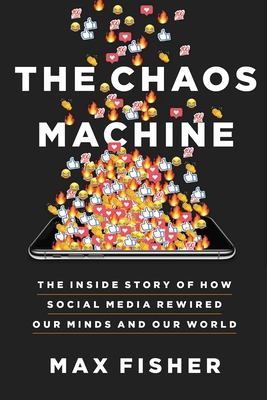
The Chaos Machine: the inside story of how social media rewired our minds and our world by Max Fisher

The Chaos Machine is an in-depth look at just how insidious social media can be on a society. Fisher explores the beginning of the social media entities and how from the very beginning the ethos of make the most money possible = keep people on any/all social media platforms as long as possible. But, the two most terrifying things about this in my opinion are 1) the algorithms are designed to pull the most controversial topics/pages/groups to the top of the feed and 2) AI is changing the algorithms all the time, so these companies may not even know what exactly their algorithms are doing. There is plenty of other terrifying information throughout the book including lots of real world examples of social media inspiring violence and totalitarian governments. Another aspect I found particularly scary was that some of the dark corners of the internet where neo-Nazis and extreme misogynists would hang out are now becoming more mainstream thanks to social media algorithms. And because of how social media works it makes it appear that these views are much more mainstream and held by a larger percentage of the population than they actually are - but also people's views ARE becoming more extreme, again, thanks to social media's relentless barrage of extreme content coming your way.

Honestly, when I first heard that Facebook or social media had influenced the 2016 election I was skeptical. But, after reading this book I very much understand the reality of the situation. Other than getting rid of the algorithms and just going back to the OG Facebook of a chronological feed of your friends vacation pictures, I don't think this will change until enough people get sick of it and quit social media. And yet, that's hard to do because this is now how we "connect" with people for the most part. And you have the whole other aspect of social media being designed to be addictive. There are no easy answers. But, it's infuriating to read how the leadership of these social media companies repeatedly choose money over people - and not just in a generic way, but knowing that people are being threatened, killed, etc. and still choosing to keep making money instead of looking at what their companies are doing. This is book that everyone on any social media platform should read.

Get ready, there are LOTS of quotes I liked:

[Successful Silicon Valley start-up creators] "'They all seem to be white male nerds who've dropped out of Harvard or Stanford and they absolutely have no social life,' John Doerr, a legendary tech investor, once said of successful founders, calling this the 'pattern' he used to select investees...Peter Thiel, a founder of PayPal and the first outside investor in Facebook, had urged elevating antisocial contrarians. 'Individuals with an Asperger's-like social ineptitude seem to be at an advantage in Silicon Valley today,' he wrote in an influential book on startups. 'If you're less sensitive to social cues, you're less likely to do the same things as everyone else around you.'...In reality, those results, Doerr's 'pattern' bearing out, simply reflected a tech culture that was hostile to anyone outside of a long-held male geek misanthrope ideal." (p. 49)

"'Gamergate seems to have alerted racist, misogynist, homophobic internet trolls to the level of power they actually possess. Which is definitely a good thing,' Andrew Anglin, a longtime 4chan poster, wrote on The Daily Stormer, a prominent neo-Nazi forum he'd founded in 2013. He urged his followers to coopt Gamergate and the broader social web, launching 'the rise of the Nazi troll army.'...The internet's foundational ideals, while noble, had led tech companies to embrace a narrow and extreme interpretation of free speech that was proving dangerous..." (p. 74)

"Like most, I had not initially considered Gamergate a harbinger of the world to come, having missed its implications at the time, I told [Brianna] Wu. 'I will tell you straight up,' she said, 'I also underestimated it. I could not have foreseen that all of our politics were going to become Gamergate. And of course they were.' She wished she'd anticipated, she said, 'the number of people that are taking up Gamergate tactics. I want to be clear, it's mostly the right doing this. But there are plenty of people on the left that I've been horrified to see have taken up the same kind of tactics of outrage and mob culture and shame.'" (p. 80)

"Public life itself was becoming more fiercely tribal, more extreme, more centered on hating nad punishing the slightest transgression. 'I'm telling you, these platforms are not designed for thoughtful conversation,' [Brianna] Wu said. 'Twitter, and Facebook, and social media platforms are designed for: 'We're right. They're wrong. Let's put this person down really fast and really hard.' And it just amplifies the division we have.'" (p. 93)

"As psychologists have known since Pavlov, when you are repeatedly rewarded for a behavior, you learn a compulsion to repeat it. As you are trained to turn all discussions into matter of high outrage, to express disgust with out-groups, to assert the superiority of your in-group, you will eventually shift from doing it for external rewards to doing it simply because you want to do it. The drive comes from within. Your nature has been changed...All it takes is regular scrolls through your anger-filled feed not only to make you feel angrier while you're online, but also to make you an angrier person." (p. 156)

"Karsten Muller and Carlo Schwarz, researchers at the University of Warwick in the UK, had gathered data on every anti-refugee attack in Germany over a two-year span, 3,335 in all. It had been a volatile period, as Europe's refugee crisis had been followed by a rise in far-right politics...In each incident in the study, the researchers analyzed the respective local community, using a handful of key variables. Wealth. Demographics. Political allegiance. Number of refugees. History of hate crimes. One thing stuck out. Towns with higher-than-average Facebook use reliably experienced more attacks on refugees. This held true in virtually any sort of community: big or small, affluent or struggling, liberal or conservative. The uptick did not correlate with general web usage; it was particular to Facebook. Their data boiled down to a breathtaking statistic: Wherever per-person Facebook use rose by one standard deviation above the national average, attacks on refugees increased by about 35 percent. Nationwide, they estimated, this effect drove as much as 10 percent of all anti-refugee violence." (p. 184)

"In an unintended 2015 test of this, Ellen Pao, still Reddit's chief, tried something unprecedented: rather than promote superusers, Reddit would ban the most toxic of them. Out of tens of millions of users, her team concluded, only about 15,000, all hyperactive, drove much of the hateful content. Expelling them, Pao reasoned, might change Reddit as a whole. She was right, an outside analysis found. With the elimination of this miniscule percentage of users, hate speech overall dropped an astounding 80 percent among those who remained. Millions of people's behavior had shifted overnight. It was a rare success in combating a problem that would only deepen on other, larger platforms, which did not follow Reddit's lead." (p. 189)

[Joel] "...Kaplan [a former Bush administration official and lobbyist] successfully pushed to shelve one of the company's internal reports finding that the platform's algorithms promoted divisive, polarizing content. He and others objected that addressing the problem would disproportionately affect conservative pages, which drove an outsize share of misinformation. Better to let users be misinformed...Facebook's courtship of Republicans, who retained control of the levers of federal oversight throughout 2018 and 2019, was exhaustive. It hired Jon Kyl, a former Republican senator, to produce a report on any anti-conservative bias in the platform...Zuckerberg hosted off-the-record dinners with influential conservatives, including Fox News host Tucker Carlson, who had accused Facebook of seeking 'the death of free speech in America.'...Facebook announced it would allow politicians to lie on the platform and grant them special latitude on hate speech, rules that seemed written for Trump and his allies." (p. 258-59)

"I came to think of Facebook's policy team as akin to Philip Morris scientists tasked with developing a safer, better filter. In one sense, cutting down the carcinogens ingested by billions of smokers worldwide saved or prolonged lives on a scale few of us could ever match. In another sense, those scientists were working for the cigarette company, advancing the cause of selling cigarettes that harmed people at an enormous scale. I was not surprised, then, that everyone I spoke to at Facebook, no matter how intelligent or introspective, expressed total certainty that the produce was not innately harmful. That there was no evidence that algorithms or other features pulled users toward extremism or hate." (p. 262)


What My Bones Know: a memoir of healing from complex trauma by Stephanie Foo

Stephanie Foo grew up in an extremely abusive household and both of her parents had abandoned her by her junior year of high school. But, while she remembered the abuse and knew it was wrong and bad she felt like it wasn't continuously affecting her. Then once she had her dream job in New York City and was dating an amazing man she started having severe panic attacks. Her therapist told her that she had complex PTSD. And even though she'd been seeing this therapist for 10 years this was news to Foo. Instead of feeling relieved, she felt worse - broken and unfixable. So, she found a new therapist (several actually, it took awhile to find the right one) and started studying up on complex PTSD - how it happens, how it affects people, and how to start healing. This book is that journey and if there is ever someone who embodies resilience more I don't know who it could be besides Foo. She shares details of her childhood for background and then digs into the two years after her c-PTSD diagnosis. While this is not a light, fun read - there is a LOT of hard stuff - it is hopeful and Foo shows how this diagnosis is nothing shameful or unhealable.

Some quotes I liked:

"It made perfect sense to me later in life when I discovered that the Chinese word for endurance is simply the word knife on top of the word heart. You walk around with a knife in your heart. You do it with stoicism. This is the apex of being." (p. 186)

"Trauma isn't just the sadness that comes from being beaten, or neglected, or insulted. That's just one layer of it. Trauma also is mourning the childhood you could have had. The childhood other kids around you had." (p. 231)

"Being healed isn't about feeling nothing. Being healed is about feeling the appropriate emotions at the appropriate times and still being able to come back to yourself. That's just life...As Lori Gottlieb says in her book Maybe You Should Talk to Someone, 'Many people come to therapy seeking closure. Help me not to feel. What they eventually discover is that you can't mute one emotion without muting the others. You want to mute the pain? You'll also mute the joy.'" (p. 296-97)


Friday, November 4, 2022

October 2022 Cookbook Reviews


Food52 Simply Genius by Kristen Miglore

I've liked several of the Food 52 cookbooks, but I didn't love this one. The subtitle is "recipes for beginners, busy cooks & curious people" but I didn't find many recipes I wanted to try. I did like that there were lots of good pictures and some pages with specific tips. I also liked that there were notes of other ways to use some of the recipes - like other ways to use the protein or other sides that would work with that dish/recipe. To me other than the tips, it didn't seem like it was really for beginning cooks either. Overall, I wasn't too impressed with this one.

October 2022 Reviews


A Billion Years: my escape from a life in the highest ranks of scientology by Mike Rinder

I discovered Mike Rinder through Leah Remini's show Scientology and the Aftermath and quickly came to love both of them. So, when I saw that Mike had a book coming out I quickly pre-ordered it. And while I knew a lot about his personal story from the TV show, there is a lot more detail in the book. He explains how he grew up in Scientology and then joined the Sea Org and went on to become one of the highest ranking people in the organization. But, all along there were nagging thoughts that troubled him about the religion and if they had all the answers why were the highest people (those in the Sea Org) treated so horribly. But, like any good cult member he pushed those thoughts aside and kept on doing what he was told. Once David Miscavige took control of Scientology it became harder and harder for Mike to continue pushing down his doubts. Even after he finally escaped he still believed in Hubbard and Scientology for awhile, until he started to see the truth that it was all a sham and Hubbard was just as delusional as Miscavige - just not as personally violent. All cults have similar core practices (like isolating people, us vs. them mentality, etc.), but Scientology really goes to extremes more than other cults. This was a fascinating look at Mike Rinder's personal story in Scientology and definitely worth reading.

Some quotes I liked:

"One of the punishments for those who messed up in the RPF [Rehabilitation Project Force] was assignment to the RPF's RPF. You slept and ate separately from and were not allowed to even talk to the other RPFers." (p. 106) [You know things are bad when there are punishments within punishments]

"His [LRH] demise also raised one of the most puzzling inconsistencies: though he'd had the time and foresight to clearly specify he did not want an autopsy done and wished to be cremated immediately, and though his elaborate estate planning had detailed precisely where his money was to go, he had not provided instructions or even a briefing for scientologists on what was to happen to the organization and who was to be his successor. This was the man who wrote millions of words and delivered thousands of lectures explaining everything from how to wash windows to how to cure yourself of cancer...Despite his supposed 'causative departure' from this earth as he 'discarded his body,' he neither spoke nor wrote anything that laid out his plans for the future or who would be in charge after he left or how long he was planning on being gone. To not have anything from Ron was an enormous omission that should have been a signal flare to every scientologist." (p. 117)

"One of the first things on my to-do list as PPRO Int was to get Hubbard a Nobel Prize. In the early 1980s, Hubbard had believed he deserved one for his 'discoveries' of the Purification Rundown, in which he claimed a regimen of saunas, vitamins, ingesting oil, and huge doses of niacin resulted in drug residues being 'sweated out.' This program was the cure for the planet's drug problems...I fairly quickly learned that Nobel Prizes are not awarded posthumously. But that was just a wog rule, according to Miscavige, and I was ordered to figure out how to get the prize committee to change their criteria - a classic example of scientology's 'make it go right' attitude. Everything outside the isolated world of scientology was invalid and could be bent to the will of the 'most ethical beings in the universe.' (p. 130-31)

"At the outset, I was enthusiastic and determined to get the truth out to counteract what I believed were lies about Hubbard perpetuated by those who sought to take him down. Ultimately, however, the task of writing a church-authorized biography of L. Ron Hubbard was a fool's errand. There were too many things that could not be ignored or explained in the man's life. If everything that was a lie, embellishment, or embarrassment was omitted, the biography would be so full of holes that even scientologists wouldn't buy it. Furthermore, if we published a book that full of lies, we opened ourselves up to being dissected by reviewers and critics...So instead of publishing a biography that risked opening scientology up to criticism, we followed the example of the LRH Life Exhibition and published issues of Ron magazine that covered carefully selected stories about Hubbard's life, such as 'Master Mariner' and 'The Humanitarian.' Each included convenient facts but left huge gaps." (p. 136-37)

"Hubbard noted in one of his policy letters that the hardest thing to see is that which is omitted, and this sums up the official scientology 'biography' of Hubbard." (p. 138)

"[David] Miscavige was the best man at Tom and Nicole's wedding on December 24, 1990, in Telluride, Colorado, where Cruise had a home. Though I was not there, my old friend Sinar Parman, Hubbard's personal chef, was flown in to cook for the newlyweds. It was the first time I became aware that Sea Org members were used as personal staff for Cruise. It was indicative of how far Miscavige was willing to go to ally Cruise. Other Sea Org members were sent to help set up the house. This became a standard pattern with Cruise. Miscavige would dispatch Sea Org members to do various tasks to 'help Tom'." (p. 139)

"You could never predict whether you would be in or out with Misavige. I think this was deliberate. It was a tactic famously used by Stalin - keep your subordinates divided, fearful, confused, and off-balance. No cabal to overthrow the king can form if no one at court is certain of their position. One minute I was digging ditches and the next I was heading up external affairs for all of scientology." (p. 147)

"Nobody lasted at the top of the pile before they were relegated to the bottom. It took me a long time to put the pieces together and realize that every single prominent executive of scientology was removed and disgraced on an almost rotational basis. Each individual instance seemed so justified - these people failed to do their jobs, so their punishment was well deserved. It also made my own failings seem less awful if everyone else was just as bad as me. There are many things about life in scientology that fit the old adage of not seeing the forest for the trees." (p. 192)


The Book Woman of Troublesome Creek by Kim Michele Richardson (Evening Edition book club)

I read and LOVED Jojo Moyes' book The Giver of Stars and I had several friends who had also read this one and said they liked The Book Woman better. So, when my book club decided to read this one I was curious to see which one I would like better. I did NOT like this one at all. I would have put it down after the first couple chapters with her forced marriage and the rape scene if not for my book club reading it. Cussy and her father are some of the last "blue people of Kentucky" and face prejudice in their community because they are seen as "colored" and not white. Cussy manages to get a position with the Pack Horse Librarian WPA project and that helps her feel more a part of the community. Cussy has a ton of terrible things happen to her throughout the book but does end up landing the new bachelor in town, Jackson. She also manages to adopt another blue child which seems completely ridiculous. There were so many holes all throughout the story and it really seemed like she was some kind of blue-skinned Kentucky Job with all the over-the-top bad things that happened to her.

In my opinion the Jojo Moyes book is WORLDS better than this one. Richardson was born in Kentucky so she does have that connection and she did include the blue people which was a real, unique part of that time and place. But, overall my first impression of the book was right - a book with a main character named Cussy is not going to be for me. There was also some controversy around The Giver of Stars by Jojo Moyes and this book, but after reading both I could not see any plagiarism. They are two books about a very specific time and place with the Pack Horse Librarians in Kentucky, but the main characters are VERY different and any other similarities seem like a product of the historical time they were trying to convey. Other than both books coming out within a few months of each other, I don't see any major issues. In my opinion Moyes does a much better job with her story and I really had to force myself to get through this one.


Raising Lazarus: hope, justice, and the future of America's overdose crisis by Beth Macy

I read Dopesick in early 2019 and it was an extremely eye-opening look at how the opioid epidemic was created and encouraged by Purdue Pharma and the Sackler family. While Dopesick looks at how this whole thing started, Raising Lazarus is supposed to be about "hope, justice, and the future of America's overdoes crisis" per the subtitle. But, there wasn't much of any of that in Raising Lazarus. Macy covers grassroots "harm reduction" efforts in some of the areas hardest hit by the opioid epidemic, but she also intersperses coverage of a bankruptcy hearing for the Sackler family that would shield several billions of their profits from future lawsuits. While a chapter or two about the bankruptcy would have added to the book, going back and forth between the bankruptcy and the heart-breaking stories of people trying to help addicts just felt very choppy and all over the place. This book didn't feel like it had a clear trajectory - it was just a bunch of random stories about people trying their best to fight this huge epidemic in their small towns with several chapters of VERY specific bankruptcy information.

She was also very political and clearly believes that Republicans are the problem and why this opioid epidemic is still raging. Despite the fact that Obama had two terms during the height of things his lack of effort is barely mentioned, while other Republican leaders are blasted repeatedly. Let me be clear - I am NOT a Republican or a Democrat, but every one of the people in federal government are responsible for taking money from lobbyists and creating laws around their pet issues (or whoever gives them the most money) with zero regard for the public they are supposed to be serving. Her blatant political agenda got old for me really fast. This is an extremely complex issue with no quick or easy answers from politicians or anyone.

Reading this book really reminded me of the beginning of the AIDS epidemic. Most people were afraid and felt like the people who had AIDS (or opioid addiction) did it to themselves and they should suffer the consequences. There were lots of grassroots efforts to help AIDS patients that did eventually help turn the societal tide toward more understanding and less hate and fear. I think this is similar. Many of the people doing this hard, grassroots work with addicts are former addicts or family members who lost someone to overdose. To me this is also a huge missed opportunity for the Church to show people who are hurting the most the love of Christ. I believe Jesus would be helping AIDS patients and addicts (and prostitutes, drug dealers, etc.) if He were around today. This is hard, uncomfortable work and Macy does do a good job of highlighting the people who are really making a difference in their work around this issue. But, it's by no means a hopeful book. Yes, there are a few programs that are really working that could be replicated around the country - will they? I don't know. Again, there are no easy answers to this. And while I didn't love this book I would still recommend it because this is a HUGE issue that is still often swept under the rug.

Some quotes I liked:

"The Centers for Disease Control and Prevention estimates that more than a million Americans have died from drug overdose since 1996, the largest factor by far in decreasing life expectancy for Americans...Within the first pandemic year, the overdoes count was 29 percent higher than the year before, and the numbers kept climbing. By late 2021, it was clear that addiction had become the No. 1 destroyer of families in our time, with almost a third of Americans reporting it as a serious cause of family strife, and drug overdoses claiming the lives of more than 100,000 Americans in a year - more than from car crashes and guns combined." (p. xiii)

[On the inspiration for the title of the book] "As with the disciples who unwrapped a raised-from-the-dead Lazarus at Jesus's command, Rev. [Michelle] Mathis explained, 'it doesn't always smell like flowers, and you might get a little something on you. But the people who are willing to work at the face-to-face level get to see the miracle and look it in the eye.'" (p. xvii)

"Lest you think the two weren't in bed together, Purdue Pharma executives literally rented a suite of hotel rooms down the road from the Rockville, Maryland, FDA headquarters in 1995 - for the express purpose of collaborating with FDA officials to speed up the OxyContin medical review...the drug's FDA approval officer, Dr. Curtis Wright, went to work for Purdue soon after, earning $379,000 a year." (p. 60)

"Insys [the maker of the fentanyl lollipop] was maybe even more brazen in its sales practices than Purdue, though, at one point hiring as a sales rep a stripper who gave the doctor a lap dance as enticement for him to prescribe more of its products." (p. 74)

"...by the time the first cohort of the Courts Addiction & Drug Services (CADS program) graduated, not a single person had overdosed. Thirty-four out of fifty-one had completed the program with no issues; of the third that had relapsed, half reengaged immediately with treatment. When Nikki presented the results to her doctoral dissertation committee, she noted that 97 percent of her patients had co-occurring mental illnesses and 76 percent had documented PTSD. Overprescribed benzos and opioid pills had been by far her patients' biggest gateways to heroin and meth use...When Nikki asked the first CADS cohort to name a short-term goal, one man said he wanted a second pair of pants. Another wished to taste salmon for the first time. She was stunned how common hunger was...'A lot of SUD [Substance Use Disorder] programs just tackle the SUD, but they don't do anything with the underlying trauma and co-occurring mental health disorders. So it becomes, 'Don't do drugs, don't do drugs.' Well, they already know that! Our program's focus is, how do we get you to a place where you can cope with the things in your life?'" (p. 93)

"While [Duane] Slone remained an outlier in rural law enforcement, he was also a powerful reminder of what enlightened elected officials could do when they worried more about doing the right thing than about winning their next reelection campaign." (p. 205)

"It takes time to soften people who are traumatized, the Kentucky activist Robert Gipe said. 'There's still a lot of anger mixed in with the grief when it comes to the SUD sufferers in a family,' he said. 'Yes, SUD is a disease, but those with that disease don't just cough and sneeze and ask you to bring them a glass of water. They steal and lie and fuck up Thanksgiving and break our hearts.'" (p. 274)


Four Seasons in Rome: on twins, insomnia, and the biggest funeral in the world by Anthony Doerr

The day after Anthony Doerr's twins are born he receives word that he's a recipient of the Rome Prize from the American Academy of Arts and Letters. This gives him a stipend and an apartment in Rome for a year to work on whatever academic project - the book that will eventually skyrocket him into literary fame, All the Light We Cannot See. When his twins, Owen and Henry, are six months old Doerr and his wife move to Rome. This book is his musings on spending four seasons in Rome while also learning to be a parent and struggling with insomnia. While I thought it sounded like an interesting book, it was pretty slow and boring. It's well written and extremely descriptive, but not very interesting in my opinion). I absolutely LOVED All the Light We Cannot See so I was also hopeful that he might write more about how he wrote the book or got his ideas, but it's mentioned very little in this book. Overall, I think he's a great author, but I didn't love this one.


Killers of the Flower Moon: the Osage murders and the birth of the FBI by David Grann (Evening Edition book club, re-reading)

On re-reading October 21-26, 2022:

It had been awhile since I read this book and I wanted to re-read it before my book club discussed it. In reading it a second time I found it a little harder to get into until about halfway through the book when the arrests are finally happening. I had also forgotten all the additional murders the author discovered that weren't tied to Hale - just showing how many people were killing Osage Indians for their money. It really is a mind-boggling and infuriating story. I think even worse than all the murders and fear the Osage must have felt during this time is the helplessness - the government wasn't going to help you, the law wasn't going to help you, and you literally could not trust anyone. Everyone hated them both for being Native Americans and even more so for being rich Native Americans. I'm thankful that this book brought attention to yet another hidden chapter of evilness that most people probably weren't familiar with before now.

Some quotes that stood out to me this time:

"The nature of the murders also gave some insight into the mastermind: the person was not an impulsive killer but a connoisseur of plots who was intelligent enough to understand toxic substances and calculating enough to carry out his diabolical vision over years." (p. 114)

"One government study estimated that before 1925 guardians had pilfered at least $8 million directly from the restricted accounts of their Osage wards. 'The blackest chapter in the history of this State will be the Indian guardianship over these estates,' an Osage leader said, adding, 'There has been millions - not thousands - but millions of dollars of many of the Osages dissipated and spent by the guardians themselves.' This so-called Indian business, as White discovered, was an elaborate criminal operation, in which various sectors of society were complicit. The crooked guardians and administrators of Osage estates were typically among the most prominent white citizens: businessmen and ranchers and lawyers and politicians. So were the lawmen and prosecutors and judges who facilitated and concealed the swindling (and, sometimes, acted as guardians and administrators themselves)." (p. 154)

"The Osage were also able to retrieve at least a portion of the oil funds mismanaged over decades by the U.S. government. In 2011, after an eleven-year legal battle, the government agree to settle a lawsuit brought by the Osage for $380 million." (p. 252)


Breadsong: how baking changed our lives by Kitty and Al Tait

When Kitty Tait was 14 she suddenly fell into a deep depression with extremely high anxiety. Her parents were trying to find anything to help her get outside her own head with little success. Then one day her Dad, Al, decided to make bread from scratch and it got Kitty's attention. Soon she started making bread herself and trying new recipes. Baking bread was the only thing Kitty could do that helped calm the anxiety and gave her enjoyment. But their family could only eat so much bread. So, first they started giving bread to their neighbors, then they started a subscription service and that led to some pop up shops in borrowed spaces, and eventually they opened their own storefront of Orange Bakery. Throughout the two year journey, Kitty found ways to cope with her anxiety and was able to get mostly back to her old self but still credits bread baking with what turned things around for her. This book is half memoir (written by both Kitty and Al) and half cookbook. There are definitely a few recipes I'd like to try out and the book is full of gorgeous photos of all the yummy bread.

In reading the memoir side I did feel a little bad for her older siblings during Kitty's breakdown and the beginning of her bread obsession. Her parents focused almost 100% on trying to help Kitty (which is understandable), but also let Kitty take over the whole kitchen. The family had always made a point of eating dinner together, but they let Kitty get rid of the dining table for more baking room/supplies. And the first Christmas during her bread obsession they basically didn't celebrate much because it was too overwhelming for her. While I can't imagine what that time was like for Kitty or her parents, I still felt bad for the older siblings who just seemed like they were on their own. And while Orange Bakery became a huge success, it was definitely a gamble for her parents to put so much time and money into something like that. It was an interesting story and I'm sure Kitty will go on to do amazing things in the baking world.


Gwelf: the survival guide by Larry MacDougall

This is a unique book that written as a guidebook for the land of Gwelf. The entire book is written as a guide for a visitor and gives information about the types of inhabitants, villages and terrain, where to stay, where to eat, what to bring/pack, and unique landmarks. The land of Gwelf has the good inhabitants - Sparrows, Mice, Otters, Foxes (our narrator), Rabbits, Badgers, and Racoons and the evil inhabitants - Ravens, Ragteeth, and Rats. The inhabitants are locked in a battle of magic so the guide is helpful in how to navigate these types of magic and not be caught off guard.

The illustrations are absolutely stunning. I put this book on hold after I saw the cover because it reminded me of the Mouse Guard graphic novels. While this is definitely not a graphic novel it's a really unique fiction book. It would make a great coffee table book as well with all the great illustrations. I definitely hope there are some sequels or further books about Gwelf.


Friday, October 21, 2022

September 2022 Cookbook Reviews


The Red Truck Bakery Farmhouse Cookbook by Brian Noyes

I put this cookbook on hold at my local library because I remembered liking the first Red Truck Bakery Cookbook that came out in 2018. This cookbook is a follow up to the first cookbook. Author Brian Noyes talks about how regular customers complained when some of their favorite dishes from the bakery weren't in the original cookbook. So, he decided to write a second cookbook during the beginning of the COVID pandemic that would bring in some new recipes and several fan favorites that hadn't made it into the first one. I liked that at the beginning there are tips for pantry items to stock and kitchen tools that are good to have on hand - neither of which includes any crazy out there items. There is also a section on "kitchen advice" that's very handy like don't crack eggs directly into your batter and tips for measuring sticky things like honey (his tip is to spray the measuring cup with nonstick cooking spray first). There are definitely several recipes I'm looking forward to trying.


Simple Pasta by Odette Williams

This is a really comprehensive homemade pasta cookbook. The author covers different kinds of homemade pasta dough, how to make various shapes/kinds of pasta, and several kinds of pasta sauces. Then she gets into seasonal recipes. All the recipes are organized by season - spring, summer, fall, and winter. I really like that it's a seasonally focused cookbook. While I think this is a good cookbook overall, there weren't that many recipes I wanted to try. I do think it's great for someone who is interested in starting to make pasta from scratch or someone who has the basics down and is looking for a few more options with their homemade pasta. My next step is ravioli and I did get some good tips from this cookbook.


A Dish for All Seasons by Kathryn Pauline

I really love the concept of this cookbook. Kathryn Pauline takes 25 staple recipes and gives each one a seasonal spin. So, for each staple she'll include a basic recipe, then 4 additional recipes that focus on seasonal ingredients. The recipes are organized like a basic cookbook with breakfast, appetizers & sides, mains, etc. But, I just love that by giving a basic staple recipe then showing how it can change with what's in season this could help people understand seasonal cooking/eating better. While I love the overall concept, there weren't tons of recipes I wanted to try. But, I do think this is a great cookbook for a home cook who's wanting to step up their cooking game or try to eat more seasonally.


September 2022 Reviews


The Rooted Life by Justin Rhodes

I wasn't familiar with Justin Rhodes until we discovered the Homesteaders of America organization. After the Joel Salatin and Mother Earth News falling out we sided with Joel. We had been going to the MEN fairs for several years (which I found by following Joel), but after that we decided we were done with MEN and happened upon the virtual HOA conference in 2020. We made it out to the in-person conference in 2021 and that's when I discovered Justin Rhodes. After the conference I started following several of the presenters (including the Rhodes family) on social media. We also plan to use his Chickshaw model for when we add egg chickens to our homestead. When I saw he had this book coming out I bought it right away, which is something I rarely do as a librarian. But, this is a great book for the beginner homesteader. It weaves together their personal story with tips on how to grow/raise more of your own food. There are definitely some good tips - the only thing I thought was missing was on sourcing land/property. The Rhodes family is lucky in that his family already owned this 75 acre plot that they can now use/live on. But, not everyone is so lucky so at least a chapter or part of a chapter on finding land/property would be helpful. But, it's a great overview and inspiration if you're looking to start homesteading or maybe up your homesteading game.


Wastelands: the true story of farm country on trial by Corban Addison

Eastern North Carolina is home to more pigs than people. These are rural areas you may drive by on your way to one of the NC beaches and not think much of it. But in the past two decades huge industrial hog farms have set up shop all over Eastern North Carolina and have contributed to huge amounts of pollution and nuisance to their unfortunate neighbors. Many of these neighbors are poor African-Americans who have lived on their land for generations. When these hog farms came in they tried every resource they could think of to try to combat it with no help. Until 2013 when a law firm in Salisbury, NC was asked to take on some nuisance lawsuits for clients living near these industrial hog farms. These cases would drag on for 7 years and read almost like fiction for all the underhanded dealings of the hog industry tycoons and their cronies in the NC Legislature. And while I don't want to give anything away it becomes very much a David vs. Goliath legal case that will deal a serious blow to Smithfield Foods (currently owned by China).

This book is the story of the legal battle between Smithfield Foods and several dozen residents of Eastern NC, but it still highlights the horrific practices of the industrial food industry. The only people profiting from Smithfield Foods are the executives - the land, the pigs, the farmers, the neighbors, and the people eating this food all lose. This book also perfectly illustrates the proverb that the love of money is the root of all evil. Which is the motto of the industrial food industry anyway. I was also FURIOUS at the men in power in the NC Legislature that lied, cheated, and paid big money to try to legislate protection for Smithfield. As a native North Carolinian I wanted to throw all those men into one of these hog waste lagoons by the end of the book. It's infuriating to me that these people run under the guise of protecting "family farms" which is NOT protecting family farms, but corporations like Smithfield and their own pockets. This book does give an overall look at how awful industrial hog farms are even though that's not the main point.

Reading this book made me wish I had become a lawyer. This is like the hog farm version of Erin Brockovich. A few reviews complained that it was overly descriptive or overly written and I agree there were a few spots of that, but the overall story was just so compelling I could look past that. My only other minor complaint (that couldn't be helped) was that there were just SO MANY people and names that it was sometimes hard to keep track of who everyone was in the narrative. But, overall I thought this book was AMAZING and I'll be buying a copy. It should be required reading for every NC resident as well.

Some quotes I liked:

"It [the lagoon and spraying system for hog waste] was a colossal exercise in magical thinking. Between lagoon spills and flooding from storms and hurricanes, the industry has despoiled waterways across eastern North Carolina and befouled the air and land in dozens of communities. Yet the corporate hog barons - Smithfield chief among them - have never been held to account. Rather, they have raked in profits by the billions." (p. 27)

"There are nine million hogs in the state, nearly one per person. If humanity suddenly went vegan, almost every North Carolinian could have a pig for a pet. All but a nominal fraction of these hogs are concentrated in the vast expanse of coastal plain east of Interstate 95. In Duplin County alone...there are nearly thirty-five hogs for every human being, a density higher than any other place on earth. Yet this truth has remained largely hidden...North Carolina is famous for many things, but being home to the pork capital of the world is not one of them. Quite conveniently - for the tourist bureau, at least - the hog kingdom is tucked away in a rural region of the state invisible to outsiders and forgotten by most North Carolinians, except when they make the drive down Interstate 40 to the port of Wilmington." (p. 30-31)

[When NC Representative Cindy Watson tried to introduce legislation to help combat industrial hog farms she received death threats] "But informing the FBI was not enough. The following day, Cindy told her colleagues on the floor of the House. 'I have a little tape in my hand. Some of my hog farmers aren't real happy with me. They've threatened to kill me, to drown me in the Cape Fear River. I just want you all to know it. I want to make a public record, Mr. Speaker.' No one on the floor moved. No one spoke. But the message got through. The hog farmers left her family alone." (p. 87) [But, they backed her opponent and she didn't get re-elected during the next election]

"John [Hughes - one of the lawyers fighting Smithfield] wades through court record and finds the contract. It's the first grower agreement he has ever seen. He reads it with fascination. He knew the relationship was lopsided, but the full extent of the imbalance blows his mind...The relationship is purely provisional. The grower must live with the constant risk of total loss, all to earn a subsistence income of a few dollars per marketable hog. Murphy-Brown, meanwhile, collects the fully grown hogs from its farms, slaughters them at its slaughterhouse, packages the meat for sale - or exports it to China or elsewhere overseas - and rakes in around a billion dollars a year in profit. The growers, in effect, are modern-day sharecroppers." (p. 127)

[A photographer and scientist are permitted to test and photograph the inside and around some of the hog farms. There are several pages around how long the smell clung to things and how hard it was for the people who were there to get rid of the smell.] "At Corey's Christmas party, he shows off his camera to a few of his buddies. The smell of the hog barns is like a halo around it. One of his friends suggests he file an insurance claim and purchase a replacement...[he] tries an experiment first. He places the camera outside in the golden Colorado sunshine. He gives it time, allows the intense solar radiation to burn the VOCs and bioaerosols off the glass and plastic surfaces. The experiment was successful. The camera is saved. After two months in the sun." (p. 183)

"The $473 million award - reduced to $94 million by the statutory cap - accomplished what Mona and Mike had hoped: It forced the Murphy men to change. That autumn, Smithfield made sweeping improvements to its production practices, installing refrigerated dead boxes, replacing high-powered spray guns with subsurface injection and low-pressure irrigation, and limiting its trucking schedule to daylight hours. Smithfield also announced the planned conversion of 90 percent of its lagoons into covered biogas digesters. The company's publicists spun these changes as an outgrowth of a broader sustainability initiative designed to cut greenhouse emissions across its supply chain, not a concession to the cudgel of $550 million in jury verdicts. But the targeted nature of the improvements, the tens of millions of dollars required to deploy them, and the timing of the announcement suggest otherwise." (p. 344)


The Comfort Book by Matt Haig (Books & Banter book club)

Matt Haig wrote this book during Britain's COVID lockdown to remind himself of good things during that difficult and anxious time. With no real order or chapters it's a collection of short observations, stories, and quotes about surviving and thriving during difficult times. At the beginning of the book he gives the following guidelines for reading it, "You can read it how you want. You can start at the beginning and end at the end, or you can start at the end and end at the beginning, or you can just dip into it." (p. ix) But, it would be easier to "dip into it" if there was any kind of structure or topics. The book is divided into four parts, but the parts don't seem to designate any topic or theme. It was a random collection of feel-good thoughts, quotes, and stories. It was basically exactly what I expected and exactly what I hated about The Midnight Library. The best part was it's a pretty quick read so I was able to finish it over the course of one day. I personally wouldn't have read anything else by Haig after The Midnight Library, but this is for my book club and I couldn't find any discussion questions. So I forced myself to read it so I could create some discussion questions. Since my book clubs both LOVED The Midnight Library I'll be curious to see what they think of this one. Not having personally experienced severe depression or being suicidal I can't say for sure, but I just feel like this would not help someone in that situation and almost seems to make light of it - which is also how I felt about The Midnight Library. Overall, I would not recommend this one or anything else by Haig.


Blood Orange Night by Melissa Bond

Melissa Bond was already dealing with losing her newspaper job during the 2009 recession and having a special needs infant, plus recovering from a traumatic birth when she suddenly couldn't sleep at all. She was getting maybe an hour or two a night. Then she found out she was pregnant again, so when she went to the doctor they couldn't prescribe anything since she was still in the first trimester. But, later in her pregnancy she found "Dr. Amazing" who was supposed to be more of a holistic doctor, but still a real MD. He prescribed her Ativan and quickly upped her dosage from 2mg to 6mg within a few months. And yet she still wasn't sleeping much. Then she began to experience other troubling symptoms - stomach cramps, dizziness, muscle weakness, olfactory hallucinations, muscle pain and spasms. Only after almost two years of taking Ativan daily did she start doing some research on the drug and almost immediately found out that it's not recommended to take longer than 4 weeks due to being highly addictive. So, all of Bond's mystery symptoms were actually "withdrawal tolerance" even though she continued to take the medication daily her body was experiencing withdrawal symptoms. And stopping cold turkey could actually result in psychosis. Yet, very few doctors understand benzodiazepines enough to help someone get off them. Bond was lucky enough to find one not too far away from her and started the excruciating process of weaning off these high powered drugs. Unfortunately through the process her marriage couldn't handle the stress of two very young children, one of which has special needs, and the physical and emotional toll of the benzos and trying to get off them. But, Bond shines a MUCH needed light on how terrifying these drugs are and how often doctors over prescribe them (and also terrifyingly don't seem to understand just how addictive they are either).

I think what's most terrifying about benzodiazepines is that it is a surprise addiction. It's not like painkillers where people often did abuse them because they felt so great taking them. It's also incredibly hard to get off of them. It's not a short 30-day detox and maintenance, the withdrawals are not just physical, but emotional/mental as well and many people become suicidal while trying to get off them.

Obviously this is Bond's story and told from her perspective, but her husband seemed like a HUGE jerk. Instead of being worried about her health issues he seemed irritated that more was expected of him with the kids, yet he also didn't want his mother to help them (and she was VERY willing to help) because he didn't get along with her (and you never know why, I don't even think Bond knew why). Obviously, he had a role in creating these two children, yet he seemed irritated and mad that he had to come home from work everyday and you know, be a parent to his kids. He also seemed to think she was either exaggerating or making up her symptoms. I wasn't surprised when they were separated by the end of the book. It made me wonder if he would have been more sympathetic if she had had cancer or something else that wasn't seen as being her own fault. Even before she was prescribed benzos he wasn't sympathetic AT ALL when she wasn't sleeping and was trying to deal with a special needs baby all day on no sleep. I'm in no way suggesting this wasn't hard for him as well. Even just having a special needs 14 month old and a newborn would be a huge struggle for any parents without the benzo addiction/illness thrown in. But, he really came across like a huge dick throughout the whole book. Luckily, she did have some amazing friends who really stepped up to help her and she managed to find a nearby doctor who was one of the few doctors in the country who could help her. Definitely an eye-opening and terrifying book.

Some quotes I liked:

"Neither of us can believe there isn't more information out there, more doctors who understand what it takes to pull benzos safely from the brain. There are innumerable doctors and clinics specializing in opioid addiction treatment, but this is because the explosion in opioid abuse came with an explosion of overdoses. Part of the horror of opioids is the immense and sudden mortality. Benzos dismantle the brain over time. Instead of a swift and sudden death by overdoes, there's a slide into disability. Cause and effect are harder to track down because the horror is stealth. Instead of a fire burning your house down, benzos are the thief that steals everything you own a piece at a time." (p. 171)

"If I went to a doctor with complaints of numbness or weakness, electric shock sensations and tremors, they'd likely suspect multiple sclerosis or some other neurodegenerative disorder. If I told them I couldn't eat because my stomach cramped and burned, they'd look toward Crohn's disease or irritable bowel syndrome. If I hadn't discovered what was happening, I could be on a terrifying medical track or on terrifying new medications meant to remedy a disorder that was never a disorder at all." (p. 218)

[Bond is contacted by ABC about filming a piece for World News with Diane Sawyer. When she's told it's going to air it ends up being bumped off that night and never ends up airing.] "Len stops calling me after the first week. Two months later I call ABC about the piece. I'd love a copy of the footage, I say. It wasn't run but it means something to me. I'm told that Len is no longer working with ABC and that producers typically take the footage if it isn't aired. I look Len up on LinkedIn a year later and discover he's taken a job with a pharmaceutical company. The piece wasn't run, he likely has the footage, and now he's working for Big Pharma. It's like a bad movie with me as the walk-on." (p. 252)

"In the first year of my withdrawal, I reported Dr. Amazing to the only state agency having a criminal unit for investigation into physician malpractice. A narcotics agent interviewed me and called both Dr. James and Dr. Kate just once, leaving messages. He spoke to neither of them, despite their calls back to him, and the case was quietly closed. Dr. Amazing remains in practice to this day." (p. 265)


The Marmalade Diaries by Ben Aitken

The premise of this sounded really interesting - the reality? BORING. Ben Aitken was looking for a new apartment/roommate and went through a company called Share and Care Homeshare that matched him with a recent widow named Winnie. Winnie is 85 and has been widowed for slightly less than a year when Ben moves in. Part of his low rent is helping around the house for Winnie. But, to say Winnie is demanding is an understatement. She is stingy and particular and less than appreciative as well. I do think Ben and Winnie come to appreciate each other, but based on Ben's telling of it it seems much more one sided (his side). Winnie seems to be like many older people who are aging and unhappy about all they've lost. I don't want to sound like she didn't have reasons to be sad or frustrated, but none of that was Ben's fault and I think he put up with WAY more than the average person would. In fact her son and his family moved in with Winnie at the beginning of COVID and only lasted 6 months and there were STILL hurt feelings between Winnie and her daughter in law over it. And after reading this book I wasn't surprised. She seemed pretty awful and that never got better. I kept reading because I thought their relationship might become more of a reciprocal relationship and less landlady and servant. Overall, I was unimpressed and almost wish I had quit reading after the first few chapters.