Thursday, September 29, 2016

September 2016 Cookbooks

Canning for a New Generation by Liana Krissoff

Canning for a New Generation: updated and expanded edition by Liana Krissoff

I read through the original Canning for a New Generation, but was interested to see what had been updated and expanded in this edition. Krissoff notes that there are new recipes, but she also clarifies some of the information on canning that was in the original cookbook. While I did like this cookbook and really enjoy canning, I personally think this is NOT something best learned from a book. Most counties have an agriculture extension office that teach very thorough and inexpensive canning classes - hands on is the best way to learn to can in my experience. But, I do appreciate the canning recipes and there are some I'd like to try, but please do NOT try to learn how to can solely from this book!


Damn Delicious by Chungah An

Damn Delicious by Chungah Rhee

I stumbled upon the Damn Delicious blog through Pinterest and pretty much everything I tried was great. So, I was very excited to see an actual cookbook from Damn Delicious! There were lots of new recipes and some of the favorites from the blog. Overall, just like the blog there is no way you can't find something yummy and easy to make from this cookbook!

September 2016 Reviews

When I went on vacation at the beginning of September I read my first fiction book in over 3 months. So, now I'm back to alternating between fiction and non-fiction. Here is what I read in September:


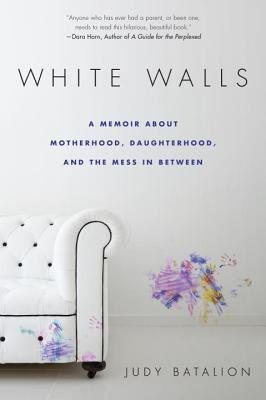
White Walls by Judy Batalion

White Walls: a memoir about motherhood, daughterhood, and the mess in between by Judy Batalion

Judy Batalion grew up in a house that her mother filled with her hoarded "deals." As soon as she could she escaped from the hoarding and clutter, even meeting and marrying a man who's mother was a hoarder too. But, when she gets pregnant she freaks out about how to raise this child when she didn't really have a childhood of her own. She's also seen her grandmother and her mother spiral into mental illness and hoarding and doesn't want to follow in those footsteps. I was interested in the hoarding aspect of this book, but a large chunk of it is more about the author's failed relationships and her struggle into adulthood. That kind of bogged down the book for me and wasn't as interesting. Overall, it was OK, but not one I would recommend.


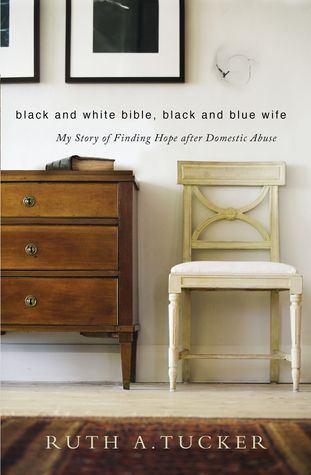
Black and White Bible, Black and Blue Wife by Ruth A. Tucker

Black and White Bible, Black and Blue Wife: my story of finding hope after domestic abuse by Ruth A. Tucker

Ruth Tucker married a man she was foolishly in love with, but she quickly saw who he really was when he started becoming violent with her. There were PLENTY of red flags before they got married that she overlooked and plenty more in their 20 years of marriage - he was fired from almost every job he ever had for things like stealing and plagarism. And to top it off her husband was a pastor. Tucker was educated and worked as a college professor, so why didn't she leave? Her main answer was that she was legitimately afraid he would kill her if she did. But, she eventually did along with her then-thirteen-year-old son. As she looks back at her own story she combines it with an exploration of what the Bible has to say about marriage and domestic violence and how all too often abusers use the Biblical theology of male "headship" to justify pretty much anything. The worst parts of this book were quotes from male pastors to abused wives telling them to continue to submit to their abusive husband instead of helping them pack up and leave. Tucker proves that it is possible to rise above supposedly Biblically supported abuse and move on - over 17 years after she leaves her abusive husband, she remarries a wonderful man to whom she is still happily married.

This isn't a new topic, but Tucker's book is incredibly well-written and articulate. She is not only an expert in theology, but also in surviving an abusive marriage. Her personal story only reinforces her points in the book. Overall, a fantastic book about an unfortunately always timely topic.

Some quotes I really liked:

"We sometimes read right past these words from Paul's letter to the Ephesians: 'Husbands, love your wives, just as Christ loved the church and gave himself up for her.' Really? The standard is impossible. Christ gave himself up for the church by submitting to crucifixion. The husband's role is obviously to be read metaphorically. No husband is expected to die on a cross for his wife. Still, the benchmark is very high." (p. 18)

"When I think of a husband laying aside his glory for his wife, Robertson McQuilkin immediately comes to mind...most people know him as having served for more than two decades as the president of Columbia International University in Columbia, South Carolina. Much to the chagrin of the university's board of trustees, he quit at the height of his career to become a full-time homemaker. His wife, Muriel, had been diagnosed with Alzheimer's disease in 1981. By 1990, her condition had deteriorated to the point that she was becoming agitated and fearful unless he was with her. He had not promised 'till death do us part' to the university. To Muriel, however, he had. So he laid aside his glory as a university president to become a caretaker for Muriel." (p. 18)

"Very early in my first marriage, the Ephesians 5 passage was frequently used against me, always in a one-sided manner. That my ex-husband failed to love me as Christ loved the church was no applicable. That I was not submitting to him was the overriding issue. Anyone familiar with this passage knows it begins in verse 21: 'Submit to one another out of reverence for Christ.' The next phrase, 'wives, to your own husbands,' has no verb in the original Greek. It is a verse that cannot be read without the topic sentence of mutual submission. Moreover, the entire passage places a far heavier burden of love and submission on the husband than it does on the wife, as I have written elsewhere: 

It is safe to say that in the ancient world, Paul's admonition to women did not amount to shocking news. That a wife should submit to her husband was obvious. That was part of the very fabric of society and culture. But that husband and wife were to 'be subject to one another' had to be rather startling. And that the husband was to 'love his wife as Christ loved the church.' was certainly a standard far beyond what was expected of husbands in the ancient world. If anyone squirmed in the pew of the first-century church, it surely must have been the husband, not the wife." (p. 46-7)

[Some of the red flags Tucker learned about her now ex-husband before they married]
"I had already learned form my fiance that he had been expelled from Wheaton College for cheating and for breaking into a faculty office in search of exam answers. Two years later, he had been forced to leave Miami Christian College for behavior he did not clearly explain. And he was arrested as a peeping Tom near his parents' home on Long Island. All this, he told me, had been cured through counseling." (p. 38)


To The Bright Edge of the World by Eowyn Ivey

To the Bright Edge of the World by Eowyn Ivey

I loved The Snow Child, so I couldn't wait to read this one and saved it to take on vacation. While it's very different fromThe Snow Child, there are some similar elements and I really liked it.

Allen Forrester has the opportunity of a lifetime to lead a small group of men up the Wolverine River and into uncharted Alaskan territory. While this is the adventure of a lifetime he will be leaving behind his newly pregnant wife Sophie. Sophie is not thrilled about living in army barracks for up to a year with little to no word from her husband - not knowing if he will come back to her. Told exclusively in letters and diary entries from both Allen and Sophie, their stories even though hundreds of miles apart continue to intersect through strange coincidences or magic - however you choose to see it. While Allen is away Sophie delves into the new art and science of photography to fill her time. This new hobby will completely change her life in unseen ways. Meanwhile at times Allen's group struggles to survive in the harsh Alaskan wilderness and much of what they experience can't be explained rationally or scientifically. Like Ivey did inThe Snow Child, there is a fine line between reality and magic that is often blurred and many events could be seen either way. While this book does start slow, it holds your attention and you can't wait to see if Allen and his men will survive their journey and make it back to Sophie. And as someone who is childfree, I like that in both her books the main characters don't have children. In the late 1800's when this book takes place that would have been a devastating circumstance, but only because of it is Sophie able to do all she does at the end of the book. While in both this book andThe Snow Child, being childless is not their choice, the author shows that in both cases the characters have fulfilling lives and marriages. I highly enjoyed this one!


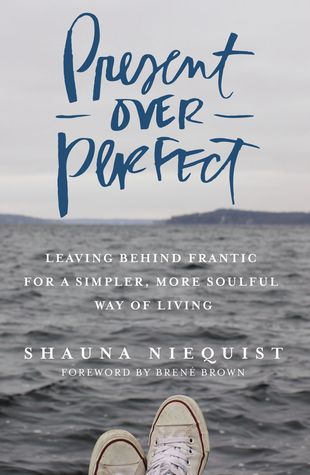
Present Over Perfect by Shauna Niequist

Present Over Perfect: leaving behind frantic for a simpler, more soulful way of living by Shauna Niequist

Shauna Niequist has become one of my absolute favorite authors! Her observations are just spot on all the time. InPresent Over Perfect she takes on the issue of trying to have a "perfect" life from the outside, when really that drive for more and more can destroy you from the inside out. The book is full of her personal experiences taking on too much and always trying to do and be more to everyone, while she and her family suffered. Only after her health started to really suffer and she mentioned it in passing to her mentor did she really start to reevaluate her life and slow down. It took Niequist 3 years to work through this process, but because of her honestly and willingness to open up about her own struggles we can learn from her and not have to completely burn out before making changes. While I don't personally relate to her need to please people (I'm definitely NOT a pleaser personality), I can relate to how hard it can be to go against the cultural flow that tells you you need to be doing more better all the time. This is a great book and I would highly recommend it to anyone!

Some quotes I really liked:


"Years ago, a wise friend told me that no one ever changes until the pain level gets high enough. That seems entirely true. The inciting incident for life change is almost always heartbreak - something becomes broken beyond repair, too heavy to carry; in the words of the recovery movement, unmanageable." (p. 24)


"My friend Geri taught me something about prayer many years ago, and the image stayed with me...She told me that when you begin to pray...picture a bottle of oil-and-vinegar salad dressing...the vinegar, probably red wine vinegar, rests on top of the olive oil, softly red, flecked with oregano. The green-yellow oil is at the bottom of the bottle, rich and flavorful. Geri said that when you pray, pour out the vinegar first - the acid, whatever's troubling you, whatever hurt you, whatever is harsh and jangling on your nerves or spirit...Pour out all the vinegar until it's gone. Then what you find underneath is the oil, glistening and thick...[God] wants me to bring the vinegar so that I can taste the oil. He has all the time in the world to sit with me and sift through my fears and feelings and failings. That's what prayer is. That's what love is." (p. 74-6)


"He said, 'When I go to your church, it's like a breath of fresh air from what I grew up with.' 'Exactly,' I said, 'and this is a breath of fresh air from what we grew up with.' I told him it was like we all grow up with half a pie, and part of being an adult person of faith is finding the rest of your pie." (p. 81)
"Sometimes being brave is being quiet. Being brave is getting off the drug of performance. For me, being brave is trusting that whatever God is asking of me, what my family and our community is asking from me, is totally different than what our culture says I should do. Sometimes, brave looks boring, and that's totally, absolutely, okay." (p. 126)


"Present over perfect living is real over image, connecting over comparing, meaning over mania, depth over artifice." (p. 130)


"It seems to me like most of us were taught that jealousy is bad, and so when we feel it, we should push it away from ourselves as quickly as possible, get rid of it fast. But I'm learning that envy can be an extremely useful tool to demonstrate our desires, especially the ones we haven't yet allowed ourselves to feel, and so I committed to learning from my jealousy toward her." (p. 149)


First Comes Love by Emily Giffin

First Comes Love by Emily Giffin

Emily Giffin has always been one of my favorite authors and while this book is good, it wasn't one that I just couldn't put down like some of her previous books. The story centers around sisters Josie and Meredith, who couldn't be more different, but when their brother was killed in a car accident their differences in how they grieved pushed them even further apart. Now coming up on the 15 year anniversary of Daniel's death, new revelations about that night threaten to tear them even further apart. Each sister is also dealing with disappointments in their personal lives - Josie is still single and longs to be a mother, while Meredith seemingly "has it all," but is deeply dissatisfied with her marriage and career. Can these two sisters finally come together to get past their brother's death or will their relationship be fractured forever? Giffin does a great job with the sister relationship and each character is likable in their own way, but I did think there were a few aspects of the book that seemed a little forced and I felt like the ending was kind of predictable and unrealistic. I did like the book, but I didn't love it.


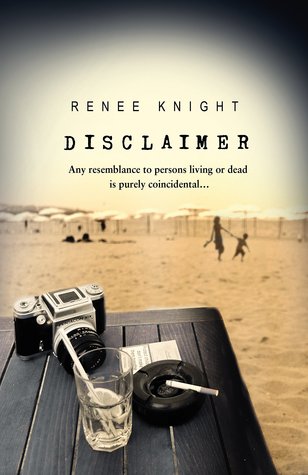
Disclaimer by Renée Knight

Disclaimer by Renee Knight

Ugh. This book was TERRIBLE. It was billed as this fast-paced thriller, but it was anything but fast-paced. What was supposed to keep you hanging barely gave you enough story to keep your interest going. I won't even summarize the basic storyline because it was such a stupid story and the "real" story was so violent and terrible that I wish I hadn't finished it. Don't waste your time with this one.


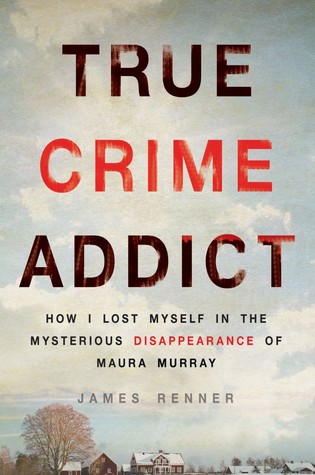
True Crime Addict by James Renner

True Crime Addict: how I lost myself in the mysterious disappearance of Maura Murray by James Renner

I was drawn to this book because I love the TV showDisappeared and had seen the episode about Maura Murray's disappearance. But, the show almost always leaves out a lot of the story and that is where Renner comes in with this book. It's not just about Maura's disappearance, but more about how and why Renner chose to dig into her story. His first crush was Amy Mihaljevic, who went missing in his area when he was 11. That started his obsession with true crime - and also gave him PTSD. But that doesn't stop him from diving headlong into Maura's case. While he doesn't solve her disappearance, he does shed light on new facts and evidence, but those things only seem to deepen the mystery. The book is a mix of Maura's case and also Renner's own back story. When you find out about some things that happened to him and his family in the past it definitely explains his fascination with true crime and wanting to solve old cases. Overall, it was an interesting book especially if you like TV shows like Disappeared.

Friday, September 2, 2016

August 2016 Cookbooks

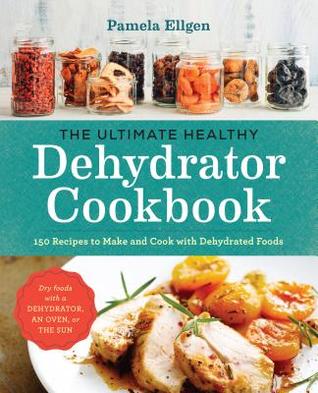
The Ultimate Healthy Dehydrator Cookbook by Pamela Ellgen

The Ultimate Healthy Dehydrator Cookbook by Pamela Ellgen

This books gives a really good introduction to what dehydrating is and the benefits for storing/using dehydrated food. The first section is an overview, the second section is basics of dehydrating specific foods, the third section is dehydrated food recipes (jerky, fruit leather), and the last section is recipes using dehydrated food ingredients. I thought the overview was really good and helpful and there are a few recipes I'd like to try. Overall, a good cookbook on this topic.

August 2016 Reviews

So, this is the first year I've read only non-fiction for the whole summer and it was great. I read a lot of really good books and I'm glad I decided to do this. Here are the non-fiction books I read in August:

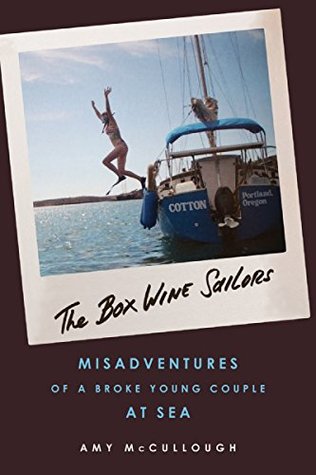
The Box Wine Sailors by Amy McCullough

The Box Wine Sailors: misadventures of a broke young couple at sea by Amy McCullough

Amy and her boyfriend Jimmie want to figure out a way to take a year off work and have an adventure. They decide that the cheapest way to do that is to buy an old sailboat and sail from Oregon to Mexico - neither of them grew up sailing or have any real training. They watch a few DVDs, read some books, and spend a year sailing once a week to prepare. They saved as much money as they could in a year and lived as cheaply as possible in their year of sailing. While I admire them for going for their dream right now and not waiting until retirement or a "better" time, it seems like their year of sailing was more stressful than relaxing or fun. They ate really cheap, crappy food and never really slept much or well. After it was over and they spent their first night off the boat Jimmie said it was the first night of real, restful sleep he had had in over a year. Not to say they never had fun or a relaxing time, but it really seemed like a LOT of their time was very stressful. Overall, it was good, but it definitely didn't inspire me to want to do anything similar!

Some quotes I really liked:

"It turns out the only difference between bravery and stupidity is a happy ending. If we had died, if our soggy carcasses had washed up on some California beach months after our departure, everyone would have said that we were foolish. Or at least they would have thought it. Sailing the Pacific on a twenty-seven-foot boat, with no experience? Figures...But we lived. And so we are brave." (p. 1-2 of "Sensible" Cruising)

"Often, the thing that is the scariest is not the actuality of your situation but what your imagination sees as its potential amplification. The unknown. The unknown. The unknown. It haunts you. And it can never be answered until it is already happening. And then, an already worse unknown has formed in your brain." (p. 12 of Desperately Seeking Social) 


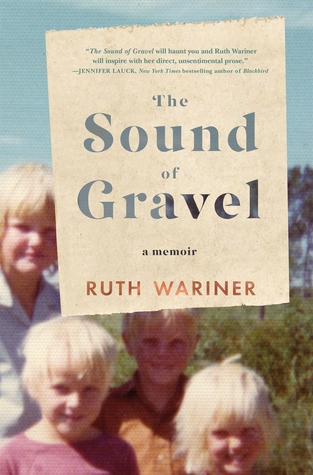
The Sound of Gravel by Ruth Wariner

The Sound of Gravel by Ruth Wariner

Ruth Wariner was the 39th child for her father and her mother was his fifth wife. After her father was killed when Ruth was just a baby her mother remarried and became the second wife of Lane. Lane would come to be the worst part of Ruth's childhood. Ruth and her family lived in an adobe hut in Mexico, but since her mother was an American citizen they often came back to the US for her to collect welfare checks and food stamps. As the second oldest girl, Ruth was expected to help care for her younger siblings - her mother would have a total of 10 children before her death. Because of this Ruth dropped out of school around 12 or 13, as did her older brothers who were needed to work and help bring in income for all of Lane's wives and children. Heartbreakingly, two of Ruth's siblings would die in childhood and her oldest sister was so violently schizophrenic that she had to be institutionalized when she was 14. Even worse Lane molested Ruth and at least one of her other siblings and dozens more of his children and stepchildren. After her mother's death, Ruth was finally able to escape Mexico with her remaining younger siblings and their life of poverty and abuse to live with her grandmother in California. Ruth raised her 3 youngest siblings and eventually went on to get her GED, a college degree and a master's degree. The fact that she survived her childhood at all is a miracle. Her story shows the horrors of polygamy and how these cults are basically havens for sexual predators. This is a powerful memoir in the vein of The Glass Castle or North of Normal. I could NOT put this book down and read it in a little over a day.


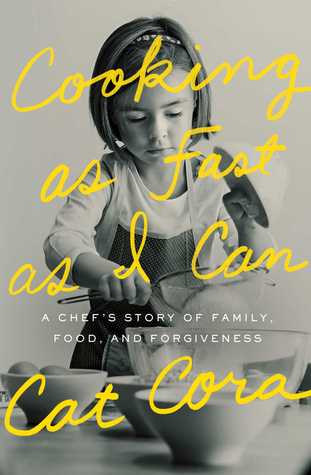
Cooking as Fast as I Can by Cat Cora

Cooking as Fast as I Can by Cat Cora

Cat Cora grew up in Mississippi enjoying Southern and Greek food since her father's family was Greek. It was nothing unique to her to eat grits with feta cheese. Her parents were both hard-working and loving and taught Cat that working hard is how you'll get far in life. In this memoir you see how Cat worked hard to overcome some serious challenges - she was molested by a family friend, she was gay in time when it was still illegal in her home state, and once she knew she wanted to cook she struggled to get into professional kitchens that often didn't want women. But, she overcame all these struggles to become the Iron Chef Cat Cora most people recognize today. She has accomplished so much and opened so many doors for future women in the professional food industry. Her memoir is a pretty quick read, but it really sheds light on all the things in her life that helped create who she is today.


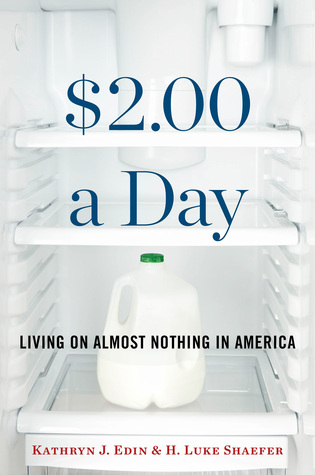
$2.00 a Day by Kathryn Edin

$2.00 a Day: living on almost nothing in America by Kathryn Edin and H. Luke Shaefer

After doing research for over two decades on American poverty, Kathryn Edin discovered something she hadn't seen before - households surviving on virtually no cash income. And not only that, the number doing so has skyrocketed in the last few years. Teaming up with Luke Shaefer, an expert on surveys of the incomes of the poor, they uncovered just how these $2-a-day families are managing to survive. They focus on a few families in different cities and in different circumstances, but all of whom want nothing more than to work a full-time job with regular hours and have their own home for their family. This is really a heart-breaking book because all of the families featured have tried so hard and just keep getting beaten down by their environment, circumstances, an emergency, etc. The biggest thing I noticed among all the people was the low-wage jobs they had worked - pretty much all of them were never scheduled for enough hours to get benefits, had crazy schedules that weren't consistent (and made childcare impossible), and were fired for insanely small infractions. If companies weren't allowed to have these employment practices all of the people featured in this book could have been MUCH better off and managed to create some stability in their lives.

Overall, this is an eye-opening book about a large, yet largely unseen segment of the American population. It will definitely make you feel like a millionaire in comparison.

Some quotes I liked:

"Jennifer rejects the idea of taking 'handouts,' even now in her third spell of $2-a-day poverty in as many years, and so she won't even apply for welfare. Her vision of the good life remains astonishingly humble: she dreams of a full-time job paying $13 an hour, a set schedule, and decent working conditions. She believes that at this wage, she could find a modest apartment in a safe neighborhood, perhaps even afford a reliable used car. Barely making it on $13 an hour is Jennifer's version of the American dream. Yet even this modest aspiration can seem all but out of reach." (p. 47-8)

"Place like the public library where Jennifer, Kaitlyn, and Cole found refuge are crucial to the day-to-day survival strategies of the $2-a-day poor. They offer a warm place to sit, a clean and safe bathroom, and a way to get online to complete a job application. They provide free educational programs for kids. Perhaps most important, they can help struggling families feel they are part of society instead of cast aside by it." (p. 101)


Home is Burning by Dan Marshall

Home is Burning by Dan Marshall

Warning: if you are offended by cursing and bad language this is NOT the book for you!

Dan Marshall is the second of five siblings and felt like at the age of 25 his life was just getting started. He lived in LA, had a beautiful girlfriend, and enjoyed his job. Growing up in Utah the only bad thing about his childhood (besides all the Mormons) was his mom battled cancer off and on since he was 11. So, when he got a phone call in 2007 that his dad had ALS, or Lou Gehrig's disease, his world was turned upside down. His father was always the rock of the family and he declined so quickly that everyone was shocked. Dan ended up quitting his job to go home and help take care of his father. What could have been a terrible depressing story is turned into a laugh-out-loud memoir by Dan and his foul-mouthed family. Their mantra of "fuck Lou Gehrig's disease!" shows how they handled their dad's illness and the strain of caring for him and their mom (her cancer came back shortly after Dan's father was diagnosed). With terrible language and black humor Dan and his siblings come together to help their dad through his final year. Of course there are some serious moments and the very end is a tear-jerker, but overall I would have never thought that a memoir about having two dying parents could be so funny.

A few favorite moments/quotes:

[On Chelsea the 4th child's lack of desire to drive] "...you need to learn how to drive. You're sixteen years old, and our home is burning to the ground with tragedy." (p. 75)

"Before the Lou Gehrig's disease, anytime we were watching a game together and the Jazz scored, we would exchange a high five. We couldn't do that anymore. 'I wish I could high-five you,' I said after Deron Williams nailed a three. My dad didn't say anything. But he did raise his foot as much as he could. I looked at it, a little confused. Carlos Boozer slammed down a jam. My dad raised his foot again. I finally put it together. 'Oh, you want to do foot high fives?' He nodded his head as much as he could. I pulled my chair up to his bed, and we exchanged foot high fives every time the Jazz scored. It wasn't exactly like watching the game together in the Delta Center, but it was better than nothing." (p. 131)

[On a Lou Gehrig's support group meeting] "Those accompanying the person with ALS to the support group meeting usually looked tired and had more to say than the two hours would allow. Bags under their eyes. Shoulders slumped. Hadn't been fucked for months, maybe years. In other words, I fit right in. These were people who would really go for the free Capri Suns, cake and pizza provided by the MDA's scrawny budget. They'd throw caution to the wind. Fuck it, I've got to treat myself since I'm working so hard to keep someone alive, I imagined them thinking as they tried to stab the straw into that tiny little hole that the makers of Capri Suns put on top of the juice pouch in an effort to completely fuck with us all...The topics at these meetings were as depressing as the crowd. Once month, owners of a funeral home came to explain how everyone could save a shitload of money if they prepaid for their funeral and picked out a coffin in advance. Honestly. During this meeting, I was tempted to squirt my Capri Sun at the assholes, but I was unwilling to part with the fruity greatness that is Capri Sun. Plus, it had taken me twenty minutes to get that fucking straw in." (p. 161-2)

[On going to Chelsea's dance recitals] "The actual going to the performance part was one thing that we couldn't pawn off because of the guilt our mom smothered us with. She took a variety of different approaches, usually involving our dying father. 
'Come on, her father is dying. She needs you guys. You're all she's got.'
'You have to go. It means the world to her, and Dad is dying.'
'GET THE FUCK IN THE CAR BEFORE I START GETTING SO MAD THAT I MURDER YOU WITH MY LITTLE CANCER HANDS.'" (p. 173)

[After almost a year of caring for his dad Dan's long-time girlfriend breaks up with him]
"But my unhappiness was apparent. When Tiffany, my mom, and I were unloading my dad from our van for a walk up at Red Butte Garden, I lost my shit. His chair had caught on a seat belt. I tried to unhook it, but couldn't, so I started tugging on the seat belt and screaming, 'Motherfuckers!' as loud as I could. I followed up the 'Motherfuckers!' with a string of expletives that would make the devil cringe. I think I actually flipped off the seat belt at one point and punched the floor of the van. I started to cry and melted to the ground. I was losing it...I knew I'd officially lost it when I bare-knuckle-punched the respirator when it wouldn't stop beeping. After that, my dad suggested I go see their shrink, Robin. I did." (p. 203)


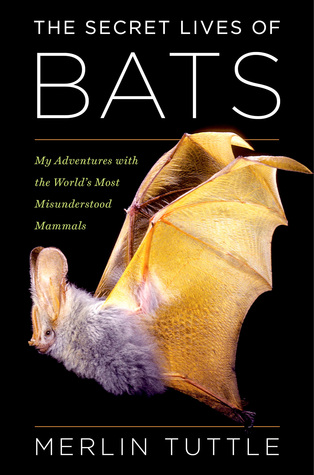
The Secret Lives of Bats by Merlin Tuttle

The Secret Lives of Bats by Merlin Tuttle

I really like bats and think they are fascinating, but I really had no idea what to expect with this book. I was blown away with all the crazy stories Merlin Tuttle had of his time as a bat biologist! He first became interested in bats when his family discovered a colony in a cave near their home in Tennessee and from there he was hooked on bats. His work led to many bat related discoveries, he helped inform the public about how beneficial bats are, he founded an organization to help protect bat habitats around the world. The craziest thing is that when he realized how few good bat photographs there were at the time (1970's and 80's) he taught himself photography so that he could photograph both bats in the wild and in studios he built! He would catch whatever type of bat he was working with in the area, tame it, then photograph it in a set he would create - and he did this all over the world! He is really a trendsetter when it comes to bats and their world. There are also 2 sections of color pictures of some of the bats he describes in his stories. Overall, this was a fascinating book about some very beneficial and fascinating creatures!


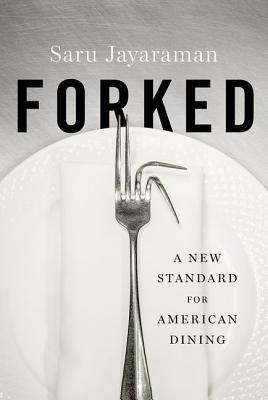
Forked by Saru Jayaraman

Forked: a new standard for American dining by Saru Jayaraman

There are TONS of books about the evils of industrial food production, but Forked looks as another evil in the food industry - how cooks and wait staff are mistreated and underpaid. I think people expect that in the fast food industry, but in many mid-level and higher-end restaurants the wait staff are barely getting by and your food might be prepared by someone with the flu because most restaurant staff don't get paid sick leave and can't afford to not come in to work. I liked how the author broke down the book by type of restaurant to show that good and bad can be in any price level or type of restaurant. In each chapter she talks about that type of restaurant and then gives both a good and bad example restaurant. The author also talks a lot about the Restaurant Opportunities Centers United (ROC) that she co-founded and c0-directs that helps encourage and support long-term, sustainable changes to the restaurant industry and how its workers are treated. This is definitely an eye-opening look at an aspect of the restaurant industry.

Some quotes I liked:

"In fact, the restaurant industry is the single largest source of sexual-harassment complaints to the EEOC of any industry in the United States. Seven percent of American women work in restaurants, but 37 percent of all sexual harassment complaints to the EEOC come from the restaurant industry." (p. 11)

"Eighty percent of the almost seven hundred restaurant workers surveyed reported experiencing sexual harassment in their restaurant workplace, and 50 percent experience sexual behaviors that were scary or unwanted. Worst of all, women in states that paid the tipped-worker minimum (often $2.13 an hour) experienced twice the rate of sexual harassment from customers as they did in states that paid the same wage to tipped and nontipped workers...In sum: our research showed that when workers were not reliant on customers for a base wage, they were less likely to be sexually harassed." (p. 38)

Tuesday, August 9, 2016

July 2016 Reviews

So, this year I decided to read non-fiction for the whole summer. It's definitely my favorite thing to read and I had SO much non-fiction on my to-read list that it made sense to kind of clear that out and enjoy my summer of non-fiction. Here is all the non-fiction I read in July:


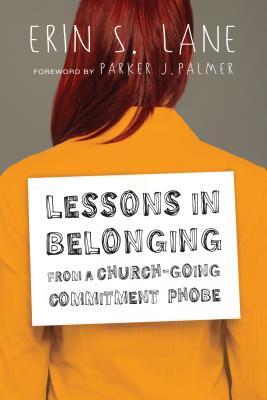
Lessons in Belonging from a Church-Going Commitment Phobe by Erin S. Lane

Lessons in Belonging from a Church-going Commitment Phobe by Erin S. Lane

I really wanted to like this one, but I just could NOT relate to the author much at all. I do understand how hard it can be to find a church, especially for a woman who's a Christian AND a feminist. But, I just couldn't get past her not wanting to attend the church where her husband is a pastor. I really wondered about what the staff at his church thought of that and how hard that was for him. Basically, most of this book was her complaining about various church-related issues/theology/etc. that she didn't agree with. She also seemed like she was ALWAYS looking for said issues/theology she didn't agree with/etc. Churches are full of people who will always fail at being like Christ, but God won't fail you. I just didn't enjoy her constant whining about everything.

There were two quotes I did really like:

[Parker Palmer in the introduction] "Like most of us, I belong to a variety of communities: family, clusters of friends and colleagues, a religious community, a civic community. But unlike most people, I spent eleven years living in a so-called intentional community, where I shared a daily round of worship, work, study, social action, decision-making and common meals with some eighty people. At the end of my first year, I came up with Palmer's Definition of Community: 'Community is that place where the person you least want to live with always lives.' At the end of my second year, I came up with Palmer's Corollary to Palmer's Definition: 'And when that person moves away, someone else arises immediately to take his or her place.'" (p. 11-12)

"It was a relief to find people at college who shared my faith values, but I was perplexed by some of the gendered values that came with it. I didn't know being mad was a character flaw in a woman." (p. 66)


Big Girl by Kelsey Miller

Big Girl: How I gave up Dieting and Got a Life by Kelsey Miller

Kelsey Miller always struggled with her weight. She went on her first official diet at 11 and that started the cycle of dieting and gaining back whatever weight she lost, plus more, which continued until she was almost 30. At 29 she had an epiphany that dieting wasn't working. She bought the bookIntuitive Eating and found an intuitive eating coach and decided to document her journey for the online magazine she worked for. As Kelsey documents her non-diet, she also goes back and shares pivotal moments from growing up and it's easy to see why she struggled with her weight - her family is extremely dysfunctional and chaotic. While all this sounds pretty heavy, she tells her story with laugh-out-loud humor and wit. Her story is one I'm sure many people can relate to, but even if you can't her story is very inspiring and will definitely make you think more about what you eat and why.

"The best part of being on a diet is knowing it will end. I don't mean the part where the whole thing falls apart and you find yourself whispering on the phone with the Chinese place, calling in dumplings like a mob hit. I mean the 'after' shot. We think we're running toward a goal weight, but really, we're not running toward anything so much as running away from that 'before'...The day I quit dieting was the day I gave up on 'after,' and what a great relief it was. But it took me almost a year for me to realize that there's no escaping my 'before.' All that history is in me...When I stopped trying so desperately to starve and burn 'before' away, I finally got to participate in right now. That baggage wasn't going anywhere. So, I'd just have to bring it with me." (p. 267-8)


Bulletproof by Maci Bookout

Bulletproof by Maci Bookout

OK, I will confess that Teen Mom is one of my only guilty pleasure/trashy TV shows that I watch. Somehow I got sucked in and never missed an episode. I always liked Maci the best because she seemed to really put her child first and not herself, so when I saw this book I added it to my pile. While it wasn't terrible, it didn't really reveal anything new that you didn't see on Teen Mom. It was basically a re-cap of her life from Sixteen & Pregnant through the end of the last season of Teen Mom. She does talk about how freaked out she was on the inside, especially in the beginning, and how that didn't translate to camera and everyone thought she was so calm and mature. But, the book kind of reads the same way - she seems very put together and on top of things. Despite things not working out with her son's father, she had a very strong support system with her family that helped her get her life together and be a good mom. Overall, it was OK, but if you've seen all the Teen Mom episodes then you don't really need to read her book.


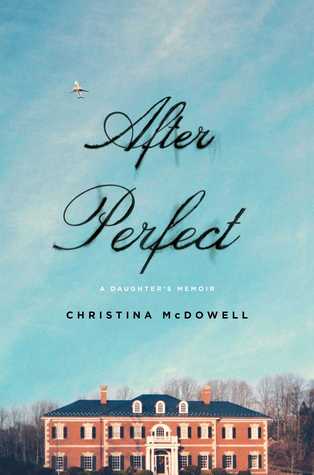
After Perfect by Christina McDowell

After Perfect: a Daughter's Memoir by Christina McDowell

When Christina was a freshman in college her father was arrested on charges of fraud and without even realizing it her life completely changed that day - to before the arrest and after. Christina was the middle daughter of a successful lawyer and stay-at-home mom. Their family was in the 1% of wealthiest people in the US - they lived in a huge home, traveled the world, summered in Nantuckett, and were friends with many celebrities. But, as Christina would find out, all that was a sham. Even after her father's arrest it took Christina YEARS before she finally realized he was never going to come back and rescue her. Unfortunately, her family didn't deal with the situation well and there was a lot of denial, including her parents opening credit in her name and leaving her with over $100,000 in debt at the age of 19. Christina turned to alcohol, drugs, and promiscuity to numb herself to her reality. It took almost 10 years for her to hit rock bottom and then finally start to climb out again. Some of the reviews I read said that she was a spoiled rich girl complaining about not having access to unlimited money anymore, but to me it was obvious that her whole identity was rocked when she realized her parents were selfish thieves who would continue to use her if she let them - that's not an easy thing to come to terms with. Obviously she didn't handle it in the best way and there were a few painful chapters of her downward spiral that were painful to read. But, she did manage to get herself back on track and the last few chapters are really great when she starts working with The Center for Restorative Justice Works and starts helping other people affected by incarceration in their families. Overall, if you can get past the section with her self-destruction, it's definitely an interesting read. I hope she writes another memoir in a few more years - I'd like to see what she does in the future.


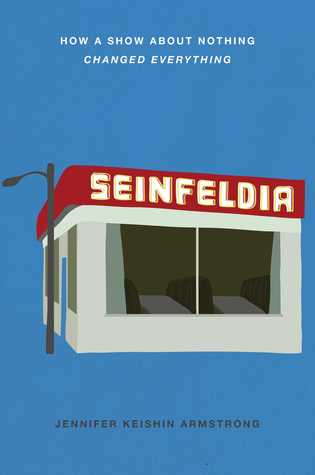
Seinfeldia by Jennifer Keishin Armstrong

Seinfeldia: How a Show About Nothing Changed Everything by Jennifer Keishin Armstrong

When stand-up comedian Jerry Seinfeld was approached by NBC about doing a sitcom, he immediately went to his friend and fellow comedian Larry David to hash out some ideas. The two would have never predicted that what came from their meeting and subsequent partnership would turn into the world-wide TV phenomenon that was Seinfeld. InSeinfeldia Armstrong explores not only the TV show Seinfeld, but also the cultural phenomenon that it turned into and still is today even though it's now been off the air longer than it was on (not counting re-runs). What I found the most interesting is that literally EVERY episode is based on something that really happened to someone - including Festivus! Many of the characters on the show were based on real people and many characters names were real names of writers or friends of the writers like Joe Davola and Alec Berg. 

Armstrong also covers the insanity of Seinfeld's popularity and how basically no one thought it would do much in the beginning so the writers did whatever they wanted, then when it became so popular no one even wanted to try to hold them back. The only darker side is that they would basically fire all the writers at the end of every season in order to get a new batch of experiences to pull from for the show. Also, because of the constant writing and editing for each episode the writers worked almost constantly. Seinfeld became one of the hottest shows to work for and anyone who ever had was immediately hired by other networks who wanted the "next Seinfeld," which is an impossible task. Seinfeld is one of those things that had the right people in the right place at the right time to create a show that is just as funny today as it was when it originally aired - you can't re-create that. 

If you are a Seinfeld fan this is a MUST READ!

"When Mehlman went out into the 'real world' beyond Seinfeld's office walls, he found that everyone in television wanted 'the next Seinfeld, but they didn't want to take any of the chances necessary to make such a thing. They wanted Seinfeld money, but they seemed to resent Seinfeld itself for breaking the rules of television. He would go in to pitch ideas to executives and hear, over and over, 'That character's not really likeable,' He'd thought Seinfeld had done away with likability. Seinfeld had even ruined his mother for all other sitcoms. Whenever she watched anything else, she said,'How does anybody think this is good?'" (p. 193)


Bonhoeffer by Eric Metaxas

Bonhoeffer: Pastor, Martyr, Prophet, Spy by Eric Metaxas

This book is very long at 542 pages, but it is well worth the time it takes to read it. I was familiar with Bonhoeffer as a Christian theologian, but this book really fleshes out just how much of an impact he made both in his local community and throughout the world with his writings. He was pretty much a genius and his family was very intellectual - not many people were his intellectual or theological peer. Probably the most amazing thing about him is that as soon as the Nazi party emerged in Germany he almost prophetically knew how bad things would be for Germany if they continued on this path. As a devout Christian it might be hard to believe, but he was convinced that God wanted him to be involved in plots to kill Hitler. He worked as a spy and secret agent until his arrest and execution - he was executed just 2 weeks before Allied troops liberated the concentration camp where he was killed. But, he was never afraid of death and knew it was really only the beginning for him. Also, amazing is that he had the opportunity to escape to America right before things got really bad in Germany, and he chose to come back. He truly felt it was his Christian duty to be in Germany and help his country in any way he could - whether as a pastor or in the resistance as a spy. Overall, this is an amazing book that really sheds light on the powerful resistance movement and how much of it was sparked by Christians who refused to stand by in the face of pure evil. 

Some quotes I really liked:

"His father and brothers thought that [becoming a pastor] would be a waste of his great intellect, but he often said that if one couldn't communicate the most profound ideas about God and the Bible to children, something was amiss." (p. 64)

"The music at Abyssinian formed an important part of his experience. Bonhoeffer searched New York record shops to find recordings of the 'negro spirituals' that had so come to transfix him every Sunday in Harlem. The joyous and transformative power of this music solidified his thinking on the importance of music to worship." (p. 109)

"Bonhoeffer's interest was not only in teaching them as a university lecturer. He wished to 'disciple' them in the true life of the Christian. This ran the gamut, from understanding current events through a biblical lens to reading the Bible not just as a theology student but as a disciple of Jesus Christ. This approach was unique among German university theologians of that era." (p. 128)

"What is at stake is by no means whether our German members of congregations can still tolerate church fellowship with the Jews. It is rather the task of Christian preaching to say: here is the church, where Jew and German stand together under the Word of God, here is the proof whether a church is still the church or not." (p. 150)

"The third way the church can act toward the state, he said, 'is not just to bandage the victims under the wheel, but to put a spoke in the wheel itself.' The translation is awkward, but he meant that stick must be jammed into the spokes of the wheel to stop the vehicle. It is sometimes not enough to help those crushed by the evil actions of a state; at some point the church must directly take action against the state to stop it from perpetuating evil." (p. 154)

"'In those days,' Ruth-Alice recalled, 'the Nazis were always marching and saying, 'The future belongs to us! We are the future!' And we young ones who were against Hitler and the Nazis would hear this and we wondered, 'Where is our future?' But there in Finkenwalde, when I heard this man preaching, who had been captured by God, I thought: 'Here. Here is our future.'" (p. 277)

"I have had the time to think and to pray about my situation and that of my nation and to have God's will for me clarified. I have come to the conclusion that I have made a mistake in coming to America. I must live through this difficult period of our national history with the Christian people of Germany. I shall have no right to participate in the reconstruction of Christian life in Germany after the war if I do not share in the trials of this time with my people." (p. 321)

"Bonhoeffer was soon given privileges in the prison, sometimes because of who his uncle was, but more often because other in the unpleasant environment found him to be a source of comfort to them and wanted him around...Bonhoeffer was also allowed time alone in his cell with others, contrary to explicit orders. And he was allowed to spend a time in the sick bay where he functioned much like a prison pastor instead of a prisoner. In general, Bonhoeffer spent quite a bit of time working pastorally at Tegal, so much so that he sometimes even felt he was taking too much time away from his own writing and reading." (p. 448)

"So less than twenty-four hours before he left this world, Bonhoeffer performed the offices of a pastor. In the bright Schonberg schoolroom that was their cell, he held a small service...He had hardly finished the last prayer when the door opened [and he was escorted out]...We bade him good-bye - he drew me aside - 'This is the end,' he said. 'For me the beginning of life.'" (p. 528)


The Reason by Lacey Sturm

The Reason: How I Discovered a Life Worth Living by Lacey Sturm

I love Lacey's music with both Flyleaf and her newer solo stuff. I knew a little about her personal faith story and was always blown away watching her perform in clubs and basically preach between songs. This book tells more of her story and how she went from being suicidal to fully committed to God. She is really honest with what her life was like before God, but without going into too much detail. She is obviously anointed by God and she has committed her life to glorifying Him and trying to reach people who don't even want to be reached with her own story of life change. If you ever have the chance to see her perform live - take it! She is unbelievably gifted musically and spiritually. Her music is so powerful and it's amazing to see so much come out of this tiny woman! My only small complaints would be I wish she had explained some parts of her story a little more - in the second half of the book it seems to jump forward pretty quickly and it sometimes left you wondering what was glossed over. But, overall a great story and quick read. She is really amazing and I can't wait to see what she comes out with next.

Some quotes I really liked:

"There is something about music that opens up your soul to understand, to meditate on something, to taste the spiritual significance of the world around you." (p. 3 of chap. 13)

"There were so many things in my heart that were healed during times of worship in church. I laid out many dark lies in my heart before God's light, so that he could shine on them and expose them for what they were: lies about my identity, my self-worth, my orphaned feelings. I laid so many anxieties to rest. It was here in these moments that I felt free to open my hands, in a sense. It was as if I no longer had to hang on to anything. I didn't have to control or manipulate anything or anyone. I didn't have to defend myself or be afraid of anything." (p. 10 of chap. 13)

"My driving desire to start a band and play the music beating in my heart came from the fact that so much of my life had been changed while I encountered the Spirit of God during the worship music in church. I thought if I could bring that experience into a bar, people would experience a longing to live their lives to the full potential for which they were created. If I could play loud enough and sing honestly enough with all my heart to God, about what he had done in my life to save me from suicide and death and hell, then God would show up in such a tangible way." (p. 2 of chap. 14)

"The reason we wanted a label that would market us to radio that had no regard for Jesus at all, and the reason we wanted to tour with bands who were atheistic and blasphemous in their lyrics, was because that's where I would find a hopeless girl like myself looking for her real purpose - someone like my sixteen-year-old self who had tremendous pain in her heart and was overwhelmingly tired of living the life she was living." (p. 2 of chap. 15)

Thursday, June 30, 2016

June 2016 Cookbooks

The Anti-Inflammation Cookbook by Amanda Haas

The Anti-Inflammation Cookbook by Amanda Haas and Bradley Jacobs

Inflammation is a natural occurrence in the body, but if it happens too much it can wreak havoc. This cookbook has a great introduction that explains inflammation and gives some personal stories of how food healed inflammation-related issues for the author and others. I really liked that she gave a list of "feel-good" foods and foods to avoid that are the most likely causes of food-related inflammation. There were quite a few recipes that looked really good and most of the recipes look really easy too. Overall, it looks like a good cookbook.


Broth and Stock from the Nourished Kitchen by Jennifer McGruther

Broth & Stock from the Nourished Kitchen by Jennifer McGruther

I loved Jennifer McGruther's previous cookbook The Nourished Kitchen, so I was excited to check this one out. This one is solely devoted to broths and stocks. I like how she gives basic broth and stock recipes, then goes into recipes using those broths and stocks. I'm already making my own chicken stock and canning it, but I do want to move on to beef stock. There were some recipes using broth and stock that I'd like to try. I also really appreciate how she reiterates the importance of sourcing quality meat/bones sources for your broths and stocks. I also liked how she shared various ways to store your stocks, including dehydrating which I had never heard of before. This would be a great introduction into making your own broths and stocks and once you start you'll realize how EASY it is.


Melissa's Southern Cookbook by Melissa Sperka

Melissa's Southern Cookbook by Melissa Sperka

I love a good Southern cookbook and in many ways this one did not disappoint. There are TONS of recipes for Southern classics like biscuits and sausage gravy, skillet cornbread, hush puppies, etc. But, a few of the recipes called for "ingredients" like canned biscuits, or corn muffin mix. I don't understand why you would give a recipe for homemade biscuits and then a few pages later use canned biscuits in a recipe. But, most of the recipes look good and fairly easy to make. There were quite a few I wanted to try, so overall I did like it.


Foolproof Preserving by America's Test Kitchen

Foolproof Preserving: a Guide to Small-Batch Jams, Jellies, Pickles, Condiments, and More by America's Test Kitchen

This is a great basic canning and preserving book. I like that it's smaller batches, especially since not all of the recipes are designed for canning. The book is divided into sections by type of recipes - sweet jams & jellies, savory jams & chutneys, pickles, tomatoes, fruit in syrup, and condiments & fruit butters. Plus, there is a good introduction about the equipment needed for canning. There are a few recipes I'd like to try. Overall, a good solid preserving/canning cookbook.


The Vegetable Butcher by Cara Mangini

The Vegetable Butcher by Cara Mangini

This is a unique book in that you don't think of the word "butcher" associated with vegetables. Basically this book goes from A - Z with various vegetables and each one has a page with info about that vegetable (when it's in season, what pairs well with it, how to pick a good one, and how to store). Then there is a page or two about various ways to "butcher" that vegetable, then a few recipes using that vegetable. While there weren't a ton of recipes I wanted to try, I still liked all the info about the various veggies and the best ways to prep them. Overall, a good start if you want to eat more veggies or find new ways to use them.

June 2016 Reviews


I lead two book clubs at work and while we read LOTS of great books, every year there are always some that I slog through. Since both of my book clubs don't meet over the summer, the last few years I've read nothing but non-fiction for June and sometimes into July as well. Non-fiction is my favorite thing to read so it's a great way to start off the summer for me. Here is my start to my non-fiction summer reading!


Hammer Head by Nina MacLaughlin

Hammer Head by Nina MacLaughlin

After a decade of working as a newspaper journalist, Nina MacLaughlin is tired of sitting behind a computer screen - she wants to do something more physical. When she sees an ad on Craigslist looking for a carpenter's assistant and encouraging women to apply, she impulsively applies even though she has NO experience. She ends up getting the job and learning how to do all kinds of carpentry and other home renovation work. While the premise of the book sounded interesting, the actual story is kind of boring. She doesn't really talk much about her personal life or her relationship with Mary, the carpenter who hired her. I was also really curious about her money situation - she doesn't work for a few months in the winter and she never talks about how she plans for that, is she making more than at the newspaper?, etc. The last chapter is the best when she makes custom bookshelves for her Dad's new house and she can tell he's really impressed, but overall I didn't love it. Her writing style was kind of distant, almost like she's on the outside looking in.


Searching for Sunday by Rachel Held Evans

Searching for Sunday: Loving, Leaving, and Finding the Church by Rachel Held Evans

This book is AMAZING! If you ever felt like you didn't fit in at church, this is the book for you! Evans grew up in an evangelical church and met her husband at a Christian college where her father was a professor. But, in college she started having doubts about some of the theology and cultural mindsets she was seeing both in college and in the church she attended. It wasn't until Tennessee was trying to pass Amendment One that defined marriage as only between one man and one woman that Evans mentally checked out of church and soon after quit attending regularly. When she started her blog where she wrote about a lot of the issues she was struggling with, she became the topic of lots of church gossip and ended up officially leaving her church. But, with her blog she connected with a whole host of like-minded people who felt run off by traditional churches. She also never lost her faith in God - just her faith in church. This book shares her personal story about church and some of the many stories of people she's encountered through her blog and speaking engagements. While you may not agree with every word she writes, the bigger picture of this book and Christianity as a whole is that there is so much more to God than what is represented in churches. Yes, the Church is supposed to represent God here on earth, but we often do a really terrible job with that. I can guarantee that you will ALWAYS be disappointed somehow, some time with church, but you will NEVER be disappointed with God.

Here are some quotes I really liked:

"Death and resurrection. It's the impossibility around which every other impossibility of the Christian faith orbits. Baptism declares that God is in the business of bringing dead things back to life, so if you want in on God's business, you better prepare to follow God to all the rock-bottom, scorched-earth, dead-on-arrival corners of this world - including those in your own heart - because that's where God works, that's where God gardens." (p. 21)

"Imagine if every church became a place where everyone is safe, but no one is comfortable. Imagine if every church became a place where we told one another the truth. We might just create sanctuary." (p. 73)

"It was a strange way to start a ministry - turning water into wine. And what sort of sign is it anyway, ensuring that a simple wedding feast carry on? It may be tempting to dismiss the miracle and Cana as a mere magic trick, an example of Jesus flexing his messianic muscles before getting to the real work of restoring sight to the blind and helping the paralyzed off their mats. But this is only because we have such a hard time believing that God cares about our routine realities, that God's glory resides in the stuff of everyday life, just waiting to be seen." (p. 155)

"Today, some of us struggle to see the Spirit within the religious institution, often for good reason. But God is present both inside and outside the traditional church, working all sorts of everyday miracles to inspire and challenge us if only we pay attention." (p. 197)

"As Brene Brown puts it, 'I went to church thinking it would be like an epidural, that it would take the pain away...But church isn't like an epidural; it's like a midwife...I thought faith would say, 'I'll take away the pain and discomfort, but what it ended up saying was, 'I'll sit with you in it.'" (p. 209)

"Marriage, like a meal of bread and wine, is just one more ordinary, everyday circumstance God transforms into an avenue through which to enter our lives. We must be careful, then, of idolizing the institution of marriage on the one hand and discounting its kingdom-reflecting potential on the other. What makes a marriage holy isn't the degree to which the two partners reflect gender stereotypes, or stick to a list of rule and roles, or even reflect cultural norms and expectations, but the degree to which the love of Christ is present in one of the most challenging and rewarding commitments two people will ever make to one another." (p. 243)


Bastards by Mary Anna King

Bastards by Mary Anna King

Mary was the second of seven children born to her parents in Camden, New Jersey. She and her older brother Jacob watched as each of their sisters were adopted. Mary always vowed that someday she would find all her missing sisters. When she was 7 Mary and her brother Jacob went to live with their grandparents in Oklahoma who were already raising Rebecca, number 3 in the line of siblings. Things were VERY different in Oklahoma and after a few years Jacob was sent back to live with their father in New Jersey. When Mary was in college her sisters who had been adopted out started reaching out to their family to reconnect. While all the siblings wanted to reconnect, it was also traumatic to re-live all the chaos and trauma from their early lives. Despite LOTS of dysfunction, all the siblings establish a relationship with each other and their birth parents. King shows that family is often dysfunctional and messy, but there will always be a bond between siblings.


Infamy by Richard Reeves

Infamy: the Shocking Story of the Japanese American Internment in World War II by Richard Reeves

When the Japanese bombed Pearl Harbor on December 7, 1941 President Franklin D. Roosevelt declared it "...a date that will live in infamy." Unfortunately, shortly after that surprise bombing the United States embarked on another infamous act - the internment of all Japanese-Americans for the duration of WWII. Most of those interned were American citizens, which undeniably went against the Constitution and their rights as citizens. Almost all of those interned lost everything - all their possessions, homes, land or businesses, and savings. Despite this, many of the young men interned were desperate to enlist in the military to prove that they were Americans and willing to fight for their country. Many Japanese-American soldiers died for their country and many more worked as interpreters and spies that greatly helped the US in WWII. While this book is fascinating, it was also a very hard read. To read of the wide-spread racism and hatred of political leaders, media, and average citizens was hard to stomach - including a racist cartoon drawn by none other than Dr. Seuss (p. 21)! Many people think of Hitler and the Jewish concentration camps when you think of WWII, but the US Japanese internment camps, while not designed to kill people, was almost equally horrific. I didn't realize until reading this book that the Civil Liberties Act of 1988 included a formal apology for the internment and gave each internment survivor $20,000. While, hard to read at times, this is a must-read simply so that more people are aware of this blight on US history and so we don't repeat the mistakes of our past again.

Some quotes I liked:

When the order for internment was issued, scavengers came out of the woodwork hoping to capitalize on the Japanese-American's misfortune. "As she was packing to leave...[she] was harassed by scavengers wanting to buy her best dishes, worth about $200. One by one, she took the dishes out of their velvet jackets and smashed them at the men's feet." (p. 59)

"A few white neighbors promised to look after homes and farms - some kept the promises, some did not. In Sacramento, a state agricultural inspector named Bob Fletcher agreed to take over the maintenance of three Japanese farms with ninety acres of vineyards. He paid the mortgages and taxes in exchange for 50 percent of the profits. When the war ended, the Nitto, Okamoto, and Tsukamoto families returned; their land and their profits waiting for them. The same kind of thing happened in Fresno, where a prosperous local farmer,...Hubert 'Dutch' Leonard,...agreed to manage a Japanese farm and turned over $20,000 in profits after the war. But such stories were rare." (p. 76)

"The government of Canada...relocated 23,000 persons of Japanese ancestry after declaring war on Japan. They were moved to camps and abandoned mining towns in the interior of the country; three-quarters of those interned were Canadian citizens...The evacuees' property was confiscated and auctioned off to help pay for the evacuation and internment." (p. 93)

"After the war, Major General Charles Willoughby, General MacArthur's chief of intelligence, said of the work of the [Japanese-American] linguists, 'Never before in history did an army know so much concerning its enemy prior to actual engagement, as the American army during the Pacific campaign. Those interpreters and translators saved over a million lives and two years.'" (p. 150-151)

"Edison Uno, a Nisei who was eighteen years old when he was released from detention after the war ended, devoted the rest of his life as a human rights activist trying to tell the story of the camps and organize Japanese Americans to demand government apologies and financial redress. Uno said of the silence, 'We were like the victims of rape. We felt shamed. We could not bear to speak of the assault.' That attitude began to change in the 1960s when Sansei, the third generation, many inspired by the black civil rights movement and growing anti-Vietnam War protests, began questioning their parents and grandparents about the camp years." (p. 273)

"One of the results of the new activism was the creation by Congress in 1980 of the Commission on Wartime Relocation and Internment of Civilians...Perhaps the most significant sentences of the report were: 'In sum, Executive Order 9066 was not justified by military necessity, and the decisions that followed from it - exclusion, detention, the ending of detention, and the ending of exclusion - were not founded on military considerations. The broad historical causes that shaped these decisions were race prejudice, war hysteria, and a failure of political leadership.'" (p. 276)


Flash by Rachel Anne Ridge

Flash: the Homeless Donkey Who Taught Me About Life, Faith, and Second Chances by Rachel Anne Ridge

Rachel Ridge was at the end of her rope. Her husband Tom had recently lost his job, so he joined Rachel in her mural business - it was a success until the 2009 economic downturn. They were struggling to find enough work to stay afloat with 2 teenagers and 1 daughter about to get married. One day after a long, hard day on a job that wasn't going to pay enough, Rachel and Tom come home to find a donkey in their driveway. They manage to get him into their pasture and figure they'll find his owner the next day - no one ever claims him and they end up keeping him and naming him Flash. While it didn't seem like the best idea to add another expense to their household, the whole family quickly falls in love with Flash. And soon Rachel is starting to realize that Flash is helping her see things in a new light - she is able to find new life lessons that help her take her own life in new directions. Flash becomes a catalyst for a happier life and a deeper faith. Each chapter ends with a life lesson that Flash helped Rachel realize. If you're an animal lover, this is a great story of how one lost donkey changed the Ridge family for the better.


A Good Place to Hide by Peter   Grose

A Good Place to Hide: How One French Village Saved Thousands of Lives During World War II by Peter Grose

The isolated village of Le Chambon in the Loire Valley of central France became a haven for Jews and other wanted people during World War II. Because the area was isolated and somewhat hard to get to, but also because there weren't large industries or natural resources there, it wasn't an early target of the Germans. A few people who were in the right place at the right time made history by refusing to bow to German occupation and laws that went against their personal and moral beliefs. Two pastors, André Trocmé and Édouard Theis, and a school headmaster, Roger Darcissac, were three community leaders who helped facilitate their community as a haven for Jews and other targeted people. There were also a few talented forgers who helped create fake paperwork to get people out of France and into safer areas. But, no one person could do what this community did together - virtually everyone in the community helped hide people, shared resources, and found ways to band together against the evil of Nazi Germany. The Loire Valley also became a hotbed of Resistance activity because it was isolated and not targeted for occupation by the Germans. This is a fascinating book that looks at how one community came together to help strangers. This was mostly accomplished because no one asked questions - they helped anyone who needed help. But, because no one actually asked if the people they were hiding were Jewish, the number helped is hard to nail down. Most accounts say between 2000-5000 people were hidden and/or given forged papers and roughly 3500 were most likely Jewish. My only (small) complaint about this book was that there was SO MUCH information and so many names to keep up with that it was sometimes hard to remember who was doing what - especially since many of the people were using fake names too. But, overall this was a great book about how people following their conscience made a difference and saved thousands of lives during one of the worst times in world history.

Some quotes I really liked:

André Trocmé and Édouard Theis issued a joint statement to their congregations that read in part, "The duty of Christians is to resist violence directed at our consciences with the weapons of the spirit. We appeal to all our brothers in Christ to refuse to agree with or cooperate in violence, especially in the coming days when that violence is directed against the English people. To love, to forgive, to show kindness to our enemies, that is our duty. But we must do our duty without conceding defeat, without servility, without cowardice. We will resist when our enemies demand that we act in ways that go against the teachings of the Gospel. We will resist without fear, without pride, and without hatred..." (p. 42) [The whole statement is at the end of the book and is definitely worth reading in its entirety]

"Magda Trocmé (pastor André's wife) went on the rounds of the hotels to ask some of the more prosperous Jews if they would contribute to the support of their co-religionists, particularly those from outside France. She was told: 'These foreigners that you bring to Le Chambon will be the ruin of us. We French Jews are not going to get mixed up with them.'" (p. 88)

On February 13, 1943 André Trocmé, Édouard Theis, and Roger Darcissac were arrested, but not charged with any offense and were transferred to Camp de Saint-Paul d'Eyjeaux, an internment camp for 'undesirables.' On March 15 the three men were told they needed to sign some paperwork and would be released. "When the three men read the paper to be signed, they found it contained a clause requiring them to swear allegiance to the government of Marshal Pétain [a puppet French government established by the Germans before total occupation] and to undertake to obey its orders. As school headmaster, Roger Darcissac had no choice. He was a public servant paid by the government; if he didn't sign, he would lose his job and be unable to support his family. So, he signed, and left on the five o'clock train. However, the two pastors refused...To the commandant's astonishment, they returned to their prison hut, where their fellow inmates couldn't believe what they were hearing...The next morning, he summoned the two men again. He had new orders. They could leave without signing the paper. They were free...A few days later, all the prisoners in the camp - about five hundred men - were packed onto trains and deported to Poland and Silesia. There is no record of any of them being heard from again." (p. 142-3)

"It would be nice to report that the world learned lessons from World War II, that the universal relief at the end of the fighting and the defeat of Nazism led the world to say 'never again,' and mean it. Yet among leaders all over the world today there are strutting buffoons who steal and cheat and lie and torture, and get away with it. The mighty still oppress the weak. There are millions of blameless people denied dignity, security and basic human rights in Syria, in Zimbabwe, in Palestine, in North Korea, in far too many countries and regions around the globe." (p. 278)


Unashamed by Lecrae Moore

Unashamed by Lecrae

I wasn't familiar with Lecrae until a few years ago when my husband stumbled across his music. We both love music and unfortunately it can be hard to find really unique, creative Christian music artists. But, Lecrae most definitely is unique and creative. His memoir explores his rough childhood and youth - he grew up with a lot of abuse and violence. He became a Christian when he was in college, but it took awhile for him to really get serious about his faith. What I love the most about this book is how honest and raw he is - about how hard his childhood was and the things that he struggled with after becoming a Christian. I really love that he doesn't define himself as a "Christian rapper" - he is a rapper who happens to be a Christian so of course that will show up in his music, but he doesn't limit his music to "Christian" or "secular." Whether you're a fan of his music or not, he definitely has a story worth reading.

Some quotes I really liked:

"Being an outspoken Christian in the music industry means always feeling out of place. It's like whatever you have accomplished is less credible because of your faith. You're in the circle, but you're not really in the circle. You fit it, but you don't really fit in. When you're standing next to people or sitting beside people, it's as if you're not really there. This is one of the reasons I don't fully embrace the 'Christian rapper' label. It isn't that I'm ashamed of being a Christian. I'm not...But labeling the music that way creates hurdles and is loaded down with baggage. Plus, it just isn't a true expression of the music I'm making. I try to produce music that is life-giving and inspires people to hope, but it isn't just for the super-religious. I want to address themes that people who aren't Christians can appreciate." (p. 6-7)

"Or when we find culture alluring, but are uncomfortable with really engaging with it, we can copy culture. This is the approach that produces Christian films and Christian schools and Christian T-shirts and any other 'Christian' version of something - yes, that includes Christian music. None of these approaches are sufficient, [Andy] Crouch says. The only way to truly transform culture is to create culture." (p. 157)

"This has changed the way I do music. There is no such thing as Christian rap and secular rap. Only people can becomes Christians. Music can't accept Jesus into its heart. So I am not trying to make Christian music or secular music. I'm just making music. Hip-hop, like all music, is a good thing. I could use it for evil by filling it with violence and misogyny and profanity. Or I can use it to glorify God. Every song I write doesn't have to have the Gospel spelled out or quote Scripture so that people will know I love Jesus. My goal is just to use my gifts to produce great art that tells the truth about the world." (p. 193)


Evicted by Matthew Desmond

Evicted: Poverty and Profit in the American City by Matthew Desmond

This is a heart-breaking book about the effects of eviction on families living in poverty. Matthew Desmond follows a few people living in some of the poorest areas of Milwaukee, Wisconsin - some living in the "ghetto" on the North side of the city and some living in one of the worst trailer parks on the South side of Milwaukee. All of the people he follows made their fair share of poor choices, but overall they are struggling daily to try and make ends meet to support themselves and their families. For anyone living in poverty one unexpected emergency or lost job means the difference between making ends meet or possibly being evicted. Once evicted it's incredibly hard to get another lease and often housing in the poorest, most violent areas of town are not much, if any, cheaper than in nicer parts of town. "Public housing" is incredibly hard to come by and often evictions prevent someone from every qualifying for subsidized housing again. Desmond also found that having children makes someone even more likely to be evicted at some point.

I am a landlord, although it's not my full-time job, so I understand that landlords aren't running charities and when they don't get their rent, they still have to pay the mortgage on their rental property somehow. But, I could not in any way relate to the two landlords featured in this book. While I'm not targeting lower-income renters, they were just so heartless and had NO sympathy for their tenants - many of whom lived in appalling conditions. One of the landlords, Sherrena, had one of her buildings catch fire. In that fire one of her tenants had a child die - both tenants lost EVERYTHING they had, and her first question to the fire marshal was "Do I have to give them their rent back?" since the first was just after the first of the month - the answer was no. I just couldn't relate to them at all and I have no idea how they lived with themselves. Both Sherrena and Tobin (the trailer park owner) were slumlords in my opinion. 

This was definitely an eye-opening book. While there is no easy answer to the issue of affordable housing for lower-income families, there have got to be better ways than what this book exposes. 

Here are some quotes I really liked:

"Sherrena had bought a home in 1999, when prices were low. Riding the housing boom a few years later, she refinanced and pulled out $21,000 in equity. Six months later, she refinanced again, this time pulling $12,000. She used the cash to buy her first rental property: a two-unit duplex in the inner city, where housing was cheapest...Four years later, she owned thirty-six units, all in the inner city, and took to carrying a pair of cell phones with backup batteries, reading Forbes, renting office space, and accepting appointments from nine a.m. to nine p.m. Quentin [her husband] quit his job and started working as Sherrena's property manager and buying buildings of his own. Sherrena started a credit-repair business and an investment business. She purchased two fifteen-passenger vans and started Prisoner Connections LLC, which for $25 to $50 a seat transported girlfriends and mothers and children to visit their incarcerated loved ones upstate. Sherrena had found her calling: inner-city entrepreneur." (p. 12-13)

"Landlords were allowed to rent units with property code violations, and even units that did not meet 'basic habitability requirements,' as long as they were up front about the problems." (p. 73)

"Tenants able to pay their rent in full each month could take advantage of legal protections designed to keep their housing safe and decent. Not only could they summon a building inspector without fear of eviction, but they also had the right to withhold rent until certain repairs were made. But when tenants fell behind, these protections dissolved. Tenants in arrears were barred from withholding or escrowing rent; and they tempted eviction if they filed a report with a building inspector. It was not that low-income renters didn't know their rights. They just knew those rights would cost them." (p. 75)

"Some landlords neglected to screen tenants for the same reason payday lenders offered unsecured, high-interest loans to families with unpaid debt or lousy credit; for the same reason that the subprime industry gave mortgages to people who could not afford them; for the same reason Rent-a-Center allowed you to take home a new Hisense air conditioner or Klaussner 'Lazarus' reclining sofa without running a credit check. There was a business model at the bottom of every market." (p. 90)

"...Or the absentee landlord who failed to screen his tenants? Didn't he play a role in creating the drug house? The police and courts increasingly answer yes. It was in this context that the nuisance property ordinance was born, allowing police departments to penalize landlords for the behavior of their tenants. Most properties were designated 'nuisances' because an excessive number of 911 calls were made within a certain timeframe. In Milwaukee, the threshold was three or more calls within a thirty-day period...In the vast majority of cases (83 percent), landlords who received a nuisance citation for domestic violence responded by either evicting the tenants or by threatening to evict them for future police calls. Sometimes, this meant evicting a couple, but most of the time landlords evicted women abused by men who did not live with them...The year the police called Sherrena, Wisconsin saw more than one victim per week murdered by a current or former romantic partner or relative. After the numbers were released, Milwaukee's chief of police appeared on the local news and puzzled over the fact that many victims had never contacted the police for help. A nightly news reporter summed up the chief's views: 'He believes that if police were contacted more often, that victims would have the tools to prevent fatal situations from occurring in the future.' What the chief failed to realize, or failed to reveal, was that his department's own rules presented battered women with a devil's bargain: keep quiet and face abuse or call the police and face eviction." (p. 190-192)

"Residential stability begets a kind of psychological stability, which allows people to invest in their homes and social relationships. It begets school stability, which increases the chances that children will excel and graduate. And it begets community stability, which encourages neighbors to form strong bonds and take care of their block. But poor families enjoy little of that because they are evicted at such high rates." (p. 296)

"There are losers and winners. There are losers because their are winners. 'Every condition exists,' Martin Luther King, Jr. once wrote, 'simply because someone profits by its existence. This economic exploitation is crystallized in the slum.'" (p. 305)

"I am frequently asked how I 'handled' this research, by which people mean: How did seeing this level of poverty and suffering affect you, personally?...The honest answer is that the work was heartbreaking and left me depressed for years." (p. 328)

"There are costs to abandoning the first person. In the context of this study, it meant disguising when I intervened in nontrivial ways. There are two such instances in this book. When a 'friend' rented Arleen a U-Haul truck to move from Thirteenth Street and when Vanetta borrowed money from a 'friend' to buy a stove and refrigerator in anticipation of a visit from Child Protective Services, that was me...Scott still sends my eldest son a birthday card with a ten-dollar bill tucked inside, just like he did when he was homeless." (p. 335-6)