In 2016 I read 96 books and 35 cookbooks. Here are my top 10 books for 2016:
Fiction
The Forgetting Time by Sharon Guskin
A Robot in the Garden by Deborah Install
To the Bright Edge of the World by Eowyn Ivey
News of the World by Paulette Jiles
Pax by Sara Pennypacker
Non-Fiction
Seinfeldia by Jennifer Armstrong
Evicted by Matthew Desmond
Bittersweet by Shauna Niequist
A Deadly Wandering by Matt Richtel
The Marvelous Pigness of the Pig by Joel Salatin
Cookbooks
Learn to Cook 25 Southern Classics 3 Ways: Traditional, Contemporary, International by Jennifer Brule
Homestead Kitchen: Stories and Recipes from Our Hearth to Yours by Eivin and Eve Kilcher
Eating in the Middle: a Mostly Wholesome Cookbook by Andie Mitchell
Rise and Shine: Better Breakfasts for Busy Mornings by Katie Sullivan Morford
Savor: Rustic Recipes Inspired by Forest, Field and Farm by Ilona Oppenheim
Scratch: Home Cooking for Everyone Made Simple, Fun, and Totally Delicious by Maria Rodale
Thursday, January 19, 2017

Thursday, December 29, 2016
December 2016 Cookbooks

Biscuit Head: New Southern Biscuits, Breakfasts, and Brunch by Carolyn and Jason Roy
All you have to say when it comes to food is biscuits - and I'm in! I wasn't familiar with the Biscuit Head restaurant in Asheville, NC before reading this cookbook, but now that I know about it I'll definitely check it out next time we're there. There is not much better than a really good Southern biscuit and this cookbook does not disappoint! The first chapter is biscuit recipes, then there are chapters about what to put "on your biscuit," "in your biscuit," and "on the side." There are definitely some recipes I'd like to try and if you're a fan of Southern biscuits for any meal then this cookbook is for you!
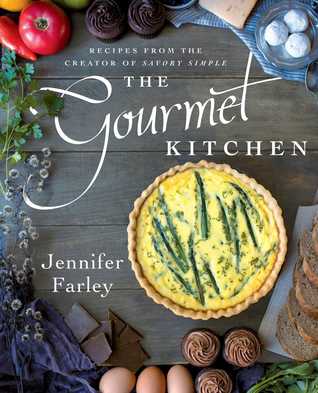
The Gourmet Kitchen: Recipes from the Creator of Savory Simple by Jennifer Farley
Jennifer Farley could never figure out what she wanted to do when she grew up. She had a variety of jobs and careers before deciding at the age of twenty-nine she quit her job and enrolled in culinary school. She started a blog to have a creative outlet for her recipes while in culinary school. This cookbook is a compilation of those recipes from her blog.
While I loved her late-bloomer story and the cookbook is full of beautiful pictures, there just weren't a lot of recipes that I wanted to try. It's not a bad cookbook, it's just not one that resonates with me and what I want to cook. But, good for Jennifer Farley for going for what she wants!
While I loved her late-bloomer story and the cookbook is full of beautiful pictures, there just weren't a lot of recipes that I wanted to try. It's not a bad cookbook, it's just not one that resonates with me and what I want to cook. But, good for Jennifer Farley for going for what she wants!

Rise & Shine: Better Breakfasts for Busy Mornings by Katie Sullivan Morford
I LOVED this cookbook! I love a good breakfast anyway, but this cookbook really gives a TON of great recipes and ideas for healthy, easy breakfasts. I was especially impressed that she had a recipe that mimics a Carnation Instant Breakfast drink (which I love). There are so many recipes I want to try from this book and if you're looking for some new breakfast recipes this is definitely one to check out!
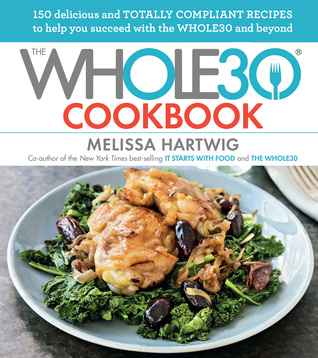
The Whole30 Cookbook by Melissa Hartwig
I had heard of the Whole 30 movement, but I guess I didn't realize it was basically a Paleo diet. While I'm not against doing an elimination diet if you're trying to figure out food allergies/sensitivities, but I just can't get behind a diet that doesn't allow dairy, pasta or beans. I just have zero interest in trying to cut out cheese and pasta from my diet. If you're into Paleo this might be a great cookbook, but it wasn't for me.
December 2016 Reviews

Eat Pray Love Made Me Do It by Elizabeth Gilbert (ed.)
I really liked Eat Pray Love when I first read it, but it didn't inspire me to quit my life and travel the world. This book is a collection of people who's lives were changed when they read the book by Elizabeth Gilbert. Gilbert talks about the idea coming from people who would tell her their stories at book signings or events. Some of the stories were interesting, but some didn't really seem "life-altering" enough to merit a book about it. Also, the stories were mostly like a page or two (a few were longer), but I would have rather had fewer, longer stories that were more dramatically transforming. I thought this book was OK, but I wouldn't really recommend it.
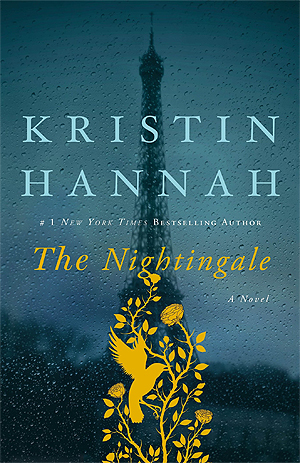
The Nightingale by Kristin Hannah (Books & Banter and Evening Edition book clubs)
The Nightingale follows sisters Vianne and Isabelle as they try to survive in occupied France during World War II. Vianne's husband is sent off to fight and she is alone with their young daughter Sophie, so Isabelle comes to stay with them. Isabelle can sense early on that the Nazi occupation will only get much worse and decides to find ways to help the resistance movement. Vianne struggles to provide for her daughter as the war worsens. Both women will do things they never imagined both to survive and to resist the Nazis.
The beginning of this book was VERY slow and Isabelle's character was ridiculously irritating and immature. The story gets better and is told alternately by Isabelle and Vianne. Both women find out what they are really made of by the horrors of war. The ending is definitely a tear-jerker, but there are quite a few threads that are wrapped up a little too neatly. This is like the Hallmark movie version of a WWII book - it does show the horrors of war, but without giving anything away there were a few things that just worked out too well to be real. This doesn't even compare to All the Light We Cannot See by Anthony Doerr!
The beginning of this book was VERY slow and Isabelle's character was ridiculously irritating and immature. The story gets better and is told alternately by Isabelle and Vianne. Both women find out what they are really made of by the horrors of war. The ending is definitely a tear-jerker, but there are quite a few threads that are wrapped up a little too neatly. This is like the Hallmark movie version of a WWII book - it does show the horrors of war, but without giving anything away there were a few things that just worked out too well to be real. This doesn't even compare to All the Light We Cannot See by Anthony Doerr!

Captured: A True Story of Abduction by Indians on the Texas Frontier by Scott Zesch
After I read News of the World by Paulette Jiles she referenced this book if anyone wanted to read more about the lives of Indian captives during the late 1800's, so I decided to check it out because I LOVED News of the World. The author decides to research this topic because his great-great uncle Adolph Korn had been captured by Indians as a child and lived with them for 3 years before his rescue. Zesch had always heard family stories that Uncle Adolph never really recovered from his capture and ended up living in remote caves at the end of his life. Zesch decided to do more research into children captured and briefly raised by Native Indian tribes to try to learn more about his uncle's experiences. There were a few children who had been captured and returned to their families who wrote memoirs about their experiences, but much of the first person information has been lost. But, as Zesch finds, almost all captives even when held for less than a year had a lot of trouble re-adjusting to "white" life and most didn't want to leave their Native families.
While there was a lot of interesting information and stories, I wish that Zesch had told more of his uncle's story. I also wish there had been a little more information about why the captives bonded so easily with their Native captors in such a short amount of time. Overall, it was an interesting book, but in my opinion it could have been a little better/more clearly written.
While there was a lot of interesting information and stories, I wish that Zesch had told more of his uncle's story. I also wish there had been a little more information about why the captives bonded so easily with their Native captors in such a short amount of time. Overall, it was an interesting book, but in my opinion it could have been a little better/more clearly written.

The Colour of Lightning by Paulette Jiles
After I read News of the World I realized that Jiles had written this previous book about Britt Johnson and his family being captured by raiding Indians and his drive to get them back. This story is based on the real life experiences of Britt Johnson. The book is great, but I'm not going to lie the chapters of the raid on Johnson's family were rough and hard to read. But, his determination to get his family back and how he does it is incredible. My absolute favorite scene is when Elizabeth Fitzgerald (the other adult captured with Britt's wife Mary) beats the SHIT out of one of her Indian captors - the BEST. SCENE. IN. THE. WHOLE. BOOK.
Jiles does a great job of capturing the issues between Native Indians and Texans in this book and almost all the characters are based on real people and is pretty true to their real stories. Definitely worth reading and you'll be thinking about it long after you're done reading.
Jiles does a great job of capturing the issues between Native Indians and Texans in this book and almost all the characters are based on real people and is pretty true to their real stories. Definitely worth reading and you'll be thinking about it long after you're done reading.
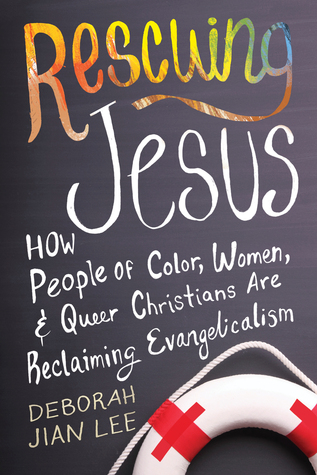
Rescuing Jesus: How People of Color, Women, and Queer Christians Are Reclaiming Evangelicalism by Deborah Jian Lee

Braving It: a Father, a Daughter, and an Unforgettable Journey Into the Alaskan Wild by James Campbell
I didn't know what to expect with this book, but once I got it in my hands I realized the author's cousin is Heimo Korth who is featured on the TV show The Last Alaskans. Campbell has traveled all over the world and spent a lot of time in Alaska, especially when he was researching the book he wrote about Heimo and his wife Edna's Alaskan wilderness life. When Campbell's oldest daughter turns 15 she wants to go on an Alaskan adventure with her dad. They start planning a canoe trip, but then Heimo calls and asks Campbell to come help him build a new cabin. Campbell goes and brings his daughter Aiden with him. The book is divided into 3 sections which detail 3 separate Alaskan trips he and Aiden take together. The first is helping Heimo build a new cabin the summer, the second they go back to help Heimo and Edna run their trap lines in the winter (avg. temp is -50), and the last trip is the canoe trip they were originally planning. During every trip Campbell gets to see his daughter grow and be changed by Alaska and the physicality of their trips and they develop a unique father/daughter bond as well.
Campbell is a great writer - the book flows really well and you just want to sit down and read it all in one sitting. He does a great job of describing the beauty and ruggedness of Alaska, but also the reality of the physical hardship of these trips and the work they do. I am looking forward to reading The Last Frontiersman, his book about Heimo and Edna. Overall, a great book that you won't want to put down!

Campbell is a great writer - the book flows really well and you just want to sit down and read it all in one sitting. He does a great job of describing the beauty and ruggedness of Alaska, but also the reality of the physical hardship of these trips and the work they do. I am looking forward to reading The Last Frontiersman, his book about Heimo and Edna. Overall, a great book that you won't want to put down!
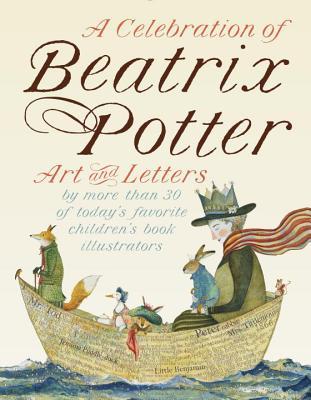
A Celebration of Beatrix Potter by Beatrix Potter
Beatrix Potter was an amazing woman and she changed children's books forever with her Peter Rabbit series. In this book current children's book authors and illustrators share what Beatrix Potter's books meant to them and how she inspired them, then they illustrate a character or scene from one of her books in their style. I LOVE the Beatrix Potter books and I've read a few books about her life and she was really ahead of her time in many ways. My favorite illustrations in this book are Chris Haughton (p.29), Jen Corace (p. 59), Chuck Groenink (p. 83), and Matthew Forsythe (p.93). This is really a beautiful book and any fan of Beatrix Potter needs to see this one!
Troublemaker by Leah Remini
I heard about Leah Remini's split from Scientology when the news broke, but I honestly didn't think much of it. I knew Scientology was a cult, but I had no idea just how crazy and abusive it was until I started watching her A&E TV show. After watching one episode I was totally hooked and decided to read her book. There are a lot of obvious red flags, but what you don't know from the outside is how controlled EVERYONE is - including celebrities. There are a LOT worse things revealed in the TV show, but there is plenty revealed in this book. Remini obviously had some doubts all along about Scientology because she continued to have friends and employees who were not Scientologists (which is strongly discouraged), so when she left she did still have support. Not to say she didn't lose a lot - she did, but she had a career and family and friends outside of Scientology, which many people don't have. I have to give her a lot of credit for not only getting out of something so crazy, but for trying to make a difference by exposing the abuses of this so-called "church." Good for her! The world needs more Troublemakers!
Monday, December 5, 2016
November 2016 Cookbooks
Learn to Cook 25 Southern Classics 3 Ways by Jennifer Brule
I would never have thought I would be so impressed with a Southern cookbook written by someone who is NOT Southern, but I am! Jennifer Brule grew up in Columbus, Ohio and has lived with her family in Switerland and England, but for the last 10+ years she's lived in the South. Her parents were foodies before that was a thing, so she grew up in a family centered on food and cooking. It's no surprise that she went to culinary school and now teaches cooking. She was inspired by both her own global food travels and now living in the South to take 25 Southern Classics and give them 2 additional preparations. Each dish has a classic, contemporary, and international recipe. There were SO many recipes I want to try! This is a great twist on a more traditional Southern cookbook, while still paying homage to all the great Southern Classics. This might be one I have to buy!
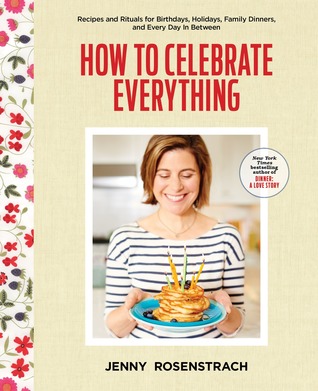
How to Celebrate Everything by Jenny Rosenstrach
I loved Rosenstrach's first book, Dinner, a Love Story, based on her blog of the same name. And I like the idea of this book about celebrating more and creating family rituals and celebrations, but there weren't as many recipes that I'd like to try in this one. I also felt like it could have almost been 2 books - one with the recipes and one with the stories behind her family's rituals and celebrations. I like her stories a lot, but when I'm looking at a cookbook I don't want to stop for long stories before each few recipes. It makes sense, but I would have more preferred two separate books or at least all the stories in the first half, then the recipes all together in the second half. Overall, still a good cookbook with a unique theme.

Deep Run Roots by Vivian Howard
I wasn't familiar with Vivian Howard before finding this book, but I love a good Southern cookbook. I liked how she organized the book not by type of recipe, but by the main ingredient - everything from okra to eggs, peaches to pecans. At the beginning of each chapter/ingredient Howard gives a few page introduction to that ingredient from her past or perspective. Howard grew up in the small town of Deep Run, NC and couldn't wait to get OUT. But, eventually she and her husband come back and decide they want to raise their family there, so they open a restaurant in Kinston, NC. Most of the recipes in the book are ones Howard has created for their restaurant - some old family recipes and some revamped Southern classics. Overall, it's a good cookbook, but it's HUGE, so it was kind of overwhelming to get through. There were a few recipes I'd like to try and I'd also like to check out her episodes of A Chef's Life on PBS.
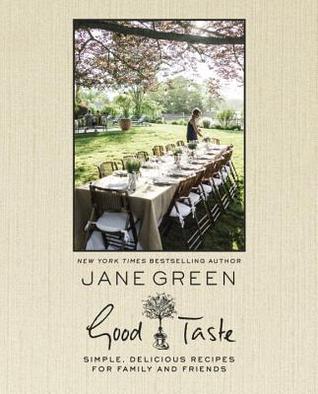
Good Taste: Simple, Delicious Recipes for Family and Friends by Jane Green
Jane Green is one of my favorite authors, so when I got an email that she was doing a Kickstarter campaign to fund a cookbook I definitely wanted to get it. The cookbook is beautiful with great photos and her goal is to have recipes that are simple and easy, but look much fancier. There are definitely recipes I'd like to try. I'm just as happy with Jane Green's cookbook as I am with her novels, and I look forward to more of both from her in the future.

Homestead Kitchen: Stories and Recipes From Our Hearth to Yours by Eve and Eivin Kilcher
I'm a big fan of the TV show Alaska: the Last Frontier, so when I heard that Eivin and Eve were writing a cookbook I knew I would buy it. While I'm not trying to live the complete homesteading life of the Kilchers, I do try to grow my own food and make food from scratch. Sourcing food from quality and humane sources is important to me. This book is full of not just recipes from Eivin and Eve, but also writings about their views on food which I really appreciate. They are up front that not every ingredient they use will be available for the average home cook, but any of their recipes could be edited with ingredients you like and/or are available in your area. I was really impressed with this cookbook - both the recipes and the other content. If you're a fan of the Alaska: the Last Frontier TV show, it's definitely worth checking out this cookbook.

The Pioneer Woman Cooks: a Year of Holidays by Ree Drummond
I love the Pioneer Woman's food, so this cookbook doesn't disappoint. I've had this cookbook for a few years since it came out, but only just now got around to really reading through it. I like that it's divided up by holidays instead of the traditional appetizers, entrees, etc. I also really like that each recipe has LOTS of color pictures of each step of the recipe. That way you can make sure as you're going that it's looking like it's supposed to. There are definitely lots of these recipes I'd like to try. If you're a fan of the Pioneer Woman definitely check this one out.
November 2016 Reviews

What She Knew by Gilly MacMillan
Rachel Jenner is struggling with becoming a single mother to her son Ben after her husband leaves her for another woman. About a year after their divorce she and Ben are in a local park when he disappears. Rachel is frantic with worry, but soon the media focuses on her and begins speculating that she did something to Ben. Throughout the 9 days Ben is missing Rachel realizes that almost everyone close to her are harboring dark secrets. She begins to doubt everyone. The story alternates between Rachel's perspective and the perspective of the lead detective on the case James Clemo. It's clear that after the case is over detective Clemo is struggling with almost symptoms similar to PTSD, but it's never quite clear what caused that. I was thinking there was going to be some huge reveal related to his character, but there never really was. I thought Rachel's character was very well done and you definitely felt for her as the story progressed. The author did a good job of giving quite a few possible suspects, so by the end I was surprised. Overall, it was a good, quick read. It's the author's first novel so I'll be interested to see what she writes in the future.
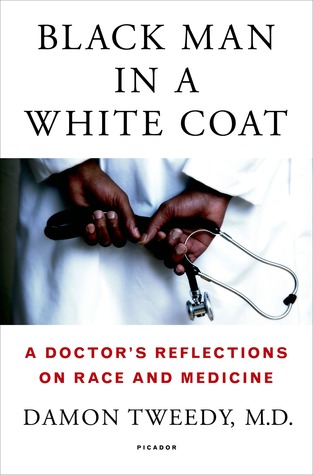
Black Man in a White Coat by Damon Tweedy, M.D. (Books & Banter book club)
When Damon Tweedy begins medical school he thinks that his race won't be an issue, but he moves into a world where race is often an issue for both doctors and patients. It starts when Tweedy is mistaken for maintenance staff by a medical school professor - the encounter really brings out a lot of racial insecurities in him. Often in school he hears about how certain diseases are more prevalent in blacks than whites. During his clinical rotations his race is often brought up by patients and other staff - in both positive and negative ways. This book is his sorting out how race affected his personal journey through medical school and into a practicing doctor, but also about race and medicine in general. I was surprised when black patients didn't want him to treat them because they wanted a "real" doctor and when other staff wanted him to take their black patients as if by being black he could somehow be a better doctor to a black patient than a doctor of another race. While very interesting and eye-opening, it's still sad to me that this is such an issue today. I'm curious (and somewhat worried) about what the discussion will be like in book club with this book.

A Robot in the Garden by Deborah Install
This was a complete surprise of a book! When I read a review of the book I thought it sounded interesting, but it was FANTASTIC! Ben has been in a funk ever since his parents died suddenly. He and his wife are growing apart and he is basically depressed and not really doing anything. One day when he wakes up there is a robot in his garden. It's obviously "retro" - not the new AI androids everyone is buying to help out around the house. But, Ben feels sorry for the robot, who calls himself Tang, and decides to try to find out where Tang came from. This turns into quite a journey taking Ben and Tang to California, Texas, Japan and Micronesia before finally returning home. During this process Ben starts to realize he's been grieving for his parents all along and just how much he misunderstood his wife as well. Tang ends up being the unifying force with Ben and both his family and the outside world.
This was really a great book that had laugh-out-loud humor and some more serious themes. A completely happy surprise. I can't wait to see what this author writes next!

Indian Creek Chronicles by Pete Fromm

What Was Mine by Helen Klein Ross
When Lucy Wakefield can't have children she is grief-stricken. Her marriage falls apart and she just tries to go on with her life. But one day when she comes across a baby in a store cart with no parent in sight, she impulsively takes the baby and raises her as her own. Lucy is constantly worried that she will be found out, but she never is - until her daughter Mia is in college and a series of events work together to expose Lucy's secret. The book is told from many perspectives, but mainly Lucy, Mia, and Marilyn, Mia's birth mother.
I thought this would be a really interesting book, but it was just kind of mediocre. The first section of the book where Lucy describes taking the baby and the immediate aftermath was the best part. After that is got really slow and bogged down. Overall, it was OK, but I wouldn't really recommend it.
I thought this would be a really interesting book, but it was just kind of mediocre. The first section of the book where Lucy describes taking the baby and the immediate aftermath was the best part. After that is got really slow and bogged down. Overall, it was OK, but I wouldn't really recommend it.

When God Doesn't Fix It by Laura Story
If you've ever struggled with why bad things happen to you, whether an illness, a strained relationship, or an unanswered prayer, this is the book for you. Laura Story had her life all planned out and it started with her marriage to Martin. But, after they had only been married a little over a year Martin started experiencing weird symptoms. It was eventually discovered that he had a brain tumor. They both thought once the tumor was removed, things would get better. But, they got worse - Martin almost died and needed to have other surgeries. His short-term memory is severely limited and he struggled physically as well. There were years of struggles for Laura and Martin, but through it all she was able to see God's hand in their lives so much more clearly. This book highlights the many lessons Laura learned through their on-going struggle - she thought people could only learn from their story when it had a happy ending. But, God showed her that He works best through our brokenness and sharing their story even when it's not over is what can really help people. At the end of each chapter Laura highlights a myth she believed before their journey and the truth God revealed to her about that myth - then they are all compiled at the end of the book. This is really a great story and a testament to God working through us even when things seem to be at the worst.
Some quotes I really liked:
"I no longer believe the myth that trials are a curse. Trials are an opportunity. They are an invitation to do good works to glorify our Father in heaven, to transform our lives from the inside out, and to drive us into the arms and footsteps of Jesus." (p. 25)
"It's important to know that nowhere does the Bible promise that all our questions will be answered this side of heaven. God doesn't promise that our stories will make sense in and of themselves. But he does promise they will find their greater purpose in light of his greater story of redemption." (p. 141)
"The answer to why doesn't help us heal. But knowing that God's glory can be displayed, even in the brokenness of our lives, gives us hope despite our circumstances." (p. 142)
"God was asking me to reveal the brokenness in my life not to show how faithless I was, but how faithful he is. God wasn't going to use me in spite of my hard story; he was going to use my hard story." (p. 174)
"...I realized that when we're living in brokenness we can sometimes feel as though we're less than or not good enough. Sometimes that leads us to trying harder. Often it leads to us failing further. But we have to give up that idea and settle into who God created us to be." (p. 276)
Some quotes I really liked:
"I no longer believe the myth that trials are a curse. Trials are an opportunity. They are an invitation to do good works to glorify our Father in heaven, to transform our lives from the inside out, and to drive us into the arms and footsteps of Jesus." (p. 25)
"It's important to know that nowhere does the Bible promise that all our questions will be answered this side of heaven. God doesn't promise that our stories will make sense in and of themselves. But he does promise they will find their greater purpose in light of his greater story of redemption." (p. 141)
"The answer to why doesn't help us heal. But knowing that God's glory can be displayed, even in the brokenness of our lives, gives us hope despite our circumstances." (p. 142)
"God was asking me to reveal the brokenness in my life not to show how faithless I was, but how faithful he is. God wasn't going to use me in spite of my hard story; he was going to use my hard story." (p. 174)
"...I realized that when we're living in brokenness we can sometimes feel as though we're less than or not good enough. Sometimes that leads us to trying harder. Often it leads to us failing further. But we have to give up that idea and settle into who God created us to be." (p. 276)

Paris for One and Other Stories by Jojo Moyes
Every time I think I have new favorite by Jojo Moyes, I read her next book and it's instantly my new favorite! She is just a wonderful author and this book does NOT disappoint. The main short story, really more of a novella, follows Nell on what is supposed to be a romantic trip to Paris with her boyfriend after he bails on the trip. Then there are 8 other short stories - all very different, but all fantastic. My favorite one was the last one, "The Christmas List." Fans of Jojo Moyes this is another winner!
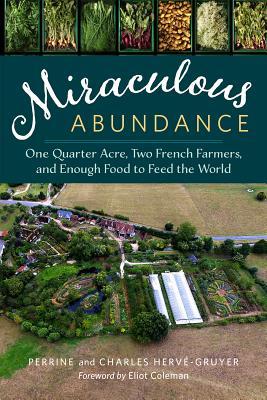
Miraculous Abundance: One Quarter Acre, Two French Farmers, and Enough Food to Feed the World by Charles and Perrine Herve-Gruyer
Some quotes I really liked:
"Slow Food is often criticized as elitist. But that criticism is totally blind to the real issue. It is not important whether you or I or anyone else in the United States ever gets to eat some specific artisanal food. What's important is that it exists, that there is one small corner of the planet still unconquered by Kraft or Nabisco or Monsanto, one little rural holdout inhabited by a few hardworking people who still know what quality is and have a passion for producing it." (p. x of the Forward)
"Here is a definition of this system adapted to our latitudes, from Patrick Whitefield: 'A forest garden is a garden modeled on natural woodland. Like a natural woodland, it has three layers of vegetation: trees, shrubs and herbaceous plants. In an edible forest garden the tree layers contains fruit and nut trees, the shrub layer soft fruit and nut bushes, and the ground layer perennial vegetables and herbs. The soil is not dug, and annual vegetables are not normally included unless they can reproduce by self-seeding. It is usually a very diverse garden, containing a wide variety of edible plants.'...If we abandon an agricultural area, it is the forest that will return naturally. Maintaining open space requires constant effort. The central role of the tree is becoming better appreciated. It fulfills a plethora of ecological functions, creates soil, promotes microclimates conducive to life, and stores carbon. It also beautifies the landscape and provides countless human services." (p. 128-9)
"Traditional agriculture was labor intensive, industrial agriculture is energy intensive, and permaculture-designed systems are information and design intensive. - David Holmgren" (p. 147)
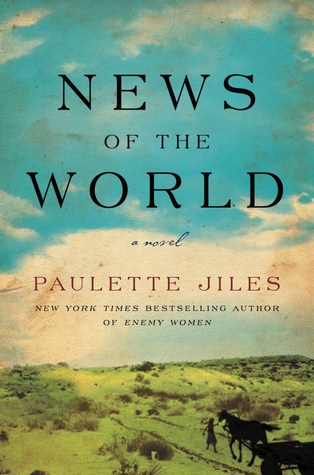
News of the World by Paulette Jiles
After the Civil War Captain Jefferson Kidd rides from small town to small town reading the news of the world from various newspapers. He's lived through three wars, is widowed, and enjoys the freedom of not being tied down in his old age. While at one of his stops he is offered a fifty-dollar gold piece to bring a rescued white child back to her family. Johanna Leonberger's parents and younger sister were killed by Kiowa raiders and she was kidnapped and lived with them for 4 years. She is now 10 years old, does not speak English, and doesn't want to leave her Kiowa family. The Captain agrees to take her against his better judgement, but while traveling across the wild Texas territory the two form a unique bond. Once they reach her extended family outside San Antonio the Captain has to make a terrible choice that will ultimately change both he and Johanna's lives forever. This is a short, but fantastic book with two very memorable characters and would make a great movie! Definitely worth reading!
Wednesday, November 2, 2016
October 2016 Cookbooks
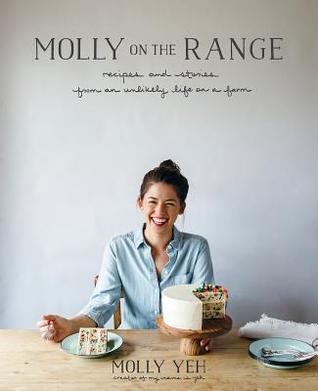
Molly on the Range by Molly Yeh
When I saw a review of this book that said a city girl moves to her husband's family farm and starts a blog about cooking, I was interested. But, it seems like the "family farm" is pretty much a mono-culture factory farm, so that was a big let down. While there were a lot of recipes I want to try, I was kind of turned off by some of the author's language. She seemed to be crude for seemingly no reason and it didn't even seem to fit into the stories she was telling. I have never read her blog, so maybe that is just how she talks, but I didn't like it and it didn't seem to work with her stories. Overall, the recipes look good, but I don't think I'll be checking out her blog.
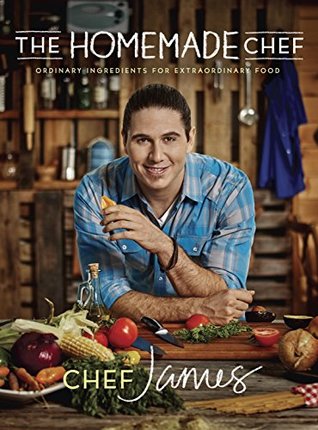
The Homemade Chef by James Tahhan
I wasn't familiar with James Tahhan, but I liked the title so I decided to check this book out. I don't love a lot of "Latin" food, but there were a few recipes I wanted to try. I also liked that the first 50 pages of the book were his personal story and LOTS of tips for making the best use of your kitchen and ingredients. Overall, I'm glad I picked this one up.

Scratch: Home Cooking for Everyone Made Simple, Fun, and Totally Delicious by Maria Rodale
When I first heard about this cookbook I didn't even realize the author was related to J.I. Rodale - one of the pioneers of organic farming. The author is J.I.'s granddaughter and she grew up on the first official organic farm eating high quality food made from scratch. Even after she became a single mother she knew that cooking from scratch was cheaper and tasted better. This cookbook is her ode to her unusual and pioneering family background. There are SO many great sounding, yet simple recipes. There are quite a few that I'd like to try. She gives a lot of background on her family, definitions of some common food terms related to organics, and lots of tips for cooking and baking from scratch. Overall, this is a fantastic cookbook and I would highly recommend it!

Food 52 A New Way to Dinner by Amanda Hesser and Merrill Stubbs
The premise of this cookbook is that you can prep and/or cook more on the weekend to make dinners easier during the week. The book is divided into seasons and each author gives a weekly menu based on that season. I often cook more on the weekend so that I don't have to cook after work during the week and I like the idea of a cookbook that focuses on that premise, but this one just fell short for me. I felt like the huge grocery lists were kind of confusing and it didn't seem like there were enough recipes for a whole week's worth of dinners. It is a very pretty cookbook, but not one I would recommend.
October 2016 Reviews

The Memory Weaver by Jane Kirkpatrick
I loved A Light in the Wilderness by Kirkpatrick, so I was really looking forward to reading this one. I was pretty disappointed by The Memory Weaver. It follows Eliza Spalding who is "the first white child to live born west of the Shining Mountains." Her parents are missionaries to the Nez Perce Indians and when Eliza is ten years old she is captured and held captive for over 30 days by Cayuse Indians during a massacre. That event forever changed Eliza's life. The book starts when Eliza is thirteen and has recently lost her mother. She is trying to figure out how to shape her life after the massacre and aftermath, as well as, losing her mother and trying to help care for her younger siblings. While the story is based on true events, I felt like Eliza's character was kind of flat. I just didn't connect with her like I did with Letitia in A Light in the Wilderness. I wouldn't recommend this one.
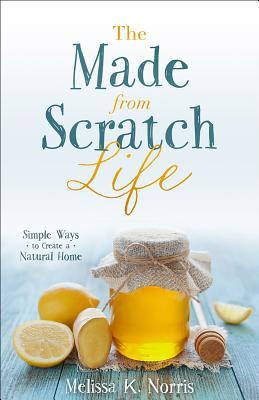
The Made from Scratch Life by Melissa Norris
This was a really quick read that goes over some basic areas where you can create a more "made-from-scratch" life. It's broken down into 8 chapters that each deal with a specific area - growing food, preserving food, cooking, cleaning, etc. I liked how she divided up the book and I liked that each chapter started with a personal story. There are also lots of recipes both for food and for homemade cleaning products or gifts. The author is a Christian so that shapes her views and how she lives her life. My only complaint was that sometimes her parallels between homesteading and Christianity were a little heavy handed. I appreciate and agree with her, but it just seemed a little forced at times. Overall, I did like the book and Norris definitely has a LOT of great, easy to incorporate tips on doing more things the "made-from-scratch" way.
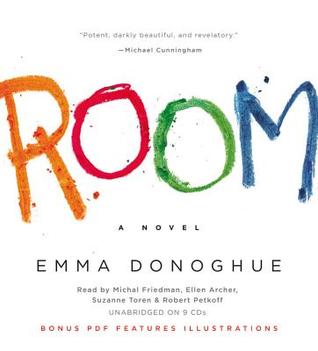
Room by Emma Donoghue (Books & Banter book club)
First time I read this book Dec. 30 - Jan. 1 2011.
Re-read for Evening Edition book club March 2012.
Re-reading this book it was just as good as the first time I read it. The only difference was this time I already knew how they escaped from Old Nick. I really think Donoghue writing the book from Jack's point of view was just genius. It is a whole different spin on this situation and it would have been a much darker book if it was from Ma's point of view. I think this will spark some good discussion at book club!
Re-reading again for Books & Banter book club Oct. 2016.
I have enjoyed this book just as much reading it for the third time. It's a really fast read and now after reading it again I might go ahead and watch the movie to see how it compares. It's even more interesting to read now after stories like Jaycee Dugard and the Cleveland three were found after years in captivity and also had children in captivity. I still really like it being told from Jack's perspective. We'll see how this book club likes it.
Re-read for Evening Edition book club March 2012.
Re-reading this book it was just as good as the first time I read it. The only difference was this time I already knew how they escaped from Old Nick. I really think Donoghue writing the book from Jack's point of view was just genius. It is a whole different spin on this situation and it would have been a much darker book if it was from Ma's point of view. I think this will spark some good discussion at book club!
Re-reading again for Books & Banter book club Oct. 2016.
I have enjoyed this book just as much reading it for the third time. It's a really fast read and now after reading it again I might go ahead and watch the movie to see how it compares. It's even more interesting to read now after stories like Jaycee Dugard and the Cleveland three were found after years in captivity and also had children in captivity. I still really like it being told from Jack's perspective. We'll see how this book club likes it.
I Am Second by Doug Bender and Dave Sterrett
I wasn't familiar with the I Am Second movement before reading this book, but now I will definitely check out some of the videos. The book is a really quick read with most of the stories only a few pages long. There were some celebrities and familiar faces, but mostly just "normal" people who have struggled with things millions of people struggle with - addiction, infidelity, overeating, suicidal thoughts, etc. But, all these people at their lowest point reached out to God and felt Him respond and that was what allowed them to turn their lives around. This is one of those books that I would have probably never read if it wasn't for a book club, but it's definitely worth reading.

Falling by Jane Green
Emma never felt like she fit into upper-crust British society, but she followed her family's plans and worked in finance. When she had the chance to come to New York she feels like this is a chance to start over. But the high stress financial world isn't her dream either so she saves up as much as she can and moves to Westport, Connecticut to start a new, lower stress life. When she moves into a rental house she almost immediately starts falling for her landlord, a single father named Dominic and his son Jesse. Soon they are living like a family and everything is pointing toward a great future. Then the unthinkable happens and everything Emma dreamed about is threatened. Will Emma stay and fight for her future or will her dreams be destroyed?
I love Jane Green and I read that this was kind of a fictional account of how she met her current husband. But something just seemed off to me. There were a few weird sections of self-doubt that just seemed to not fit at all and were very awkward. While I didn't see the twist at the end coming, the very end seems like a HUGE stretch. Overall, it was just kind of weird. It didn't read like a falling in love story, but more like Emma constantly worrying about this relationship and whether they're moving too fast. Not Jane Green's best in my opinion.
I love Jane Green and I read that this was kind of a fictional account of how she met her current husband. But something just seemed off to me. There were a few weird sections of self-doubt that just seemed to not fit at all and were very awkward. While I didn't see the twist at the end coming, the very end seems like a HUGE stretch. Overall, it was just kind of weird. It didn't read like a falling in love story, but more like Emma constantly worrying about this relationship and whether they're moving too fast. Not Jane Green's best in my opinion.
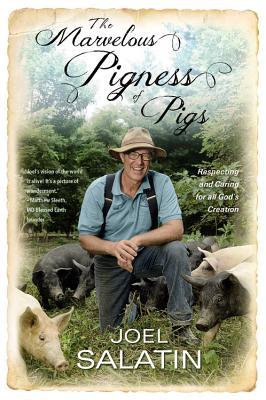
The Marvelous Pigness of Pigs by Joel Salatin
Joel Salatin is AMAZING! He is so incredibly articulate and if you ever have the opportunity to hear him speak in person - GO! In this book Joel "comes out" as a Christian, although I doubt that's really been a secret, and shows how Biblical principles can apply to food and farming. I had the opportunity to hear Joel speak at Duke University a few years ago at a food and faith conference (I wish I could have gone to the whole conference) and there was a lot of what he spoke about at that conference in this book. He explains that this book is more geared toward Christians, but obviously it's open to anyone. I don't think anyone who hears Joel speak or reads is books can be unchanged. Each chapter he has two opposite terms and explores those specific terms/issues in that chapter both in the matter of Christian faith and how it can be played out in food and farming. I will say as both a Christian and a proponent of Joel's way of eating/growing food/supporting my local farmers it was a convicting book - you can always do more and better in everything. I would highly recommend this one to anyone!
Some quotes I really liked:
"It dawned on me that the biblical narrow way that leads to truth and the broad way that leads to destruction are not just spiritual: they're all-encompassing." (p. 7)
"As if pigs are no more special than extruded plastic dolls or polyethylene pipe fittings. I would suggest that a culture that views its pigs as just mechanical objects to be reprogrammed and manipulated will view its citizens the same way, and ultimately God the same way." (p. 20)
"We're the first culture in the world that routinely eats things that have never lived. In spiritual parlance, we're ingesting things that are an abomination to our bodies - and then requesting prayer for the ailments that result." (p. 29)
"Our modern techno-sophisticated culture has absolutely abandoned domestic culinary arts. An integrity food system requires that people using it be informed through participation. When people abdicate kitchen and home-centricity in food preparation, processing, packaging, and preserving, they withdraw accountability. The more people are ignorant about an issue, the easier it is for unscrupulous participants to succeed." (p. 80)
"At sustainable agriculture conferences, most of the workshops are positive how-tos. I almost never hear much discussion about sickness and disease. The overriding desire is how to work with nature as a benevolent friend. This is completely opposite of the theme at industrial agriculture conferences - the kind put on by mainstream agribusiness. Nearly all the discussions center around diseases and sicknesses. The overriding desire is how to beat nature, how to win, as if nature is the enemy that must be subjugated like a military conquest." (p. 89)
"I know segregation is a strong word, but I use it on purpose in order to capture the degree of separation in America's current food and farming system...Perhaps the most segregated thinking of our day rears its ugly head toward the farm sector specifically, and the food sector generally. What happened to the Jeffersonian intellectual agrarian? It's been replaced by a nearly universal notion that smart, white, creative people don't get their hands dirty. While this applies more egregiously to farming, I see it in virtually all of the trades - plumbers, electricians, masons, carpenters, mechanics, welders. You name it, smart white kids aren't supposed to do those things." (p. 106)
"Why are many state governments passing laws criminalizing picture-taking at industrial farms? Because seeing the ugliness incriminates the system." (p. 116)
"The whole idea of pornography, which of course the Christian community universally condemns, is instant and expedient gratification of a sacred act sanctified by marriage. Where is the Christian who dares to identify the pornographic food system that revels in death-inducing, sickness-encouraging, and creation-destroying orgies of self-indulgence? Strong language? Have you walked into a confinement factory chicken house lately? How about a confinement hog factory? Just like pornography disrespects and cheapens God-given and -sanctioned specialness of sex, factory-farmed hog houses disrespect and cheapen the God-sculpted specialness of pigs." (p. 133)
"Folks, a food system that pollutes the neighbor's land, buildings, and people is not a neighbor-friendly system and therefore not a biblical system. Let's call it what it is: wrong." (p. 180)
"For decades the USDA romanced farmers to freebie dinners in order to teach them how to feed dead cows to cows. Because it violated the most fundamental herbivoreness of herbivores, it eventually created mad cow disease. At least, that's the official belief. Cows are herbivores, and herbivores in nature do not eat dead cows, chicken manure, grain, or fermented forage. A host of regulations and government agencies now surround combating this disease that never would have occurred had we simply followed God's template. Virtually all of our diseases reflect a departure from God's patterns." (p. 246)
Some quotes I really liked:
"It dawned on me that the biblical narrow way that leads to truth and the broad way that leads to destruction are not just spiritual: they're all-encompassing." (p. 7)
"As if pigs are no more special than extruded plastic dolls or polyethylene pipe fittings. I would suggest that a culture that views its pigs as just mechanical objects to be reprogrammed and manipulated will view its citizens the same way, and ultimately God the same way." (p. 20)
"We're the first culture in the world that routinely eats things that have never lived. In spiritual parlance, we're ingesting things that are an abomination to our bodies - and then requesting prayer for the ailments that result." (p. 29)
"Our modern techno-sophisticated culture has absolutely abandoned domestic culinary arts. An integrity food system requires that people using it be informed through participation. When people abdicate kitchen and home-centricity in food preparation, processing, packaging, and preserving, they withdraw accountability. The more people are ignorant about an issue, the easier it is for unscrupulous participants to succeed." (p. 80)
"At sustainable agriculture conferences, most of the workshops are positive how-tos. I almost never hear much discussion about sickness and disease. The overriding desire is how to work with nature as a benevolent friend. This is completely opposite of the theme at industrial agriculture conferences - the kind put on by mainstream agribusiness. Nearly all the discussions center around diseases and sicknesses. The overriding desire is how to beat nature, how to win, as if nature is the enemy that must be subjugated like a military conquest." (p. 89)
"I know segregation is a strong word, but I use it on purpose in order to capture the degree of separation in America's current food and farming system...Perhaps the most segregated thinking of our day rears its ugly head toward the farm sector specifically, and the food sector generally. What happened to the Jeffersonian intellectual agrarian? It's been replaced by a nearly universal notion that smart, white, creative people don't get their hands dirty. While this applies more egregiously to farming, I see it in virtually all of the trades - plumbers, electricians, masons, carpenters, mechanics, welders. You name it, smart white kids aren't supposed to do those things." (p. 106)
"Why are many state governments passing laws criminalizing picture-taking at industrial farms? Because seeing the ugliness incriminates the system." (p. 116)
"The whole idea of pornography, which of course the Christian community universally condemns, is instant and expedient gratification of a sacred act sanctified by marriage. Where is the Christian who dares to identify the pornographic food system that revels in death-inducing, sickness-encouraging, and creation-destroying orgies of self-indulgence? Strong language? Have you walked into a confinement factory chicken house lately? How about a confinement hog factory? Just like pornography disrespects and cheapens God-given and -sanctioned specialness of sex, factory-farmed hog houses disrespect and cheapen the God-sculpted specialness of pigs." (p. 133)
"Folks, a food system that pollutes the neighbor's land, buildings, and people is not a neighbor-friendly system and therefore not a biblical system. Let's call it what it is: wrong." (p. 180)
"For decades the USDA romanced farmers to freebie dinners in order to teach them how to feed dead cows to cows. Because it violated the most fundamental herbivoreness of herbivores, it eventually created mad cow disease. At least, that's the official belief. Cows are herbivores, and herbivores in nature do not eat dead cows, chicken manure, grain, or fermented forage. A host of regulations and government agencies now surround combating this disease that never would have occurred had we simply followed God's template. Virtually all of our diseases reflect a departure from God's patterns." (p. 246)

Come Away With Me by Karma Brown
Tegan has everything she always dreamed of - she is newly married to the love of her life Gabe and is pregnant with a baby boy. But one night on the way to a Christmas party a patch of black ice and the subsequent car accident change everything. Tegan is drowning in grief, but is also angry at Gabe who was driving the night of the accident. After a few months Gabe reminds Tegan of their Jar of Spontaneity, a collection of trips and wish list things they wanted to do together in the future. Gabe hopes that if they can do a few of these trips it will help Tegan create some new, happy memories. While traveling to Thailand, Italy, and Hawaii Tegan does slowly start to feel better, but that is also where a huge plot twist comes in that changes the whole dynamic of the story.
Definitely a tear-jerker at times, and I didn't see the plot twist coming at all. While Tegan is dealing with enormous grief, there is only so many pages you can take of constant feeling sick and wanting to stay in bed - there were times when the story definitely dragged. And while the plot twist definitely changed things, it came so close to the end that it almost seemed an afterthought. Overall, it was good, but not great.
Definitely a tear-jerker at times, and I didn't see the plot twist coming at all. While Tegan is dealing with enormous grief, there is only so many pages you can take of constant feeling sick and wanting to stay in bed - there were times when the story definitely dragged. And while the plot twist definitely changed things, it came so close to the end that it almost seemed an afterthought. Overall, it was good, but not great.

The Forgetting Time by Sharon Guskin
Janie knew her son Noah was precocious and often difficult, but she just assumes it's because he's only 4 years old. But when his behavior gets worse and he is kicked out of preschool, she knows something has to be done. When she stumbles upon Jerome Anderson's work on children who remember past lives, she is shocked at the similarities between his work and what's going on with her son. Dr. Anderson is struggling after receiving a deadly diagnosis, but when he is contacted by Janie he can't help but be intrigued. Can Dr. Anderson figure out what's going on with Noah? Will this help or hurt Noah?
This is a unique and fascinating story that quickly pulls you in. Whether you believe in the idea of reincarnation or not (I don't), it's still a great story about love and loss and how some things will never be explained by science. This is a FANTASTIC book and since it's the author's first, I can't wait to see what she comes out with in the future.
This is a unique and fascinating story that quickly pulls you in. Whether you believe in the idea of reincarnation or not (I don't), it's still a great story about love and loss and how some things will never be explained by science. This is a FANTASTIC book and since it's the author's first, I can't wait to see what she comes out with in the future.

Elephant Company by Vicki Constantine Croke (Evening Edition book club)
This is one of those books that I would have probably never read if not for book club, but I'm so glad I did! James Williams signed up to work for the Bombay Burmah Trading Corporation, a teak logging company, after WWI because he wanted "adventure." Williams would certainly get adventure living in the Burmese jungle and working with elephants. His job was to take care of all the elephants working for the teak company to make sure they were healthy and physically able to work. He was part manager and part elephant vet. He immediately bonded with the elephants and became incredibly skilled in their care. After finding out how adult elephants were captured and "kheddared," he worked to find a new way to raise working elephants with the calves born to working elephants - a new training school for elephants that was much less barbaric. When WWII started Williams played a huge role in using his working elephants for the Allied war effort. He put his own life in danger to help the elephants and transport them (and many refugees) to safety after Japan invaded Burma. He is a pioneer in many ways and his story is amazing. Definitely a great book about a fascinating man and the elephants he loved.
Some quotes I really liked:
[When a mother elephant was blinded] "When the mother and calf were led away Williams noticed something extraordinary. 'I saw the calf back his hindquarters toward his mother's head,' Williams wrote. 'When she felt him, she raised her trunk and rested it on the calf's back; and in this way they moved about the clearing. It was like a little boy holding his blind mother's hand and steering her down the street.'" (p. 110)
"Williams made his way through danger zones with the help of his network of informants - the villagers who were the eyes and ears of the forest. He received astonishingly accurate and swift intelligence on the movement of the enemy...General Slim himself was amazed by the loyalty shown to Williams. After all, his men and their families were civilians and not subject to military law or discipline. They could do as they pleased. Slim said, 'That they stayed, in spite of hardship, danger and separation from their homes - with at one time what seemed like small prospect of ever returning to them - was the measure of Elephant Bill's leadership and of their trust in him.'" (p. 232-3)
"One by one then, all fifty-two of the other [elephants] completed the ascent. Not one fell or refused to climb. Williams, the man who thought elephants were capable of anything, was humbled by their achievement. It was a wonder. 'I learned more in that one day about what elephants could be got to do than I had in twenty-four years,' he would write." (p. 275)
"Williams grieved Bandoola as he would a brother, and he buried him as a war hero. Somewhere on the border of Burma and India is a monument. Carved on a giant teak tree, 'preserved for humanity,' are the words BANDOOLA BORN 1897, KILLED IN ACTION 1944." (p. 288)
Some quotes I really liked:
[When a mother elephant was blinded] "When the mother and calf were led away Williams noticed something extraordinary. 'I saw the calf back his hindquarters toward his mother's head,' Williams wrote. 'When she felt him, she raised her trunk and rested it on the calf's back; and in this way they moved about the clearing. It was like a little boy holding his blind mother's hand and steering her down the street.'" (p. 110)
"Williams made his way through danger zones with the help of his network of informants - the villagers who were the eyes and ears of the forest. He received astonishingly accurate and swift intelligence on the movement of the enemy...General Slim himself was amazed by the loyalty shown to Williams. After all, his men and their families were civilians and not subject to military law or discipline. They could do as they pleased. Slim said, 'That they stayed, in spite of hardship, danger and separation from their homes - with at one time what seemed like small prospect of ever returning to them - was the measure of Elephant Bill's leadership and of their trust in him.'" (p. 232-3)
"One by one then, all fifty-two of the other [elephants] completed the ascent. Not one fell or refused to climb. Williams, the man who thought elephants were capable of anything, was humbled by their achievement. It was a wonder. 'I learned more in that one day about what elephants could be got to do than I had in twenty-four years,' he would write." (p. 275)
"Williams grieved Bandoola as he would a brother, and he buried him as a war hero. Somewhere on the border of Burma and India is a monument. Carved on a giant teak tree, 'preserved for humanity,' are the words BANDOOLA BORN 1897, KILLED IN ACTION 1944." (p. 288)
Subscribe to:
Posts (Atom)