Thursday, June 29, 2017

June 2017 Cookbooks

Full Moon Suppers at Salt Water Farm by Annemarie Ahearn

Full Moon Suppers at Salt Water Farm by Annemarie Ahern

When Annemarie Ahearn was 18 her parents fulfilled a lifelong dream when they bought a run-down farm on the coast of Maine. At first Annemarie thought her parents were crazy, but soon she came to love the small town where they spent their summers on the farm. Soon she decided to live there full time and start a farm and cooking school on her parent's farm. Soon she was hosting full moon suppers on the full moon of each month sourcing local and seasonal ingredients. This book is a collection of recipes from those monthly dinners. Each chapter describes that month's full moon and what food/ingredients are in season at that time before the recipes. While I love the premise of the book and what Annemarie did with her parent's farm, there just weren't a lot of recipes I wanted to try. But, it's still a unique cookbook with lots of beautiful photographs of the food and the farm.


Pecans by Kathleen Purvis

Pecans by Kathleen Purvis

I love the Savor the South cookbooks and somehow I had missed this one even though I think it was the first in the series. I haven't always loved nuts, but in the last few years I have come to really like pecans so I decided to check out this book. Purvis gives a great introduction with the history of pecans in the South, as well as her personal history with pecans. The book is ordered like many cookbooks with sections for appetizers, main dishes, sides, and desserts. Whether you pronounce them "pee-cans" or "pah-cahns" pecans are a definitive Southern food. There were definitely a few recipes I'd like to try.


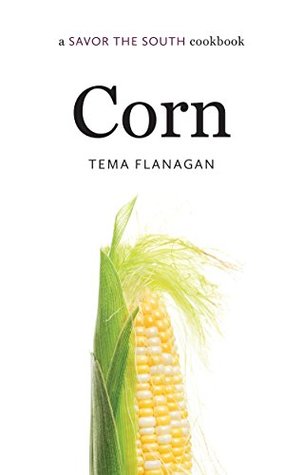
Corn by Tema Flanagan

Corn by Tema Flanagan

This is one of the newest Savor the South cookbooks and I might end up buying this one! Corn is such a versatile ingredient and definitely a signature food of the South. Flanagan gives a great introduction with the history of corn and how it is used in Southern cooking. She also gives some tips on how to source the best quality corn and corn products. Then she organizes the recipes by the type of corn used - on and off the cob, dried and ground, nixtamalized and popped, and mashed and fermented. It is a unique way to organize a cookbook, but really works to show just how versatile and prolific corn is for Southern cooking. There are LOTS of recipes I'd like to try in this one!


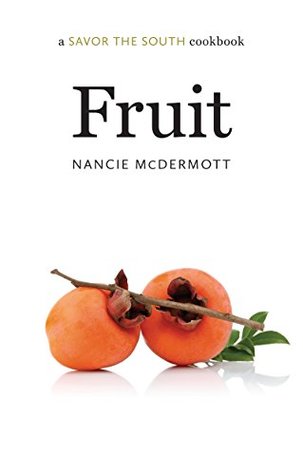
Fruit by Nancie McDermott

Fruit by Nancie McDermott

This is one of the newest Savor the South cookbooks. I liked that McDermott didn't just focus on one fruit, but rather on 12 fruits that are either native to the South (Mayhaws, Pawpaws) or have become symbolic of Southern food (Watermelon, Figs). Each fruit gets its own small introduction about it's history and place in Southern cuisine followed by a few recipes. Overall, I liked how the book was put together, but there weren't a ton of recipes I wanted to try.

June 2017 Reviews

Last year I decided to read all non-fiction over the summer and I think I'll make that a new annual tradition. Here is the start of 2017 summer of non-fiction!

Everything That Remains by Joshua Fields Millburn

Everything That Remains by Joshua Fields Millburn and Ryan Nicodemus

When a friend suggested the Minimalists documentary on Netflix I thought Joshua and Ryan seemed really interesting and fun, even though I didn't see myself as a minimalist. I read their earlier book Minimalism: live a meaningful life first and liked it, but thought it was a little didactic. This book is more what I was hoping for - a more personal story about how Joshua got into minimalism and how it changed his life. His story was really interesting, but I was still curious to know more about how he supported himself after quitting his corporate job. I also thought that he and Ryan deciding kind of on a whim to move out to Colorado would be much harder for someone with a family to do. Joshua wasn't married or dating anyone and both of his parents were dead, so he really wasn't tied down in any way. But, this is definitely making me think about some things. Definitely worth reading and I'll be interested in future books by The Minimalists.

Some quotes I really liked:

"I understand that Ryan's and my (or any other successful person's) seemingly rapid rise from obscurity might seemrapid - at least from the other side of the glowing rectangle. But what you see is only the end result. Before your favorite rock stars were headlining festivals and stadiums around the world, they had to earn the calluses on their fingertips. What you perceive as overnight success is, in fact, everything after- after the tedium of repeated failures, after the monotony of writing twelve hours a day, after drudging through the drudgery, after adding value to one, two, ten, hundreds, and then thousands of people's lives. What you see is the culmination of years of hard and steady work. There's nothing overnight about it." (p. 137)

"That 'downtime' is a misnomer. Human beings used to have precious interstitial zones in which we could find momentary solace: airports, checkout lines, waiting rooms, and other places were transient sanctuaries in which we could bask in reverie. This is no longer the case. I now notice everyone on their phones during these precious moments. They are attempting to be more productive or interactive, but I've discovered that stopping and thinking during these moments is more productive than fiddling with my phone." (p. 143-4)


Freedom by Jaycee Dugard

Freedom: My Book of Firsts by Jaycee Dugard

I was really looking forward to reading this because I liked Dugard's first book A Stolen Life even though it was hard to read. But, this one was kind of a let down. It seemed kind of simplistic and all over the place and the tone was kind of subdued. I was hoping for more of a chronological account of all her "firsts" after she was rescued and reunited with her family. It does seem like she has a good life and has found a way to balance her "fame" and creating a normal life for her and her daughters. Overall, it was just OK - not bad, but I didn't love it.


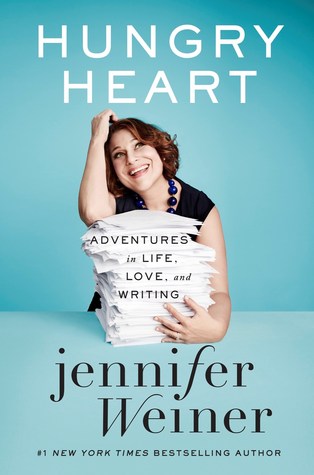
Hungry Heart by Jennifer Weiner

Hungry Heart: Adventures in Life, Love, and Writing by Jennifer Weiner

I have always loved Jennifer Weiner's novels, so I was excited to read her memoir. In a series of stories she explores everything from serious issues like her dysfunctional family, her struggles with weight, and a miscarriage to more light-hearted stories about her love of the Miss America pageant and The Bachelor. While Jennifer may have struggled in high school and longed to be accepted by her peers, today she sounds like the perfect BFF - smart and funny and willing to share all her secrets with you. She reveals how hard it was for her after her father left their family and started a downward spiral that left illegitimate children, debt, and lawsuits in his wake. She also writes about how she worked even harder to never follow in her father's footsteps - to create a career she loved, to be successful, and to love her children and create a healthy family. This is one of those books that was so good you wish it was longer!


American Girls by Nancy Jo Sales

American Girls: Social Media and the Secret Lives of Teenagers by Nancy Jo Sales

This book was a lot to take in and is pretty disturbing and depressing. As the author says in the conclusion, "Being a teenager has never been easy. Faces and bodies are changing, hormone raging, emotions all over the place. Imagine adding to that a constant pressure to take pictures of yourself and look 'hot' in those pictures and have people like them. Imagine getting a dick pic from a boy, maybe before you've ever held a boy's hand. Or being asked for nudes at a time when you're just trying to feel comfortable in your changing body, and not always succeeding. Imagine developing a crush on someone, who seems to like you back, only to find out that he's been 'talking' to other girls, online, even at the same time you thought you were having an intimate conversation." (p.371) - this is what this book deals with. I liked that the author organized the book by ages - each chapter focuses on a particular age from age 13 to 19 and how they use social media and how it affects their life. And it seems like it mostly affects them negatively, yet they are also so drawn to it and addicted to it. While there was a lot of eye-opening and disturbing information presented, the basic gist of the book is that teens and kids are really sexualized from a very young age, social media has hampered real connections, and porn has fucked EVERYONE up. My main complaint about this book is that each chapter was basically a remix of the previous chapter just with older kids being interviewed. Although, I personally found the younger (13 & 14) and older (18 & 19) chapters were worse. The younger because they are SO YOUNG and dealing with sexual harassment every single day and the older kids because college campuses + drinking = lots of rape. Overall, very disturbing and depressing. I'm so thankful that I grew up before social media and cell phones.

Some quotes I really liked:

"In 1991, Naomi Wolf's The Beauty Myth: How Images of Beauty Are Used Against Women amplified this theme. Wolf saw in the increased pressure for women to be beautiful a reaction against feminism. She contended that as women achieved more social and political power, the demands of 'beauty' worked to undermine women's empowerment. 'The more legal and material hindrances women have broken through, the more strictly and heavily and cruelly images of female beauty have come to weigh upon us,' she wrote. 'During the past decade, women breached the power structure; meanwhile, eating disorders rose exponentially and cosmetic surgery became the fastest growing specialty...pornography became the main media channel...and thirty-three thousand American women told researchers that they would rather lose ten to fifteen pounds than achieve any other goal...More women have more money and power and scope and legal recognition than we have ever had before; but in terms of how we feel about ourselves physically, we may actually be worse off than our unliberated grandmothers.'" (p. 86)

"More than 220,000 cosmetic procedures were performed on patients ages thirteen to nineteen in 2013, and in that year plastic surgeons were noting that teenagers were saying they wanted to have 'something done' for a new reason - to look good in selfies." (p. 93)

"'Girls start out life now being immersed in princess culture,' says Rebecca Hains, author of The Princess Problem: Guiding Our Girls Through the Princess-Obsessed Years, referring to the obsession with princesses seen in little girls since the launch of Disney's multibillion-dollar line of princesses and princess toys in 2000. 'I think princess culture is part of the overall backlash against feminism,' says Hains. 'This obsession with princesses is concurrent with a cultural pendulum swing that happened when the Republicans got back power in the 2000s and [in the 2010s] launched the War on Women,' meaning efforts to roll back reproductive rights and restrict women's rights in other areas...'What girls learn from princess culture is that how they look is very, very important. If you're hooked on external validation at age four, that plays into self-objectification and self-sexualization.'" (p. 98)

"In 2005, Newsweek ran a story headlined 'Bad Girls Go Wild,' which raised an alarm about an alleged increase in violence among girls. Citing a new study from the FBI, the magazine reported that the number of adolescent girls arrested for aggravated assault had seen a shocking rise over the last twenty years. Though the FBI had given no theories about the reason for this spike in violence, Newsweek blamed feminism. 'The women's movement,' said the magazine,'which explicitly encourages women to assert themselves like men, has unintentionally opened the door to girls' violent behavior.' But when the Justice Department looked into Newsweek's claims, in 2008, it found them to be based on a faulty analysis of data. Girls weren't becoming more violent, but they were being arrested and incarcerated more frequently for lesser offenses...It's worth considering whether the women's movement actually may have opened the door to, not more violent behavior among girls, but more policing of girls' behavior, as a form of backlash." (p. 152)

"'It's become a way for people to dismiss sexism,' says Laura Bates, talking about the evolution of the notion that 'girls are mean.'...Competitiveness is a difficult human trait. Bullying comes from all kinds of people. I don't believe it's some ingrained genetic trait in women or girls...In a world where there is such sexualization of women and oppression of women, it just feels like it's too easy to blame girls for meanness. And it's such a clever attempt to create a diversion. Why is it that everybody loves to talk about 'mean girls'? It's another attempt to stymie the feminist movement." (p. 168)

"And yet, despite the high numbers of girls experiencing sexual harassment in schools, only 12 percent said they ever reported it to an adult. 'Some researchers claim that sexual harassment is so common for girls that many fail to recognize it as sexual harassment when it happens,' said the AAUW report." (p. 273)

"Finally, I think girls need to read. Which they already do; but they need to read more. Early in this book I reported on my conversation with April Alliston, the Princeton professor who talked about how it was with the invention of the printing press that we first saw porn in its modern form. Porn was a reaction to women reading, to becoming more educated and informed. It was meant to degrade women and distract them from becoming educated, in the view of some historians, as a way to keep them from becoming empowered. And so for girls now to model themselves in the image of pornography, one could argue, is for them to embrace their own disempowerment. Girls need to put down their phones sometimes and pick up books." (p. 375)

Wild and Free by Jess Connolly

Wild and Free: a Hope-Filled Anthem for the Woman Who Feels She is Both Too Much and Not Enough by Jess Connolly and Hayley Morgan

I was really looking forward to reading this one since part of the subtitle is "for the woman who feels she is both too much and never enough." It's easy to feel that way as a Christian if you don't fit the stereotypical view of what a Christian woman is supposed to be like. Growing up in churches where feminism was the other f-word I can totally relate to feeling like I'm "too much" and our overall culture works hard to make sure women always feel like we are "never enough." But, I felt like the authors only skimmed the surface of this issue. Every chapter felt like it repeated itself by continuing to talk about how God made us wild and free and all the ways God Himself is wild and free in His creation and by loving us unconditionally. While I completely agree and would argue that the Church in fact often tries to tame our perceptions of God - especially for women, but nothing in this book really jumped out and made me feel connected to the authors or their message. Overall, I love the title and the idea behind the book, but was pretty disappointed.

One quote I did love:

"I see women believing and repeating the lie that motherhood is the highest calling for all women. Did you know that's nowhere in the Bible?" (p. 29) [But again that's easy for these authors to note because they both have 4 children. As a Christian who's childfree by choice it's been a very isolating choice, but I still don't regret my decision and would like to see more Christian women own their non-conformist choices.]


Unearthed by Alexandra Risen

Unearthed: Love, Acceptance, and Other Lessons From an Abandoned Garden by Alexandra Risen

Alexandra Risen's parents emigrated to Canada from the Ukraine after World War II. Her parents often fought and it wasn't a happy household to grow up in. Her one comfort and escape was the ravine behind her family home. Risen grew up loving the outdoors and hiking. When Risen and her husband see a house for sale with a huge abandoned garden, she knows she must rebuild the garden. At first it feels like a way to connect with her mother who's health is failing and has recently moved into a retirement home. Risen also wants the garden to be a connection for herself and her son. Her own mother loved gardening, but seemed incapable of including her children in her hobby. Risen wants a better relationship with her own son, but she also wants to instill in him the love of nature that she got from exploring as a child. The more they get into their garden the worse shape they realize it's in, but the more unique features they discover. I hate to even imagine how much money they poured into the garden, but after 10 years it's completely renovated and renewed. Working in the garden helped Risen work through her emotions about her parents and the strained relationship she had with them, but the garden also connected her even more with her husband and son. There are a few pictures on the inside cover pages, but I would have loved to see more pictures of the garden included.

Junk by Alison    Stewart

Junk: Digging Through America's Love Affair With Stuff by Alison Stewart

When Alison Stewart and her sister have to clean out their late parent's house to get it ready to sell they make short work of the main level - most things were in working order and could be donated and they each wanted to keep a few family mementos. But the basement was another story. After spending months of Saturdays working hard they had barely made a dent and Stewart knew it was time to get professional help. Sorting through her parent's basement and subsequently paying someone to help clean it out made Stewart think about junk - why do we keep so much stuff "just in case," the companies and TV shows that make a living from junk (selling it, organizing, hoarders, etc.), new uses for junk, and even embracing your junk. This is a really interesting and unique look at junk - however you define it, because there is not just one definition of junk. And you have the old saying, "one man's trash is another man's treasure." I think this is more than timely with the new popularity of minimalism and tiny houses in our culture today. One thing I found really interesting is the people she interviewed who were in the professional business of helping clean out other people's junk live much more minimally. Overall, a really interesting and unique book that really looks at every aspect of junk.

Two things I really liked - the Regeneration Station, a business in Asheville, NC that will come and collect good quality "junk" furniture and other things and then refurbishes them to sell at the Regeneration Station.

Repair Cafe - started in Amsterdam, but is now all over the world. Mostly a quarterly meeting with craftspeople of all types who volunteer their time to repair most anything - furniture, clothing, dolls, toys, light fixtures, etc.

Some quotes I really liked:

"Rats are a big problem in Portland. Apparently, it is so bad that one man in the neighborhood told the local news, 'They're like their own little gang. When I killed one...they pulled him back in there like it was like Saving Private Ryan or something.'" (p. 180)

"Wiens is part of the Right to Repair movement, an effort to pass strong legislation that would allow individual and independent repair shops to fix electronics. Many companies keep their manuals close to the vest and only allow them in the hands of dealers. A bizarre example has surfaced with farm tractors. Now there are John Deere tractors that are wildly computerized. If one of these tractors breaks down, a farmer can't really get in there and fix it himself. He has to have a Deere-approved repair person do it with certain parts and manuals only available to certain people...The Fair Repair bill put forth in two states in 2015, New York and Minnesota, would empower the average person or repair person to have access to the information and parts to be able to fix smartphones, computers, and yes, farm equipment. There is a precedent for a law like this passing. Automotive repair folks won the right to repair in 2012. Now that cars are borderline spaceships, for a while independent mechanics and owners who were handy with a wrench were being turned down when they requested manuals and parts to fix cars, based on the proprietary argument." (p. 250)


We Should All Be Feminists by Chimamanda Ngozi Adichie

We Should All Be Feminists by Chimamada Ngozi Adichie

I almost hate to mark this down as reading a "book" since it was more like a long pamphlet at only 48 pages and about the size of the old tiny Peter Rabbit books. I had heard a lot of hype about this book and since I 100% agree with the title I decided to check it out. It was disappointing in that it was so short and tiny - it only took me about 15 minutes to read it. But, it was also very basic and I was hoping for something more in depth. I think this could be good for someone who doesn't understand what feminism is to read, but I was definitely looking for more.


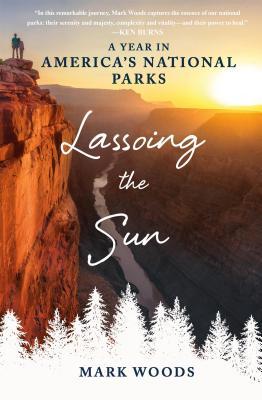
Lassoing the Sun by Mark   Woods

Lassoing the Sun: A Year in America's National Parks by Mark Woods

I was really excited to read this book, but it was kind of a gloomy read. When Mark Woods won a writing grant he decided to write a book about National Parks and visit a different one every month for a year. His family often visited National Parks when he was growing up and he had many fond memories of those trips. Right before his National Parks year starts he finds out that his mother is dying and that kind of took over the book. While I understand why his mother's death, family, and National Parks were all tied together for him, it really gave the book a sad tone. His visits to 12 National Parks was definitely interesting and he visited a wide variety of parks. While it wasn't exactly what I expected it did make me want to visit more National Parks and especially the ones out West.

A quote I really liked:

"More than anything, Mom's life made me think about what I wanted in my life. And I didn't want things. I wanted to dothings." (p. 265)
Monday, June 5, 2017

May 2017 Cookbooks

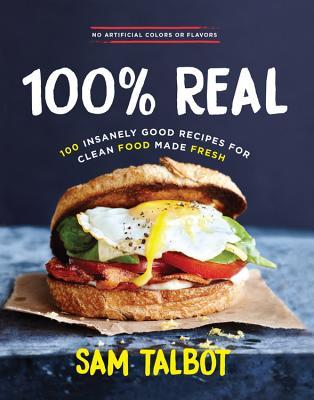
100% Real by Sam Talbot

100% Real: 100 insanely good recipes for clean food made fresh by Sam Talbot

Sam Talbot is a type 1 diabetic and he learned early on that he couldn't eat processed junk food and feel good. This cookbook focuses on recipes that reflect his food philosophy of real food - just cooking with high quality real, whole foods. He gives some tips on eating real food and also gives substitutions for some common staples. While some of the recipes are gluten free or vegan that's not the focus, but it is noted in the recipe. It's organized like most cookbooks by type of meal - breakfast, sandwiches and salads, proteins, vegetables, etc. There are lots of recipes I'd like to try. This is a great cookbook especially if you're new to whole food eating or trying to make some positive changes to your cooking.

May 2017 Reviews

The Last One by Alexandra Oliva

The Last One by Alexandra Oliva

Zoo is a contestant on a survival reality TV show. Some of the show's challenges are group challenges and some are solo. While on a solo challenge Zoo's cameraman never shows back up, but she thinks it's part of the challenge that there are hidden cameras. But, the reality that Zoo doesn't know is that her cameraman is dead - a pandemic has hit the US and hundreds of thousands of people die. But, Zoo still thinks she is on the solo challenge. When she starts seeing some of the carnage she thinks it's just part of the show. After meeting Brennan, a teenager who's family all died, she finally realizes what has happened. Zoo's hope is that somehow against all odds her husband survived. Will she and Brennan make it back to her home? Will her husband still be alive? 

This is a really unique storyline and it was definitely a quick read. The beginning was a little slow, but once the story picked up you didn't want to put the book down. This is the author's first novel, so I'll be interested to see her future books.


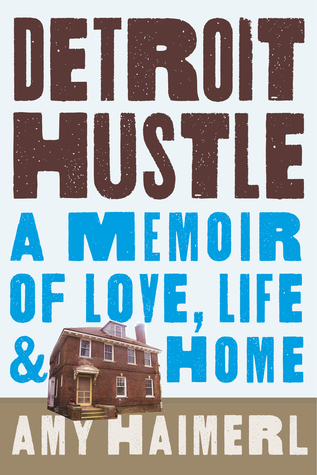
Detroit Hustle by Amy Haimerl

Detroit Hustle: a memoir of love, life, and home by Amy Haimerl

Amy Haimerl grew up in a small, working-class town in rural Colorado, so blue collar, hard scrabble towns are in her blood. While she and her husband are living in Red Hook Brooklyn where the cost of living is getting higher and higher, they decide to start looking for somewhere to live where they can afford to buy a house. They end up in Detroit. And while rumors of $1 houses in Detroit abound, there is a lot of red tape involved in buying and fixing up an abandoned house in Detroit...namely most banks won't give you a mortgage. After finding their dream home and cashing out their 401ks and borrowing money from family they spend two years rehabbing a historic home in Detroit. Amy writes about not only their adventure in renovating a home, but also some of the history and current issues with Detroit. She also delves into the whole issue of gentrification and what that can mean for both sides of the issue. Overall, an interesting book about how one couple realized their dream of home ownership and are helping to revitalize the city of Detroit.


Salt, Fat, Acid, Heat by Samin Nosrat

Salt, Fat, Acid, Heat by Samin Nosrat

This is a unique cookbook in that only about half of the book is recipes. The first half talks about the four main elements of cooking - Salt, Fat, Acid, and Heat. Each chapter explains that element and how it affects cooking. She also includes "test" recipes to test out each element and using that element when cooking. The second half of the book is full of recipes and then at the very end she creates some sample menus based on the recipes given. This is more like cooking school in book form. Michael Pollan writes the forward and I remember Samin being featured in his book Cooked when she teaches Pollan how to cook better. Overall, a very thorough and educational book about cooking. This is one you could refer back to time and again and learn something new each time.


The Alliance by Jolina Petersheim

The Alliance by Jolina Petersheim

When a plane crashes into a Mennonite community in rural Montana it signals a drastic change for this pacifist community. Moses Hughes, the pilot of the crashed plane, believes that an EMP or electromagnetic pulse is the cause of his plane crash and the loss of electricity in the area. But, as the Mennonite community only uses electricity for their commercial store, they are the most prepared people in the area - which means they quickly become a target for gangs of looters and thieves. Moses and two other Englishers (non-Mennonites) work with the Mennonites to try to protect their community. 

While I liked the premise of the book, it was VERY obvious right from the start that a large focus of the book is the love triangle between Mennonites Leora and Jabil and the downed pilot Moses. It was also painfully obvious that Moses, like his Biblical namesake, was "sent" to lead the Mennonite community out of danger. There was also a very odd twist at the end relating to Leora's estranged father that really seemed crazy and did not fit with the rest of the book. But, it was still a quick read and I'll admit that I put myself on hold for the sequel since the ending definitely leaves you hanging. This is like the Hallmark movie channel version of a dystopian novel, which I would normally not like, but it did draw me in enough to keep reading and I do want to see what happens in the next book.


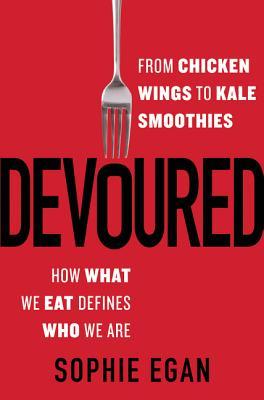
Devoured by Sophie Egan

Devoured: from chicken wings to kale smoothies how what we eat defines who we are by Sophie Egan

In Devoured Sophie Egan explores the deeper meaning behind what we choose to eat and why. What does is say about our country that only 26% of Americans eat breakfast everyday and 40% eat lunch at their desk so they can keep working? Egan explores not only how we eat, but some of the crazy things we eat like cereal that has more sugar than candy bars and things like the Doritos Locos Taco from Taco Bell. Egan explores 10 phenomena that illustrate what our food says about who we are as a culture. In the last chapter she gives her prescription for how we can create better food habits and culture - "Work less and savor more. Make it real and stir the pot." (p. 311). This is a very interesting look at America's food culture and habits and it really does say a lot about who we are both for good and bad. I liked that Egan shows her findings, but doesn't pass judgement about what we should or shouldn't be eating. She isn't telling us to give up sugar forever, but what she explores does shine a light on some bad habits that could be better. Overall, a great book with tons of eye-opening information. 

Here are some quotes I really liked:

"I was on a hike with a Swedish friend, and she was talking about how stunned she is by the amount of time people work in the United States...she asked me a simple question about the sheer number of hours we work: Why? She was absolutely dumbfounded when I explained: Putting in the time proves your value. She laughed at the idea and said, 'In Sweden, if you're working more than the hours absolutely mandatory and expected of you, people's reaction is, 'What's wrong with you that you couldn't get your work done in time?' ' In other words, it's an efficiency question - 'You're working late tonight? Oh, you must be slow.' I stopped in my tracks. Mind blown." (p. 27)

"When [consumers were asked] how they define a 'meal,' they describe a combination of foods, home-cooked and plated. This sounds about right to me too. But when he asks them the last time they had a meal like that, responses vary from 'a couple of weeks ago' to 'maybe Thanksgiving.' One of the fundamental themes of eating behavior is that there is a difference between what people say they want and what they actually eat. It's often the difference between intention and action, between goals and reality." (p. 29)

"Dinner has become a litmus test for family values in America. According to recent data from Gallup, 53 percent of American adults with children under the age of eighteen say their family eats dinner together at home six or seven nights a week. On average, families share 5.1 dinners together, down only slightly from 5.4 in 1997...I'll admit, this figure is higher than I would have given us credit for...But if you dig deeper into the family meal, it gets more interesting...It turns out that a good number of families eating dinner 'together' aren't eating the same thing. Family meals are following more of an a la carte model...More than half of families cook multiple meals or dishes to cater to each family member." (p. 97-8)

"...our food culture thrives on 'mass customization,' which sounds like an oxymoron but means taking existing processed foods and delivering them in individual-size portions that meet a wide range of specific demands. A cup of coffee made with a Keurig capsule costs about three times more than one made with supermarket grounds and a drip machine. That Keurig habit can add up to spending $400 more on coffee in a given year. Apparently the exact flavor we get from Keurig, made fresh at the precise moment we want it, is worth that much." (p. 103)

"...a far more prevalent, and equally puzzling, practice: Selling Absence. That is, how marketers convince us to buy foods such as fat-free milk, low-sodium pretzel sticks, and 100-calorie packs of cookies. What we are doing is purchasing a food not for the crazy reason that it contains worthwhile ingredients - but because of what an item lacks. Emily Green, a writer for the Los Angeles Times, has dubbed this genre of foods 'nonundelows,' because their labels being with 'non-,' 'un-,' 'de-' and 'low-.'" (p. 107)

"So when it comes to brunch, one way to think about its popularity is to ask what activity it is replacing. If people are sipping mimosas at a cafe with friends, what are they not doing on Sunday mornings? The answer: Brunch is secular church. Sunday service for the socially starved. Something for the nothings. Specifically, something soulful and restorative...in parts of the United States where people aren't as religious, the brunch gathering is the closest substitute for the experience of church: getting out of the house, marking the turn of the calendar, breaking bread together. Perhaps most important, Connor argues, it involves spending time with friends or family." (p. 145)


The Stars Are Fire by Anita Shreve

The Stars Are Fire by Anita Shreve

In October of 1947 after a long drought fires break out all along the Maine coast. Grace Holland and her husband Gene live 2 blocks from the ocean with their two children. When the fires break out Gene and some other men go try to create a firebreak to stop the fire from reaching their community. When the fire comes Grace and her children must huddle in the ocean to stay alive while they watch everything they own burn to the ground. Grace has no idea if her husband survived the fire or not, but she has to step up to care for her children. In short order Grace finds a place for them to stay, learns to drive, and gets a job. But months after the fire when her husband returns neither of them is the same. Grace has come to relish her independence and control over her own life and Gene is terribly burned and disfigured from the fire. While their marriage was never good, the stress of Gene's injuries really brings out the worst in him and he takes it out on Grace and their children. Grace found strength within herself to rebuild her life after the fire, but can she find the strength to leave her abusive marriage and start over yet again. Grace finds that her experience has irrevocably changed her and even if she wanted to she can never go back to who she was before the fire.

A beautifully written and haunting novel about finding the strength and resilience to start over.


The Dog Merchants by Kim Kavin

The Dog Merchants: inside the big business of breeders, pet stores, and rescuers by Kim Kavin

I remembered reading and liking Kim Kavin's previous book Little Boy Blue about her personal story with adopting a dog who was transported from a high-kill shelter in the South to her home state of New Jersey. In The Dog Merchants Kavin takes on breeders. Is there such a thing as a "responsible" breeder? Can legislation stop puppy mills? Why does the Westminster dog show have such an impact on breeding and dog popularity? These are just a few of the questions that Kavin tackles in this book. I was truly amazed at how many large and small scale dog breeders are out there, but I was even more shocked by how much movies and the winners of the Westminster dog show affect the public opinion of certain breeds and the demand for them. While Kavin definitely shows examples of good, responsible breeders, the overall theme of the book is that dog breeding today (especially in the US) is driven by the "breed standards" created by breed clubs hoping for wins at Westminster and other dog shows. Any breed can make a great pet, but often breeders attach personality traits to their breeds that can apply to any pet if you put the time into training. At the very end she talks about what questions to ask when adopting or purchasing a dog - questions to ask yourself about how much time and money you're willing to invest in your pet and also questions for the shelter and/or breeder you're adopting/buying from. Definitely an interesting look at the dog industry through the lens of breeding.

Some quotes I really liked:

"'To me, breeds are like a designer handbag,' Woods writes. 'People like the way they look and the hype behind them. They buy into the stereotypes (Border Collies are the smartest, Labs are the most faithful, etc.) and then they match up how they see themselves with the marketing behind the dog.'" (p. 49)

"All dog lovers have come to know the terms 'puppy mill' and 'puppy farm' in recent years. They appear on the news and in fundraising letters from animal welfare groups showing horrific photographs and asking for donations to shut down the big-scale breeders who treat dogs badly...But what, exactly, is a puppy mill? There is no legal definition, even according to leading animal welfare groups." (p. 89)

"The notion that America's homeless dogs face an 'overpopulation problem' does not match up against the available statistics. Supply is not exceeding demand. Americans want about eight million dogs a year as new pets, while only about four million dogs are entering the shelters. America kills about two million of those shelter dogs each year while US dog lovers get their new pets from other sources. If just half the Americans already getting a dog went the shelter route, then statistically speaking, every cage in US animal control facilities could be emptied. Right now. And the United States would still need another four million dogs each year to meet demand. Americans want more pups than any other nation on the planet. In the United States, there are no extra dogs in terms of quantity. There are instead millions of throwaway dogs in terms of perceived quality." (p.140-1)

"'This is a very materialistic society. If you buy something and then you don't want it, you throw it out,' [Teri Goodman] says. 'I was walking on the street with Misty one day, and there was a woman who said a woman up the block wanted to get rid of her older dog. I said, 'What's the problem? Is the dog unhealthy? Is there a problem with finances?' And the woman said she was selling her house and moving to an apartment, and she had a garden and could let the dog out, but at the apartment, she'd have to walk her. The dog was fourteen. She'd had her from a puppy. Now that I've been in this senior dog world for a while, that's not an uncommon story. People think of a dog as a commodity, that you can get rid of it if it's inconvenient.'" (p. 203)

Goodreads Milestone


In May I posted my 1000th review on Goodreads! I joined Goodreads in August of 2007, so it took me almost 10 years to get there. 


Tuesday, May 16, 2017

April 2017 Cookbooks

Dishing Up the Dirt by Andrea Bemis

Dishing Up the Dirt: simple recipes for cooking through the seasons by Andrea Bemis

This is a beautiful cookbook and there are lots of recipes I'd like to try. I really like the author's introduction about how she and her husband started Tumbleweed Farm. She also gives an introduction of each section, which is organized by season, about what's going on on the farm during that season, what vegetables are available, etc. While the recipes are mostly vegetarian, they all look so good you hardly notice! Overall, a great seasonal cookbook with beautiful pictures of both the recipes and their farm.


The Forest Feast by Erin Gleeson

The Forest Feast: simple vegetarian recipes from my cabin in the woods by Erin Gleeson

This is a really unique cookbook in that it's very artistic and includes lots of beautiful photographs and illustrations by the author. Erin Gleeson grew up in California on an apple orchard, but when she moved to New York City she felt right at home there. After eight years in NY she and her husband had the opportunity to move back to California and they found a small cabin in the woods that they fell in love with. Inspired by the forest around their new home Erin started creating recipes that she felt reflected their new cabin life. While all the recipes in this book are vegetarian you hardly notice because everything looks so good. It's organized like a traditional cookbook with chapters on appetizers, salads, etc., but with really unique illustrations. This book is worth picking up just to look at the beautiful photographs, but you'll probably find at least a few recipes you want to try too.


Add a Pinch by Robyn Stone

Add a Pinch: easier, faster, fresher Southern classics by Robyn Stone

This is one I might end up buying. I just LOVE a good Southern cookbook and Robyn Stone does not disappoint! The premise of the cookbook is that she's trying to make a quicker, lighter version of many of the Southern dishes she grew up eating. It's organized like a traditional cookbook with chapters like starters & snacks, slow cooker suppers, simple sides, biscuits & bread, etc. Definitely a solid, Southern cookbook! There were so many recipes I'd like to try. I would definitely recommend this one.


Dinner Chez Moi by Elizabeth Bard

Dinner Chez Moi: 50 French secrets to joyful eating and entertaining by Elizabeth Bard

I've read both of Elizabeth Bard's memoirs, so I was excited to see a cookbook from her. While it is a cookbook, she also explores the French food philosophy. There are some recipes I'd like to try, but I enjoyed the food philosophy part even more. The book is divided into 4 sections - Ingredients, Equipment, Rituals, and Family. Each section has French food "secrets" and recipes that go along with that "secret." Overall, a nice cookbook that focuses on simple, fresh food and enjoying food with friends and family.


Food Swings by Jessica Seinfeld

Food Swings: 125 recipes to enjoy your life of virtue and vice by Jessica Seinfeld

I like Jessica Seinfeld's other cookbooks, so I decided to check this one out. She divides the book into "Virtue" which is healthier recipes and "Vice" which are more indulgent recipes. There were recipes in both sections that I'd like to try and I like her approach to food that it's not hardcore salads and quinoa all the time, but there is a place for creamy pasta and cake too. Overall, a good cookbook with quite a few recipes I'd like to try out.

April 2017 Reviews

Originals by Adam M. Grant

Originals: how non-conformists change the world by Adam Grant

I wasn't really sure what to expect with this one, I just basically put it on hold based on the title. But, I LOVED it! Grant does a fantastic job exploring the philosophy of being an outsider and how outsiders are often successful because they are working outside conventional norms in their field. He gives dozens of examples in the business world of an "out there" idea that after much hard work ended up being the next "big thing." One of my favorites was about Meredith Perry - she had an idea for a wireless charger for electronic devices, but her idea was so against the grain that she couldn't even get anyone to help her build a prototype. Eventually, she found people by not giving them the whole idea, just asking them to work on a specific component, THEN revealing what they were really working on - by the end of 2014 her company had 18 patents and $10 million in venture funding. Grant gives examples of both successful outsiders and unsuccessful ones and explains why their approach worked or didn't. He also shows how various approaches can be cultivated in the workplace by both management and staff, so it's also applicable to the average person as well. It was also really interesting how very seemingly small decisions really show who we are like what Internet browser you use. Definitely a unique and interesting read.

Some quotes I liked:

"Not long ago, economist Michael Housman was leading a project to figure out why some customer service agents stayed in their jobs longer than others...his team had captured information about which internet browser employees had used when they logged in to apply for their jobs...But when he looked at the results, he was stunned: Employees who used Firefox or Chrome to browse the Web remained in their jobs 15 percent longer than those who used Internet Explorer or Safari...If you own a PC, Internet Explorer is built into Windows. If you're a Mac user, your computer came preinstalled with Safari...To get Firefox or Chrome, you have to demonstrate some resourcefulness and download a different browser. Instead of accepting the default, you take a bit of initiative to seek out an option that might be better. And that act of initiative, however tiny, is a window into what you do at work." (p. 4-5)

"As much as agreeable people may love us, they often hate conflict even more. Their desire to please others and preserve harmony makes them prone to backing down instead of sticking up for us...It is often the prickly people who are more comfortable taking a stand against others and against convention. As a Google employee put it, disagreeable managers may have a bad user interface but a great operating system." (p. 81)


The Secret Garden by Frances Hodgson Burnett

The Secret Garden by Frances Hodgson Burnett (Books & Banter book club)

I remember reading The Secret Garden as a kid and really liking it, but reading it as an adult was definitely a different experience. The character of Mary does grow on you because you see her change from a terrible child to a more healthy and caring child - especially after she meets Dickon and they are working in the secret garden. Where the book started to go downhill for me was when Colin was introduced. He was such an irritating and terrible child and character. His "transformation" seemed much more forced and didactic. And when his father has the dream of "in the garden, in the garden" I was literally rolling my eyes when I read that scene. That kind of ruined the book for me and it ended in a really odd way. But, I did still like the first 2/3 when Mary is growing and changing and discovering the wonder of the secret garden. I guess reading it as a child that was probably the age of the main characters you wouldn't feel as talked down to by the book, but I didn't love it as an adult.


Heart of Glass by Wendy Lawless

Heart of Glass by Wendy Lawless

I remember really liking Lawless's first book Chanel Bonfire about growing up with her volatile mother, but I didn't remember a lot of the details. This book starts when Wendy finally escapes her mother and moves to New York City for college. While she is relieved to be away from her mother, the wounds from her childhood still hold her back. She has no safety net of family to help her and because of her dysfunctional family her romantic relationships are terrible. Finally through some good friends and therapy, Wendy is able to start making better decisions for herself and set boundaries with her mother. She also is finally able to develop a relationship with her father and step-family. By the end of the book she has met her husband and her future looks bright both personally and professionally.

I really liked the beginning and end of the book - a lot of the middle was hard to read just because of her terrible choices in men and how she let people use her. I appreciate her honesty and I'm glad that it did end on a happier note with her in a healthy relationship. I feel like this book just highlights how hard it can be for people from ultra-dysfunctional families to break the patterns they learned growing up. But, Wendy Lawless shows that it can be done.


The True Tails of Baker and Taylor by Jan Louch

The True Tails of Baker and Taylor by Jan Louch

This is such a great book. Working in the library world I was always familiar with Baker & Taylor the library book wholesale company, but this story explains how two cats named Baker & Taylor became the mascot for the company and changed the lives of many people in the small town of Minden, Nevada. When the two librarians in the Minden library decided to get two cats to help protect their new library from mice and also create a welcoming environment, they kind of jokingly decided to name them Baker & Taylor after the company that most libraries buy their books from. Jan Louch decided to call the company and let them know about Baker - they were still saving up to buy Taylor at that point. The company loved the idea so much they offered to buy Taylor if they could do a photoshoot and use the cats in their marketing materials - and the rest was history. The first photoshoot went well and the new cat mascots blew up in the book world. The Minden library also started getting fan mail and requests from all over the world for posters and Baker & Taylor swag. They had people from all over the world come and visit the two famous cats. But, the everyday people who used the Minden library were the ones affected the most by Baker & Taylor. Patrons loved coming in to get books and see the cats. The library staff also loved coming in to work with the cats every day too. Baker & Taylor lived in the Minden library for 15 years, Baker dying 3 years before Taylor. After that the library board decided not to replace Baker & Taylor. While it's definitely sad when the cats die the book overall is so much fun as you get to read about all the adventures Baker & Taylor had together. There are also stories about other library cats after most of the chapters. This is a great book for anyone who is a fan of cats and the library!


Jesus Swagger by Jarrid Wilson

Jesus Swagger: break free from poser Christianity by Jarrid Wilson 

The premise of this book is that as Christians we need to emulate Christ in all aspects of our lives, get our Jesus Swagger on so to speak. While the premise is good, basically don't be a fake Christian and really let God transform your life, the book seems geared toward either teenagers or very new Christians. The writing is very basic and almost assumes that you don't know much about God or the Bible at all. Being a Christian very often means being an outcast and if you really want to fit in you are going to struggle with that. I did like that Chapter 6 "Be the Change" was almost exclusively about Dietrich Bonhoeffer and his example of standing up for the gospel to the point of death - Bonhoeffer is definitely someone every Christian reads about and knows about. Overall, I didn't love this one because it was just a little too elementary for me, but the premise is good and it could definitely be helpful for a teenager or new believer.

Some quotes I liked:

"Remove the word hate from your vocabulary, and start reflecting an image of Jesus that portrays him differently than a man standing on a soapbox wielding a megaphone. I can't ever recall a person who came to faith because of hate." (p. 52)

"As William Gurnall said, 'We fear men so much, because we fear God so little. One fear cures another. When man's terror scares you, turn your thoughts to the wrath of God.'" (p 162)


My Name is Leon by Kit de Waal

My Name is Leon by Kit De Waal

Leon's mom is white and his dad is black, but his new baby brother Jake's dad is white. Leon's mom is really struggling after Jake is born and Leon tries to take care of them both, but he's only 9 years old. When he asks a neighbor for money to get food and diapers she calls social services. At first Leon and Jake stay together, but because Jake is white and a baby he is quickly adopted. Leon struggles to understand why he and Jake can't stay together and when his mom will come back for him. Leon is lucky to end up in Maureen's foster home because she genuinely cares about him, but he still wants to be back with his mom and Jake. Eventually he makes a few friends, but they are all adults he meets in a community garden. Leon is planning to find his brother Jake and take care of him by himself. On the night he leaves to find Jake all hell breaks loose and Leon realizes his new family might not be so bad. 

This was an interesting book that dealt with the issue of race in foster care and adoption through the eyes of a child. While Leon definitely struggles, it's easy to see how much worse it could have been and how quickly he could have gone down a really bad path if he didn't have such a good foster mother.


Minimalism by Joshua Fields Millburn

Minimalism: live a meaningful life by Joshua Fields Millburn and Ryan Nicodemus

I would never consider myself a minimalist, but after watching The Minimalist's documentary I was intrigued and they seemed really fun and interesting. I decided to check out their book and actually laughed when I got it because of course a book about minimalism would be succinct and short - only 121 pages. While I did like the book, it's a good overview of minimalism and how it can help/impact different areas of your life, it seemed a little too didactic to me. There were a lot of steps and here's how to do this better, etc. While they never claim to have all the answers I think a lot of stuff is subjective and it won't look the same for every person. Where I disagreed the most was with food, I am NOT trying to be vegan or a minimalist when it comes to food! But, overall I do think they have a lot of good stuff to share about their journey and how minimalism has worked for them. They recommend that you read one chapter of the book a week and really think about it, work through stuff, etc., but I read it over the course of one day - it's a really quick read. 

Here are some quotes I liked:

"Health is not a destination; it is a vehicle. So, okay, maybe Joshua will never make it to the NBA with his bad back...but that doesn't mean he should feel defeated, broke, broken. No, it means he must take care of the vehicle he has, providing it with regular tune-ups (daily stretching, regular exercise, and occasional chiropractor visits, as well as a good diet, adequate sleep, and daily meditation), which will help him better enjoy the journey ahead." (p. 35-6)

"Once you acknowledge your vocation is who you are, it's extraordinarily difficult to do something else." (p. 79)

"Financial freedom isn't easy, but you knew that before reading this book. The exciting part about these five steps is they apply to anyone, anywhere on the socioeconomic ladder. Whether you earn minimum wage or six figures, whether you are single or have half-a-dozen children, we have seen these principles work for thousands of people - because it's not about our income level, it's about the decisions we make with the resources we have." (p. 90)


The Guest Room by Chris Bohjalian

The Guest Room by Chris Bohjalian (Books & Banter and Evening Edition book clubs)

Richard Chapman offers to host his younger brother's bachelor party at his house because that way it's less likely to get out of control. He assumes there will probably be a stripper, but thinks it will be pretty tame. He was wrong. At the end of the bachelor party multiple guests have had sex with the "entertainment" and two people are dead. While Richard didn't cheat on his wife, he is still associated with a wild orgy that turned into murder. The aftermath of the party is devastating for Richard - his wife is contemplating leaving him, he is suspended from work, his house is now a crime scene, and one of the other party guests is trying to blackmail him. But Richard doesn't have the worst of it - the two girls who were the "entertainment" are now running for their lives. Told in alternating viewpoints from Richard and Alexandra, an Armenian teenager who was kidnapped into sex slavery, you see how both of their lives are profoundly changed from this one fateful night.

Re-read for both of my book clubs. It was equally good the second time, but slightly less suspenseful since I already knew the ending. Still it should make for some good discussions in book club.


Esther the Wonder Pig by Steve       Jenkins

Esther the Wonder Pig by Steve Jenkins, Derek Walter, and Caprice Crane

I love a good animal memoir, but I just didn't like this one. Steve Jenkins is tricked into adopting what he thought was a mini pig that wouldn't get any larger than a medium sized dog, in reality Esther was an industrial pig who topped out over 600 pounds. While trying to deal with a growing new pet Esther basically destroys their home because huge pigs aren't meant to live inside a 1000 square foot house. Pigs are also very intelligent, so she often outsmarted them when it came to stealing food and their attempts to house train her. Eventually Steve and his partner Derek decide to buy a farm and start an animal sanctuary for rescued animals from the industrial food industry, of course along the way thanks to Esther they also become vegan. I was familiar with the basic storyline of the book, but I didn't know they became vegan. While I am VERY familiar with the evils of the industrial food industry, I don't want to be vegan. I think supporting local farmers who are raising animals in natural and humane ways is a better way to opt out of the industrial food system instead of being vegan. While I understand their love for Esther she really destroyed their house and made for a very stressful life until they moved to the farm, and it was stressful to read about all of their stress and destruction. I also wasn't wild about them crowd-funding the purchase of their farm. I feel like crowd-funding is best used for unexpected medical emergencies, etc. not buying your dream house (even if you are starting an animal sanctuary there). They also included some random recipes in the back, which was odd since food was not really mentioned much other than them talking about deciding to become vegan. Overall, it was disappointing. A better pig memoir is The Good Good Pig by Sy Montgomery.