Tuesday, October 23, 2018

September 2018 Reviews

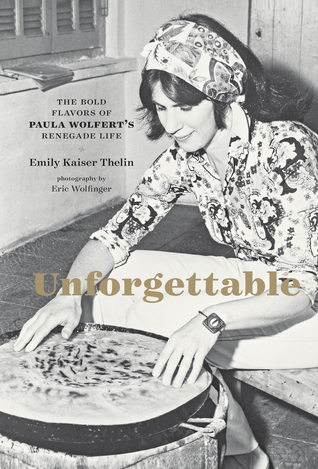
Unforgettable by Emily Kaiser Thelin

Unforgettable: the bold flavors of Paula Wolfert's Renegade Life by Emily Kaiser Thelin

I didn't know what to expect with this book and I will admit I didn't know who Paula Wolfert was either, but after reading this memoir/cookbook I feel like I should have known who she was because she was a pioneer in the food world. The book is organized around her life with recipes at the end of each chapter, but it's not really a cookbook - more of a memoir with recipes included. Wolfert is now suffering from dementia, but cooking and eating bring back many fond memories. Wolfert was living abroad when her husband left her with two young children. She pretty much created a career for herself exposing Americans to, at the time, rare and exotic cuisines. She even worked for Columbia House creating subscribers monthly boxes with recipes and ingredients to create a dinner party with a specific country theme - an idea well ahead of it's time. She would travel to various countries and embed herself with local women and then create a cookbook around that country's cuisine. The author of 9 cookbooks she was the main impetus of bringing now-common ingredients and cuisines to Americans. While the book is huge and the print somewhat small, her story is truly Unforgettable and worth reading.

Some quotes I liked:

"[Columbia Records] The music subscription service was about to launch an epicurean program called International Home Dining. Paula was promptly hired to help run it. A kind of Blue Apron or Sun Basket of its day, the service sent subscribers a box every month or so containing everything they'd need to throw a dinner party from a different country: an album of music from that country (of course), plus a half-dozen illustrated recipes, printed invitations, a four-page newsletter, a battle plan for the cooking, and a half-dozen harder-to-find ingredients and necessary equipment (think a basic cleaver and wok). Each box cost $9.95 plus shipping and handling, about $60.00 in today's dollars - a bargain now but a bit steep in 1969." (p. 61)

Paula embraced technology, "...she developed unparalleled recipes for all of them tailored for the Cuisinart. For years to come, Cuisinart founder Carl Sontheimer sent new models of his machine to Paula from time to time." She also purchased one of the first word processors, "Paula spent $4,000 (about $14,500 in today's dollars) to purchase a Lexoriter from Otterson's husand, who helmed the Lexor Corporation, an early computer company." (p. 120)

"She wished people would be a little bit more willing to cook, if only to preserve all the bounty. She told Edible San Francisco magazine, 'When I lived in Morocco, all summer long people were making food for the winter. That's something that we don't even think about anymore - making jarred food.'" (p. 267)
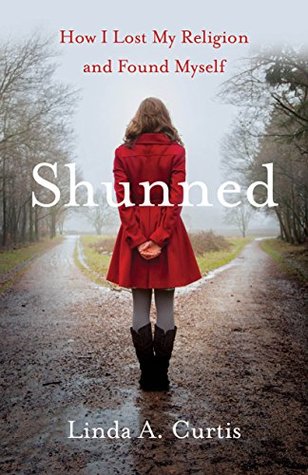


Shunned by Linda A. Curtis

Shunned: how I lost my religion and found myself by Linda A. Curtis

Linda grew up in the Jehovah's Witness religion. From the age of 9 she would go on weekly preaching trips going door to door trying to talk to people about their faith. When she's in her early 30's on one of these weekly preaching trips she shows up at a coworker's door. In doing through her normal spiel she feels like the words are hollow and condescending. That encounter starts the process of Linda leaving the Witness faith. In leaving Linda divorced her husband of almost 10 years and is cut off from everyone in her former life - friends, family, everyone. When you denounce the Witness faith you are "disfellowshipped" or shunned, meaning you are now an evil person and a bad influence so everyone needs to stay away from you. Twelve years after leaving her whole life behind Linda finds out there is a small exception when her father calls to tell her his mother is dying and lets her know she can come see her dying grandmother. That visit allows about 24 hours of normalcy with her immediate family, but then once again cut off until another death. 

I personally believe that the Jehovah's Witness faith is a cult and Linda was right to get out of it. But, it was sad to see her go from having faith in God to nothing. She did rebuild her life and find love and happiness, but I guess once you leave a cult it's hard to be able to buy into any other religion. I also found the way her family seemed to allow a "death exception" was so odd - so during that brief time she's not a threat? But the rest of the time she is? Also, her father wasn't a Witness for most of his life only converting shortly before she left the faith. I don't understand why it was OK for her to grow up around her dad who wasn't a Witness, but when she leaves the faith she's totally cut off. Is he seen as a potential convert, but she was in and chose to leave so she's worse? Cults are crazy for a reason. It was a very quick, engaging read, but it was sad and I just felt bad for her that she couldn't see that God is not this cult and still have faith in her life outside of the Witness cult.
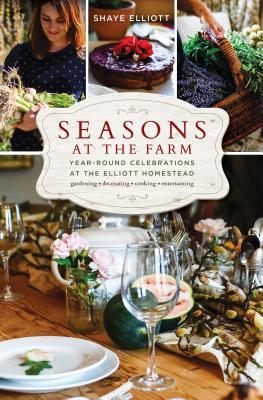

Seasons at the Farm by Shaye Elliott

Seasons at the Farm: year-round celebrations at the Elliott homestead by Shaye Elliott

I was expecting more of a cookbook, but this was more of a seasonal look at the Elliott homestead. The book is divided by seasons and each section has sub-sections about the garden during that season, recipes, what's going on in their home, and celebrations. I guess because "celebrations" is in the title I expected more from these sections, but instead of describing specific celebrations it's more about celebrating that season which is more my speed anyway. Overall, it was a nice book with lots of photographs, but I have no idea how she has so much time to spend decorating her house with a farm and 4 kids she's homeschooling. I wasn't sure what to expect, but I did like reading through it and as some other reviews said it did feel like reading through a blog in book format.
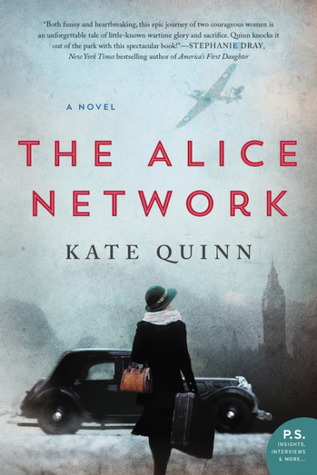

The Alice Network by Kate Quinn

The Alice Network by Kate Quinn (Evening Edition book club)

American college student Charlotte "Charlie" St. Clair is pregnant and unmarried and on her way to get an abortion in Europe when she escapes from her mother to try to find her cousin Rose who no one's heard from since the end of WWII. Her search brings her into contact with Eve Gardiner who worked as a spy during WWI and the demons from her time as a spy still haunt her today. These two unlikely allies come together for the common goal of finding Charlie's cousin and also Eve's goal of revenge for someone who betrayed her during her time as a spy. 

Eve's story is based on the real Alice Network of spies during WWI and is a MUCH more interesting story. Although I was pretty put off by her basically prostituting herself to get information - I'm sure that did happen, but I wish that hadn't been part of the story here. Charlie's character is basically a spoiled brat who discovered that sleeping around makes her pretty popular - she is not really a sympathetic character at all and her part in this book could have been so much better. I could think of a few different ways to create a fiction book around the real Alice Network that were better than this one. Also for the time period of the two story lines I was really surprised at how much sex and abortion was in the story. But it should make for a good book club discussion. I did like this one better than The Nightingale by Kristen Hannah, but there will never be another war historical fiction book better than All the Light We Cannot See, so everything else just pales in comparison.
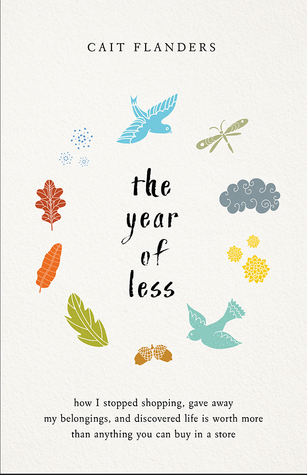

The Year of Less by Cait Flanders

The Year of Less by Cait Flanders

Before the age of 29 Cait Flanders had (finally) stopped drinking and paid off $30,000 in consumer debt. But, as she turned 29 she knew she could do better with her finances so she decided to spend her 29th year in a shopping ban. She could only buy certain things, she could replace something that broke (but only after discarding the original), mostly she could buy consumables - food, gas, etc. Each month she works through not shopping and while it does get easier as she goes along, she had no idea at the beginning of this year that she would face some very difficult times ahead that would seriously try her resolve. But, she did it and even decided to do it for another year. I wasn't familiar with her blog or her really before this book, but I was really in awe of how honest she was about her struggles and opening up about how she used shopping and other consumer-related things to fill voids in her life. I think everyone does that, but not everyone talks about it so honestly. A very inspirational book that shows you can do a lot if you put your mind to it and make yourself accountable.

Some quotes I liked:

[After a breakup] "I felt things and I kept living. I didn't numb myself with food or alcohol. And I didn't shop. It wasn't going to help. It had never actually helped before, and it wasn't going to help this time either...The real thing to celebrate was that I had felt things and I kept living." (p. 49)

"Over the years, I have come to believe there are two types of friends in this world: the friend who will save you from going home with the random person you met at the bar, and the friend who will celebrate your sexual escapade over Bloody Marys the next morning. The one who will never miss a scheduled date to go to the gym, and the one who will congratulate you for eating two cheeseburgers, an order of fries, and a milkshake after a bad day. The one who will stop you from spending $300 on a bag you don't need, and the one who will drive you to the nearest store to buy it." (p. 61)

"I knew I was eating my feelings. I would place the order and walk into the stores knowing I was buying things that would allow me to eat my feelings. I didn't do it every night, and I didn't eat it all in one sitting. These weren't the same binges I'd done before. I didn't want to overdose on cheese or go into a sugar coma. I simply wanted a little comfort, every few days, and finding it in food seemed like the healthiest option." (p. 126)


All We Ever Wanted by Emily Giffin

All We Ever Wanted by Emily Giffin

I had the opportunity to see Emily Giffin on the first stop of this book tour in Charlotte, NC. At the time since the book wasn't technically out yet the talk was more generalities and ideas/themes from the book than specifics. But I remembered part of the talk when I was reading the book and got to the part where Nina sees the white velvet chaise lounge in her bedroom and how ridiculous it is and how it suddenly represents where her life has gone off the rails. Nina married into old Nashville money and lives a very wealthy, pampered life, but she didn't grow up that way and she doesn't want her son Finch to be an entitled brat. Tom lives on "the other side of the tracks" in Nashville and is raising his daughter Lyla as a single father. When Lyla gets a scholarship to Windsor Academy, a prestigious prep school, he thinks they've won the lottery. Then during her sophomore year Lyla and Finch's lives collide and the aftermath fuels gossip and blame all around town. What really happened that night with Lyla and Finch? Has Nina lost the battle over her son? Is Finch really a bad guy or did he make a dumb mistake? In the aftermath of the #metoo movement, Giffin's timely novel explores issues of consent, love, truth, money and power, and relationships. A quick read that will stay with you long after you finish the last page. Another wonderful novel by Emily Giffin!


Living Large in Our Little House by Kerri Fivecoat-Campbell

Living Large in Our Little House by Kerri Fivecoat-Campbell

Kerri Fivecoat-Campbell was unintentionally at the beginning of the tiny house movement. When she was a teenager her parents bought their dream home, but within five years their circumstances had changed so much that they had to sell it. Kerri could see how devastated her mom was to have to sell that house and when Kerri and Dale married they immediately bought a large, split-level house and filled it with new furniture and collections. When they had been married almost 20 years they had the opportunity to build a small lake house on some family land in the Ozark mountains. Their intention was to build a small vacation cottage and later build a larger home to retire to. But, when Dale was laid off at the beginning of the recession in 2007 they realized that financially it made more sense to live in their lake house and sell their house in town. So, out of necessity they started tiny house living in their 480 sq ft cottage that became their full time home with up to 6 dogs at any given time. As they started their journey Kerri discovered the tiny house movement and began to embrace their small house living. They did eventually build Kerri a writing cottage for working out of and also a shed for tools and other equipment. Since then Kerri has connected with many other small house lovers and she shares many of their tips and tricks for living large in a small space. While Kerri and Dale started living tiny out of necessity they both quickly realized this way of life made things so much easier - their expenses were less and they both had more time to pursue their passions. This is a great book if you're interested in possibly downsizing or just want to see other people's tiny home success stories and there are lots of photos as well.


Every Note Played by Lisa Genova

Every Note Played by Lisa Genova

Richard is an accomplished concert pianist when he's diagnosed with ALS. In deep denial at first he tries to go on living a normal life, but his illness progresses quickly and soon he's lost the use of both of his arms. Karina is Richard's ex-wife and said that the day he moved out was the happiest of her life, but when she sees how quickly he is deteriorating she becomes his caregiver and he moves back into the home they shared when they were married. It's obvious that they did not have a good marriage and probably should have never been married. As their background unfolds you see the mistakes they each made in their marriage and in their lives and how it led to this point. Richard is not a sympathetic character for the first half of the book and I was wondering if Genova was ever going to get to the point of reconciliation and forgiveness between Richard, Karina, and Grace, their daughter. Then the last few chapters of the book totally sucker-punched me with how powerfully everything that needed to happen did. Seriously DO NOT read the last 4-5 chapters at work or out in public! I was full on crying for the last 2 chapters. 

Genova does an amazing job of describing what it's like to have ALS and to care for someone with ALS. But she also did an amazing job of exploring all the layers of sadness these characters had to work through during the progression of the illness. By the end of the book you feel such sadness for Richard and Karina and see how things could have been different for them. But, you also wonder if they would have been able to change or see things differently outside of this devastating illness. An amazing book about a horrific disease.


Killers of the Flower Moon by David Grann

Killers of the Flower Moon: the Osage murders and the birth of the FBI by David Grann (Books & Banter book club)

In the 1920's some of the wealthiest people in America were the Osage Indian nation in Oklahoma. Their tribal land was on top of some of the richest oil fields at the time and they could lease out the drilling rights for big money. But soon members of the Osage tribe started dying - some by mysterious illnesses and some by murder. Mollie Burkhart had one sister murdered, another blown up by a bombing, and her mother poisoned. Then some of the people looking into the murders were also murdered or went missing. When the number of Osage deaths reached into the 20's someone contacted the fledgling FBI in Washington, DC. J. Edgar Hoover tasked former Texas Ranger Tom White with solving this case. White used dozens of undercover agents, but also had to constantly fight against widespread corruption, bribery, racism against the Osage, and "good ol' boys" ties within the community. White was able to solve the case, but the master conspirator only spent 20 years in prison before being released, a final favor from his vast network of cronies perhaps. After this Osage "Reign of Terror" was solved many felt like this chapter was closed, but as the author finds out in researching this book there were likely hundreds and hundreds of Osage Indians who's deaths were never investigated and while they weren't part of this one conspiracy, they were still murdered for their money and valuable oil headrights. Just another despicable chapter in the history books of how Native Americans have been treated in this country. A remarkable read that proves the truth is often stranger than fiction.

Some quotes I liked:

"At one congressional hearing, another Osage chief named Bacon Rind testified that the whites had 'bunched us down here in the backwoods, the roughest part of the United States, thinking, 'we will drive these Indians down to where there is a big pile of rocks and put them there in that corner.' 'Now that the pile of rocks had turned out to be worth millions of dollars,' he said, 'everybody wants to get in here and get some of this money.'" (p. 80)

"This so-called Indian business, as White discovered, was an elaborate criminal operation, in which various sectors of society were complicit. The crooked guardians and administrators of Osage estates were typically among the most prominent white citizens: businessmen and ranchers and lawyers and politicians...In 1924, the Indian Rights Association, which defended the interests of indigenous communities, conducted an investigation into what it described as 'an orgy of graft and exploitation.' The group documented how rich Indians in Oklahoma were being 'shamelessly and openly robbed in a scientific and ruthless manner' and how guardianships were 'the plums to be distributed to the faithful friends of the judges as a reward for their support at the polls.'" (p. 155)

[Following the Reign of Terror] "The Osage, meanwhile, had taken their own steps to protect themselves against future plots, persuading Congress to pass a new law. It barred anyone who was not at least half Osage from inheriting headrights from a member of the tribe." (p. 223)

"In 1947, while Earnest was still in jail [for a subsequent crime], Hale was released, having served twenty years at Leavenworth. Parole board officials maintained that their ruling was based on the grounds of Hale's advanced age - he was seventy-two - and his record as a good prisoner. An Osage leader said that Hale 'should have been hanged for his crimes,' and members of the tribe were convinced that the board's decision was the last vestige of Hale's political influence." (p. 248)

"These cases underscored that the murders of the Osage for their headrights were not the result of a single conspiracy orchestrated by Hale. He might have led the bloodiest and longest killing spree. But there were countless other killings - killings that were not included in official estimates and that, unlike the cases of Lewis or Mollie Burkhart's family members, were never investigated or even classified as homicides." (p. 279)

"To get a better sense of the decimation, McAuliffe looked at the Authentic Osage Indian Roll Book, which cites the deaths of many of the original allotted members of the tribe. He writes, 'Over the sixteen year period from 1907 to 1923, 605 Osages died, averaging about 38 per year, an annual death rate of about 19 per 1,000. The national death rate now is 8.5 per 1,000; in the 1920's, when counting methods were not so precise and the statistics were segregated into white and black racial categories, it averaged almost 12 per 1,000 for whites. By all rights, their higher standard of living should have brought the Osages a lower death rate than America's whites. Yet Osages were dying at more than one-and-a-half times the national rate - and those numbers do not include Osages born after 1907 and not listed on the roll.'" (p. 283)

"Garrick Bailey, a leading anthropologist on Osage culture, said to me, 'If Hale had told what he knew, a high percentage of the county's leading citizens would have been in prison.' Indeed, virtually every element of society was complicit in the murderous system. Which is why just about any member of this society might have been responsible for the murder of McBride, in Washington: he threatened to bring down not only Hale but a vast criminal operation that was reaping millions and millions of dollars." (p. 291)

The Flight Attendant by Chris Bohjalian

The Flight Attendant by Chris Bohjalian (Evening Edition book club)

** spoiler alert ** Cassie Bowden is a flight attendant with a drinking problem. Her life revolves around getting blackout drunk and sleeping with random men - often in cities around the world thanks to her work. One morning Cassie wakes up in a strange hotel room, but this time the man in the bed beside her is dead. Making the split second decision to flee without contacting authorities, Cassie has to decide whether to tell the truth or not and what the consequences of her decision might be.

Chris Bohjalian is kind of hit or miss for me with his books and this one was a huge miss. The storyline is so ridiculous that it's barely believable as you're reading. Also, the fact that a train wreck of a person like Cassie Bowden would suddenly realize she's being followed is even more ridiculous. But, what takes the ridiculous cake is the end with Cassie now working as a spy for the Russians and that's AFTER she had a baby from her encounter with the dead guy in the UAE. Really?! This story was just ridiculous.

Thursday, September 27, 2018

August 2018 Cookbooks

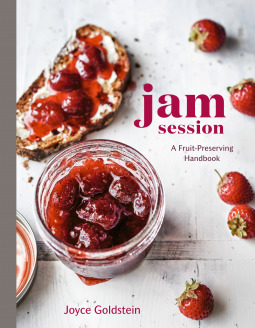
Jam Session by Joyce Goldstein

Jam Session: a fruit-preserving handbook by Joyce Goldstein

I'm always looking for new canning recipes and ideas. In Jam Session Joyce Goldstein gives a brief overview of canning and how she got into canning and preserving. Then the recipes are organized by season, which is great because especially with fruit it's best when it's peak season. While I haven't had a lot of success with canning jelly (it doesn't set and then I have to do it all a second time), I would like to try jams and other fruit preserving. There are definitely a few recipes I'd like to try. A good book for an experienced canner looking for new ideas with fruit.

August 2018 Reviews

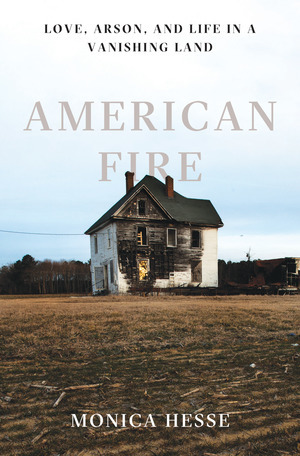
American Fire by Monica Hesse

American Fire: love, arson, and live in a vanishing land by Monica Hesse

Between November 2012 and April 2013 eighty-six fires were started in Accomack County, Virginia. This was a rural area with few local residents and most of the fires were started in abandoned houses or buildings. With local, state, and federal law enforcement involved as the fires continued it seemed like the arsonist would never be caught. Multiple profilers were brought in and yet still no one could catch the arsonist. Until the night of April 1, 2013 when two state troopers on their last night of surveillance caught the arsonist pair red-handed. Charlie Smith and Tonya Bundick were locals who had grown up in the area. Charlie had a criminal past, but definitely wasn't the mastermind. Their relationship and lives were very stressful - living paycheck to paycheck, but just barely. The fires somehow eased the stress for them, but there was never a real explanation of why they did what they did. Monica Hesse does a great job of laying out both Charlie and Tonya's personal histories, the history of the area, and the arson investigation. Not only is this the story of a crazy arson case, but the story of one couple trying to survive in a poor, rural area and how they unfortunately turned to crime to ease some of their stress and tension. A very quick, well-written read about a very interesting case.


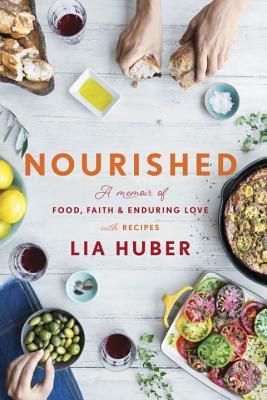
Nourished by Lia Huber

Nourished: a memoir of food, faith, and enduring love by Lia Huber

Nourished follows Lia Huber's journey of how food and cooking shaped her life. Starting in Greece while studying abroad in college she discovers that food is more than just fuel for your body, food can nourish your soul. In her early twenties she was diagnosed with an autoimmune disease and also had to have a hysterectomy. These physical challenges inspired Huber to change how she ate to help heal her body. As she and her husband travel abroad and move around the US, food always brings Huber back to her roots and her passion.

I was really tracking with the first half of this book. Huber became a Christian after college, but had a non-traditional life - married, but childfree. Never wanting children helped her cope with having to have a hysterectomy since now she biologically couldn't have children anyway. Then all of a sudden she "realizes" she really did want to be a mother and suddenly so did her husband. So, they adopt in Guatemala - one of the countries they stayed in during a driving trip to Costa Rica. And so now that she's back in the Christian homemaker stereotype her life is complete. As a Christian woman who's childfree by choice, it just bothered me how quickly this switch was flipped for her and how perfectly everything worked out. I feel like this just reinforces the stereotype that every woman REALLY does want to be a mother deep down. After that part I really lost interest in the book and just skimmed the last few chapters.


Tamed and Untamed by Sy Montgomery

Tamed & Untamed: close encounters of the animal kind by Sy Montgomery and Elizabeth Marshall Thomas

I've read two of Sy Montgomery's books (The Good Good Pigand The Soul of an Octopus), so I couldn't wait to read this one. While this one is different in that it's a collection of essays by Montgomery and Elizabeth Marshall Thomas it does not disappoint. The book is divided into six categories: animals and people, birds, dogs and cats, wild animals, tiny animals, and animal abilities. The essays cover everything from animal intelligence, skills in the wild, how our pets view us, and more. A perfect book for any animal lover out there!

A few quotes I really liked:

"Why is it more fun to adopt a particular, named animal than to simply make a donation for conservation of a species? Because, as researchers confirm, no matter the species studied - be it puffins or snow leopards or even sharks - animals are individuals, just like we are. And their stories can be as compelling as our own." (p. 55)

"An adult hummer visits an average of 1,500 flowers in a day. If the nectar were converted to a human equivalent, that would be fifteen gallons a day. But few people realize that insects are equally essential. Each hummingbird needs to catch and eat six to seven hundred bugs a day. (So spraying insecticide in your yard is like hiring a hummingbird exterminator.)" (p. 64)

"When humans get involved with other species, especially if they try to manage another species, things often get messed up. Ever since a dog's appearance made a difference, breeders have been manipulating what dogs look like no matter what this does to health and longevity." (p. 76)

"Arizona professor Con Slobodchikoff has documented that prairie dogs - gregarious ground squirrels - use specific sounds to communicate to others that a human has been spotted. (They also discuss the dangers of cats, badgers, hawks, and ferrets, as well as announce the comforting presence of harmless species like cows and pronghorns, who signal safety.) Not only that, but the little mammals can communicate what color shirt the human is wearing, whether he is tall or short, and even whether the human is carrying a gun!" (p. 165-6)


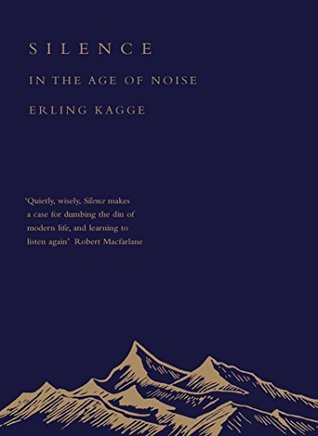
Silence by Erling Kagge

Silence in the Age of Noise by Erling Kagge

In 1993, Norwegian explorer Erling Kagge spent fifty days walking solo across Antarctica. He was the first person to reach the South Pole alone and while he did have a radio with him he had removed the batteries before he started his journey so that he could truly be alone and silent for the entire trek. In this book he explores what he learned on that solo journey of silence, but also through other experiences and from other philosophers and thinkers about the value of silence and what we can learn about ourselves and our world through silence. In today's constant barrage of noise silence can seem like a luxury that few can afford, but as Kagge points out we must all find that silence within ourselves to truly live and understand our world. This short book is a profound meditation on silence and why we so often fill our lives with noise to push back the truths that silence brings.

Some quotes I really liked:

"I believe it's possible for everyone to discover this silence within themselves. It is there all the time, even when we are surrounded by constant noise. Deep down in the ocean, below the waves and ripples, you can find your internal silence. Standing in the shower, letting the water wash over your head, sitting in front of a crackling fire, swimming across a forest lake or taking a walk over a field: all these can be experiences of perfect stillness too. I love that." (p. 26)

"Knitting, brewing beer, felling trees; these are activities that all have something in common. You set yourself a goal and carry it out - not all at once, but over time. You use your hands or your body to create something. By moving yourself, you move your mind. I enjoy experiences where the satisfaction travels from the body to the head, rather than the other way around. The results that you achieve - firewood to warm you, a sweater you have poured yourself into - are not things that can simply be printed out. The fruit of your labour is a tangible product. A result that you and others can enjoy over a period of time." (p. 30)

"The philosopher and boredom theorist Blaise Pascal promoted this type of exploration as early as the 1600s: 'All of humanity's problems stem from man's inability to sit quietly in a room alone.' So a discomfort with being alone, holding one's tongue and simply being did not start with the advent of TV in the 1950s, with the coming of the internet in the '90s or with smartphones: it has always been a problem, and Pascal was probably the first to write about this feeling...This disquiet that we feel has been with us since the beginning; it is our natural state. The present hurts, wrote Pascal. And our response is to look ceaselessly for fresh purposes that draw our attention outwards, away from ourselves." (p. 37)

"In a joint study from the universities of Virginia and Harvard, scientists left individuals alone in a room for six to fifteen minutes without music, reading material, the chance to write or their smartphones. They were left solely to their own thoughts. The participants ranged from eighteen to seventy-seven years old and were drawn from a variety of social backgrounds, yet the results were the same regardless. Most felt discomfort...The scientists then took the study one step further, in order to see whether the participants would rather do something unpleasant, such as receive an electrical shock, than sit alone in silence once again. Each participant had been subjected in advance to a similar electric shock so they would know exactly how painful the option was. And it was painful. Nevertheless, nearly half of the subjects eventually pushed on the button to administer an electrical shock in order to reduce their silent time...One of them pushed the electric shock button 190 times." (p. 42-3)

"Some users get a good response when they post something on social media, while most sit waiting for anyone to care. And the more unpredictable this interaction is, the more the user is addicted. You don't want to miss out on anything." (p. 49)


In the Middle of the Mess by Sheila Walsh

In the Middle of the Mess: strength for this beautiful, broken life by Sheila Walsh

Sheila Walsh's father committed suicide when she was 5 years old. She didn't remember her father when he was well and after his death her family never spoke about him. Because she was a child and nothing was explained she truly thought she was the reason for his suicide even into adulthood. Then as an adult she too suffered from clinical depression and suicidal thoughts. As a Christian, she believed that if she told people about her time in a psychiatric ward or her continuing thoughts of suicide it would be a bad witness because God hadn't "fixed" her. Finally Walsh started to realize that God was with her in her darkest moments and she didn't need to feel ashamed of her struggles with depression or suicidal thoughts. Thanks to therapy, a loving family, and a close group of "safe sister" friends Walsh is able to manage her depression better and realize that God is often the closest to us when we are In the Middle of the Mess as the title of her book says.

While I don't have clinical depression or struggle with suicidal thoughts, I could still very much relate to her struggle. So often Christians hide their struggles because they don't want people to think badly of them or show how wounded they are, but Christ came to help the sick not the healthy and whatever your particular struggle might be He can help you heal those wounds. I wasn't familiar with Sheila Walsh before, but she's a well known Christian musician, author, and speaker. I mainly picked up this book because of the title and some things that I'm working through right now in my spiritual and emotional life, but it came to me at the right time and definitely gave me some new ideas and practices to put into place. 

Some quotes I really liked:

"This is the truth I would discover that night: Christ came to save us in the present moment. The gift of salvation is God's active, present gift to us, no matter where we are...If all our brokenness was healed the moment we came to Christ, we'd have no need to call on His name over and over again - but that's not my story, and I suspect it's not yours either...There is present-tense salvation, one that's offered to us right now in the middle of our mess. Salvation is far greater and more present than we imagine." (p. 8-9)

"When we don't say the true things, the things that might free us from secrets and lies, the poison seeps out of our lives and into the lives of others. The anger and sadness surface when you least expect it." (p. 24)

"Not all losses weight the same. Some disappointments may seem small measured against others, so we don't bring them into the light...They're not life-changing losses, but they are very real disappointments. Instead of speaking those out loud, though, we often stuff them inside because we don't want to seem small or petty before God. But hear this truth: Nothing that affects you is petty to God. He loves you and cares about everything that affects you. He wants to deliver you, to bring you present salvation. I don't know what losses you've had in your life. I don't know what you're walking through right now, but I want to say this: Don't hurry through it, and don't hide the pain. Don't let anyone tell you to get over it and don't hide it in secret, thinking the pain won't find you there. It will. I promise. Wouldn't you rather confess it to God, to feel Him taking your load and delivering you?" (p. 52)

"Just because a place has become familiar doesn't mean it's where you belong." (p. 139)


The Finnish Way: Finding Courage, Wellness, and Happiness Through the Power of Sisu

The Finnish Way by Katja Pantzar

Katja Pantzar grew up in Canada, but had two Finnish parents so some of the Nordic ideas and philosophies were things she grew up seeing her parents do. After being diagnosed with depression in her late 20's, Pantzar decided to move to Finland and try to reconnect with her family roots. This was when she was introduced to the idea of Sisu - a Finnish idea or resilience, fortitude, and not giving up. This philosophy plays out in all areas of Finnish life - food, exercise, work, family, etc. In the book she explores Finnish trends/cultural norms that exemplify Sisu like cold water swimming, sauna, being out in nature, bike riding, movement as medicine and more. While a lot of these ideas/ways of life seem wonderful, it would be much harder to do them outside of living in a coastal town. There is also the issue of Nordic countries designing cities around public transportation or making it easier to walk or bike to work. While Pantzar shows how you can still take these ideas and implement them to suit your situation, it's obvious that it would be a LOT easier if you lived in a Nordic country. But, there are lots of great ideas and ways to think about how you could incorporate more nature and more Sisu into your daily life.


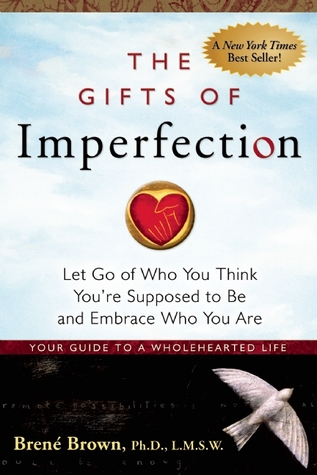
The Gifts of Imperfection by Brené Brown

The Gifts of Imperfection by Brene Brown

When Brene Brown first started studying shame she saw some patterns in people who were more resilient and called these patterns "wholehearted." This book fleshes out those wholehearted patterns and ideals - a lot of which deal with authenticity and breaking away from who we "should" be and moving toward who we truly are. While I did like the book and there was a LOT of great information, it almost felt like you were dropped into the middle of a conversation. There is just a LOT going on right from the first page. I read Braving the Wilderness earlier in the year and really liked it so I wanted to go back and read more of Brown's work. Maybe she's improved with each book! While I did like this one and get a lot out of it, I was slightly put off by the cover - it was very Oprah-esque and probably not one I would have picked up if I wasn't already familiar with the author. But, you can't always judge a book by it's cover and there IS a lot of great info here. I'll definitely be reading more by her in the future.

Some quotes I liked:

"One of the biggest surprises in this research was learning that fitting in and belonging are not the same thing, and, in fact, fitting in gets in the way of belonging. Fitting in is about assessing a situation and becoming who you need to be to be accepted. Belonging, on the other hand, doesn't require us to change who we are; it requires us to be who we are." (p. 25)

"It's also pushed me to think about the important differences between professing love and practicing love. During a recent radio interview about the rash of celebrity infidelities, the host asked me, 'Can you love someone and cheat on them or treat them poorly?' I thought about it for a long time, then gave the best answer I could based on my work: 'I don't know if you can love someone and betray them or be cruel to them, but I do know that when you betray someone or behave in an unkind way toward them, you are not practicing love. And, for me, I don't just want someone who says they love me; I want someone who practices that love for me every day.'" (p. 28)

"In Jungian circles, shame is often referred to as the swampland of the soul...What I'm proposing is that we learn to wade through it. We need to see that standing on the shore and catastrophisizing about what could happen if we talked honestly about our fears is actually more painful than grabbing the hand of a trusted companion and crossing the swamp." (p. 36)

"Our stories are not meant for everyone. Hearing them is a privilege, and we should always ask ourselves this before we share: 'Who has earned the right to hear my story?' If we have one or two people in our lives who can sit with us and hold space for our shame stories, and love us for our strengths and struggles, we are incredibly lucky...We don't need love and belonging and story-catching from everyone in our lives, but we need it from at least one person." (p. 47)

"Children most often learn hope from their parents. Snyder says that to learn hopefulness, children need relationships that are characterized by boundaries, consistency, and support...To add to Snyder's work on hope, I found in my research that men and women who self-report as hopeful put considerable value on persistence and hard work. The new cultural belief that everything should be fun, fast, and easy is inconsistent with hopeful thinking. It also sets us up for hopelessness. When we experience something that is difficult and requires significant time and effort, we are quick to think, This is supposed to be easy; it's not worth the effort, or, This should be easier: it's only hard and slow because I'm not good at it. Hopeful self-talk sounds more like, This is tough, but I can do it." (p. 66)


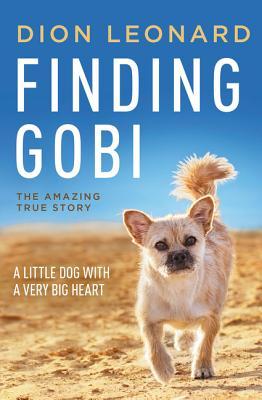
Finding Gobi by Dion Leonard

Finding Gobi by Dion Leonard

Dion Leonard is an ultra-marathoner - running races that lasted days and were in extreme environments. While running a 155-mile race through China's Gobi desert Leonard encounters a small dog. The dog seems enamored with Leonard, but he figures there's no way the dog will keep up with him through the day's leg of the race, but she does and continues on the next day as well. Soon Leonard finds himself looking out for the little dog he names Gobi and even sharing his food rations with her. By the end of the race he decides to find a way to bring Gobi home to Scotland. He leaves her with one of the race organizers in China while he works out a plan, but Gobi escapes. Leonard ends up taking a leave from work to go back to China and find Gobi. Miraculously he does and that is still only the beginning of their adventure to get Gobi back home to Scotland. A wonderful happy story about the bond between dog and man. This is a quick, adventure-filled read with a very happy ending.


We Are All Shipwrecks by Kelly Grey Carlisle

We Are All Shipwrecks by Kelly Grey Carlisle

Kelly realized once she started school that her family wasn't like other families. Other families had a Mom and Dad and kids, while she lived with her Grandfather and his second wife. Other kids knew their parents, while Kelly's Mom was murdered when she was just 3 weeks old and her Father was in and out of jail. Other families had normal homes and jobs, while Kelly's Grandfather ran a porn shop and for most of her childhood they lived in a small boat in an Los Angeles harbor. Still while she was growing up Kelly idolized her Grandfather. He said he had served in WWII and ended up in a concentration camp, he knew lots of famous actors and musicians, and the reason he loved boats so much was because of his time in the Navy - but as an adult Kelly finds out most of her Grandfather's stories weren't true. So, who was Kelly's Grandfather? What really happened to her Mother? These are the questions Kelly struggles with as an adult once she realizes that she did grow up in a family of people who loved her and wanted the best for her even if they sometimes had a hard time showing it.

While Kelly's story is fascinating, I wish the book had been more 50/50 with her childhood and adulthood. It kind of felt like she jumped from high school over college and straight into being married and a mother herself dealing with these questions about her family. I would have liked more about how she was able to create a stable home life when she never had that for herself. I also wish she could have made contact with her Father as she found out he really did want a relationship with her and did love her Mother. Overall, a great memoir of a woman growing up in a crazy, dysfunctional family that manages to create the stable family she wished she had for her own children.


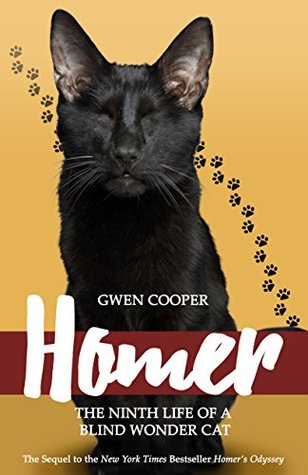
Homer by Gwen Cooper

Homer: the ninth life of a blind wonder cat by Gwen Cooper

I LOVED Homer's Odyssey when it came out, so when I saw that there was a sequel I couldn't wait to see the next chapters of Homer's life. As Gwen Cooper explains, Homer's Odyssey covered 12 years and she felt like she didn't have enough content to make a second book equally long, so this is more of a "mini-sequel" that covers the time period after Homer's Odyssey was published and through his death at age 16. The first two chapters cover trying to get the book published and the media attention after it came out. The last two chapters are serious tear-jerkers that cover when Homer got sick and through his death. Homer was an amazing cat right up until the very end. He was diagnosed with kidney failure and not given any prognosis - his liver levels were so high he shouldn't have been alive at all - but he lived for another 4 months. It was very hard to read the second half because it was so sad and I just lost my 14 year old cat Roxy a little less than 3 months ago. But reading more Homer stories was great and as Cooper says in the introduction she got to relive all these Homer memories again while writing this mini-sequel. While definitely not as long, if you loved Homer's Odyssey make sure to read this follow up.


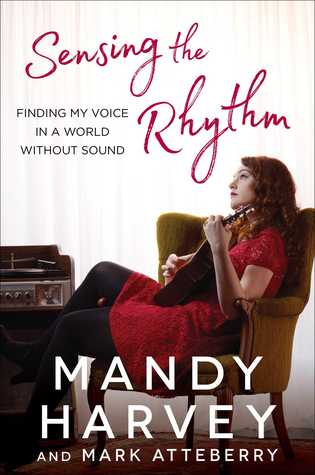
Sensing the Rhythm by Mandy Harvey

Sensing the Rhythm: finding my voice in a world without sound by Mandy Harvey

I first heard of Mandy Harvey when I saw the clip of her episode on America's Got Talent singing and playing the ukelele even though she's completely deaf. In this book she explains how she lost her hearing and how she managed to get back into music even with no hearing. Harvey was a music major in her first year of college when she suddenly started to lose her hearing and within a few months she was completely deaf. She went into a deep depression because music was her love and passion. Her father helped her try out singing again and she was able to continue singing through muscle memory, feeling music and vocal vibrations, and with help from a pitch app to make sure she gets and stays on pitch while singing. But, this is not the only adversity Harvey has overcome in her life - she had other physical and emotional struggles, including a failed marriage that helped shape her life and become the resilient person she is now. This is a very inspiring book about an amazing woman who's overcome a lot and revamped her dreams when the original dreams died.


Nomadland by Jessica Bruder

Nomadland: surviving American in the twenty-first century by Jessica Bruder

Nomadland explores a unique segment of the US population - retirement age people who are essentially homeless, living in old RVs, vans or cars and traveling all over the US doing seasonal work and meeting up as a community of "vandwellers." While many people saw media coverage of the tent cities that popped up around the country during the 2008-9 recession full of out of work people who had been foreclosed on or evicted and were now homeless. While some of the vandwellers enjoy their lifestyle, most if not all were forced into this lifestyle and are now trying to make the best of it. Jessica Bruder buys a van to live out of for months at a time so she can truly get to know the vandweller culture and experience this lifestyle. Bruder interviews many people, but mainly follows Linda May, a woman in her late sixties who worked a variety of jobs in her lifetime, but yet couldn't seem to make ends meet paying rent, utilities, etc. but with no rent and much lower expenses she can work toward her dream of buying land and building an Earthship house one day. The most eye-opening part of this book for me was how many seasonal jobs are geared toward older adults as extra retirement income, but the reality is these people depend on these jobs and will probably never really be able to retire. Amazon is a huge recruiter of "camperforce," older people who have RVs/campers/vans to live out of and will travel to Amazon's huge warehouses as seasonal workers during the holiday rush between Thanksgiving and Christmas. This is extremely physical and demanding work that is needed round the clock. I also didn't know that many National Parks advertise for "campground hosts" who help rangers keep campsites clean, clean public showers and restrooms, and check in campers. While there's nothing wrong with either of these jobs, it just felt sad that many of these people can't find any other full-time work because of their age. It also felt somewhat predatory and while that shouldn't surprise me about a huge corporation like Amazon I guess it still does. This is a unique story about a hidden part of our population, but there is also just an undercurrent of sadness too. These people do have a genuine community and help each other, but there are many that fall through the cracks when they have a health crisis. Definitely a book I'll be thinking about for a long time.

Some quotes I really liked:

"Amazon had recruited these workers as part of a program it calls CamperForce: a labor unit made up of nomads who work as seasonal employees at several of its warehouses, which the company calls 'fulfillment centers,' or FCs. Along with thousands of traditional temps, they're hired to meet the heavy shipping demands of 'peak season,' the consumer bonanza that spans the three to four months before Christmas. Amazon doesn't disclose precise staffing numbers to the press, but when I casually asked a CamperForce manager at an Amazon recruiting booth in Arizona about the size of the program, her estimate was some two thousand workers [that was 2014]...The workers' shifts last ten hours or longer, during which some walk more than fifteen miles on concrete floors, stooping, squatting, reaching, and climbing stairs as they scan, sort, and box merchandise. When the holiday rush ends, Amazon no longer needs CamperForce and terminates the program's workers. They drive away in what managers cheerfully call a 'taillight parade.'" (p. 45)

[Talking about how physically demanding the Amazon temp work is on anyone, but especially older bodies] "Many of the RVs I entered [in CamperForce] were stocked like mobile apothecaries, with Icy Hot Pain Relieving Gel, tubs for soaking tired feet, Epsom salts, and bottles of Aleve and Advil. If the workers ran out of pills, that wasn't a problem - Amazon had wall-mounted dispensers offering free over-the-counter painkillers in the warehouse." (p. 55-6)

"Along with many of the wayfarers he came to inspire, Bob [Wells who created CheapRVLiving.com] saw things differently. He envisioned a future where economic and environmental upheavals had become the new American normal. For this reason, he didn't package nomadic living as a quick fix, something to tide folks over until society had stabilized, at which point they could reintegrate with the mainstream. Rather he aspired to create a wandering tribe whose members could operate outside of - or even transcend - the fraying social order: a parallel world on wheels." (p. 78-9)

Tuesday, August 7, 2018

July 2018 Reviews

The Wellness Project by Phoebe Lapine

The Wellness Project by Phoebe Lapine

When Phoebe Lapine was diagnosed with Hashimoto's tyroiditis after college she struggled to reconcile her diagnosis with how she thought her 20's should be lived - lots of drinking and eating garbage. After cutting out gluten, she saw some improvement, but not enough. So, in the vein of Gretchen Rubin's The Happiness Project she decided to spend a year focusing on her health and how to improve it without never enjoying her life. While some of the chapters/focus were interesting the whole book was more geared toward someone with Hashimoto's or autoimmune disease, so that got a little old for me since I don't have that. But, I pretty much lost complete interest during the chapter on birth control. She makes it sound like the Pill is the worst thing you could ever use and decides on the withdrawal method (?!?!?!) and FAM (fertility awareness method) which is where you track things daily like your temperature and vaginal discharge - seriously? who has time to do that? And this quote about the withdrawal method just pissed me off, "Most [women using this form of birth control] are in committed relationships and therefore have already nurtured the degree of trust needed to cede that kind of control to a man. And many acknowledge some comfort in handing over the reins; it's stressful to be the lone watchdog guarding the hen house." (p.251-2) WTF?! Are you going to hand the pregnancy reins over if it doesn't work?! This is the stupidest thing I've read in a long time. After this chapter I was pretty much done. I just felt like this book was so geared toward her specific situation that it was hard to get much out of it. Also, she worked from home so she had a lot more freedom to take exercise classes during the day, sleep in, cook better meals, etc. Overall, I wasn't impressed with this one.


Healing Back Pain by John E. Sarno

Healing Back Pain: the Mind Body Connection by John E. Sarno, M.D.

This book was recommended in the last book I read, The Wellness Project by Phoebe Lapine in the chapter when she discussed her back issues. In that book her acupuncturist said that often shoulder pain/tension was due to unresolved feelings of anger and I don't remember if the acupuncturist was the one who recommended this book to Lapine or not, but as I've had issues with my neck and shoulders that have gotten worse over the past almost 10 years I decided to check this book out. Healing Back Pain was published in 1991, so it's not exactly current, but his basic theory does make a lot of sense. His theory is that most common back issues (neck/shoulders, lower back, and leg issues) are a result of TMS (Tension Myositis Syndrome) which is basically the body feeling physical pain instead of dealing with emotional pain or anger. When Sarno describes the "types" of people who most often have TMS it makes sense, but this book is seriously lacking in any real help or "treatment" options. He basically says once you understand you have TMS and it's not a physical/medical issue then the pain just goes away and there is really not much more "treatment" that is recommended. Although he does say in about 5% of cases therapy is needed to work through the painful emotions/anger, but he also hints that that is mainly in cases of physical or sexual abuse in childhood. I also got a little leary when he talked about basically all kinds of things are TMS - allergies, plantar fasciitis, etc. While I do think he makes some good points I also think he's a little too broad in his assumptions that almost every ailment are TMS. I think there needs to be more of a balance. But, as someone who's suffered from, at times, terrible pain in my shoulder and neck with no obvious medical cause it is frustrating that NONE of the doctors I ever saw suggested it might be a reaction to stress or other emotional issues. While I do agree with the premise of this book it was still a let down that there wasn't more about how to work through these emotions instead of having them manifest in physical pain. If you're curious read the chapters about TMS and skip or skim some of the others that don't offer much in the way of actual help.

Some quotes I liked:

"TMS can manifest itself in a variety of locations, and it tends to move around, particularly if something is being done to combat the disorder...It is as though the brain is unwilling to give up this convenient strategy for diverting attention away from the realm of the emotions." (p. 13)

"One often hears or reads that holidays may be stressful. What should be a time of relaxation and fun often turns out to be unpleasant for some people. I have often been struck by the fact that many patients will report the onset of attacks of TMS before, during, or shortly after major holidays. The reason is obvious: Big holidays usually mean a lot of work, particularly for women, who take the responsibility in our culture for organizing and carrying out the festivities." (p. 24) [not to mention actually seeing family members you don't like, are rude, etc.]

"The longer I work with TMS, the more impressed I am with the role of anger. We have all learned to repress it so completely that we are totally unaware of its existence in many situations. In fact, I have begun to wonder if anger is not fundamental to the development of symptoms than anxiety and, indeed, whether anxiety itself may be a reaction to repressed anger." (p. 51)

"In the long run, fear and preoccupation with physical restrictions are more effective as a psychological defense than pain. A severe attack of pain may be over in a few days, but if the person is afraid to do things for fear of inducing another attack or because he or she has found that the activity will invariably bring on pain, even if it is not an acute attack, then the preoccupation with the body is continuous and the defense is working all the time." (p. 61)


Why I Don't Call Myself Gay by Daniel Mattson

Why I Don't Call Myself Gay by Daniel Mattson

I wasn't sure what to expect from this book, but I was interested to read a book by someone who considers themselves a Christian and is also gay or attracted to the same sex. Mattson is Catholic and if I had realized how much of the book would be about Catholic teachings/ideas/theology I might not have read it, but I'm glad I did. While I don't agree with Mattson 100% (he does not think anyone is born gay) he is very courageous to open his life up and show his struggle and how he has reconciled his life with the teachings of the Church. The first part is his back story then the rest of the book covers how someone with same sex attraction CAN be a Christian and can glorify God through a life of celibacy. Mattson believes that we are all more than our sexuality and we were all made to glorify God. And while I have issues with the Catholic church, he believes (and I agree) that the Church is to shine a light on the truth of God's Word for the world. While his message won't be popular with the secular world and our current culture, I think he gives a lot of hope for any Believer who struggles with any sexual sin that God can help you and you are more than your sexuality.

Some quotes I liked:

"We all acknowledge the weight of the societal resistance to or rejection of the Church's teachings on marriage and sex. The opposing forces are formidable. Out of fear of being called a 'hater' or 'homophobe,' or worse consequences, we can remain silent and unwilling to raise the banner of truth in a compassionate and thoughtful way." (p. xxxiv-xxxv)

"I have always wanted to live my life based on reality, on the way things really are. On the one hand, the way things 'really are' is that I am sexually attracted to men. But despite what the gay rights movement said about me (that my feelings and attractions reveal my true sexual identity), I never felt convinced by their arguments. 'Being gay' never really made sense to me. Defining reality based on my feelings seemed a rather unconvincing premise upon which to build a life...I want to live my life based on reality, not based on what I feel reality to be." (p. 90)

"We associate this sort of propaganda with the political machine of dictators; yet the weaponizing of the word 'can be found wherever a powerful organization, an ideological clique, a special interest, or a pressure group uses the word as their 'weapon.' The gay rights movement deftly uses the power of propaganda, the word wielded as a weapon, against anyone they perceive stands in the way of their aims. Just recently, a group of 'progressive organizations' fomented a propaganda war against Christian and other religious organizations who still uphold traditional marriage, in opposition to same-sex marriage, by labeling such organizations as 'hate groups.' In some countries like Sweden, it is becoming illegal to even preach about homosexuality as being immoral." (p. 102-3)


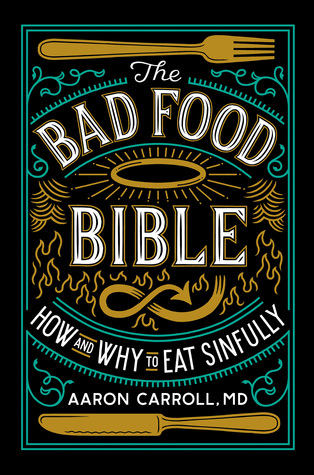
The Bad Food Bible by Aaron E. Carroll

The Bad Food Bible by Aaron Carroll, MD

Every day there is a new headline about a new "superfood" that will help you live forever or a new "evil" chemical that's been found in processed foods that will send you to an early grave. How do you know what to eat? Is anything safe? Dr. Carroll is a medical doctor, but early in his career while researching whether wedge pillows really helped infants with acid reflux he found that many doctors are just making their best guess based on whatever the current research is at the time. While digging further into the research he found Dr. Carroll discovered that many of the clinical tests weren't done well or for very long or had conflicting results. So, how do you sort through all the "evidence" given to support whatever current food trend is going on? Dr. Carroll walks through how scientists do their research and the best (most accurate) ways to do clinical trials and tests. Then the rest of the book goes through various "bad" foods and the research that supposedly backs up the common claims about that food. For the most part Dr. Carroll is able to show that research can really be bent to fit most any claim and it very often is even by medical professionals. Also, the research is often funded by an organization with an agenda, for example the Sugar Research Foundation trying to make sure sugar isn't seen as the blame for weight gain - fats and meat should be. Dr. Carroll covers butter, meat, eggs, salt, gluten, GMOs, alcohol, coffee, diet soda, MSG, and non-organic food. I pretty much agree with him on everything except his stance on GMOs - he is just wrong about this issue in my opinion. But, his overall view point and take away for the book is summed up well in the last paragraph of the book, "Eating is one of the great joys of life. Don't let people use misinformation or bad science to deprive you of the pleasure of good food. If they tell you that you need to drastically change your eating habits, or that you need to avoid this or that food completely, be skeptical; that's almost never the case. You can eat things you love and still live a long and healthy life. Let this book be your guide." (p. 198)

Some quotes I really liked:

"There's a lot of potential good in GMO crops. It's also important to recognize that this kind of modification also occurs in nature [NO, it does NOT]. DNA mutations eventually confer adaptive benefits on certain species, allowing them to overcome such challenges without human intervention. This is Darwin's theory of evolution by natural selection at work. Genetic engineering just dramatically speeds up the process and allows for more specific changes than nature usually stumbles upon through the halting process of random mutation." (p. 83) [What GMOs do is NEVER found in nature. How would fish DNA naturally evolve into plants? How would poison naturally evolve into plants? That is what GMO crops are doing, not to mention that Monsanto wants to own plant DNA - not own their ideas or technology, but OWN MULTIPLE PLANT DNA. Read Modified by Caitlin Shetterly to get the real scoop on GMOs and their threat to our health and environment.

[In talking about the percentages of Americans who drink alcohol and how much per week] "Whereas people in the ninth decile consume fifteen drinks a week, people in the tenth and final decile consume seventy-four drinks a week on average. Seventy-four! You have to average two bottles of wine a day just to make it into the bottom half of this decile...Seventy-four drinks a week is more than four and half bottles of scotch. It's three cases of beer. It's ten beers every day - on average...These 10% of Americans [24 million people] drink more than half of all the alcohol consumed in the United States every year...If those 10% could reduce their drinking to the level of the ninth decile, overall alcohol sales in the United States would fall by 60%." (p. 106-7)

"In many ways, organic foods are now every bit as corporate as the conventionally grown stuff, with bucolic brands and packages obscuring the gears of the industrial food system. 'Cascadian Farm' is owned by General Mills. 'Back to Nature' was owned for some time by Kraft, which in 2012 sold it to Brynwood Partners, a private equity fund. 'Moringstar Farms' is owned by Kellogg." (p. 174)

"Perhaps more than anything else, I found myself saying that I wanted readers to realize that we can't believe everything we hear about dietary health, even when it comes from scientists. The truth is much more complicated than any one study can reveal." (p. 187)


Slow by Brooke McAlary

Slow: simple living for a frantic world by Brooke McAlary

This book came into my life at the perfect time. I had put it on hold based on the title and when it came in it was so beautiful that I just wanted to start reading it right away. Brooke McAlary was living the typical "keeping up with the Joneses" life of accumulating all the stuff society told her she needed, but she was overwhelmed and barely keeping her head above water. After her second child was born she had severe postpartum depression and that was when she decided to change her life. It was a slow process, but little by little McAlary de-cluttered her house and life. She began to see that saying "yes" to everything often meant saying "no" to the truly important things like her family and health. She covers decluttering and de-owning, mindfulness and disconnecting from technology to reconnect with nature and real life. She also talks about the wobbly art of balance and how to deal with "backsliding" into our old ways.

I loved that she wasn't pushing minimalism or a certain way to slow down - she reiterates that this process is all about whatever works for you and what is important to you. I also like that even though she has children the whole book wasn't about her kids it was more about whatever your family looks like or whatever your priorities are how best to enjoy that more. She also recognizes the importance of technology in our lives, but encourages serious boundaries - both with the amount of time we use technology and what we feed ourselves with social media. This is probably the most well done book about simplifying or slowing down that I've read. McAlary gives lots of great tips and ideas, but doesn't try to create a new "slow Joneses" to now idealize. Overall a wonderful book that I will probably end up buying because it's just so beautiful and inspiring!

Some quotes I really liked:

"Instead, think of decluttering as one step in the process of creating a slower, simpler life, not the goal. It's more about approaching our home - and the things we choose to keep in it - with intention. It's about choosing actively what things to hold on to, what things to let go of, and what things are meaningful to us. There is no right or wrong, but we do have a choice." (p. 43-44)

"Clutter is deferred decisions. It's the physical manifestation of procrastination. It's overcommitment in the form of stuff." (p. 44)

"As my raw, real, feeling self was revealed, two things began to happen. I began to experience more. More joy, yes, but also more realization, more discomfort, more pain, more bittersweetness. More awareness of the beauty and tragedy of life. For the first time in many years (maybe ever), I was becoming emotionally available, and it was stunningly uncomfortable." (p. 117)

"There is constant stimulus in modern life, and the opportunity to let thoughts out rather than cramming more in is a rare one. By walking in silence, with no music, no podcasts, no audiobooks, we invite our thoughts to do their thing without impediment. So often, I will have a breakthrough in these moments of silence, as my thoughts, which need time to roll around in silence and put themselves in some kind of order, gradually work themselves out." (p. 132)

"We do a lot to avoid feelings like anxiety, sadness, or anger. We stay busy, we self-medicate, we say yes, we say no - all so as not to experience the 'bad' feelings life has for us. But these feelings are important, because in order to feel the highs of joy and happiness, we also need to understand the lows of grief, envy, or disappointment. Mindfulness allows us to acknowledge and accept such feelings, feel them in all their depth, and understand that they are valid and important. It also helps us to understand that they are not everything - even on days that feel like sadness has swallowed the whole world." (p. 141-2)

"The technology isn't the problem; it's how we choose to use it. And it is a choice. We choose to keep our phones in our pockets. We choose to put them on the dinner table. We choose to respond to emails at 11:30 p.m. We choose to update statuses when we're sick, or in bed, or on vacation, or while someone who loves us waits for us to look at them. We choose to document an endless succession of precious, personal moments, and we choose to view so much of our life through a screen." (p. 154)

"Now I can see that the idea of balance is a good one, when viewed with two caveats:
1. Not everything in our lives deserves the same weight. Aim instead for the correct weight.
2. Balance isn't a daily act. Not everything will be given attention every day, and that's OK.
The difference is the weight we give things. Keeping the house immaculately clean doesn't need or deserve the same weight as spending time with our closest people." (p. 216)

"What does a (realistically) ideal day look like for you? One that fills you up, ticks the boxes you want ticked, makes time for the important things in your life, leaving you satisfied as you lie in bed at night? Not a holiday or day off, but a work-school-cooking-meetings-laundry kind of a day...Think it through, and write it down if you want to. Choose one thing in that ideal day that you aren't currently doing - make it a good one, one that will contribute to your core - and add it to tomorrow." (p. 236-7)

"So often, we avoid doing things because we're afraid. Afraid to fail, fall flat on our faces, or admit we made a mistake. Afraid to backtrack, afraid to be judged. We don't make changes, because we're afraid the requirements will exceed our capabilities or the problems will be bigger and more complex than we anticipated. So we stay where we are. Comfortably stuck. Studiously avoiding change or new experiences, out of fear of what the other side holds." (p. 241)

"Behavioral consultant Nicholas Bate refers to this regular checking in as 'taking your MEDS,' or, more specifically, paying attention to: mindfulness, exercise, diet, sleep Once I recognize which of these areas has changed, it's simpler (again, not necessarily easier) to recognize the issue and start fixing it." (p. 245)


Kitchen Confidential by Anthony Bourdain

Kitchen Confidential by Anthony Bourdain

Based on the other Goodreads reviews I guess I'm not completely in the minority for not loving this book. I've never read anything by Bourdain or watched his show, but I had always heard that THIS was the book of his to read. So after his suicide I put it on hold and here we are. To start I LOVE reading about cooking, food, chefs, etc. but this one was just too much for me. I know kitchens aren't PC workplaces, but there was so much vulgarity and sexual harassment that I had a hard time reading parts of it. I know this book came out long before the #metoo movement, but it really epitomizes how the "old boys club" and "this is just how it is" attitude is so pervasive and makes changing very hard. Bourdain seemed like a spoiled brat (and he does own that) who then because an addict and worked his way up in the world of cooking. How he ever managed to get and stay married is beyond me. I was liking it more in the first half, but the second half seemed more name dropping and a lot of the same material just repackaged slightly. Overall, not super impressed.

Some quotes I did like:

"Vegetarians, and their Hezbollah-like splinter-faction, the vegans, are a persistent irritant to any chef worth a damn. To me, life without veal stock, pork fat, sausage, organ meat, demi-glace, or even stinky cheese is a life not worth living. Vegetarians are the enemy of everything good and decent in the human spirit, an affront to all I stand for, the pure enjoyment of food." (p. 70)

"Garlic is divine. Few food items can taste so many distinct ways, handled correctly. Misuse of garlic is a crime...Avoid at all costs that vile spew you see rotting in oil in screwtop jars. Too lazy to peel fresh? You don't deserve to eat garlic." (p. 81)

"Skills can be taught. Character you either have or don't have. Bigfoot understood that there are two types of people in the world: those who do what they say they're going to do - and everyone else." (p. 96)