Thursday, February 28, 2019

February 2019 Cookbooks

Cook90 by David Tamarkin

Cook90: the 30-day plan for faster, healthier, happier meals by David Tamarkin

I really like the premise of the Cook90 - cook every meal for 30 days to expand your cooking skills and try new recipes. I did think some of the rules were a little strict - you can't eat the same meal more than twice (except breakfast), eat leftovers no more than twice, and it doesn't count if someone else in your household cooks - you HAVE to cook part of the meal. But, I definitely think doing this would push you out of your comfort zone with cooking. I am a creature of habit, so it would be very hard for me to not have the same meal more than twice in a month. The first section of the book explains the Cook 90 plan and then the second section goes over how to plan this out and the importance of having a meal plan and creating "nextovers" parts of a meal that you purposely plan to use in another meal that week to cut down on prep work. The final section is the recipes and many of them give tips on how to best use all your ingredients for multiple meals. While I didn't see a ton of recipes I wanted to try, I do like the premise and will think about possibly doing my own Cook 90 in the future.


Damn Delicious Meal Prep by Chungah Rhee

Damn Delicious Meal Prep by Chungah Rhee

I already really liked the Damn Delicious blog and had found lots of recipes I've tried and want to try. In this book she focuses on meal prep which helps create quick meals with whole foods. I really liked her meal prepping ideas and tools and she gives several examples of how to use one ingredient many ways for many different meals. That way you're not getting burned out eating the same meal over and over for several days. There were definitely lots of recipes I want to try in this one. If you're already a fan of Damn Delicious or just want some quick, good recipe ideas this is one to check out.

February 2019 Reviews

The Underground Railroad by Colson Whitehead

The Underground Railroad by Colson Whitehead (Books & Banter and Evening Edition)

Cora is a third-generation slave on a plantation in Georgia. When she is 10 years old her mother runs away and is assumed to be safe up North as she is never caught. Once her mother is gone life is even harder for Cora as a "stray" on the plantation - and daily life is brutal all the way around. After her master dies and his malicious brother takes over things become even more unbearable on the plantation. When Caesar, a newer slave, approaches Cora about running away she decides to go. The rest of the book is their harrowing journey on the underground railroad - which Whitehead imagines as an actual subterranean railroad. With stops in South Carolina, North Carolina, Tennessee, and Indiana every time things look like they are improving for Cora the bottom falls out - constantly on the run she is wary of making any personal attachments. But, the end of the book does look more promising for Cora without being too neatly wrapped up.

This is a hard book to review because while it is incredibly well-written the content is horrific and brutal. I'll never understand how slavery was accepted in the South (and all over the world), but this book shows just how depraved and evil humanity can be. And US slavery is just one chapter in the world's history of brutality and evil that still hasn't stopped being written. A hard read, but definitely worth it.


Hay Fever by Angela Miller

Hay Fever: how chasing a dream on a Vermont farm changed by life by Angela Miller

I thought this would be a really interesting book, but it was not that great. Angela Miller and her husband Rust just seem like gluttons for punishment and wasting money. He is a successful architect and she works in the publishing industry in New York City. They want to find a new rural "get-away" and come across Consider Bardwell Farm in Vermont and immediately both love it. Almost right away Angela wants to bring it back as a working goat farm and make cheese - but she knows nothing about raising goats or making cheese. So basically they throw money at the farm and hire a ton of employees to run things while they both continue to work full time and split their time between NYC and the farm. I understand running a working farm is very hard and it's very hard to be successful financially, but they just seemed to have more money than sense. I just really didn't like them and after awhile I just got frustrated with the book and all her complaints about employees and money problems. There are other much better farming books out there - don't waste your time on this one.

One quote I really disliked:

"As a matter of fact, the farm has triggered a talent I didn't know Rust had: landing government grants. That can be as important to the survival of today's family farm as producing children to provide free labor was in the past." (p. 133) Any business dependent on subsidies or government grants is NOT successful - just talk to Joel Salatin, Ben Hewitt, or Forrest Pritchard and read their books.


The Seasons on Henry's Farm by Terra Brockman

The Seasons on Henry's Farm by Terra Brockman

The Seasons on Henry's Farm is a week-by-week look at the running of an organic farm. Terra Brockman's parents bought what they all called "the Land" in the early 1970's. They eventually moved there full time, but now it's being run by Terra's brother Henry. Three of the five siblings have moved back to the farm or the farm area and all work together on Henry's farm. Terra had taken over writing the weekly email "farm notes" that eventually turned into this book - what's in season, what they're planting, and other farm events/happenings. There is SO MUCH WORK involved in running a full-time farm that at times just reading this book made me anxious! Even in the winter there is work to do they only really get "time off" December through February and even then there are still things to do to prepare for spring planting again. It definitely makes you appreciate that there are people who are willing to do this very difficult and often low-paying job so that we have fresh, healthy food to eat. Each chapter also includes at few recipes using some of the ingredients discussed in that chapter. Overall, an interesting and insightful look at the day-to-day operations of an organic vegetable farm.


Life's Work by Willie  Parker

Life's Work: a moral argument for choice by Dr. Willie Parker

I decided to read this book after seeing Jodi Picoult speak on her Spark of Light tour. She loosely based the doctor and clinic in her book on Dr. Parker and the sole Mississippi abortion clinic where he rotates working. While I was already more on the pro-choice side of the issue, he does make a good argument from a doctor's viewpoint that abortions are part of women's reproductive care and shouldn't be unduly hard to get. He also points out that the anti-abortion advocates are also more likely to want to restrict all aspects of reproductive control for women. There are so many other issues related to abortion that it's hard to see this issue as just black or white. Definitely a unique look at a hard issue.

Some quotes I liked:

"In the late seventies, a small but powerful alliance of Protestants, Catholics, and political strategists intent on putting Ronald Reagan in the White House came up with a cynical plan. By framing abortion as the most important threat in a broad secular assault on 'family values' - and using rhetoric of the 'sanctity of life' lifted directly from the Roman Catholic catechism - a group of what were essentially lobbyists found they could mobilize conservative voters throughout the Bible Belt, millions of citizens who had previously been politically passive and who regarded the polls as profane. The public face of this alliance was an organization called the Moral Majority, led by a fundamentalist Christian pastor from Virginia named Jerry Falwell, who conflated religion and politics by preaching that abortion was murder, and that the moral duty of a good and faithful Christian was to declare him- or herself to be 'pro-life.' It was, perhaps, the most successful marketing campaign ever launched in the political sphere, creating legions of single-issue voters who would stand in line at the polls in any weather to elect pro-life candidates." (p. 120-1)

"This sacralization of motherhood in every sector of the privileged classes enables a widespread social conservatism that, at base, diminishes women's liberty: a consensus that motherhood is a woman's most important role." (p. 178)


The Comfort Food Diaries by Emily Nunn

The Comfort Food Diaries: my quest for the perfect dish to mend a broken heart by Emily Nunn

I liked the premise of this book, but it was definitely darker than I was expecting. Emily Nunn was engaged and living with her fiancee and his daughter who Emily loved. She had been laid off from her job, but was able to rely on her fiancee to support her while she did more of the domestic side of things. But when her closest sibling Oliver commits suicide Emily goes into a tailspin. Her grief exposed the cracks in her relationship as well, as her fiancee thinks she should "be over" it by now. Emily (and Oliver) had struggled with alcoholism before and now she just succumbs to constant drinking to cope. After she and her fiancee break up she ends up checking herself into a psychiatric hospital and from there rehab. Before her hospitalization she drunkenly posted on Facebook about how her life was falling apart and was surprised by the kind reactions she got from far-flung friends and family. After rehab she goes on what she dubs the Comfort Food Tour where she meets up with family and friends to cook and heal through food. Emily is the 4th of 5 children and grew up in a very dysfunctional family. Her mother and younger sister didn't even come to Oliver's funeral and off and on her older sister Elaine cuts off contact with her for no reason - a common occurrence in their family. So, during the Comfort Food Tour Emily does reconnect with some non-immediate family and old friends. She finds that she not only has to grieve for Oliver and the life she thought she was going to have with her fiancee, but also grieve the family she desperately wanted that is never going to be what she needs or wants. But, along the way she begins to create a new family of people who do support her and do want the best for her and there are also lots of recipes included throughout the book. While it was darker than I initially thought it would be it was an amazing book that explores the power of food to heal us and how to break the dysfunctional chains of your past.

Some quotes I liked:

"How does a person make choices about relationships, ones that might lead to a stable happy family, when she's never been given a recipe that makes any kind of sense at all? And how does she learn to let go of the bad recipe, even though it's a family heirloom?" (p. 38)

"When Mariah's [Emily's aunt] older brother Richard was a medic in a naval hospital during World War II, Edith contacted his commanding officer and said, 'We do not know how to work the planting machine. Could you let my son Richard come home?' Instead, he sent a busload of seamen. They came every year until the war ended to plant peanuts, cotton, and tobacco. And after the war was over, that officer and his friends came back to hunt on the family property along the Nottoway." (p. 166)

"But at this moment, miraculously, I felt relieved in a way I never had before. And I would come back to it for comfort, again and again. Because I finally realized that trying to understand my family's bizarre patterns of devaluing and discarding people closest to them was so much less important than realizing that the patterns were just that - a systemic dysfunction - and that I could escape the system." (p. 292)


The Dreamers by Karen Thompson Walker

The Dreamers by Karen Thompson Walker

One day a young woman just starting college feels sick and goes to sleep - but can't be woken up. Not long afterward she dies. Then two more girls on the same floor fall asleep and can't wake up, then more until the small town of Santa Lora, California is under complete quarantine with check-points and military vehicles delivering supplies. As the sickness spreads and no one can figure out why some succumb and others don't, the townspeople have varying reactions - some panic while others just go on with their normal lives as best they can. The story is built around a few main characters - Mei, who's roommate is the first to get the sickness, Ben, Annie and their baby daughter Grace, who are new to town and parenthood, and Libby and Sara, two sisters living with a prepping father who's been planning for something like this for years. But, no one is immune to the sickness and everyone in the story is affected. Similar to The Age of Miracles the story explores people's reactions to a disaster, as well as just the ordinary lives of the characters. Incredibly well-written, I could NOT put this one down. I can't wait to see what Walker writes next!


The Grace of Enough by Haley Stewart

The Grace of Enough: pursuing less and living more in a throwaway culture by Haley Stewart

Stewart and her husband had 3 young children when they decided to sell their house in Florida and move to Texas to intern on a farm for a year and all live in a 600 square foot apartment. Leading up to and during that year they began to re-assess what they wanted for their family. Did they want to work more and more hours to barely see each other, but achieve the "American dream?" Or did they want to take a more radical faith-based step to live with less and fight against the tide of our throwaway culture. Each chapter talks about an area of their lives or their Catholic calling and how they made changes to live more authentically. I didn't realize when I put this book on hold that it was from a Catholic perspective. Not that that would have completely turned me off from it, but it was VERY much Catholic-focused. I am a Christian, but I don't like the Catholic Church and I especially don't want the pope telling me I shouldn't use birth control - Stewart and her husband don't and there's a chapter about that (during which I rolled my eyes a lot). There are some good tips and ideals, but it was VERY Catholic heavy which didn't speak to me at all.

Tuesday, February 19, 2019

January 2019 Reviews

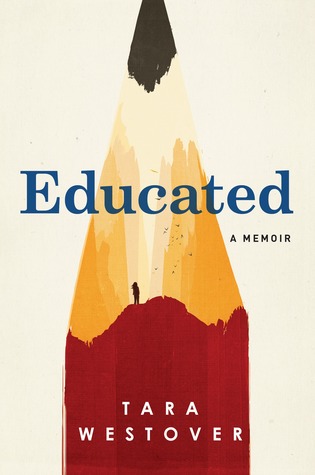
Educated by Tara Westover

Educated by Tara Westover (Books & Banter)

The first time Tara Westover heard of the Holocaust she was in a college classroom. Westover grew up the youngest of seven children born to survivalist Mormon parents. Westover's father owned a scrap metal yard and sometimes worked construction and her mother was a midwife and herbalist. They didn't believe in public education or modern medicine - all the children were homeschooled, but mostly that meant working either in the scrap yard or in the kitchen (but only for Tara and her sister since women belong in the kitchen). This is the life Tara sees herself living as an adult since she knows nothing else. But when her older brother Tyler gets into college he opens the door to her as well. He encourages her to take the ACT and after teaching herself enough math to pass she is accepted to BYU. Once in college Tara begins to see that almost everything she was taught by her parents was wrong, but by reading and studying Tara begins to open more doors for herself through education. But, going home between semesters gets harder and harder as she begins to see her family and life growing up through new eyes - her father is very likely bipolar and her brother Shawn is violently abusive to everyone in his path (and it's excused away by her family time and time again). Finally after Shawn repeatedly threatens to kill her she is cut off by her family - she didn't cut them off THEY cut her off as she is obviously demon-possessed for wanting Shawn to address his issues. She is able to maintain a relationship with two of her brothers - both of whom are educated and aren't financially tied to the family businesses. In the same vein of The Glass Castle, it's a miracle that Westover is able to get out of her family and graduate with a PhD, but Westover's childhood was much more abusive. It's really a miracle that all seven children lived into adulthood with the horrific accidents and injuries that happened to most of them - only going to the hospital with the direst of injuries and often not even then. Westover shows the value of education through her life story and is an inspiration.

Some quotes I liked:

"'I know you think we're being unfair,' she said. 'but when I was your age I was living on my own, getting ready to marry your father.' 'You were married at sixteen?' I said. 'Don't be silly,' she said. 'You are not sixteen.' I stared at her. She stared at me. 'Yes, I am. I'm sixteen.' She looked me over. 'You're at least twenty.' She cocked her head. 'Aren't you?' We were silent. My heart pounded in my chest. 'I turned sixteen in September,' I said. 'Oh.' Mother bit her lip, then she stood and smiled. 'Well, don't worry about it then. You can stay. Don't know what your dad was thinking, really. I guess we forgot. Hard to keep track of how old you kids are.'" (p. 137)

"...I had finally begun to grasp something that should have been immediately apparent: that someone had opposed the great march toward equality; someone had been the person from whom freedom had to be wrested. I did not think of my brother as that person; I doubt I will ever think of him that way. But something had shifted nonetheless. I had started on a path of awareness, had perceived something elemental about my brother, my father, myself. I had discerned the ways in which we had been sculpted by a tradition given to us by others, a tradition of which we were either willfully or accidentally ignorant. I had begun to understand that we had lent our voices to a discourse whose sole purpose was to dehumanize and brutalize others - because nurturing that discourse was easier, because retaining power always feelslike the way forward." (p. 180)

"'I have been teaching in Cambridge for thirty years,' he said. 'And this is one of the best essays I've read.' I was prepared for insults but not for this...I could tolerate any form of cruelty better than kindness. Praise was a poison to me; I choked on it. I wanted the professor to shout at me, wanted it so deeply I felt dizzy from the deprivation." (p. 240)

"I'd never heard anyone use the word 'feminism' as anything but a reprimand. At BYU, 'You sound like a feminist' signaled the end of the argument. It also signaled that I had lost." (p. 258)

"Everything I had worked for, all my years of study, had been to purchase for myself this one privilege: to see and experience more truths than those given to me by my father, and to use those truths to construct my own mind. I had come to believe that the ability to evaluate many ideas, many histories, many points of view, was at the heart of what it means to self-create. If I yielded now, I would lose more than an argument. I would lose custody of my own mind. This was the price I was being asked to pay, I understood that now. What my father wanted to cast from me wasn't a demon: it was me." (p. 304)

"I didn't understand it then, and I don't understand it now, but there was something nourishing in setting aside that time each week, in the act of admitting that I needed something I could not provide for myself." (p. 316)

"Now I thought about it, I realized that all my siblings, except Richard and Tyler, were economically dependent on my parents. My family was splitting down the middle - the three who had left the mountain, and the four who had stayed. The three with doctorates, and the four without high school diplomas. A chasm had appeared, and was growing." (p. 326)


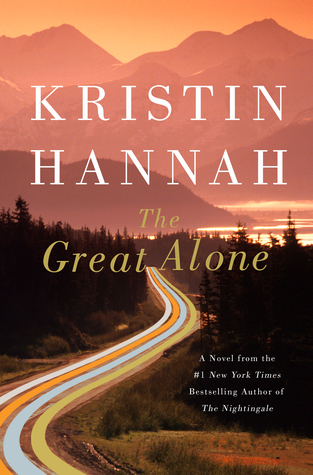
The Great Alone by Kristin Hannah

The Great Alone by Kristin Hannah (Evening Edition)

It's 1974 and 13-year-old Leni's parents are packing up a VW Bus to drive to Alaska. Her father Ernt just found out that his army buddy who died in Vietnam left his Alaskan homestead to him. Ever since Ernt came home after being a POW in Vietnam nothing has been the same. He drinks too much and can't keep a job, so they move from place to place always seeking a fresh start where "things will be different this time." But Alaska is not for the weak. With help from some neighbors the Allbrights make it through their first year in Alaska, but the severe cold and long nights don't help Ernt's issues. He is becoming more and more violent and controlling and everything explodes one night. Leni and her mother flee Alaska leaving behind more than they can imagine.

So, this is the second Kristin Hannah book I've read and they both follow the same formula - good story idea + LOTS of melodrama + every single thread is neatly wrapped up perfectly at the end. Yes, there was violence and bad situations, but just like in The Nightingale it's like a Lifetime TV movie version of something that could have been great. 

*Spoiler Alert*

Seriously the Dad's name is Ernt - what kind of ridiculous name is that?! Why not Ernest or Ernie? Are there any real Ernt's out there? Also, there is no way in hell this family would have made it through the first year in Alaska. In just a few years they have become true, hard-core Alaskans and Ernt is telling newcomers to go back home - oh, you mean where YOU came from like 2 years ago?! The first red flag of too-neat storylines was the "intervention" Tom Walker and Marge had with Ernt - that would NEVER have happened after literally EVERY character talks about how you can do whatever you want in Alaska and everyone will leave you alone - well, I guess everything but beat your wife. While it did make for a tear-jerker ending, what happened with Leni and Matthew almost dying, then being reunited with their son years later is so unbelievably unrealistic. More realistic (and sad) would have been Matthew dying, then Leni and their son coming back to live with Tom later. It was just too much. I'm sure my book club will LOVE this one as they LOVED The Nightingale, but I'm done with Kristin Hannah after this one.


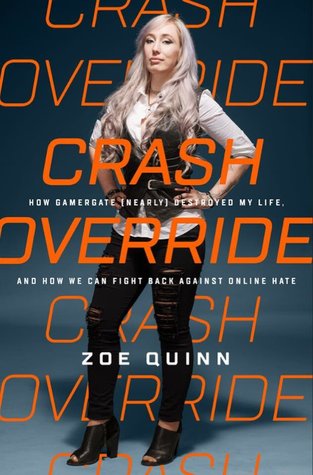
Crash Override by Zoe  Quinn

Crash Override by Zoe Quinn

Zoe Quinn was a game developer who was mass cyber-attacked by her ex-boyfriend when she broke up with him. Thinking it would only go on for a few weeks she tried to fight back as best she could, reporting all the vile comments to whatever medium it was on. She quickly realized this was something different, the abuse wasn't stopping and the threats were all-too real. She and her currently boyfriend lost jobs and couldn't go home due to the death and rape threats she was receiving not just daily, by almost every minute of every day. So how did this happen? Why wouldn't tech giants like Twitter or Google DO anything to stop this violent assault? That's what Quinn explores in this book. She tells her story and throughout she also includes information about why tech companies don't want to ban people or have more thoughtful security measures. Based on her horrific experience (that's still going on just on a smaller scale) she gives tips on how to protect your online life and also what to do if you become a target of the internet hate-mobs. I remember this story when it came out, but unfortunately like many terrible stories you think, 'Wow. That sucks, good for her for trying to fight back.' and you go on your merry way not thinking about the aftermath for her. This book exposes the aftermath for Quinn, but also how real the threat of internet hate-mobs is for anyone. Like anything else the internet can be great, but Quinn's story shows how quickly it can turn VERY ugly. Good for her for not only fight back and trying to help other people avoid what she went through, but also good for her for going back to what she loves - making video games.

Some quotes I liked:

"Our culture has systematically failed to help victims of online harassment while simultaneously leaving it up to them to fix those same failing systems with little or no support. Law enforcement, lawmakers, and private corporations have done little more than shrug their shoulders, telling me and other victims to just get offline - and cede the internet to those who want to use it only to hurt people. The longer I spent trying to change these systems from within, the more I found that they were constructed from the ground up to resist effective change. You can hear the same nonexcuses from people in power only so many times before realizing that they know how broken things are, and that they're not going to change." (p. 6)

"Two years and countless angry video rants and blog posts later, I have a deeper understanding than I could possibly have wanted. These pundits are community leaders of a sort - they validate feelings and provide guidance. Internet Inquisitors position themselves as authority figures and truth tellers; they confirm the mob's hatred, paranoia, and insecurities and direct it toward the nearest combustible witch on their radar. They serve as morale boosters, assuring the mob that they are correct, that their path is righteous, and that it's the world that's wrong (or in this case, the person they're offering up as a sacrifice). Without leadership, a ragtag group of people who make being an asshole their hobby will usually fall apart from infighting or get bored in a short period. It's hard for an anonymous mob to coordinate itself - someone has to do a bit of cat herding." (p. 61-2)

"Generally speaking, the bigger the following someone has, the less interested a service is in banning them. Platforms like YouTube thrive on traffic, and crowdfunding sites like Go-FundMe get a percentage of the funds raised. The incentives for these companies to remove abusive users are not as compelling as they should be. I want to believe that it's not intentional, but it's hard to understand why episodes of Game of Thrones are wiped from places like YouTube within nanoseconds while chronic abusive users are allowed to flourish." (p. 64)

"The indifference and inaction of platforms like YouTube in response to abuse, which is supposedly against their Terms of Service, makes it hard for victims to feel anything but despair. The abuse is public, people are profiting, and no one will do anything." (p. 65)

"Almost all the reports came back an unactionable, and the light died in me a little. It's hard to express the toll it takes on you to spend so much time sifting through sewage, but when you're sure the effort is worth something, that it'll help someone who needs it, you can bear it. When you have a direct line to a person who can help, and they don't care, it crushes you." (p.132-3)


Coming to My Senses by Alice Waters

Coming to My Senses by Alice Waters

I almost didn't read this one based on all the mixed/bad reviews and now that I finally finished it I wish I hadn't wasted my time. As another reviewer said, this book skipped over all the best parts - her marriage and child, running the restaurant for over 40 years, the Edible Schoolyard project - all the things Alice Waters is known for. Instead the book almost seems like a weird stream-of-consciousness about her childhood and all the important/funky/artistic people she knew in the 60's and 70's. I did like the first half that was more about her childhood and up to the point in college where she went to France, but the rest was pretty boring. She also made it seem like starting a restaurant was just a whim that has somehow been successful. If I didn't know who she was I would have wondered how this book ever got published. I would not recommend this one at all.

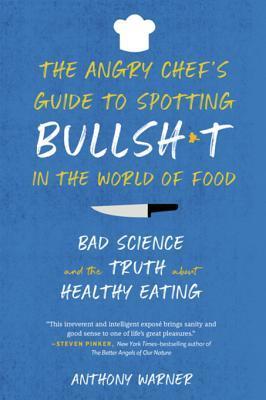
The Angry Chef̢۪s Guide to Spotting Bullsh*t in the World of Food by Anthony Warner

The Angry Chef''s Guide to Spotting Bullshit in the World of Food by Anthony Warner

Why does chef Anthony Warner go by "the angry chef"? He's tired of food bullsh*t and pseudoscience masquerading as truth and fact. In this book he discusses pseudoscience and why it's so easy to convince people that a certain diet is THE way to lose weight/be healthy/live your best life/etc. It was really interesting when he discussed why our brains are wired to want connections and simple explanations when nutritional science is not always that simple. He takes on many popular diet trends like keto, paleo, and detoxing and basically rips the pseudoscience behind them apart. While I didn't agree with every word he said, for the most part I was already on his side before I even read the book. He does a great job explaining the bits of science that are used to create trends and why they aren't right and in some cases can even be dangerous to follow. If you miss bread or want to enjoy a cupcake every once in awhile the angry chef agrees. His diet advice is to eat in moderation and eat a varied diet - cutting out whole food groups is NOT good. If you're not sure where to turn with all the various diets and superfoods out there give this book a try and see if you agree with The Angry Chef's Guide to Spotting Bullsh*t in the World of Food.

The Angry Chef's Rules for Spotting Bullsh*t in Food
1) They will have a food philosophy.
2) They will try to sell you detox.
3) They will tell you that your illness is your own fault.
4) They will fit the health-blogger template.
5) They will tell you that the truth is not up for debate.
6) They will talk about superfoods.
7) They will use anecdotes as evidence.
8) They will quote ancient wisdoms at you as fact.
9) They will tell you things were better "back then."
10) They will tell you all these things with great certainty.

Some quotes I liked:

"I generally pride myself on an ability to pick apart the misunderstandings and confusions that result in false beliefs being born, but in the case of detox diets and detox products, there is no mystery to pick apart. Despite it being a multibillion-dollar industry, no clinical study has shown any commercially available detox diet or treatment to have any clinical effect in the removal of toxins." (p. 25)

[Best subheading EVER] "WTF is wrong with potatoes" (p.121)
"If you cannot fit potatoes into a healthy balanced diet, there is something wrong with the way you are eating. They are a near perfect food, and to create rules that exclude them not only feels wrong, it is wrong." (p. 123)

"Sugar is just sugar. It is not good or bad. It is only toxic if you eat too much of it, and by that measure all food is toxic (remember the does makes the poison: you can die from drinking too much water)...To attach the language of toxicity and addiction to a food we literally cannot avoid means pouring vitriol and scorn on all of us...If you are not sugar-free, if your children are not sugar-free, then you are toxic, you are contaminated. You and your kin are foul and pestilent junkies, no longer worthy, no longer deserving of medical treatment, contaminated and beyond hope, destined to die fat, lonely, miserable, and addicted." (p. 149)

"Sugar is important. It is the sweetness of freshly picked peas. It is in the bliss of strawberries warmed by the sun. The sweetness of foods can enrich our lives; it can bring us joy and pleasure. Sweetness is a vital part of the flavor palette of every cook and true sweetness comes only from sugar...To dismiss and reject the use of sugar because of false notions of toxicity is to misunderstand what it is to eat healthily. A healthy diet is one of joy, not one of rejection and denial." (p. 151)

"Social media creates many closed, self-affirming populations capable of perpetuating and reinforcing falsehoods. Ideas don't have to travel the world to do a lot of damage." (p. 281)


Dopesick by Beth Macy

Dopsick: dealers, doctors, and the drug company that addicted America by Beth Macy

In Dopesick Beth Macy delves into the opioid epidemic that has been sweeping through the country for the past 20 years. She explores small towns in Appalachia where opioid addictions started with injured and disabled former coal miners that now have teens dying of overdoses almost daily. She meets up with a convicted drug dealer who moved from Baltimore into the small town of Woodstock, Virginia because he could make more money with less competition than in Baltimore. Macy also exposes the grief of parents whose children died, sometimes the first time they ever used opioids. While a lot of the statistics are overwhelming Macy finds small pockets of doctors and nurses working in free clinics to try to help the poorest of the poor fight their addictions and also fight back against the drug companies that pushed opioids on unsuspecting patients. The most frustrating part of the book was reading about how Oxycontin was created and then relentlessly pushed on doctors and patients even when doctors were reporting accidental addictions just from patients taking the medication as prescribed. This just further highlights how money trumps everything. The huge amounts of money and bonuses made from Oxycontin in the pharmaceutical world was why no one cared when people started abusing these drugs and dying. Even now after all the media attention about opioids there are still doctors thoughtlessly prescribing 30-60 supplies of opioids to patients who don't need that level of painkiller. A very eye-opening and sad look at an on-going health crisis in America.

Some quotes I liked:

"The Harrison Narcotics Act of 1914 severely restricted the sale and possession of heroin and other narcotic drugs, and by 1924 the manufacture of heroin was outlawed, twenty-six years after Bayer's pill came to market. By the thirties, typical heroin users were working-class, and many of them were children of immigrants, along with a growing number of jazz musicians and other creative types, all now reliant on criminal drug networks to feed their vicious habit - and keep their dopesickness at bay. The addicted were now termed 'junkies,' inner-city users who supported their habit by collecting and selling scrap metal. The 'respectable' upper- and middle-class opium and morphine addicts having died out, the remaining addicted were reclassified as criminals, not patients." (p. 25-6)

"Van Zee didn't yet grasp what was truly driving the furious rate of overprescription. Sales-rep bonuses were growing exponentially, from $1 million in 1996, the year OxyContin hit the market, to $40 million in 2001...Purdue conducted more than forty national pain management and speaker-training conferences, luring doctors to resorts from Boca Raton, Florida, to Scottsdale, Arizona...More than five thousand doctors, nurses, and pharmacists attended the conferences during the drug's first five years - all expenses paid." (p. 47)

"What in fact was the addiction rate among those prescribed opioids for chronic nonmalignant pain? More recent studies - not letters to the editor penned in 1980 - put the figure as high as 56 percent." (p. 95)

"Though his mother, Ginger Mumpower, had sent him to fifteen different rehab facilities, for eight years Spencer managed to use and sell drugs before his name ever entered a police blotter...As his counselor Vinnie Dabney remembered it, 'Fifteen rehabs had not convinced Spencer that it was not in his best interests to get high. It took time in jail and a friend dying before he could decide he wanted to change.'" (p. 117-8)

"Emergency-room administrator Dr. John Burton watched the cultural shift play out at the North Carolina YMCA summer camp he attended as a kid and returned to later as the camp doctor. Whereas very few campers took prescribed medications in the 1970's, by the mid-1990s 10 percent were taking a pill at some point during the day - most for asthma or allergy conditions, followed by a small set of kids on behavioral medications, usually for ADHD. By 2012, fully one-third of his campers were on meds, mostly ADHD medications, antidepressants, and antipsychotics. 'What happens is, we've changed our whole culture, from one where kids don't take pills at all to one where you've got a third or more of kids who are on pills to stay well because of what are believed to be chronic health conditions,' Burton said. 'They get so used to taking pills that eventually they end up using them for a recreational high.'" (p. 135)

"Why had blacks failed to become ensnared in opioid addiction? That question was addressed in 2014 data issued by the Centers for Disease Control and Prevention: Doctors didn't trust people of color not to abuse opioids, so they prescribed them painkillers at far lower rates than they did whites. 'It's a case where racial stereotyping actually seems to be having a protective effect,' marveled researcher Dr. Andrew Kolodny of Brandeis University. Put another way: By 2014, while young whites were dying of overdose at a rate three times higher than they did in 2002, the death rate for people of color was relatively unchanged." (p. 253-4)


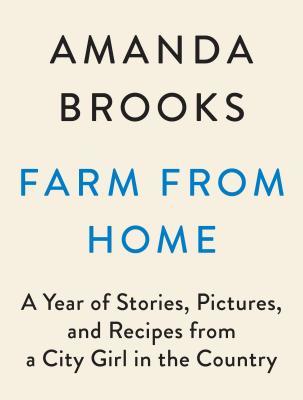
Farm from Home by Amanda Brooks

Farm From Home by Amanda Brooks

I thought I was really going to like this book based on the description - a family living in New York City feels like their life is too hectic and decide to take a one year sabbatical to the father's family farm in England, but never come back to NY and stay on the farm full time. The book is set up by months starting in June, which was the month they moved to England. Each month Brooks takes readers through what that month is typically like on the farm - activities, recipes, photos, etc. About half-way through she started to get on my nerves. They obviously have TONS of money - living on the farm with not much talk of jobs or income and keeping their NY apartment too. They also travel and frequently go "somewhere tropical" during the coldest part of winter. Maybe I just don't understand it, but the chapter on fox hunting and the social importance of hunting (not actual hunting for food, but horseback riding that's "hunting" now a fox scent since actual fox hunting is illegal) seemed so elitist and terrible. That kind of turned me off to the book as a whole. While I like the idea of taking a sabbatical from city life and living on a working farm, this was more of farming as an English hobby which was off-putting to me. I gave it 3 stars though because the photographs are beautiful and the chapter with all the baby animal pictures was worth looking through the book for. Overall, I would skip this one for actual farm memoirs or better memoirs about leaving hectic city life for a simpler life.

Thursday, January 3, 2019

2018 Year in Reading

In 2018 I challenged myself to read 100 books and I surpassed that by reading 101! I also read 39 cookbooks. Here are my Top 10 books by category:

Fiction

The Woman in the Window by A.J. Finn
Every Note Played by Lisa Genova
All We Ever Wanted by Emily Giffin
Still Me by Jojo Moyes
The Tea Girl of Hummingbird Lane by Lisa See


Non-fiction

Nomadland: surviving America in the twenty-first century by Jessica Bruder
The Year of Less by Cait Flanders
Slow: simple living for a frantic world by Brook McAlary
Modified: GMOs and the threat to our food, our land, our future by Caitlin Shetterly
Hillbilly Elegy: a memoir of a family and culture in crisis by J.D. Vance


Cookbooks

Canning in the Modern Kitchen by Jamie Dement
Little Everyday Cakes by Candace Floyd
Once Upon a Chef by Jennifer Segal
Platters and Boards by Shelly Westerhausen
For the Love of the South by Amber Wilson

Monday, December 31, 2018

December 2018 Cookbooks

Red Truck Bakery Cookbook by Brian Noyes

Red Truck Bakery by Brian Noyes

I wasn't familiar with Red Truck Bakery in Virginia before I checked this book out. But now after reading their story and seeing these recipes if I'm ever in the area I will definitely check it out. Brian Noyes worked in the publishing industry, but always enjoyed baking on the side. Deciding to get away from the DC area, he and his partner purchased a farm in Virginia and he stared making jams and jellies to sell in the area, soon he expanded to baked good and Red Truck Bakery took off. Surviving the Great Recession, they continue on today with two physical locations in Virginia. The recipes look amazing and I really like that he includes both savory and sweet recipes. There are definitely plenty I want to try myself.


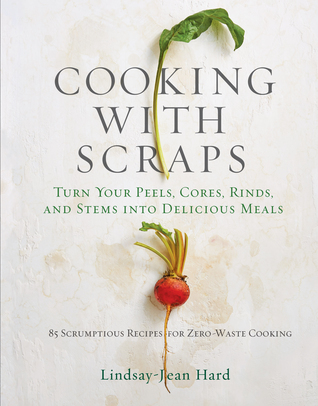
Cooking with Scraps by Lindsay-Jean Hard

Cooking With Scraps by Lindsay-Jean Hard

While I love the idea of cooking with food scraps and not letting food go to waste, I just never see many recipes I want to try. As a gardener I also compost (which she does discuss in this book), so I don't feel like I'm wasting food scraps when I am turning them into soil for my garden. There are some good ideas in here and I like that she encourages readers to change things or tweak recipes for their own taste.


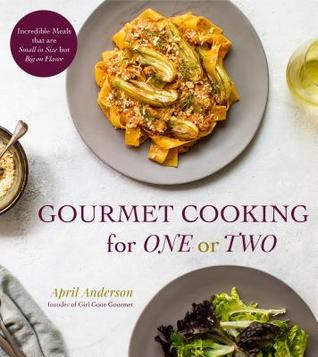
Gourmet Cooking For One (Or Two) by April Anderson

Gourmet Cooking for One or Two by April Anderson

In my house it's just my husband and myself, which is why I decided to check out this cookbook. But, I really like having leftovers to take to work for lunch or to have on hand so I don't have to cook every night. I do think this could be a way to try out a new recipe and not waste so much food if you don't like it or it doesn't turn out. Overall, I guess I prefer to cook "normal" recipes and use the leftovers. But, there are a few new recipes in here that I would like to try and I think many people would appreciate the small soup and chili recipes.


Southern Snacks by Perre Magness

Southern Snacks by Perre Coleman Magness

I love Southern food, so what could be better than a cookbook of nothing but Southern Snacks?! The author breaks down the snacks into categories like dips and spreads, cheese, please, deep-fried love, and the garden path. It looked like there were lots of great recipes and there were also sidebars between some of the recipes with info on Southern things like ro-tel, tailgating, and Mardi Gras and how these things relate to food or specific dishes. Overall, a good cookbook especially if you're looking for new snack or appetizer recipes.


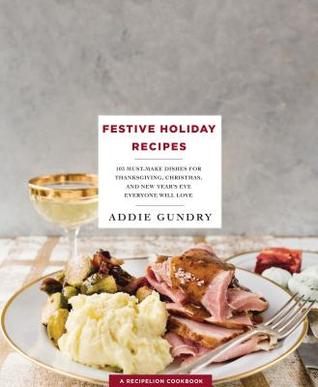
Festive Holiday Recipes by Addie Gundry

Festive Holiday Recipes by Addie Gundry

If you're looking for new ideas for a holiday meal this is a great cookbook. It's organized like a typical cookbook with appetizers, main courses, sides, etc. but all the recipes are geared toward holiday meals. There are lots of recipes that look great and quite a few I want to try. If you're looking for some new recipes to try out for the holidays or any day this is a great cookbook to check out.


Carla Hall's Soul Food by Carla Hall

Carla Hall's Soul Food by Carla Hall

I love Southern food and was really looking forward to checking out this cookbook, but I found it a little disappointing. Maybe because I've grown up in the South there just weren't a lot of recipes I wanted to try. I did like that she explored all aspects of Southern food and talked about the history of Soul Food in different areas. If you're a fan of Carla Hall or want an introduction to Southern food this would be a good starting point.


Cook It in Your Dutch Oven by America's Test Kitchen

Cook it in Your Dutch Oven by America's Test Kitchen

I love my Dutch oven and it really is probably the most versatile kitchen item I own. I already use it all the time, but there were lots of really great recipe ideas in here. Everything from one pot meals to desserts and everything in between. If you're looking to utilize your Dutch oven more or just want some new recipe ideas this is a great cookbook.

December 2018 Reviews

Regretting Motherhood by Orna Donath

Regretting Motherhood: a study by Orna Donath

As a woman who's chosen to not have children I know that's a social taboo, but for women who have had children to admit they regret it is so taboo it's barely spoken about at all. Orna Donath is Israeli and was working on a study of men and women in Israel who don't want to have children. I didn't know that Israel has one of the highest birth rates in the world, so there is a LOT of social pressure to have children for Israelis. Due to that study, Donath found women who had had children and wished they hadn't caved to social or family pressure and wanted a place for their feelings - and that is how this book came to be. While the tone of the book is more scholarly, it is still an interesting read. I found it really interesting that many of the women never felt a strong desire to have children but did because it was what was expected or the next natural step in their life. I see that all the time people not even allowing themselves to think if they want children, just doing what's expected or what is the norm. Definitely a unique book giving voice to women who have been overlooked or shunned for expressing regret about motherhood.

Some quotes I liked:

"On the few occasions in recent years when the issue of regretting motherhood has been addressed on the internet, it has tended to be regarded as an object of disbelief - meaning that its actual existence is denied - or as an object of rage and distortion - meaning that mothers who regret are branded as selfish, insane, damaged women and immoral human beings who exemplify the 'whining culture' we allegedly live in...Clearly, we are facing a wide range of emotions about motherhood that are begging to be dealt with. Something is still profoundly missing from our public discourse about motherhood..." (p. xv - xvii)

"When it comes to reproduction and the transition to motherhood, it is crucial to cast doubt on this rhetoric of all-embracing choice: how much room to maneuver do women actually have if we are free to choose only what society wants us to choose?It seems that as long as women make decisions according to the will of society and the priorities and roles it assigns us - such as being well-kempt, devoted mothers in an ongoing heterosexual romantic relationship - we gain social status as free, independent, autonomous individuals with an untethered ability to fulfill our desires. However, when our choices clash with society's expectations - when we refuse, for instance, to commit to beauty care, have children, or maintain romantic partnerships with men (or in general) - then we run into a problem." (p. 7-8)

"Since the nineteenth century, nationalist, capitalist, heteronormative, and patriarchal ideologies have joined hands to sustain this gendered division of labor - because without women's unpaid labor as mothers and homemakers, the system would fall apart - while stressing that this division is 'natural,' and therefore eternal; that it makes the world a better place; and that it benefits women themselves as well as their children. As we shall see, it is not considered sufficient for a woman to simply mother: mothers are also expected to follow strict and universal rules dictating howthey should mother, even though mothers nurture and protect their children in different ways and under different circumstances - and may not necessarily provide such care at all." (p. 31)

"Women, especially those over the age of 30, are caught within a mind-game of threats and warnings: Your time is running out for making a family. You may think that you're not interested in being a mother, but you are wrong; the desire will strike you eventually, but then it will be too late. You are going to regret this. In reality, women's subjective experience of motherhood and nonmotherhood is far more complex; yet because the voices of those women who regret becoming mothers largely remain unheard - as well as those of nonmothers who do not regret not having children - the assumption becomes that they do not in fact exist." (p. 59)

"The statement 'I love my children but regret my motherhood' is very often seen as impossible by definition - because doesn't a wish to erase motherhood mean a wish to erase those children she loves? Yet a statement such as 'I love him, but I regret I ever met him' following a painful romantic relationship would hardly be considered paradoxical. In other words, it may be the sacredness we have placed on motherhood that prevents us from accepting that a woman can both love and acknowledge the broader implications of that love in her life." (p. 113-4)

"On one hand, facing them [the accounts of regretted motherhood] may have torturous consequences; on the other hand, avoiding them may prevent us from understanding social worlds and changing them for the benefit of those who suffer from them. With this in mind, I believe the question 'Why talk about regretting motherhood?' should be flipped the other way around: What are the consequences of silencing regret over motherhood? Who pays the price when we try to pretend it does not exist?" (p. 221)

"The truth is that I have never felt that my unwillingness to be a mother is in need of justification nor that this is a problem that should be solved (though society demands such a justification while assuming I have a problem, I feel it is a problem that society tends to think so). I am not looking to glorify mothers' regret. Nor am I looking to criticize women who want with all their heart to be mothers, as I believe we are diverse in our needs, yearnings, and dreams." (p. 223)

Grits by Erin Byers Murray

Grits: a cultural and culinary journey through the South by Erin Byers Murray

This was a really interesting look at grits as a cultural and culinary journey through the South. Murray looks into the history of grits and the variations in the past, she also explores grits through a racial lens, and through a female lens since historically women were the growers and cooks of grits (and most food), she also explores grits as a political tool, and finally highlighting he chefs, cooks, and eaters honoring grits across the South today. Each chapter includes a few recipes for grits as well. Overall, it was a unique look at one of the South's staple foods from where grits started to how they are being used today.

A quote I really liked:

"Glenn Roberts, motivated originally by his interest in rediscovering and reintroducing flavor, quickly took on the political charge - since its start, his small (by comparison) production milling operation has steadily and quietly waged culinary aggression against Big Agriculture. Though it's not a message he touts loudly, the very existence of Anson Mills is a form of resistance. By reintroducing heirloom varieties into commercial production, he offers chefs and consumers a small-scale weapon: the option to step far outside the frustrations that come from supporting the ongoing cycle of damage Big Ag creates." (p. 143-4)


The Wind in the Willows by Kenneth Grahame

The Wind in the Willows by Kenneth Grahame

Somehow I made it this far in my life without having read The Wind in the Willows and it was definitely worth reading. I don't know how I never read this as I LOVED animal characters as a kid and read all the Brian Jacques Redwallbooks. This reminded me of those books, but less warfare and more lounging and gentlemanly type "adventures." The characters are very strong, but I do find it odd that they are called Rat, Toad, etc. instead of actual names. Is there only one Toad or Rat? The book is basically a collection of stories with these characters that do all flow into one storyline. There were some very funny moments and memorable dialogue. Definitely a happy, uplifting book - my book club should be very pleased they are getting a "happy" book for our December meeting!

Some quotes I liked:

"A moment, and he had caught it again; and with it this time came recollection in fullest flood. Home! That was what they meant, caressing appeals, those soft touches wafted through the air, those invisible little hands pulling and tugging, all one way!...Now, with a rush of old memories, how clearly it stood up before him, in the darkness! Shabby indeed, and small and poorly furnished, and yet his, the home he had made for himself, the home he had been so happy to get back to after his day's work. And the home had been happy with him, too, evidently, and was missing him, and wanted him back, and was telling him so, through his nose, sorrowfully, reproachfully, but with no bitterness or anger; only with plaintive reminder that it was there, and wanted him." (p. 80-1)

"He clambered into his bunk and rolled himself well up in the blankets, and slumber gathered him forthwith, as a swath of barley is folded into the arms of the reaping-machine." (p. 95)

"He increased his pace, and as the car devoured the street and leapt forth on the high road through the open country, he was only conscious that he was Toad once more, Toad at his best and highest, Toad the terror, the traffic-queller, the Lord of the lone trail, before whom all must give way or be smitten into nothingness and everlasting night." (p. 112-3)

"Really, Toad, of all the trying animals - I wonder you manage to keep any friends at all!" (p. 209)


Another Kind of Madness by Stephen P. Hinshaw

Another Kind of Madness by Stephen Hinshaw

While Stephen Hinshaw and his sister Sally were growing up in Ohio their father would periodically disappear for months at a time, and once for an entire school year. No explanation was ever given for his absences and the one time Stephen asked his mother he was told to not ask any more questions. Stephen didn't find out until his first year of college that his father had been diagnosed as schizophrenic (mis-diagnosed, he was actually bi-polar) and the absences were involuntary hospitalizations. This information rocks Stephen's world and he actually decides to study psychology in order to try to help people like his father and reduce the stigma around mental illness. As Stephen's father gradually opens up to him about his mental illness Stephen beings to realize that many people in his family suffer from mental illness, but it was never discussed. In the 1940's and 50's when his father was first hospitalized doctors told the families to not tell children anything and the stigma was so great that Stephen's mother never even told her mother or friends. Stephen's father was a brilliant man who went on to make a name for himself as a sought-after philosophy professor despite his mental illness and hospitalizations. Throughout college Stephen struggles with worrying about developing mental illness (especially once he realizes how rampant it is in his family), but feels like he can't talk about it. Finally while in graduate school he stars opening up and really begins working to change things in the mental health field. But, only by telling his family's story can he really heal from the trauma of shame and stigma his family suffered with for years. This was a really interesting look at mental illness and stigma from someone who experienced it firsthand and is working hard to make changes in both the medical profession and in society.

Some quotes I liked:

"During the 1950s the psychiatric profession forbade family members from knowing about the very forms of illness under its care. Would an oncologist direct a patient never to divulge his or her cancer to family members, including children - or a cardiologist, heart disease? It's unthinkable. But mental illness was so shameful that banning all discussion was believed to be therapeutic. Our family's role-playing was off and running, professionally sanctioned - even ordered." (p. 81-2)

"To this day I fight the long-held belief that I must suppress anything troubling, which is part of my learned pattern, too often keeping me stuck even now. It's one of the key battles of my lifetime." (p. 100)

[After finding out that another mentally ill family member had committed suicide] "How had I managed to hang on to my sanity: through my intensive work ethic and blocking off feelings? Or just the blind luck of the genetic draw? I couldn't figure it out then. Even now, I'm not sure." (p. 190)


Pioneer Girl Perspectives by Nancy Tystad Koupal

Pioneer Girl Perspectives: exploring Laura Ingalls Wilder by Nancy Tystad Koupal, ed.

Pioneer Girl Perspectives is a collection of essays about Laura Ingalls Wilder and the impact her books made, background on her early life and her life as a writer. I wasn't sure what to expect, but this was much more scholarly than I was expecting. These authors REALLY dug into Wilder's past and how she was influenced by her upbringing and how she influenced others with her writing. There was a lot of really good, interesting information, but it was also very scholarly and somewhat dry. It was worth reading, but it wasn't a super quick, easy read. If you're a hardcore Wilder fan this is definitely worth reading, but I have read some other books about her and her work that are easier to read and equally interesting.

Some quotes I liked:

[From a speech Wilder gave at the Detroit Book Fair in 1937] "It seemed to me that my childhood had been much richer and more interesting than that of children to-day even with all the modern inventions and improvements." (p. 13) [Does literally EVERYONE feel this way?]

"Much has been made of the theory that Rose Wilder Lane wrote the books and not her mother. It has become an urban myth much in the tradition that Shakespeare could not have written those plays. The problem with the ghost-writer theory is that none of the Little House books sounds like Lane. The narrator of Little House on the Prairie and all the others is not that of Let the Hurricane Roar and Free Land. It is the voice of Pioneer Girl. Lane's influence may be traced here or there of course, but the overall tone and drive of the multi-volumed novel are consistent, and they are Wilder's." (p. 112)

"Not much really happens in the stories. Life is not a series of exciting adventures. Instead, the Little House books describe meticulously how things were done in the old days. 'One of the things that I always liked about the Little House on the Prairie books,' Erdrich admitted,' was the specificity of everything that the family made or used.' The books also propagate the old, basic American values. 'This plain account focuses on ordinary lives, but that is why it is so thrilling and engrossing,' Eden Ross Lipson, children's book editor of the New York Times, summarized. 'The family's ordinary lives are so far from our own, unimaginably remote to today's children. But the lesson the books taught me, and still teach without comment, is that there is dignity, honor, and pleasure in work well done.'" (p. 133-4)

"Wilder's lavish use of fairy-tale elements in her work - most notably in her first novel, Little House in the Big Woods, but to varying degrees in all of the Little House books - resulted in something unprecedented in American children's literature. Wilder's irresistible story, reworked and reimagined as historical fiction but shot through with golden threads of ancient and timeless fairy tale, dramatized America's western experience for generations of young readers. In effect, Wilder reinterpreted Manifest Destiny and the Mythic West for young children, subtly shaping their understanding of frontier life through her compelling personal narrative based on childhood memory, family history, historic fact, and last, but by no means least, Wilder's own shrewd grasp of fairy tale and its power to capture the hearts, minds, and imaginations of young readers. By deploying the classic concepts and framing features of fairy tale, Wilder completely transformed her monotone and comparatively plodding autobiographical memoir, Pioneer Girl, into a prize-winning series of best-loved children's books." (p. 209-10)


Killing It by Camas Davis

Killing It: an education by Camas Davis

In the span of a year Camas Davis loses her job and her long-time boyfriend. Forced to re-evaluate her life, she decides to go to Gascony, France. In France she stays with Kate Hill, an American woman living in France teaching cooking classes. Kate introduces Camas to the Chapolard brothers who run a full-circle pig farm - growing the feed, raising the pigs, slaughtering the pigs, butchering the pigs, and selling the products of the pigs in local markets. After studying with Kate and the Chapolards Camas comes back to Portland, Oregon and decides to start the Portland Meat Collective that focuses on whole animal butchery and sourcing quality, humane meat. The PMC teaches classes to the public and also helps connect small farmers and butchers to potential markets. While the food parts of the story are VERY interesting, there was too much of her personal drama woven in. You never get the full story on what happened with the long-time boyfriend, then she is in a relationship with a man (who she later marries) and a woman (who is also a female butcher) at the same time. As another reviewer wrote, "I wanted the Camas Davis female butcher story, not the Camas Davis bisexual story." While I liked her story, I didn't really like her as a person - or at least how she portrayed herself in this book. Overall, it was interesting and I think the Portland Meat Collective is an amazing idea.

Some quotes I liked:

"By the end of each week, they explained, after three different outdoor markets, the Chapolards had usually sold every part of every one of their ten weekly animals to their customers, save for the bones, which they composted for use on their farm, and whatever they took home to feed their own families. When a customer bought a slice of ham from them, the Chapolards could vouch for every part of the process that transformed one of their pigs into that slice of ham. They grew the grain to feed their pigs. They raised the pigs themselves. They owned their cooperative abattoir with other small farmers. They did all the cutting and curing. They sold the meat at outdoor markets. They owned every part of the process, and this was their appeal. By French standards, they lived modestly, though comfortably - a kind of modern-day middle-class peasant. Though there were still plenty of small meat producers in France, Kate told me the Chapolard model was increasingly rare." (p. 70)

"What might it be like if we all lived in such close proximity to the animals we ate? If we had to perform, or at least be witness to, the work of these saws and knives and cleavers in order to put meat on our own tables? How much meat might we eat then? How much might we be willing to pay for someone else to do the close reading for us if we understood the difficult paradox it required?" (p. 142)

"Since I returned from France, I'd become increasingly aware of the way in which people spoke of me in relation to butchery, as if I were a monkey on display in a cage performing tricks no human had ever seen a monkey do: 'This is my friend Camas. She just went to France to become a butcher. Can you believe it?' Or 'You are one sexy butcher,' even though I wasn't even really a butcher. 'I'll make sure to never get into bed with you and a sharp knife,' said a man I had only just met at a party. I was pretty sure no man who'd gone to France to study butchery would be talked to this way." (p. 200-1)

"'This is something we should talk about at our workshop,' Kate said. 'You can't just take the recipes from one culture and apply them to the ingredients of another culture. It's not a one-to-one ratio. There's an entire history and culture and method of raising animals that informed those recipes. The animals you raise don't necessarily make sense for our recipes. You guys are either going to have to raise animals differently, or you are going to have to come up with your own recipes.'" (p. 240)


How to Be a Good Creature by Sy Montgomery

How to Be a Good Creature by Sy Montgomery

Sy Montgomery is an author, naturalist, and adventurer and has traveled all over the world studying animals and writing about them. In this memoir she chooses thirteen animals that shaped her life and taught her lessons about How to Be a Good Creature. From her first pet dog Molly, to a tarantula, an octopus, a pig, and more dogs Sy has learned from every animal relationship. One thing that surprised me that I didn't remember being mentioned in any of her previous books is that her parents disowned her because she wanted to work with animals and married a Jewish man - nothing that seems worth being disowned over. It was sad how her parents just cut her off because she didn't choose the path they did, but she has obviously created a wonderful life for herself full of friends and animals that love her for who she is. I also really liked how honest she was about how hard it was to lose some of her beloved pets. If you've ever loved an animal this is a wonderful book about the life-changing relationship between human and animal.


The Landscapes of Anne of Green Gables by Catherine Reid

The Landscapes of Anne of Green Gables by Catherine Reid and Kerry Michaels (photographs)

In this book Catherine Reid explores how the landscape of Prince Edward Island inspired L.M. Montgomery, as well as, her most beloved character Anne. Each chapter focuses on an aspect of Maud Montgomery's life that somewhat mirrored her character Anne and how they were both inspired and transformed by the beautiful flowers and landscapes of Prince Edward Island. There are SO MANY gorgeous photographs included as well. I was lucky enough to get to go to Prince Edward Island for my honeymoon and it really is a beautiful place and I would love to go back again someday. For now the beautiful photographs in this book can remind me of my visit there until I can visit again. A beautiful book for any Anne of Green Gables fan.

A quote I really liked:

"Throughout the novel, Anne's imagination flourishes in the beauty of the natural world in a way that invites us all to pay it closer attention, and to take advantage, whenever possible, of its potential to help us transform the moments that regularly challenge our own lives." (p. 58)


The Only Girl in the World by Maude Julien

The Only Girl in the World by Maude Julien

Maude Julien grew up in a 3-person cult. Her father planned to create a child who would be the ultimate survivor and one day possibly save the world. Maude grew up extremely isolated rarely leaving her family's home. She was home-schooled and worked 16+ hour days regularly. She and her mother waited on her father hand and foot and any type of comfort or pleasure was for "the weak." She was also routinely subjected to bizarre psychological torture in order to overcome "fear" and make her able to survive in any circumstance. Her only comforts were a few books and a handful of pets. Eventually thanks to a perceptive and kind music teacher she was able to escape when she was 17, but it still took her years and becoming a mother herself to actually deal with her horrific childhood and all the trauma she suffered. She eventually became a therapist to help other victims of childhood trauma heal. 

This is honestly the craziest non-fiction book I have ever read. Julien's childhood was pure torture every single day and it's truly a testament to the mind's will to survive that she made it out mentally intact. I literally could NOT put this book down until I found out how she was able to escape her insane family. A powerful book I'll be thinking about for a long time.
Monday, December 3, 2018

November 2018 Cookbooks

Gordon Ramsay's Healthy, Lean & Fit by Gordon Ramsay

Gordon Ramsay's Healthy, Lean & Fit by Gordon Ramsay

I read an article awhile back that Gordon Ramsey's wife threatened to leave him if he didn't lose weight. While that's not mentioned in this book, he does talk about how he let his crazy schedule get in the way of a healthy life. Now he makes exercise a priority and works to make easy, healthy meals. I didn't know that he and his wife are both marathon runners and have even completed the Ironman triathlon! I did like how the book is organized, but I didn't find a ton of recipes I wanted to try. There was a lot of seafood which I can't eat too. Overall, it was good and did have a lot of healthy lifestyle tips throughout the book.


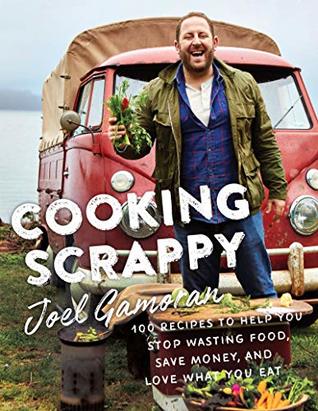
Cooking Scrappy by Joel Gamoran

Cooking Scrappy: 100 recipes to help you stop wasting food, save money, and love what you eat by Joel Gamoran

I love the idea of this cookbook, but there just wasn't a lot of recipes I wanted to try. Joel Gamoran taught cooking classes at Sur La Table and saw how many scraps were left over that would have been put to use in a commercial kitchen. Some of the ideas are obvious, but some seem odd like making apple butter from apple cores - as someone who makes apple butter every year that just seemed like it wouldn't work. Also, as a gardener my kitchen scraps don't go to waste - they get composted. I liked the idea, but wasn't super blown away by the recipes.


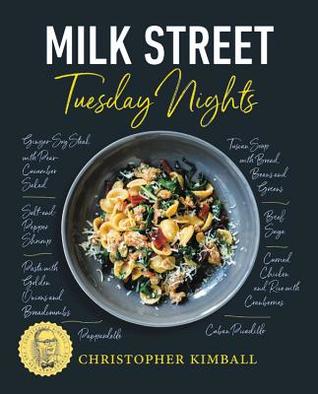
Milk Street by Christopher Kimball

Milk Street Tuesday Nights by Christopher Kimball

I wasn't familiar with Milk Street, but apparently it's a cooking school, TV show, radio show, and magazine! In this cookbook Kimball focuses on quick, weeknight meal ideas. I like that the cookbook is divided by how you cook, not by meal. So there are chapters on Fast, Faster, Fastest (how quickly the meal is ready), sides, salads, pizza night, etc. The recipes are globally inspired, so there is a lot of variety of dishes. I found a few things I'd like to try, but there were a lot of seafood dishes which I can't eat and I'm not a super adventurous/global eater, so this wasn't the best cookbook for me. But, if you are looking for more quick and easy meals there are a LOT of recipes in this book.


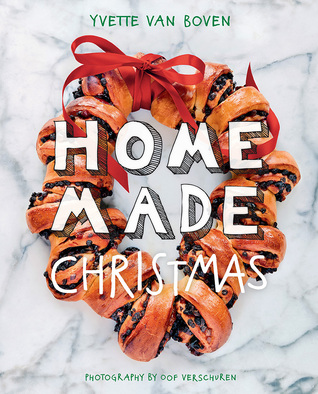
Home Made Christmas by Yvette van Boven

Homemade Christmas by Yvette Van Bowen

These "Home Made" cookbooks are always beautiful to look through. This is a collection of holiday/winter recipes. There are also lots of beautiful photographs to go along with the recipes - both photos of food and also of holiday scenes. The first few chapters are about prepping for holiday parties/cooking, even one about "christmas stress-relief tips." I also liked that at the end there is a section of menus created from the recipes in the book. Definitely a unique cookbook with lots of recipes I'd like to try.


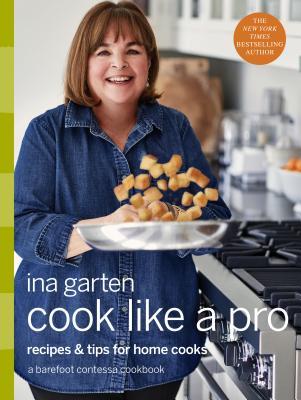
Cook Like a Pro by Ina Garten

Cook Like a Pro: recipes and tips for home cooks by Ina Garten

I don't normally watch Ina Garten, but I did recently see one of her shows with recipes I wanted to try, so I figured I would check out this book. While she did give some tips, there definitely weren't as many "pro tips" as the title would imply - there was a page at the beginning of each chapter and some sprinkled in throughout the recipes. Overall, there just weren't that many recipes I wanted to try from this book. Maybe it would be better for a more beginner cook.