Friday, May 31, 2019

May 2019 Cookbooks

Emily by Emily Hyland

Emily: the cookbook by Emily and Matt Hyland

I really liked the authors of this cookbook and their restaurant philosophy. Emily and Matthew Hyland built the beginning of their relationship around pizza. After Matthew worked in several restaurants they decided to open up EMILY, a pizza restaurant. They've since expanded to two other locations and decided to create this cookbook as a way to share their food with a wider audience. While I liked their story and the ideas behind their food and restaurant, I just didn't find that many recipes I wanted to try. But, if you're wanting to expand your homemade pizza game this is one you should definitely check out.


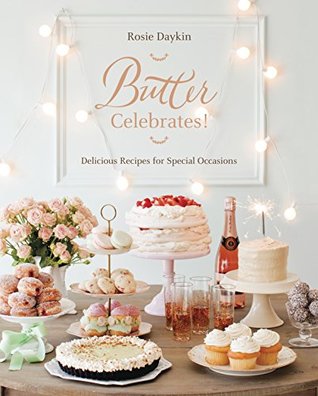
Butter Celebrates! by Rosie Daykin

Butter Celebrates! by Rosie Daykin

Even if you don't make anything from this cookbook it's nice to just flip through and look at all the gorgeous desserts. Rosie Daykin opened Butter bakery in 2007 and she finds that when people order desserts from Butter she feels like she is part of whatever they are celebrating, hence the title of this cookbook Butter Celebrates!. The cookbook is organized by holiday since it is about celebrating, but many of the recipes could be used anytime. I also liked that in the introduction she gives tips on entertaining, important tools for baking, and other tips to make your home baking better. Overall, a good cookbook and there are definitely a few recipes I want to try out.


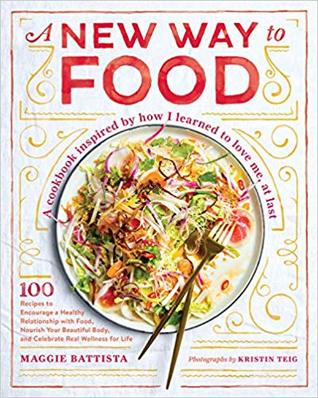
A New Way to Food by Maggie Battista

A New Way to Food by Maggie Battista

Maggie Battista grew up always being the heavier girl. Everyone always had a backhanded compliment like, "your face is so pretty" or "good thing you're so smart." Her parents would hide food from her, but that only served to teach her to hide food and sneak it when alone. Finally after many years of struggling with her weight she began to work toward truly loving herself and that led her to a healthier life overall - not just the goal of losing weight. In A New Way to Food Battista shares her struggles and gives recipes she used to eat healthier without giving up whole food groups or constantly depriving herself. I liked that she focused on just making steps toward being healthier, not before and after photos or insisting that her way is the right way. She shows what she did, but also encourages readers to find their own way or start where they can now. While this is definitely a cookbook there was a several page introduction to each section and I almost feel like this would have been better as more of a memoir with recipes included instead of a cookbook with long memoir-like sections. But, overall I like her approach and while I don't want to be vegetarian Battista is showing what worked for her. And there are a few recipes I'd like to try as well.


Food52 Genius Desserts by Kristen Miglore

Food52 Genius Desserts

I've checked out some of the other Food52 cookbooks, so when I saw this one I all about desserts I was interested. There are some odd recipes like parsley cake that looks like you're eating a grass cake, but there are plenty of others that look amazing. I was surprised to see that the recipe on the cover for the gorgeous chocolate cake is a vegan recipe. The recipes in here really run the gamut of desserts from simpler cookies and bars to more complex cakes and pies. There is also a good introduction with tips for baking and "genius tools" that give info on tools that unexpectedly really help with baking. And throughout the book there are "genius tips" from how to crack eggshells more cleanly to "the most important rule in pie dough." Overall, a very thorough dessert cookbook from the well-established Food52.


The Prairie Homestead Cookbook by Jill Winger

The Prairie Homestead Cookbook by Jill Winger

I didn't realize when I put this book on hold at the library that Joel Salatin wrote the foreward - that's all the endorsement I need to know this is a great book! Jill Winger and her husband decided when they were first married to buy a farm in Wyoming and start homesteading. At the time Winger was learning through trial and error, but she wants to pass on the knowledge she learned, especially about cooking, on so others can benefit from what she learned. There is SO MUCH great information in this cookbook! And so many recipes I want to try that I will probably end up buying it. The first part is recipes and the second part is about growing your own ingredients from veggies to meat and milk. But, Winger reiterates that you don't have to live on a farm and raise livestock to homestead - you can still source high-quality, local food from farmers. In the second section she also gives a brief overview of canning, but as I always say if you want to learn to can take a class or learn in person from someone who's experienced - don't just go by a book. Overall, this is an AMAZING cookbook filled with all kinds of great recipes and homesteading tips.


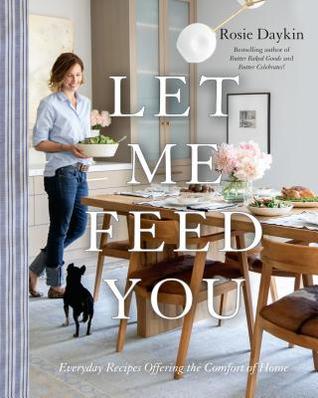
Let Me Feed You by Rosie Daykin

Let Me Feed You by Rosie Daykin

I just recently looked through one of Daykin's previous books, Butter Celebrates!, so I was excited to check this one out since it was a more traditional cookbook, not just desserts. Let Me Feed You is laid out like a tradition cookbook with chapters on breakfast, sandwiches, soups, salads, mains, vegetables, etc. and there were quite a few recipes I want to try. The only odd thing to me was before each section there was a one page article about some random thing in Daykin's life like her love of dishes or old dogs. While there is nothing wrong with these little articles they just didn't fit with the cookbook. If this were more of an overall home type book that included recipes it would work better, but it just seemed odd and kind of stuck out in the book. But, the recipes look great and there were a lot that I'd like to try.


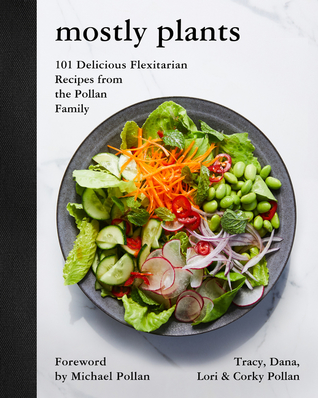
Mostly Plants by Tracy Pollan

Mostly Plants by Tracy, Dana, Lori, and Corky Pollan

When Michael Pollan said in his book In Defense of Food, "Eat food, not too much, mostly plants." as his guide to healthy eating, he started a national conversation about food and what we should eat. This quote is also the inspiration for this cookbook created by his 3 sisters and his mother. While the Pollan family grew up eating the typical meat, starch, and veggie meals over time many of them moved into vegetarianism or flexitarianism. So, this cookbook is a way for them to share some of their favorite meals that can be made meat, dairy or gluten free easily. Michael Pollan writes the foreword and in the introduction the reader is introduced to each member of the Pollan family who contributed and their personal food journey and philosophy. While I'm not a vegetarian, I do buy all my meat from local farmers which is more expensive, so I do try to have some vegetarian meals just to stretch my food budget. There are definitely some recipes I want to try in here. Overall a good cookbook if you're looking to add more vegetable-centered meals to your table.


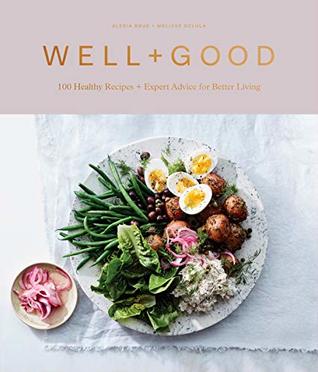
Well+Good Cookbook by Alexia Brue

Well + Good Cookbook by Alexia Brue and Melisse Gelula

This is a cookbook for celebrities or ultra-wealthy people who have the time and money to source a bunch of random/exotic substitute ingredients (or have staff doing this for them). Every recipe is full of stuff like almond meal, arrowroot powder, baharat, etc. I personally believe that you can eat well with actual foods and not substitute every form of dairy or flour. I understand lots of people have food allergies/sensitivities, but this cookbook says it's for eating healthier, not for food allergies. When literally every single recipe had several substitutes I just lost interest. I'm not into spa food I'm into real, whole food. I'm not saying this is a bad cookbook, it's just not for me.


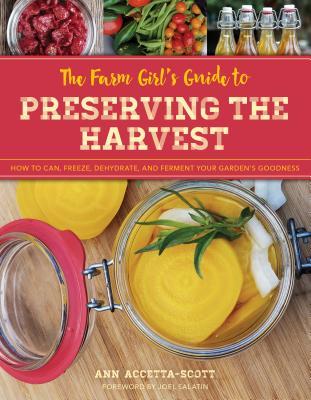
The Farm Girl's Guide to Preserving the Harvest by Ann Accetta-Scott

The Farm Girl's Guide to Preserving the Harvest by Ann Accetta-Scott

This is the second book in the last month that I've picked up only to realize Joel Salatin wrote the Foreword! Anything Joel Salatin endorses has got to be right up my alley. I put this title on hold because I'm always looking for new canning ideas or recipes. Ann Accetta-Scott does more than just give some canning recipes this is really a primer for preserving your own food. She covers several different ways to preserve food with lots of tips and tricks. She also goes into detail about why some foods need to be pressure canned vs. water bath canned - which is very important. While I did enjoy this book and got some new ideas, I always say that for canning food you need to take a class or learn from someone who is experienced. I would NOT recommend learning to can from a book. But, this is still a wonderful book for someone who's interested in preserving more of the food you grow or buy from your local farmer.

May 2019 Reviews

Hippie Food by Jonathan Kauffman

Hippie Food: how back-to-the-landers, longhairs, and revolutionaries changed the way we eat by Jonathan Kauffman

In Hippie Food Jonathan Kauffman shows how the back-to-the-land and hippie food movements of the 1960's and 70's transformed America's food culture. When the hippie movement started food wasn't at the forefront, but it quickly became another area that could be revolutionized against the mainstream. Kauffman explores several themes and foods of the counter-cultural era and how now those foods and ideas are considered normal and mainstream - things like tofu and brown rice, organic farming, and co-ops. Each chapter gives insight into how a particular idea or food emerged, how it transformed over time, and how it still shows up today. This was a really interesting look at both the counter-culture food movement of the 1960's and 70's and also just how influential it was - despite the push-back from the media and mainstream at the time. Definitely an interesting book, but I would still argue that there is still a counter-cultural food movement going on today and unfortunately many of the issues the hippies were fighting against are still going on today (industrial agriculture, chemicals, destroying nature, profits over health, etc.)

Some quotes I liked:

"The food Americans were eating in the mid-1960's resembled nothing that any civilization on Earth had ever eaten before. The United States outright manufactured a meal like the Dining Deck Supper [from the 1963 Good Housekeeping Cookbook] - through innovations in farming, food processing, flavoring, packaging, and, yes, marketing, as well as a queer eagerness to abandon the culinary wisdom of the generations that preceded them." (p. 6)

"'Plastic' became the shorthand for commercial food, and the antithesis of what was natural. Plastic meant lab-manufactured, factory-made, chemically flavored and colored and preserved. Plastic food was wrapped in plastic bags and stacked on plastic shelves in great, impersonal, modern supermarkets. It looked created, not grown or made by human hands. It tasted like plastic - or rather, it tasted like nothing that came from fields, forests, and waters." (p. 118-19)

"They had no idea of what exactly they were going to do when they got back to the land, only that they needed to go...[Robert Houriet] wrote in the introduction to his 1971 book, Getting Back Together, 'Only afterward was it called a movement [the back-to-the-land movement]. At the outset it was the gut reaction of a generation.'" (p. 185)

"Nonvegetarian, noncounterculture eaters at the time may only have seen hippie food, vegetarian food, as brown or lacking. They were missing out on how it was transforming kitchens across the country. Cooking from the vegetarian cookbooks of the mid- to late 1970's would fill home cooks' cabinets with jars of new spices, make tahini and soy sauce refrigerator essentials, lead the American-born to tiny markets that catered to new immigrants, and stuff their canvas totes with produce their parents may never have cooked, or even seen." (p. 231)

"Just as the 1970s interest in whole foods sent longhairs into tiny health-food stores, the Paleo, vegan, and gluten-free movements of the early twenty-first century have sent people to food co-ops and natural-foods stores, where contemporary shoppers have taken bulk-bin staples and used them to their own ends." (p. 275)

"The growth of the organic marketplace is even more spectacular. Organic food is, arguably, the most visible legacy of the 1970s food movement." (p. 277)

Little Fires Everywhere by Celeste Ng

Little Fires Everywhere by Celeste Ng - Books & Banter book club

Shaker Heights, a suburb outside Cleveland, Ohio is a progressive town with every aspect planned out perfectly - from where trash cans are to be picked up (out of sight, not on the curb) to what color you're allowed to paint your house (color options depending on home style). The Richardson family is the fourth generation of their family to live there and like the neighborhood their life is expertly crafted. Then Mia and her teenage daughter Pearl move into their rental property and soon their perfectly planned life starts to unravel. When a long-time family friend of the Richardson's adoption of a Chinese baby turns into a lengthy court battle with the biological mother, even more cracks start to show up in the Richardson family. Celeste Ng does an incredible job of exploring many aspects of motherhood through several characters in the book. The way she weaves all the stories together is amazingly well-done. I liked Ng's previous book Everything I Never Told You, but I LOVED this one. It should make for a really great book club discussion.

Before We Were Yours by Lisa Wingate

Before We Were Yours by Lisa Wingate - Evening Edition book club

It's 1939, Rill and her 4 siblings all live on a riverboat with her parents. One stormy night her mother goes into labor and is having trouble so her father takes her to the hospital. The next day the police come and bring all 5 children to the Tennessee Children's Home Society orphanage. There Rill and her siblings have their names changed, are beaten, barely fed, and threatened if they ask about home or their parents. One by one Rill's siblings disappear or are adopted under their assumed names. Finally she and her one remaining sister are adopted by the same couple, but Rill struggles to let go of her family of origin.

In the current day, Avery has come home to Aiken, SC from working as federal prosecutor in Washington, DC to help her father, a state Senator, through a health crisis. Raised with wealth and privilege, Avery has a chance encounter with a woman in a retirement home that causes her to question her family origins. She starts digging into the past and uncovers the horrific story of Georgia Tann and the Tennessee Children's Home Society orphanage where thousands of children from poor families were stolen and sold to wealthy or famous families all over the United States.

Lisa Wingate does an excellent job of tying Rill and Avery's storylines together. While neither character is based on an actual person, the Tennessee Children's Home Society orphanage and Georgia Tann are real and the story is based on sadly true events. The author gives several books about the actual events in the "note from the author" at the end of the book. I can see why there has been so much hype about this book and it should make for a good book club discussion.


The Stranger in the Woods by Michael Finkel

The Stranger in the Woods: the extraordinary story of the last true hermit by Michael Finkel - re-read, Willow Grove book club (original review August 30, 2017)

This is one of those books that proves the axiom "truth is stranger than fiction." If this were a fictional story it would be completely unbelievable. For 27 years cabins around North Pond in Albion, Maine were routinely burglarized. Locals called the burglar the North Pond Hermit and he mostly stole food, batteries, books, and other small-scale supplies. No one thought it was the same person burglarizing for 27 years, but when Christopher Knight is caught in 2013 he confesses to upwards of 40 break-ins per year for the past 27 years. At 20 years old Knight just walked into the wilderness of Maine for no clear reason other than he wanted to be alone in the quiet of the woods. He survived by stealing everything he needed from food to clothes to shelter from seasonal cabins and a nearby camp. He only encountered humans on two occasions and never called his family or left the woods except for these break-ins. After he is arrested Michael Finkel manages to create a rapport with him and begins writing and visiting him which eventually leads to this book. Knight doesn't really even want to tell his story, if he could have his way he would go back into the woods again. He knew the stealing was wrong and never tries to justify it, but he truly enjoyed living a life of solitude in the Maine woods. Finkel does an excellent job of telling Knight's story from Knight's own perspective, as well as the perspectives of locals who were regularly burglarized. Finkel intersperses facts about solitude and hermits throughout Knight's story. Overall, a fascinating book that I just blew through in the course of a day at the beach.

Some quotes I really liked:

"According to more than a dozen studies conducted around the world, Knight's camp - an oasis of natural quiet - may have been the ideal setting to encourage maximum brain function. These studies, examining the difference between living in a calm place and existing amid commotion, all arrived at the same conclusion: noise and distraction are toxic...The body responds immediately, even during sleep. People who live in cities experience chronically elevated levels of stress hormone. These hormones, especially cortisol, increase one's blood pressure, contributing to heart disease and cellular damage. Noise harms your body and boils your brain." (p. 113)

"I began asking cabin owners - and, later, many others - to estimate the longest time they'd ever spend without human interaction. By this I meant not seeing anyone or communicating in any way, including phone, e-mail, or text messages. Just time by one's self, unconnected, though reading or listening to the radio or watching TV alone was okay. Nine out of ten people, often after a contemplative pause, realized that they had never passed a single day in solitude. Usually it was no more than a handful of waking hours. My father has lived seventy-three years but hasn't tried a dozen hours alone. I once embarked on a three-day solo wilderness trip but encountered a pair of hikers and stopped to chat, so my record is around forty-eight hours. A few accomplished explorers I know have gone a week. To meet someone who's finished a month would be extraordinary. Chris Knight, with his thousands upon thousands of days alone, was an unfathomable outlier." (p. 131-2)

"A large majority of men, and twenty-five percent of women, a University of Virginia study found, would rather subject themselves to mild electric shocks than do nothing but sit quietly with their thoughts for fifteen minutes. Unless you are a trained meditator, the study's authors concluded, the 'mind does not like to be alone with itself.'" (p. 136)

"He left because the world is not made to accommodate people like him. He was never happy in his youth - not in high school, not with a job, not being around other people. It made him feel constantly nervous. There was no place for him, and instead of suffering further, he escaped. It wasn't so much a protest as a quest; he was like a refugee from the human race. The forest offered him shelter." (p. 182)

Re-read in May 2019 for a book club I was covering for a co-worker. Just as good the second time around. Found a few more quotes I liked:

"Knight insisted that his escape should not be interpreted as a critique of modern life. 'I wasn't consciously judging society or myself. I just chose a different path.'...Carl Jung said that only an introvert could see 'the unfathomable stupidity of man.'...The Indian writer Jiddu Krishnamurti has been quoted as saying, 'It is no measure of health to be well adjusted to a profoundly sick society.'" (p. 122)

"After ten days in solitary confinement, many prisoners display clear signs of mental harm, and one study showed that about a third will eventually develop active psychosis. There are at least eighty thousand such inmates in America. The United Nations has determined that holding a person in isolation for more than fifteen days is cruel and inhuman punishment." (p. 136)

Dwelling by Melissa   Michaels

Dwelling: simple ways to nourish your home, body, and soul by Melissa Michaels

Melissa Michaels believes that our dwelling - both our home and our body are connected and taking care of one can inspire you to take care of the other and taking care of both are equally important. In Dwelling she goes through several ideas to create a more nourishing life for yourself. Some of the reviews I read complained that it was repetitive, but I think in each chapter she was trying to highlight ways to incorporate that chapter's idea into your home life and that could have overlap. I didn't find it repetitive, but I did find some of the chapters seemed to jump around or kind of seemed randomly put together. But, overall I think it was a good book about how to make your dwelling better and better reflect you and your values. I also liked that each chapter had several journaling prompts to help you work out ways to make changes and improve aspects of your life. 

Some quotes I liked:

"When it comes to our home, it's important to make decisions that nurture us rather than stress us. Even if you have the means to make expensive or extravagant changes in your home or can afford to move to a more lavish neighborhood, you may decide to live more modestly. Someone else may choose to live in a more expensive neighborhood to avoid the traffic to and from work. Two hours gained for their family every day might be worth the additional expense for the peace added to their home." (p. 50)

"But by incorporating this technology into our lives, are we missing out on fully living in the moments? Are we living our best life? Or are we spending our lives trying to look like we do? Does a camera or the use of social media inspire us to create more vivid memories and even better savor each moment? If we don't know what to do without our cell phone in hand, or we've lost touch with what fuels our soul and fills our self-worth, we've lost something that should be precious to us." (p. 94)

Growing Winter Food by Linda Gray

Growing Winter Food by Linda Gray

Every year I say that I'm going to try a fall/winter garden or grow more root vegetables to use over the winter months and every year I run out of time. This book is a great overview of growing, harvesting, and storing winter vegetables. The first section goes over some gardening tips and gives a few charts on what vegetables are good for what seasons. Then the rest of the book is different foods and with each one the author talks about how to plant (whether direct seed or seedlings), how to care for the plants, harvesting, storing, nutrient info, and a few recipe ideas. It's really a small book that is full of very helpful information. This is one I might need to buy to keep on hand for the future whenever I finally get around to doing more in my garden.


Buttermilk Graffiti by Edward       Lee

Buttermilk Graffiti by Edward Lee

Edward Lee spent two years traveling the US exploring immigrant food. Immigrants are what makes up America, so how do immigrants incorporate their food into their new culture and how does American food change with the influence of all this immigrant food? These are some of the questions Lee explores in this book. Each chapter focuses on a specific ethnic food in a small town in America. Often it's surprising as Lee claims the best Jewish Deli is in Indianapolis, or there is a huge Middle Eastern population and food culture in Dearborn, Michigan. Lee says, "The plate of food has never been the be-all and end-all for me. Quite the opposite: for me, good food is just the beginning of a trail that leads back to a person whose story is usually worth telling." (p. 32) and that is exactly what he does in this book he highlights not just ethnic food all over the US, but the specific people who are cooking this food and their stories. Definitely an interesting look at just how diverse the food culture is here in the US.
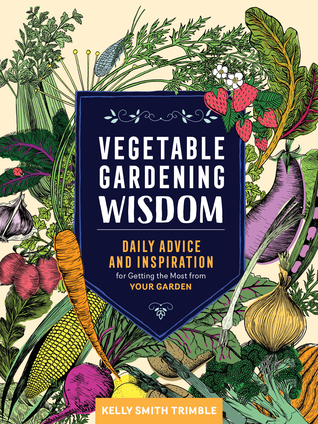

Vegetable Gardening Wisdom by Kelly Smith Trimble

Vegetable Gardening Wisdom by Kelly Smith Trimble

This small book is packed full of helpful gardening tips, tricks, and ideas with a few recipes thrown in as well. It's divided by season - late winter, spring, summer, and fall and each section's tips are relevant to that season. There were a lot of good tips and inspiration, but I also liked that it's a book you could easily pick up and read a few pages and pick up again later. I read through each section at a time, but you could easily read it any number of ways. This is one that would be good to have on hand and flip through once a year or so just to refresh. Good for the beginning gardener or someone more seasoned. A great book overall.


Fed Up by Gemma Hartley

Fed Up: emotional labor, women, and the way forward by Gemma Hartley

"Day in and day out, women anticipate and manage the needs of others." this first line of the book description is the basic definition of emotional labor. All the mental work that goes into running a household or workplace - who's birthday is coming up, buying gifts, making sure bills are paid, making doctor or house maintenance appointments, etc. the list is never ending. As a women's studies minor in college I was well-versed in Betty Friedan's "the problem with no name" and the "second shift." But, it wasn't until this book that I really understood that a frustration I've felt and apparently that every single woman has felt is the weight of emotional labor. Hartley states that she has a wonderful, involved husband who does a lot, but a lot in comparison to other men or a lot compared to her? That's the real question. I also have a wonderful husband who does a lot and while we don't have children I have definitely been frustrated to feel like I do most, if not all, the emotional labor. Hartley does a great job is fleshing out how emotional labor plays out in our homes and workplaces. Most of her examples involve parents and I'm sure the emotional labor goes WAY up when kids are added to the mix. She also gives some solid ways to make changes in your own home which is good - the book is not just bitching about how men don't do enough, she actually shows how she addressed this with her husband and how over time they were able to make some pretty significant changes - and how they BOTH changed, not just him. Hartley points out that much of the issues women have with emotional labor is due to how our society views gender, work, value and gender roles. So, in order for this issue to ever get better we need to address it with our significant others and do the hard work of trying to change ourselves and our relationships for the better. Definitely a must read for everyone.

Lots of quotes I liked:

"Even when there is a fifty-fifty split in domestic labor and childcare, we aren't quantifying the emotional labor that goes into these tasks. Often it's easy to miss the 'more' that we do, because much of the 'more' is invisible. At the heart of so much emotional labor is the mental load that goes into ensuring everything gets done. For every task that produces a physically visible result, there are many mental steps behind it that remain unseen. Those steps are largely noticed, tracked, and executed by women." (p. 5)

"We need to know it's okay to want more from our partners, even when society tells us not to, because that is how progress is made." (p. 84)

"The fact that people need to like you for you to get promotions is true of both genders, but an aggressive and less emotionally involved man is rarely blacklisted as 'overbearing' or a 'control freak.' He is seen as a strong leader and detail oriented...Maintaining high expectations for emotional labor in the workplace puts women in a position where they cannot possibly win, at least not in the same well-liked capacity as men who exhibit similar qualities." (p. 145-6)

[Hillary Clinton when running for President in 2016] "She was, in short, too close to the masculine standard for comfort, but still too feminine to be the leader of the United States. In such a no-win position, it speaks deeply to her political aptitude that she went as far as she did." (p. 149)

"In the large majority of rapes - those perpetrated by someone the victim already knows - we ask if she was leading him on (indeed, if her emotional labor went too far into intimate territory). We ask what she did to stop it from happening (could she have walked the fine line more carefully?). We ask what she was wearing (was she playing the appropriate role in her appearance?). We scrutinize the emotional labor performed by the victim, because it is more socially acceptable to criticize the behavior or victimized women than it is to criticize men who are criminals. It is this aspect of rape culture that makes victims so hesitant to speak out about their experience in the first place." (p. 165)

"The root of the problem was that I was asking for the wrong thing. The truth is that I don't need 'help' - I need full partnership. There is a difference between the two. Helping means 'this is not my job.' Helping means 'I am doing you a favor.' Helping means 'this is your responsibility.' Helping implies that the helper is going above and beyond, while the responsible party is falling behind. Why is only one of us responsible for our shared life? Full partnership, on the other hand, means not having to delegate and micro-manage. It also means significantly shifting our perspective on who is expected to do what - who is expected to be in charge...'Help' is a bandage on a broken bone. We need a total reset. And that doesn't just mean changing our partners' perspectives; it means changing our own too." (p. 209-10)

"I'm motivated by the cultural idea that women are meant to be perfect and that anything less than perfect makes me less than worthy. So I keep reaching and reaching for perfect, and I get better and better at emotional labor...Rob was able to figure out a way to keep everyone happy and comfortable, without any guidance from me, when I gave him the space to do so. He did so without striving for perfection, without second-guessing himself, without wondering if his way was the best way. His standards are not my standards, because he has not been taught to expect domestic perfection for himself. He approached emotional labor without any baggage: good enough was good enough." (p. 220-1)

"'The more conservative homeschooling mothers would be willing to accept that this is my role as mom. This is my duty. This is what God wants me to do,' Lois tells me. 'The Christian faith helped them manage their feelings of stress.' There was a feeling of purpose behind their emotional labor, and that, coupled with the unquestioned expectation that they would not receive help from their partners, allowed them to 'manipulate their feelings' so that emotional labor did not weigh on them so heavily." (p. 232) [this subject should be the topic of a whole other book...]

"Setting boundaries isn't about others at all. It's about you. It's about making sure that your time, mental space, and emotional energy are being spent in ways that align with your values and priorities. Emotional labor always serves a purpose, but it doesn't always serve you...We need to stop modeling martyrdom and start modeling boundaries - no longer allowing emotional labor to overwhelm us but rather harnessing those skills to make our lives more fulfilling." (p. 238)

Thursday, May 2, 2019

April 2019 Cookbooks

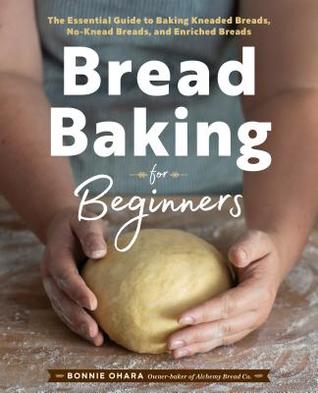
Bread Baking for Beginners by Bonnie Ohara

Bread Baking for Beginners by Bonnie Ohara

Bonnie Ohara started out making bread for her family because she was trying to cut back their food budget and was trying to make as much of their food herself as she could. That turned into a real passion for baking bread that is now a full-time business as owner and baker of Alchemy Bread Co. She created this book because she was self-taught, but found many of the books were either too simple or too complicated. She does a really good job of giving an overview of the process of baking bread, common terms and definitions, different types of bread (knead or no-knead), basic equipment needed, etc. Then she gets into the recipes and starts with easier types of bread, then moves into more complicated breads. Overall, this is book that you would want to buy because there is way too much information to just photocopy a recipe or two. My only complaint would be that I wish she would give the ingredient measurements in both weight and measurement (like cups, teaspoons, etc.) because by only giving weights you HAVE to have a food scale to try any of these recipes.


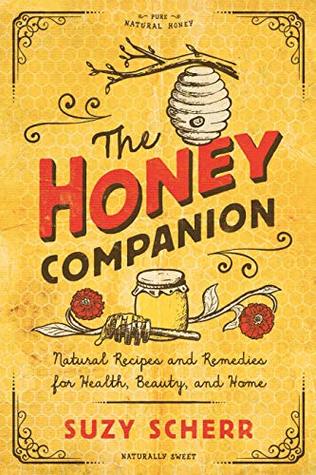
The Honey Companion by Suzy Scherr

The Honey Companion: natural recipes and remedies for health, beauty, and home by Suzy Scherr

Honey is a miracle product and if you didn't already know that Suzy Scherr will help convince you with this book. In the introduction Scherr gives the history of honey, how bees make honey, other bee products that are used in this book, and how to source local honey. Then she gets into the recipes - the majority are food related, but there are also chapters on honey for health, honey for beauty, and household uses for honey and beeswax. She also briefly mentions how to actually get started keeping your own bees, but there are tons of other books (and classes) out there solely about beekeeping. Overall, if you're a beekeeper this could give you more ideas of things to do with your honey, but if you don't want to or can't keep bees you can still benefit from all that honey has to offer. There are definitely a few recipes I'd like to try.


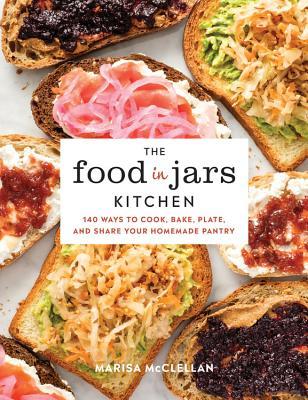
The Food in Jars Kitchen by Marisa McClellan

The Food in Jars Kitchen: 140 ways to cook, bake, plate, and share your homemade pantry by Marisa McClellan

I've seen other cookbooks that are half canning and half recipes using the canned ingredients, but this one is very unique. McClellan talks about the value of canning produce at peak season and using those canned products in a variety of ways, but her recipes aren't tied to specific canning recipes. They say things in the ingredient list like "fruit butter," "any runny jam," "any well set jelly," etc. It makes using these recipes MUCH easier and it's based on what you've canned or like to eat. She also emphasizes that it doesn't have to be home-canned, it could be canned products from the farmers market, a friend, or the grocery store. I think this makes for a much more well-rounded cookbook. There are also several recipes I'd like to try.


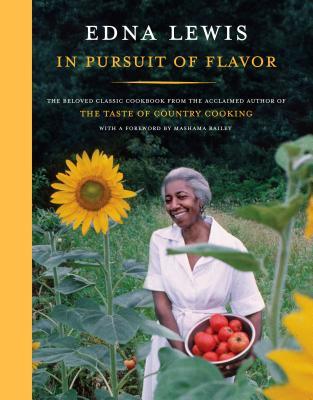
In Pursuit of Flavor by Edna Lewis

In Pursuit of Flavor by Edna Lewis

This is a new edition of Miss Edna's classic cookbook. You would never know if picking it up for the first time that it's not brand new. Each section of recipes starts with an introduction from Lewis about how she grew up eating and the importance of finding fresh ingredients. Although much of her career was in New York she still loved the classic Southern dishes she grew up with. The introductions before each section of recipes are written like you're just having a conversation with her on a front porch. There are TONS of recipes and several I plan to try out myself. If you're a fan of Southern food or want a good start with Southern cooking this is the cookbook for you.

A great quote:

"Good cooks always put up their own food. It is the only way we can be sure of the quality of our fruits and vegetables all year round. If we garden, we can select the seed, raise the plants without chemicals, and when the time is just right, pick the fruit or vegetable and preserve it at its peak - whether we choose to can, pickle, or freeze it." (p. 177)


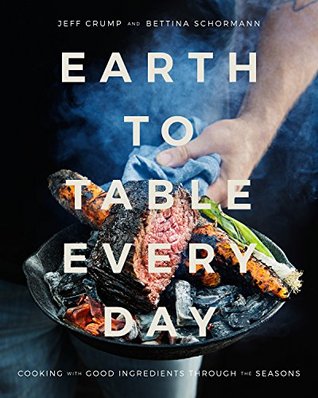
Earth to Table Every Day by Jeff Crump

Earth to Table Every Day by Jeff Crump and Bettina Schormann

Jeff Crump and Bettina Schormann both worked in restaurants and dreamed of opening their own place someday. Jeff wanted to open a pizzeria and Bettina wanted to open a bakery and out of their dreams Bread Bar was born. They wanted to focus on high-quality, local ingredients so they started making connections to local farmers and eventually started an organization called Farm Start that provides land for farmers to learn on and practice while also providing produce for their restaurant. This cookbook is a compilation of recipes from Bread Bar and also their many other food and restaurant influences. There are SO many recipes I want to try from this cookbook! Each section of the cookbook has an introduction about an inspiration or influence related to some of the recipes or theme of that chapter. Overall, this is a great cookbook that will inspire you.


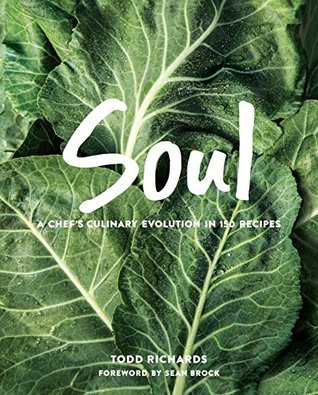
SOUL by Todd Richards

Soul: a chef's culinary evolution in 150 recipes by Todd Richards

Todd Richards grew up in Chicago, but often visited his father's family in Arkansas where he was exposed to Southern food and culture. Often African-American chefs are pigeonholed in "soul food," but Richards worked for French chefs and Japanese chefs and wanted to incorporate all the foods he loves into his food and this cookbook. Hence the name Soul - celebrating the soul of great food. I also like that he organizes the recipes by ingredient instead of a more typical cookbook organizing by appetizers, main courses, sides, etc. Each ingredient chapter starts with an introduction by Richards about that ingredient. Overall, a very solid cookbook and definitely a few recipes I want to try out.

April 2019 Reviews

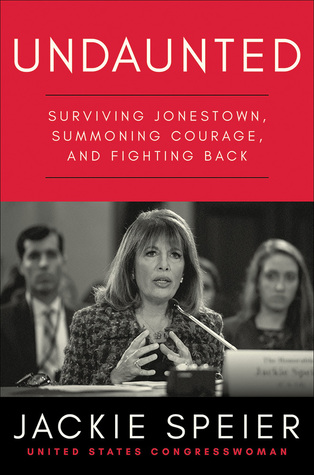
Undaunted by Jackie Speier

Undaunted: surviving Jonestown, summoning courage, and fighting back by Jackie Speier

I wasn't familiar with Jackie Speier's name, but am fascinated with anything about Jonestown which is why I picked up this book. Speier started volunteering for California state assemblyman Leo Ryan when she was sixteen helping with his re-election campaign. Eventually she interned with him while she was in college and even followed him to Washington, DC when he was elected to Congress. She eventually became his legislative counsel after she finished law school. It was while she was in that role that she accompanied Congressman Ryan to Jonestown in Guyana to investigate claims from family members of people in the cult. Of course this is where the story gets familiar, she is with Ryan when their group is ambushed by Jonestown "security" and she is shot 5 times. She somehow survives 22 hours with no medical attention before finally being airlifted back to the US. After months of surgeries and physical recovery Speier is healed enough to go home. But her experience in Jonestown would mark her life forever - reinforcing her belief to stay in politics and try to help people as she saw Congressman Ryan do. Speier grew up in a long line of strong women and her survival in Jonestown is partially because of the strength she drew from her family. This memoir explores how service and politics shaped Speier's life and how despite many obstacles thrown in her path she has still continued to persevere. Her life (which is far from over) is a testament to feminism and her career has paved the way for many other women to benefit in her wake. An inspiring memoir of a memorable and pioneering woman.

Some quotes I liked:

"After race riots roiled through much of the largely African American neighborhood of Watts, Los Angeles, Ryan briefly took a job as a substitute teacher in one of the poorest schools in the community. He wanted to have real conversations with the students, parents, and educators. What he learned from that experience found its way into legislation the following season. Then in 1970, as chairman of a committee overseeing prison reform, he had listened to inmates talk about the subhuman conditions in California prisons. So, under a pseudonym, he had himself booked, strip-searched, and incarcerated for ten days at Folsom State Prison to get an unvarnished perspective of the criminal justice system in California. He only revealed his identity when it was time to be released. A couple of the prisoners appreciated his efforts. He treated them as equals, and ideally he would help pass legislation to improve their living conditions (which he later did)." (p. 36)

"The congressman wanted answers [about Jonestown]. No argument or threat would have been able to deter him...Politically, there was nothing to gain - and everything to lose - by taking on Jim Jones, who was reportedly a live wire of the most dangerous variety. There was no telling what he'd do if confronted and challenged. Still, none of those red flags made the congressman pause or reconsider. Ryan didn't care about doing what was popular, and he didn't pay much mind to doing what others deemed safe. He cared about doing what he thought was right. Never one to accept thirdhand information or be dissuaded by hearsay, he confirmed that he was going to embark on a fact-finding - and potentially lifesaving - trip after the November election, to check on the constituents who had followed Jones into the Guyanese jungle." (p. 49)

"A campaign consultant once advised me, with the best of intentions, to not be so focused on women, that doing so would only alienate men. But I responded, and still believe, 'If women don't do it, who will?' If a woman avoids taking on the cause of women, who do we expect to affect change? Should we leave it to men to fight for our equal pay?" (p. 170)


The Last Ballad by Wiley Cash

The Last Ballad by Wiley Cash (Books & Banter and Evening Edition)

In 1929 Ella May Wiggins works 12-hour days, six days a week in a dirty, dangerous job in a textile mill in Gastonia, NC making $9 a week. She has 4 children and one on the way and her husband, who never liked to work much to begin with, has walked away leaving her to try to find a way to support everyone by herself. When she sees a union flyer she decides to check it out mainly out of desperation for something better for her family. Her decision to go to that first union rally will quickly shape the rest of Ella May's life. Told from several character's perspectives, The Last Balladtells Ella May's story - which is based on true events, as well as the plight of poor working class people (both white and black) in a time before many workplace protection laws were in place. Cash does a great job with all the characters and telling the story from their perspective and while at first you're not sure why all of the characters are introduced everything comes together in the end to give a very well-rounded story. 

Some quotes I liked:

"Ella wasn't pretty, not like that girl. Pretty took the will to be so and the money to do it and the time to see to it and the sleep to maintain it, and Ella didn't have any of those things." (p. 6)

"...it was this past and present of find industrialization that Richard wanted the Lytles to understand marked him and his family as being one of its most wealthy and famous. While the Lytles' ancestors had sipped juleps on the veranda and overseen the work of enslaved black bodies in brackish water, Richard's father and grandfather had moved mountains, electrified production, cared for the poor, and changed the state forever." (p. 190)


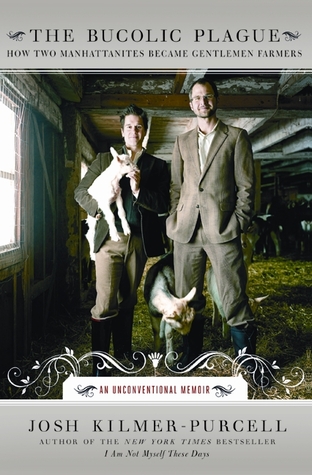
The Bucolic Plague by Josh Kilmer-Purcell

The Bucolic Plague by Josh Kilmer-Purcell

Josh Kilmer-Purcell and his partner Brent Ridge decide somewhat on a whim to buy an old farm/mansion in upstate New York as their vacation home. They both work in New York City and want somewhere to get away on the weekends. Both Josh and Brent grew up in more rural areas and Josh spent much of his childhood not appreciating his family's huge garden and summer canning. Josh works in advertising and Brent works for the Martha Stewart TV show. Josh is getting tired of working in advertising which is more of a young person's game. As he is getting closer to 40 he wants to get back to his roots and garden and can and do more for himself on the Beekman farm. Josh puts in a vegetable garden at the Beekman and they hire a caretaker who comes with a herd of 80 goats. In an attempt to help use up all the goat's milk they start making soap and when they give some to Martha Stewart and she features it on her TV show the Beekman 1802 company is born. But, it's very difficult to run a farm and soap business while still working full time in the city. Then the economic collapse of 2009 happens and Brent and Josh are both out of work with two mortgages and all the work of the farm to manage as well. If you're familiar with the brand you know they managed to pull it out of the fire and keep both the Beekman business and farm. Josh is a great writer and the book is hilarious, but he is also honest about how hard things were around the time of the economic collapse and how the farm started to create problems in his relationship with Brent. Overall, an honest and hilarious look at two city slickers who made a (successful) go at farming.

Some quotes I liked:

"Ever since Martha mentioned that she'd like to visit the farm, Brent had been seeing everything through her eyes. And when one peers through Martha glasses, the world isn't rose colored. It's a great big collection of disappointing imperfections." (p. 169)

"I'd come to realize that while most Americans don't have any idea what actually happens on a farm, they all think they do. Having spent hours as children with their Fisher-Price farms and pull-string toys that make animal noises, people have created a tableau of farm life in their heads that couldn't be further from reality. They envision Brent and me spending our weekends driving a big red tractor aimlessly around the barnyard, taking breaks to milk things and perhaps tote a bale of hay somewhere. Fisher-Price seems to ensure that every little kid grows up with a false perception of the lives of firemen, policemen, and farmers. Maybe if they made more accounting office play sets and little middle management figures, they'd hit the mark better - or at least be more demographically accurate." (p. 212-13)

[When Brent is laid off from the Martha Stewart TV show after spending Labor Day weekend traveling with her for the show] "'You mean you just spent two days with her, flying on the jet and eating meals together, and she never mentioned that you were going to be let go the minute you got back to New York?' 'Martha doesn't really handle layoffs.' [Brent responded] I find myself growing enraged...She never once e-mailed or called Brent after his layoff. In all my years as an employee, and later as a manager and partner, I have never let a terminated colleague disappear without privately acknowledging her or his contributions, and offering to help in any way that I could. For a woman who has publicly lamented her lack of friends, it's hard to believe that her sixty-nine years of human interaction haven't illuminated the cause." (p. 231 & 236)


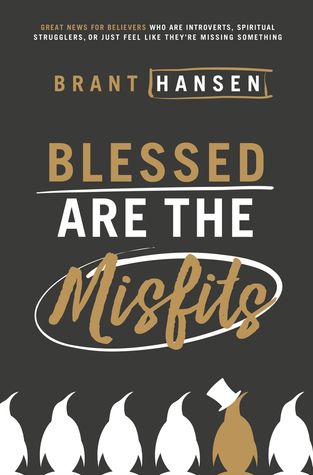
Blessed Are the Misfits by Brant Hansen

Blessed are the Misfits by Brant Hansen

Brant Hansen has Asperger syndrome, is an introvert, and has rarely "felt" God's presence in his life, but is still a Believer and in this book he sets out to show us that misfits like him are not second-class Christians. If you've struggled to fit in with the Christian culture then this is the book for you. There is a place for everyone in the Church, but often if you're not an extrovert who loves talking to strangers or getting up on stage and singing in front of huge congregations you can feel left out or less than. Hansen gives countless examples of how Jesus not only accepted outcasts and misfits, but actively sought them out and made them part of his inner circle. Hansen also gives ways that spiritual misfits CAN get involved in their local church and community in ways that work with their personality, not against it. While nothing in this book was a huge surprise for me, I think it's a good reminder for Christians that there are all kinds of people and God calls us to love everyone - not just the people who are just like us. 

Some quotes I liked:

"Jesus is exactly what I would hope God would be: a blunt-speaking, underdog-loving, field-leveling, jaw-droppingly brilliant, authority-challenging, short-story-telling, self-sacrificing, bring-the-children-to-Me...healer. And if there's a God, and this is what God is like...this is incredibly good news." (p. 26)

"But that's just it: we have to struggle. It's striking how often people think that a longstanding, ongoing struggle against a particular temptation means they are somehow failing. No. You're not failing. The struggle means God is still working in you. Do not stop struggling. We should expect struggle as part of the Christian life." (p. 129)


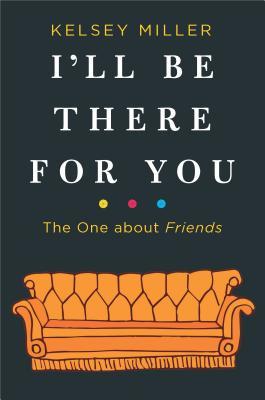
I'll Be There for You by Kelsey Miller

I'll Be There For You: the one about Friends by Kelsey Miller

I have fond memories of watching the TV show Friends with my best friend in high school on my tiny TV in my bedroom. So, when I saw this book and realized that Kelsey Miller was the author I knew it would be good. Miller explores the phenomenon of Friends - how the idea was born, how the cast was selected, and how it blew up and shaped our culture. The background of the show was really interesting and how the cast truly became friends in real life. It was also interesting to read about how the cast really banded together and used that to negotiate fair and equal salaries - something that was unheard of at the time. Today Friends is nostalgia for a lot of people "comfort food TV" as it was described in the book. While I loved Friends when it was first on the air and rooted for Ross and Rachel to get together, after awhile I just lost interest in the show and I think it went on longer than it should have just because of how much money it was making. People rip on Jerry Seinfeld for turning down $110 million for a tenth season of Seinfeld, but it is better to "go out on a high note" as he did and not let the show drag on until it's just dumb. Unfortunately I think that's what happened with Friends, but it's still wildly popular more than 15 years off the air and this book explains why that is. Overall, even though I'm not a die-hard Friends fan anymore this was still a nice trip down memory lane.

Some quotes I liked:

"That's what struck Wild during the shoot. 'It was much more like being with a band than being with a TV cast,' he said. However, 'I've never seen a cast, and very rarely seen a band, stick together to the degree they did.' Wild had been a music writer for years before covering television, and noticed that, yes, the Friends did appear to genuinely like one another - but more importantly, they seemed to recognize how much they needed each other. They had to function as a group or else things could go sour fast. They spent meals together, watched the show together on Thursday nights, and did all the promotional photos as a group." (p. 91)

"No television ensemble had ever negotiated as a group, nor had any cast ever had such power at the bargaining table. If they were serious about this all-for-one-one-for-all approach, then they could walk away and take the entire show with them. Headlines lit up with reports of the Friendscast banding together to make these startling demands, and threatening to strike if they weren't met. It wasn't just trade publications, either, but mainstream outlets from Us Weeklyto the Washington Post. Historically, the general public wouldn't have even known, let alone cared, about the details of television contract negotiations. But this one had become both tabloid gossip and national news." (p. 126)

"Some say [Friends] jumped the shark when Ross said 'Rachel' at the alter, instead of 'Emily,' Others cite the Vegas episode, when the two of them got drunk and married. But those were fairly standard plot twists in the soap opera of Ross and Rachel. The truth is, when compared to other shows, Friends never really jumped the shark - but it came pretty close. It put on water skis and got in the ocean. It had nothing to do with Rachel and Ross, though. The Friendsshark was Rachel and Joey." (p. 190-91)


Roar by Cecelia Ahern

Roar: thirty stories one roar by Cecelia Ahern

You've probably heard the line, "I am woman, hear me roar." from the 1972 song by Helen Reddy and Ray Burton. In Cecelia Ahern's hilarious and clever book she lets us hear 30 women roar by writing short stories based on cliches used to describe women or issues women struggle with. Some of the topics include women disappearing as they get older, women's roles vs. men's roles (pink vs. blue), being pigeonholed, being eaten up with guilt, reproductive rights, etc. While I didn't love every single story, the majority were FABULOUS. Ahern did an incredible job of taking topics or cliches and turning them around in such a pointed, yet hilarious way. This is definitely one of the best books I've read this year so far. Great job Cecelia Ahern!


Outer Order, Inner Calm by Gretchen Rubin

Outer Order Inner Calm: declutter and organize to make more room for happiness by Gretchen Rubin

I really like Gretchen Rubin and while this book is very different from her other books she still uses some of the principles from her other books to inform this one. She found through her research about happiness that often outer order helps create inner calm - hence the title of this book. What I really like is that unlike many other organizing books this one is not focusing on minimalism. Rubin understands that organization is not the same for everyone. I also really liked that she focused on having your home reflect who you are, so cleaning and organizing so that the things that are important to you are what you see every day. This book is a really quick read and each section is full of quick 1-2 page tips about creating outer order for inner calm. The five areas Rubin covers are 1) Make Choices, 2) Create Order, 3) Know Yourself - and Others, 4) Cultivate Helpful Habits, and 5) Add Beauty. This is a book I could see myself referring back to, so it might be one I buy. If you're wanting to clear clutter and be more organized, but you're NOT a minimalist - this is a great book for you.

Saturday, March 30, 2019

March 2019 Reviews

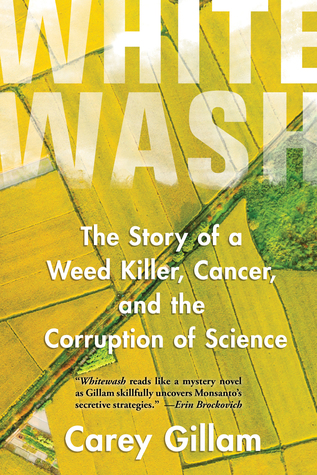
Whitewash by Carey Gillam

Whitewash: the story of a weed killer, cancer, and the corruption of science by Carey Gillam

I already knew Monsanto was the devil, but if you want even more confirmation and the facts to back it up this is the book for you. Gillam was an agricultural journalist who when she started was impressed with Monsanto staff and used Roundup liberally herself at home. But soon she started seeing a darker side and started digging into claims that Roundup is not as safe as Monsanto claimed and in fact was unbelievably dangerous and carcinogenic. In Whitewash she mainly covers how Monsanto has routinely paid scientists or writers to paint their products in a good light - even when reputable science disputes those claims. Gillam also delves into how corrupt the EPA, USDA, and other government entities are that are supposed to be watchdogs for the public - these agencies are routinely filled with former and current chemical company executives who are obviously not looking out for public interest, but for their own pockets. While often infuriating to read, this book just further proves that money rules the world. Monsanto doesn't care if their product destroys the world because they are raking in the money and paying off or suing anyone who gets in their way. Hopefully as more and more books like this come out people will start to realize chemicals are NOT the path to quality, healthy food and enough people will demand change in these supposedly protecting government agencies.

Lots of great quotes in this book:

"U.S. farmers alone applied more than 276 million pounds [of glyphosate] in 2014, compared with 40 million pounds in 1995, according to published research, and use globally has more than doubled in just the past ten years. Around the globe, glyphosate is now registered for use in 130 countries and is manufactured by dozens of producers following Monsanto's lead. It is considered the most heavily used agricultural chemical in history." (p. 4)

"Both the U.S. Food and Drug Administration (FDA) and the U.S. Department of Agriculture (USDA) annually test thousands of food products for hundreds of different types of pesticide residues, but both routinely have refused to test for glyphosate. It's also notable that as the USDA and FDA have been declining to test for glyphosate residues over the past twenty years, the U.S. Environmental Protection Agency (EPA), which regulates pesticides, has been approving industry requests for higher and higher allowable levels of glyphosate residues in food." (p. 5)

"Don Huber, professor emeritus of plant pathology at Purdue University, believes that glyphosate may be even more toxic than DDT. 'Future historians may well look back on our time and write about us...how willing we were to sacrifice our children and jeopardize future generations based on false promises and flawed science just to benefit the bottom line of a commercial enterprise..." (p. 20)

"...Henry Rowlands, who launched the Detox Project in California to test food and bodily fluids for glyphosate residues...Rowlands said he found quickly that glyphosate is such a hot-button issue that even trying to find independent laboratories to run tests is a challenge. All but two of the American labs he sought out to help launch large-scale testing declined. More than 350 turned him down...'I'm certain it was political,' Rowlands told me in a call from Bulgaria. 'All of these labs tset for big food producers. They aren't going to risk their bottom line looking for something food companies don't want people to find. It's really sad. They're not protecting public health.'" (p. 62)

"In fact, roughly 85 percent of more than 10,000 food samples tested by the USDA in 2015 carried pesticide residues. Most of those foods were fruits and vegetables, both fresh and processed - food consumers generally consider healthy...even residues of chemicals long banned in the United States were found as recently as 2015, including residues of DDT or its metabolites found in spinach and potatoes." (p. 69)

"Monsanto Company, Dow Agrosciences, DuPont, Syngenta, and others snapped up leases for large swaths of property [in Hawaii] over the past several decades and have transformed areas known for sugar and pineapple production into experimental field sites. By 2014, the chemical companies controlled more than 13,500 acres on the island of Kauai alone. Across the state, including on the islands of Maui, Molokai, and Oahu, the companies occupied about 25,000 of the states's 280,000 acres of agricultural land." (p. 135)

"One analysis of government pesticide databases and data from the Hawaii Department of Agriculture released in 2014 showed that the agrochemical industry was applying pesticides at higher rates on Kauai than the application rates on most U.S. farms. That report described the west side of Kauai as 'one of the most toxic chemical environments in all of American agriculture.'" (p. 139)

[Due to so much interest in GMOs and corruption government officials are now using fake email accounts to avoid having to turn over damning evidence in litigation or Freedom of Information Act requests]
"Still, an investigation by the Associated Press found that many government officials use these secret e-mail accounts in ways that complicate an agency's legal responsibilities to find and turn over e-mails in response to congressional or internal investigations, civil lawsuits, or public records requests." (p. 230) 

"'Innovation does not happen without the courage to question the current paradigm,' said Jonathan Lundgren, the former USDA scientist who left the agency when he felt his scientific findings were being sacrificed for political purposes. 'If we do not change our behavior, then humans are in trouble. We know what needs to be done to solve these problems that our planet and species are facing. What is lacking is the courage to implement the needed changes.' Let's find that courage." (p. 248) [The last paragraph of the book perfectly sums up what needs to be done.]


Butter by Elaine Khosrova

Butter: a rich history by Elaine Khosrova

This was an interesting and quick read all about the history of butter. It covers how butter has been made historically all over the world and also to some current, artisan butter makers out there now. She also covers the role of women in butter making, butter tools & techniques, and how butter was demonized by some scientists as the reason for rising heart disease (spoiler - they were wrong). Khosrova really does a very thorough job of covering every aspect of butter. The second part of the book is tons of recipes involving butter - including how to make your own butter. Overall, definitely an interesting look at a commonplace, yet vital cooking ingredient.

A quote I liked:

"Eventually, the new momentum in dairy science coupled with old-world chauvinism would eradicate women's authority and place in the dairy world. But it happened incrementally, as each new technical innovation erased a portion of traditional butter making." (p. ??? somewhere in chapter 4 my ebook page numbers were not showing correctly)


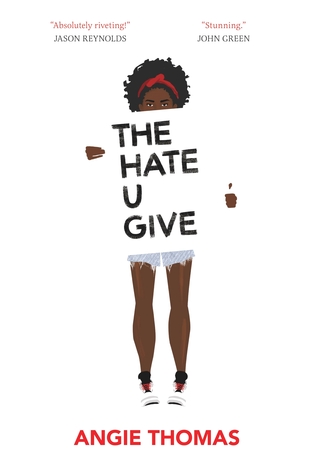
The Hate U Give by Angie Thomas

The Hate U Give by Angie Thomas (Community Read - Books & Banter and Evening Edition book clubs)

Starr Carter already feels pulled between two worlds - her world at home in Garden Heights, the poor black neighborhood where she lives, and Williamson, the predominately white prep school she and her brothers attend. At home she can't act too "Williamson" and at school she can't act too "Garden Heights" and to make things even harder she is dating a white guy named Chris. One night she goes to a party in Garden City and accepts a ride home from her childhood friend Kahlil. On the way home they are pulled over and the officer makes Kahlil get out of the car, then when Kahlil opens the car door to check on Starr the officer shoots him in the back. Starr is the only witness, but is terrified of getting involved in the case. The media quickly makes Kahlil out to be a gang member and drug dealer and the police don't seem interested in Starr's account of that night, but the community want answers and want someone to pay for Kahlil's death. As Starr grieves for Kahlil, she also struggles with how to fight for him and whether or not she should get involved in the protests that often turn into riots. As her community protests for Kahlil they must also find a way to come together for everyone's benefit. A very timely novel that addresses some hard issues like race, community, oppression, and police-involved shootings.

A quote I liked:

"...Sometimes you can do everything right and things will still go wrong. The key is to never stop doing right." (p. 154)


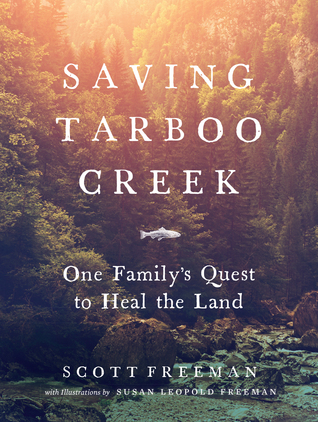
Saving Tarboo Creek by Scott     Freeman

Saving Tarboo Creek: one family's quest to heal the land by Scott Freeman

In 2004 Scott Freeman and his wife Susan (granddaughter of conservationist Aldo Leopold) bought 17 acres on Washington's Olympic Peninsula. Their land straddles Tarboo Creek, a 7.5 mile stream that had been degraded from channeling and clearcutting, but used to be a salmon run. They decide to restore their section of Tarboo Creek to its former salmon run glory. The book is half about their work restoring their portion of Tarboo Creek and half about conservation in general and why it's important work for everyone. It was a little more academic than I was expecting, but the parts about how they restored the creek and the land around it was really interesting. Freeman gives a few tips in the last chapter about how to live a more natural life - be engaged, be simple, be real, and be present. Advice that everyone could use in today's fast-paced, automated world. A quick read about an important topic.

Some quotes I liked:

"We find it repugnant when people exploit or abuse others for personal gain - we call them cheats, tyrants, scoundrels, or villains; we describe them as despicable, evil, vile, wicked or manipulative. Leopold said we should feel the same way about people who exploit or abuse land. If someone we meet is broken or damaged, we reach out to help them. If land is broken or damaged, we reach out to help it - by planting trees and native wildflowers." (p. 35)

"Based on more than a hundred years of data like these, the claim that hatcheries can make up for habitat loss is false. Knowing what we know now, hearing someone advocate for hatcheries is like listening to a doctor advise a patient that it's okay to eat junk food, abuse alcohol, sit all day, and chain smoke because we have state-of-the-art emergency rooms and ICUs that can solve any health problems that might result. But the jobs and sport fisheries supported by hatcheries have created a vested interest group that fights any attempt to close them...David Montgomery recognized the root of the problem: the success of hatcheries has always been measured in numbers of fry released, not the health of the populations they are supposed to be supplementing...If the money spent on hatcheries over the past 130 years had been spent on habitat protection and restoration instead, the situation would be far different today." (p. 80-1)


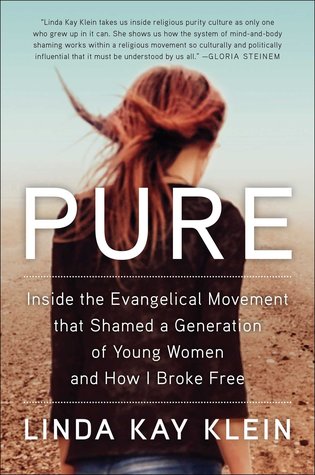
Pure by Linda Kay Klein

Pure: inside the Evangelical movement that shamed a generation of young women and how I broke free by Linda Kay Klein

Linda Klein grew up in an evangelical Christian church and experienced some very harmful messages about being a woman that impacted her traumatically for years after leaving the Church. A few years after starting to question the messages about women she grew up with, Klein decided to reach out to former friends that she attended church with to see what their experiences were and by doing so she basically opened up Pandora's box. She found an out-pouring of horror stories from young women who were experiencing PTSD-like symptoms around sex and relationships. It took her another 10 years to further sort through her own issues and trauma and work out what she really wanted to do with this book. Her main points are the purity culture of the Church is damaging to everyone, but especially girls/women and the Church really needs to figure out a better way to address healthy sexuality. While I didn't experience everything she did, I could definitely relate to how damaging the purity culture is. I don't know what the answer is, but I know it's not that. One thing that was hard for me was that many of the women (Klein included) have left the traditional/evangelical Church and either practice no religion or something that I would consider outside mainline Christianity. I think we need to find a middle ground between do whatever you want sexually and the Evangelical purity movement - something that deals with healthy sexuality and doesn't make women out to be the problem, but in a godly, Biblical way. It was so sad to see how often the stories in this book show church leaders taking the Bible so far out of context it was scary and shaming everyone into toeing the party line with a trail of destruction in their wake. This is a sad, but VERY important book. Thank you to Linda Klein for being brave enough to tell her own story and start digging into this horrible and destructive ideology.

Some quotes I liked:

"To summarize, first, the researchers are finding that purity teachings do not meaningfully delay sex. Second, they are finding that they do increase shame, especially among females. And third, they report that this increased shame is leading to higher levels of sexual anxiety, lower levels of sexual pleasure, and the feeling among those experiencing shame that they are stuck feeling this way forever. Oh, and it doesn't get better with time...it gets worse! Yep. Sounds about right." (p. 28)

"Reading these verses as an adult [Romans 14 verses about being a 'stumbling block'] I cannot help but shake my head - the whole time my childhood friends and I were being told that we were the stumbling blocks, our accusers were, even then, placing the real stumbling blocks before us: purity-based shaming and judgmentalism that pushed many of us right out of church...These stumbling blocks are: 1) the accusation that if purity culture doesn't work for you, it's you (not its teachings) that are the problem; 2) the requirement that all girls and women must perform a stereotypical gender role to be acceptable; 3) the expectation that all unmarried girls and women must maintain a sexless body, mind, and heart to be 'pure'; and 4) the systematic mishandling of sexual abuse cases and survivors." (p. 30)

"The cornerstone of the purity myth is the expectation that girls and women, in particular, will be utterly and absolutely nonsexual until the day they marry a man, at which point they will naturally and easily become his sexual satisfier, ensuring the couple will have children and never divorce: one man, one woman, in marriage, forever." (p. 77)

"By this I mean both that the purity movement classifies sexual violence by systematically silencing and hiding it, and that if and when it is exposed, the purity movement then misclassifies sexual violence as 'sex' rather than 'violence'...Equating survivors' actions, such as drinking in Laura's case, and perpetrators' actions, such as assault, is called sin-leveling, and is often categorized as a form of spiritual abuse." (p. 91)

"And after graduating from school, I had four or five avenues that I thought about as a vocation for myself, but I was just really looking for guidance from God: 'Where would you want me to be, God?' 'What if God was asking you the same question?' I asked. 'What if he was waiting for you to tell him what you wanted?' Katie laughed under her breath. 'It's funny because it really never occurred to me that maybe he was letting me choose. It never even occurred to me that he would be saying, 'And here's your life; do what you want.'"(p. 131)

"I have heard the tiger/lamb language many times since. Interviewees share about it being said from pulpits, in Bible studies, and in Christian counseling sessions. Somehow, purity culture has turned a pornographic fantasy about a virgin turned vamp into 'morality,' so that now both a woman's nonsexuality before marriage and her hypersexuality after marriage are required for her to be considered good." (p. 139)

"'I can't tell you what my daughters were taught in youth group,' Solange continued, picking her glass back up off the table. 'But I can tell you some of the results I saw: I saw them embarrassed about their feminine selves; I saw them more self-conscious about how they dressed and how they looked. They were just - I don't know. There was an underpinning of shame. When I read the Bible I see God's powerful love for women. I do not see in the Bible God treating women as second-class citizens, as little girls who aren't quite grown-up and will never be." (p. 153-4)

"Egalitarian women began organizing in the 1970s. In the eighties and nineties, complementarians fought back. Hard. Christian colleges that had embraced egalitarian thinking in the previous decades, for example, now fought to prove their commitment to complementarianism as demonstrated in their hiring practices, course offerings, and assignments. One of my interviewees even recalls having to write a college paper title 'Why Feminism is Wrong.' Tensions were particularly strong at Southern Seminary, the Southern Baptist Convention's flagship seminary. In the early to mid-1990s, the school made so-called women's issues a litmus test for whether or not a faculty member was conservative enough to teach there, its president calling them 'clear dividers in our time.'...Faculty hired before the new litmus test was put into place were now required to articulate a complementarian perspective if they wanted to keep their jobs...The seminary lost about a third of its faculty and half of its student body to the subsequent firings." (p. 162)

"I cannot help but wonder if, while some men worry that they are monsters because of this gender-based messaging, others may feel their monstrous behavior is justified because of it. When boys are repeatedly taught that they cannot control their sexual impulses and that it is a girl's responsibility to protect her own purity, how logical it must seem for perpetrators attempting to justify their actions to come to the conclusion that if a woman dresses or acts a certain way she is 'asking for it,' making rape at least partly (if not totally) her fault?" (p. 235-6)


Women Rowing North by Mary Pipher

Women Rowing North: navigating life's currants and flourishing as we age by Mary Pipher

In Women Rowing North Mary Pipher takes on the topic of women and aging. While the demographic she's focusing on is women who are 60+, I think it's still beneficial for any woman to read and think about. Pipher makes the case that women in this age-range are experiencing a lot of changes and have the opportunity to make the best of this time and grow or to retreat inward and refuse to grow. She covers topics from health issues, losing or dealing with a terminally ill spouse, issues with children, grandchildren, working/retiring, building a good day, and getting involved in volunteering and/or your local community. In every facet that she covers she reiterates the importance of building and maintaining relationships and how our attitude about these changes will greatly determine how good (or not) these final years are. She interviewed dozens of women for this book - some friends and some strangers. All of these women have unique stories and are working through these issues currently. Overall, it was a very interesting book about an important topic for women.

Some quotes I liked:

"As with Reviving Ophelia, this book explores a specific life stage from a feminist perspective, revealing the reality of women's lives as opposed to the dominant cultural stories about us. We are much more complicated, intense, and fascinating than most of America's stories suggest. Our culture presents us with a misogynistic version of who we older women are. We confront both ageism and gender-specific challenges. As we age, our bodies, our sexuality, and our minds are devalued...Contrary to cultural stereotypes, many older women are deeply happy. A 2014 Brookings Institute study on happiness and age found that people are least happy in their twenties, thirties, and early forties, and steadily gain an appreciation for life as they age. Indeed, most women become increasingly happy after age fifty-five, with their peak of happiness toward the very end of life." (p. 4)

"This may be the most important thing - that we learn to grant ourselves mercy. That we forgive ourselves, that we accept our pain, mistakes, and vulnerability, and somehow manage to love ourselves and our own lives. Most of us do make progress in this area; all of us can make more. And it is only when we grant ourselves mercy that we can extend this mercy to others." (p. 158)


Eager by Ben  Goldfarb

Eager: the surprising, secret life of beavers and why they matter by Ben Goldfarb

I always thought beavers were fascinating animals, but as Ben Goldfarb's book shows they are not only interesting, but necessary to our ecosystems. Beavers are "keystone animals" that "supports an entire ecosystem...pull the keystone out, and the arch - or the ecosystem - collapses." (p. 55-6) Over and over Goldfarb shows examples of how when beavers are over-trapped or exterminated the ecosystem collapses with devastating consequences, but the good news is that by bringing beavers back into areas they can actually heal the land. What's so sad in reading this book is how over and over humans have just destroyed our land for a quick gain, never thinking of how this will impact the future. It's also frustrating to see over and over how we humans think we can change nature to suit our desires, never thinking nature knows best and if we work WITH nature instead of against it things are better for everyone - humans and animals alike. Thankfully beavers are still around and can still help heal the land - if people are willing to work with them instead of trying to force nature to work around what we want. A wonderfully well-written book about a fascinating animal that can truly heal much of the damage humans have done to our land.

Some quotes I liked:

"The weight of the [beaver] pond presses water deep into the ground, recharging aquifers for use by downstream farms and ranches. Sediment and pollutants filter out in the slackwaters, cleansing flows. Flood dissipate in the ponds; wildfires hiss out in wet meadows. Wetlands capture and store spring rain and snowmelt, releasing water in delayed pulses that sustain crops through the dry summer. A report released by a consulting firm in 2011 estimated that restoring beavers to a single river basin, Utah's Escalante, would provide tens of millions of dollars in benefits each year. Although you can argue with the wisdom of slapping a dollar value on nature, there's no denying that these are some seriously important critters." (p. 7)

"We are not accustomed to discussing the fur trade in the same breath as those earth-changing industries [like mining], but perhaps we should. The disappearance of beavers dried up wetlands and meadows, hastened erosion, altered the course of countless streams, and imperiled water-loving fish, fowl, and amphibians - an aquatic Dust Bowl...'[Beavers'] systematic and widespread removal,' wrote Sharon Brown and Suzanne Fouty in 2011, 'represents the first large-scale Euro-American alteration of watersheds.' If trapping out beavers ranked among humanity's earliest crimes against nature, bringing them back is a way to pay reparations. Beavers, the animal that doubles as an ecosystem, are ecological and hydrological Swiss Army knives, capable, in the right circumstances, of tackling just about any landscape-scale problem you might confront. Trying to mitigate floods or improve water quality? There's a beaver for that. Hoping to capture more water for agriculture in the face of climate change? Add a beaver. Concerned about sedimentation, salmon populations, wildfire? Take two families of beavers and check back in a year. If that all sounds hyperbolic to you, well, I'm going to spend this book trying to change your mind." (p. 9-10)

"'From here in the twenty-first century, we can look back and see that people then really did have a much more sophisticated understanding of their ecology than we recognize today,' LaPier said. Western scientists may have taken centuries to come around to the notion that beavers create life, but to the Blackfeet and other tribes the animal's vitality was always self-evident." (p. 47)

"In some ways beavers are akin to fire, a maligned and misunderstood disruption that society has quelled for decades, with disastrous ecological side effects. Brainwashed by Smokey Bear's hardline anti-wildfire agenda, only recently have we woken to the importance of allowing the woods to burn...In 2001 the ecologist Mark Harmon coined the word morticulture to connote the importance of snags, logs, and other forms of woody detritus long ignored by foresters. Beavers are adroit morticulturalists: One Finland-based study found that beavers created as much deadwood as windstorms and wildfires. Destruction is the preface to renewal; a force of death also breaths life." (p. 58-9)

"Our grandiose sense of self-worth - our human supremacy, as Derrick Jensen has put it - guides our every interaction with other species, from the livestock we raise for slaughter to the wild carnivores whose populations we fanatically control. To work with beavers is to recognize the limits of our own divinely bestowed domination, to acknowledge that the best thing we can do for many landscapes is to turn their salvation over to a mammal whose ecological vision diverges wildly from our own. Homo sapien's defining trait is our hubris; ceding our authority to beavers is an act of profound humility. Let the rodent do the work." (p. 243 - last few sentences of the book)


Big Love by Scott Stabile

Big Love: the power of living with a wide-open heart by Scott Stabile

What happens when you dedicate your life to loving more? Lots of good things according to Scott Stabile. You may think Stabile must have had an easy life full of happiness to be so devoted to spreading love around, but that was not the case at all. When Stabile was 14 his parents were murdered at the grocery store they owned, then 9 years later his oldest brother overdosed on heroin, after that he was in a cult for 13 years before finally getting the courage to leave. He's also had other friends die or commit suicide and dealt with his own anxiety and shame. But what he learned through all the bad is that there IS good out there and being the good and looking for the good make all the difference. Sometimes you never know how one small act of kindness can impact someone for the rest of their life and Stabile encourages us all to do that more in our daily lives. A funny and upbeat look at how to see the best in a world that's still full of bad things.

Some quotes I liked:

"Healing isn't possible within denial and fear. It's only possible within openness and honesty, within our willingness to look at the truth of our reality, past and present, and to accept it for what it is without letting it define who we are right now. We are not our struggles, or our heartbreak...But, ultimately, who we are is who we decide to be, because of and despite everything we've been through." (p. 22-3)

"Change will always be scary. Fearlessness will always be a myth. We can be afraid and still make courageous choices. Courage doesn't even exist without an element of fear. It's action with fear that makes a choice brave." (p. 119)

[On not wanting children] "I can't begin to imagine what women who don't want children have to endure. I've felt like a monster because I've never wanted children, or worse, because I'm not even a fan of them. But I've never had my purpose for living questioned simply because I chose not to procreate...We're not all put on earth to parent children. Indeed, we're not even all put on earth to enjoy them very much. There's no shame in either of those things." (p. 195)


Simple Matters by Erin Boyle

Simple Matters: living with less and ending up with more by Erin Boyle

There were mixed reviews on this one and some of the main complaints were that the author seems to be pushing for everyone to make their own cleaners and lotions. I felt like this was more of a manual on how to have a more simple life overall and how the author interprets that for her own life. Nowhere did I read anything that felt like this is how you MUST do things to be a good human being. She does talk about her own journey of simplicity and getting away from chemicals by making some of her own body lotions and cleaning products, but I felt like she wrote in a very non-judgmental way. There were a few things I couldn't relate to - only having one perfect throw blanket - nope. Only having one or two things on huge bare walls - again, not for me. A desk with only a computer and keyboard on it - again, no - where are your files, bills, stamps, etc. she never discusses that when talking about her desk. This is more of a simplifying manual for aspiring minimalists. I am NOT a minimalist and don't aspire to be, but I did like some of what she talked about in this book. Trying to make your home inspire you with beautiful things (regardless of how many things) instead of a bunch of cheap crap is fair and something I can definitely get behind. I did like this one, but Slow: simple living for a frantic world by Brooke McAlary definitely spoke to me more.