Wednesday, August 6, 2025
July 2025 Cookbook Reviews
July 2025 Reviews
In 2020 Selinger saw a series of tweets about a powerful man in the restaurant industry that she had crossed paths with back in her restaurant days. That triggered her memory of all the dysfunction she witnessed and participated in during her restaurant working days. I was surprised at the mixed reviews of this book. Several people said that they thought the book would be more about wine and how to pair it with food (that is NOWHERE in the description of the book) or that Selinger was a narcissist who just wanted to whine about all the bad stuff that happened to her. She doesn't come across as narcissistic AT ALL to me. Nowhere in the book does she say that every minute of every day in the restaurant industry was awful and toxic. That's the whole point of the book the love/hate aspect of restaurants - when it's good it's intoxicating but when it's not, it's really bad. It's also frustrating and sad to keep reading about abusive people in power who are never held accountable. Certain industries are known for this but it's anywhere where there is enough money to shield people from their consequences. I really liked the book even though it was not a happy or light read. Selinger is a good writer and this book shines a light on things that are likely still going on in restaurants today despite the #metoo movement and everything else.
Some quotes I liked:
"But to be a woman who loved food was very different than to be a man who loved food. You were still supposed to care about restraint. You were supposed to love it, want it, understand it, obsess over it, talk about it constantly - but never really indulge in it. To indulge was to give up the last vestiges of control. To indulge was to slip from a size 0 to a size 2 to a size 4 to a size 6 and so on and so on." (p. 168)
"To fit in at Momofuku, after all, you couldn't be nice. You could pretend to be nice, but you couldn't actually mean it. It was hard to know where I fit in when it came to this jigsaw puzzle of personalities. I wasn't mean, but I was a misfit. After work, I was happy to commiserate with the servers and creative personalities at the late-night bars. Even though I was upper management, I wasn't treated like a manager, and I wasn't included in the camaraderie extended to Dave's so-called Momo family. From the outside, it was a happy place to work, a communal place, where everyone pushed everyone else to be better. But inside, it felt competitive and exclusive, and, for me, unwelcoming. It was a workplace led by people who wanted you to believe that they had your best interests in mind, when really they wanted you to fail." (p. 198-199)
Some quotes I liked:
"...naturalist Lynn Faust, who used to spend summers in the now-defunct Elkmont community, grew up admiring the fireflies we're watching. As an adult, she came across and article about sychronous-flashing fireflies in Asia, and she recognized similarities in what the scientists were reporting and what she'd seen as a child. When she reached out to researchers in the 1990s, they were skeptical that an unknown-to-science species existed in the most-visited national park in the country [The Great Smoky Mountains National Park], so she sent a musical composition mimicking the sequences of flashes in Elkmont. It's what convinced firefly scientists that they should make a trip to Great Smoky Mountains National Park, where they confirmed a never-before-recorded synchronous species: Photinus carolinus. (p. 6-7)
"We might think of songbirds as daytime companions as opposed to night owls, but 80 percent of North America's migratory birds travel at night, using stars as navigational devices while avoiding the turbulence of daytime thermals. In U.S. cities alone, 365 to 988 million birds are killed every year during these nocturnal migrations in part due to artificial lighting issues, which disorient and cause them to collide with buildings, often fatally. And without access to navigational stars in cities awash with LEDs, some birds simply lose their way, with city lights drawing them away from their ancestral migratory flyways." (p. 70)
Updated review after 2nd reading:
Re-reading this book was even more enjoyable the second time. There were scenes I didn't remember, but overall I was able to read it a little more slowly because I knew the ending so I wasn't rushing to find out what happens. I still got choked up at the very end. I just LOVE Captain Kidd and Johanna and now to find out there will be a movie later this year is even better!
Update after 3rd reading:
It's been 5 years since I last read News of the World and I still love it. This time the poetic language really stood out to me and just how well she tells the story. She is able to pack so much description in so few words. Such a great book. Update to my second reading - I saw the movie and was not impressed. This is a hard book to turn into a movie because it's not super dramatic and more about the developing relationship between Captain Kidd and Johanna. Also just found out that Jiles passed away this month.
Thursday, July 10, 2025
June 2025 Cookbook Reviews

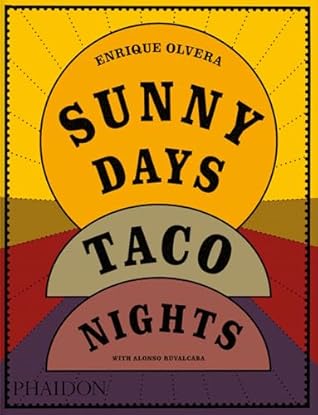
Sunny Days Taco Nights by Enrique Olvera
I love tacos and Mexican food. My favorite summer snack is homemade salsa. So, I'm always checking out taco/Mexican cookbooks to get new ideas. This one was a huge disappointment. I've never seen LESS appealing taco photos - like NONE of them looked good. Several were like a tortilla with a huge slab of some kind of meat on it. Surely that's not how you're expected to eat it? So why not show what it looks like with either cut or shredded meat and some toppings? It was just a disappointment overall.

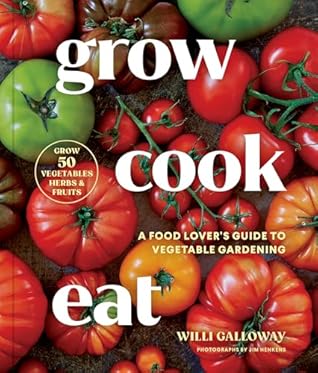
Grow Cook Eat: a food lover's guide to vegetable gardening by Willi Galloway
This is a unique half gardening half cookbook. The first 40 pages cover gardening basics - planning your space, creating good soil, planting, etc. Then the rest of the book is divided into types of plants - herbs, greens, legumes, squash, cabbage family, roots, warm-season vegetables, and fruit. Each section covers specific plants and tips for growing and then a recipe for that plant/veggie. There was a lot of good information but I do wish there were more recipes, one per plant/veggie just didn't seem like enough. But I think this would be a good book for a beginner gardener to help decide what to grow.

The Cook and the Gardener by Amanda Hesser
An American cook is working for a year in a French chateau and befriends a curmudgeonly French gardener. While the premise sounds great, I was expecting a cookbook. This was like half memoir/story of her time working as a chef at this French chateau and how she becomes friends with the older French gardener and his wife. I would read that book if it was published as food/gardening memoir/nonfiction book. But a cookbook with not one picture or photo of the recipes? No thanks. In the future, maybe I'll revisit when I have time to read all of the writing around the recipes. I also agree with one review I read that said it had a know-it-all vibe too. I haven't read any of her other books and after this one I'm not inspired to.
June 2025 Reviews

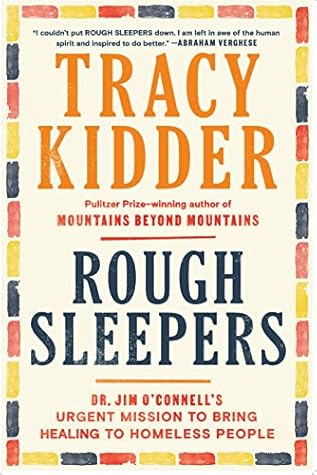
Rough Sleepers by Tracy Kidder
When Dr. Jim O'Connell graduated from Harvard Medical School, he was asked to defer a prestigious fellowship and help launch a grant-funded program to bring medical care to Boston's homeless population. He agreed and ended up finding his life's calling. Dr. O'Connell launched "the Program" from his initial involvement with a grant-funded clinic for the homeless in Boston that now hosts several clinics, a mobile outreach/clinic, and a building for respite care. He and a team of nurses, doctors, psychiatrists, and social workers try to help Boston's homeless have "continuity of care" despite their circumstances. There have been some success stories - former patients who got clean, got housing, and became productive citizens. Some of those success stories now work for the Program and give back to the organization that helped them. Sadly, the vast majority of the people the Program has helped are either dead or still homeless. So, what keeps Dr. O'Connell and his team going despite the hard work they are doing? That's what Tracy Kidder explores in this book. It's a portrait of Dr. O'Connell, the Program, and several memorable people from the Boston streets. This is obviously not a job everyone could do, but Dr. O'Connell makes it seem interesting and even though he rarely sees huge victories he focuses on the small victories and making each person he works with feel like a worthy human being. Eye-opening, sad, and heartwarming all at once, this is a unique book about a very unique doctor doing what he can to address the issue of homelessness in Boston.
Some quotes I liked:
"In the shelter clinics and on the van, Jim came face-to-face with dozens of people who hadn't been to a doctor in years, let alone a psychiatrist or dentist. He saw many rotted teeth and many cases of scabies and lice...At times Jim imagined that he and his colleagues were practicing something like wartime or post-earthquake medicine. It was as if he had been parachuted into another world that modern technologies had never reached. The situation was appalling, the work overwhelming. And, if he was honest with himself, utterly fascinating." (p. 42)
"Homelessness had a complex taxonomy. It included families and also many lone individuals, generally divided into four categories. There were the 'hidden,' such as the Street Team patient who slept in a rented storage locker. The 'transitional,' by far the most numerous, fell into homelessness only briefly, while the 'episodic' did so a few times a year. A smaller category - about 10 percent in 2018 - belonged to the 'chronic' category, living in constant or near-constant homelessness. That chronic group had two main subgroups - those who spent most of their nights in homeless shelters and those who slept rough, on pavement and park benches, in doorways, ATM parlors, tents on the outskirts of town...Some rough sleepers claimed their own distinction, labeling as 'snowbirds' those who slept out only in warm months and retreated to shelters in the winter. In fact, the difference was important. In Massachusetts, the people who lived mostly in shelters suffered a death rate about four times higher than that of the state's general adult population. But the people who stayed outside year-round - the Street Team's special patients, whom Jim had once imagined as 'hardy survivors' - died at about ten times the normal rate." (p. 55-56)
"By contrast, neither Jill nor the workers from Home Start had any experience in teaching domestic arts to rough sleepers, whose finely honed skills for outdoor living didn't help them indoors. Jim remembered a patient who actually pitched a tent in his apartment. Industrial cleaning was needed sometimes, not just because of partying but because many new tenants didn't know how to clean a stove or a bathroom. Most didn't know how to pay bills or shop for groceries, let alone cook. One freshly housed man, unable to sleep for a few nights, went back out to the streets and made a tape recording of the sounds of traffic and sirens, which he used as his lullaby, his antidote to indoor insomnia. People who had adapted to the exigencies of street life had no idea how to fill their time indoors." (p. 102)
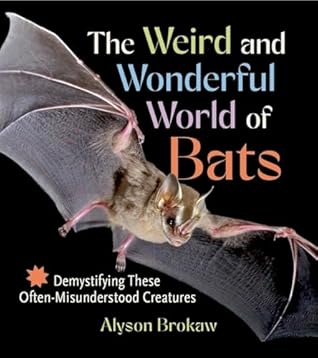
The Weird and Wonderful World of Bats by Alyson Brokaw
If you are interested in bats, this is the book for you. It is FULL of all kinds of information about every aspect of bats - how they use echolocation, how they fly, different roosting spots, what different kinds of bats eat, how they mate and raise young, etc. There is also a chapter on what we can learn from bats, how they are keystone animals, and what people can do to help bats. The book is full of lots of color photos of a variety of bats. The book is pretty easy to read, but some sections are a little science-heavy and may not be interesting to every reader. It reminded me a lot of The Owl Handbook by John Shewey - it's the same size book, full of color photos, and a mix of science and easily readable non-fiction writing. I really enjoyed this one and I hope to add a bat box to my back yard this year so that I can promote more bats in my yard.Some quotes I liked:
"In 1953, [George] Griffin dragged a literal truckload of equipment to a pond near Ithaca, New York, and listened to bats as they hunted insects above the water. He noticed that foraging bats were adjusting their sound production patterns in flight. At this point, no one had suspected that bats could use echolocation to detect and capture small, fast-moving insects on the wing. Even Griffin himself was surprised, later writing that 'echolocation of stationary obstacles had seemed remarkable enough, but our scientific imaginations had simply failed to consider...this other possibility with such far-reaching ramifications.'" (p. 27)
"Bats can process acoustic information from echoes with impressive speed and accuracy. A recent study found that Mexican free-tailed bats can accurately discriminate between different textures. Bats were trained to associate coarser grit sandpaper with a mealworm reward. They easily discriminated between ten different sandpaper comparisons...Put another way, these bats were able to differentiate textures using sound with about the same accuracy of a human hand discriminating texture using touch." (p. 35-36)
"Two species of bats deserve special recognition for their ability to ambulate on the ground: the New Zealand lesser short-tailed bat and the common vampire bat...To study how these bats move on the ground, researchers trained them to walk and run on a treadmill while recording them using high-speed video. Both bat species were observed to use a lateral sequence walk, a widespread form of walking in terrestrial animals where the left forelimb moves forward at the same time as the right hindlimb. Common vampire bats were notably very smooth during this movement, keeping their body at a constant height to move with a smooth, horizontal, catlike gait." (p. 104) [There is also a picture of a bat on a treadmill in the book!]
"As of 2013, more than 500,000 bats were estimated to be killed annually from wind farms in Canada and the United States...Bats either die by colliding with the turbines - which at the tip are moving at more than 200 miles per hour - or from trauma associated with rapid pressure changes near the turbines." (p. 240)

"Recent studies have uncovered 'rod monochromacy' as part of the evolutionary development of sloths. What that means is that sloths, over time, have lost the cones that enable color vision and so the animals can only see the world in black and white." (p. 62-63)
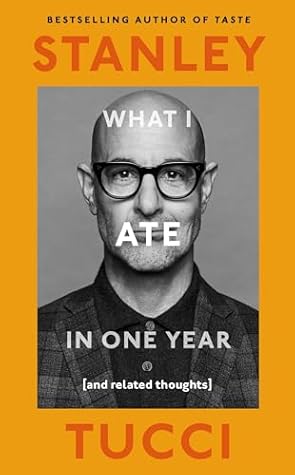
Some quotes I liked:
"I like to make tomato sauce whenever I return home after a trip, or when I arrive at a vacation home or wherever I'm staying while filming. I find it grounding. After the sauce has cooked for even just a few minutes, the new space smells more like home." (p. 66)
[On celebrating Thanksgiving even though they live in London] "Why do we do it? Because we like turkey? No. Frankly those busty, fatless fowls are a pain in the ass to cook, even though somehow Felicity has found a method of cooking them brilliantly. But we do it, we celebrate it...[because] the idea of communing through food is beautiful and something to be celebrated. People always think of the turkey when they think of Thanksgiving, but to me it's the side dishes, the trimmings, those ubiquitous 'fixin's', that make that day's meal wonderful rather than the big bird itself." (p. 293)
"We watched a couple of short Christmas films. I tried to find the ones I grew up with made by Rankin/Bass in the sixties, like Rudolph and the one about how Santa came to be, but to no avail. I couldn't even find the original Grinch narrated by Boris Karloff. I am sure they're all lurking out there somewhere in the ether, but I am simply not capable of finding the right button on the right remote to bring them back for a nostalgic holiday visit."
Friday, June 27, 2025
May 2025 Cookbook Reviews
Friday, June 13, 2025
May 2025 Reviews
Tia's story is horrific and almost sounds like something from another time and place, not modern-day America. She is also included in the Amazon Shiny Happy People docuseries about the IBLP organization and theology. She's a good writer and especially the chapters about her horrific years with her now ex-husband are visceral and you can feel her fear and pain as the reader. But there were several things that didn't make sense to me - 1) her immediate family was NOT like this and it's never stated that they wanted this life for her. I think if at ANY time she had told her parents what her husband was like (even before they married) they would have helped her and not told her to "submit more." 2) I personally didn't see how her childhood and their church in Jacksonville groomed her for IBLP and Christian patriarchy. Her parents seemed normal and loving and nothing she shared about the church seemed way off to me. 3) I think her biggest issue was not trusting herself and not asking questions. If she had followed her instincts she would have never married her now ex. And if she had asked her parents or other people her theological questions, I don't think they would have led her down this path. That's not to say any of this was her fault. But I just didn't really understand how her childhood groomed her for this.
I also felt so bad for her kids. I wish there had been a little bit more at the end about what, if any reckoning they had with religion and/or their Dad. It was also crazy how after she left her ex-husband, she had a TON of health issues. Once she got into trauma specific therapy, her physical ailments improved dramatically. The body really does keep the score. This is not a fun read at all. But I'm glad I read it and this stuff is still going on today all over the US so it's important to know how women get sucked into this and how they can get out.
Some quotes I liked:
[After 9/11] "The Christians we knew were angry about the burkas we saw on the news. It was un-Christian, they said, to force women to be invisible and uniform. But I silently laughed at that, American Christians had burkas too. I wore one. The denim jumper was the American burka." (p. 158)
"Joshua Harris, author of I Kissed Dating Goodbye, recanted his teachings on courtship. He stopped publication of his books and disavowed his position on purity culture and Christianity. I felt like I understood conversion from the inside out - he admitted his complicity without deflection - and I trusted it. To this day, Harris stands out as not only a high-profile ex-evangelical, but also one of the few who's taken tangible action steps to address the harm done by his former work. He's unique in the field that way because the rest of them seem to sneak off and wait for their chance to come back." (p. 266)
Some quotes I liked:
"A portion of the microbes in the hive lives inside the bees' bodies and is passed from bee to bee during feeding and grooming. Studies have shown that it's critical for newly emerged worker bees to have contact with older workers...It turns out that these microbes are the key to how nestmates recognize each other. They give the colony a unique scent that all the bees share, and this acts like a 'members only' pass into the hive. To test this theory, researchers inoculated bees from the same colony with different microbes and found that afterward, they fought! They no longer recognized each other as being from the same hive, even though they shared genetics." (p. 55)
"Honey bees have an astonishing ability to learn. They can recognize and remember colors, shapes, patterns, and scents. They can count, add and subtract, sequence, and combine concepts that they learn...Bees have also been credited with understanding the concept of zero, an ability few other animals possess and one that even human children struggle with." (p. 82)
"Given the collaborative nature of comb building, some have wondered if older bees teach the younger ones how to do it. One study sought to answer this question by raising bee larvae in round cells. They found that even though the bees had never seen an example of hexagonal comb nor had contact with any bees who had, they still managed to build hexagons...[the bees in this study built comb that was hexagonal but not quite right] This suggests that while the use of the hexagon shape may be instinctual, the fine details of comb construction must be learned.
I've read a LOT about factory farming and know full well all the evils that come from this way of "farming." But reading this book made my blood boil. In Eayrs community and nearby communities she witnessed Big Ag taking over the governments of these small towns with their yes men who would ignore the law or in some cases CHANGE IT to better suit the construction of the CAFOs and the destruction of the communities. Then to have the nerve to threaten anyone who spoke out - death threats, false police reports, dumping trash and dead animals on their lawn, etc. She had people interviewed for this book who still wanted to be anonymous 25 years later because they were still afraid of speaking out. After reading this book I decided that every one of the people who lied, schemed, threatened, paid off, and bullied their way into forcing these abominable CAFOs on these communities should be forced to live there. Not just on site, but inside the pig barns. They want to lie about the health issues around CAFOs - show me. Live in it yourself. Or we could just throw them in the manure lagoons... While this book is definitely not a happy ending or a triumphant David vs. Goliath story, it's still an important read. What Eayrs exposes is not just the evils of CAFOs but the way these corporations are taking over small towns - changing the government, forcing people out of generational land and farms - all to line their pockets. May each one of them rot in a special hell just for them of pig manure.
There were a lot of good quotes, I'll try to limit here:
"The bit of propaganda repeated most often by 'Big Ag' (big agriculture) lobbyists is that corporate agriculture 'feeds the world.'...But consider this: the U.S. Department of Agriculture (USDA) released numbers in 2018 that indicated the United States produced approximately seventy-three million hogs that year - the same number of hogs it produced in 1943." (p. 15)
"By signing a contract, young farmers essentially become low-wage corporate employees. Most growers do not receive a pay increase, not even a cost-of-living adjustment, during the contract term. Likewise, they do not get a pension contribution, profit sharing, or health insurance. Many economists and ag scholars deem the grower-integrator relationship today's version of sharecropping." (p. 37)
"The single most important organization in enabling the rapid takeover of hog country was undoubtedly the American Farm Bureau Federation (AFBF) and its state affiliates. The Farm Bureau has a chapter in every state and is active in 90 percent of all U.S. counties...the AFBF is one of the most powerful lobbies in Washington DC and is comparable to the National Rifle Association (NRA) in terms of its influence and reach. But unlike the NRA, many people are unaware of the organization's partisanship and politics." (p. 49-50)
"Indeed, at the time, proximity to a meatpacking plant was the greatest predictor of a community's increased likelihood of COVID infection, illness, and death. Research published in July 2020 found that communities near meatpacking plants had more COVID deaths than would be expected by the baseline, in the range of 4,300 to 5,200 excess deaths, representing an elevation of between 37 and 50 percent above the baseline rate. The researchers also reported that these impacts were lessened in communities where the meatpacking plants chose to shut down. Yet most didn't, and those that did close reopened within an average of nine days." (p. 225)
[On keeping meatpacking plants open with the argument of a potential meat shortage] "In reality, it was a booming time for the meat-packers. In April 2020 the pork industry, led by Smithfield and Tyson, exported a record-setting amount of pork to China...the industry produces at least 25 percent more pork than needed for domestic consumption, and government data reveals that in the spring of 2020, Smithfield had 'hundreds of millions of pounds' of meat in cold storage, or enough to feed the entire country for several months even in the theoretical complete absence of more production." (p. 226-27)
"Officials estimated that during plant closures in April 2020, about seven hundred thousand pigs across the nation could not be processed each week and had to be euthanized...Many CAFO operators resorted to depopulation methods that the AVMA (American Veterinary Medical Association) classifies as 'not recommended' but 'permitted in constrained circumstances.' Ventilation shutdown was a common procedure during the 2020 factory closures. Contract growers shut off the ventilation fans inside the CAFOs, closed the vents, turned up the heat, and piped a cocktail of carbon dioxide and steam into the barns. The animals died from overheating, suffocation, and poisoning...In Iowa in May 2020 a whistleblower employee at Iowa Select Farms, the state's largest pork producer, informed the animal rights group Direct Action Everywhere (DxE) when such an extermination would be taking place. DxE installed a hidden camera. The footage captured the sounds of hogs crying out in agonized pain and distress for hours. When employees arrived the next morning, some of the hogs were still alive. Workers killed them with bolt guns." (p. 228)
"Tom Butler, a North Carolina hog contract grower with about 7,500 to 8,000 hogs, told his integrator, Prestage Farms, that he would insist on sending his hogs to local butchers and distribute the meat to the hungry. His pitch was unsuccessful, and there was absolutely nothing Butler could do about it. Prestage owned the pigs...When Butler's integrator announced tentative plans to come to his farm and kill thousands of healthy adult hogs, he continued his plea to send the hogs to local butchers or just give them away to the community. Butler lives in a rural community where most residents know how to slaughter, preserve, and save pork. Finally, the integrator agreed to remove the overweight animals and transport them to their own meat processing plant in Wright County, Iowa. While an imperfect solution, it was preferable to the total waste that the industry was promoting." (229-30)
"The majority of voters in Iowa, including the majority of Republican voters, favor a statewide CAFO moratorium, and 75 percent favor stricter permitting requirements. For six consecutive years - annually since 2018 - members of the legislature introduced a bill cosigned by dozens of local organizations to enact a CAFO moratorium in Iowa and to tighten the regulation of existing facilities. Yet nothing happens. The state's legislature won't even bring the bill to the floor." (p. 243)
"In a final act of retribution against the Trom family, local industry operative spread manure on the land for nearly thirty-six hours the weekend of Lowell's [the author's father] visitation and funeral. They spread it just steps from the funeral home in Blooming Prairie on the day of the visitation...Spreading continued through the night and the following day. As our family gathered around my father's rural gravesite, several family members had to remain inside their vehicles, unable to bear the foul odor." (p. 264) [I hope every single person who did this drowns in a hog manure lagoon.]
Some quotes I liked:
"Too often our observation of birds - or any other wildlife - end at the moment of recognition. We look just long enough to see what something is, and then turn away, neglecting to ask the next logical (and arguably more interesting) question: What is it doing? To really understand what is happening in the natural world, we need to pay attention to behavior. That's not always easy. Watching closely takes time, a precious commodity that is often hard to spare..." (p. 75)
"Urban ecology is now considered a distinct field of study, focused on the many adaptations springing up in built environments that simply don't occur anywhere else...a growing number of studies have documented local species embracing new habits, from bats and birds feasting on insects at streetlights to brushtail possums, stone martens, and chipmunks denning in artificial structures." (p. 87-88)
Monday, May 19, 2025
April 2025 Cookbook Reviews